
Related Guide
Port of New York & New Jersey: Key Shipping Hub
Introduction – A Vital Gateway for Global Trade The Port of New York & New Jersey is recognized as the busiest and largest seaport on the U.S. Ea...
Read guide →

New York & New Jersey port drayage services connect ocean containers with warehouses, rail facilities, and delivery locations across the Northeast. Efficient pickup requires customs clearance, carrier release, and coordinated truck scheduling.
The Port of New York and New Jersey handled approximately 8.9 million TEUs in 2025. This 2026 guide covers drayage costs, major terminals, transit times, chassis requirements, and ways to avoid demurrage and detention. Tonlexing helps coordinate local trucking and final delivery.
Drayage Costs
Port Terminals
Pickup & Delivery
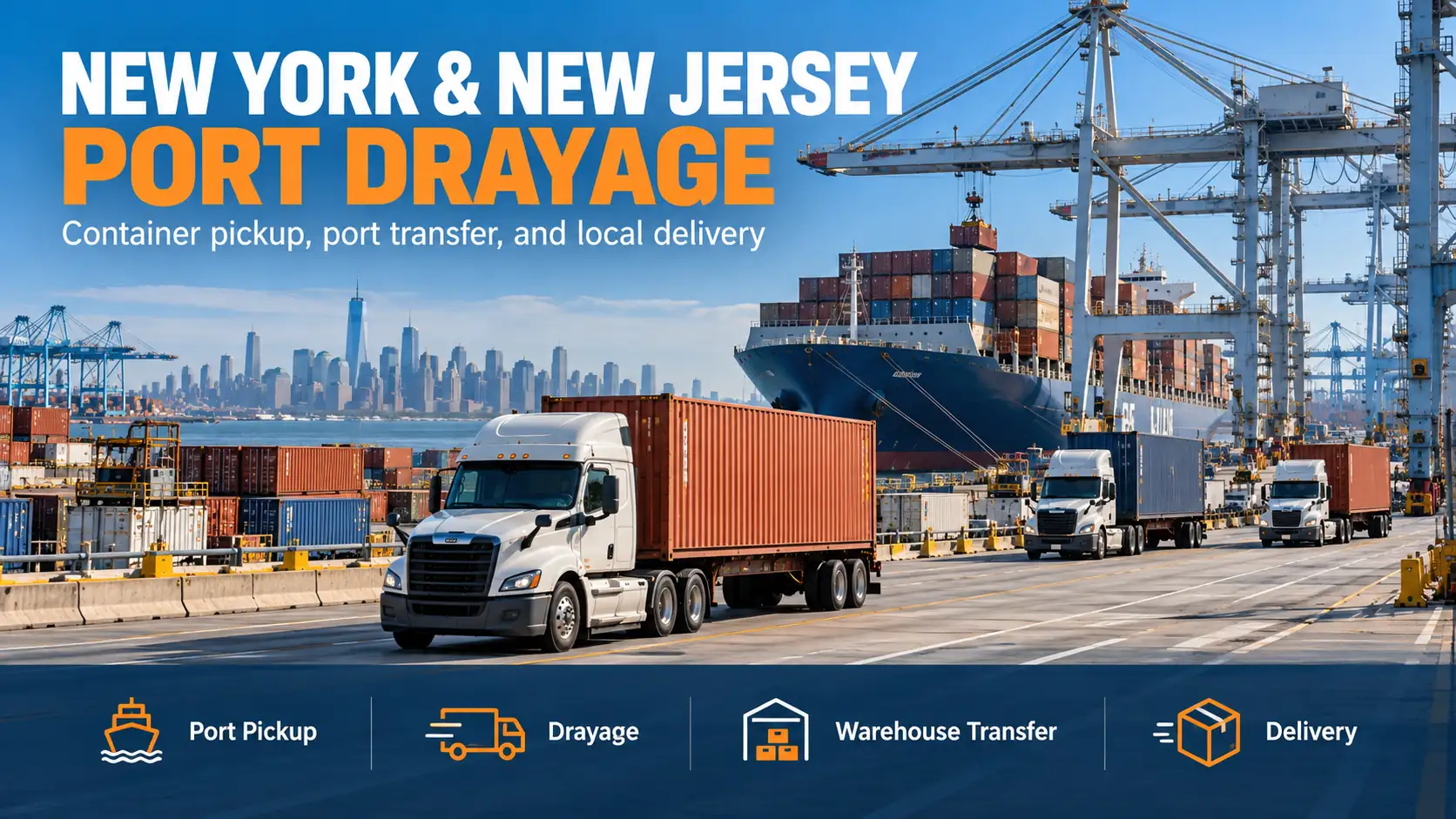
Drayage is the relatively short movement of a loaded or empty container between a seaport, nearby yard, rail ramp, or inland facility. It forms the link between international shipping and the domestic supply chain. For a container arriving in New Jersey, a typical move runs from the marine gate to a nearby consignee, followed by an empty return.
Common services include:
Import pickup: Moving released containers from the assigned marine terminal to a consignee.
Export moves: Bringing loaded export containers to the receiving gate within the permitted cutoff.
Port-to-rail transfers: Connecting container shipments with inland intermodal rail options.
Transloading: Shifting goods into domestic trailers when direct inland haulage is less practical.
Empty returns: Repositioning unloaded containers to the location designated by the ocean carrier.
Drayage differs from long-haul trucking because pickup authorization, chassis interchange, gate procedures, and equipment free time are central to the job. See our guide to drayage in the USA for a broader explanation of the process.
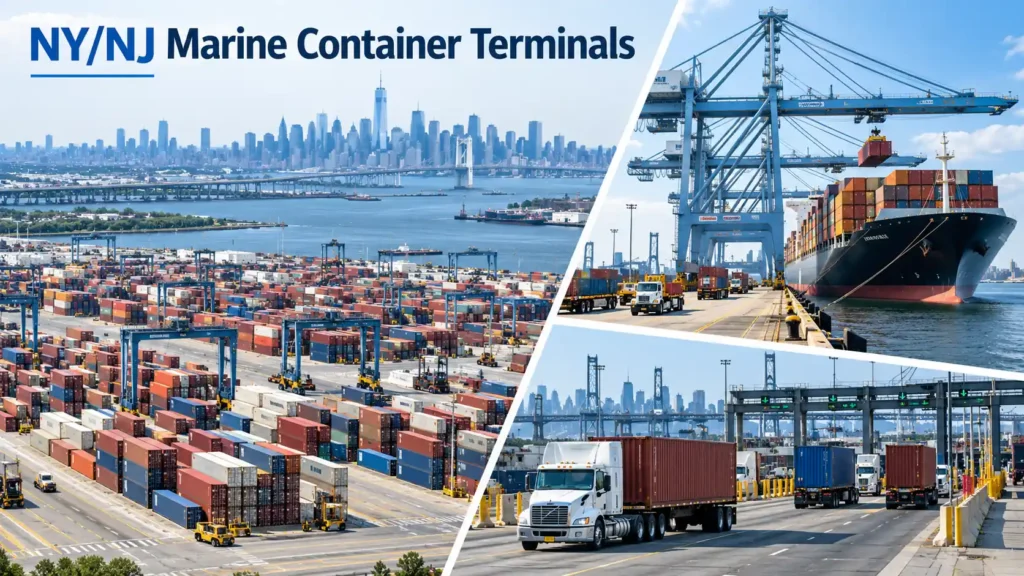
The Port of New York and New Jersey has several container terminals across New Jersey, Staten Island, and Brooklyn. Each terminal has its own gate procedures, availability notices, and operating schedule, so a dispatch plan must be tied to the actual vessel and discharge point.
| Marine terminal | Location | Area |
|---|---|---|
| APM Terminals | Elizabeth, NJ | Elizabeth |
| Maher Terminals | Elizabeth, NJ | Elizabeth |
| Port Newark Container Terminal (PNCT) | Newark, NJ | Port Newark |
| Port Liberty Bayonne | Bayonne, NJ | Port Jersey |
| Port Liberty New York | Staten Island, NY | Howland Hook |
| Red Hook Container Terminal | Brooklyn, NY | Brooklyn |
These adjoining locations handle substantial import and export activity and provide practical highway access to Newark, Elizabeth, Kearny, Secaucus, Carteret, and other New Jersey logistics districts. They are especially relevant to importers routing shipments to nearby warehouses or onward East Coast distribution facilities.
Port Liberty Bayonne serves the Port Jersey area, while Port Liberty New York operates at Howland Hook on Staten Island. Red Hook handles maritime cargo in Brooklyn. A New York City receiving address may involve additional tolls, traffic, and truck-route limitations. Do not assume that equipment collected at one site can be returned to another.
For geography and gateway context, review the Port of New York and New Jersey overview.
The right trucking solution depends on container size, cargo weight, location, unloading method, and customer needs. A 20-foot dry container serving a nearby industrial park has different equipment and scheduling needs from a heavy 40-foot unit going to a restricted urban site.
FCL trucking: Local pickup of 20-foot, 40-foot, and high-cube containers for direct inland movement.
Door-to-door coordination: Linking the international shipment with customs processing and final delivery.
Transloading and warehousing: Unloading goods near the gateway for short-term storage or transfer into domestic trailers.
Rail connections: Planning handoffs to intermodal facilities when the destination is farther inland.
Special cargo handling: Reviewing overweight, refrigerated, or regulated goods that need different equipment or permits.
New Jersey container delivery commonly covers Newark, Elizabeth, Jersey City, Secaucus, Kearny, Carteret, Linden, and Edison. In New York, service areas may include Brooklyn, Queens, Staten Island, Long Island, and other sites accessible to commercial vehicles. Longer hauls into Pennsylvania or Connecticut depend on the route and carrier capacity.
For importers consolidating production and inland distribution, door-to-door shipping from China can provide a framework for coordinating the stages. Smaller shipments should compare FCL vs LCL shipping from China to USA, because LCL freight generally moves through a consolidation facility before local dispatch.
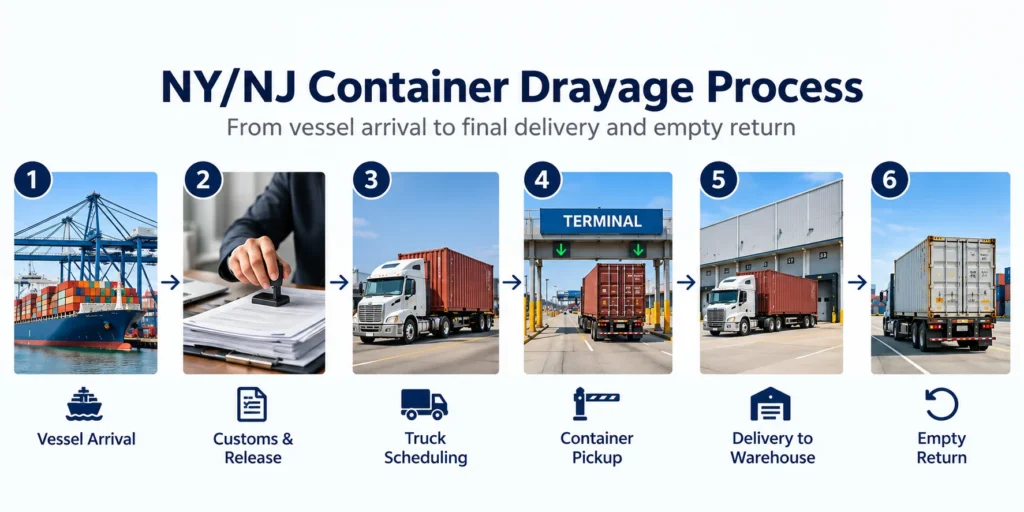
A vessel’s arrival does not mean a shipment is immediately available. The customs broker, ocean carrier, marine operator, and transport team must confirm the releases and practical pickup conditions before dispatch.
Arrival and discharge: Check the vessel, assigned marine terminal, and container availability status.
Customs and line release: Resolve government holds and carrier release conditions before arranging collection.
Dispatch planning: Confirm a qualified driver, suitable chassis, gate rules, and a reservation when required.
Gate pickup: Collect the container, complete interchange records, and verify the seal and equipment details.
Inland movement: Bring the goods to the receiving site, or to a transloading facility for onward distribution.
Unload and return: Complete the delivery appointment and send the empty container to its authorized return point.
Before requesting service, share the bill of lading reference, container number, carrier, discharge terminal, customs status, last free day, gross weight, delivery address, and unloading instructions. A delivery order or pickup reference may also be needed depending on the shipment.
If documentation is still pending, early customs clearance from China to the USA coordination is important. Clear communication among all parties helps avoid sending a driver before cargo is actually releasable.
Need a container pickup plan? Send Tonlexing the shipment details and receiving ZIP code so the required trucking arrangements can be reviewed.
New York and New Jersey port drayage costs depend on container size, delivery distance, cargo weight, and equipment requirements. The rates below provide 2026 budget estimates for 20ft and 40ft containers, excluding fuel, tolls, chassis rental, and additional fees.
| Distance from Port | 20ft Container | 40ft / 40HC Container |
|---|---|---|
| Local (0–25 miles) | $300–$550 | $400–$750 |
| Metro (25–50 miles) | $500–$750 | $550–$900 |
| Regional (50–100 miles) | $800–$1,100 | $950–$1,400 |
Estimated base trucking rates in USD for 2026 budgeting, based on the reference ranges. They are not verified live quotations and exclude fuel, chassis, tolls, and other accessorial charges. Actual prices may exceed these ranges, particularly for New York City routes or specialized cargo.
Besides the base trucking rate, NY/NJ port drayage may involve additional charges:
Fuel surcharge: Varies with diesel prices and carrier pricing.
Chassis rental: Approximately $35–$75 per day.
Tolls: Depend on the bridge, tunnel, and delivery route.
Chassis split: Extra fees apply when equipment is collected off-site.
Overweight cargo: Tri-axle chassis or permits may increase costs.
Cargo Facility Charge (CFC): $14.80 per loaded TEU in 2026.
Rates are indicative except for the published CFC rate. Check whether individual charges are already included in the quotation.
Delays can add substantial costs beyond the base drayage rate:
Demurrage: Daily charges when cargo exceeds the terminal’s free time.
Detention / Per Diem: Charges when containers are returned after the permitted free time.
Truck waiting time: Approximately $75–$125 per hour after the included waiting allowance.
Confirm cargo release, warehouse appointments, and empty return deadlines to avoid unnecessary charges.
For complete import budgeting, compare these local expenses with the overall shipping cost from China to USA.
Request a NY/NJ drayage quote from Tonlexing with your pickup terminal, container size, cargo weight, and delivery ZIP code.
New York and New Jersey port drayage typically takes 1–2 business days for local delivery after customs clearance, carrier release, and container availability are confirmed. Nearby New Jersey warehouses may receive cargo on the pickup day, while deliveries to New York City or more distant destinations may take longer.
| Operation or destination | Estimated time |
|---|---|
| Truck scheduling after release | 1–2 business days |
| Terminal waiting and pickup | 1–3 hours |
| Port Newark / Elizabeth to nearby NJ warehouses | 30–90 minutes driving |
| Brooklyn, Queens, or Staten Island | 1–3 hours driving |
| Pennsylvania or Connecticut destinations | 2–5 hours driving |
| Empty container return | Same or next business day after unloading |
These are planning estimates under normal operating conditions, not guaranteed transit times. Driving estimates exclude terminal waiting, unloading, and empty returns.
Gate operating hours and appointment requirements vary by facility. For example, Port Newark Container Terminal (PNCT) normally handles standard import pickups from 6:00 AM to 6:00 PM, Monday through Friday, with the last truck permitted to join the queue at 4:45 PM. Standard gate transactions at PNCT do not require appointments.
During busy periods, terminal congestion, chassis availability, customs holds, and heavy traffic can extend pickup times beyond 3 hours or push delivery to the next business day.
To minimize delays, importers should:
Confirm customs release and cargo availability before dispatch.
Check terminal gate hours and appointment requirements.
Arrange trucking 1–2 business days in advance where possible.
Coordinate warehouse unloading and empty return schedules.
Early communication with the carrier and receiving facility helps reduce waiting charges, missed appointments, and demurrage risks.
The Port Authority and marine operators enforce access and safety rules for motor carriers and drivers. Access is not determined by cargo release alone: the assigned vehicle, operator, identification, and equipment must also be eligible to enter.
Drayage Truck Registry (DTR): Class 8 vehicles accessing the marine terminals must be registered according to Port Authority rules.
RFID and PortTruckPass: Registration and a valid, matching RFID tag support gate access; TIPS can provide terminal updates and pickup information.
TWIC: A valid Transportation Worker Identification Credential is generally needed for unescorted access to secure maritime areas.
UIIA and interchange: Equipment interchange agreements, insurance, and carrier authorization should be checked when applicable.
The chassis must be suitable for the load. An overweight shipment may require tri-axle equipment, a permitted route, or additional authorization. Reefer goods can require a compatible power solution and closer coordination. Hazmat movements are subject to applicable classification, driver, equipment, and regulatory requirements.
Emission-related eligibility and other requirements may change. Use the current Port Authority guidance and the relevant marine operator’s notices before sending a vehicle to the gate.
Avoidable fees often arise because the freight is physically present but not collectible, the receiving facility is unprepared, or the empty equipment cannot be returned within the allowed time. Demurrage commonly concerns time at the marine facility, while detention commonly concerns extended use outside it. Exact definitions, free time, and billing depend on the governing terms.
Verify customs release, ocean carrier approval, and any outstanding holds.
Check cargo availability, the last free day, and the correct pickup location.
Confirm equipment, driver access, and the applicable gate process.
Reserve an unloading slot with enough time for a practical road move.
Keep a record of gate-out time and equipment interchange details.
Confirm whether the receiving site can unload immediately or needs a drop arrangement.
Obtain the authorized empty-return location and verify current acceptance notices.
Save gate receipts and timestamps in case additional charges are disputed.
Where a bill appears incorrect, compare the invoiced dates, published tariff or service agreement, free-time calculation, and supporting documents before requesting a correction. Good records make a fee review more effective than relying on assumptions about standard waiting times.
Importers moving commercial goods from China need a reliable handoff between overseas shipping and local transport. Tonlexing can help organize the freight plan and coordinate destination-side delivery through suitable partners, with a focus on practical instructions and clear responsibilities.
Depending on the shipment, arrangements may include customs-related document coordination, marine pickup planning, inland trucking, transloading, warehousing, and empty equipment returns. This approach gives customers more flexibility when one facility is busy or a receiving date changes.
For broader route planning, see shipping from China to New York. When asking for local service, include:
Pickup terminal and ocean carrier
Container type and gross cargo weight
Destination address and ZIP code
Estimated available date and last free day
Unloading method and receiving hours
Any special equipment or storage needs
Contact Tonlexing for a shipment-specific drayage quote. A complete request helps identify the trucking scope, chassis arrangements, likely access restrictions, and avoidable extra fees before collection.
It arranges local movement of import or export containers between marine terminals and inland locations, including the gate, equipment, and timing coordination needed for the trip.
Yes, provided the container is released and the warehouse can receive the load. Direct inland trucking is a common option for FCL shipments.
Rates depend on the pickup point, mileage, chassis, weight, tolls, fuel, and accessorial fees. An itemized quotation is more reliable than a fixed statewide price.
Collection can be arranged once discharge, customs and line release, equipment, and gate access are complete. A vessel ETA alone does not establish a pickup date.
Responsibility depends on the governing transportation agreement, tariffs, and applicable billing rules. Review the invoice and shipment documents rather than assuming every charge belongs to the trucking provider.
Useful freight, customs and importing resources related to this shipping guide.
Introduction – A Vital Gateway for Global Trade The Port of New York & New Jersey is recognized as the busiest and largest seaport on the U.S. Ea...
Read guide →
Drayage in the USA Explained: Services, Costs, Types, and How It Works Verified & Reviewed · Last updated March 2026 Drayage in the USA explained...
Read guide →
Shipping from China to New York has become a vital logistics channel in global trade, especially for importers seeking fast, reliable, and cost-e...
Read guide →
Why East Coast Ports Are Vital to U.S. Trade The East Coast of the United States is home to some of the busiest and most strategically located co...
Read guide →Demurrage vs Detention vs Storage Verified & Reviewed · Last updated January 2026 Demurrage vs detention vs storage is one of the most expensive...
Learn more → Useful Resource What Are Terminal Handling Charges (THC)?When dealing with international shipping, one of the common costs importers and exporters encounter is Terminal Handling Charges (THC). These cha...
Learn more →WhatsApp us