Related Guide
Drayage in the USA Explained
Drayage in the USA Explained: Services, Costs, Types, and How It Works Verified & Reviewed · Last updated March 2026 Drayage in the USA explained...
Read guide →

USA container drayage services connect U.S. ports and rail terminals with warehouses, distribution centers, and final delivery locations. Services include container pickup, trucking, chassis coordination, terminal appointments, and empty returns.
We help importers manage container movement, reduce delays, and keep inland deliveries on schedule.
Container Pickup
Port & Rail Drayage
Drayage Cost
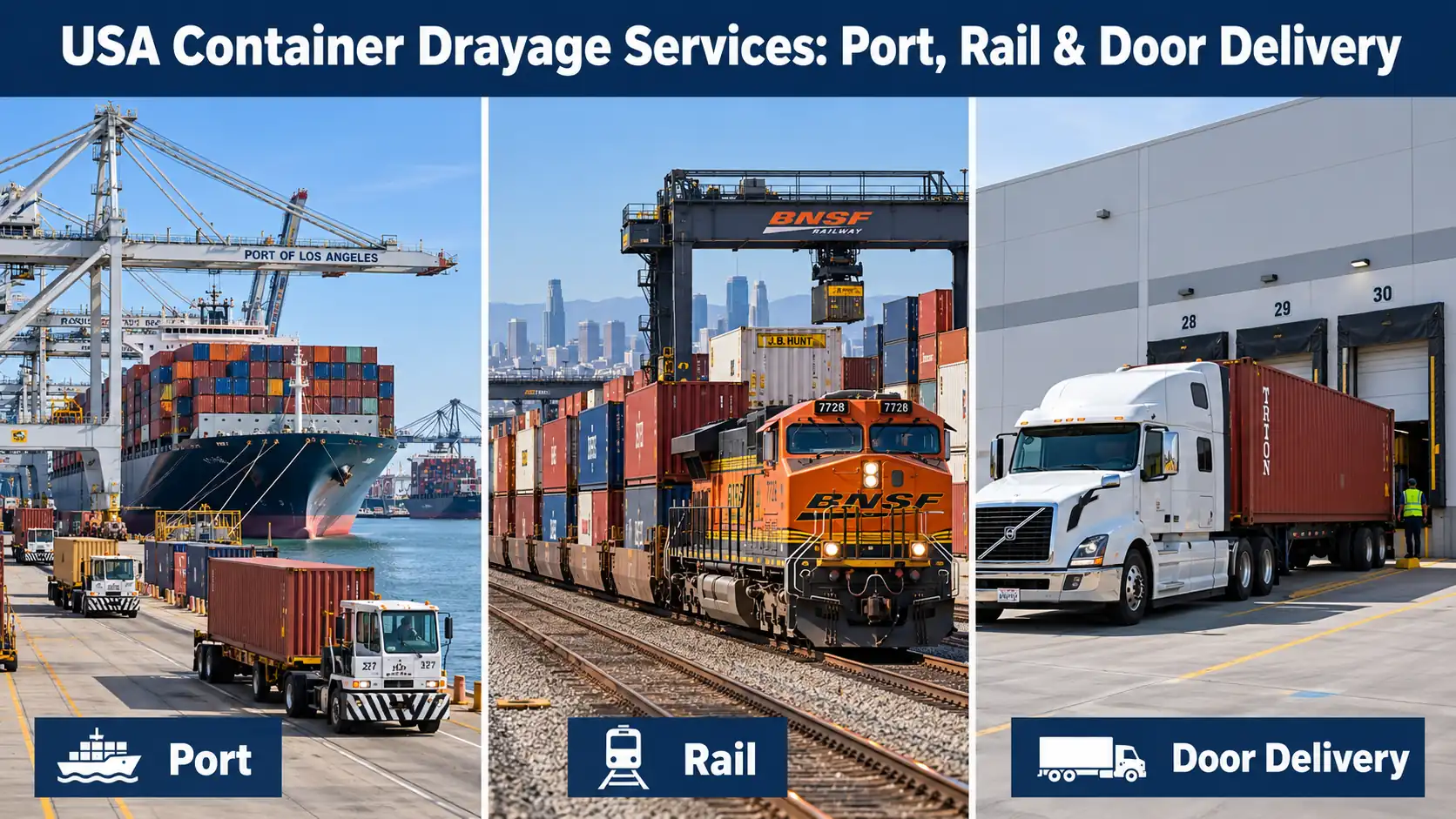
Container drayage refers to the short-distance movement of shipping containers between transportation facilities and nearby destinations. It is an important part of an intermodal supply chain because ocean and rail transportation usually do not deliver the container directly to the consignee’s warehouse.
For an import shipment, the inland movement may look like:
Ocean Vessel → U.S. Port Terminal → Drayage → Warehouse → Final Delivery
When rail is involved, the route may instead be:
Ocean Port → Rail Terminal → Drayage → Inland Warehouse
The exact arrangement depends on the container’s origin, destination, transportation mode, and delivery requirements. Unlike long-haul trucking, drayage focuses primarily on connecting ports, rail terminals, container yards, warehouses, and other logistics facilities.
A container drayage provider can coordinate several parts of the inland transportation process. The exact services depend on the shipment, terminal, container type, and destination, but the main objective is to move the container safely and on schedule.
Port pickup is one of the most common drayage requirements for imported containers. Once the container is released and available for collection, a truck is scheduled to pick it up from the marine terminal and transport it to the next destination.
The pickup process may require coordination of:
Container release information
Terminal appointment
Truck and driver
Chassis availability
Pickup time and delivery schedule
For international shipments, the container must generally be ready for release before the truck can collect it.
Rail drayage connects inland rail terminals with warehouses, distribution centers, and final delivery locations. This is particularly useful when a container travels a long inland distance by rail before being transferred to local trucking.
The drayage provider coordinates the final truck movement from the rail ramp and arranges delivery according to the receiving facility’s schedule.
A container transported by road normally requires a suitable chassis. Chassis availability can therefore have a direct impact on pickup timing and transportation costs.
The provider needs to match the container with appropriate equipment and trucking capacity while considering the terminal’s operating requirements.
After the loaded container reaches the warehouse, the job may continue with unloading and empty equipment return. The empty container usually needs to be returned according to the shipping line’s instructions and within the applicable free-time period.
This makes the complete drayage operation more than simply moving a loaded container from point A to point B.
Different drayage arrangements are available depending on where the container starts and where it needs to go. Choosing the appropriate service can help align inland transportation with the rest of the shipping plan.
Port drayage moves a container between a marine terminal and a nearby warehouse, distribution center, transloading facility, or consignee.
It is commonly used after an imported FCL container has been discharged from a vessel and released for inland delivery.
Rail drayage connects an inland rail ramp with the next point in the supply chain. The container may arrive at the rail terminal after a long-distance rail journey and then be transferred to a local truck for final delivery.
This arrangement allows importers to combine rail transportation with local container trucking.
Door-to-door container delivery coordinates the movement from the port or rail terminal to the consignee’s specified address. This can simplify transportation for importers that prefer one logistics partner to coordinate the inland portion of the shipment.
Typical destinations include:
Importer’s warehouse
Distribution center
Transloading facility
Retail distribution location
Commercial delivery address
Expedited drayage may be considered when a container has a tight delivery window or the cargo is particularly time-sensitive. Availability and pricing depend on local trucking capacity and the specific route.
Although procedures vary between terminals and locations, most container drayage shipments follow a similar operational sequence. The key is to coordinate the container release, equipment, pickup, delivery, and empty return before free time or appointment windows become a problem.
Before arranging pickup, the shipment information should be checked to confirm that the container can be collected. This normally includes the container number, terminal, release status, and available free time.
Once the container is ready, trucking capacity and chassis availability are arranged. The pickup appointment should match the terminal’s operating hours and the warehouse’s receiving schedule.
The driver collects the container and transports it from the terminal or rail ramp. Terminal congestion, appointment availability, and equipment shortages can affect the actual pickup time.
The loaded container is transported to the warehouse, distribution center, transloading facility, or final consignee. The receiving facility should be prepared to accept the container within the agreed delivery window.
After unloading, the empty container may need to be returned to an approved location. Completing this step within the permitted period can help avoid unnecessary detention charges.
Shipment status updates and proof of delivery provide visibility after the container reaches its destination. For importers managing multiple shipments, timely updates can make it easier to identify exceptions and adjust receiving plans.
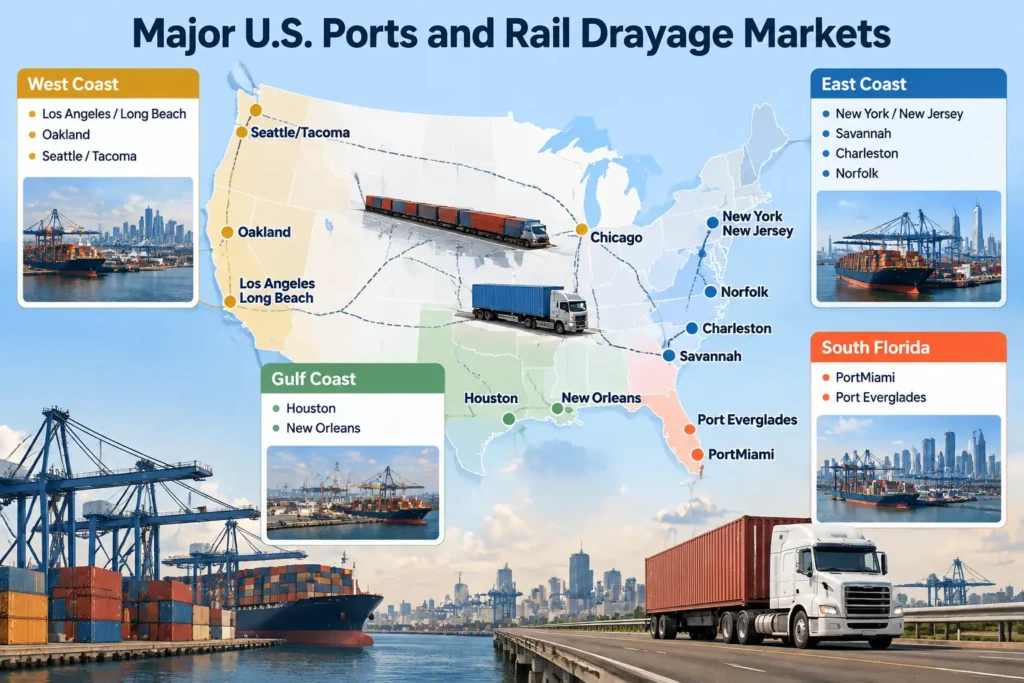
Container drayage is concentrated around major U.S. ports and inland rail hubs. The most suitable routing depends on the shipment’s final destination, available trucking capacity, rail connections, and delivery requirements.
The major container gateways can broadly be considered by region:
| Region | Major Container Gateway Examples |
|---|---|
| West Coast | Los Angeles/Long Beach, Oakland, Seattle/Tacoma |
| East Coast | New York/New Jersey, Savannah, Charleston, Norfolk |
| Gulf Coast | Houston, New Orleans |
| South Florida | PortMiami, Port Everglades |
Major coastal ports connect imported containers with local trucking networks, warehouses, and distribution centers. West Coast gateways have strong connections with Asian freight, while East Coast and Gulf Coast ports serve major regional markets.
South Florida is another important market, with PortMiami and Port Everglades supporting container movement to local warehouses and distribution facilities.
For longer inland movements, containers can travel by rail before local drayage completes the final delivery. Major inland markets include Chicago, Dallas-Fort Worth, Atlanta, and Memphis, where rail ramps connect intermodal freight with regional distribution centers.
A typical port and rail movement is:
Seaport → Rail → Inland Rail Ramp → Drayage → Warehouse
For importers moving cargo from China, selecting the right gateway can affect both international freight costs and inland transportation requirements. You can also review our guides to key ports for logistics from China to the USA and West Coast shipping ports in the USA.
Container drayage rates in the U.S. are usually quoted per move or per container, rather than simply by mileage like standard FTL trucking. The total cost depends on the port or rail terminal, delivery distance, container size, chassis requirements, fuel, waiting time, and other accessorial charges.
For standard container moves, a typical all-in drayage cost may range from about $500 to $1,300+ per container, depending on the route and service requirements.
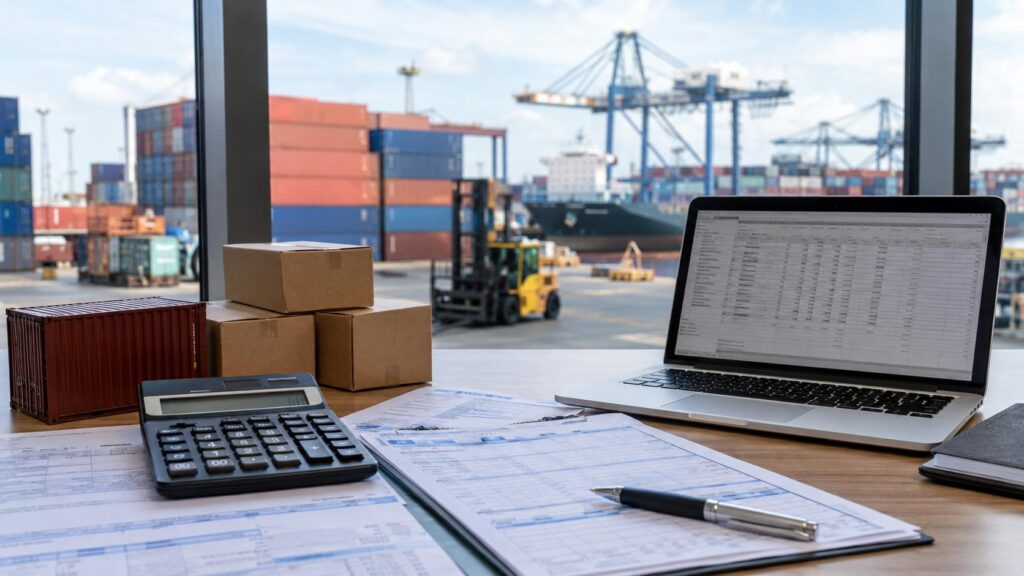
The following ranges are general market reference figures for standard container moves. Fuel, chassis, waiting time, tolls, and other additional charges may be billed separately.
| Drayage Market | Indicative Base Rate | Main Cost Considerations |
|---|---|---|
| Los Angeles / Long Beach | $500–$800 | Port congestion, appointments, chassis |
| New York / New Jersey | $500–$800 | Traffic, tolls, chassis availability |
| Savannah / Charleston | $400–$600 | Regional trucking capacity |
| Houston | $500–$800 | Port conditions and inland distance |
| Chicago / Dallas | $300–$500 | Rail ramp and local delivery |
| Longer moves, 100–300 miles | $600–$1,300+ | Distance, fuel, tolls, and equipment |
These are reference ranges rather than fixed quotations. Actual drayage rates vary according to the pickup terminal, delivery ZIP code, container type, appointment requirements, and available capacity.
The base rate is only part of the final cost. Fuel, chassis, waiting time, pre-pull requirements, and storage can increase the total amount paid by the shipper.
Common additional charges include:
Fuel surcharge: Adjusted according to fuel prices and carrier pricing.
Chassis fees: May apply when a chassis is separately arranged or used beyond the included period.
Chassis split fee: May occur when a suitable chassis is unavailable at the pickup location.
Detention or waiting time: Applies when a driver waits beyond the agreed free time.
Pre-pull fee: May apply when a container is picked up before the scheduled delivery date.
Yard storage: May apply when a container needs to remain at a yard before delivery.
Because these charges vary by lane and operating conditions, shippers should confirm whether a quoted rate is all-in or base-only before comparing drayage providers.
The quoted drayage rate is not always the final transportation cost. Demurrage costs, detention, chassis fees, waiting time, pre-pull charges, and storage may increase the total cost when a container cannot be picked up, delivered, unloaded, or returned within the permitted free time.
Demurrage generally applies when a container remains inside a port or rail terminal beyond the allowed free time. Detention usually applies when the container is outside the terminal and is not returned within the agreed period.
These charges can become significant when port congestion, customs delays, warehouse scheduling, or limited trucking capacity prevents normal container movement.
Depending on the shipment and local operating conditions, additional charges may include:
Chassis fees: Charges for using a chassis or keeping it beyond the included period.
Chassis split fees: May apply when a suitable chassis is located separately from the container pickup point.
Waiting time: Charged when drivers wait beyond the agreed free time at a port, rail ramp, or warehouse.
Pre-pull: May be required when a container is picked up before its scheduled delivery date.
Yard storage: Applies when containers need to remain at a yard before delivery.
Good coordination before container pickup can help control additional drayage costs. Importers should confirm the cargo release, terminal appointment, free time, warehouse receiving schedule, and empty return requirements before dispatch.
For China-origin freight, customs clearance should also be coordinated early so the container can be collected promptly after release. Monitoring shipment status and responding quickly to changes can help reduce the risk of demurrage, detention, and unnecessary waiting charges.
Choosing a drayage provider is not just about finding the lowest rate. The provider should be able to arrange the right truck and chassis, work with the required port or rail terminal, and keep the container moving according to your delivery schedule.
Before making a decision, look at:
Port and rail coverage: Can they handle your pickup terminal and delivery area?
Drayage capacity: Can they arrange trucks and equipment when you need them?
Chassis availability: Is suitable equipment available for your container?
Shipment visibility: Will you receive updates when the container is picked up and delivered?
Customer service: Can someone respond quickly if a terminal or delivery schedule changes?
For importers shipping from China, Tonlexing can coordinate the international shipment and U.S. container drayage together, including port pickup, inland delivery, and related logistics. You can learn more about our freight forwarding services from China to the USA.
Container drayage is the short-distance transportation of shipping containers between ports, rail terminals, container yards, warehouses, distribution centers, and other delivery locations.
Port drayage normally moves containers from a marine terminal to an inland destination. Rail drayage typically moves containers from an inland rail ramp to a warehouse, distribution center, or final consignee.
The cost varies by route, distance, terminal, container type, chassis, fuel, waiting time, and other operational requirements. A shipment-specific quotation is more useful than a nationwide average rate.
A chassis may be included depending on the transportation arrangement and quotation. Chassis availability and any related charges should be confirmed before booking.
Waiting time, storage, demurrage, detention, pre-pull requirements, chassis usage, redelivery, cancellation, congestion, and special cargo requirements can increase the final cost.
Useful freight, customs and importing resources related to this shipping guide.
Drayage in the USA Explained: Services, Costs, Types, and How It Works Verified & Reviewed · Last updated March 2026 Drayage in the USA explained...
Read guide →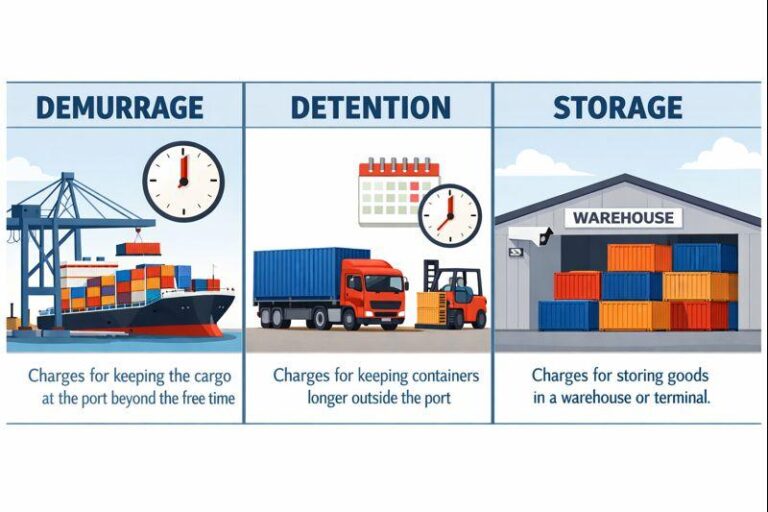
Demurrage vs Detention vs Storage Verified & Reviewed · Last updated January 2026 Demurrage vs detention vs storage is one of the most expensive...
Read guide →
When dealing with international shipping, one of the common costs importers and exporters encounter is Terminal Handling Charges (THC). These cha...
Read guide →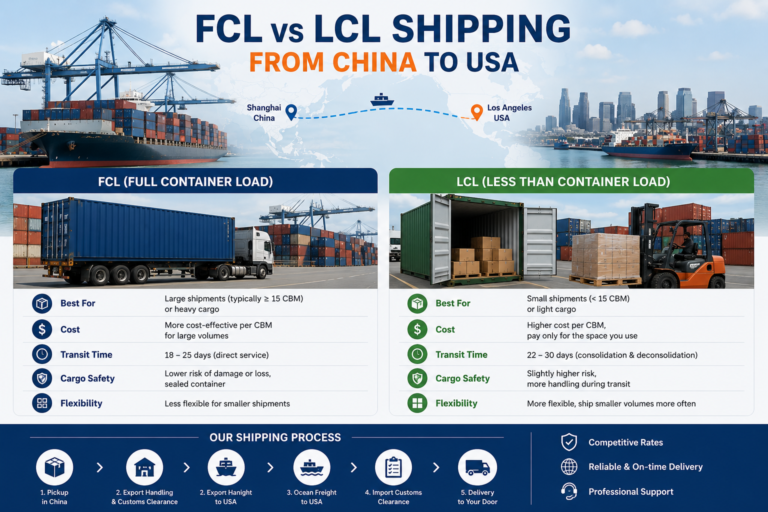
FCL vs LCL shipping from China to USA Verified & Reviewed · Last updated June 2026 FCL vs LCL shipping from China to USA depends on your cargo vo...
Read guide →Customs Bond for USA Imports: The Complete Guide Verified & Reviewed · Last updated March 2026 If you import into the United States, a customs bo...
Learn more → Useful Resource Top West Coast Shipping Ports in the USAThe top West Coast shipping ports in the USA play a vital role in supporting international trade, facilitating container shipping, and driving ec...
Learn more →WhatsApp us