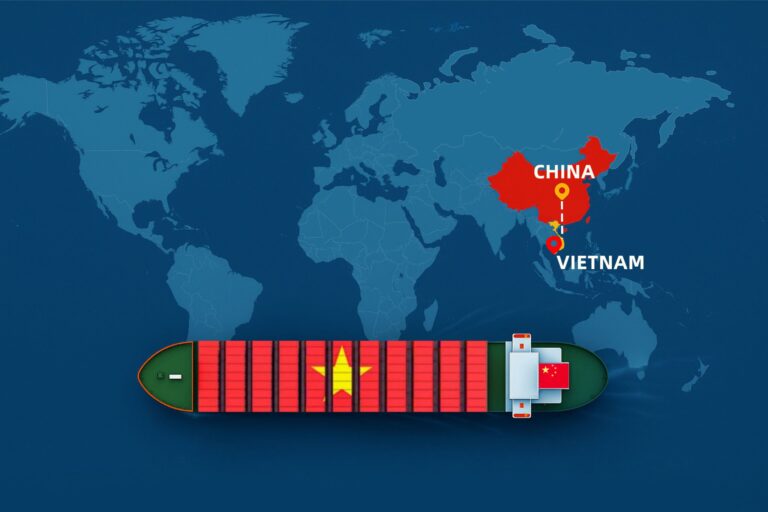


20ft & 40ft Container Shipping Costs from China to Vietnam
- Verified & Reviewed · Last updated June 2026
20ft 40ft Container Shipping Costs from China to Vietnam vary depending on sea freight rates, container size, shipping routes, transit time, customs clearance, and total shipping charges.
This guide explains container shipping costs from China to Vietnam, covering 20ft, 40ft, and 40HQ container rates, major Vietnamese ports such as Hai Phong, Ho Chi Minh City, Cat Lai, Cai Mep, and Da Nang, as well as FCL, LCL, air freight, and door to door shipping options.
Container shipping cost
Transit time range
FCL / LCL
- Experienced China-based logistics specialists
10,000+ international shipments handled Global sea, air & DDP shipping solutions 24/7 shipment tracking & customer support
Table of Contents
How Much Does It Cost to Ship a Container from China to Vietnam?
The cost to ship a container from China to Vietnam depends on container size, origin port, destination port, cargo volume, carrier space, port congestion, customs clearance, and shipping terms. Because China and Vietnam are close trading partners, ocean freight is usually more affordable than long-haul routes to Europe, the Middle East, or North America.
For most port-to-port sea freight shipments, the average price ranges are:
| Shipping Option | Average Price Range | Estimated Transit Time |
|---|---|---|
| 20ft container | USD 315–1,200 | 5–10 days |
| 40ft container | USD 450–1,800 | 5–10 days |
| 40HQ container | USD 500–1,950 | 5–10 days |
| LCL shipping | From about USD 18/CBM | 9–17 days |
These container rates mainly refer to basic ocean freight between major ports. The total shipping cost may also include pickup in China, export handling, port handling, customs fees, cargo insurance, Vietnam destination charges, customs broker service, and inland transportation to the final warehouse.
Choosing the Right Container Size
The right container size depends mainly on cargo volume, total weight, package size, and loading method. For China to Vietnam shipping, a 20ft container is better for heavy cargo, while a 40ft or 40HQ container is usually better for larger cargo volume.
Container Size Comparison
| Container Type | Practical Loading Volume | Common Weight Limit | Best For |
|---|---|---|---|
| 20ft Container | About 26–28 CBM | About 21–22 tons | Machinery, tiles, stone, hardware |
| 40ft Container | About 56–58 CBM | About 25–26 tons | Furniture, textiles, appliances, retail goods |
| 40HQ Container | About 65–68 CBM | About 25–26 tons | Cartons, display racks, light bulky goods |
These figures are general references. Actual loading capacity depends on carton size, pallet use, stacking method, and cargo weight.
As a simple guide:
Below 15 CBM: LCL shipping is usually more practical.
15–30 CBM: a 20ft container may be considered if cargo security is important.
30–55 CBM: a 40ft container is usually a better choice.
Above 55 CBM: a 40HQ container often provides better loading value.
China to Vietnam Container Shipping Cost by Route
Shipping rates vary by route because each port has different carrier schedules, container availability, port handling charges, and inland transportation costs. South China routes to Ho Chi Minh City are often more competitive, while shipments from eastern or northern China may cost more due to longer sailing distance.
| Major Route | 20ft Container | 40ft Container | Estimated Transit Time |
|---|---|---|---|
| Shenzhen to Ho Chi Minh City | USD 315–980 | USD 450–1,480 | 3–7 days |
| Guangzhou to Ho Chi Minh City | USD 350–1,000 | USD 500–1,500 | 3–7 days |
| Shanghai to Ho Chi Minh City | USD 500–1,080 | USD 950–1,620 | 5–8 days |
| Ningbo to Hai Phong | USD 720–1,020 | USD 1,080–1,560 | 5–9 days |
| Qingdao to Hai Phong | USD 820–1,180 | USD 1,220–1,740 | 7–10 days |
| Xiamen to Da Nang | USD 450–900 | USD 750–1,400 | 4–8 days |
These sea freight rates are estimates for standard dry shipping containers. Final container shipping costs may change based on cargo details, shipping season, fuel surcharge, ocean freight rates, customs clearance requirements, and whether the shipment is arranged as FOB, CIF, DAP, or door to door service.
FCL and LCL Shipping from China to Vietnam
FCL and LCL are the two main sea freight options from China to Vietnam. The right choice depends mainly on cargo volume, handling requirements, delivery time, and total shipping cost.
FCL Shipping from China to Vietnam
FCL means full container load. Your goods use the entire 20ft, 40ft, or 40HQ container without sharing space with other cargo. The container is loaded and sealed at origin, then shipped as one complete container to Vietnam.
This option is suitable for importers who need better cargo control, fewer handling steps, and faster release after customs clearance. It is commonly used for machinery, furniture, electronics, textiles, building materials, and regular container load shipments.
FCL is usually a better option when:
Your cargo can fill most of a container
The goods are fragile or high value
You want fewer handling steps
You need more predictable delivery
LCL Shipping from China to Vietnam
LCL means less than container load. Your cargo shares container space with other shipments in the same ocean container. It is a practical choice when the shipment is too small for a full container.
LCL is often used for trial orders, small batches, spare parts, mixed products, or goods from multiple suppliers. The upfront shipping cost is lower, but the cargo needs consolidation before departure and deconsolidation after arrival, so the transit time is usually longer than FCL.
LCL is usually suitable when:
Your shipment volume is small
You do not want to pay for a full container
The delivery schedule is flexible
The goods are packed well for shared container transport
Sea Freight from China to Vietnam
Sea freight is the most common shipping method for container transport from China to Vietnam. It offers competitive pricing for commercial cargo and supports both full container and smaller shipments. Because the sailing distance is short, sea freight from China to Vietnam can be fast, stable, and economical.
Ocean freight is commonly used for shipping goods such as machinery, furniture, textiles, auto parts, electronics, packaging materials, household products, construction materials, and factory supplies. Compared with air freight, sea freight provides a much lower shipping cost for heavy or large-volume cargo.
The main benefits of sea freight include:
Lower cost for full container load shipments
Better capacity for large cargo volume
Flexible container size options
Stable service from major Chinese ports
Suitable for long-term international trade and supply chain planning
Sea freight rates can change quickly during high demand periods, before the holiday rush, and when fuel surcharge or port congestion fees increase. For accurate ocean freight rates, importers should confirm the latest container rates before booking.
Main Shipping Routes and Major Ports
China and Vietnam are connected by frequent ocean freight services, cross-border trucking, and multimodal shipping services. The best shipping routes depend on the supplier location in China and the final delivery address in Vietnam.
Major Chinese Ports
Most container shipping from China to Vietnam departs from major Chinese ports with strong export capacity and frequent vessel schedules. These ports are also major hubs in the logistics industry.
Common departure ports include:
Xiamen
Qingdao
Tianjin
Hong Kong
South China ports are often preferred for shipments to Ho Chi Minh City, Binh Duong, Dong Nai, and southern Vietnam. East China and North China ports are often used when suppliers are located near Shanghai, Ningbo, Qingdao, or Tianjin.
Major Vietnamese Ports
Vietnam’s main ports connect sea freight with inland trucking to factories, warehouses, and industrial zones. The right destination port depends on whether the cargo is going to northern, central, or southern Vietnam.
Common Vietnamese ports include:
Hai Phong for Hanoi, Bac Ninh, Hai Duong, and northern Vietnam
Ho Chi Minh City and Cat Lai for southern Vietnam
Cai Mep for larger vessel services and southern distribution
Da Nang for central Vietnam
For northern Vietnam, Hai Phong is usually the main port. For southern Vietnam, Ho Chi Minh City, Cat Lai, and Cai Mep are more commonly used.
What Affects Container Shipping Costs from China to Vietnam?
Container shipping costs from China to Vietnam are not fixed. Even on the same route, the final price can change because of container size, cargo type, carrier space, port charges, customs clearance, and market demand.
For most shipments, standard dry containers are cheaper than refrigerated, open-top, flat rack, or other special containers. A 20ft container usually has a lower upfront cost, while a 40ft or 40HQ container may offer better value for bulky cargo.
The main cost factors include:
Route and port pair: Shipping from South China to Vietnam is often cheaper because the distance is shorter.
Container type: Standard dry containers cost less than special containers.
Cargo volume and weight: Heavy cargo may fit better in a 20ft container, while bulky goods often need a 40ft or 40HQ.
Seasonal demand: Rates may rise before Chinese New Year, Golden Week, and major holiday shipping periods.
Fuel surcharge and port fees: Fuel prices, terminal handling charges, and port congestion can increase the final shipping cost.
Customs and delivery: Customs fees, cargo insurance, and inland transportation also affect the total landed cost.
For smaller shipments, LCL shipping can be more practical than booking a full container. LCL sea freight from China to Vietnam may start from around USD 18 per cubic meter, but destination charges and local delivery should also be included when comparing the total cost.
Customs Clearance in Vietnam
Efficient customs clearance is critical for avoiding delays and reducing transport costs. Vietnam has strict but transparent customs regulations, especially for electronic goods, medical devices, and controlled items.
Required Shipping Documents
Most shipments from China to Vietnam need the following documents:
Packing list
Bill of lading or air waybill
Certificate of origin
Import license if required
Product certificates for regulated goods
The commercial invoice and packing list should match the real cargo details, including product name, quantity, weight, dimensions, cargo value, and shipping terms.
Import Duties, VAT, and Customs Fees
Import duties in Vietnam vary depending on the HS code, product category, and country of origin. For many commercial products imported from China, import duty rates typically range from 0% to 30%, although some goods may be subject to higher rates.
Most imported goods are also subject to 10% VAT, which is calculated based on the customs value of the goods plus any applicable import duties.
In addition to import duties and VAT, importers may incur:
Customs declaration fees
Customs inspection fees if selected for examination
Port storage and handling charges
Customs broker service fees
For products covered by trade agreements such as ACFTA or RCEP, a valid Certificate of Origin may reduce or eliminate import duties on eligible goods.
Because duty rates vary significantly by product, importers should confirm the correct HS code and applicable tariff before shipping, especially for electronics, machinery, chemicals, food products, medical devices, and other regulated goods.
Door to Door Shipping from China to Vietnam
Door to door shipping is a practical option for importers who want one freight forwarder to manage the full shipping process. Instead of arranging pickup, export customs, ocean freight, Vietnamese customs clearance, and final delivery separately, the whole shipment is handled under one logistics solution.
Door to door container shipping from China to Vietnam can include:
Supplier pickup in China
Export customs declaration
Container loading
Sea freight booking
Ocean freight from China to Vietnam
Import customs clearance in Vietnam
Customs fees coordination
Truck delivery to warehouse, factory, or commercial address
Real time tracking and shipment updates
Door to door shipping has a higher cost than basic port-to-port ocean freight, but it can reduce communication problems, improve delivery control, and simplify international shipping for companies that do not have their own logistics team in Vietnam.
Why Work With a Freight Forwarder in China
Choosing a reputable freight forwarder provides comprehensive services that make the entire logistics process easier, especially for new importers or complex cargo shipments.
Advantages of a Professional Freight Forwarder
Accurate shipping documents
Faster customs clearance
Better freight rates
Knowledge of shipping routes
End-to-end coordination
Flexible door to door service
A good forwarder helps you ship goods efficiently, whether by sea, land, or air.
When You Need a Freight Forwarder Most
First-time importers
High-value shipments
Large container volume
Multiple suppliers
Special cargo (medical devices, hazardous materials)
Their experience prevents costly errors and ensures compliance with all customs requirements.
Frequently Asked Questions
How much does it cost to ship a container from China to Vietnam?
The cost to ship a container from China to Vietnam depends on container size, route, cargo volume, shipping terms, and market conditions. As a general reference, a 20ft container usually costs around USD 315 to USD 1,200, while a 40ft container usually costs around USD 450 to USD 1,800 for basic port-to-port sea freight.
What is the cheapest way to ship from China to Vietnam?
Sea freight is usually the cheapest way to ship from China to Vietnam for large cargo and commercial shipments. LCL shipping is cost effective for smaller shipments, while FCL shipping is usually better for larger cargo volume or regular import orders.
How long does sea freight take from China to Vietnam?
Sea freight from China to Vietnam usually takes around 5 to 10 days for FCL shipments. LCL shipments often take around 9 to 17 days because they require consolidation and deconsolidation.
Is air freight faster than sea freight from China to Vietnam?
Yes. Air freight from China to Vietnam usually takes around 3 to 4 days, while express shipping takes around 3 to 5 days. However, air freight has a higher cost and is usually better for urgent cargo, samples, and high-value goods.
Should I choose FCL or LCL shipping?
Choose FCL shipping if your cargo can fill most of a container or if you need better control, faster handling, and lower risk. Choose LCL shipping if your shipment is small and you do not want to pay for a full container.
Related China to Vietnam Shipping Guides
Related Logistics Guides
Useful freight, customs and importing resources related to this shipping guide.
Related Guide
Shipping Cost from China to Vietnam
Shipping goods from China to Vietnam has become increasingly vital as the two countries strengthen trade ties and manufacturers rely on fast, cos...
Read guide →
Related Guide
Sea Freight Shipping from China
Sea freight is the most cost effective shipping method for large volumes and container load cargo. It is ideal for businesses looking to reduce s...
Read guide →
Related Guide
Air Freight from China to Vietnam
Air freight from China to Vietnam is one of the fastest options in international shipping when you need predictable uplift, frequent schedules, a...
Read guide →
Useful Resource
DDP Shipping from China to Vietnam
Why Choose DDP Shipping from China to Vietnam DDP shipping from China to Vietnam is quickly becoming the preferred method for importers seeking a...
Learn more → Useful Resource Top Vietnam Shipping Companies for International Freight ForwardingTop Vietnam shipping companies for international freight forwarding are typically chosen by importers and exporters who want one reliable logisti...
Learn more →