

Air Freight from Shanghai PVG to Dubai DWC
- Verified & Reviewed · Last updated February 2026
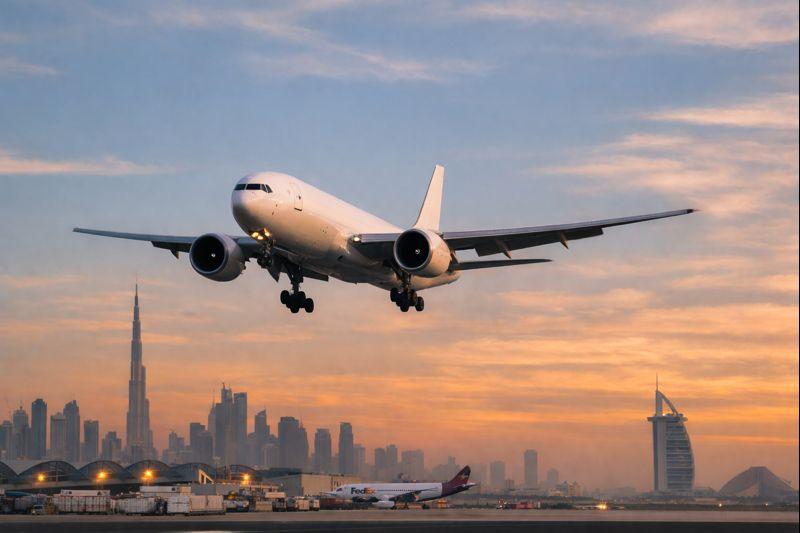
Air freight from Shanghai PVG to Dubai DWC varies by chargeable weight, service level, and airline capacity.
This updated 2026 guide covers air freight cost ranges, end-to-end transit time, compare direct flights and indirect routes, run the air freight process with milestone control, UAE customs clearance essentials.
2026 rate factors
Transit time range
Routes and destination airports
- Experienced China-based logistics specialists
Table of Contents
Choose air freight or ocean freight
Why ship by air
If you search why ship by air, the practical answer is risk control. Air transport reduces time in transit, lowers stockout risk, and improves milestone predictability. For high value cargo, faster movement can reduce inventory carrying costs and protect cash flow.
Air freight is commonly used when:
you need shorter lead times for replenishment
a delay triggers lost sales or downtime
customers demand tracking milestones, not vague ETAs
you need stable international shipping into the Middle East
This is one reason air freight from china keeps growing in popularity: it supports faster, more controlled supply chain decisions across international trade.
When ocean freight wins
Ocean freight is usually cheaper than air freight for bulky and heavy goods. Sea freight and ocean shipping are strong fits when delivery windows are flexible and cost per unit is the dominant factor. If you are close to a container load or full container load volume, ocean freight often delivers better unit economics.
A hybrid supply chain strategy
Many importers use ocean freight for baseline inventory and air freight for urgent top-ups. This hybrid approach stabilizes the supply chain: ocean shipping keeps average costs down, while air freight protects service levels when demand changes or disruptions occur.
Lane fundamentals: PVG, DWC, and what the destination airport changes
Shanghai PVG as a major hub origin
Shanghai Pudong International Airport is a major hub for air cargo exports from mainland china. A major hub matters because it improves routing flexibility when capacity is tight and offers stronger uplift options through a wider carrier network.
When researching PVG, you may see references such as five cargo terminals. The practical takeaway is execution: cargo terminal cut-offs, security screening queues, and build-up timing decide whether your shipment uplifts today or rolls to the next flight.
Dubai DWC as a cargo-oriented destination airport
Al Maktoum International Airport is designed for cargo-focused operations and logistics access. DWC is often chosen for logistics-zone deliveries, cargo-first handling flow, and smoother onward inland delivery planning.
DXB and AUH as realistic alternatives
Dubai International Airport may be selected when schedules and uplift availability are better in a given week. Abu Dhabi International Airport can also be used as an entry point, with onward trucking to Dubai. Your destination airport choice affects:
breakdown speed and destination handling flow
inland delivery distance and delivery vehicles scheduling
clearance workflow and local coordination
total door timeline for airport to door shipments
Air freight services: economical, standard, and urgent
Economical air freight
Economical air freight suits shipments with flexible delivery windows. It may use broader uplift windows and may rely on indirect routes when direct space is tight. This option can reduce freight rates when timing risk is acceptable.
Standard air freight
Standard air freight services are the baseline for most commercial cargo. You get stable milestones, consistent tracking, and a balanced cost structure. For most PVG to UAE shipments, standard service is the default choice.
Urgent air freight
Urgent air freight is built for time-critical or high value deliveries. It typically receives higher uplift priority and reduces the chance of rolling to later flights. It is commonly used for delicate and perishable goods, sensitive components, and replacement parts where downtime is expensive.
The simplest decision rule
Pick service level based on business consequences:
delay costs money now: choose urgent
delay is acceptable: choose economical
you want reliable baseline performance: choose standard
2026 pricing: freight rates, chargeable weight, and quote scope
What determines air freight costs
Air freight costs are driven by chargeable weight, cargo nature, service level, screening requirements, and capacity dynamics in the aviation industry. Pricing also varies based on whether cargo moves via cargo aircraft or passenger aircraft belly space.
Because air transportation buys speed and flexibility, it is typically more expensive than ocean freight. A smarter comparison is total cost considerations: delay risk, inventory cost, and customer impact.
Chargeable weight: the number that controls your invoice
Chargeable weight is the higher of gross weight and volumetric weight. This is why bulky cartons can be expensive even if the goods are light. Packing density is not a warehouse detail; it is a pricing lever.
Best practices that prevent quote changes after pickup:
confirm carton dimensions before booking
standardize carton sizes for repeat shipments
reduce empty space and unnecessary outer packaging
ask your freight forwarder to calculate chargeable weight in advance
avoid last-minute carton changes that force re-measurement
2026 planning bands for budget control
Use weight bands to compare offers consistently and explain why per-kg pricing improves with scale.
| Chargeable weight band | Typical 2026 price range (USD/kg) | Notes for budget control |
|---|---|---|
| 45–99 kg | $6.0–$10.0/kg | Usually slightly higher than the 100 kg band due to minimums and handling spread. |
| 100–299 kg | $5.2–$6.2/kg | Common “step-down start” band; carton density and stable dimensions matter most. |
| 300–499 kg | $4.8–$5.7/kg | Strong value zone; consolidation and early booking improve uplift options. |
| 500–999 kg | $3.7–$5.3/kg | More predictable per-kg performance; keep packing consistent to avoid re-measurement. |
| 1000 kg+ | $3.0–$5.1/kg | Best scale economics, but still seasonal; align booking window and routing stability |
Quote scope: what must be comparable
A high-quality quote is not only a number. It is a scope definition. Confirm whether pricing includes:
pickup or delivery to cargo terminals
export handling, screening, build-up
air waybill issuance
destination handling and breakdown
clearance support and documentation coordination
inland delivery for airport to door shipments
A cheap quote that excludes key steps can become expensive after arrival.
Quote comparison framework for PVG to DWC
Most shippers lose money not because the base rate is high, but because they compare quotes that include different steps. Use this framework to compare offers in a way that prevents hidden costs, protects transit time, and reduces disputes.
Step 1: Normalize the shipment input
Before comparing quotes, make sure every forwarder is pricing the same shipment. Confirm:
measured carton dimensions and chargeable weight basis
cargo type and any special cargo requirements
service tier: economical air freight, standard, or urgent
scope: airport to airport or airport to door
destination airport and delivery address if door service is needed
This is especially important for air freight from china because packaging and compliance differences across factories can cause unexpected cost swings.
Step 2: Break the quote into four buckets
Ask each freight forwarder to list charges in these buckets:
Origin costs: pickup or terminal delivery, cargo terminals handling, screening, build-up
Air linehaul: the air transport cost, including common surcharges if applicable
Destination costs: breakdown, handling, documentation processing
Delivery and clearance support: inland delivery, delivery vehicles, and support for import customs clearance
This helps you compare like-for-like and see whether a quote is complete.
Step 3: Five filter questions that reveal execution quality
What is the PVG cargo terminal cut-off plan, and what happens if we miss it?
Are you proposing direct flights or indirect routes, and where is the transfer point?
Which carrier network will you use, and do you have direct access to space?
How do you verify chargeable weight before pickup and avoid quote changes after acceptance?
What is your document review process before AWB issuance to reduce customs delays?
Step 4: Choose based on outcomes, not the cheapest headline
Score the offer on:
reliability: routing clarity, carrier access, cut-off plan, milestone updates
predictability: clear scope, defined charges, chargeable weight verification
speed: uplift probability, transfer risk, destination airport suitability
support: clearance readiness and exception handling
A slightly higher quote can be cheaper in total if it prevents delays, storage charges, and missed delivery windows.
What 2–10 days really includes
Transit time is end-to-end: cargo acceptance, screening, build-up, uplift, arrival breakdown, import customs clearance, and inland delivery. Flight time is only one segment.
What usually delays shipments
Most delays are repeatable and preventable:
missed cargo terminal cut-offs
additional security screening
indirect routes without a transfer plan
customs clearance issues caused by document mismatch
late trucking and inland delivery scheduling
How to protect a buyer-facing timeline
If timing matters:
book with buffer to reduce uplift risk
deliver cargo early to meet cut-offs
finalize documents before AWB issuance
confirm routing stability and contingency plan
pre-plan inland delivery capacity and receiving windows
Direct flights
Direct flights reduce handling touches and transfer risk. They typically provide cleaner milestone flow and are preferred for high value cargo and tight timelines.
Indirect routes
Indirect routes can perform well when controlled. A stable indirect plan clearly defines:
transfer point and number of handoffs
responsible qualified partner carriers
milestone update expectations
fallback plan if the connection fails
Destination airport selection table
Use this to match the destination airport to your delivery plan.
| Destination airport | Practical advantage | When to choose it |
|---|---|---|
| DWC | Cargo-oriented flow and logistics access | Logistics-zone deliveries, cargo-first planning |
| DXB | Dense schedules and network optionsDense schedules and network options | When uplift patterns favor DXB that week |
| AUH | Useful for some routings, then trucking | When capacity aligns better via AUH |
Air freight process: milestones that control outcomes
A reliable PVG to DWC shipment is fast because it follows a controlled milestone chain, not because the aircraft is fast. Track these milestones and you will reduce rollovers, protect transit time, and avoid customs clearance delays.
The 11 milestones to track
Booking confirmed — lock service level, routing, and destination airport.
Cargo delivered to cargo terminals — treat terminal cut-offs as the real deadline.
Security screening completed — prevent re-screening by declaring cargo accurately.
Build-up accepted — confirm chargeable weight matches measured cartons.
Air waybill issued — align AWB with invoice and packing list before release.
Uplift confirmed — avoid rollovers with early delivery and a fallback plan.
Goods arrive — arrival is not the finish, it’s the start of destination execution.
Breakdown completed — ensure local agent is ready to take over immediately.
Import customs clearance completed — correct HS code and consistent values prevent holds.
Inland delivery scheduled — book trucks early, confirm receiving window and rules.
Delivered (POD confirmed) — verify consignee contact and address to prevent failed delivery.
What usually breaks the timeline
Missed cut-offs at origin cargo terminals
Chargeable weight surprises caused by carton changes
Indirect routes without a clear transfer plan
Document mismatch between AWB, invoice, and packing list
Late inland delivery planning after customs release
Airport to airport vs airport to door
Airport to airport: consignee controls clearance and delivery; fast if experienced, risky if not.
Airport to door: forwarder coordinates clearance support and inland delivery, reducing handoffs.
Booking and execution playbook: how to run PVG to DWC like a repeatable system
A strong booking is not just choosing a flight. It is building a plan that survives screening queues, cargo terminal cut-offs, capacity changes, indirect routes, and customs questions.
Step 1: Pre-booking checks
Confirm measured dimensions, cargo nature, and scope. Measured dimensions protect chargeable weight. Clear cargo nature supports acceptance at cargo terminals, especially for special cargo. Defined scope prevents disputes between airport to airport and airport to door responsibilities.
Step 2: Lock routing logic
If you need reliability, request direct flights first, then accept indirect routes only with a written transfer plan and named qualified partner carriers.
Step 3: Treat terminal cut-offs as the real departure time
Your shipment must be accepted, screened, and built before the cut-off. One missed cut-off can add a full day or more.
Step 4: Make AWB accuracy your clearance insurance
Keep descriptions specific, totals consistent, and consignee details correct. This is often the fastest path to smoother customs clearance procedures.
Step 5: Plan inland delivery before landing
For airport to door shipments, schedule trucking and delivery vehicles based on expected arrival milestones, not after release.
Mainland China origin strategy: PVG alternatives when you need faster uplift
Even when your plan starts at Shanghai, the best execution mindset is flexibility. Air freight from china becomes more predictable when you can pivot to alternative origin airports during peak weeks, capacity shortages, or domestic trucking constraints.
When to consider alternative origin airports
Consider a switch when:
PVG cargo terminal cut-offs are missed repeatedly
screening queues push build-up past the uplift window
capacity for your service tier is consistently tight
the cargo is produced far from Shanghai and domestic trucking is slowing the plan
Practical alternatives across major airports
Guangzhou Baiyun International Airport can be useful for South China supply chains and can reduce domestic trucking if your factory base is in the Pearl River Delta.
Shenzhen Bao’an International Airport is often considered for electronics and time-sensitive commercial goods when South China manufacturing is the origin.
Hong Kong International Airport can offer strong international air cargo connectivity, and some shippers use it when they need broader network options or when uplift via Hong Kong aligns with their timeline.
Beijing Capital International Airport may be relevant for North China cargo or when you need to align with specific carrier schedules.
Hangzhou Xiaoshan International Airport can be a practical option when origin is near the Yangtze River Delta but PVG is congested.
Chengdu Shuangliu International Airport and Chengdu Tianfu International Airport can support western china exports and reduce time wasted on long domestic moves to coastal hubs.
These alternatives are not about chasing a “cheaper rate.” They are about protecting the end-to-end transit time by reducing domestic friction and improving uplift probability.
How to switch origin airports without losing control
If you need to pivot:
lock measured dimensions and shipment readiness first
keep documents consistent so import customs clearance stays routine
ask your forwarder for a clear uplift plan and fallback routing
confirm whether the destination airport remains DWC or shifts to DXB or AUH based on capacity
This origin flexibility often improves outcomes for air freight from shanghai pvg to dubai dwc because it keeps the plan resilient during capacity fluctuations in the aviation industry.
Core documents for customs clearance
commercial invoice
air waybill
Depending on the goods, you may need permits or licenses. Import declarations must be submitted upon arrival, and inspections may occur.
HS code accuracy matters
HS code drives duty and compliance logic. HS code mismatch is a common cause of customs questions and delays.
Best practices:
use specific product descriptions
keep quantities, weights, and totals consistent
declare values that are realistic and explainable
align invoice, packing list, and AWB data
Special cargo, aircraft type, and cargo insurance
Special cargo planning
Special cargo may require extra acceptance checks and screening. Batteries, liquids, controlled items, and sensitive goods must be declared correctly. Poor declaration can cause terminal rejection and missed uplift.
Cargo aircraft vs passenger aircraft
Cargo aircraft often supports heavier and oversized shipments and can provide better uplift resilience. Passenger aircraft belly space can be efficient for standard shipments when dimensions fit.
Cargo insurance
Cargo insurance is worth considering for high value shipments and fragile goods. Air shipping is fast, but handling risk still exists.
how to choose a partner who executes
Choosing a partner for PVG to DWC is not about the cheapest rate. It’s about execution: cut-offs, space access, document accuracy, customs clearance readiness, and inland delivery. Tonlexing is built around these controls, and you can use the same checklist to judge any forwarder.
What an executing forwarder does
A reliable freight forwarder will:
Confirm chargeable weight from measured cartons before booking
Plan pickup and terminal handover around PVG cargo terminal cut-offs
Offer a clear routing plan with direct flights first, then controlled indirect routes with a transfer point
Review invoice and packing list before the air waybill is issued
Pre-arrange destination handling and inland delivery for airport to door shipments
Share milestone updates beyond departed and arrived
Carrier vs forwarder: keep it simple
Carriers provide uplift capacity and fly the cargo.
Freight forwarders manage the shipment end-to-end, including export handling, air waybill, customs clearance support, and delivery coordination.
Most delays come from poor coordination, not from the aircraft.
Red flags to avoid
Quotes without a clear scope and included charges
No mention of cut-offs, screening, or cargo terminal timing
Air waybill issued before documents are checked
Indirect routes with no transfer plan
Delivery planned only after customs release
Pick the forwarder who can answer the six questions with specifics, not slogans. That is how you get stable air cargo services from Shanghai to Dubai with predictable transit time and fewer customs issues.
Frequently Asked Questions
Most end-to-end shipments fall in the 2–10 day range. The real transit time depends on PVG cut-offs, screening, direct flights versus indirect routes, customs clearance procedures, and how inland delivery is scheduled for airport to door shipments.
Chargeable weight is the biggest driver, followed by service tier, capacity availability, and cargo type. Packaging density can change the invoice more than rate negotiation. Destination airport charges and special cargo requirements also affect total cost considerations.
Choose the destination airport based on delivery flow, trucking distance, and schedule availability. DWC is cargo-oriented with strong logistics access. DXB may have more schedule options in certain weeks. AUH can be used with onward trucking when capacity aligns better.
Most shipments need a commercial invoice, packing list, and air waybill. Some goods require permits or licenses. Accurate HS code selection and consistent totals across documents reduce holds and inspections.
Verify chargeable weight before pickup, meet cargo terminal cut-offs early, finalize documents before AWB issuance, choose stable routing with a clear transfer plan if indirect routes are used, and schedule inland delivery before the cargo lands.
destination.
Related Guides
Get an Air Freight Quote
2026 rate ranges based on chargeable weight
End-to-end transit time with milestone tracking
Route options and UAE customs clearance support
Get clear routing, transparent costs, and fast execution for your PVG to DWC shipment.