Related Guide
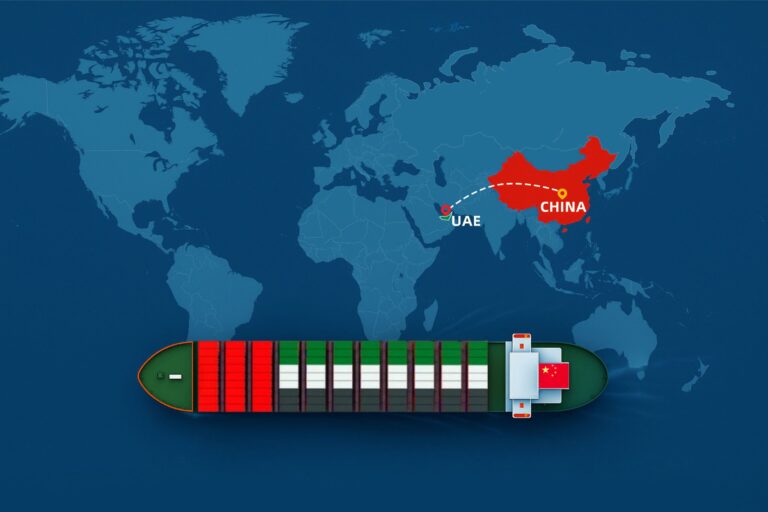
Shipping from China to UAE
Shipping from China to UAE is fast and cost effective with air freight and sea freight options. Explore shipping time, costs, and door to door se...
Read guide →

Shipping FCL vs LCL from China to the UAE varies depending on sea freight rates, transit times, and total shipping charges.
This updated 2026 guide explains FCL vs LCL Shipping to the UAE, covering major UAE ports such as Jebel Ali Port, Khalifa Port, and Sharjah, and detailing what is included in container shipping quotes, including ocean freight, port charges, and customs clearance.
FCL vs LCL basics
Cost & transit time
When to choose
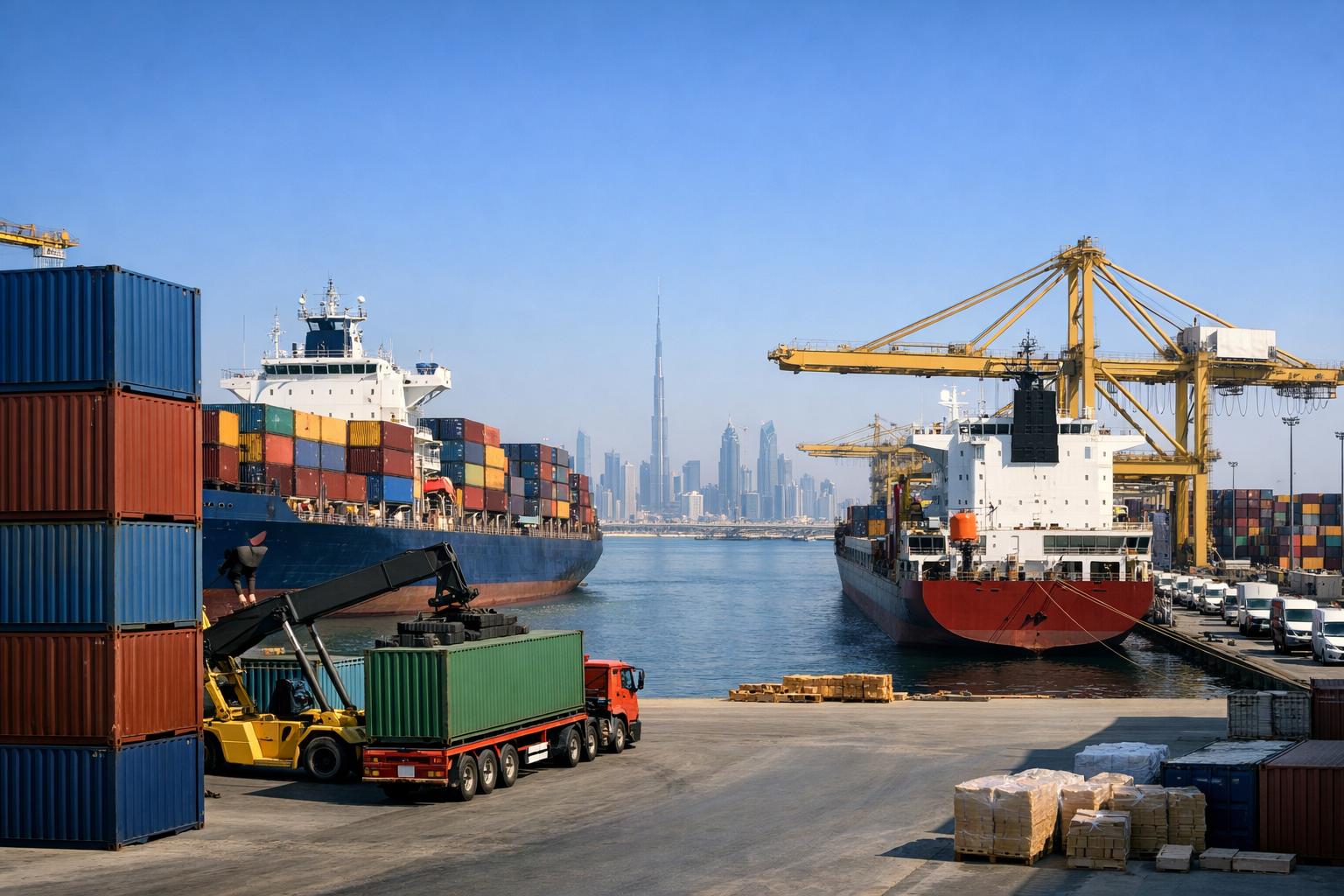
When you plan container shipping to the United Arab Emirates, one decision shapes almost everything else: FCL vs LCL shipping to the UAE.
The choice between a full container load and a less than container load affects your shipping cost, transit time, how much extra handling your cargo faces, and even how smoothly customs clearance goes at major UAE ports such as Jebel Ali Port and Khalifa Port.
Different container loads spread costs in different ways. FCL spreads the bill over one whole container, while LCL splits charges by cubic meter among multiple shippers.
FCL containers usually move point-to-point with fewer stops. LCL shipments depend on consolidation and deconsolidation, which adds time and variability.
This guide explains what FCL and LCL really mean in day-to-day ocean freight, the key differences, and how to choose the right shipping method for each shipment size and cargo volume.
In FCL shipping, one shipper uses one complete container. Your freight forwarder books a shipping container, and your cargo fills the whole container, or at least you pay for the entire container or whole container.
The FCL container is loaded at the factory or export warehouse, sealed, and moved as a single unit from origin to the destination port in the UAE. All the space inside the FCL container is for your company’s goods only. In other words, FCL means exclusive use of the container:
One shipper
One container
One seal
Because no other shipments enter the box, there is less handling of individual cartons. The container is lifted on and off trucks and vessels as one complete container, so there is less chance of cartons being mixed with other cargo or damaged during transfer. For high value goods and fragile products, this simple structure is a major advantage.
FCL is usually chosen for large shipments where the shipment volume or cargo size is close to, or completely fills, a full container. Once the cargo occupies enough container space, full container load shipping often brings better cost efficiency than paying per cubic meter in an LCL service.
LCL shipping is designed for smaller shipments. Instead of reserving a whole container, you book only the space your cargo occupies. The freight forwarder then combines your cartons with cargo from multiple shippers into one shared container.
With LCL shipments:
A shared container carries many individual shipments.
Each shipper pays only for the volume measured in cubic meter and, when relevant, weight.
The container load LCL is unpacked at a deconsolidation warehouse near the final destination in the UAE before last-mile delivery.
This model lets you ship smaller volumes without waiting until you have enough cargo to fill a whole container. It is popular with small businesses that need to move stock regularly but cannot always build large quantities for a single shipment.
The trade-off is that the cargo stays in shared space and receives extra handling when it is consolidated and separated from other shipments. Good packaging and clear labels are essential to protect the cargo during this process.
Although both options use sea freight, FCL and LCL behave very differently once your cargo starts moving. The simple table below shows the core differences for shipments to UAE ports such as Jebel Ali and Khalifa Port.
| Aspect | FCL (Full Container Load) | LCL (Less than Container Load) |
|---|---|---|
| Shipment size | Close to a full container, usually 15–18 CBM and above | Small or mixed shipments below full-container volume |
| Cost | Better unit cost when the container is mostly full | Lower total bill for small volumes, pay per CBM |
| Transit time | Faster and more predictable | Slower and more variable due to consolidation steps |
| Risk & handling | Less handling, lower damage risk | More handling, slightly higher risk if packing is weak |
For low shipment size, LCL usually has the lower upfront shipping cost because the shipper pays only for the space used. A few cubic meters in a shared container are cheaper than paying for one container that is mostly empty.
As cargo volume increases, the equation changes. Once the cargo fills enough of the container, the total cost of FCL shipping becomes more attractive. The per-unit cost drops because one container moves a much larger amount of cargo. For large volumes and big shipments, FCL is often the most cost effective way to save money on sea freight to the UAE.
On the main China → UAE routes (Shanghai, Ningbo, Shenzhen, Guangzhou to Jebel Ali / Khalifa Port), FCL is usually faster and more reliable. A full container goes almost point-to-point:
Typical FCL port-to-port transit time: about 15–25 days, depending on the Chinese departure port and service.
Very few extra steps, so once the container is on board, the arrival window is quite predictable.
LCL takes longer and is less predictable because of extra handling:
Your cargo must be consolidated in China and deconsolidated in the UAE, which often adds 5–10 days on top of the sailing time.
If one shipper’s cargo is late to the CFS, the whole LCL container can miss its planned vessel, so actual transit time can easily stretch beyond the estimate.
With FCL, the container is handled as a single unit from loading to final destination. There is less handling of individual cartons, which reduces the chance of carton damage or misplacement. Many importers choose FCL for electronics, machinery, and other high value goods for this reason.
With LCL, each carton is moved several times as it is loaded into and removed from the shared container. Extra handling increases the chance of surface damage if packaging is weak. For most general cargo this risk is acceptable, but it should be understood when selecting the shipping method.
Customs behaves very differently for FCL and LCL, even if both arrive at the same UAE port.
With FCL, one container equals one shipment for one importer. If customs at Jebel Ali, Khalifa or another UAE port selects that container for inspection, only your goods are held and checked. Once the inspection is finished, the box is released and can move on to delivery without involving anyone else.
With LCL, one container is shared by multiple shippers. If any one consignment inside that shared container has an issue – incorrect HS code, missing documents, restricted items, or valuation doubts – the whole container is held while customs inspects it. Your cartons can be delayed even when your paperwork is completely correct.
In practice, this means FCL offers more predictable customs clearance, while LCL carries a higher “shared” risk of delay at the port, which you need to factor into lead-time planning.
FCL is usually the right shipping method when:
Your cargo fills most of a full container or you regularly ship large quantities.
You want predictable transit time to UAE ports such as Jebel Ali Port, Khalifa Port, or Sharjah.
FCL is also ideal when:
The goods are sensitive, high value, or cannot mix safely with other cargo.
You need a simple flow from loading to final delivery without unnecessary stops or re-handling.
In these situations, paying for one FCL container gives you control. The container belongs to one shipper only and moves as a single block through the supply chain from origin to destination.
LCL shipping works best when:
You do not yet have enough cargo to justify a full container load FCL.
You prefer frequent shipments with smaller volumes to keep stock light and cash flow flexible.
LCL is also useful when:
You are testing new products in the UAE market and want to limit financial risk.
Your customers order in low volume and cannot wait until you build a whole container.
For these needs, LCL shipping allows you to respond quickly. You can move cargo as soon as you have a few pallets ready, instead of waiting weeks until the cargo fills a container. Many importers start with LCL, then move to FCL once regular orders create stable volumes and bigger shipments.

A good freight forwarder is crucial when comparing FCL and LCL. Ask your partner to quote both options for the same shipment so you can see the real difference in shipping rates, port fees, and local charges in the UAE.
For each shipment, review:
Shipment volume in cubic meters and weight
Space used in a standard container
Estimated transit time for FCL vs LCL
Also look at:
Handling steps before the container reaches the destination port
Impact on your shipping needs, supply chain, and customer delivery expectations
This side-by-side view helps you choose the right shipping method rather than always defaulting to one mode.
A new buyer approached Tonlexing to ship about 4 CBM of home décor from China to Dubai for an online store. The volume was far below a full container, and demand was still uncertain.
Tonlexing arranged LCL shipping: we consolidated the cartons in our China warehouse, loaded them into a shared container, and delivered to the client’s warehouse in Dubai. The customer paid only for a few CBM, kept the total shipping cost manageable, and was able to test the UAE market without committing to a full container.
Within a year, the same client’s orders grew to around 20 CBM per shipment. At this point, Tonlexing compared LCL vs FCL for them. The numbers showed that:
FCL had a lower cost per unit than LCL at this volume
FCL offered faster, more predictable transit time to Jebel Ali
A dedicated container reduced handling and improved cargo safety for their higher-value items
Based on this, Tonlexing switched the lane to full container load FCL, using a 20ft container for each shipment. The client now enjoys better margins, more reliable lead times, and a simpler logistics flow, while still using LCL for occasional small or urgent top-up orders.
Use this checklist before every shipment:
Volume: Is the shipment above or below 15–18 CBM?
Urgency: Do you need the most reliable transit time, or can you accept extra days?
Cargo type: Are you shipping fragile or high value goods, or robust general cargo?
Budget: Is lowest unit cost more important than lowest upfront invoice?
Frequency: Do you ship once in a while, or do you have recurring lanes and frequent orders?
If most answers point to large, urgent, sensitive, recurring, FCL is usually better. If they point to small, flexible, experimental, LCL is often the smarter choice.
FCL means full container load. One shipper uses one whole container, which stays sealed from loading to arrival at the UAE port. All the space is for your goods only, so handling is reduced and transit time is more predictable.
LCL is more cost effective when your shipment is small and far from filling a container. You pay by CBM in a shared container, so the total bill stays lower even if the per-unit cost is a bit higher than FCL.
As a simple rule, once your shipment regularly uses half to two-thirds of a 20ft container (around 12–18 CBM), you should compare FCL and LCL. If FCL gives a lower cost per unit and similar or better transit time, it’s time to switch.
Not 100%, but usually yes. FCL containers move more directly with fewer consolidation steps, while LCL needs extra time for stuffing and unstuffing, which often adds days and more chances for delay.
Yes, and many shippers do. They use FCL for their main, large shipments and LCL for small, new, or urgent orders, so they balance cost, speed, and flexibility across the whole UAE supply chain.
Useful freight, customs and importing resources related to this shipping guide.
Shipping from China to UAE is fast and cost effective with air freight and sea freight options. Explore shipping time, costs, and door to door se...
Read guide →
Shipping Costs from China to UAE (2026 Guide) Verified & Reviewed · Last updated June 2026 Shipping costs from China to UAE usually start from $3...
Read guide →
Sea Freight From China to UAE Verified & Reviewed · Last updated April 2026 Sea freight from China to UAE depends on shipping costs, transit time...
Read guide →
FCL Shipping from China: Full Container Load Guide for Importers Verified & Reviewed · Last updated May 2026 FCL shipping from China is a reliabl...
Read guide →Learn how LCL shipping and consolidated shipments help reduce shipping costs for smaller cargo from China.
Learn more → Useful Resource DDP Shipping from China to UAEDDP Shipping from China to UAE Verified & Reviewed · Last updated June 2026 DDP shipping from China to UAE is an all-inclusive door-to-door logis...
Learn more →WhatsApp us