

Consolidation vs Direct Shipping
- Verified & Reviewed · Last updated January 2026
Consolidation vs direct shipping affects shipping costs, delivery speed, handling risk, and how predictable your final delivery will be. The best choice depends on shipment size, urgency, product sensitivity, and how your supply chain is set up.
This 2026 guide explains freight consolidation, the consolidation process, and when direct shipping is the better option across air, ocean, and ground shipping methods. You will also get quick decision rules and checklists to choose the right mode for each shipment.
Consolidation vs Direct
Cost vs Transit Time
Risk & Handling Points
- Experienced China-based logistics specialists
Table of Contents
What freight consolidation means
Freight consolidation is the practice of combining multiple smaller shipments into one load so shippers share capacity. A freight forwarder or consolidator collects cargo from multiple shippers, brings it to consolidation centers, and builds a single movement such as one truck, one container load, or one air unit.
A consolidated shipment is created when those shipments are grouped by lane, destination, and delivery constraints. The goal is to reduce transportation costs and improve capacity utilization.
Freight consolidation works best when shipments move to established logistics hubs or distribution centers and when many shipments share the same destination region. It is also a common logistics strategy for smaller businesses that ship weekly. Smaller businesses often use it to access better pricing bands.
What direct shipping means
Direct shipping moves cargo as individual shipments without grouping it with other shippers’ freight in the main linehaul. You book dedicated space in a truck and secure truck capacity, or you book an aircraft slot or container, so the route is more straightforward and typically has fewer stops.
Direct shipping usually means:
Dedicated space rather than shared space
Fewer handling points in the shipping process
Cleaner shipment-level tracking and control
More reliable delivery timelines in time-sensitive situations
Direct shipping is often chosen for urgent shipments and urgent cargo, high-ticket products, and fragile goods where less handling is critical. It is also the typical choice for a single shipment tied to a hard deadline.
Consolidated shipping vs direct shipping at a glance
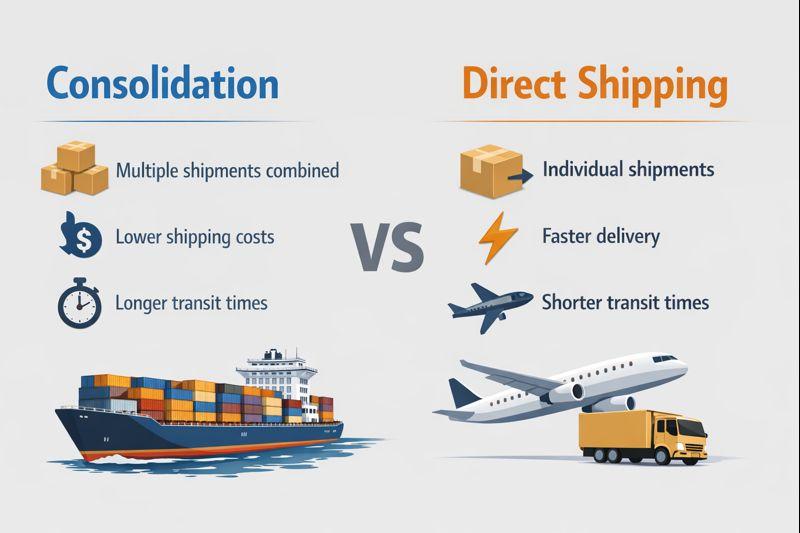
Here is the core trade-off: consolidated shipping is built for cost savings, while direct shipping is built for speed and control.
| Factor | Consolidated shipping | Direct shipping |
|---|---|---|
| Primary goal | Reduce costs through shared capacity | Quicker delivery and better control |
| Best for | Smaller shipments, recurring lanes, non-urgent | Time sensitive cargo, urgent shipments, high-ticket |
| Handling points | More sorting and transfer | Fewer touchpoints |
| Risk profile | Higher risk if packaging is weak | Lower risk due to less handling |
| Visibility | Coordinated network visibility | Direct, shipment-specific visibility |
| Price behavior | Lower costs for small volumes | Premium prices for dedicated service |
If your goal is saving money on smaller shipments, saving money starts with a repeatable cutoff calendar, and freight consolidation offers strong value. If the shipment must arrive on schedule, direct shipping often wins even if the rate looks higher.
The consolidation process step by step
A clear understanding of the consolidation workflow and the consolidation process helps you predict timelines and protect delivery timelines. If you manage multiple shipments each week, these details matter.
Step 1: Collection from multiple locations
Cargo is picked up from factories, suppliers, or warehouses across multiple locations. This is common when you have multiple shipments from different vendors.
Step 2: Receiving at consolidation centers
The consolidator receives cargo, checks labels, verifies carton counts, and records weights and dimensions. This is where many shipping method issues begin if suppliers provide inaccurate paperwork.
Step 3: Sorting and grouping shipments
Shipments are sorted by destination region, lane, and delivery requirements. The consolidator starts grouping shipments that share the same direction and timelines.
Step 4: Combining shipments into a single load
The consolidator builds pallets, ULDs, or a container load to maximize utilization. This is where freight consolidation works in practice and where consolidation savings are created.
Step 5: Main linehaul movement
The consolidated shipment moves as one load via ground, ocean, or air freight depending on the chosen shipping methods.
Step 6: Deconsolidation and final delivery
At destination, the consolidated shipment is broken into individual shipments for local delivery. This step can add time depending on appointment systems and warehouse release procedures.
Shipping costs: what you should compare
Many shippers compare only the freight rate. A better approach is total logistics cost, including internal time and risk.
What drives freight costs in consolidated shipping
Consolidated shipping tends to reduce linehaul costs but adds handling steps. Common cost items include:
Receiving and sorting fees at consolidation centers
Palletizing, labeling, and handling charges
Documentation coordination by forwarders
Deconsolidation and warehouse release fees
Local delivery scheduling fees
These costs are not always obvious in the quote. They are part of your total shipping expenses.
What drives freight costs in direct shipping
Direct shipping typically has a higher base rate because you pay for dedicated transport and dedicated space. You may also pay for priority capacity in air freight.
However, direct shipping often reduces exception handling and claim risk. That reduces internal transportation expenses, such as staff hours chasing updates, correcting documents, or handling damage cases.
Cost savings rule you can use
If the freight is small and recurring, freight consolidation usually provides significant cost savings.
If delay costs you revenue or penalties, direct shipping can reduce total cost even with premium prices.
Transit time: why consolidated shipments take longer
A common reality is that consolidated shipments take longer due to additional handling and sorting processes.
This extra time comes from:
Cutoff windows while the consolidator waits for other shipments
Sorting, scanning, and load building
Extra transfers between facilities
Deconsolidation steps before final delivery
In many lanes, this can add several days. Some consolidated shipments may take 3–7 days longer depending on how often the consolidator builds loads and how tight delivery timelines are.
Direct shipping is usually faster because it avoids the wait-to-build stage and often avoids intermediate stops, which supports faster delivery when urgency is high.
Risk: damage, theft, and fewer touchpoints
Handling is one of the biggest drivers in this decision.
Consolidated shipping risk profile
Freight consolidation introduces additional handling points. That can increase damage risk when packaging is weak or when cartons are mixed with heavier freight.
Risks to manage:
Compression damage from stacking
Carton deformation during sorting
Mislabels and split deliveries
Shortages during deconsolidation
Direct shipping risk profile
Direct shipping has fewer touchpoints. That usually means lower risk of theft or damage and a cleaner chain of custody. For fragile products, reduced handling is a real advantage.
Packaging standards that protect both methods
Proper packaging is not optional, especially for consolidated shipping:
Use strong cartons that resist compressiona
Palletize when possible
Wrap and strap pallets to prevent shifting
Apply clear carton count and SKU labels
Avoid mixed loose cartons for sensitive goods
Packaging is also critical in air freight because chargeable weight and stacking conditions can impact cost and damage risk.
Air freight is where the trade-off becomes most visible because schedules are strict and capacity is tight. If you ship hazardous materials, confirm acceptance rules before you choose a program.
Consolidated air freight
Consolidated air freight combines multiple shippers’ cargo into a single build. Many forwarders market this as air programs that bundle volume into planned departures.
Consolidated air freight is typically used when:
The shipment is not extremely urgent
You ship regularly and want reliable service
Your cargo fits standard handling rules
The forwarder has stable airline allocation
It can deliver cost savings when the cargo is small because capacity is shared across multiple parties.
Direct air freight
Direct air freight is ideal for urgent cargo, valuable cargo, and security-sensitive products. Direct air freight tends to provide better control over booking and routing, faster delivery compared to consolidated air freight, and cleaner shipment-level milestones.
Use direct air freight when:
You need faster delivery and tighter control
You need enhanced security for valuable goods
You want fewer touchpoints and less handling risk
Direct air freight is more expensive because you are paying for dedicated transport, but it is often the safest option when delays are costly. Direct air freight is also preferred when you need enhanced security and reliable service.
The same decision logic applies beyond air freight.
LTL shipping and domestic shipping
In domestic shipping, ltl shipping is a common consolidation model. Freight is grouped at terminals and moved in shared linehaul. It is cost-effective for smaller shipments but adds handling.
LCL shipments and international shipping
In international shipping, lcl shipments are the typical form of freight consolidation. Your cargo shares a container load with other shipments, which can reduce costs for small volumes.
Full container load as direct shipping
A full container load is the classic direct shipping model in ocean freight. If you can fill most of a container, direct shipping often becomes simpler, faster, and safer than LCL. If you have enough cargo for an entire container, direct shipping can reduce handling and improve schedule control.
Destination factors and environmental impact
Destination considerations matter because the last mile can create the biggest delays. A consolidated shipment may require a warehouse release step before trucking, while direct shipping can move to delivery with fewer parties involved.
Freight consolidation can also reduce environmental impact by using fewer trucks on the road. Better consolidation lowers fuel consumption per unit and helps logistics companies run cleaner networks in the logistics industry.

Best-fit scenarios: which option to choose
Below are the most common scenarios and the shipping method that typically fits best.
Multiple smaller shipments going to the same region
Choose freight consolidation when you have multiple shipments that are small and recurring. Freight consolidation is also a strong choice for steady weekly replenishment. Freight consolidation offers cost savings because you share capacity and cut costs on lanes that repeat.
This is common for smaller businesses and medium sized businesses that source from many suppliers. It also supports supply chain planning because weekly cutoffs are easier to forecast.
One time-sensitive shipment with strict delivery timelines
Choose direct shipping for time sensitive cargo and urgent cargo. Direct shipping offers quicker delivery and better control over scheduling and routing.
High-ticket or fragile goods
Direct shipping is usually better for high-ticket and fragile goods because less handling lowers risk. Fewer touchpoints can significantly minimize the risk of theft or damage, and enhanced security is easier to manage.
Routine replenishment where cost is the priority
Consolidated shipping is ideal for non-urgent and recurring shipments where cost is the primary concern. It allows businesses to ship smaller quantities more frequently without waiting to fill a full truck, improving supply chain rhythm.
Vendor shipments to retailers or distribution centers
When multiple suppliers ship into one retailer hub, consolidators can combine goods into a single pre-appointed delivery. This simplifies receiving at the destination side and supports supply chain stability.a
Decision checklist you can use in 90 seconds
Use this checklist to make consistent shipping decisions across your business operations and to protect delivery schedules.
Choose consolidated shipping if:
You ship smaller shipments that do not fill a truck or container
You have multiple smaller shipments moving to the same destination region
You want cost savings and lower shipping expenses
Delivery speed is secondary to budget control
Your lane runs through established consolidation centers
You ship regularly and can follow weekly cutoffs
Choose direct shipping if:
The cargo is time sensitive and delivery timelines are strict
You need faster delivery and fewer delays
The cargo is valuable or fragile
You want fewer touchpoints and less handling risk
You need better control over routing and scheduling
The volume justifies dedicated space or dedicated service
Frequently Asked Questions
Consolidated shipping is usually more cost-effective for smaller shipments that do not fill an entire truck or container. Shared expenses can lower the linehaul portion of the quote. But always compare total costs including handling and destination release fees.
Savings vary by lane, volume, and how efficiently the consolidation process is managed. Many shippers see meaningful cost savings when they ship regularly and when consolidation centers run stable schedules.
Direct shipping typically offers quicker delivery because it avoids grouping and sorting stages. However, capacity constraints can still affect shipping time, especially in peak season.
For routine air freight, consolidated air freight can be cost-effective. For urgent cargo or high-ticket items, direct air freight is usually the better choice due to better scheduling control, enhanced security, and reduced handling.
Freight forwarders design the shipping process, manage consolidation centers, coordinate documentation, and manage exceptions. Strong freight forwarders can make consolidated services reliable. Many freight forwarders also offer consolidated services with fixed weekly cutoffs, and can secure dedicated capacity for direct air freight during peak periods.
Related Shipping Guides
Get Help Choosing Consolidation vs Direct Shipping
Compare total shipping costs, not just the base rate
Match transit time to your delivery timelines and risk level
Get a clear recommendation for air, ocean, or truck shipping methods
Share your cargo details and destination, and we’ll suggest the best shipping option for cost, speed, and handling risk.