

Demurrage vs Detention vs Storage
- Verified & Reviewed · Last updated January 2026
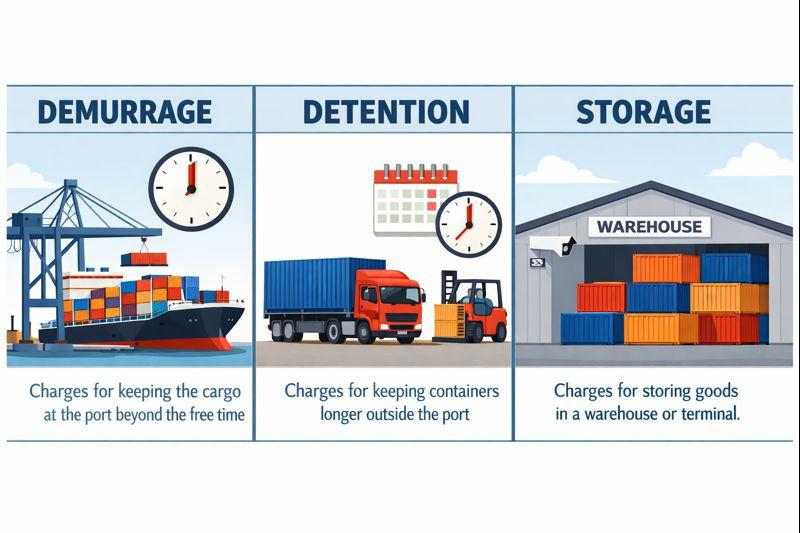
Demurrage vs detention vs storage is one of the most expensive misunderstandings in container shipping. These fees can escalate fast when a container arrives and delays affect release, pickup, or empty return. The key is understanding who charges you, where the container is, and which free time clock is counting down.
This 2026 guide explains demurrage charges, detention charges, and storage charges in a clear side-by-side breakdown. You’ll learn how free days and the terminal free period work, why customs clearance and port congestion trigger demurrage and detention charges, and the practical steps to avoid demurrage fees and avoid detention fees through better documentation, milestone tracking, and last-mile planning.
Fee comparison / Who charges what
Free time rules
Avoid extra fees
- Experienced China-based logistics specialists
Table of Contents
Quick Comparison Table: Demurrage, Detention, and Storage
| Fee Type | Charged By | Where the Container Is | What Triggers It | What You’re Paying For |
|---|---|---|---|---|
| Storage charges | Port / terminal | Inside port yards or container yard | Container or cargo stays past the terminal free period | Space usage in the terminal |
| Demurrage charges | Shipping line / carrier | Inside the container terminal | Full container not picked up within free time or demurrage free days | Carrier equipment usage inside the terminal |
| Detention charges | Shipping line / carrier | Outside port during inland transport | Container not returned within detention free days | Carrier equipment usage outside the port |
A shipment can face two fees at once when the container stays inside the terminal too long: storage charges billed by the port terminal and demurrage charges billed by the shipping line.
Storage Charges at the Port Terminal
Storage charges are billed by the port terminal or port operator, not the carrier. These storage fees cover the physical space your container or cargo occupies on terminal ground, in a warehouse, or in the container yard.
Storage is common when:
customs clearance delays release after cargo arrives
congestion reduces appointment availability for moving containers
the consignee cannot confirm pickup time and the container stays on terminal ground
documentation is incomplete and cargo cannot be released
Storage is a space charge. It can apply even when the carrier is not billing demurrage.
Demurrage Charges: Full Container Time Inside the Container Terminal
Demurrage charges are billed by the shipping line or ocean carriers when a full container stays inside the container terminal beyond allowed free time. You will see it as demurrage charges or demurrage fees on a carrier invoice.
Demurrage increases when:
the consignee cannot pick up the container quickly
the release process is delayed after the arrival notice
holds occur during customs clearance
the port terminal is congested and truck appointments are limited
Demurrage is tied to the time the container stays inside the terminal while using carrier equipment.
Detention Charges: Equipment Time Outside the Port
Detention charges are billed by the carrier or shipping line after the container leaves the terminal. Detention is meant to keep equipment circulating for shipping containers to support booking shipments and reduce delays in global shipping.
Detention often applies when:
unloading takes longer than planned
the trucking company cannot secure a return slot
the empty container cannot be returned to the required nominated empty depot
the consignee does not manage empty returns within detention free days
Detention is frequently tied to late empty returns, but it is fundamentally about equipment time outside the port.
Demurrage and Detention: Why One Delay Can Create Two Fees
Many importers assume demurrage and detention are the same charge, but they are not:
Demurrage applies when the full container stays inside the terminal
Detention applies when the equipment stays outside the terminal too long
If the consignee picks up late and also returns the empty late, the shipment can be billed for demurrage and detention, or shown as detention and demurrage fees. This is why teams track the full flow from availability to empty return as one continuous risk window, especially for shipments arriving during congestion.
Free Time, Free Days, and Extended Free Time
Free time is the allowance before charges begin. Managing free time allowed is the single fastest way to reduce demurrage detention and storage fees.
You will usually see three allowances:
Storage free period from the port terminal
Demurrage free days from the shipping line
Detention free days from the carrier
Free days differ by port, trade lane, and equipment type. When risk is predictable, you can request extended free time in advance. Extended free time is often useful when port congestion, long inland distance, or warehouse scheduling makes a tight time frame unrealistic.
Customs Clearance: The Most Common Trigger for Extra Charges
Delays in customs clearance often cause the highest surprise time burns and charges begincosts because the container cannot move even when trucking is ready. When the container is on hold, free.
Common causes:
missing or inconsistent relevant documents
errors across invoice and packing lists
unclear consignee details or contact points
late filing that prevents release after vessel arrival
When customs delays occur, a container can face demurrage and storage at the same time, because it remains in the port terminal while time continues.
How to Avoid Demurrage Charges and Avoid Detention Fees
To reduce risk across the supply chain, treat the shipment as a timeline, not just a cost line.
Prepare relevant documents in advance
To avoid demurrage charges, ensure your relevant documents are aligned before arrival:
product descriptions match across files
values and quantities are consistent across invoice and packing lists
consignee and notify details are correct for release and delivery
Use milestone alerts for the critical time frame
To control the time frame, track:
vessel arrival, container availability, and arrival notice timing
last free day for demurrage and last free day for detention
pickup appointment confirmation and gate-out time
empty return appointment and depot confirmation
Using automated alerts or dashboards to track container milestones can minimize delays and reduce demurrage and detention charges.
Choose a reliable trucking company and return plan
To avoid detention fees, confirm:
last-mile delivery window and unloading readiness
depot location and the nominated empty depot rules
return cutoff times and weekend limitations
A reliable trucking company often reduces detention risk more than any tariff negotiation.
Consider extended free time when risk is clear
If port congestion, customs exams, or warehouse delays are likely, request extended free time before free days expire. This is one of the simplest ways to avoid demurrage fees and prevent detention from starting with a shortened window.
Work with an experienced freight forwarder
A strong freight forwarder helps coordinate customs clearance, appointment booking, and exception handling across carriers, terminals, and inland transport partners. This coordination reduces hidden costs and helps prevent avoidable disputes about detention and demurrage fees.
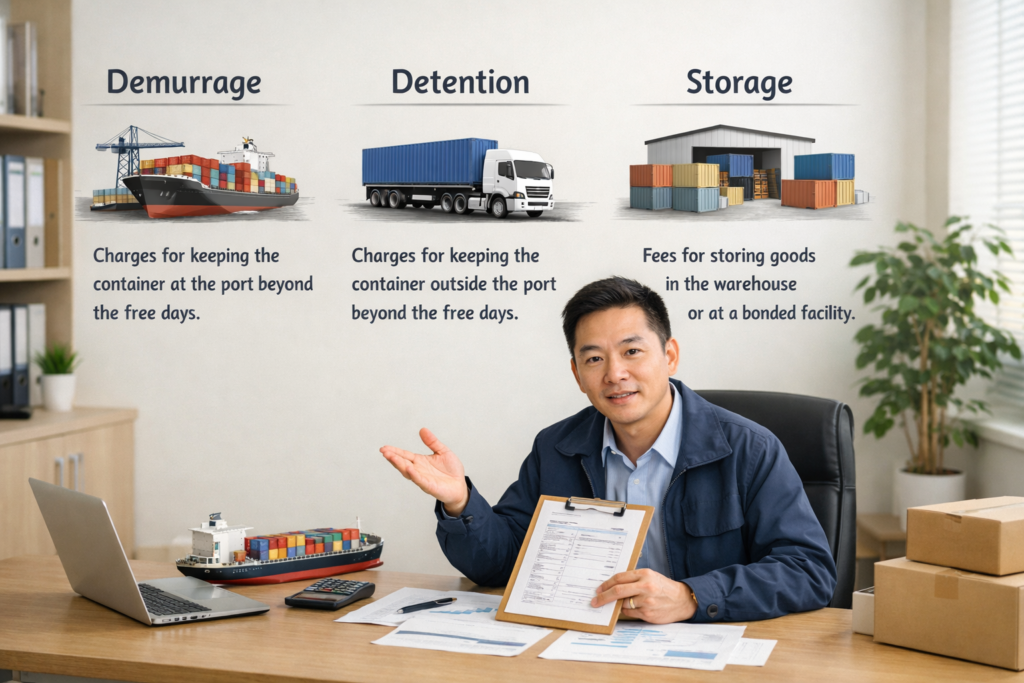
Example Timeline: How a Container Gets Charged
Here is a practical example that shows how one shipment can create multiple fees:
Day 0 — Vessel arrives / container becomes available
The container is released in the terminal. The free-time clock starts.Day 1–3 — Customs clearance is delayed
The container can’t move and remains inside the terminal. You’re burning free days.Free time ends — Terminal storage starts
The port terminal begins charging storage once the free period is over.Demurrage free days end — Demurrage starts
If the container is still sitting in the terminal, the ocean carrier/shipping line starts charging demurrage after demurrage free days expire.A truck is finally secured — Container is picked up
The box leaves the terminal. Demurrage typically stops, but the next countdown begins.Detention clock starts — Empty return countdown
Once the container is out-gated, you enter detention free days to unload and return the empty.Detention free days end — Detention starts
If unloading runs late and the empty isn’t returned in time, the ocean carrier/shipping line charges detention until the empty is returned.
This flow shows how demurrage detention and storage can stack when timelines are not controlled.
Frequently Asked Questions
Storage is a port space charge billed by the port terminal. Demurrage is a carrier charge for a full container staying inside the terminal beyond free time. Detention is a carrier charge for equipment held outside the port beyond detention free days.
Yes. A container can incur both demurrage and storage charges at the same time if it sits in the port terminal too long, because terminals charge for space while carriers charge for equipment usage.
Detention applies after the container leaves the terminal. It ends when the empty container is returned to the carrier’s nominated empty depot within the allowed detention free days.
Carriers define demurrage free days and detention free days separately. Terminals define a storage free period separately. Track each clock as a different deadline inside the same shipment time frame.
Prepare documents in advance, track milestones with alerts, book pickup early, use a reliable trucking company, confirm depot return rules, and request extended free time when delays are likely. These steps reduce demurrage and detention charges across most ports.
Related Customs & Container Fee Guides
Get a Demurrage & Detention Prevention Checklist
Track free time, last free day, and key milestones
Reduce customs clearance delays with document consistency
Speed up pickup and empty return with a clear return plan
Get a practical checklist and timeline to avoid storage, demurrage, and detention fees.