Related Guide
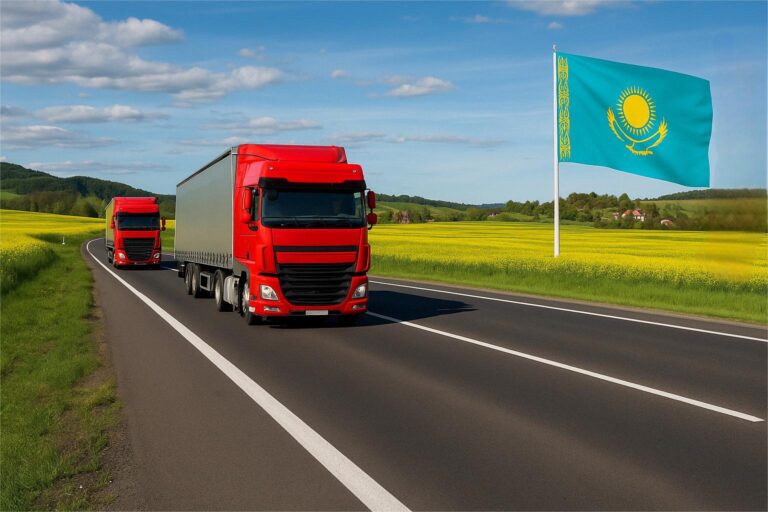
Road Freight from China to Kazakhstan
As Central Asia rises in strategic importance, road freight from China to Kazakhstan has become one of the most efficient and flexible logistics...
Read guide →

FTL road freight from China provides dedicated truck space, while LTL combines smaller shipments in shared trucks. The best choice depends on cargo volume, shipping costs, transit time, and delivery requirements.
Compare FTL vs LTL freight costs, transit times, cross-border routes, customs clearance, and cargo handling to choose the right trucking solution from China.
FTL vs LTL Costs
Freight Routes
Customs & TIR
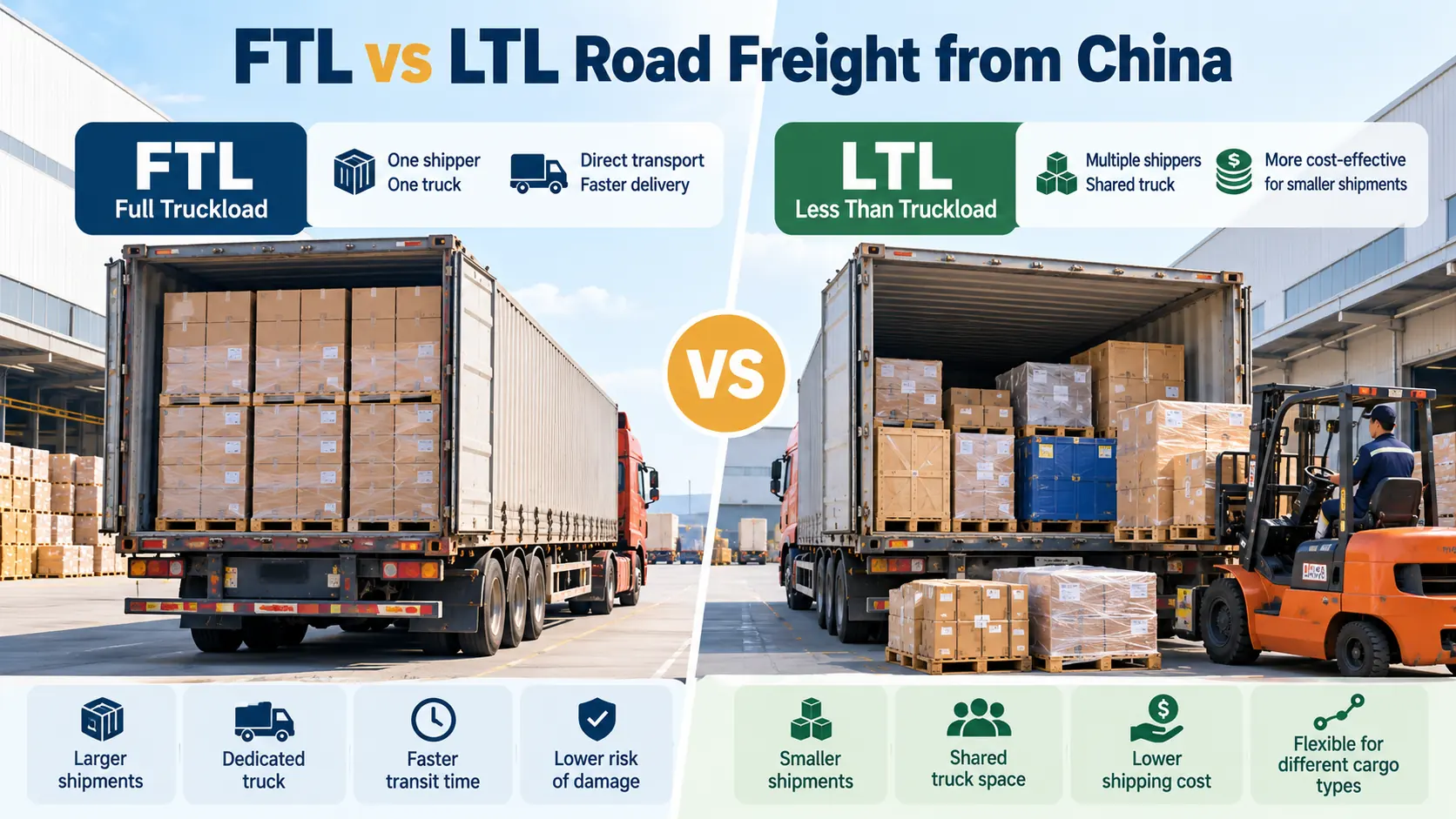
The main difference between FTL and LTL shipping is how truck capacity is allocated.
FTL (Full Truckload) provides a dedicated truck or trailer for one shipment or shipper. The cargo does not necessarily need to fill the entire vehicle, making FTL suitable for large shipments, fragile goods, or deliveries requiring greater scheduling control.
LTL (Less Than Truckload) allows multiple shippers to share the same truck. Each customer pays for the capacity allocated to their shipment, making it a practical choice for smaller commercial cargo.
| Comparison | FTL (Full Truckload) | LTL (Less Than Truckload) |
|---|---|---|
| Truck space | Dedicated truck or trailer | Shared with other shipments |
| Best suited for | Large, urgent, or sensitive shipments | Smaller commercial shipments |
| Freight pricing | Usually quoted per truck and route | Based on weight, CBM, or pallet space |
| Transit & delivery | More direct with flexible scheduling | Depends on consolidation schedules |
| Handling & risk | Generally fewer cargo transfers | More handling and potential damage exposure |
| Cost efficiency | Better for larger shipments | Better for smaller shipments |
Neither option is automatically cheaper or faster in every situation.
LTL can offer better value for smaller shipments, while FTL may become more economical as cargo volume increases. Importers should compare total shipping costs, delivery requirements, and cargo handling risks rather than relying only on pallet count.
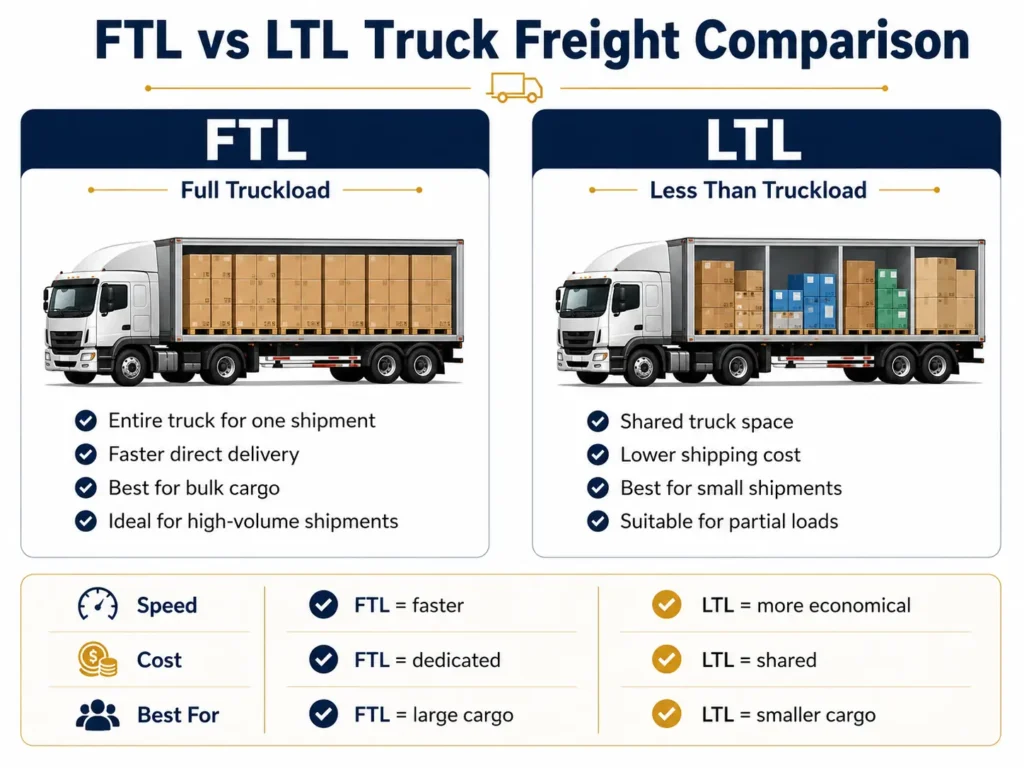
FTL and LTL road freight from China have different pricing structures. FTL is usually charged per dedicated truck, while LTL is priced based on cargo weight, volume (CBM), or occupied truck space.
LTL is generally cheaper for small shipments, but FTL can become more cost-effective as cargo volume increases.
| Cost Factor | FTL (Full Truckload) | LTL (Less Than Truckload) |
|---|---|---|
| Pricing basis | Fixed truck rate for an agreed route | Weight, CBM, or pallet space |
| Cost efficiency | Lower unit cost for large loads | Lower total cost for small loads |
| Handling charges | Usually fewer consolidation fees | May include warehouse and transfer fees |
| Additional costs | Fuel, waiting time, and border charges | Consolidation, customs handling, and delivery charges |
Road freight costs from China vary by destination, cargo volume, truck type, and border conditions. FTL is generally priced per truck, while LTL is charged by CBM, weight, or occupied truck space.
The following indicative FTL rates provide a general reference for major cross-border routes:
| Route | Estimated FTL Cost | LTL Reference |
|---|---|---|
| Khorgos to Shymkent, Kazakhstan | Around $2,100/truck | Quote required |
| Xinjiang to Tajikistan | $1,500–$3,200/truck | $150–$350/CBM |
| China to Turkmenistan | $4,000–$14,000/truck | Quote required |
| China to Vietnam | $1,500–$3,500+/truck | $1.10–$3.00/kg |
Updated 2026. These are published indicative rates for different routes and service scopes, not confirmed carrier quotations or directly comparable door-to-door prices.
For Russia and Europe, FTL and LTL quotations should be calculated individually because route distance, transit restrictions, and delivery requirements vary considerably.
The cost break-even point occurs when the total LTL shipping cost approaches or exceeds the price of a dedicated truck.
Three factors matter most:
Cargo volume: Larger shipments occupying more truck space may favor FTL
Weight and dimensions: Heavy, oversized, or non-stackable goods may require dedicated capacity
Additional charges: Consolidation, terminal handling, and transfers can increase LTL costs
There is no fixed pallet count or weight threshold that applies to every route. Importers should compare complete quotations, including pickup, customs services, handling, and final delivery.
Not sure which option is cheaper? Tonlexing can compare FTL and LTL road freight costs based on your cargo weight, CBM, pallet count, and destination.
China’s international road freight network connects major manufacturing centers with Central Asia, Russia, Europe, and Southeast Asia. Both FTL and LTL trucking services may be available, depending on border crossings, consolidation capacity, and carrier arrangements.
The main transportation corridors include the following destinations.
Kazakhstan: Road freight commonly uses Khorgos and other China–Kazakhstan border gateways, supporting delivery to Almaty, Astana, and other commercial centers. Explore road freight from China to Kazakhstan.
Uzbekistan: Shipments commonly travel through Kazakhstan or, on suitable routes, Kyrgyzstan. Larger shipments can also be compared with rail freight from China to Uzbekistan.
Tajikistan: The direct corridor runs through Kashgar and the Karasu–Kulma border crossing, with delivery to destinations such as Dushanbe. Learn more about road freight from China to Tajikistan.
Turkmenistan: A major TIR trucking corridor passes through Khorgos, Kazakhstan, and Uzbekistan before entering Turkmenistan. See road freight from China to Turkmenistan.
Russia: Dedicated and consolidated trucking services connect China with selected Russian commercial destinations through suitable border and transit corridors. Explore road freight from China to Russia.
Europe: International road transportation can serve selected European destinations through Eurasian corridors. Importers should compare trucking with alternative options for shipping from China to Europe.
Vietnam is an important cross-border road freight destination, particularly for shipments from southern China. Trucking services connect Chinese manufacturing areas with Vietnamese commercial destinations such as Hanoi and Ho Chi Minh City.
Both dedicated and consolidated options are covered in road freight from China to Vietnam.
FTL generally offers greater departure flexibility, while LTL depends more on consolidation schedules and shared vehicle availability. Actual border routes, transit permissions, and delivery times should always be confirmed before booking.
Customs clearance is an important consideration when choosing between FTL and LTL road freight from China. Both services require export, transit, and import procedures, but LTL shipments may involve more complex customs coordination because goods from multiple shippers share the same truck.
| Customs Factor | FTL (Full Truckload) | LTL (Less Than Truckload) |
|---|---|---|
| Customs declarations | Usually easier to coordinate for a single shipment | Each consignment requires appropriate documentation |
| Inspection impact | Mainly affects the dedicated shipment | Inspection of one consignment may delay other cargo |
| Clearance coordination | More direct cargo and document coordination | May require additional sorting and document checks |
The TIR (Transports Internationaux Routiers) system facilitates customs transit across participating countries through internationally recognized procedures and customs guarantees.
Both FTL and eligible LTL shipments can use TIR arrangements, depending on the carrier, route, and customs requirements. However, TIR does not eliminate import clearance, inspections, or applicable duties and taxes.
To reduce border delays, importers should prepare accurate commercial invoices, packing lists, HS codes, and transport documents before departure.
Tonlexing can help coordinate the customs clearance process for international road freight from China.
The best freight mode depends on cargo volume, delivery requirements, budget, and risk tolerance.
Instead of applying a fixed pallet threshold, importers should evaluate how much vehicle capacity the shipment requires and what level of handling or schedule flexibility is acceptable.
FTL (Full Truckload) is generally the better choice when cargo occupies a substantial portion of a truck or requires dedicated transportation. It provides greater control over pickup, loading, and delivery while reducing the need for cargo consolidation.
Consider FTL shipping when:
Large cargo volume: Your shipment requires most of the available truck space
Urgent delivery: You need a more direct route with fewer planned stops
High-value goods: Machinery, electronics, or fragile products require limited handling
Special loading requirements: Cargo is oversized, non-stackable, or difficult to consolidate
Strict delivery schedules: Your shipment must arrive within a specific delivery window
For example, a manufacturer shipping a large batch of industrial machinery from China to Kazakhstan may benefit from dedicated truck transport, especially when the equipment requires special loading arrangements.
Although FTL usually has a higher total booking cost, it can become more economical per unit as shipment volume increases.
LTL (Less Than Truckload) is suitable for shipments that do not require an entire truck. Multiple shippers share vehicle capacity, allowing each customer to pay for the space or chargeable freight allocated to their goods.
LTL freight is worth considering when:
Smaller shipment volume: You are transporting a few pallets or a partial truckload
Limited shipping budget: Dedicated truck capacity would be unnecessarily expensive
Flexible delivery schedule: You can accommodate consolidation and possible terminal handling
Regular inventory replenishment: You ship smaller commercial orders frequently
Compatible cargo: Goods can be safely packed and transported alongside other shipments
LTL is particularly useful for small and medium-sized importers shipping commercial goods from China to Russia and Central Asian destinations.
However, shared transportation may involve additional warehouse handling and longer consolidation times. Proper packaging is essential, particularly for fragile or irregularly shaped cargo.
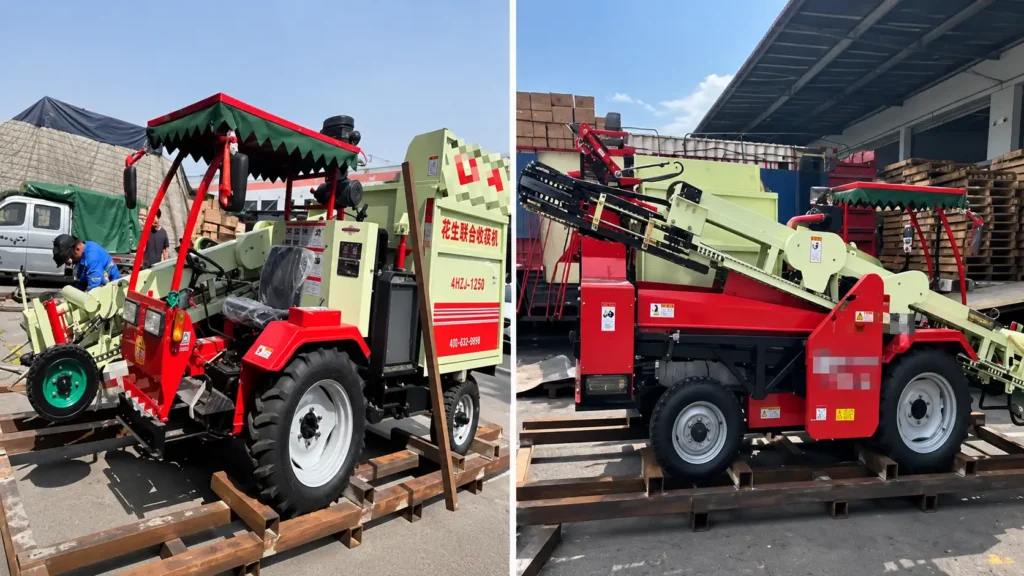
Tonlexing arranged a consolidated road freight shipment for a peanut harvester from Zhejiang, China, to Russia. The project demonstrates how shared truck transport can accommodate individual machinery shipments without booking an entire truck.
Shipment details:
Product: Peanut harvester
Origin: Zhejiang, China
Destination: Russia
Transport: Shared truck transport (LCL, as described in the original case)
Packaging: Customized wooden crate
Service: Door-to-door transportation with customs clearance
The machinery was collected from the customer’s location in Zhejiang and transported to a warehouse for protective wooden crate packaging. It was then loaded as part of a consolidated truck shipment to Russia.
Tonlexing coordinated export customs clearance in China, import customs clearance in Russia, and final delivery to the consignee.
By sharing transportation capacity with other shipments, the customer avoided the need to reserve a dedicated truck. The customized packaging also helped protect the machinery during handling and long-distance transportation.
This case illustrates the practical benefits of consolidated road freight for shipments that do not require full truck capacity.
Read the full case: LCL Truck Transport from Zhejiang to Russia
The cheapest quoted transport service does not always provide the lowest overall shipping cost.
Delays, damaged goods, unnecessary handling, and unexpected destination charges can all affect the final cost of importing from China.
A few practical adjustments can improve freight efficiency without compromising cargo protection.
Optimize pallet dimensions. Avoid oversized pallets and excessive empty space
Consolidate compatible shipments. Combine supplier orders where commercially practical
Compare complete quotations. Include handling, customs services, and delivery charges
Plan pickup dates early. Reduce last-minute capacity problems and avoidable storage
Review the shipment size. Recalculate FTL and LTL options when order quantities increase
For regular importers, shipment planning should be reviewed periodically rather than assuming the same freight mode will always be the cheapest.
FTL generally involves less handling than conventional consolidated transport, but neither service is risk-free.
Strong packaging and complete documentation remain important for both.
For LTL freight, use pallets or export packaging appropriate for warehouse handling and repeated loading operations.
For FTL freight, confirm load securing, weight distribution, and any special vehicle requirements before departure.
Additional precautions include:
Photographing cargo and packaging before pickup
Using clear shipping marks and pallet identification
Verifying cargo dimensions and gross weight
Confirming customs documents before dispatch
Reviewing cargo insurance coverage and exclusions
Allowing reasonable time for border-related uncertainty
Insurance should be considered separately from carrier liability. A dedicated truck does not automatically provide full protection against cargo loss or damage.
Working with a suitable freight forwarder can also help importers coordinate carriers, customs documentation, and shipment visibility across different transportation stages.
FTL uses dedicated truck capacity for one shipment or shipper. LTL allows multiple shippers to share truck space and transportation costs.
FTL can be more economical for large shipments. LTL is often cheaper for smaller consignments. The actual break-even point depends on the route, cargo size, and quotation details.
There is no universal limit. Some LTL services focus on a few pallets, while others accept larger partial loads. The carrier’s capacity and pricing rules determine what is practical.
FTL is often faster because it can depart without waiting for consolidation and usually involves fewer planned stops. However, border delays and route conditions can affect both services.
Yes, eligible consolidated road freight can use TIR arrangements where supported by the operator, customs procedures, and route. Each shipment must still meet applicable documentation and clearance requirements.
Useful freight, customs and importing resources related to this shipping guide.
As Central Asia rises in strategic importance, road freight from China to Kazakhstan has become one of the most efficient and flexible logistics...
Read guide →
If you’re shipping goods from China to Russia, you’ve probably noticed that road freight is becoming one of the top logistics choices in 2025. It...
Read guide →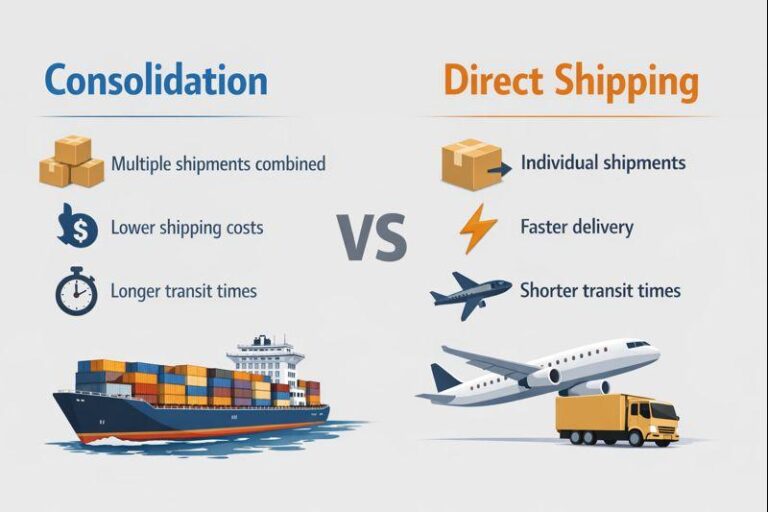
Consolidation vs Direct Shipping Verified & Reviewed · Last updated January 2026 Consolidation vs direct shipping affects shipping costs, deliver...
Read guide →
Warehouse Consolidation in China — Faster, Smarter Global Shipping A consolidation warehouse combines cargo from multiple suppliers into one ship...
Read guide →Key Shipment Details Transportation Mode: Truck Freight (Less than Container Load – LCL) Origin: Guangzhou, China Destination: Minsk, Belarus Car...
Learn more → Useful Resource Cheapest Way to Ship Heavy Cargo from ChinaFind the cheapest shipping methods for heavy cargo, bulk shipments, and oversized items from China.
Learn more →WhatsApp us