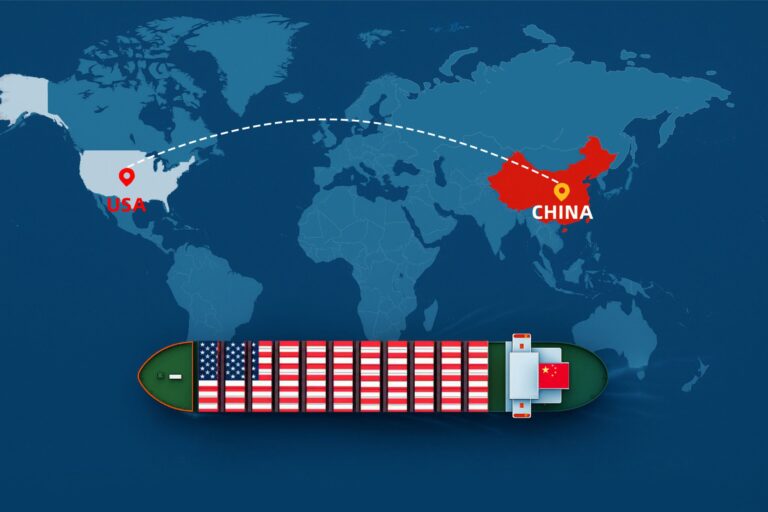
Related Guide
Shipping from China to the USA
Shipping from China to the USA includes air freight, sea freight, and DDP shipping options. Compare shipping costs, transit times, and US customs...
Read guide →

Shipping from China to the USA typically ranges from $3–$6 per kg by air freight, $5–$10 per kg by express, while sea freight costs are around $60–$120 per CBM or $1,800–$5,000 per container. Transit time is usually 3–7 days by air and 20–40 days by sea freight, depending on route, cargo type, and delivery method.
Actual shipping cost from China to USA depends on cargo weight, shipment volume, delivery address, customs clearance, seasonal demand and shipping method. Air freight is ideal for urgent cargo, while sea freight is more cost effective for large shipments and containers.
Shipping method / Mode
Cost drivers & total charges
Customs & Door to Door
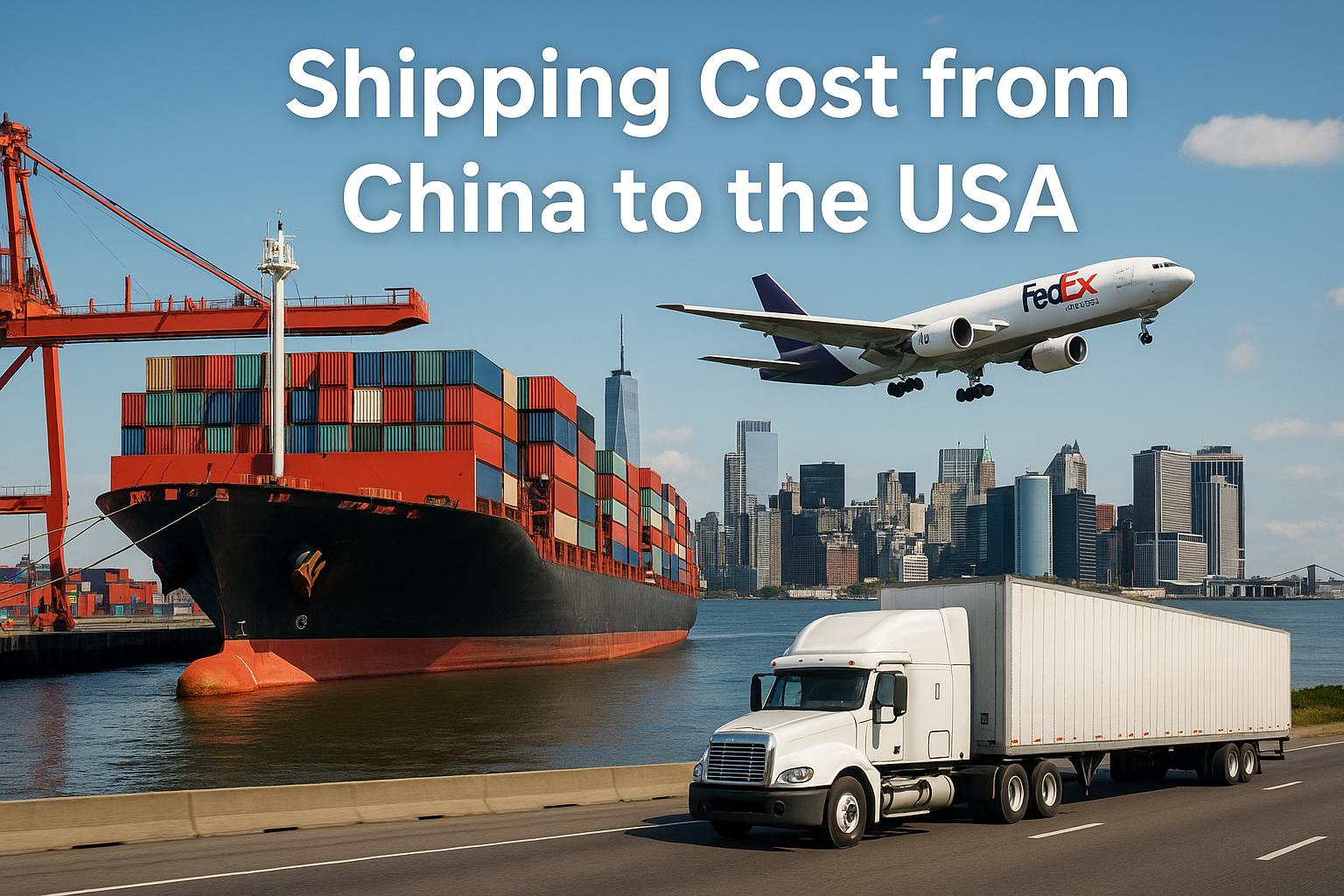
Use our freight calculator to estimate air freight, sea freight, express shipping and container shipping costs from China to USA. Compare transit times, shipping methods and total freight charges instantly.
Use this freight calculator to estimate shipping costs from China based on cargo weight, shipment size, shipping method, and delivery service. Compare air freight, sea freight, courier, and door to door shipping options to find the most suitable solution for your shipment.
Enter shipment details for a fast air freight estimate from China.
Shipping costs vary depending on shipping mode, package weight, volumetric weight, shipment size, customs clearance, destination country, fuel surcharges, insurance, and shipping carriers. This shipping rate calculator helps compare prices before requesting an exact shipping quote.
This shipping cost calculator provides just an estimate based on current freight rates and shipping data. Final shipping charges may vary depending on the specific shipment, cargo type, customs duties, destination fees, peak season demand, and additional services requested.
| Route | Shipping Method | Latest Rate | Transit Time |
|---|---|---|---|
| Shenzhen → Los Angeles | Air Freight | $4.2/kg | 3–7 days |
| Guangzhou → Chicago | DDP Air | $6.8/kg | 7–12 days |
| Shanghai → New York | LCL Sea Freight | $85/CBM | 30–40 days |
| Ningbo → Houston | 40HQ Container | $3,100 | 30–45 days |
Rates are market estimates for general cargo and may change based on airline space, vessel schedules, fuel surcharge, customs requirements, delivery address and peak season demand.
Need to calculate shipment volume? Use our CBM Calculator for Shipping from China.
When quotes differ a lot, it usually means at least one input is different. Here are the variables that move freight rates and delivered totals the most.
For air shipment and express shipping, carriers bill by chargeable weight: the higher of actual weight vs dimensional weight. Bulky cartons often push the billing weight up, even when the cargo is light.
Some quotes are port-to-port only, while others include destination handling, customs clearance support, and last mile delivery. Always confirm inclusions before comparing totals.
Inland trucking, tight delivery windows, appointment requirements, liftgate needs, and limited receiving hours can raise last-mile cost and affect delivery time.
Oversize cargo, fragile goods, batteries, or hazardous material can increase freight rates and extend handling time due to documentation and carrier restrictions.
Capacity, rollovers, terminal congestion, and peak season surcharges can shift pricing even when shipping routes look identical.
Sea freight is usually the most cost-effective option for large shipments, but it has longer transit times and more moving parts at the port.
Full Container Load is used when shipping enough goods to fill an entire container. You pay for one container and typically reduce consolidation risk.
FCL is usually best when you:
ship larger shipments regularly
want lower handling risk
want better control over a container load
want fewer consolidation delays
Less Than Container Load is for smaller shipments that share container space. LCL can work well, but destination charges often decide whether it stays cost effective.
LCL cost elements often include:
origin consolidation handling
documentation processing
destination CFS handling
release and delivery order fees
local drayage and last mile delivery
If you ship LCL, request a destination-fee breakdown early so your delivered total does not surprise you.
A common planning approach:
small volume: LCL
mid volume: compare LCL total vs 20ft FCL
large volume: FCL
The break-even point depends on destination fees and your cargo density, not only CBM.
Port choice impacts both total cost and shipping time. It also changes inland routing, appointment availability, and exposure to storage-related charges.
West Coast is often cheaper on the port-to-port portion, while East Coast can reduce inland trucking for deliveries in the Northeast or Southeast. In practice, the lowest ocean rate is not always the lowest delivered cost.
Common West Coast ports:
Los Angeles and Long Beach
Oakland
Seattle and Tacoma
West Coast routes can be faster on the ocean leg, then cargo moves inland by rail or truck.
Common East Coast ports:
Savannah
Norfolk
East Coast routing may cost more on the ocean leg, but it can shorten inland transport for eastern destinations.
| China Origin Port | 20ft West Coast (USD) | 40ft West Coast (USD) | 20ft East Coast (USD) | 40ft East Coast (USD) |
|---|---|---|---|---|
| Shanghai / Ningbo | $1,500–$1,800 | $2,000–$3,500 | $1,500–$2,800 | $2,500–$4,500 |
| Shenzhen / Guangzhou | $1,600–$2,000 | $2,200–$3,700 | $1,600–$3,000 | $2,800–$4,800 |
| Qingdao / Tianjin | $1,700–$2,100 | $2,300–$3,800 | $1,800–$3,200 | $3,000–$5,000 |
Many importers only see the ocean freight line and assume that is “the shipping cost.” In practice, your delivered cost includes multiple layers.
You can also compare container shipping and LCL options in our Sea Freight from China to USA guide.
A typical ocean shipment budget has four buckets:
Common items:
factory pickup (trucking to warehouse/port)
export documentation and filing
origin terminal handling
warehouse receiving (especially for LCL)
Origin costs are usually stable, but pickup distance and waiting time can add cost.
This is the part most people compare:
FCL container rates
LCL per-CBM ocean line-haul
Ocean freight is important, but it is often not the largest bucket in a door-to-door plan.
Common destination charges:
terminal handling
ISF-related support (if included by forwarder)
CFS fees for LCL
chassis and port drayage (especially for containers)
delivery order / release fee
This is where many budgets break because destination items are often not transparent on a “cheap” quote.
Costs depend on:
distance to warehouse
appointment requirements
limited receiving windows
liftgate, residential delivery, re-delivery
If your delivery is far inland, inland trucking can exceed the ocean freight rate.
Air freight is one of the fastest shipping methods from China to the USA, and it is commonly used for time-sensitive shipments, replenishment orders, and higher-value goods. On many lanes, transit times are typically 3–10 days, depending on flight space, cut-off times, and customs processing.
For detailed airline routes, chargeable weight rules and airport delivery options, see our Air Freight from China to USA guide.
| Air Freight Shipment Band | Typical Air Freight Costs | Best Use Case |
|---|---|---|
| 45–99 kg | 5–10 per kg | small commercial shipments |
| 100–299 kg | 3.8–6 per kg | cartons or small pallets |
| 300–999 kg | 2.8–5 per kg | dense pallets, better unit economics |
| 1,000 kg+ | 2.5–4.5 per kg | stable volume, negotiated lanes |
These ranges assume normal capacity. Premium routing, peak season, or tight deadlines can push air rates higher.
Air freight is priced by chargeable weight, not just the scale weight. Carriers use whichever is higher:
Actual weight: what the shipment weighs on a scale
Dimensional weight: what the shipment “occupies” as space in the aircraft
If cartons are bulky, dimensional weight can become the billing weight, which is why two shipments with the same actual weight can have very different freight costs.
Most air savings come from reducing dimensional weight:
use tighter cartons and remove empty space
avoid oversized outer cartons for light products
standardize carton sizes for better pallet builds
recheck packaging with the supplier before final production
In practice, packaging optimization is often the fastest way to reduce air freight costs without changing delivery time.
Express shipping options are available for urgent shipments and are generally more reliable and quicker than standard shipping methods.
Express Courier services charge approximately 8 to 12+ USD per kg for small, urgent parcels with a transit time of 3 to 5 days on many lanes.
Express shipping is ideal when you:
ship time sensitive shipments
ship small parcels and samples
need high delivery speeds
ship high-value products where delays cost more than freight
Mail service, including China Post and other economy routes, may save money for low-value parcels. The tradeoff is delivery time variability and weaker tracking number update consistency.
In some scenarios, SF Express may be used for specific services and handoffs. Always confirm the final-mile carrier and expected delivery time.
The larger the shipment, the more complex the shipping process, especially with air freight and multi-stop delivery.
A typical shipment to ship from China to USA includes:
pickup from the factory
origin warehouse receiving
export documentation and filing
loading and terminal handling
ocean freight for sea freight
airline uplift for air freight
courier network for express shipping
destination terminal handling
customs clearance support
local drayage or trucking
delivery appointment scheduling
If a quote only includes port to port, you still need to budget for destination handling and last mile delivery.
Customs clearance can impact shipping times, so accurate documentation is essential to avoid delays. Most customs delays come from missing details and inconsistent paperwork.
Accurate and complete documentation is crucial for smooth customs clearance when shipping from China to the U.S.
Common customs forms and documents:
commercial invoice
packing list
bill of lading or air waybill
importer details and shipment identifiers
Shipping clothing from China often requires specific descriptions on customs forms to avoid complications. The same principle applies to electronics, parts, and mixed goods.
Good descriptions include:
material and use
model or style identifiers
clear unit counts
consistent values across documents
invoice and packing list mismatch
vague descriptions
missing HTS or HS details
inconsistent consignee or importer records
random inspection selection
Working with a customs broker can help navigate customs duties and taxes, ensuring goods are correctly classified to avoid overpaying.
Customs duties are taxes imposed on goods when they are imported into the U.S. The rate depends on the product’s classification under the Harmonized Tariff Schedule.
For 2026 planning, keep duties as a standalone line item and base your estimate on:
the correct HTS classification for your product
a declared customs value that matches the real transaction and paperwork
any additional tariff measures that apply to that HTS code and origin
As a practical budgeting reference, many industrial parts and some electronics often fall in the 0% to 5% base-duty range, while apparel is commonly higher, often around 16% to 32%. Footwear can vary widely and is often around 8% to 37.5%, depending on material and construction. These are typical ranges used for early budgeting; the final rate depends on the exact HTS code.
Duty issues usually come from preventable documentation mistakes. Before shipping, make sure:
product descriptions are specific and include material, use, and model or style
the commercial invoice and packing list match on quantity, unit price, and totals
importer details are correct and consistent
If the HTS code or customs value is inconsistent, the duty amount can change and clearance may slow down. The simplest way to keep budgeting accurate is to confirm the HTS code with your broker before departure and keep duties separate from the shipping quote when you compare options.
Freight rates can vary widely between freight forwarders and prices change regularly, so it’s important to shop around.
Carriers operate the physical network:
ocean lines for sea freight
airlines for air freight
couriers for express shipping
They move cargo from port to port or airport to airport based on their schedules and service rules. Most carriers do not manage your pickup, documents, customs coordination, or last-mile delivery as one complete plan.
Using a freight forwarder can help streamline the shipping process and manage logistics effectively.
A good freight forwarder can:
select routes and shipping carriers that match your delivery time needs
manage documentation to reduce customs delays
coordinate pickup, consolidation, and delivery
help you consolidate shipments and reduce overall shipping costs
negotiate space and rates for regular shipments
Negotiating rates with freight forwarders can help lower shipping costs for regular shipments, especially when you ship on a predictable schedule.
Tonlexing works as a freight forwarder on the China to USA lane, focusing on end-to-end coordination rather than only quoting a port-to-port rate. In practice, that means helping shippers compare options on a like-for-like scope, confirm what is included at destination, and keep documents clean so clearance and delivery stay predictable.

DDP shipping means the seller or logistics provider handles the shipment all the way to your final address and includes import duties and taxes in the quote. It sounds simple because it reduces the number of steps you manage, but it often costs more than port-to-port or standard door-to-door where you pay duties separately.
For customs clearance and door to door delivery solutions, see our DDP Shipping from China to USA guide.
DDP quotes typically include extra cost because the provider is pricing in risk and extra work, such as:
duty and tax uncertainty based on HTS classification and customs value
compliance responsibility and document checks to avoid clearance problems
local delivery variables like appointments, remote-area delivery, and re-delivery
added buffers for delays, exams, storage risk, and destination handling changes
DDP can be worth it when you want a single all-in number and minimal coordination, especially if:
you are shipping small or mixed shipments and want simple landed-cost budgeting
you do not have a U.S. broker or importer setup yet
your buyer requires an all-inclusive delivered price
you need smoother handoffs with fewer parties involved
To avoid paying extra for unclear scope, ask the provider to confirm:
whether duties and taxes are included as an estimate or a fixed responsibility
who acts as the importer of record
what is included in destination handling and last-mile delivery
what happens if customs selects an exam or fees increase at destination
A DDP quote is only “cheap” if the scope is clear. If the scope is vague, DDP can become the most expensive option after the shipment lands.
Shipping charges fluctuate based on geopolitical trade policies and market capacity. On top of base freight, extra charges can appear.
fuel surcharges
destination handling fees
appointment fees for last mile delivery
storage, demurrage, and detention
re-delivery charges
inspection and exam fees
Two forwarders can quote the same ocean freight but include different destination items. Always confirm scope and compare apples to apples.
Most savings come from reducing chargeable weight, cutting handling steps, and avoiding avoidable delays.
reduce empty space in cartons
standardize carton sizes
improve protection to prevent damage and rework
build pallets to reduce wasted volume
Packaging changes often lower air freight rates and express costs immediately by reducing dimensional weight.
Consolidating smaller shipments into one larger shipment can save money on shipping.
Benefits:
fewer origin fees
fewer destination fees
better chance to move from LCL to full container load
improved cost effective unit economics
The choice of shipping method should balance cost, speed, and the nature of the goods being shipped. If you can plan ahead, sea freight can be the economical option. If you need faster delivery, air freight may be the better fit.
Plan ahead to reduce peak season pressure and reduce the risk of rollovers. Better planning also improves delivery time reliability.
Cargo insurance is a value-protection tool. It covers the cargo value you cannot afford to lose, rather than reducing freight costs or speeding up delivery.
For many standard shipments, cargo insurance is often priced around 0.3% to 0.5% of the insured cargo value. The rate can be higher for fragile goods, higher-risk lanes, or cargo that needs special packing.
Insurance is usually a smart choice when the shipment value is high relative to your margin, when damage risk is meaningful due to product type or packaging limits, or when a loss would disrupt cash flow and replenishment. If one shipment loss would materially hurt your business, insurance is typically worth the small percentage cost.
Shipping cost from China to USA depends on the shipping method, cargo size, and delivery address. Air freight usually ranges from $3–$8 per kg, sea freight from $60–$120 per CBM, and container shipping from around $1,800–$5,000 per container.
Sea freight is usually the cheapest option for large or heavy cargo. LCL shipping works well for smaller shipments, while FCL container shipping offers lower shipping cost per unit for full loads.
Air freight typically takes 3–10 days, express shipping 2–5 days, and sea freight around 25–45 days depending on the shipping route, customs clearance, and destination.
A 20ft container shipping cost from China to USA usually ranges from $1,800 to $3,500 depending on the season, destination port, and carrier availability.
Shipping cost is affected by cargo weight, shipment volume, delivery address, customs clearance, fuel surcharge, shipping season, and shipping method.
Express courier services such as DHL, UPS, and FedEx are usually the fastest shipping methods, with delivery times around 2–5 business days.
DDP shipping is suitable for importers who want customs clearance, duties, taxes, and final delivery handled by the freight forwarder in one complete shipping solution.
Air freight is best for urgent or high value cargo, while sea freight is more cost effective for large shipments, heavy cargo, and container shipping.
Useful freight, customs and importing resources related to this shipping guide.
Shipping from China to the USA includes air freight, sea freight, and DDP shipping options. Compare shipping costs, transit times, and US customs...
Read guide →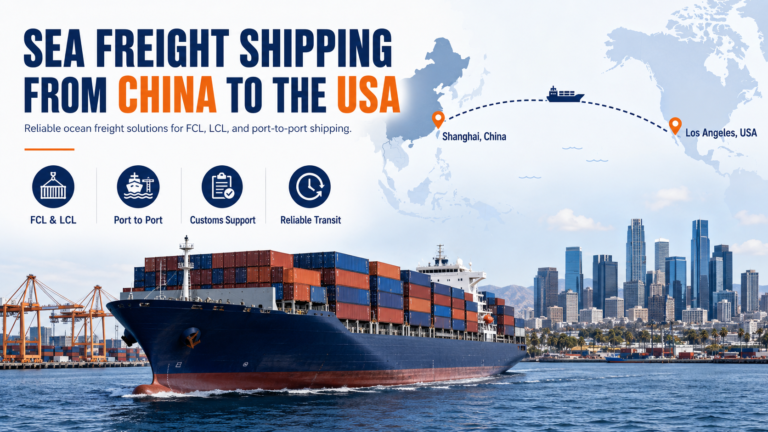
Sea Freight Shipping from China to the USA Verified & Reviewed · Last updated June 2026 Sea freight shipping from China to the USA is one of the...
Read guide →
Compare air freight rates from China to the USA, including transit times, chargeable weight, and cost effective air shipping options.
Read guide →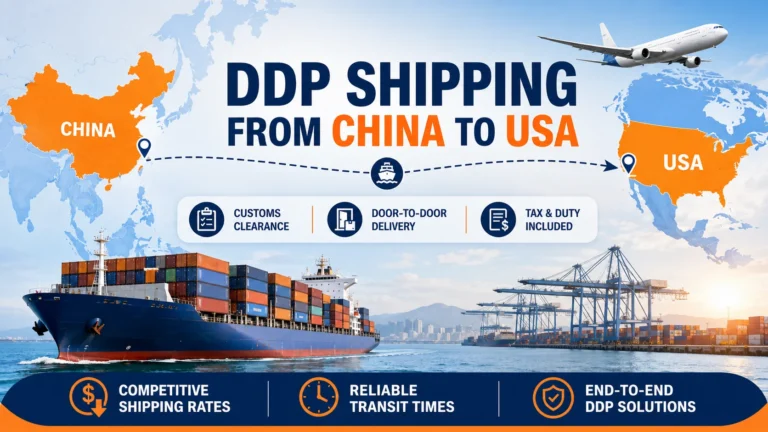
DDP Shipping from China to USA Verified & Reviewed · Last updated June 2026 DDP Shipping from China to USA is a duty-paid door-to-door shipping s...
Read guide →How Long Does It Take to Ship from China to USA? Verified & Reviewed · Last updated January 2026 How Long Does It Take to Ship from China to the...
Learn more → Useful Resource 20FT & 40FT Container Shipping Rates from China to USA20ft & 40ft Container Shipping Rates from China to USA Verified & Reviewed · Last updated June 2026 20ft and 40ft container shipping rates from C...
Learn more →WhatsApp us