

How to Avoid ISF Filing Penalties (ISF 10+2)
- Verified & Reviewed · Last updated March 2026
ISF filing penalties are avoidable, but they happen when importers treat Importer Security Filing as a last-minute task.
CBP expects timely, accurate ISF filing for supply chain security. This guide explains what triggers ISF penalties, what data CBP checks, and how to avoid penalties with a repeatable ISF compliance process.
ISF 10+2 Filing Rules
ISF Data Elements & B/L Match
Process & Scenarios

- Experienced China-based logistics specialists
Table of Contents
What Importer Security Filing ISF 10+2 Means in Plain Terms
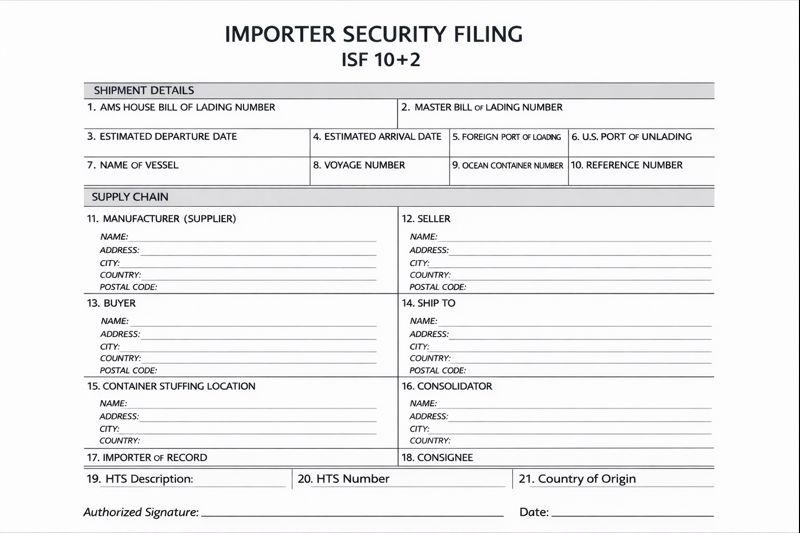
Importer Security Filing ISF is a required pre-arrival data submission for U.S.-bound ocean cargo. The industry commonly calls it ISF 10+2 because the importer submits 10 key elements and the carrier submits additional elements such as the vessel stow plan and container status messages.
CBP uses ISF to validate key shipment details, screen for risk, and decide whether a shipment may face heightened scrutiny or increased CBP scrutiny. That screening starts before cargo reaches the United States, so timing and data quality matter as much as the entry filing. For any vessel destined to the United States, the ISF importer must ensure the ISF is timely, matchable, and supported by accurate shipment details.
ISF Penalties Explained: What CBP Penalizes and Why
CBP enforcement most often targets patterns that look like weak controls:
late filings and repeat late submissions
missing filings that look like non-compliance
incorrect filings where data does not match carrier and shipping documents
inaccurate filings that require repeated changes without a disciplined trail
mismatched references such as bill of lading and lading number, plus party identifiers
These issues can lead to liquidated damages, additional exams, and financial penalties. Even when a case is mitigated, the operational cost is real: broker time, port storage, demurrage, and delivery disruption.
ISF Filing Deadline: The Timing Rule That Creates Most Penalties
Most penalties start with untimely filing. The safest operational rule is to file ISF as soon as usable shipment details are available, rather than waiting for final paperwork.
The key timing risk starts at the foreign port, because ISF must be filed before the cargo is loaded. If shipment details change at the foreign port during consolidation, late updates can create untimely filing exposure.
Late ISF filing is usually caused by:
suppliers delivering shipment details late
freight forwarders revising bill of lading references late
last-day submissions that fail due to weekends or holiday cutoffs
To avoid penalties, treat any schedule change at the foreign port as a trigger to review ISF information immediately. A “file early, then update” workflow is more reliable than “wait, then file once,” especially when documentation changes at the foreign port.
The 3 Reasons Importers Get ISF Filing Penalties
Most ISF penalties come from three failures: timing, matching, and data control. If you fix these three points, you eliminate the majority of late filings, inaccurate filings, and ISF violations.
Timing failure: untimely filing and missed deadlines
ISF requirements are strict on timing. The most common problem is untimely filing caused by late supplier inputs, last-day submissions, and weekend or holiday cutoffs. The operational best practice is to file ISF as soon as usable shipment details are available, then manage changes through a controlled process instead of waiting for final paperwork.
Matching failure: CBP cannot link the ISF to the correct shipment
CBP needs to match your ISF filing to the correct bill of lading and carrier records. The bill of lading reference and lading number are frequent break points because freight forwarders may revise B/L details or change references late. If ISF is filed under the wrong lading number or an outdated reference, CBP may treat the filing as unreliable even if it exists.
Data control failure: key ISF data elements change after booking
Some ISF data elements change late in real operations, especially when cargo is consolidated or moved through third-party warehouses. The most common ones are container stuffing location, consolidator details, actual manufacturer when a trading company sits between factory and buyer, and the Harmonized Tariff Schedule number when classification shifts late. If these change and the ISF is not updated quickly, inaccurate filings increase CBP scrutiny and raise the risk of cargo holds, cargo delays, liquidated damages, and costly penalties.
Step-by-Step ISF Process to Avoid Penalties
This is a practical workflow you can run weekly and scale across lanes. It is designed to prevent both late ISF and incorrect filings.
Step 1: Lock the internal filing target early
Do not target the minimum compliance threshold. Instead:
set an internal goal to file early to reduce missed deadlines
create a weekly schedule that accounts for weekends and holidays
require data collection to start as soon as booking is confirmed
This single step reduces late ISF filing dramatically.
Step 2: Build a data intake template for ISF information
Use a standardized form for ISF information and require suppliers to fill it. Your template should enforce:
party names and addresses
container stuffing location
expected bill of lading reference details
preliminary Harmonized Tariff Schedule number direction
Standard templates produce accurate data and reduce back-and-forth.
Step 3: Validate match points before you file ISF
Right before you file ISF, validate:
bill of lading references and lading number
importer and consignee identifiers such as record number and consignee number
party fields and key shipment details across the invoice and booking details
This prevents late or incorrect filings caused by mismatched identifiers.
Step 4: Manage changes with a controlled correction policy
Changes happen. What matters is how you control them:
create a single owner for ISF updates
track what changed, when it changed, and why it changed
avoid repeated, chaotic revisions that suggest weak controls
Controlled updates reduce risk of penalties and reduce increased CBP scrutiny.
Step 5: Align ISF information with customs entry
ISF supports pre-arrival security screening. Customs entry such as consumption entry supports clearance and duty processing. CBP may compare parties, shipment references, and classification direction across both. Keeping ISF and entry consistent reduces holds, exams, and release delays and helps you avoid penalties.
Step 6: Use a continuous bond when volume supports it
A continuous bond is operationally efficient for frequent importers. It supports smoother clearance operations and reduces friction when shipments are frequent or when entries are processed at scale.
Who Is Responsible: Importer vs Freight Forwarders vs Customs Broker
Freight forwarders often collect and pass along shipment details, and a licensed customs broker may submit ISF on the importer’s behalf. But the importer remains responsible for ISF timing and accuracy. Most penalties happen when responsibilities are unclear—especially when the bill of lading reference changes and nobody updates the filing.
| Role | What they own | What can go wrong if they don’t |
|---|---|---|
| Importer | Deadlines, approval of key data, and end-to-end compliance | Late ISF filing, inconsistent parties, and “no owner” gaps that lead to repeat errors |
| Freight Forwarder | Bill of lading reference/lading number path and change notifications | ISF becomes unmatchable after B/L changes, increasing CBP scrutiny and hold risk |
| Licensed Customs Broker | Filing execution and proof of filing/acceptance | ISF filed with missing fields, no confirmation back to the importer, delayed updates |
Simple operating rule: the importer sets the timeline, the forwarder confirms the correct bill of lading reference and any changes, and the broker files and sends back the acceptance confirmation. If the bill of lading reference or lading number changes, treat it as a high-priority update.
Two Real Scenarios That Cause ISF Violations and Penalties
Real Scenario 1: Weekend timing causes untimely filing and liquidated damages risk
Situation
An importer has a Monday loading schedule from a foreign port. The supplier sends final shipment details late Friday afternoon. The team waits for confirmation and misses the internal cutoff, then submits after the required window. The result is late ISF filing.
What goes wrong
CBP flags untimely filing as a control failure. The importer now faces potential liquidated damages, added exam risk, and possible cargo delays. Even if the cargo moves, the compliance record can invite heightened scrutiny next time.
How to avoid it
Build a Friday rule: all Monday-load shipments must have complete data by Thursday
Require suppliers to confirm container stuffing location by the cutoff
Escalate missing fields automatically to prevent missed deadlines
Create a “file early” rule so ISF is submitted as soon as data is usable
This is how teams prevent repeat late filings without relying on heroics.
Real Scenario 2: Bill of lading mismatch creates inaccurate filings and CBP scrutiny
Situation
A shipment was booked under one reference, but the forwarder issues an updated B/L. The team filed ISF under the old lading number. Later, the supplier updates the stuffing location due to consolidation and the ISF is not updated in time. The filing becomes one of those “it was submitted but doesn’t match” cases.
What goes wrong
CBP sees the ISF as inconsistent with carrier data and shipping documents. This is a classic path to ISF violations, inaccurate filings, and increased exam probability. It can also trigger cargo holds and delays at arrival.
How to avoid it
Require B/L verification before final submission: match bill of lading and lading number
Confirm actual manufacturer identity when a trading company is used
Reconfirm container stuffing location for consolidated freight
Create a change notification workflow between forwarder, broker, and importer
This is the most common “accurate timing, inaccurate content” failure—and it is fixable with one verification checkpoint.
Operational Checklist to Maintain Compliance and Avoid Costly Penalties
Use this checklist to build strict compliance across lanes:
Set internal deadlines to prevent late ISF filing
Standardize supplier intake to reduce incorrect filings
Confirm bill of lading reference and lading number before you file ISF
Verify container stuffing location, consolidator, and actual manufacturer early
Update promptly when key shipment details change
Keep ISF information aligned with customs entry and consumption entry
Review recurring errors monthly and treat them as process defects
Frequently Asked Questions
File ISF early, verify bill of lading references, control key ISF data elements, and use a disciplined change rule to prevent late or incorrect filings and avoid penalties.
Late filings, missing filings, and inaccurate filings caused by mismatched bill of lading references, party identifiers, and changes to container stuffing location.
Liquidated damages is a penalty mechanism CBP may use for compliance breaches, especially when repeated patterns suggest weak controls. Outcomes can depend on mitigation factors such as corrective actions, compliance history, and cooperation.
Often a licensed customs broker files on the importer’s behalf, and freight forwarders provide shipment details. The importer remains responsible for timing and data accuracy, so end-to-end ownership is essential.
Repeat untimely filing, inconsistent shipment identifiers, and unverified ISF data elements can signal risk. That can lead to increased CBP scrutiny, exams, cargo holds, and delays even when future shipments are compliant.
Related ISF & Customs Compliance Guides
Get ISF 10+2 Help for U.S. Ocean Imports
Prevent late ISF filing and bill of lading mismatches
Verify ISF data elements: stuffing location, manufacturer, consignee/record numbers
Reduce cargo holds, delays, and ISF penalties with a repeatable process
Get a quick ISF compliance check and clear guidance on what data to confirm before your vessel departs.