

How to Ship LED Lights from China to USA
- Verified & Reviewed · Last updated March 2026
Shipping LED lights from China to the USA can be straightforward when the process is planned well. The key is to choose the right shipping method, prepare accurate documents, and check compliance before the cargo leaves the supplier’s factory.
This guide explains how to ship LED lights from China to USA step by step, including shipping methods, transit time, shipping costs, customs clearance, import duties, product compliance, document preparation, and final delivery.
Shipping methods
Transit time
Customs clearance
- Experienced China-based logistics specialists
Table of Contents
Why So Many Businesses Import LED Lights from China
China remains one of the main sourcing markets in the lighting industry. Buyers import LED lights from China because Chinese suppliers offer broad product variety, flexible production capacity, and competitive pricing across both standard and customized orders.
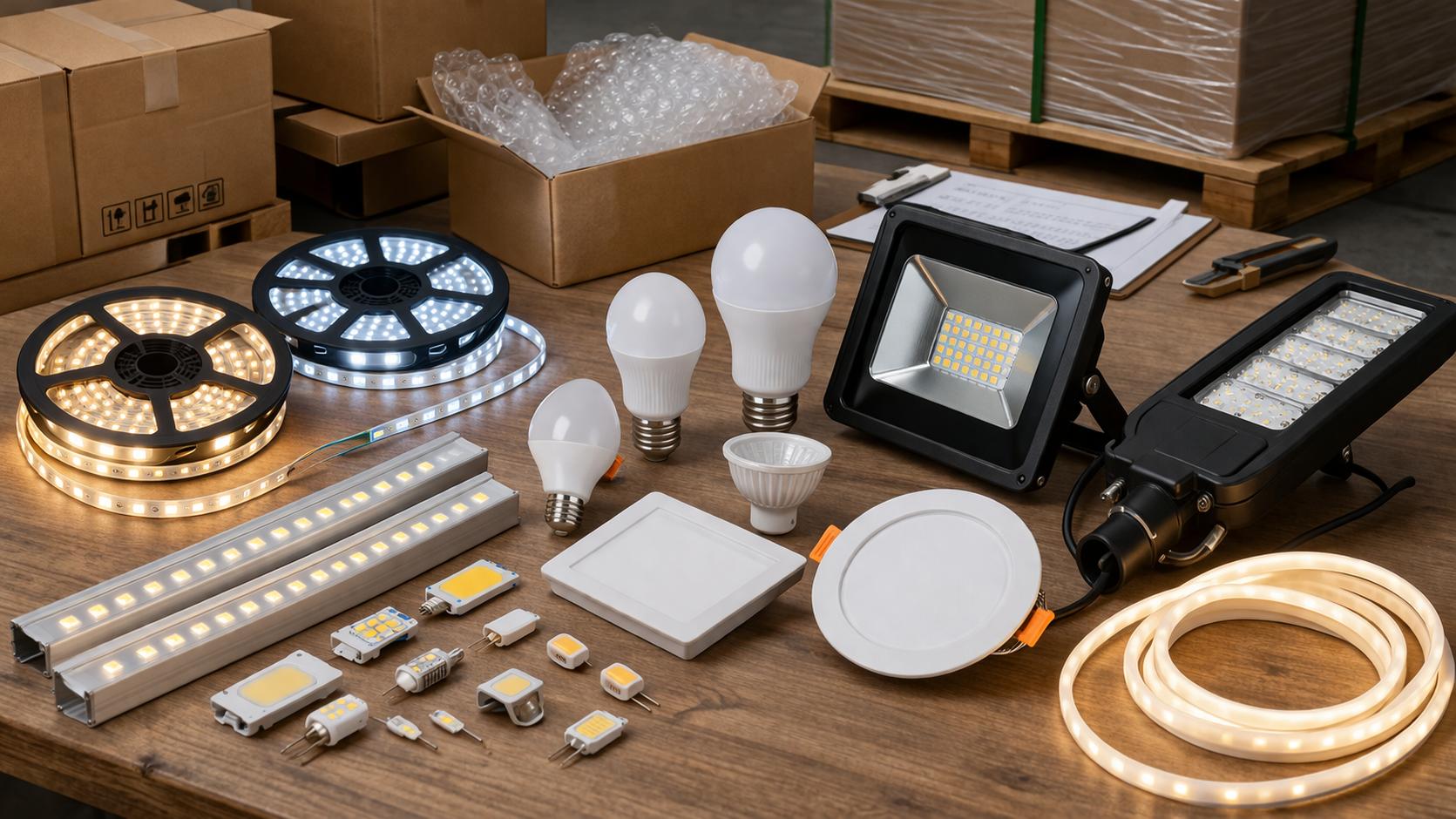
Common products include strip lights, LED bulbs, panel lights, downlights, flood lights, ceiling fixtures, and other commercial or decorative lighting products.
Another advantage is the maturity of the supply chain. Factories, inspection agencies, packaging suppliers, freight forwarders, and logistics partners are widely available, making it easier to coordinate international shipping at scale.
Still, successful LED light imports depend on more than factory price. Product quality, safety standards, lead times, packaging, and customs preparation all affect whether the shipment reaches the U.S. market smoothly.
Choose the Right Supplier Before Shipping
Before planning shipping led lights, buyers should first evaluate the supplier carefully. A reliable supplier does more than offer a low unit price. The supplier should be able to support stable production, provide accurate product information, and prepare export-ready cargo.
The right supplier should be able to provide:
clear product specifications
packaging details
photos or videos from the supplier’s factory
test reports when required
clear production lead times
export documentation support
When working with chinese suppliers, especially new ones, buyers should verify product quality before placing a large order. This is important for most LED lights because appearance, wiring, voltage configuration, and labeling all matter in the final market.
Useful checks before shipment include factory audits, sample review, carton inspection, and third party inspections. These quality control procedures help confirm that the goods match the order and reduce problems later during customs clearance or final delivery.
Understand the Main Shipping Methods
The best shipping method depends on cargo volume, urgency, budget, and delivery destination. In practice, buyers usually choose among express courier, air freight, and sea freight.
Express courier
Express shipping is best for small orders, urgent shipments, and product samples. It is commonly used when buyers want to test led products before placing larger commercial orders.
This option is usually suitable for:
samples
replacement parts
very small orders
urgent shipments
The biggest advantage is speed. The biggest disadvantage is shipping costs, since express is usually the most expensive option per kilogram.
Air freight
Air freight is often used for medium-size led light imports that need faster delivery than sea freight can provide. It is a common choice when the order is too large for courier service but still time-sensitive.
Air freight works well when:
the shipment is medium in size
the buyer needs faster restocking
product value supports a higher freight cost
customer deadlines are tight
For many importers, air freight is the best balance between speed and control.
Sea freight
Sea freight is usually the most cost effective option for bulk shipments and large shipments. Buyers that import led lights in larger quantities often prefer sea freight because it lowers the cost per unit and fits long-term inventory planning.
Sea freight is usually best when:
the cargo is bulky
the order is not urgent
the buyer wants lower landed cost
the shipment is part of regular supply chain planning
For wholesale and project cargo, sea freight is often the most practical method.
Air Freight vs Sea Freight
When deciding between air freight and sea freight, buyers should not compare freight rates alone. The real decision should consider transit time, inventory pressure, shipping costs, and delivery commitments.
Air freight is usually better for:
medium commercial orders
faster inventory replenishment
urgent launches
time-sensitive final delivery
Sea freight is usually better for:
bulk shipments
lower-cost replenishment
large shipments with longer planning windows
buyers focused on cost effective shipping
If the cargo consists of compact strip lights or relatively small cartons, air freight may still be manageable. If the shipment includes higher carton volume or regular wholesale stock, sea freight is usually the stronger option.
Transit Time From China to the USA
Transit time depends on the shipping method, departure city, destination, customs broker efficiency, and whether the shipment is port-to-port or door-to-door.
Typical transit time ranges are:
| Shipping Method | Typical Transit Time | Best For |
|---|---|---|
| Express courier | 3 to 7 days | samples and urgent orders |
| Air freight | 5 to 10 days | medium-size commercial shipments |
| Sea freight to West Coast | 15 to 25 days | bulk shipments |
| Sea freight to East Coast | 30 to 40 days | large shipments |
| Door-to-door ocean service | 25 to 45 days | simplified import arrangements |
Lead times may become longer because of production delays, Chinese holidays, port congestion, incomplete documents, customs issues, delayed appointments, or local trucking schedules.
That is why buyers should look at production lead time and transit time as one combined planning window.
Shipping Costs and What Really Affects Them
Shipping LED lights from China to the USA does not involve one fixed freight rate. The final shipping cost usually depends on the shipping method, shipment size, packaging volume, and the additional charges that apply before and after the main transport.
Cost Differences by Shipping Method
The choice of shipping method plays a major role in determining freight cost. Express shipping is usually the most expensive option, but its speed makes it suitable for samples, urgent orders, and small-volume shipments.
Air freight offers a more balanced solution. It costs less than express shipping while providing a much faster transit time than sea freight, making it a practical choice for medium-size LED light shipments.
Sea freight is generally the most cost-effective method for larger orders. Although the transit time is longer, the lower cost per unit makes it the preferred option for bulk shipments and planned inventory replenishment.
Extra Charges Beyond the Base Freight
The base freight rate is only one part of the total shipping cost. Buyers should also pay attention to the extra charges that may arise throughout the shipping process.
These may include:
origin handling charges in China
destination handling fees in the USA
customs clearance fees
customs broker charges
delivery or trucking fees after arrival
Because of these added costs, two shipments with similar freight quotes can still end up with very different total shipping costs. That is why buyers should review the full cost structure rather than looking only at the base freight rate.
Compliance, Safety Standards, and Product Review
Before shipping LED lights from China to the USA, buyers should review compliance and product details in advance. This helps reduce delays, avoid customs issues, and support a smoother import process.
Key points to check include:
Product compliance
Confirm that the LED lights are suitable for the U.S. market and not just the factory’s standard export version.Safety standards
Review whether the product type requires testing records, certification support, or other compliance documents.Labels and specifications
Check voltage, model numbers, country of origin marking, and other product details for accuracy.Packaging details
Make sure carton marks and packaging information are clear and consistent with the shipment.
A quick review before export can prevent larger problems later and make the shipment easier to handle.
Customs Clearance in the USA
Customs clearance is one of the most important stages when importing LED lights from China to the USA. In most cases, smooth customs clearance depends on having the right documents ready and making sure the filing details are accurate before the shipment arrives.
Core Customs Documents
Importers should prepare the main customs documents in advance to avoid delays at arrival. The most important files usually include:
Commercial invoice:This should clearly show the product description, quantity, unit price, total value, country of origin, and other key shipment details.
Packing list:This document should match the actual cargo and show carton count, weight, dimensions, and packaging details.
Bill of lading or air waybill:This serves as the transport document for sea freight or air freight shipments.
For customs clearance, the information across these documents should remain clear and consistent. Even small mismatches can lead to unnecessary delays or extra review. Accurate documentation and accurate documents both matter at this stage.
Key Filing and Declaration Points
Beyond the documents themselves, filing details also need to be handled correctly. One of the most important points is the correct HS code, since classification affects both customs processing and duty assessment.
For ocean freight shipments, importers should also make sure ISF filing is completed on time before departure. Late or inaccurate filing can create penalties and clearance problems.
Other key points include:
accurate product descriptions
correct HS code declaration
consistent shipment data across all documents
customs bond arrangement when required
timely filing by the customs broker
A qualified customs broker can help with handling customs clearance, checking classification, and reducing avoidable filing mistakes before arrival.
Customs Bond, PGA Review, and Duties
For many commercial shipments, customs clearance also involves additional requirements beyond basic filing.
Customs bond
Commercial imports into the USA often require a customs bond. Buyers may use a single transaction bond for occasional imports or a continuous bond for regular shipments.PGA review
Some LED light shipments may also fall under review by other government agencies. Depending on the product type, this may involve FCC-related compliance, FDA-related requirements in certain cases, or supply chain review connected to UFLPA concerns.Duties and taxes
Importers should check expected import duties before shipment departure. This may include regular duty based on the HS code, possible Section 301 tariffs for China-origin goods, and additional fees such as MPF or HMF where applicable.
For many importers, the difference between delay and smooth customs clearance often comes down to how well these customs details are prepared in advance.

Proper Packaging and Quality Control Before Shipment
LED lights are relatively sensitive products in international shipping. Even when the goods are manufactured correctly, weak packaging or missed inspection points can still lead to damage, claims, or delivery disputes after arrival. For that reason, buyers should pay attention to both packaging quality and pre-shipment checks before the cargo leaves China.
Proper Packaging for Safer Transport
Good packaging should protect the products from shock, moisture, and handling pressure during the full shipping process.
Key points usually include:
Inner protection
Use foam, protective inserts, or other cushioning materials to keep the lights stable inside the carton and reduce movement during transport.Moisture protection
For sea freight shipments, moisture control is important. Cartons should be packed in a way that helps protect the goods from humidity during transit.Strong outer cartons
Export cartons should be strong enough for stacking, loading, and long-distance handling. Weak cartons can easily lead to damage during port operations or final delivery.Palletizing for larger shipments
For bulk orders, palletizing can improve handling efficiency and reduce the risk of carton damage during loading, unloading, and warehouse movement.
Quality Control Before Shipment
Packaging alone is not enough. A final product review before shipment helps confirm that the goods match the order and are ready for export.
Common checks may include:
Function testing:Confirm that the lights work properly and that there are no obvious performance issues.
Appearance inspection:Check for scratches, defects, poor finishing, or visible damage.
Label and accessory check:Make sure labels, manuals, model numbers, and included accessories are correct and complete.
Packaging check:Confirm that the final packing method matches the shipment plan and that carton marks are clear and consistent.
For larger or higher-value orders, a pre-shipment inspection by the factory or a third party can help reduce risk before the goods are released for export.
Many importers do not just need cargo delivered to a U.S. port. They need supplier pickup, handling customs clearance, and final delivery to a warehouse, store, project site, or fulfillment center.
This is where a freight forwarder and the right logistics partner become important.
A capable freight forwarder can support:
supplier pickup
consolidation from multiple suppliers
document review
coordination with the customs broker
port handling
final delivery scheduling
The right logistics partner should have relevant experience, clear communication, and a proven track record in led light imports or similar products. Strong logistics partners reduce mistakes, improve visibility, and help support a smooth import process from origin to destination.
Common Problems That Cause Delay
Even experienced buyers can run into avoidable mistakes. The most common problems include:
choosing the wrong supplier
failing to verify product quality
weak document preparation
incomplete or inaccurate documents
poor packaging
missing compliance support
incorrect classification
late coordination with the customs broker
When these problems happen together, they can affect transit time, increase storage fees, and disrupt smooth delivery.
Frequently Asked Questions
The best shipping method depends on shipment size and urgency. Air freight is often suitable for medium orders that need faster transit time, while sea freight is usually better for bulk shipments and lower overall shipping costs.
Smooth customs clearance depends on accurate documentation, the correct HS code, complete shipment details, and timely coordination with a customs broker.
Most shipments require a commercial invoice, packing list, and transport document. Depending on the product type, additional compliance records may also be needed.
Proper packaging protects fragile components, supports product quality, reduces damage risk, and helps maintain smooth delivery through multiple handling stages.
Yes. Import duties depend on classification, and different led products may be treated differently based on their structure, use, and declared HS code.
Related Shipping Guides
Get a Shipping Quote for LED Lights from China
- Flexible shipping by air or sea
- Customs support for U.S. imports
- Door-to-door delivery for LED shipments
Get tailored shipping options, clear pricing, and expert support for shipping LED lights from China to the USA.