Related Guide
Drayage in the USA Explained
Drayage in the USA Explained: Services, Costs, Types, and How It Works Verified & Reviewed · Last updated March 2026 Drayage in the USA explained...
Read guide →

Port-to-door container delivery in the USA moves cargo from a destination port to your warehouse, factory, or business address. Costs depend on the route, container size, and services required.
Learn about port pickup, customs clearance, drayage, inland transport, delivery costs, and the key details to confirm before booking.
Port-to-Door Shipping
Container Delivery Costs
Customs Clearance
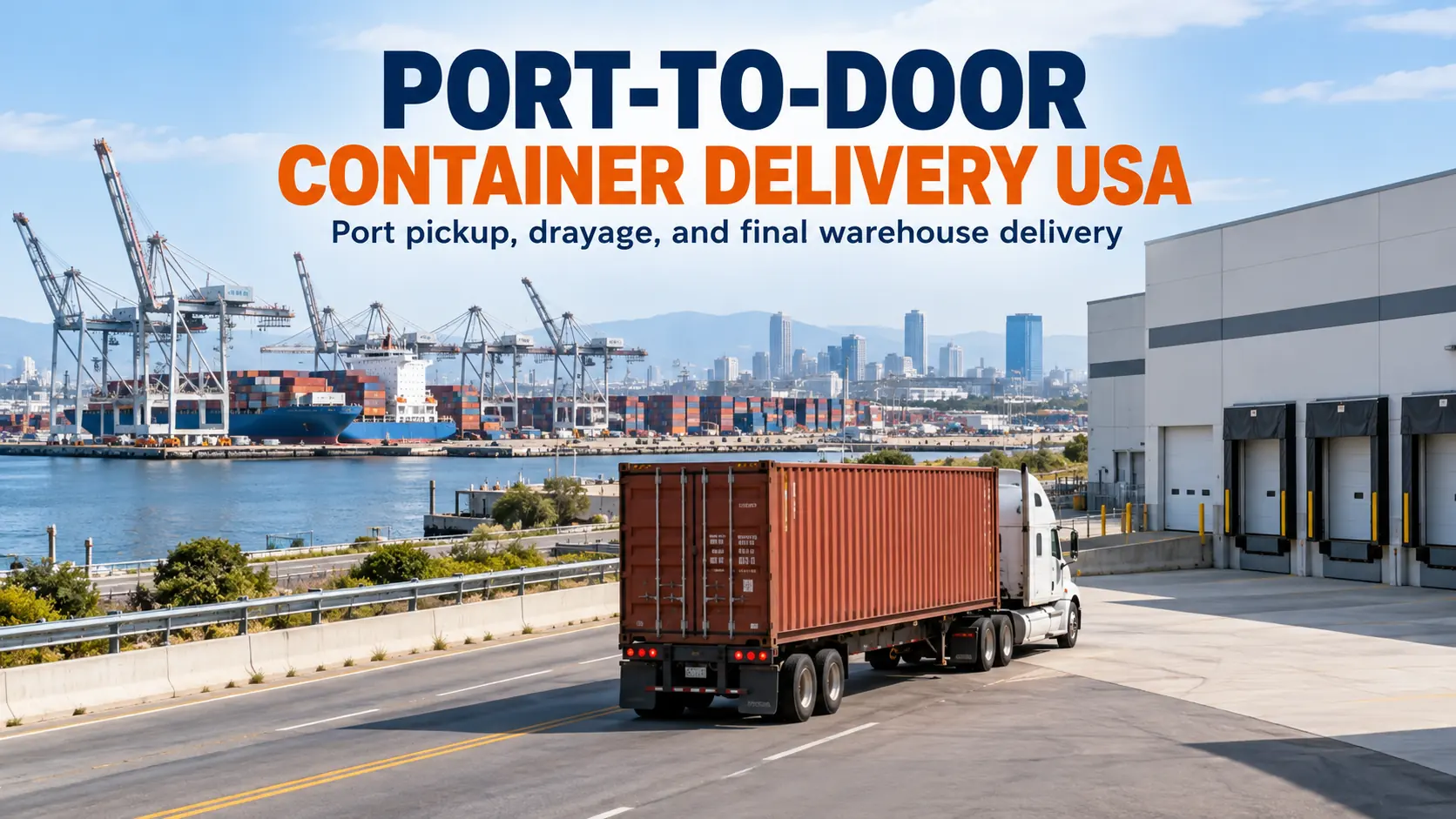
Port-to-door container delivery covers the inland movement of cargo from a U.S. destination port or terminal to a specified address. The cargo may travel directly by truck or pass through a transfer facility before continuing by truck or rail, depending on the route and receiving requirements.
This service is useful for businesses that have arranged the ocean leg but need a provider to coordinate transportation at the destination. It connects international container shipping with the domestic transport needed to reach the receiving facility.
The term describes a transportation scope rather than a standard package of services. Some quotations cover trucking only, while others include additional handling and coordination. Before booking, confirm whether the provider handles:
Port pickup and inland trucking
Customs clearance coordination and carrier release
Transloading or additional transport when required
Final delivery arrangements and empty-container return
If you also need transportation from the supplier in China, review Tonlexing’s shipping options from China to the USA.
The exact service scope depends on the route, provider, and agreed quotation. Some businesses need only a truck to collect released cargo, while others require a coordinated plan involving customs procedures, cargo transfers, and inland transportation.
Typical arrangements may include port coordination, drayage, and scheduling at the receiving facility. For longer routes, transloading or rail connections may also be considered.
When comparing logistics services, check whether the following responsibilities are included:
Release coordination: Confirm customs clearance, carrier release, terminal availability, and pickup requirements.
Drayage: Arrange a suitable truck and chassis to move cargo from the terminal to the next location.
Cargo transfer: Arrange transloading or other handling if the receiving facility cannot accept a marine container.
Final transport arrangements: Confirm the destination address, receiving hours, unloading method, waiting-time terms, and empty-return responsibilities.
A low base rate may exclude services that become necessary later. For more information about short-distance container transport, see Tonlexing’s guide to drayage in the USA.
These shipping terms describe different transportation scopes. The main distinction is where the service begins and ends, and which party arranges the remaining transport and customs formalities.
| Shipping Term | Typical Scope | Best Suited For |
|---|---|---|
| Port-to-door | U.S. destination port or terminal to the agreed address | Businesses needing inland transport after ocean shipping |
| Door-to-door | Agreed origin address to the final destination | Businesses seeking coordinated transportation across the route |
| Port-to-port | Origin port to destination port | Importers arranging their own destination handling and inland transport |
The terms alone do not establish whether customs brokerage, duties, unloading, or storage are included. Always compare the actual quotation and service agreement.
If you need the entire journey coordinated from a supplier in China, compare the scope with door-to-door shipping from China to the USA. The appropriate option depends on your budget, receiving requirements, and willingness to coordinate individual logistics providers.
Successful transportation requires coordination between the importer, customs broker, carrier, terminal, trucking provider, and receiving facility. Checking the details before dispatch helps prevent missed appointments and avoidable charges.
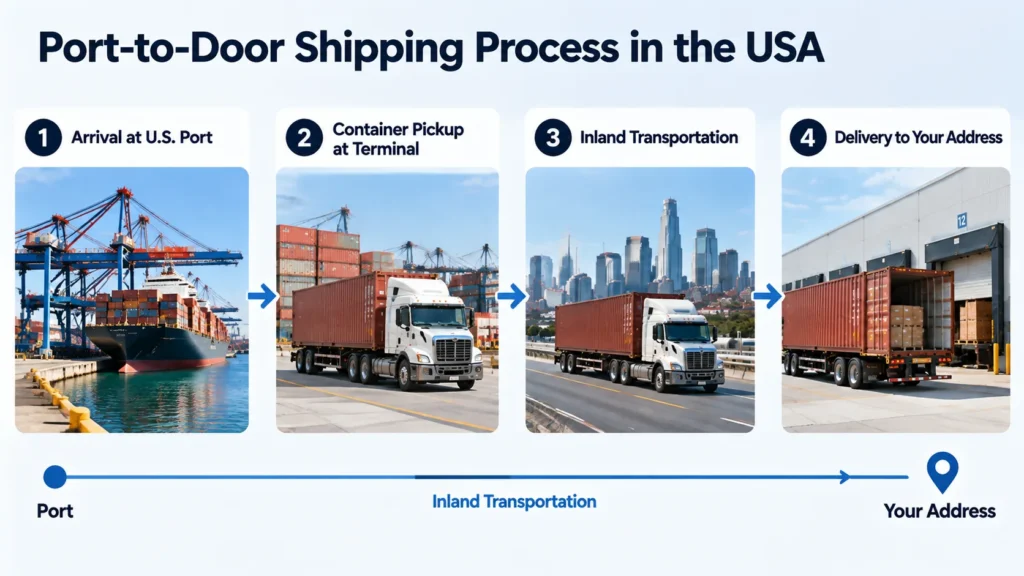
Start by confirming the cargo information and the receiving facility’s requirements. A complete destination address is essential because the ZIP code, site access, and unloading arrangements affect both routing and pricing.
Prepare the following information before requesting transport:
Destination port or terminal and container size
Cargo description, gross weight, and expected availability date
Complete destination address, ZIP code, and receiving hours
Site-access restrictions and special unloading requirements
The cargo must be available for pickup under the applicable customs, carrier, and terminal procedures. Customs release does not necessarily mean it can be collected immediately, since carrier release, terminal availability, and appointment requirements may also affect collection.
Confirm the release status with the responsible parties before dispatch. If an inspection or documentation hold occurs, the schedule may need to be adjusted.
Once the necessary releases and pickup arrangements are confirmed, the trucking provider can plan the move. Direct drayage may suit nearby facilities, while inland destinations may require a combination of trucking, transloading, and rail.
The selected method should account for truck and chassis availability, terminal appointment requirements, route restrictions, and whether cargo must be transferred before reaching the receiving facility.
The receiving facility must be ready to accept the cargo within the agreed time window. Confirm whether the booking involves live unloading, drop-and-pick, or transfer to another vehicle.
After unloading, the empty unit may need to be returned to a designated location within the applicable free time. Agree in advance who arranges the return and who is responsible for additional charges caused by delays.
The best method depends on the destination, shipment size, cargo weight, deadline, and receiving facility. Direct trucking may be straightforward for a nearby warehouse, while an inland destination or restricted site may require a different arrangement.
Direct drayage: Suitable for many local moves when the cargo can be collected and transported directly to the receiving facility.
Transloading: Useful when cargo needs to be transferred to a domestic trailer or divided among multiple destinations.
Rail plus truck: Worth comparing for suitable inland routes, considering rail schedules, transfer locations, handling costs, and final-mile transport.
FCL and LCL: Full-container-load cargo may move as a complete unit. Less-than-container-load cargo is commonly deconsolidated before local transport, so its handling differs from a sealed FCL shipment.
For example, a warehouse with suitable access may accept a full container directly, while a facility with limited access may require transloading. The decision should reflect actual site conditions rather than the initial transport rate alone.
Tonlexing’s guide to FCL vs. LCL shipping from China to the USA explains the main differences between full-container and shared-container shipments.
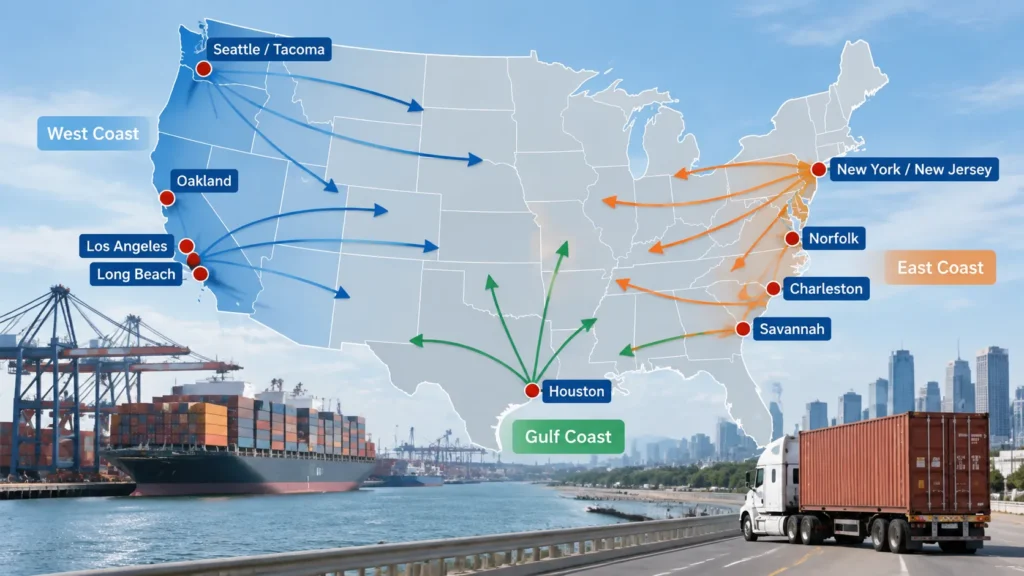
The destination port affects the ocean route, terminal arrangements, and inland transport costs. The closest port is not always the most practical choice because vessel schedules, final ZIP code, rail connections, and trucking availability also matter.
Major U.S. gateways include ports on the West Coast, East Coast, and Gulf Coast.
West Coast: Los Angeles, Long Beach, Oakland, and Seattle–Tacoma serve many shipments entering the western United States. See Tonlexing’s guide to major West Coast shipping ports.
East Coast: New York/New Jersey, Savannah, Charleston, and Norfolk may suit different routes and inland destinations. Review major East Coast ports in the USA.
Gulf Coast: Houston and other Gulf gateways may suit particular sailing schedules and receiving locations.
Inland destinations: Trucking, rail, or a combined transport plan may be needed to reach a warehouse far from the port.
When requesting a quote, provide the actual port or terminal and the complete destination ZIP code. A port city alone is not enough to estimate inland charges accurately.
Port-to-door shipping rates in the USA depend on the distance between the destination port and the delivery address. The following figures are indicative budgeting estimates for domestic container transportation, not live quotes.
| Transportation Service | 20ft Container | 40ft Container |
|---|---|---|
| Local drayage (within 50 miles) | $350–650 | $450–850 |
| Regional trucking (50–200 miles) | $600–1,200 | $700–1,500 |
| Inland trucking (over 200 miles) | $1,200–3,000+ | $1,500–4,000+ |
These estimates cover inland transportation and may exclude terminal charges, chassis fees, waiting time, and other accessorial costs. Ocean freight, customs clearance, import duties, and transloading may be charged separately.
The final quote depends on the transportation route and the services required at the destination. Before booking, consider the following factors:
Delivery distance: Longer routes generally require higher trucking charges, while tolls and regional operating costs may also affect pricing.
Container size and weight: 20ft and 40ft containers may have different rates. Heavy or overweight cargo can require additional equipment or special arrangements.
Port and terminal charges: Chassis rental, terminal-related fees, and pickup appointments may add to the base rate.
Delivery requirements: Limited site access, scheduled appointments, live unloading, waiting time, or transloading can increase the total cost.
Additional services: Customs brokerage, storage, inspections, and empty-container return may be billed separately.
For an accurate quote, provide the destination port, container size, delivery ZIP code, cargo weight, and expected pickup date. Confirm all inclusions and potential surcharges before booking.
Cargo must satisfy applicable import and release requirements before it can be collected. Port-to-door transportation does not itself mean the shipment has cleared U.S. Customs and Border Protection (CBP), and customs clearance is separate from carrier and terminal release.
The importer and customs broker should confirm which documents are required for the specific goods. Depending on the shipment, these may include:
Commercial invoice and packing list
Bill of lading and arrival information
Importer of Record and customs broker details
Product descriptions and other documents required for the import entry
For covered ocean imports, the Importer Security Filing (ISF) generally must be submitted at least 24 hours before cargo is loaded onto the vessel bound for the United States. See Tonlexing’s guide to ISF filing 10+2 requirements.
Before arranging collection, confirm customs release, carrier release, terminal availability, and any inspection requirements. Ask who handles the customs entry and who pays duties, taxes, and examination charges. Tonlexing also explains how to avoid customs holds when shipping from China to the USA.
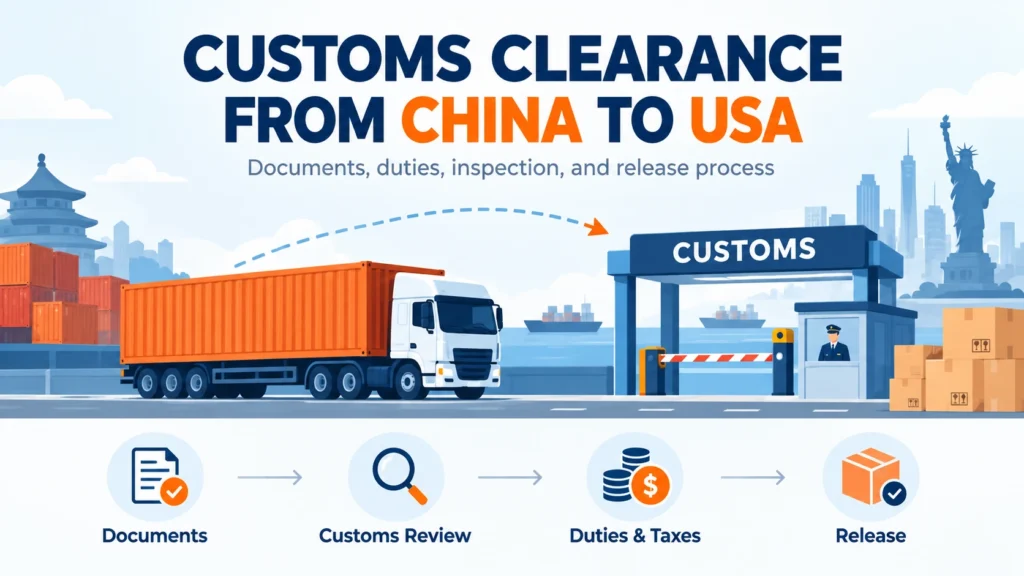
Many avoidable problems arise when collection is scheduled before cargo is available or when the receiving facility is not prepared. Early coordination helps reduce missed appointments, unnecessary waiting, and storage or equipment charges, although customs holds and terminal disruptions may still occur.
Before the cargo arrives, focus on four practical checks:
Monitor release status: Keep the customs broker, carrier, and trucking provider informed so collection is arranged only when the cargo is available.
Confirm equipment and appointments: Check terminal requirements, chassis availability, pickup references, and scheduling rules.
Track free-time deadlines: Confirm the last free day, empty-return location, and applicable carrier terms.
Prepare the receiving facility: Verify site access, opening hours, unloading equipment, appointment windows, and whether the driver can wait during unloading.
If a customs inspection is required, the schedule may need to change and additional charges may apply. Review Tonlexing’s information on U.S. customs exam fees and confirm how inspection-related costs are handled in the quotation.
A useful quotation needs more than a port name and equipment size. The destination, cargo, release status, and unloading arrangements determine the required equipment, route, and service scope. For a port-to-door container delivery USA quote, provide enough information for the provider to assess the complete move.
Prepare the following details:
Port and equipment: U.S. destination port or terminal, container size and type, and expected availability date
Cargo details: Commodity, gross weight, special-handling requirements, and whether the shipment is FCL or requires deconsolidation
Destination address: Full street address, ZIP code, receiving hours, and site-access restrictions
Customs and timing: Clearance status, target date, unloading method, and empty-return requirements
Ask the provider to distinguish the base transport charge from conditional fees. The quotation should identify included services, exclusions, free-time terms, and responsibility for unloading and empty return.
If ocean freight is also required, explain whether you need a coordinated quote for the full journey from China or only the U.S. destination leg. Share the shipment details with Tonlexing so the team can review the route and confirm the applicable service scope before quoting.
Local delivery may cost a few hundred dollars, while long-distance trucking can cost several thousand. Rates depend on the route, container size, and included services.
Not always. Confirm whether customs clearance, import duties, and taxes are included in your quote.
Yes, provided the delivery site has sufficient truck access, suitable unloading equipment, and adequate space. Container weight, road restrictions, and site conditions must also be considered. If the warehouse cannot accept a marine container, transloading may be a suitable alternative.
Local deliveries may be completed within a day after the container is released and available for pickup. Regional and long-distance shipments take longer depending on the route, terminal availability, trucking schedules, and delivery appointments. Confirm the estimated transit time for your specific destination.
Arrange pickup promptly, track free-time deadlines, and confirm the empty-container return requirements.
Useful freight, customs and importing resources related to this shipping guide.
Drayage in the USA Explained: Services, Costs, Types, and How It Works Verified & Reviewed · Last updated March 2026 Drayage in the USA explained...
Read guide →
Shipping Container Rates From China to USA in 2026 Verified & Reviewed · Last updated January 2026 Shipping container rates from China to USA are...
Read guide →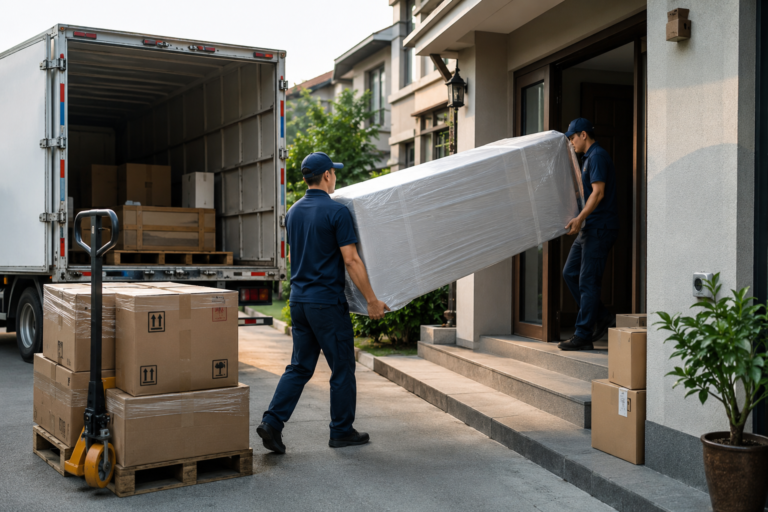
Door to door shipping from China by air, sea, rail or express. Compare DDP vs DAP, costs, transit times, customs clearance and final delivery.
Read guide →
Customs Bond for USA Imports: The Complete Guide Verified & Reviewed · Last updated March 2026 If you import into the United States, a customs bo...
Read guide →Demurrage vs Detention vs Storage Verified & Reviewed · Last updated January 2026 Demurrage vs detention vs storage is one of the most expensive...
Learn more → Useful Resource Origin Charges vs Destination Charges in International ShippingOrigin Charges vs Destination Charges in International Shipping Verified & Reviewed · Last updated July 2026 Origin charges and destination charg...
Learn more →WhatsApp us