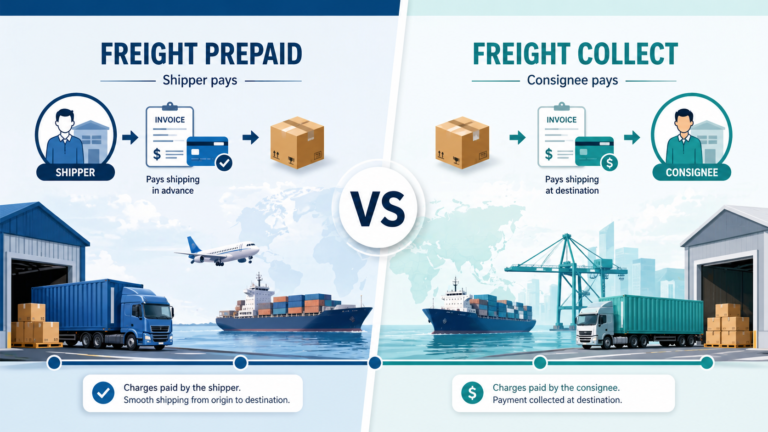
Related Guide
Freight Collect vs Prepaid
Freight Collect vs Prepaid: Meaning, Difference Verified & Reviewed · Last updated May 2026 Freight collect vs prepaid is one of the most importa...
Read guide →

Origin charges and destination charges are local shipping fees paid at different stages of an international shipment. Origin charges occur before cargo leaves the exporting country, while destination charges apply after the goods arrive.
This guide explains the key differences, common port charges, Incoterms responsibilities, customs clearance costs, and how importers can avoid unexpected fees before shipping.
Origin Charges
Destination Charges
Incoterms
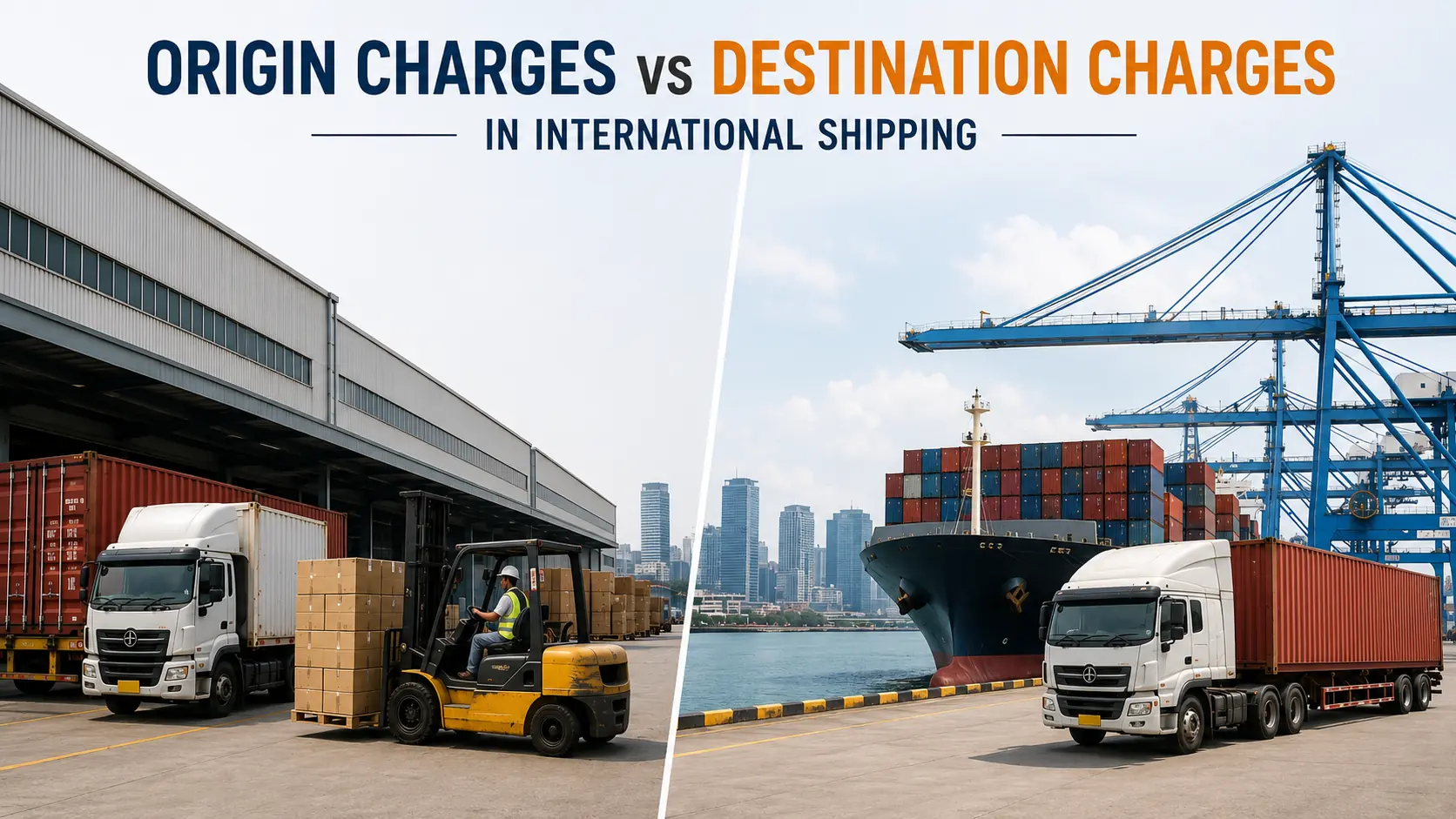
Origin charges are local costs that apply at the shipping origin before the cargo departs. These fees are usually related to pickup, warehouse handling, export customs clearance, documentation, terminal handling, and loading at the origin port or airport.
For example, if goods are shipped from Shenzhen to Los Angeles by sea freight, origin charges may include factory pickup, warehouse receiving, export declaration, origin terminal handling charges, container handling, and document fees.
Common origin charges may include:
Pickup or inland transportation
Warehouse receiving and loading fees
Export customs clearance
Origin terminal handling charges
Documentation fees
Container loading or stuffing fees
Special handling for oversized or fragile cargo
Origin charges cover the services needed to move cargo from the supplier or warehouse to the export point and prepare it for international transport.
Destination charges are costs incurred after the shipment arrives in the destination country. These charges may apply at the destination port, arrival port, airport, bonded warehouse, or final delivery stage.
A destination charge refers to local fees for unloading cargo, terminal handling, customs clearance, cargo release, temporary storage, delivery order processing, and final delivery when applicable.
Common destination charges may include:
Destination terminal handling charges
Destination port charges
Destination port fees
Customs clearance fees
Import duties and taxes
Delivery order fees
Warehouse handling charges
Temporary storage fees
Gate fees
Port document fees
Demurrage and detention
Destination delivery charge
Destination charges apply once cargo arrives at the destination port or airport. If documents, payment, or customs clearance are not prepared in time, extra costs can increase quickly.
The main difference between these two cost categories is where and when they occur.
| Item | Origin Charges | Destination Charges |
|---|---|---|
| Where they occur | Origin country, origin port, airport, or warehouse | Destination country, port, airport, or warehouse |
| When they apply | Before cargo departure | After shipment arrives |
| Main purpose | Prepare cargo for export and international transport | Release, clear, handle, store, and deliver cargo after arrival |
| Common fees | Pickup, export customs clearance, origin THC, documentation, CFS | Destination THC, customs clearance, port charges, delivery order fees, storage fees |
| Who collects them | Supplier, local forwarder, warehouse, carrier, customs broker | Carrier, destination agent, customs broker, port, warehouse, local trucker |
| Main risk | Missing export-side costs in the quote | Unexpected charges after arrival |
For importers, the biggest risk is comparing freight charges without checking which local items are included. A quote with a low sea freight or air freight rate may not be the cheapest if destination port charges, customs work, storage fees, and delivery costs are excluded.
The responsibility for paying origin and destination charges depends mainly on the Incoterms agreed between the buyer and seller. Incoterms define where cost and risk transfer during international shipments.
| Incoterm | Origin Charges | Main Freight | Destination Charges | Import Duties and Taxes |
|---|---|---|---|---|
| EXW | Buyer | Buyer | Buyer | Buyer |
| FOB | Seller | Buyer | Buyer | Buyer |
| CIF | Seller | Seller | Buyer | Buyer |
| DAP | Seller | Seller | Usually seller, depending on agreement | Usually buyer |
| DDP | Seller | Seller | Seller | Seller |
Under EXW, the buyer usually pays almost all transportation costs from the supplier’s premises to the final destination. This can include pickup, origin-side fees, export customs clearance, freight charges, destination charges, import duties, taxes, and final delivery.
Under FOB, the seller usually pays the local export charges needed to deliver the cargo to the origin port and load it onto the vessel. The buyer usually pays sea freight, destination-side costs, import procedures, duties, taxes, and delivery after arrival.
Under CIF terms, the seller pays origin charges, sea freight, and insurance to the named destination port. However, CIF usually does not include destination port charges, customs clearance, duties, taxes, storage fees, or final delivery. This is why many importers still need to pay local charges after the goods arrive.
Under DDP, the seller or freight forwarder usually arranges a more complete door-to-door service, including origin charges, freight charges, destination charges, customs clearance, duties, taxes, and delivery to the agreed address.
Most Incoterms do not mean all costs are included. Importers should always confirm what the quote includes before booking.

Destination port charges are local fees collected after a shipment arrives at the destination port. These charges are usually paid to shipping lines, terminal operators, ports, customs brokers, or freight forwarders for handling, releasing, clearing, and delivering cargo.
The exact destination charges vary depending on the destination country, port, carrier, cargo type, and shipping method. Importers should understand these costs before booking to avoid unexpected fees and calculate accurate total landed costs.
Common destination port charges include:
Destination Terminal Handling Charges cover the cost of unloading containers from the vessel, moving them within the terminal, and handling cargo before release.
DTHC is one of the most common destination port charges in sea freight. The amount varies by port, carrier, and container size. For LCL shipments, terminal handling charges may be calculated differently because cargo requires additional consolidation and handling.
Delivery order fees are charged by the carrier or freight forwarder to issue release documents that allow the consignee or trucker to collect the cargo.
Other documentation-related fees may apply when shipping documents need correction, amendment, or additional processing.
Importers cannot normally collect cargo without completing the required release procedures. Missing or incorrect documents may delay shipment release and create extra costs.
Customs clearance fees cover the service provided by customs brokers or agents who prepare and submit import declarations.
Additional import-related costs may include:
Import duties and taxes
Customs inspection fees
Port security fees
ISPS fees
Additional examination charges
Accurate customs documents, HS code classification, and product descriptions help reduce inspection delays and unexpected expenses.
Storage-related charges occur when cargo stays at the port, terminal, or warehouse beyond the allowed free storage period.
Common charges include:
Demurrage: Fees charged when a container remains inside the port terminal beyond the free time.
Detention: Fees charged when a container is not returned within the allowed period after pickup.
Warehouse storage: Charges for temporary storage when cargo cannot be released or delivered.
These fees can increase quickly. During peak seasons, demurrage fees may exceed USD 200 per day, and long delays can create thousands of dollars in additional costs.
For LCL shipments, destination charges may include additional CFS (Container Freight Station) handling fees.
CFS charges cover:
Unloading cargo from the shared container
Sorting and separating shipments
Warehouse handling
Preparing cargo for pickup or delivery
Because LCL cargo shares container space with other shipments, destination handling costs are often higher compared with FCL shipments.
Hidden shipping costs usually happen when buyers focus only on the main freight rate and do not check which local charges are included. Before booking, importers should review both origin and destination charges to understand the real transportation costs.
A clear freight quote should show all included and excluded costs instead of only listing the main freight rate.
Importers should confirm whether the quotation includes:
Origin charges
Export customs clearance
Destination port charges
Customs clearance
Delivery fees
Storage or handling charges
An itemized quote makes it easier to compare freight forwarders and avoid unexpected fees after the shipment arrives.
Under FOB or CIF terms, buyers should confirm estimated destination charges before the cargo departs. Destination fees vary by country, port, carrier, and shipment type.
This is especially important for LCL shipments, where additional CFS handling and warehouse fees may apply.
Incomplete documents or incorrect information can delay customs clearance and create extra costs.
Before the shipment arrives, importers should prepare:
Commercial invoice
Product description
Declared value
Required certificates
Accurate HS code classification and clear product information can help reduce inspection delays and unnecessary fees.
Most ports and carriers provide a limited free storage period after cargo arrival. If the shipment is not cleared or collected within this period, storage fees, demurrage, and detention charges may apply.
Tracking shipment status, preparing customs clearance early, and arranging delivery before the deadline can help importers avoid additional costs.
A reliable freight forwarder helps importers understand shipping costs before the cargo moves. This is especially useful for buyers shipping from China under EXW, FOB, or CIF terms, where cost responsibilities may vary.
A freight forwarder can help importers:
Check which local charges are included
Estimate destination charges before booking
Arrange customs clearance and delivery
Review shipping documents
Help avoid delays, storage fees, and demurrage
Choosing a freight forwarder is not only about finding the lowest freight rate. A clear quotation with a breakdown of freight charges, local handling, customs services, and delivery costs helps importers reduce unexpected fees.
Tonlexing helps importers shipping from China with sea freight, air freight, express, rail, truck, and door-to-door solutions. By reviewing shipment details and cost items in advance, Tonlexing helps buyers better understand origin charges, destination charges, and total landed costs before shipping.
Origin charges are fees incurred before cargo leaves the exporting country. They may include pickup, warehouse handling, export customs clearance, origin terminal handling charges, documentation, and loading at the origin port or airport.
Destination charges are fees incurred after the shipment arrives in the destination country. They may include destination port charges, customs clearance, delivery order fees, terminal handling, storage fees, duties, taxes, and final delivery.
Not always. Some sea freight quotes only include the main freight rate from port to port. Destination charges may be billed separately after the goods arrive at the destination port.
The consignee usually pays destination charges upon arrival, especially under FOB and CIF terms. Under DDP terms, the seller or shipper usually pays destination charges, import clearance, duties, taxes, and delivery.
Destination port charges can include unloading, terminal handling, document release, gate fees, customs support, warehouse handling, and storage. Costs can increase if the shipment is delayed, inspected, or not collected within the free time.
Useful freight, customs and importing resources related to this shipping guide.
Freight Collect vs Prepaid: Meaning, Difference Verified & Reviewed · Last updated May 2026 Freight collect vs prepaid is one of the most importa...
Read guide →
EXW Container Shipping from China: Complete Guide for Importers Verified & Reviewed · Last updated April 2026 EXW container shipping from China m...
Read guide →
How to Calculate Landed Cost When Importing from China to the USA Verified & Reviewed · Last updated May 2026 When importing products from China...
Read guide →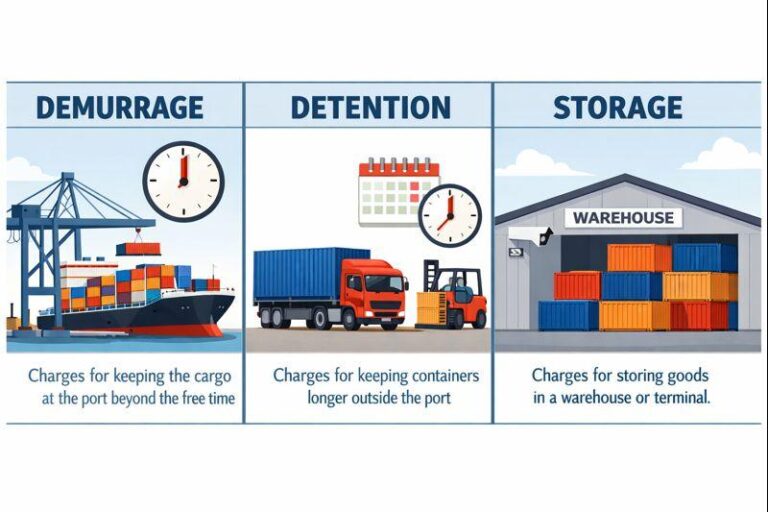
Demurrage vs Detention vs Storage Verified & Reviewed · Last updated January 2026 Demurrage vs detention vs storage is one of the most expensive...
Read guide →Customs Clearance Step by Step: The Complete Process Verified & Reviewed · Last updated February 2026 Customs clearance step by step helps intern...
Learn more → Useful Resource DAP vs DDP IncotermsDAP vs DDP: Customs Clearance, Import Duties, and Who Pays What Verified & Reviewed · Last updated January 2026 Choosing between DAP and DDP dete...
Learn more →WhatsApp us