Related Guide
What is HS Code? 2025 Guide
If you’re involved in international shipping, you’ve probably encountered the term HS Code on shipping documents, customs forms, or commercial in...
Read guide →

HS Code vs HTS Code explains the difference between global product classification and country-specific tariff classification used in international trade.
These terms are closely related, but they are not the same. An HS code is used as a global product classification number, while an HTS code is a country-specific tariff code used to determine import duties, tariff treatment, and customs requirements.
HS Code
HTS Code
Tariff Classification
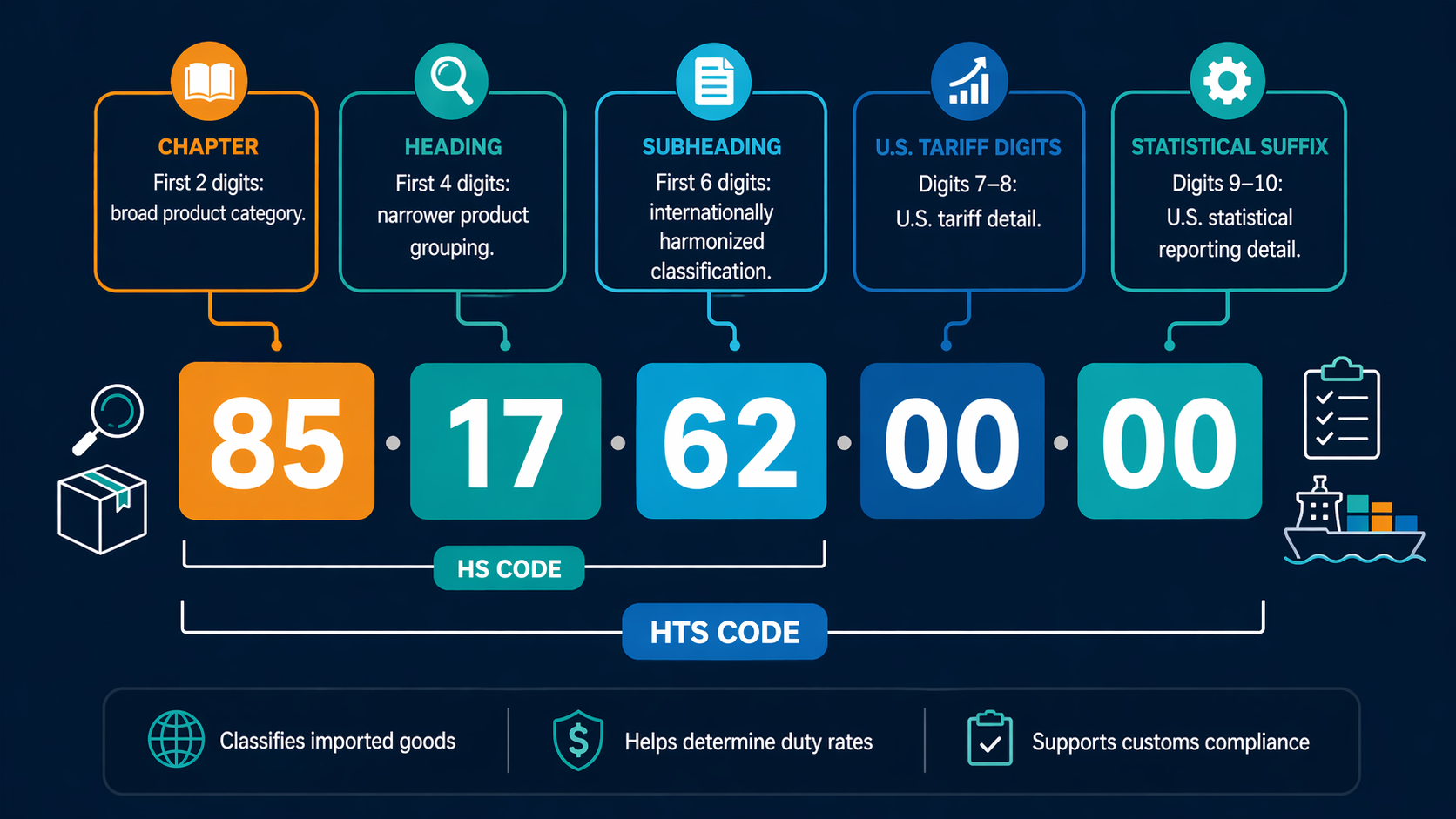
An HS code, also called a Harmonized System code, is a standardized system used to classify products in global trade. The Harmonized System was developed by the World Customs Organization WCO to create a common language for classifying goods.
HS codes are used by importers, exporters, freight forwarders, customs broker teams, and customs authorities worldwide. They help identify products, track trade statistics, and support customs purposes in international trade.
A standard HS code has six digits.
The six digit HS code is usually structured like this:
First two digits: product chapter
Next two digits: product heading
Final two digits: product subheading
For example, in the tea category, the first two digits identify the chapter, the next two digits narrow the product type, and the final two digits provide a more specific classification such as green tea.
Because HS codes are globally recognized, they form the global framework for most countries’ tariff classification systems. However, an HS code alone may not be enough to determine exact customs duties in the destination country.
An HTS code, or Harmonized Tariff Schedule code, is a country-specific tariff code used for imported goods. It is based on the HS system but includes additional digits added by the importing country.
In the United States, importers use the Harmonized Tariff Schedule HTS to classify products for customs clearance. U.S. HTS codes are also called HTSUS codes. They are used to determine duty rates, tariff rates, applicable duties, product restrictions, and customs entry requirements.
Most U.S. HTS codes have 10 digits.
The first six digits usually match the international HS code. The subsequent digits are added for U.S. tariff classification, statistical purposes, and specific import controls.
HTS codes are mainly used for:
Customs clearance
Customs duties calculation
Import declaration
Duty rates and tariff rates
Border protection review
Trade compliance
Product-specific regulations
For U.S. imports, a six digit HS code is usually not enough. Importers normally need the specific HTS code to complete customs declaration correctly.
The main difference between HS codes and HTS codes is their scope.
HS codes are used globally. HTS codes are used by individual countries for import tariff classification.
| Feature | HS Code | HTS Code |
|---|---|---|
| Full Name | Harmonized System Code | Harmonized Tariff Schedule Code |
| Scope | Global standard | Country-specific |
| Length | Usually 6 digits | Usually 8 to 10 digits |
| Main Purpose | Product classification and trade statistics | Customs duties and import declaration |
| Used By | Customs authorities worldwide | National customs authorities |
| Duty Calculation | Basic reference | Used to determine duty rates |
| Example Use | Export documents from China | U.S. import customs entry |
In simple terms, HS codes classify products globally, while HTS codes classify products for import duties in a specific country.
Using the correct codes is important because customs classification affects both cost and compliance.
Customs duties are calculated based on the tariff classification of imported goods. If the wrong HTS code is used, the importer may pay the wrong duty rate.
Paying too much duty increases landed cost. Paying too little duty can lead to corrections, penalties, or face fines later.
Customs authorities review HS codes, HTS codes, product descriptions, commercial invoices, packing lists, and declared values. If the information does not match, customs may hold the shipment for review.
This can cause customs delays, shipment delays, storage fees, demurrage, detention, and extra handling charges.
The HTS code directly affects landed cost because it determines applicable duties and tariff rates.
A complete landed cost usually includes:
Product cost
International freight
Customs duties
Customs broker fees
Customs clearance charges
Local delivery
Storage fees if delays occur
If the wrong code is used, your total import cost, pricing strategy, and profit margin may all be affected.
Some products are subject to special regulations, additional duties, anti-dumping duties, licenses, or testing requirements. The right HTS code helps identify these risks before the goods are shipped.
This is especially important for electronics, textiles, chemicals, batteries, food products, medical goods, furniture, steel products, and machinery.
For US imports, the difference between HS codes and HTS codes is especially important.
The United States uses the Harmonized Tariff Schedule to classify imported goods. The first six digits follow the international Harmonized System HS, while the remaining digits are specific to the U.S.
U.S. importers usually need the full HTS code to determine:
General duty rates
Additional tariffs
Applicable duties
Import restrictions
Trade remedies
Statistical reporting
Border protection review
Customs entry requirements
The United States International Trade Commission provides official tariff information for import classification. Importers may also see the term Schedule B, which is mainly used for U.S. export reporting, not import customs clearance.
For most importers shipping goods from China to the United States, the HTS code is the key code needed for customs clearance and duty calculation.
Finding the right HS code or HTS code requires more than searching a product name. Many products have similar names but different classifications.
A practical process includes:
Start with a clear product description.
Confirm the main material.
Identify the main function.
Check product use.
Review photos, specifications, and product links.
Use the supplier’s HS code as a reference only.
Search the destination country’s tariff schedule.
Check duty rates and special regulations.
Ask a customs broker if the product is complex.
For example, a plastic container may be classified differently depending on whether it is used for food storage, retail packaging, industrial parts, or household use.
The right HS code should describe the product accurately. The right HTS code should match the destination country’s import rules.

A six digit HS code is often not enough for customs clearance. Many countries require additional digits to calculate duty rates and complete import declaration.
For U.S. imports, the full HTS code is normally required.
Many importers use the HS code provided by the supplier without review. This can be risky because the supplier’s code may be suitable for export declaration but not correct for import clearance in the destination country.
Product names can be misleading. Customs authorities classify goods based on material, function, construction, and use, not just marketing names.
Some products may have additional tariffs, anti-dumping duties, countervailing duties, or other trade measures. A low general duty rate does not always mean the final import cost is low.
HS codes and HTS codes may change. The World Customs Organization updates the HS system periodically, while individual countries may update tariff schedules more often.
Importers should review codes regularly, especially for repeat shipments or high-value goods.
Using the wrong HTS code can cause serious problems.
Common risks include:
Customs delays
Shipment delays
Wrong customs duties
Additional duty bills
Storage fees
Customs inspection
Compliance issues
Penalties or fines
Seizure risk in serious cases
For repeat imports, a wrong code can also affect future shipments. Customs authorities may review later shipments more carefully if they find repeated classification issues.
It is much easier to confirm the correct codes before shipping than to fix customs problems after the goods arrive.
A freight forwarder can help collect shipping and product information, while a customs broker can help review tariff classification and file customs entry.
For shipments from China, an experienced freight forwarder can help organize:
Product name
Product material
Product use
Photos and specifications
Packing list
Supplier HS code
Cargo value
Destination country
Shipping method
A customs broker can then use this information to help confirm the specific HTS code and support customs clearance.
This process helps importers stay compliant, reduce customs delays, and keep shipments moving.
No. HS codes and HTS codes are related, but they are not the same. HS codes are used globally for product classification. HTS codes are country-specific and are used for import duties and customs declaration.
No. HS is the international six digit system. HTS is a national tariff schedule built on the HS system. The first six digits may be the same, but the additional digits make the HTS code more specific.
To convert an HTS code to an HS code, use the first six digits. The first six digits represent the international HS code. The remaining digits are country-specific.
For U.S. imports, you usually need the full HTS code. A six digit HS code can help identify the product, but the HTS code is needed for customs clearance and duty calculation.
Using the wrong one may cause customs delays, incorrect customs duties, penalties, storage fees, shipment delays, and compliance issues.
Useful freight, customs and importing resources related to this shipping guide.
If you’re involved in international shipping, you’ve probably encountered the term HS Code on shipping documents, customs forms, or commercial in...
Read guide →
Learn how to find the correct HTS code for your product, use the Harmonized Tariff Schedule, verify duty rates, avoid the wrong code, and improve...
Read guide →
HTS Code for Imports from China: A Complete Guide for U.S. Importers Verified & Reviewed · Last updated April 2026 When importing goods from Chin...
Read guide →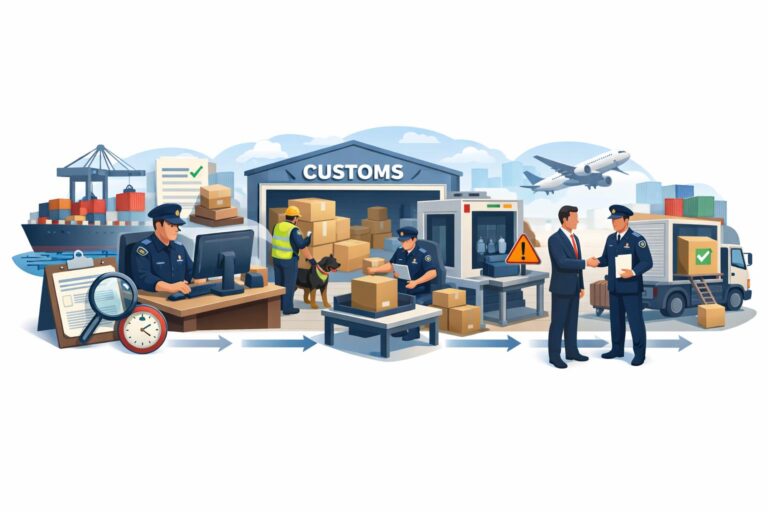
Customs Clearance Step by Step: The Complete Process Verified & Reviewed · Last updated February 2026 Customs clearance step by step helps intern...
Read guide →China to USA Import Duties: Customs Duty, Tariffs, and Import Tax Guide Verified & Reviewed · Last updated May 2026 Importing goods from China to...
Learn more → Useful Resource Documents Required to Import from China (2025 Guide)Importing goods from China can be highly profitable—but only when you understand the necessary documents and import requirements. Whether you’re...
Learn more →WhatsApp us