

Freight Collect vs Prepaid: Meaning, Difference
- Verified & Reviewed · Last updated May 2026
Freight collect vs prepaid is one of the most important payment terms in shipping. It determines who pays the freight charges, when the freight bill is paid, and who controls the shipping process.
This guide explains the difference between freight collect and freight prepaid, including who pays under each arrangement, how FOB shipping point and FOB destination affect freight payment, and which option is better for importers, exporters, and international shipments.
Freight Collect vs Prepaid
FOB Shipping Point
Freight Payment Terms
- Experienced China-based logistics specialists
Table of Contents
Freight Collect vs Prepaid
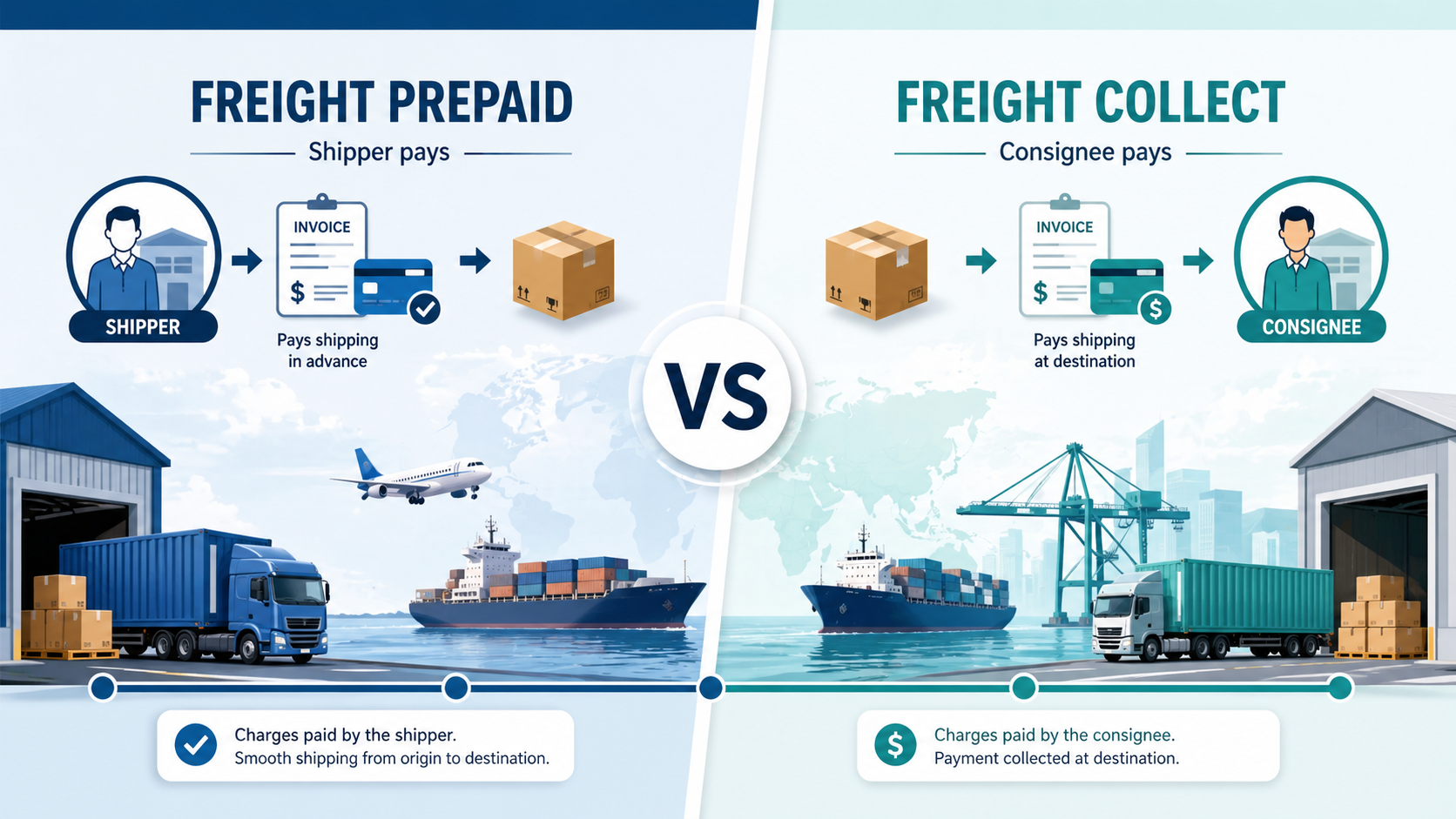
The main difference between freight collect and freight prepaid is who pays the transportation costs and when the payment is made.
| Feature | Freight Collect | Freight Prepaid |
|---|---|---|
| Who Pays | Receiver or consignee | Sender or shipper |
| When Paid | Upon delivery at destination or under agreed carrier terms | Upfront before shipping or before delivery |
| Control | Receiver chooses the carrier, route, and rates | Shipper controls the logistics and carrier |
| Common Terms | EXW, FOB, FOB shipping point | CIF, CFR, DDU, FOB destination |
In short: Freight collect means the buyer pays. Freight prepaid means the shipper pays.
However, the best option depends on the shipping agreement, cargo type, shipping method, final destination, and who has better control over freight costs.
What Is Freight Collect?
Freight collect means the buyer or consignee is responsible for paying freight charges. The seller does not pay the main transportation costs upfront. Instead, the carrier collects payment from the buyer, or the freight forwarder issues a freight invoice to the buyer.
In a freight collect arrangement, the buyer often has stronger control over the transportation process. The buyer may choose the freight forwarder, shipping company, route, delivery schedule, and shipping method.
This is common when the buyer has negotiated freight contracts or large shipping volumes. It is also common when the buyer wants to compare freight costs directly instead of accepting the seller’s shipping price.
Freight collect usually means the buyer:
Pays the freight bill
Chooses the carrier or freight forwarder
Controls the main shipping process
Handles shipping payments directly
Takes responsibility for transportation costs under the agreed freight terms
What Is Freight Prepaid?
Freight prepaid means the shipper pays the freight charges before the cargo reaches the buyer. In most trade transactions, the shipper is the seller, exporter, or supplier.
With freight prepaid, the seller arranges the shipment and pays the shipping costs upfront. These shipping charges may be included in the product price, listed separately on the invoice, or built into a delivered price.
A freight prepaid arrangement is common when the seller wants to offer a complete shipping solution. It is also useful when the buyer does not have a freight forwarder or does not want to manage the shipping process directly.
Freight prepaid usually means the shipper:
Pays the carrier or freight forwarder
Chooses the shipping company
Arranges the shipping method
Handles shipping upfront
Includes shipping costs in the commercial arrangement
How Freight Collect and Freight Prepaid Work in the Shipping Process
Freight collect and freight prepaid are both freight payment terms, but they work differently in the shipping process.
How Freight Collect Works
A typical shipping freight collect process works like this:
Buyer and seller agree on freight collect terms.
Seller prepares the goods for pickup or export.
Buyer appoints a freight forwarder or carrier.
Carrier transports the cargo.
Carrier collects payment from the buyer or consignee.
Buyer receives the goods at the final destination.
This model is often used by experienced importers who already have their own logistics company or freight forwarder.
Freight collect can be useful when the buyer wants direct control over shipping costs, routing, delivery timing, and inventory management.
How Freight Prepaid Works
A typical freight prepaid process works like this:
Buyer and seller agree on prepaid freight terms.
Seller chooses the shipping company or freight forwarder.
Seller pays the freight charges before delivery.
Carrier moves the cargo to the agreed destination.
Buyer receives the shipment.
Shipping costs are included in the invoice or sales agreement.
Freight prepaid is often easier for buyers who want fewer shipping payments and a more predictable shipping arrangement.
It is especially common for small orders, door to door shipping, and buyers who do not want to manage international logistics themselves.
Freight Prepaid vs Freight Collect Under FOB, CIF, EXW, and DDP
Freight prepaid vs freight collect is often connected with Incoterms, but they are not the same.
Incoterms define the responsibility, cost allocation, and risk transfer between buyer and seller. Freight terms define how the freight charges are paid.
This distinction is important because the same Incoterm may still require clear freight payment terms.
FOB Shipping Point
Under FOB shipping point, the buyer usually takes responsibility when the goods leave the seller’s location or agreed origin point.
Because the buyer takes responsibility early, freight collect is common. The buyer pays the freight charges and controls the shipping process after the goods are handed over.
FOB Origin Freight Collect
FOB origin freight collect means the buyer takes responsibility at origin and pays the freight charges.
This is common in international trade when the buyer has its own freight forwarder. It gives the buyer more control over freight costs, shipping method, delivery time, and carrier selection.
FOB Destination
Under FOB destination, the seller remains responsible until the goods reach the destination. Since the seller must deliver the goods to the buyer’s destination, freight prepaid is often used.
The seller pays the shipping costs upfront and includes them in the sales price or shipping agreement.
FOB Destination Point
FOB destination point means the seller is responsible for delivering the goods to the named destination point.
In this case, the seller often pays the freight charges, so the shipment is usually arranged as freight prepaid.
CIF
CIF is usually linked with freight prepaid because the seller pays the cost, insurance, and freight to the destination port.
However, CIF does not mean all costs are included. The buyer may still need to pay destination charges, customs clearance, import duties, local trucking, fuel surcharges, storage, and other ancillary fees.
EXW
Under EXW, the buyer takes responsibility from the seller’s factory or warehouse. Freight collect is common because the buyer controls most of the transportation process.
This gives the buyer strong control, but it also creates more responsibility. The buyer may need to handle pickup, export coordination, international freight, customs clearance, and final delivery.
DDP
Under DDP, the seller or logistics provider usually pays most shipping costs upfront, including freight, customs clearance, duties, taxes, and delivery to the final destination.
DDP is commonly treated as a freight prepaid arrangement because the buyer receives a complete delivered service.
For new importers, DDP prepaid shipping is often easier than managing freight collect terms.

Freight Collect Pros and Cons
Freight collect can be a strong choice for experienced buyers who want more control over freight costs, carrier selection, and delivery planning. However, it also means the buyer takes on more responsibility during the shipping process.
Freight Collect Pros
Better cost control: The buyer can compare freight costs directly and may get better rates through existing freight contracts.
Improved cash flow: The buyer does not need to pay shipping costs upfront to the seller and may pay later based on the freight invoice.
More control over shipping logistics: The buyer can choose the freight forwarder, shipping method, route, and delivery schedule.
Better for large shipping volumes: Importers with regular shipments can negotiate freight costs directly with carriers or logistics providers.
Freight Collect Cons
More responsibility for the buyer: The buyer must manage freight shipping, shipping payments, customs coordination, and delivery planning.
Higher risk for new importers: New importers may not fully understand destination fees, customs requirements, documents, or local delivery charges.
Possible cargo release delays: If the freight bill is not paid on time, the carrier may hold the cargo until payment is completed.
Less convenient for small shipments: For small or occasional orders, freight collect may create more work than necessary.
Freight Prepaid Pros and Cons
Freight prepaid can make the shipping arrangement easier for the buyer because the seller handles the main freight payment and transportation setup. However, it may also reduce cost transparency and buyer control.
Freight Prepaid Pros
Simpler shipping process: The seller arranges transportation and pays the main freight charges, so the buyer has fewer logistics steps to manage.
Improved customer service: Prepaid freight gives the buyer a clearer shipping arrangement with fewer separate charges.
Good for small or occasional shipments: Prepaid shipping is easier for samples, small orders, and buyers without their own freight forwarder.
Useful for door to door delivery: Freight prepaid works well for DDP shipping, door to door shipping, and complete logistics services.
Freight Prepaid Cons
Less cost transparency: The buyer may not see the real freight costs, especially if the seller includes a margin in the shipping charges.
Higher upfront costs for the seller: The shipper pays shipping upfront, which can affect cash flow when handling many international shipments.
Less buyer control: The buyer may have limited control over the shipping company, shipping method, route, and delivery timing.
Possible hidden destination charges: Some destination fees may still be billed to the buyer unless the shipping agreement clearly states what is included.
Which Freight Term Should Importers Choose?
The best option depends on your shipping experience, cargo volume, budget, and need for control.
Choose freight collect if:
You have your own freight forwarder
You want stronger cost control
You have better shipping contracts than your supplier
You import regularly
You ship large volumes
You want to control routing and delivery times
You are comfortable managing shipping payments
Choose freight prepaid if:
You want a simpler shipping process
You prefer the seller to arrange transportation
You do not have a reliable freight forwarder
You want fewer freight invoices to manage
You are shipping small or occasional orders
You want DDP or door to door delivery
You need a clearer delivered price
For experienced importers, freight collect can save money and improve control. For new importers, freight prepaid can reduce complexity and make the shipment easier to manage.
Common Mistakes to Avoid
Many shipping disputes happen because buyers and sellers do not define freight terms clearly before shipment.
Confusing Freight Terms with Incoterms
Freight collect and freight prepaid only explain who pays freight charges. They do not fully explain risk transfer, customs responsibility, or delivery obligation.
FOB, CIF, EXW, and DDP define broader responsibilities. Freight terms define the freight payment side.
Ignoring Destination Charges
Even when freight prepaid is used, the buyer may still need to pay destination charges, customs clearance, import duties, local trucking, storage, and ancillary fees.
Not Confirming Who Receives the Freight Bill
Before shipment, confirm whether the freight bill goes to the buyer, seller, consignee, or third party freight account.
This helps avoid payment disputes and cargo release delays.
Choosing Only by Price
Lower shipping costs do not always mean a better shipping method. Importers should also consider delivery speed, customs risk, cargo safety, service quality, and final destination requirements.
Not Writing the Shipping Agreement Clearly
The shipping agreement should clearly state whether the shipment is freight collect, freight prepaid, or third party freight.
It should also define who pays origin charges, destination charges, customs clearance, duties, taxes, and final delivery.
How Freight Terms Affect Shipping Costs, Cash Flow, and Control
Freight terms are not just payment labels. They decide who controls the shipment, who pays the freight bill, and how visible the real shipping costs are.
When a shipment is arranged as freight collect, the buyer pays the freight charges directly. This gives the buyer more control over the freight forwarder, shipping method, route, and freight invoice. For experienced importers with regular cargo volume, freight collect can be a good way to compare rates, manage transportation costs, and improve cost control.
With freight prepaid, the seller pays the freight charges before delivery. This makes the shipping process easier for the buyer because the seller handles the main shipping arrangement. However, the buyer may not always see the actual freight costs, since the seller may include shipping fees in the product price or invoice.
For international shipments, the most important point is clarity. Before the cargo moves, both sides should confirm who pays the origin charges, destination charges, customs clearance, final delivery, and any extra fees.
A clear freight arrangement helps avoid payment disputes, unexpected shipping charges, and delays at the final destination.
Frequently Asked Questions
The main difference is who pays the freight charges. Freight collect means the buyer or consignee pays. Freight prepaid means the shipper or seller pays before delivery.
Under freight collect terms, the buyer, consignee, or receiving party usually pays the freight bill. In some cases, a third party freight account may pay instead.
No. Freight prepaid does not mean shipping is free. It means the shipper pays the freight charges upfront. The shipping costs may still be included in the product price, invoice, or total sales amount.
No. Freight prepaid does not mean shipping is free. It means the shipper pays the freight charges upfront. The shipping costs may still be included in the product price, invoice, or total sales amount.
FOB shipping point is often linked with freight collect because the buyer takes responsibility at the origin point. However, the final payment arrangement should always be confirmed in the shipping agreement.
Freight collect is better for experienced buyers who want control over freight costs and shipping logistics. Freight prepaid is better for buyers who want a simpler shipping process and fewer direct shipping payments.
Related Freight Terms & Shipping Guides
Need Help Choosing Freight Collect or Prepaid?
- Compare freight collect and freight prepaid
- Find the right payment term for your shipment
- Get support from an experienced freight team
Get tailored shipping options, transparent pricing, and expert advice for your next shipment.