

What Is a Switch Bill of Lading?
- Verified & Reviewed · Last updated April 2026
A switch bill of lading is a replacement bill of lading issued after the original bill of lading has already been released for a shipment. It is commonly used when the same cargo remains under the same shipment, but the shipping documents need to reflect a new commercial arrangement.
This updated guide explains what a switch bill of lading means, why it is used in triangle trade and high sea sales, what information can or cannot be changed, and how importers, exporters, and trading companies can reduce risks during customs clearance, cargo release, and document review.
Switch Bill of Lading
Original Bill Replacement
Triangle Trade Documents
- Experienced China-based logistics specialists
Table of Contents
Switch Bill of Lading Meaning in Simple Terms
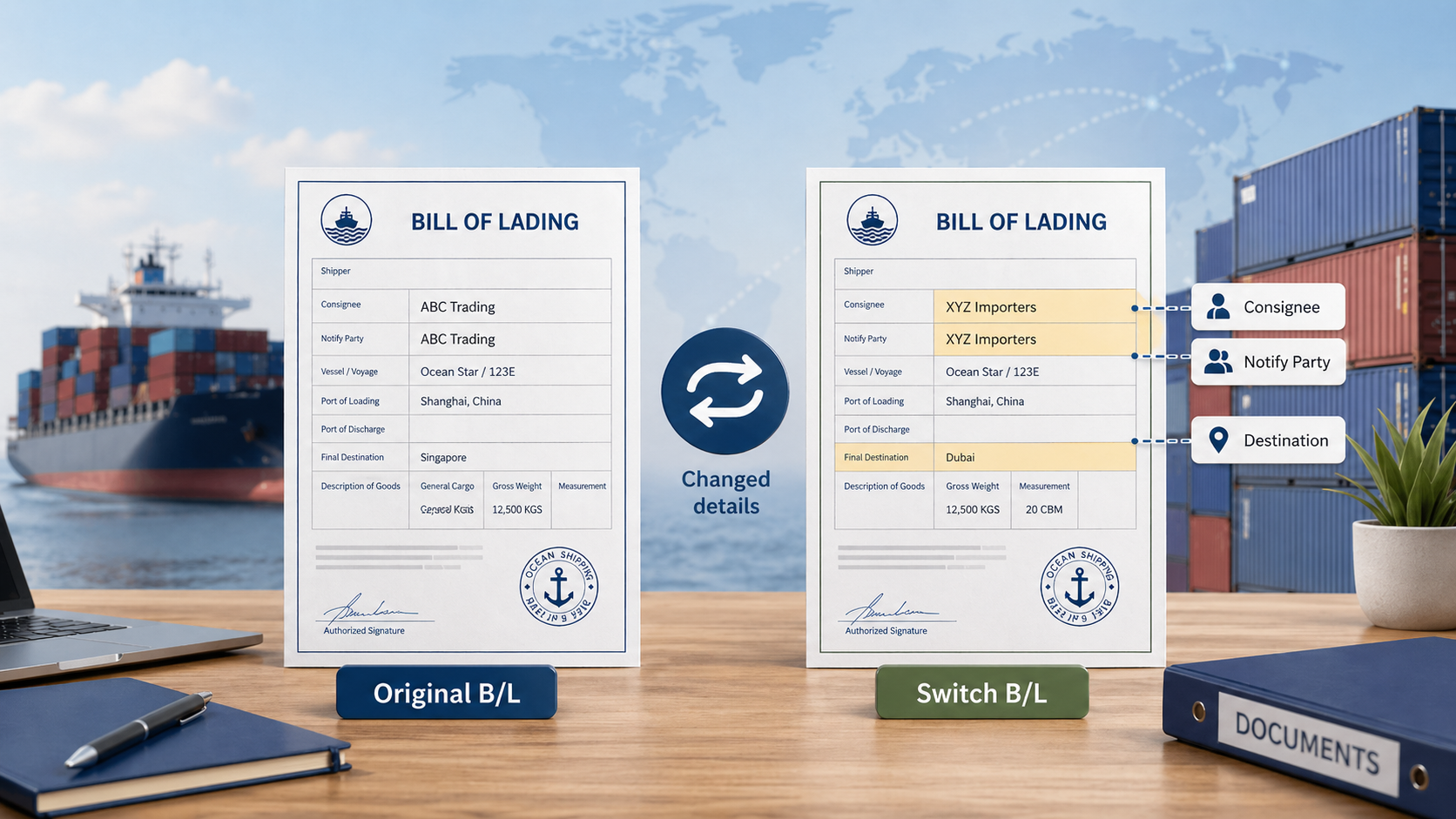
A switch bill of lading means the original bill of lading is cancelled and replaced by a new bill for the same cargo.
The word “switch” refers to the replacement of one bill of lading with another. It does not mean the goods are reloaded, rerouted, or moved again. The same cargo remains under the same shipment, but the transport document is changed to reflect a different commercial arrangement.
The key points are:
It is used for the same shipment and same cargo.
It replaces the original bill of lading after issuance.
It is often used in triangle trade, resale, and high sea sales.
The original bill must usually be surrendered before the new bill is issued.
It should not be used to falsify origin, cargo details, loading date, or shipment records.
The main purpose of a switch bill is to make the bill of lading match the final commercial structure without changing the real facts of the shipment.
Why Do Companies Use a Switch Bill of Lading?
Companies use a switch bill of lading when the original bill of lading no longer matches the final commercial arrangement of the shipment. This is common in trading business, triangle trade, high sea sales, and transactions involving multiple parties.
The key point is simple: the cargo does not change. The same cargo continues under the same shipment. What changes is the bill of lading information, such as the shipper, consignee, notify party, or other commercial details.
Protecting Commercial Confidentiality: Hiding the Original Supplier
Pain Point: In a “supplier–trader–final buyer” structure, the original bill of lading may show the factory or original supplier as the shipper. This may allow the final buyer to bypass the trading company and contact the supplier directly in future orders.
Solution: A switch bill of lading can replace the shipper name on the new bill. The trading company may appear as the shipper, while the original supplier is removed from the final buyer’s shipping documents. This helps protect the trader’s supplier channel and customer relationship.
Supporting Triangle Trade
Pain Point: In triangle trade, the cargo may move directly from Company A to Company C, while the commercial sale is arranged from Company A to Company B, then from Company B to Company C. The physical shipment and the sales transaction do not fully match.
Solution: A switch bill of lading helps the shipping documents match the final transaction. The new bill may show Company B as the shipper and Company C as the consignee, protecting Company B’s intermediary position and supporting the final sales contract.
Handling High Sea Sales
Pain Point: When cargo is sold while already in transit, the cargo owner or buyer may change before the shipment arrives at the destination port. If the original consignee remains on the bill of lading, the final buyer may face problems with customs clearance or cargo release.
Solution: A switch bill can update the consignee and notify party details before arrival. This allows the final buyer to appear correctly on the new bill and complete the import process more smoothly.
Keeping Commercial Documents Consistent
Pain Point: The bill of lading may not match the commercial invoice, packing list, sales contract, or letter of credit. This can lead to bank document refusal, customs questions, payment delays, or cargo release problems.
Solution: A switch bill can legally adjust party details or commercial details so the bill of lading aligns with the final commercial documents. However, it must not falsely change the cargo description, loading date, shipment date, actual country of origin, discharge port, or dangerous goods declaration.
Updating Buyer or Consignee Details
Pain Point: After the shipment departs, the cargo may be resold or transferred to another buyer. The original consignee may no longer be the correct party for destination customs clearance and cargo pickup.
Solution: A switch bill of lading can update the consignee, notify party, and destination contact details. This helps the correct buyer handle customs clearance, cargo release, and final delivery at the destination port.
Original Bill of Lading vs Switch Bill of Lading
The original bill of lading is the first transport document issued for the shipment. It records the original shipment arrangement at the time of loading or cargo receipt.
A switch bill of lading is issued later to replace the original bill.
| Item | Original Bill of Lading | Switch Bill of Lading |
|---|---|---|
| Issuing time | First issued after cargo loading or receipt | Issued after the original bill |
| Main purpose | Records the original shipment | Replaces the original bill with updated details |
| Cargo movement | Shows the actual cargo movement | Same cargo and same shipment |
| Common use | Standard shipping process | Triangle trade, resale, supplier protection |
| Risk level | Standard document risk | Higher legal and documentation risk |
| Key requirement | Accurate shipment record | Original bill must usually be surrendered |
The original and switch bill should not both remain valid at the same time. If duplicate documents exist for the same cargo, the parties involved may face cargo release disputes, cargo theft risk, legal claims, or delivery delays.
This is why the original bill is usually surrendered and cancelled before the new bill is issued.
A Practical Example of a Switch Bill of Lading
A factory in Shenzhen sells goods to a trading company in Hong Kong. The Hong Kong trading company then resells the same cargo to a buyer in Germany.
The cargo is loaded in Shenzhen and shipped directly to Hamburg. The final buyer receives the goods in Germany, but the factory does not sell directly to the German buyer.
The original bill of lading may show:
Shipper: Shenzhen factory
Consignee: Hong Kong trading company
Notify party: Hong Kong trading company
Port of loading: Shenzhen
Discharge port: Hamburg
Cargo description: Household storage products
After the factory has been paid and the first transaction is completed, the trading company may request a switch bill of lading.
The switch bill may show:
Shipper: Hong Kong trading company
Consignee: German buyer
Notify party: German buyer
Port of loading: Shenzhen
Discharge port: Hamburg
Cargo description: Household storage products
In this example, the party details changed, but the same shipment remained unchanged. The cargo description, port of loading, discharge port, loading date, shipment date, and actual transport record should not be falsely changed.
This is a typical use of a switch bill in triangle trade.
How the Switch Bill of Lading Process Works
The switch bill of lading process usually involves the cargo owner, trading company, freight forwarder, shipping line, carrier, or NVOCC. The procedure may vary by issuer, but the core logic is the same: the original bill must be controlled, the request must be approved, and the new bill must match the real shipment.
Step 1: Submit a Formal Switch Request
The requesting party sends a formal request to the freight forwarder, shipping line, carrier, or NVOCC. This party may be the shipper, trading company, cargo owner, consignee, or trading agent.
The request should clearly explain the exact reason for the switch, which details need to be changed, who owns or controls the cargo, whether the original bill has already been released, whether the shipment is still in transit, and whether written authority from the cargo owner is required.
Step 2: Surrender and Cancel the Original Bill
Before a new bill is issued, the original bill of lading must usually be surrendered and cancelled. If it is a negotiable bill, all original sets are normally required.
This step prevents two active bills of lading from existing for the same cargo. Without proper cancellation, the carrier may face duplicate document claims, cargo release disputes, or legal disputes at the destination port.
Step 3: Review the Shipping Documents
The freight forwarder, shipping line, or carrier reviews the shipment details and supporting documents to confirm that the requested changes are legitimate.
Important documents may include:
sales contract
original cargo declaration
cargo description
consignee and notify party details
dangerous goods declaration if applicable
For hazardous cargo, out of gauge cargo, batteries, chemicals, or other regulated goods, the review may be stricter. The issuer may refuse the switch if it creates customs, safety, compliance, or insurance risks.
Step 4: Provide a Signed Letter of Indemnity
Many carriers and freight forwarders require a signed letter of indemnity before issuing a switch bill of lading. This confirms that the requesting party will assume responsibility for claims, losses, legal disputes, or cargo release problems caused by the switch request.
Once the completed indemnity is approved and the original bill has been surrendered, the issuing party may continue with the switch bill process.
Step 5: Issue the New Bill
After the original bill is cancelled and the documents are approved, the new bill can be issued. The switch bill replaces the original bill of lading and may be used for customs clearance, cargo release, bank document submission, or final delivery.
Before using the new bill, all parties should check that the real shipment details remain accurate, especially:
cargo description
loading date
shipment date
discharge port
actual country of origin
dangerous goods declaration
quantity, weight, and package details
What Can Be Changed and What Should Never Be Falsely Changed?
The switch bill of lading process usually involves the cargo owner, trading company, freight forwarder, shipping line, carrier, or NVOCC. The procedure may vary by issuer, but the core logic is the same: the original bill must be controlled, the request must be approved, and the new bill must match the real shipment.
| Can Usually Be Changed | Should Not Be Falsely Changed |
|---|---|
| Shipper name | Port of loading |
| Consignee details | Loading date |
| Notify party details | Shipment date |
| Freight prepaid or freight collect terms | Vessel and voyage |
| Commercial details | Cargo quantity, weight, and volume |
| Destination agent details | Actual country of origin |
| Limited goods description adjustments | Dangerous goods declaration |
| Party details with written authority | Cargo condition |
| Buyer-related document details | Original cargo declaration |
A switch bill can adjust commercial presentation, but it should never change the real facts of the shipment.
For example, a switch bill should not be used to make goods from one country appear to originate from another country. It should not be used to hide hazardous cargo, remove a dangerous goods declaration, conceal damaged cargo, or change the loading date to satisfy a sales contract.
Even when certain details can be changed, approval is not automatic. The freight forwarder or shipping line may reject the request if the change creates legal implications, customs concerns, or cargo release risk.

Is a Switch Bill of Lading Legal?
Yes, a switch bill of lading can be legal, but only when it is issued properly and does not misrepresent the shipment.
It is commonly used in global shipping, triangle trade, high sea sales, and international trade involving trading companies or intermediaries. The document itself is not the problem. The risk depends on how it is used.
A switch bill is generally acceptable when:
the original bill is surrendered and cancelled
the new bill is issued by an authorized party
the cargo description remains accurate
the actual country of origin is not changed falsely
the loading date and shipment date are not falsified
customs authorities are not misled
proper documentation and written authority are provided
A switch bill becomes risky when it is used to hide the actual exporter, avoid duties, conceal restricted goods, mislead the final buyer, or create false shipping documents.
In short, a switch bill is not illegal by itself. The legal risk begins when it is used to misrepresent the shipment.
Main Risks of Using a Switch Bill of Lading
A switch bill of lading can be useful in international trade, but it also carries legal, financial, and operational risks. Because the switch bill replaces the original bill of lading, any mistake or false change may affect customs clearance, cargo release, insurance coverage, bank payment, and the relationship between the parties involved.
The biggest risk is not the switch bill itself. The real risk comes from using it to misrepresent the shipment.
Legal and Fraud Risk
A switch bill may also affect insurance protection. If the new bill contains false or misleading information, the insurance company may question or reject a claim.
For carriers and shipping lines, P&I coverage may also become a concern. If the switch bill is issued without proper control of the original bill, or if false details are included, the carrier may lose protection and face claims directly.
This risk is higher when the shipment involves:
hazardous cargo
out of gauge cargo
damaged cargo
sensitive or regulated products
The bill of lading should always match the real cargo condition, route, and shipment records.
Customs Clearance and Cargo Release Risk
This is the most serious risk. If a switch bill is used to hide or change real shipment facts, it may be treated as misrepresentation or fraud.
Common problems include:
Duplicate documents: If the original bill is not surrendered and cancelled before the new bill is issued, two valid bills may exist for the same cargo. This can lead to cargo ownership disputes and legal claims.
False shipment details: Changing the loading date, shipment date, actual country of origin, cargo description, cargo condition, or original cargo declaration may create serious legal implications.
Misleading the final buyer: If the switch bill is used to hide important shipment facts, the final buyer may challenge the transaction or refuse the goods.
A switch bill should only adjust legitimate party details or commercial details. It should never rewrite the real facts of the shipment.
Insurance and P&I Coverage Risk
A switch bill may also affect insurance protection. If the new bill contains false or misleading information, the insurance company may question or reject a claim.
For carriers and shipping lines, P&I coverage may also become a concern. If the switch bill is issued without proper control of the original bill, or if false details are included, the carrier may lose protection and face claims directly.
This risk is higher when the shipment involves:
hazardous cargo
out of gauge cargo
high-value goods
damaged cargo
sensitive or regulated products
The bill of lading should always match the real cargo condition, route, and shipment records.
Letter of Indemnity Risk
Many carriers and freight forwarders require a signed letter of indemnity before issuing a switch bill of lading. The purpose is to protect the issuing party from claims caused by the switch request.
However, a letter of indemnity does not remove all risk. For the requesting party, signing an LOI may mean accepting responsibility for future losses, claims, legal disputes, cargo release problems, or third-party demands.
If the bank, insurer, carrier, or court does not accept the switch arrangement, the LOI may not be enough to prevent financial loss. This is why the requesting party should review the terms carefully before signing.
Bank and Payment Risk
If the shipment is under a letter of credit, the switch bill must match the bank’s document requirements. Banks usually review the bill of lading, commercial invoice, packing list, shipment date, consignee details, notify party details, and goods description very strictly.
Even a small mismatch may lead to document refusal, payment delay, or extra amendment costs.
This is especially important when the switch bill is used to support a new sales contract. The new bill must align with the commercial documents, but it must not falsely change the real shipment details just to satisfy bank requirements.
Commercial Confidentiality Risk
One major reason for using a switch bill is to protect the original supplier. However, poor document handling can still expose confidential supplier information.
For example, the factory name may still appear on the commercial invoice, packing list, carton marks, certificate of origin, or original document copies sent to the final buyer. If the trading company only switches the bill of lading but ignores other documents, the supplier information may still be revealed.
To reduce this risk, all shipping documents should be reviewed together before they are sent to the final buyer or destination customs broker.
Risk Control Checklist
Before using a switch bill of lading, check these points carefully:
Make sure the original bill is surrendered and cancelled.
Do not allow two active bills for the same shipment.
Do not falsify the loading date, shipment date, cargo description, or actual country of origin.
Keep the commercial invoice, packing list, sales contract, and bill of lading consistent.
Check whether the switch may affect customs clearance, bank review, cargo insurance, or cargo release.
Review the signed letter of indemnity before accepting responsibility.
Work with an experienced freight forwarder or shipping line when multiple parties are involved.
Documents Required for a Switch Bill of Lading
The required documents depend on the carrier, freight forwarder, shipping line, shipment type, and bill of lading type.
Common documents may include:
original bill of lading
switch bill request letter
signed letter of indemnity
commercial invoice and packing list
sales contract
written authority from the cargo owner
updated shipper, consignee, and notify party details
original cargo declaration
dangerous goods declaration if applicable
proof of ownership or trading arrangement
For negotiable bills of lading, all original sets are usually required before the switch bill can be issued.
The more complex the shipment is, the more careful the document review should be. This is especially important for hazardous cargo, out of gauge cargo, high-value goods, and shipments involving multiple parties.
When Should You Avoid a Switch Bill?
A switch bill should be avoided if the requested change may mislead the final buyer, customs authorities, banks, insurance company, or carrier.
Do not use a switch bill to:
change the real country of origin
hide restricted or sanctioned parties
change the loading date falsely
conceal damaged cargo
change cargo description to reduce duty
remove hazardous cargo information
hide a dangerous goods declaration
create duplicate documents
mislead customs authorities
mislead the final buyer
If the issue is only a spelling mistake, address correction, or minor document error, a bill of lading amendment may be safer than a full switch bill.
How Tonlexing Helps Manage Switch Bills
A freight forwarder plays an important role in making the switch bill process safer and more organized, especially when the shipment involves a house bill of lading, multiple parties, or a trading company structure.
At Tonlexing, we do not treat a switch bill as a simple document change. Before arranging a switch bill of lading, our team checks whether the request is reasonable, whether the original bill can be surrendered, and whether the new bill will still match the real shipment.
Tonlexing can help with:
reviewing the switch bill request and exact reason
checking the commercial invoice, packing list, and sales contract
confirming shipper, consignee, and notify party details
communicating with the shipping line or carrier
confirming surrender or cancellation of the original bill
preparing or requesting a signed letter of indemnity
checking whether the switch may affect customs clearance, cargo release, bank review, or insurance coverage
However, a switch bill cannot be issued freely without proper authorization. The process must protect the interests of the shipper, consignee, cargo owner, carrier, and final buyer.
For importers, exporters, and trading companies, working with an experienced freight forwarder like Tonlexing can help reduce document mistakes, customs clearance delays, duplicate document risks, and cargo release disputes.
Frequently Asked Questions
A switch bill of lading is a new bill of lading issued to replace the original bill of lading for the same shipment. It is often used in triangle trade, high sea sales, and resale transactions.
Yes, it can be legal when issued by an authorized freight forwarder, shipping line, carrier, or NVOCC, and when the new bill does not contain false shipment details.
Trading companies use switch bills to protect the original supplier, update consignee details, support resale transactions, or match the final buyer’s commercial documents.
Only limited changes may be accepted. The cargo description must still match the actual goods, packing list, commercial invoice, and customs requirements.
No. The actual country of origin should not be falsely changed. Doing so may cause customs violations, customs clearance delays, and legal disputes.
Related Shipping Guides
Get Support for Switch Bill of Lading & Shipping Documents
- Review original and switch bill details
- Check shipper, consignee, and notify party information
- Reduce customs clearance and cargo release risks
Tonlexing helps importers, exporters, and trading companies manage shipping documents, freight arrangements, and customs-related risks with professional freight forwarding support.