

What Is a Bonded Warehouse?
- Verified & Reviewed · Last updated April 2026
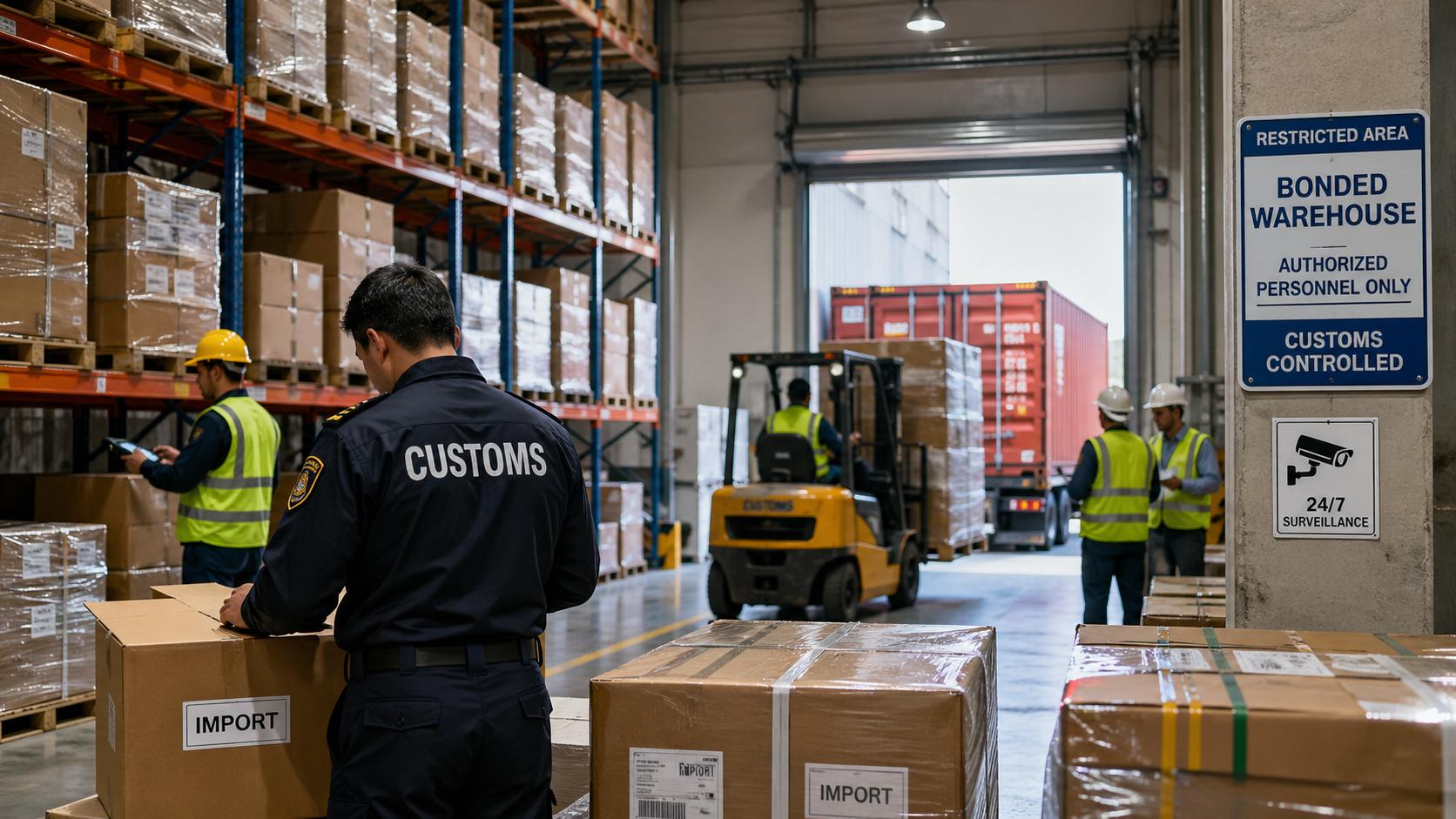
A bonded warehouse is a customs-approved storage facility where imported goods can be stored before customs duties and taxes are paid.
This guide explains what a bonded warehouse is, how bonded storage works, when importers should use it, and how it differs from a non bonded warehouse. It also covers customs duties, duty payment, warehouse bond, storage periods, and key points to check before choosing a bonded warehouse.
Bonded storage
Customs duties
Warehouse bond
- Experienced China-based logistics specialists
Table of Contents
What Is a Bonded Warehouse?
A bonded warehouse is a secure warehouse or other secured area approved by the customs authority. Imported goods, bonded cargo, dutiable goods, or certain restricted goods can be stored there without immediate payment of customs duties.
The key feature is duty suspension. Import duties and taxes are usually paid only when the goods leave the bonded warehouse and enter the local market.
If the goods are exported to a foreign country, duties may not need to be paid in the bonded warehouse country.
A bonded warehouse is also called a customs bonded warehouse or customs warehouse in many countries.
How Does a Bonded Warehouse Work?
The process is simple:
Imported goods arrive at the port, airport, or border.
The goods are moved to a customs bonded warehouse.
The cargo is stored under customs control.
Duties and taxes are deferred during storage.
The importer decides whether to sell, distribute, process, or re-export the goods.
Duties are paid when the goods enter the domestic market.
If the goods are re-exported, import duties may be avoided.
This allows importers to store goods first and pay duties later.
For example, a company may import a full container, store it in a bonded warehouse, and release the goods in smaller batches. Duty payment is made only for the portion released for local sale.
Why Do Importers Use Bonded Warehouses?
Importers use bonded warehouses mainly to control duty payment, inventory, and delivery timing.
A bonded warehouse can help importers:
Defer payment of duty
Improve cash flow
Store goods before sale
Re-export goods without paying import duties
Keep inventory close to the market
Release goods in smaller batches
Store restricted goods under customs control
Prepare cargo for final delivery
This is useful for high-value cargo, seasonal products, uncertain market demand, or goods sold across different countries.
Main Types of Bonded Warehouses
Public Bonded Warehouse
A public bonded warehouse serves multiple importers and exporters. It is usually operated by a third-party warehouse proprietor or logistics provider.
It is suitable for businesses that need bonded storage but do not have enough cargo volume to operate their own facility.
Private Bonded Warehouse
Private bonded warehouses are used by one company for its own goods. They are often used by large importers, manufacturers, retailers, or distributors.
This type gives the business more control over inventory, storage, and internal logistics operations.
Customs Bonded Warehouse
A customs bonded warehouse is a warehouse approved by customs to store goods under customs control. This term is often used as a general name for bonded warehouses.
Specialized Bonded Warehouse
Some bonded warehouses provide specialized storage services, such as:
Bulk liquid storage
Deep freeze storage
Duty free stores
Temperature-controlled storage
Hazardous cargo storage
Storage for restricted goods
Warehouses approved for manufacturing operations
Not every warehouse can handle every cargo type, so importers should confirm approval before shipment.
Bonded Warehouse vs Non Bonded Warehouse
A bonded warehouse stores imported goods before duties and taxes are paid. A non bonded warehouse stores goods that have usually already cleared customs.
| Feature | Bonded Warehouse | Non Bonded Warehouse |
|---|---|---|
| Customs status | Under customs control | Usually already cleared |
| Duty payment | Deferred | Usually already paid |
| Main use | Bonded storage, re-export, delayed clearance | Domestic storage and delivery |
| Customs approval | Required | Usually not required |
| Best for | Importers needing duty flexibility | Goods ready for local sale |
| Re-export benefit | Possible duty savings | Duties usually already paid |
A bonded warehouse is better when importers want to delay duty payment or re-export goods. A non bonded warehouse is better for goods that need faster delivery to the end user.
What Goods Can Be Stored in a Bonded Warehouse?
A bonded warehouse can store many types of imported goods, depending on customs rules and warehouse approval.
Common goods include:
Consumer goods
Spare parts
Raw materials
Retail merchandise
Dutiable goods
Bonded cargo
Re-export cargo
Approved restricted goods
Some goods need special approval, such as chemicals, alcohol, tobacco, dangerous goods, bulk liquids, and temperature-sensitive products.
In some bonded warehouses, goods may also be stored, manipulated, or undergo manufacturing operations. Common processes include labeling, repacking, sorting, inspection, marking, and simple assembly.
Customs Duties, Duty Payment, and Warehouse Bond
One of the main reasons importers use a bonded warehouse is to delay customs duty payment. When imported goods enter bonded storage, customs duties and taxes are not usually paid right away. The goods stay under customs control until they are released into the local market or exported to another country.
Customs Duties
Customs duties are usually calculated based on the product value, HS code, country of origin, and applicable duty rate. When goods enter a bonded warehouse, customs may record the shipment, but the duties are not collected immediately.
Duty Payment
Duty payment normally happens when goods leave the bonded warehouse and enter the local market. If the importer only releases part of the goods, duties may only be paid on that released portion.
If the goods are re-exported to another country, duty payment may not be required in the bonded warehouse country. This helps importers reduce upfront costs and manage cash flow more flexibly.
Warehouse Bond
A warehouse bond is a financial guarantee required by customs. Since customs allows goods to be stored before duties are paid, the bond helps protect customs if goods are lost, removed without approval, misdeclared, or released without proper duty payment.
The warehouse proprietor must keep accurate records, control cargo movement, and follow customs rules during the bonded storage period.

How Long Can Goods Stay in a Bonded Warehouse?
The storage period in a bonded warehouse is not the same in every country. Depending on local customs rules, goods may stay in bonded storage for a few months, several years, or even longer if the warehouse authorization remains valid.
| Country / Region | Typical Bonded Storage Period | Notes |
|---|---|---|
| United States | Up to 5 years | Goods must be released, exported, or handled under customs supervision before the period ends. |
| United Kingdom | No fixed maximum limit | Goods can usually remain in a customs warehouse if authorization and stock records are maintained. |
| European Union | Long-term storage allowed | Rules may vary by member state and warehouse authorization. |
| India | Up to 5 years | Interest on deferred duties may apply after a certain storage period. |
| China | Depends on warehouse type | Some bonded facilities may require registration or renewal after a set period. |
| Philippines | Usually 9–12 months | Some bonded facilities may require registration or renewal after a set period. |
For importers, the legal storage limit is only one part of the decision. Long-term bonded storage can delay duty payment, but it may also increase storage fees, handling costs, and inventory risk.
Before placing goods in a customs bonded warehouse, importers should confirm the allowed storage period, extension rules, release documents, and total warehouse costs with the warehouse proprietor or customs broker.
When Should You Use a Bonded Warehouse?
A bonded warehouse is useful when duty timing or inventory flexibility matters.
You should consider using one if:
You import high-value goods
You want to defer customs duties
You may re-export the goods
You do not know the final destination yet
You want to release goods in batches
You need bonded storage before sale
You handle restricted goods
You need labeling, repacking, or inspection before release
A bonded warehouse may not be the best choice for small shipments, urgent cargo, or goods that are ready for immediate local delivery.
How to Choose a Bonded Warehouse
When choosing a bonded warehouse, importers should look beyond storage price. The right warehouse should match the cargo type, customs requirements, storage period, and final delivery plan.
Key points to check include customs approval, accepted cargo types, storage fees, handling charges, security level, inventory control, re-export support, and cooperation with customs brokers and freight forwarders. If the goods are restricted, temperature-sensitive, or require special handling, the warehouse must also have the right storage conditions and approval.
For importers shipping from China, Tonlexing can help arrange suitable warehouse and logistics solutions based on the shipment plan. Tonlexing has warehouse facilities that can support cargo consolidation, temporary storage, packing, labeling, inspection, and shipment preparation before export. For shipments that require bonded storage or customs-controlled handling, Tonlexing can also help coordinate with suitable bonded warehouse resources and customs partners.
A reliable warehouse solution should not only store goods, but also help reduce customs risk, avoid unnecessary delays, and make the full shipping process easier to manage.
Frequently Asked Questions
A customs warehouse is used to store imported goods before they enter the local customs territory. The goods stay under customs control until they are released for local sale, exported, or moved under another approved customs procedure.
Common goods stored in bonded storage include electronics, machinery, furniture, textiles, spare parts, raw materials, retail merchandise, bonded goods, and dutiable goods. Some restricted goods may also be stored if the warehouse has the right approval.
Yes. A bonded warehouse can help importers save money by delaying the payment of duty until the goods are released for local sale. If the cargo is re exported, import duties may not need to be paid in that country.
Yes. A bonded warehouse is usually a customs-approved secure location or secured area with cargo records, access control, inventory management, and customs supervision. This helps protect goods stored under customs control.
The necessary paperwork may include a commercial invoice, packing list, bill of lading, customs declaration, warehouse entry record, release order, and duty payment documents. The exact requirements depend on the customs authority, cargo type, and release method.
Related Warehouse, Customs & Shipping Guides
Need Bonded Warehouse Support for Your Shipment?
- Bonded storage and cargo consolidation
- Customs-controlled warehouse coordination
- Support for import, re-export, and final delivery
Get tailored warehouse and shipping solutions with Tonlexing, including storage, customs support, and international freight coordination.