Related Guide
Shipping Cost from China to Chile
Shipping Costs from China to Chile (2026 Guide) Verified & Reviewed · Last updated June 2026 Shipping costs from China to Chile usually range fro...
Read guide →

Sea freight from China to Chile typically takes around 30–45 days, with 20GP rates around USD 4,320–5,280 and LCL shipping around USD 220 per CBM.
This guide covers current shipping costs, transit times, FCL and LCL options, routes to San Antonio and Valparaíso, Chilean customs clearance, and door-to-door delivery.
Sea Freight Costs
FCL & LCL Shipping
Chile Customs Clearance
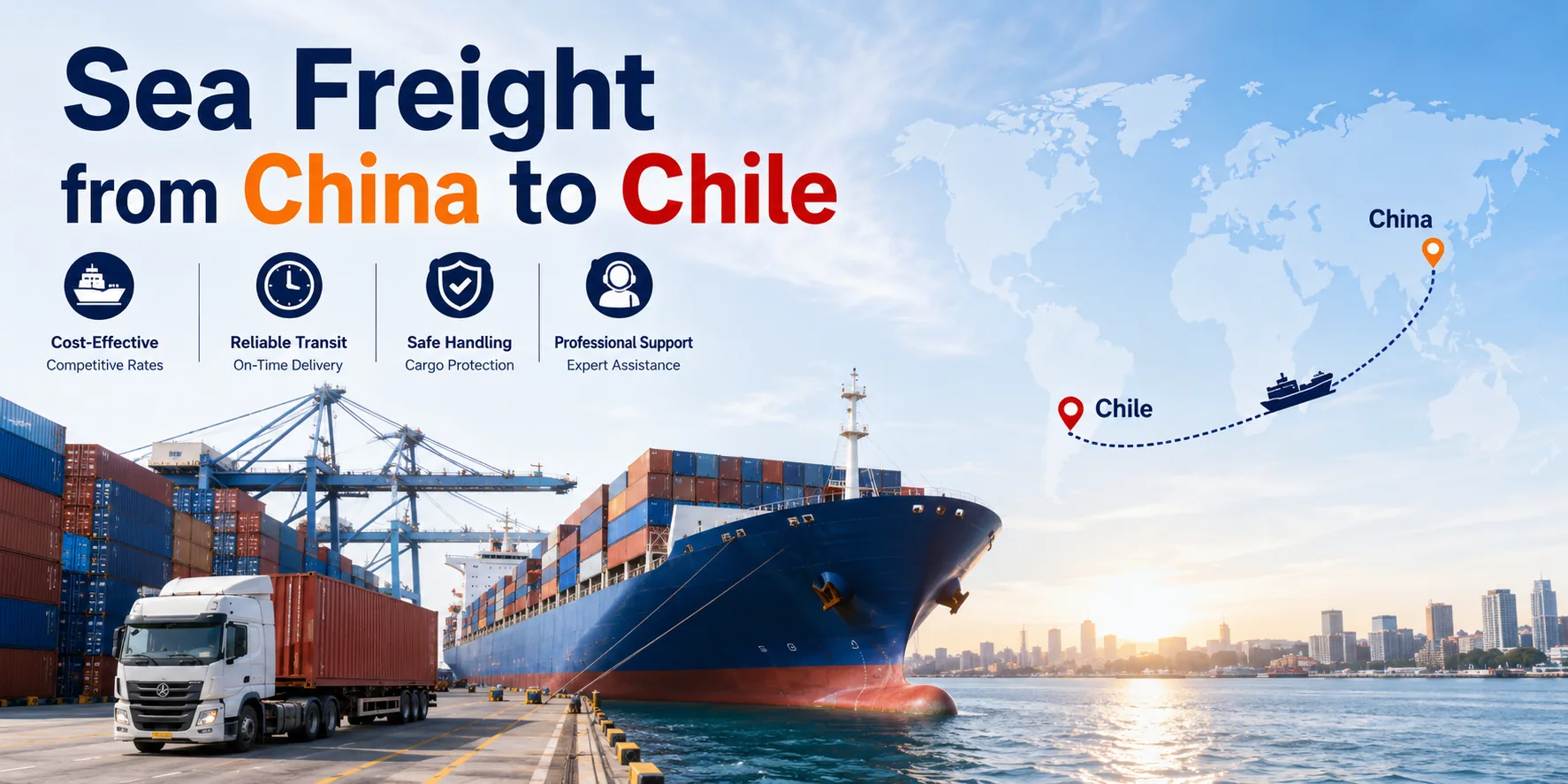
Sea freight costs vary according to the departure port, destination port, container type, cargo volume and current carrier rates. As of August 2026, the following figures can be used as general market references.
| Shipping Option | Estimated Cost | Best For |
|---|---|---|
| 20GP FCL | USD 4,320–5,280 | Medium-volume cargo |
| 40GP FCL | USD 4,500–5,500 | Larger or regular shipments |
| LCL | Around USD 220/CBM | Smaller shipments |
These prices are reference ocean freight rates rather than fixed all-inclusive quotations. Origin handling, documentation, cargo insurance, destination charges, customs duties and inland delivery in Chile may increase the final shipping cost.
FCL is normally quoted per container. A 20GP is suitable for medium-volume or heavier cargo, while a 40GP provides more loading space for larger shipments.
As cargo volume increases, FCL often becomes more economical than LCL, especially when destination handling and consolidation charges are considered.
LCL is charged by CBM or chargeable weight and is more suitable for shipments that do not require a full container.
Besides the basic freight rate, importers should also consider consolidation, CFS handling and destination fees. For larger LCL cargo, comparing the total cost with a 20GP FCL quotation is recommended before booking.
Ocean shipping from China to Chile generally takes around 30–45 days port to port. Some faster scheduled services may take approximately 28–35 days, while LCL or transshipment services can require more time.
| Shipping Service | Estimated Transit Time |
|---|---|
| FCL from major Chinese ports | About 30–45 days |
| Faster scheduled services | Around 28–35 days |
| LCL service | Often around 35–50 days overall |
| Door-to-door delivery | Ocean transit plus clearance and inland transport |
Transit time depends on the departure port, carrier, destination port and whether the container travels directly or connects through another hub.
The published vessel schedule should not be treated as the total shipping time. Cargo may still require factory pickup, export customs formalities and container loading before departure. LCL cargo also requires consolidation before sailing and deconsolidation after arrival.
Several factors can make actual delivery longer than the basic ocean schedule:
Transshipment and connecting vessel schedules
Peak-season capacity shortages
Port congestion
LCL consolidation or deconsolidation
Customs delays after arrival
Inland transportation to the final destination
Businesses working with fixed inventory schedules should allow some buffer instead of planning around the fastest advertised transit time. This makes reliable transit times and timely delivery easier to manage.
Container shipping between China and Chile connects major Chinese manufacturing regions with ports on Chile’s Pacific coast in South America.
The most suitable departure port is usually the efficient port closest to the supplier. Sending cargo across China simply to use a larger port can increase domestic trucking costs without improving the international route.
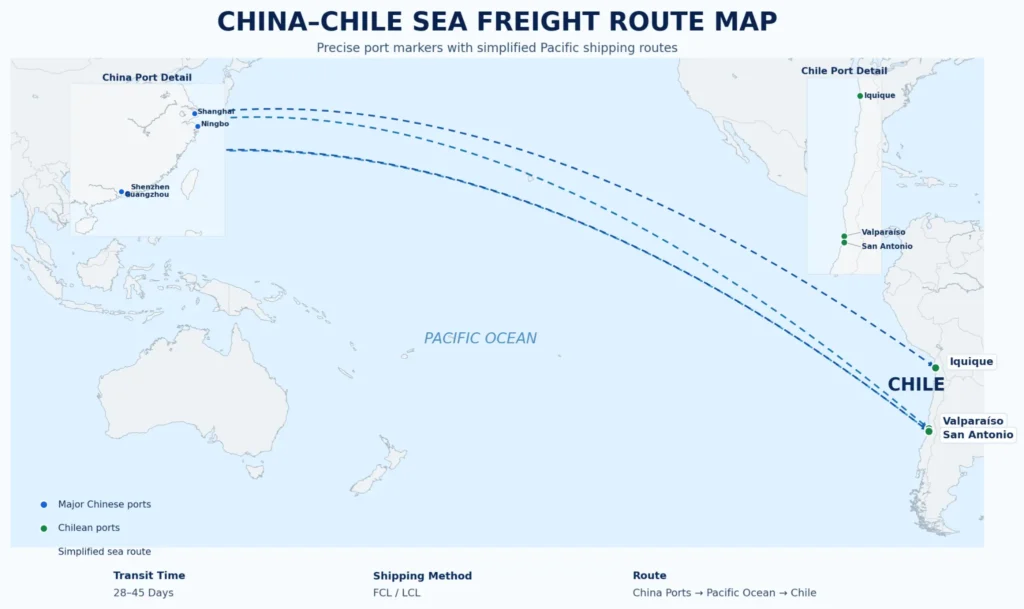
Common departure ports include:
Shanghai – suitable for suppliers in Shanghai, Jiangsu and surrounding manufacturing areas.
Ningbo – widely used for cargo from Zhejiang and eastern China.
Shenzhen / Yantian – an important option for factories in Shenzhen, Dongguan and South China.
Guangzhou / Nansha – convenient for suppliers around Guangzhou, Foshan and the Pearl River Delta.
Qingdao – commonly considered for cargo from Shandong and northern manufacturing regions.
These major Chinese ports provide regular international shipping connections toward Latin America.
The final choice should be based on supplier location, container availability, carrier schedules and total shipping costs rather than port size alone.
San Antonio and Valparaíso are two of the most important destination ports for commercial imports arriving from China.
San Antonio Port is a major container gateway for central Chile and is commonly used for shipments moving onward to Santiago and surrounding industrial areas.
Valparaíso is another established Pacific gateway and may be selected when the carrier schedule, ocean rate or inland transport arrangement is more suitable.
For cargo destined for northern Chile, Iquique can also be considered depending on carrier availability and final delivery requirements.
The cheapest ocean freight rate is not always the best option. Importers should compare the destination port together with inland transportation costs before confirming the route.
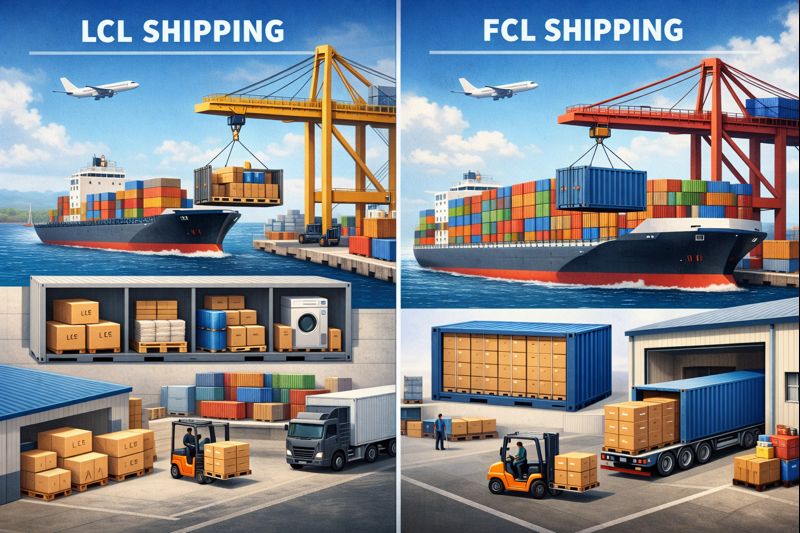
FCL and LCL are the two main container shipping options for commercial cargo moving between China and Chile. The correct shipping method depends on cargo volume, handling requirements, schedule and total landed cost.
| Factor | FCL | LCL |
|---|---|---|
| Cargo Volume | Medium to large | Small to medium |
| Pricing | Per container | By CBM or chargeable weight |
| Container Space | Dedicated | Shared |
| Cargo Handling | Less handling | More consolidation handling |
| Transit Planning | More predictable | May require extra time |
| Suitable For | Larger or regular shipments | Smaller orders |
FCL (Full Container Load) gives one shipper exclusive use of a container and is generally more suitable for larger or regular shipments. It reduces cargo handling and usually provides more predictable transit.
As cargo volume increases, FCL can also become more economical once LCL consolidation, CFS handling and destination charges are considered.
LCL (Less than Container Load) allows smaller shipments to share container space with other cargo. Freight is normally calculated by CBM or chargeable weight, making it practical for lower-volume shipments.
However, LCL involves additional consolidation and deconsolidation. For cargo approaching a full container load, it is usually better to compare both LCL and 20GP FCL quotations before booking.
Customs clearance in Chile requires accurate cargo information, correct HS classification and complete import documents. For commercial sea freight, the importer or customs agent normally submits the Declaración de Ingreso (DIN) before the cargo can be released.
Checking the customs requirements and preparing proper documentation before departure can help ensure smooth customs clearance and avoid delays after the cargo arrives.
For higher-value commercial imports, a licensed Chilean customs broker may be required to handle the declaration and customs procedures.
The main documents normally include:
Bill of Lading
Commercial Invoice
Packing List
HS code and product description
Certificate of Origin, when claiming preferential treatment under the China–Chile FTA
Additional permits or certificates for regulated products
The commercial invoice and packing list should match the actual cargo details, including quantity, value, weight and packaging. Incomplete or inconsistent information can lead to customs delays or additional inspections.
Chile generally applies a 6% import duty based on the CIF customs value, together with 19% VAT. The final tax amount depends on the product classification and whether preferential tariff treatment applies.
Goods that qualify under the China–Chile Free Trade Agreement may receive reduced or zero import duty when the applicable rules of origin are met and the required origin documentation, such as Form F, is provided.
Some products require approval from Chilean authorities before customs release. This may apply to food, agricultural products, cosmetics, medical devices, electrical products and other regulated goods.
Importers should confirm these requirements before shipment so that the necessary permits or certificates are ready before the cargo arrives in Chile.
A door to door service combines origin transportation, international shipping and final delivery under one logistics arrangement.
Instead of arranging each stage separately, the freight forwarder can coordinate the cargo from the supplier’s factory in China to the consignee’s destination address in Chile.
A typical shipping process includes:
Supplier pickup in China
Cargo consolidation or FCL container loading
Export customs formalities
Ocean transportation
Chilean customs clearance
Port or warehouse release
Inland trucking and final delivery
For businesses purchasing from several suppliers, cargo can also be collected and consolidated in China before export.
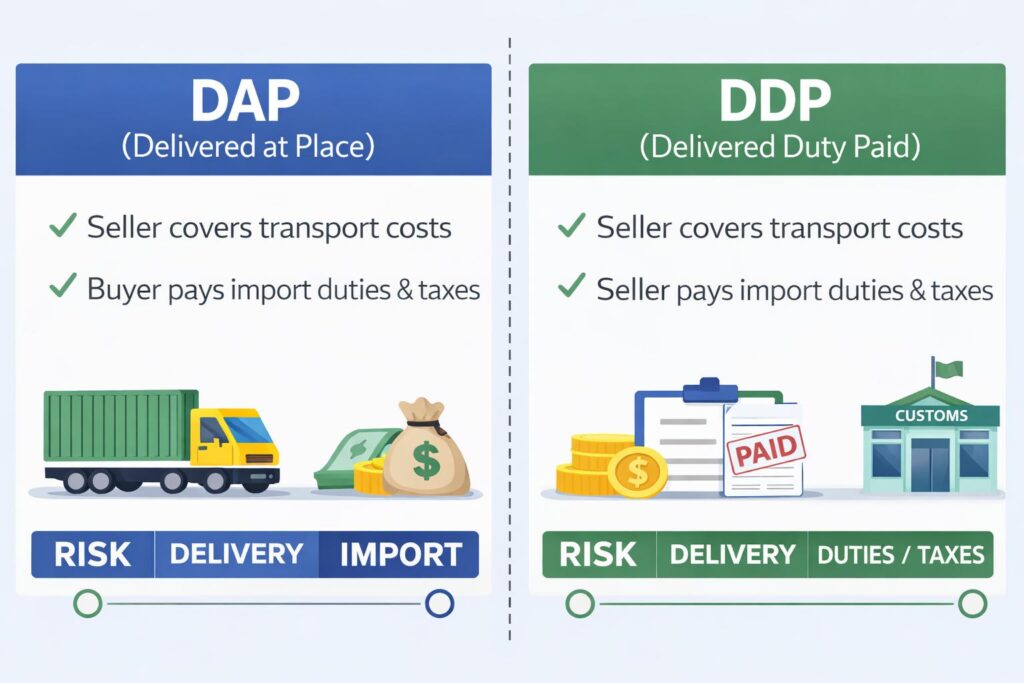
Door-to-door shipping does not automatically mean Delivered Duty Paid.
Under DAP, the seller or freight provider can arrange transportation to the agreed destination, while import duties and taxes generally remain the responsibility of the buyer.
Under Delivered Duty Paid, or DDP shipping, the responsibilities for customs duties, taxes and import procedures are different and must be clearly confirmed before booking.
The quotation should always state exactly what is included so the importer can avoid unexpected fees.
Sea freight and air freight serve different shipping requirements.
Ocean transportation is usually preferred for large shipments, heavy cargo and regular commercial imports, while air freight is more suitable for urgent or time sensitive shipments.
| Factor | Sea Shipping | Air Freight |
|---|---|---|
| Large Shipments | More economical | Expensive |
| Heavy Cargo | Suitable | High cost |
| Urgent Shipments | Slower | Better |
| Typical Transit | Several weeks | Several days |
| Cost Level | Lower | Higher |
| Best For | Commercial container cargo | Small urgent cargo |
Air freight is commonly used for urgent spare parts, samples, business shipping electronics and other high value goods where faster delivery is important.
For very small urgent shipments, express shipping can also be considered. Express shipping offers faster delivery than normal ocean transportation but usually has a higher cost per kilogram.
Some businesses combine shipping methods. Urgent stock can move by air freight or express shipping while the main container travels by sea, reducing the risk of inventory shortages without paying air rates for the entire shipment.
Choosing the right freight forwarder helps keep each stage of the shipment coordinated, from supplier pickup in China to customs clearance and final delivery in Chile.
Tonlexing provides FCL and LCL shipping solutions from major manufacturing regions in China, with services including:
Supplier pickup and cargo consolidation
FCL and LCL booking
Export customs and shipping documentation
Cargo tracking and destination coordination
Customs clearance support
Door-to-door delivery in Chile
For regular importers, we can compare routes and container options as shipment volume changes and help identify potential documentation or routing issues before departure.
To receive a quotation, provide the pickup city, product name, number of packages, gross weight, dimensions and final destination in Chile.
As of August 2026, indicative market rates are approximately USD 4,320–5,280 for a 20GP container and USD 4,500–5,500 for a 40GP container. LCL shipping is around USD 220 per CBM as a general market reference.
Typical port-to-port transit time is around 30–45 days. Some faster services may take approximately 28–35 days, while LCL consolidation, customs clearance and inland delivery can increase the overall shipping time.
San Antonio and Valparaíso are major ports for cargo entering central Chile. San Antonio is widely used for shipments moving onward to Santiago, while Valparaíso may be selected depending on the carrier and route. Iquique can also be considered for some northern destinations.
LCL is normally suitable for smaller shipments, while FCL becomes more attractive as cargo volume increases. The best option should be determined by comparing the complete shipping costs, including origin and destination handling, rather than cargo volume alone.
Commercial imports normally require a commercial invoice, packing list, Bill of Lading and accurate HS classification. A valid certificate of origin may also be required when claiming preferential duty treatment under the China–Chile Free Trade Agreement.
Useful freight, customs and importing resources related to this shipping guide.
Shipping Costs from China to Chile (2026 Guide) Verified & Reviewed · Last updated June 2026 Shipping costs from China to Chile usually range fro...
Read guide →
Sea freight is the most cost effective shipping method for large volumes and container load cargo. It is ideal for businesses looking to reduce s...
Read guide →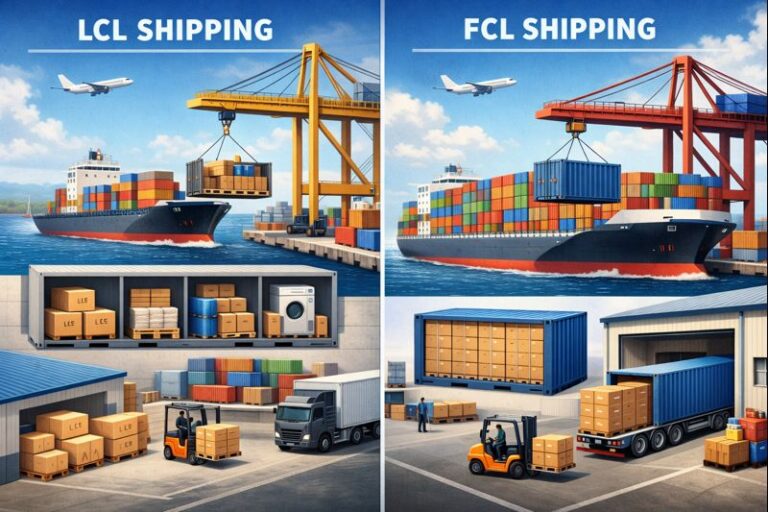
LCL vs FCL Shipping: What They Mean, Key Differences, and Which One to Choose Verified & Reviewed · Last updated January 2026 FCL vs LCL shipping...
Read guide →
Door to door shipping from China by air, sea, rail or express. Compare DDP vs DAP, costs, transit times, customs clearance and final delivery.
Read guide →Free Shipping Cost Calculator Freight Cost Calculator from China Use this freight cost calculator from China to estimate air freight, sea freight...
Learn more → Useful Resource CBM Calculator: Calculate Your Cargo Volume for ShippingCalculate your cargo volume instantly with our free CBM Calculator. Whether you are shipping goods by ocean freight, air freight, or express cour...
Learn more →WhatsApp us