Flexible container solutions for different shipment sizes, delivery schedules and shipping budgets.


Sea Freight from China to India
- Verified & Reviewed · Last updated August 2026
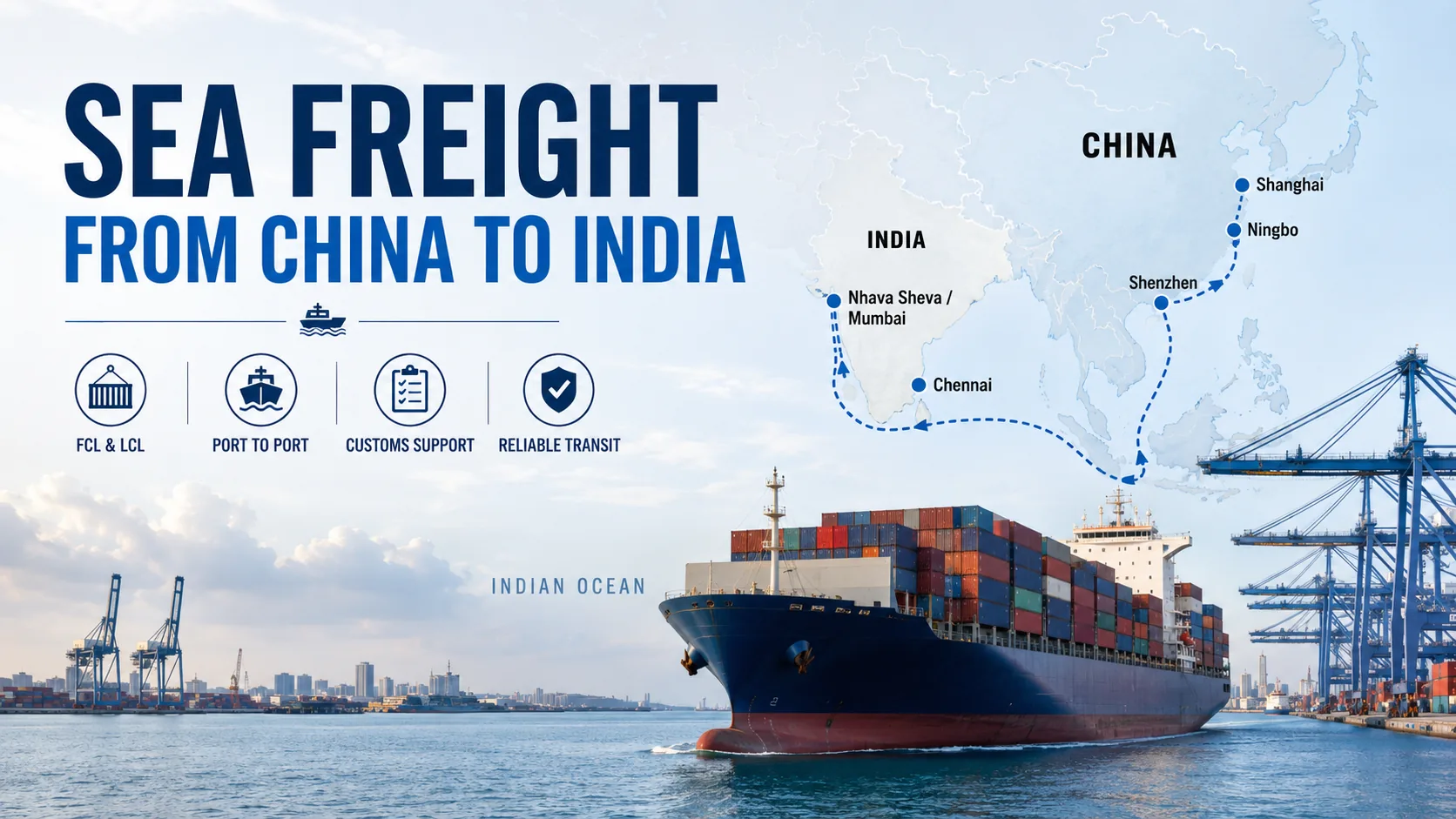
Sea freight from China to India offers a cost-effective option for businesses shipping containerized and commercial cargo between the two countries.
This guide covers shipping costs, transit times, FCL and LCL options, major ports such as Nhava Sheva, Mundra and Chennai, and customs clearance requirements for China to India shipments.
Shipping Costs / Rates
Transit Time Range
FCL / LCL Options
- Experienced China-based logistics specialists
10,000+ international shipments handled Global sea, air & DDP shipping solutions 24/7 shipment tracking & customer support
Quick Shipping Facts
For importers making an initial China to India shipping plan, the following figures provide a simple reference before requesting a route-specific quotation:
20GP CONTAINER
$1,150–$1,500
FCL to India
Suitable for medium-volume or heavier commercial cargo.
40GP CONTAINER
$1,500–$2,000
FCL to India
More capacity for larger or bulkier commercial shipments.
LCL SHIPPING
Around $10/CBM
Shared Container Space
A practical option when your cargo does not require a full container.
TYPICAL TRANSIT
10–25 days
Port-to-Port
Timing varies by route, carrier schedule and transshipment requirements.
Actual shipping costs and delivery schedules vary according to the route, shipment details, season and carrier availability.
Table of Contents
Sea Freight Costs from China to India
Shipping costs from China to India depend on more than the size of the container. The origin port, Indian arrival port, cargo characteristics, shipping season, carrier capacity and booking date can all affect the final quotation. The average shipping cost can vary considerably between routes, so businesses should compare the complete logistics quotation rather than the basic ocean rate alone.
For general August 2026 planning, the following rates can be used as a reference:
| Shipping Method | Shipment Size | Estimated Freight Rate | Typical Transit Time |
|---|---|---|---|
| LCL | Per CBM | Around USD 10/CBM | 12–25 days |
| FCL | 20GP | USD 1,150–1,500 | 10–25 days |
| FCL | 40GP | USD 1,500–2,000 | 10–25 days |
| FCL | 40HQ | Similar to or slightly above 40GP | 10–25 days |
For smaller shipments, the USD 10/CBM figure should be treated as a base ocean freight reference. Consolidation, warehouse handling, documentation and local charges in India may be billed separately. FCL quotations can also exclude services outside the basic port-to-port movement.
A complete China to India quotation may include several cost components in addition to the ocean rate, such as:
Factory pickup and origin trucking in China
Export handling and documentation
Origin and arrival terminal charges
Customs clearance and customs broker services
Inland transportation in India
Cargo insurance, storage or detention where applicable
The lowest ocean freight rate does not always mean lower shipping costs overall. Importers should compare quotations on the same service basis, particularly when arranging regular China to India shipments.
What Can Change the Final Freight Rate?
Freight prices can change between quotation and booking because vessel space, equipment availability and seasonal demand are not fixed. Different carriers may also apply different surcharges or offer different service levels on the same route.
The main factors that can change shipping costs include:
Origin location: Factory pickup costs depend on the supplier’s distance from the selected export port.
Indian arrival port: Local handling and inland delivery costs vary by route.
Shipment size: LCL and FCL use different pricing structures.
Shipping season: Peak periods can increase rates when vessel space becomes limited.
Carrier service: Transit time, sailing frequency and routing can affect the quoted price.
For regular imports, businesses should request an updated quotation close to the cargo-ready date rather than relying on an older rate.
Sea Freight Transit Time from China to India
Ocean freight typically takes around 10 to 25 days from major Chinese ports to major Indian container gateways. Direct sailings can be faster, while services involving transshipment or less frequent departures may require additional time.
Typical China to India planning ranges include:
Shanghai to Nhava Sheva: around 15–20 days
Ningbo to Nhava Sheva: around 15–20 days
Shenzhen / Yantian to Nhava Sheva: around 14–18 days
Shanghai to Mundra: around 15–22 days
Shenzhen to Chennai: around 12–18 days
These estimates cover the main ocean transportation period rather than the entire delivery schedule. A China to India shipment may also require time for factory pickup, export handling, container gate-in, customs clearance, cargo release and inland transportation.
What Can Affect Transit Time?
Transit time is influenced by more than the distance between China and India. Vessel schedules can change, containers may be rolled to a later sailing when capacity is tight, and transshipment routes can create extra waiting time.
Common causes of delay include:
Chinese public holidays and factory shutdown periods
Peak export seasons with limited vessel capacity
Port congestion at origin or arrival
Weather or operational changes
Transshipment waiting time
Importers with fixed production or sales deadlines should therefore work with a realistic transit range rather than the fastest advertised schedule. For urgent shipments where delivery speed is critical, air freight may be considered as an alternative, although air freight costs are significantly higher for larger commercial cargo.
FCL vs LCL Shipping from China to India
FCL and LCL are the two main container shipping modes used for commercial cargo between China and India. Choosing the right shipping mode depends on shipment size, product type, delivery schedule, handling requirements and overall shipping costs.
FCL Shipping
FCL means Full Container Load, where one importer uses the entire container for its own cargo. The most common container options are 20GP, 40GP and 40HQ.
FCL shipping is generally suitable for larger commercial orders, heavy goods, machinery, palletized products and businesses importing inventory on a regular basis. Since the container is not shared with unrelated shipments, FCL normally involves fewer warehouse handling stages and provides better control over the container load.
FCL is often suitable for:
- Large or heavy shipments
- Machinery and industrial equipment
- Fragile or higher-value products
- Regular commercial imports
LCL Shipping
A Less than Container Load allows several importers to share container space. It is commonly used when the shipment is too small to justify booking an entire container.
The freight charge is generally based mainly on the space occupied by the goods. Cargo is delivered to a consolidation warehouse in China, loaded with other shipments and separated after arrival in India.
LCL is commonly suitable for:
- Trial orders
- Smaller wholesale shipments
- Goods from several suppliers
- Regular shipments below full-container size
When Should You Choose FCL or LCL?
There is no fixed point where FCL automatically becomes cheaper than LCL because freight rates and local charges vary by route.
As a practical guide:
Below 10 CBM: LCL is usually the first option to compare.
Around 10–15 CBM: Compare both shipping modes.
15–18+ CBM: A 20GP FCL quotation is normally worth checking.
Tip: For fragile or high-value cargo, FCL may make sense at a lower volume because it reduces consolidation handling.
Main Shipping Routes and Ports from China to India
The maritime trade corridor between China and India connects major manufacturing regions in China with key container ports across India. The most suitable shipping route depends on the supplier location, final market, vessel schedule and total transportation cost.
Most China to India ocean freight services operate through major ports in East China, South China and India’s western and southern coastal gateways.
Major Ports of Departure in China
China has several major export ports serving India-bound container shipments. The most suitable departure point usually depends on the factory location, local transportation cost and available carrier schedules.
Shanghai Port and Ningbo-Zhoushan Port: Major East China gateways serving the Yangtze River Delta manufacturing region. These ports handle machinery, electronics, industrial products and general commercial cargo.
Shenzhen / Yantian Port and Guangzhou Nansha Port: Important South China gateways serving the Pearl River Delta, including Shenzhen, Dongguan and Guangzhou. They are widely used for electronics, electrical products, machinery and consumer goods.
Qingdao Port: A key northern China gateway serving Shandong and nearby industrial regions. It is commonly used for machinery, industrial equipment, auto parts and other manufactured products.
Major Ports of Arrival in India
India’s main container gateways for China imports are located along the western and southern coasts. The best arrival port depends mainly on the final delivery location and inland transportation requirements.
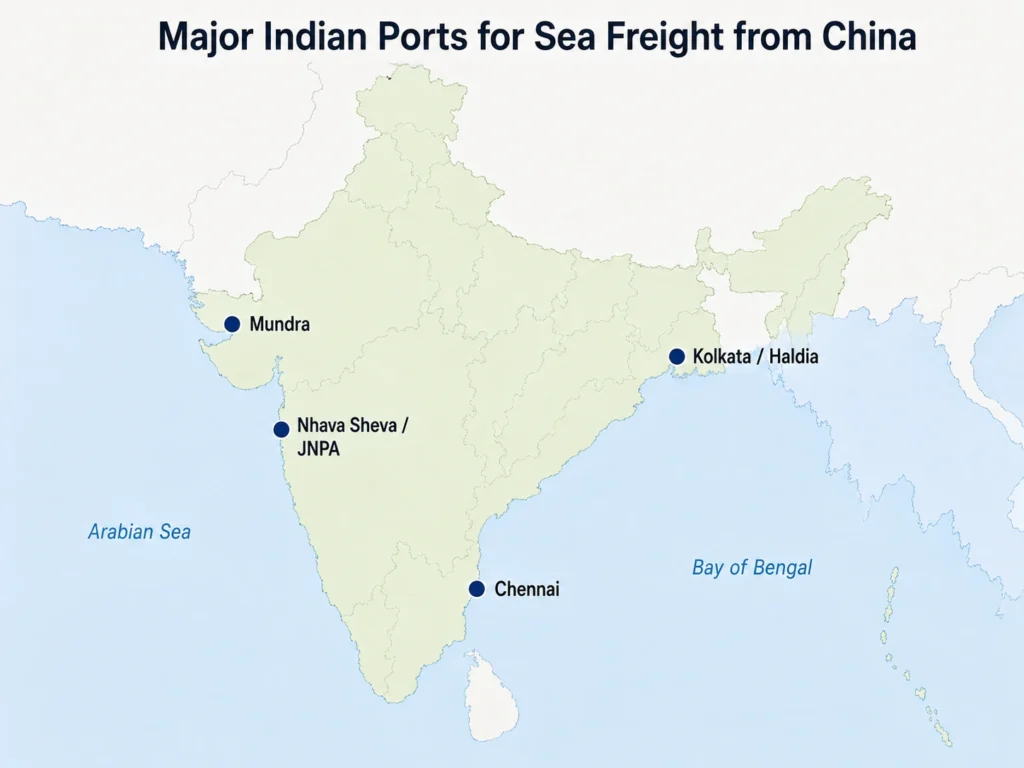
Nhava Sheva / JNPA: Located near Mumbai, Nhava Sheva is a major container gateway serving Maharashtra and western India.
Mundra Port: Located in Gujarat, Mundra is important for cargo moving toward Gujarat, Rajasthan, Delhi NCR and nearby markets.
Chennai Port: A major southern India gateway used for machinery, automotive components, electronics and industrial products.
Kolkata / Haldia: Provides access to eastern India markets where inland delivery from western ports may be less efficient.
Core Shipping Routes & Transit Times
China to India services can generally be divided into South China routes and East China routes. The selected shipping route depends on the origin location, final destination and available carrier schedule.
South China to East and South India Route
This route is commonly used by exporters located in the Pearl River Delta because of its convenient access to Shenzhen, Guangzhou and nearby manufacturing centers.
Routing: Shenzhen / Guangzhou → Strait of Malacca → Bay of Bengal → Chennai / Eastern India
Average Transit Time: Around 12–18 days
Common Pairings: Shenzhen to Chennai; Guangzhou to Chennai
East China to West India Route
This is one of the main China to India ocean corridors for machinery, industrial products, electronics and general commercial cargo.
Routing: Shanghai / Ningbo → Strait of Malacca → Arabian Sea → Nhava Sheva / Mundra
Average Transit Time: Around 15–25 days
Common Pairings: Shanghai to Nhava Sheva; Ningbo to Mundra
Shipping Lines and Service Options
Major carriers provide regular China to India services through direct sailings and transshipment connections. Available schedules depend on the origin port, Indian gateway, vessel space and shipping season.
When comparing services, importers should consider:
Transit time
Sailing frequency
Direct or transshipment routing
Container availability
Total freight cost
Choosing the right combination of origin port, arrival port and service can improve delivery reliability while keeping transportation costs under control.
How the Sea Freight Process from China to India Works
A clear shipping process helps importers understand how cargo moves from suppliers in China to final delivery in India. Although every shipment is different, most international shipping bookings follow a similar sequence.
Provide Cargo Details
Importers provide the product description, package quantity, weight, dimensions, supplier location and delivery address. These details help the freight forwarder determine the suitable shipping mode, container type and estimated shipping costs.

STEP 01
Choose FCL or LCL
Based on shipment size and requirements, the cargo can move as LCL, 20GP, 40GP or 40HQ. The best option depends on shipment size, budget, transit time and handling requirements.

STEP 02
Arrange Pickup and Export Booking
The freight forwarder coordinates factory pickup, supplier consolidation where required, export handling and vessel booking. This is particularly useful for businesses shipping goods from several suppliers under one international shipping arrangement.

STEP 03
Ocean Transportation
After loading, the container is transported from China to the selected Indian port. Transit time depends on the route, carrier schedule and whether the service is direct or involves transshipment.

STEP 04
Customs Clearance and Final Delivery
After arrival, the importer or customs broker completes the required customs clearance process. Once released, the cargo can move to the final warehouse, factory or business address.

STEP 05
Customs Clearance for Sea Freight into India
Customs clearance is an important part of the China to India shipping process. After the cargo arrives at the Indian port, the importer must complete the required procedures before the goods can be released for final delivery.
The requirements depend on the product type, HS code, cargo value and applicable customs regulations in India. Preparing accurate documents before shipment can help avoid delays and additional charges at the port.
Required Import Documents
For most commercial shipments, Indian customs require standard shipping documents. The exact requirements can vary according to the product, but commonly used documents include:
Commercial Invoice
Packing List
Bill of Lading
Bill of Entry
Importer-Exporter Code (IEC)
HS Code information
The information shown on the invoice, packing list and transport documents should be consistent. Incorrect product descriptions, quantities or cargo values can delay the customs clearance process.
Duties and Import Requirements
Customs duties and taxes are calculated according to the product classification and customs value. Depending on the goods, charges may include Basic Customs Duty, Social Welfare Surcharge, IGST and other applicable fees.
The final customs duties vary according to the HS code, so importers should confirm the applicable rate before shipping goods from China to India. Indian customs may also request additional documents or inspection for certain regulated products.
Some goods, including electronics, batteries, chemicals, food products, medical products and selected machinery, can require additional permits or compliance checks.
Working with an experienced freight forwarder or customs broker can help coordinate documentation, customs clearance and delivery arrangements more efficiently.
Sea Freight vs Air Freight from China to India
Sea and air freight serve different shipping requirements. Ocean transportation is generally more economical for heavy cargo, larger orders and regular commercial imports, while air freight is used when delivery speed is more important than transportation cost.
Ocean services commonly take around 10 to 25 days, while air freight from China to India typically takes around 2 to 8 days, depending on the service and airport pair. Air freight is therefore more suitable for urgent shipments, high-value products, samples, replacement parts and other time-sensitive shipments.
The main differences are straightforward:
Ocean freight: Lower transportation cost and better suited to larger or heavier shipments.
Air freight: Faster delivery but higher shipping costs for most commercial cargo.
Air freight costs rise quickly for heavy or bulky shipments. For this reason, businesses importing regular inventory usually use ocean transportation as their main shipping method and reserve air services for urgent replenishment.
Some importers use sea and air freight together, moving routine stock in containers while sending urgent commercial shipments by air when faster delivery is required.
Common Goods Shipped from China to India
China to India ocean freight is commonly used for commercial goods that are heavy, bulky or moved in larger quantities. Businesses frequently use container shipping when air transportation would be too expensive for regular inventory.
Common goods include:
Machinery and industrial equipment
Electronics and electrical products
Auto parts
Textiles and garments
Furniture and building materials
Solar and energy equipment
Consumer goods
Most standard products can move by FCL or LCL. Businesses shipping goods such as batteries, chemicals, liquids or oversized equipment should inform their freight forwarder before booking because additional documentation, packaging or handling may be required.
The correct shipping method should be selected according to the product, shipment size, Indian destination and import requirements.
Why Choose Tonlexing for China to India Ocean Freight?
Choosing a freight forwarder for China to India shipments involves more than comparing the lowest ocean rate. Businesses also need reliable coordination between suppliers, transportation, customs procedures and final delivery.
Tonlexing provides practical ocean freight solutions for commercial cargo moving from factories and suppliers across China to India.
01
FCL and LCL Shipping Options
02
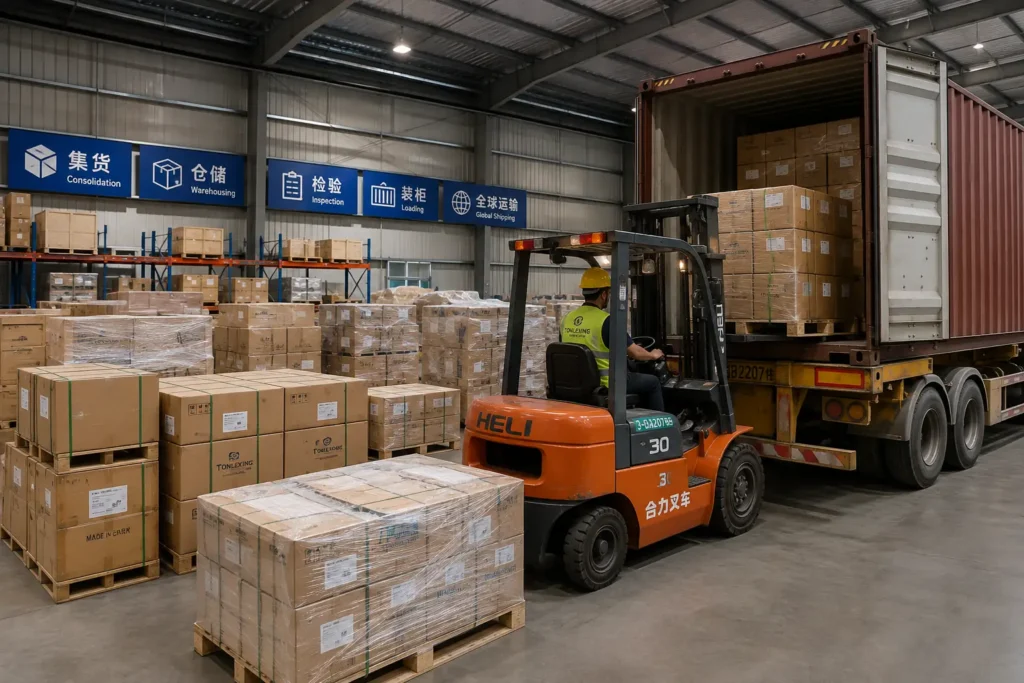
Supplier Consolidation in China
Collect and combine cargo from multiple suppliers before export to simplify shipping and reduce coordination work.
03
End-to-End Shipping Coordination
Coordinate factory pickup, export handling, customs procedures and destination delivery through one logistics arrangement.
Frequently Asked Questions
How much does sea freight from China to India cost?
For general August 2026 planning, a 20GP container costs around USD 1,150–1,500, while a 40GP is approximately USD 1,500–2,000. Base LCL ocean freight is around USD 10 per CBM.
Actual shipping costs depend on the route, carrier, shipment details and booking date. Pickup, terminal handling, customs clearance and inland delivery may also affect the final quotation.
How long does sea freight from China to India take?
Most common China to India ocean routes take around 10 to 25 days port to port. Direct services can be faster, while transshipment, congestion or schedule changes can increase the transit time.
Importers should also allow time for supplier pickup, export handling, customs clearance and inland delivery when estimating the complete schedule.
Is FCL or LCL better for shipping from China to India?
LCL is generally suitable for smaller shipments because the importer pays only for the container space used. FCL becomes more attractive as shipment size increases and also reduces consolidation handling.
When a shipment approaches approximately 15–18 CBM, businesses should normally compare the total LCL quotation with the price of a 20GP full container.
Which Indian ports are commonly used for China to India shipments?
Nhava Sheva is commonly used for Mumbai, Maharashtra and western India. Mundra serves Gujarat and parts of northern and western India, while Chennai Port is an important gateway for Tamil Nadu and southern markets. Kolkata and Haldia can be considered for eastern India.
The best port depends on the final delivery location, route availability and total ocean-plus-inland transportation cost.
What documents are required for customs clearance in India?
Common documents include the Commercial Invoice, Packing List, Bill of Lading and Bill of Entry. Commercial importers generally also require an Importer-Exporter Code, while additional permits or certificates may be required for regulated goods.
Importers should confirm the HS classification and applicable customs regulations before shipping so the required documents can be prepared before arrival.
Related Logistics Guides
Useful freight, customs and importing resources related to this shipping guide.
Related Guide
Shipping from China to India
Shipping from China to India (Sea, Air & DDP) | 2026 Guide Fast, reliable shipping from China to India for B2B importers, eCommerce sellers,and p...
Read guide →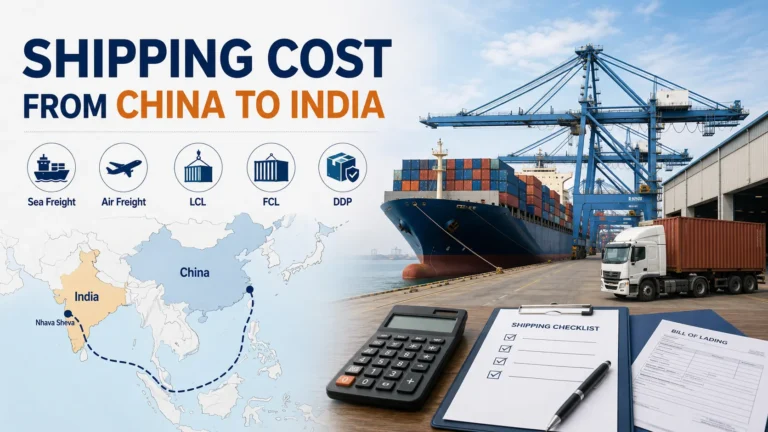
Related Guide
Shipping Cost from China to India
Shipping goods from China to India can be arranged by sea freight, air freight, express courier, or door-to-door delivery. The final shipping cos...
Read guide →
Related Guide
How Long Does It Take to Ship from China to India?
Shipping from China to India typically takes 2–8 days by air freight, 2–5 business days by express courier, and about 15–50 days by sea freight...
Read guide →
Related Guide
DDP Shipping from China to India
DDP shipping from China to India has become an increasingly popular choice for importers seeking a hassle-free and cost-effective logistics solut...
Read guide →
Useful Resource
Air Freight from China to India
Fast & Reliable Shipping Solutions for Indian Importers Shipping goods from China to India by air freight has become an essential logistics strat...
Learn more → Useful Resource LCL Shipping from ChinaLearn how LCL shipping and consolidated shipments help reduce shipping costs for smaller cargo from China.
Learn more →