
Related Guide
Shipping from China to Seattle
This guide covers shipping from China to Seattle, including freight options, transit times, shipping costs, customs clearance, and delivery plann...
Read guide →

Seattle and Tacoma are major container gateways in the Pacific Northwest. Container drayage connects port terminals and rail ramps with warehouses, distribution centers, and inland destinations.
Tonlexing helps coordinate shipping and related logistics. Drayage rates depend on route, container size, weight, chassis, and delivery requirements. Contact us for a shipment-specific quote.
Port Drayage
Rail Drayage
Drayage Rates
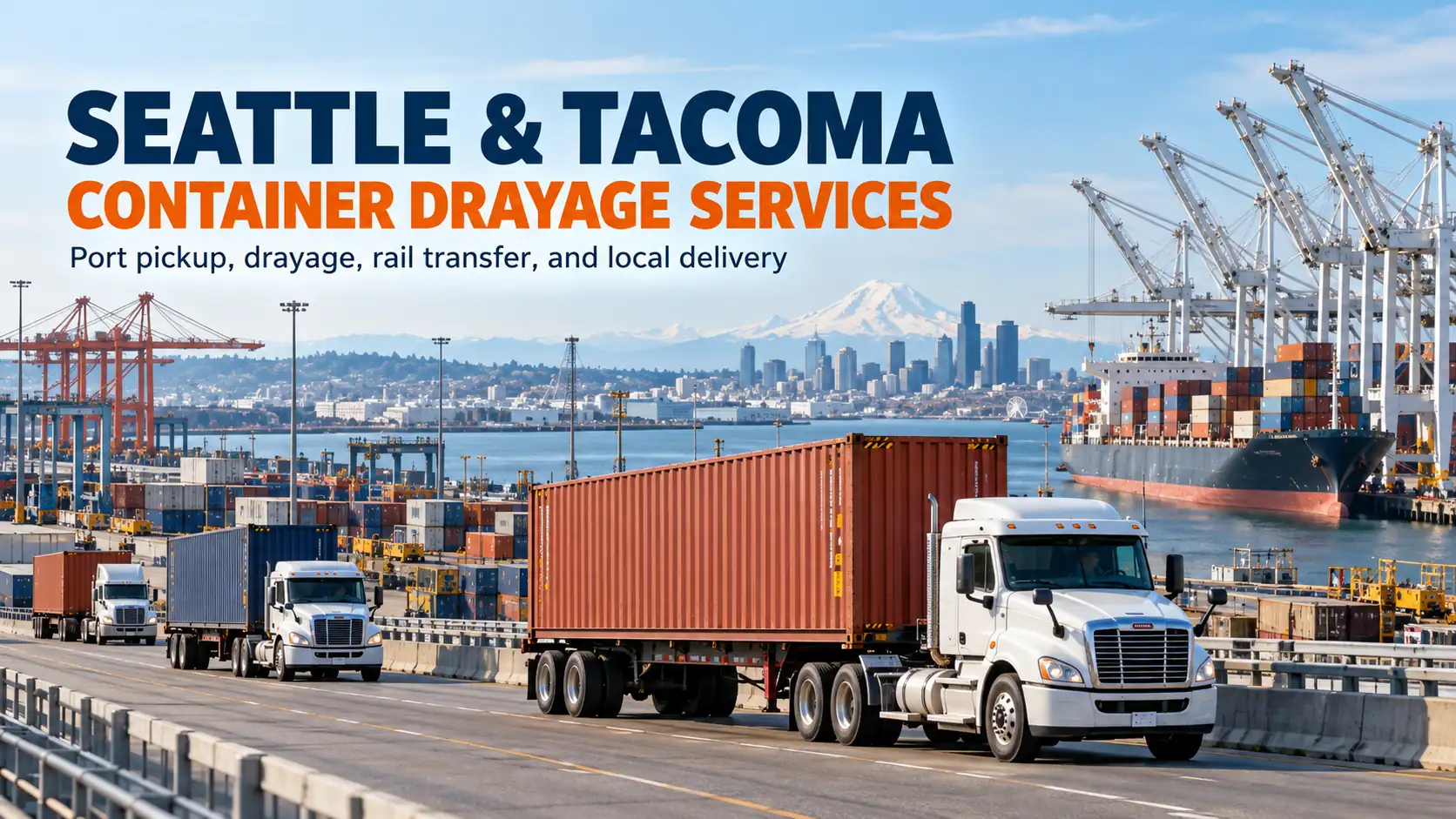
Local drayage connects the international transportation leg with the next stage of the supply chain. Depending on the shipment, the required service may involve port collection, inland rail connections, warehouse handling, or empty equipment returns.
Port drayage moves loaded units from marine facilities to warehouses, distribution centers, and other approved destinations. Rail drayage connects inland ramps with the next road transportation leg when freight travels by intermodal service.
After unloading, the empty unit must be returned to a location designated by the shipping line. The return location, free-time limits, and any appointment requirements should be confirmed before dispatch.
Some importers need cargo unloaded, sorted, palletized, or transferred to domestic trailers. These services depend on suitable warehouse capacity, handling requirements, and the availability of local providers.
For a broader overview of short-distance trucking in the United States, see our guide to drayage in the USA.
If international ocean transportation is also part of your plan, our sea freight shipping from China to the USA guide explains the main shipping options.
The Port of Seattle and Port of Tacoma operate within the Northwest Seaport Alliance (NWSA), which coordinates marine cargo operations across the two gateways. However, individual facilities can have different operating procedures, so the correct pickup point must be confirmed before a truck is dispatched.
Seattle serves importers moving freight through its assigned marine terminals. Pickup planning depends on the vessel call, release status, appointment availability, and the location of the receiving warehouse.
Tacoma is another major gateway for international containerized freight in Washington State. Shippers should verify the assigned facility, cargo availability, chassis arrangements, and designated empty return location before booking.
The best routing depends on the actual shipment rather than assumptions about which port is faster or cheaper. Compare the complete transportation cost, including inland mileage, waiting time, and any additional handling.
For more information about gateway selection, see our guide to key ports for logistics from China to the USA.
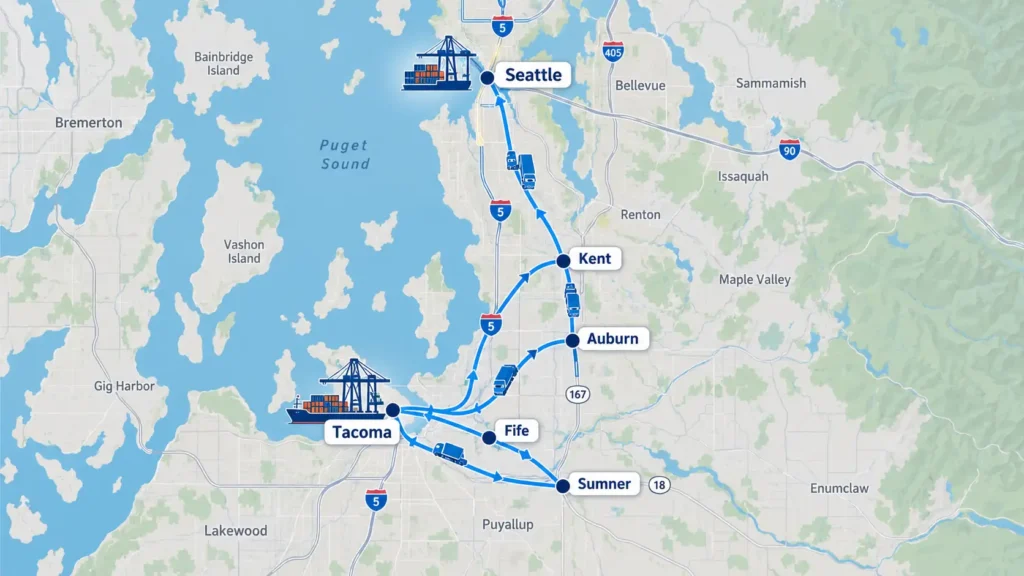
The Puget Sound logistics network connects marine gateways with industrial districts, distribution centers, and commercial destinations throughout the surrounding area. Actual service coverage depends on the trucking provider, route, cargo requirements, and destination address.
Potential destinations for regional freight movements include:
Seattle and Tacoma: Commercial facilities and warehouses near the two port cities.
Kent and Auburn: Industrial and distribution areas that may suit regional cargo handling.
Fife and Sumner: Potential destinations for freight moving inland from Tacoma.
Other Washington destinations: Locations requiring additional route planning based on distance, road access, and carrier availability.
Always confirm the complete address and ZIP code before arranging transportation. Coverage in one part of the region does not guarantee that every provider can serve every destination or handle every load type.
Businesses comparing Pacific Coast gateways can review our overview of West Coast shipping ports in the USA.
For importers sourcing goods from China, our guide to shipping from China to Seattle covers the international leg that may precede local trucking.
The size, gross weight, and characteristics of a load determine which truck and chassis arrangement may be suitable. Providing accurate specifications in advance helps carriers assess road restrictions, equipment availability, and handling requirements.
Common options include 20FT, 40FT, and 40HQ units. Confirm the size, loaded weight, and chassis requirements before arranging pickup.
For high-cube equipment and international shipping considerations, see our guide to 40HQ shipping from China to the USA.
Reefer units may require a generator set or other arrangements to maintain the specified temperature during transport. Oversized or overweight freight may require additional checks for permits, route restrictions, and vehicle capacity.
For importers comparing full-container and consolidated freight, our guide to FCL vs. LCL shipping from China to the USA explains the differences between the two options.
A typical move involves several coordinated steps. Confirming the cargo status, pickup arrangements, and receiving conditions before dispatch helps reduce unnecessary waiting and additional charges.
Confirm release and availability. Provide the unit number, pickup location, size, gross weight, and expected collection date. Check that the shipment is released and ready to move.
Arrange the truck and chassis. Confirm carrier capacity, appointment requirements, and the receiving facility’s operating hours.
Move the freight by road. The driver collects the released load and transports it to the agreed warehouse or commercial destination.
Complete unloading and empty return. Confirm unloading arrangements, the designated return location, and the applicable free-time period.
For intermodal shipments, the dispatch team must also verify the correct rail ramp and ensure the load is available for collection. Arrival at a ramp does not necessarily mean immediate release.
Shipment tracking and status updates can help importers identify delays and coordinate with suppliers, carriers, and warehouse teams.
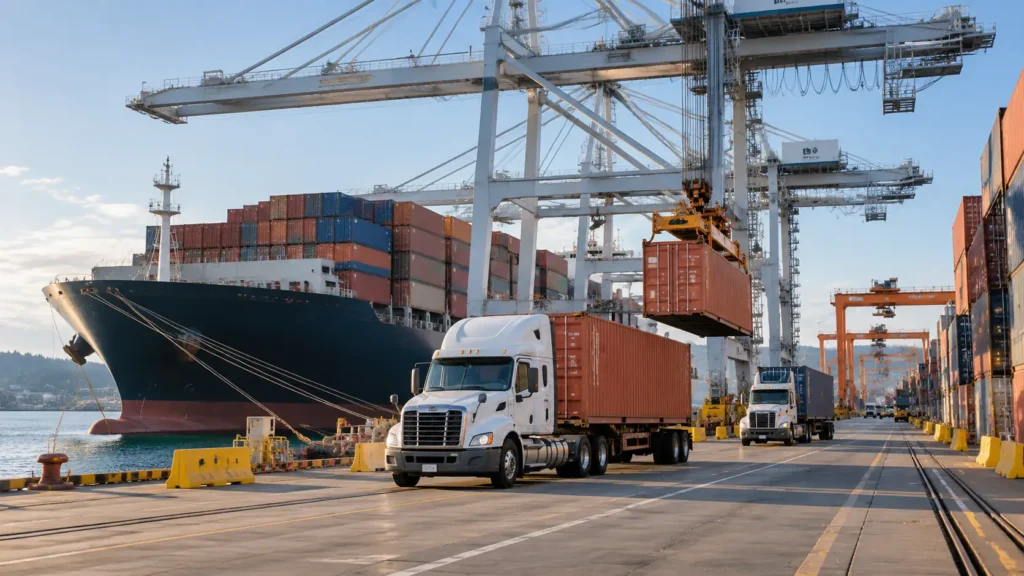
Container drayage rates in Seattle and Tacoma depend on the pickup terminal, delivery distance, container type, fuel costs, and equipment requirements. The following figures provide an indicative 2026 cost breakdown for a local container move. Actual charges vary by carrier, route, and terminal conditions.
| Charge Type | Estimated Price | Details |
|---|---|---|
| Base Line-Haul Rate | $240–$370 per move | Local transportation within the carrier's specified service radius |
| Fuel Surcharge (FSC) | 22%–40% of base rate | May vary with diesel prices and carrier surcharge policies |
| Chassis Use Fee | $30–$50 per day | Daily equipment rental; additional fees may apply if the chassis must be collected from a separate yard |
| Port Congestion Surcharge | $50–$100 | May apply when specified by the carrier or under applicable terminal and operating conditions |
These figures are estimates for budgeting purposes, not guaranteed rates. Confirm the applicable service radius, surcharge calculation, equipment charges, and any minimum fees before booking.
The base drayage rate may not cover every cost associated with moving a container. Depending on the shipment, additional charges may include:
Waiting time: Charges may apply if terminal delays or warehouse unloading extend beyond the agreed free time.
Pre-pull and yard storage: Early collection or temporary storage may create additional costs.
Demurrage and detention: Charges may arise when terminal free time or the permitted use period for shipping line equipment is exceeded.
Special equipment or handling: Reefer units, overweight cargo, and unusual delivery requirements may need separate pricing.
Request quotes from at least three providers using the same shipment details. Compare the pickup terminal, delivery ZIP code, container size and weight, chassis arrangements, included mileage, and empty return requirements.
Ask each provider to specify whether fuel surcharges, tolls, chassis rental, waiting time, and storage are included or billed separately. A clear breakdown helps you compare the total cost per move rather than choosing a rate that appears lower but excludes essential services.
Container drayage in Seattle and Tacoma can be affected by terminal congestion, appointment restrictions, chassis availability, and warehouse scheduling. These issues may delay pickup or delivery and increase transportation costs.
Terminal congestion: Heavy truck traffic and limited appointment availability can delay pickup.
Release issues: Customs holds or incomplete documentation may prevent container collection.
Chassis shortages: Unavailable equipment can disrupt scheduled transportation.
Warehouse delays: Limited receiving hours or unloading capacity may result in waiting time.
Waiting time: Extra fees may apply when terminal queues or unloading exceed the agreed free time.
Pre-pull and storage: Early pickup may require temporary yard storage.
Demurrage and detention: Charges may apply when terminal free time or the permitted equipment-use period is exceeded.
Chassis and empty returns: Daily chassis rental or transportation to a designated empty return location may increase costs.
To reduce unexpected expenses, confirm container release, terminal appointments, chassis availability, warehouse receiving hours, and empty return instructions before dispatch. Always clarify which surcharges and free-time allowances are included in the drayage quote.
Some importers need cargo transferred from an international unit to domestic transportation before distribution. Transloading may be suitable when the receiving facility cannot accept the original unit or when the freight needs to be sorted before its next journey.
Warehouse handling may include unloading, sorting, palletizing, and preparing cargo for onward transport. The required labor and handling arrangements depend on the cargo dimensions, weight, number of pallets, and available facilities.
Confirm receiving hours, forklift or unloading requirements, site access, and storage needs before scheduling the truck. A warehouse’s ability to accept the freight should be checked in advance.
Transloading can simplify the transition between international and domestic freight networks, but it is not automatically the lowest-cost option. Compare handling, storage, and onward trucking expenses before choosing an arrangement.
Complete shipment information helps the logistics team assess carrier availability and prepare a more accurate rate. Missing pickup details or an unclear empty return plan can delay dispatch.
Prepare these four groups of information:
Pickup details: Port or rail ramp, unit number if available, release status, and expected pickup date.
Cargo details: Load description, size, gross weight, and any special handling requirements.
Destination details: Full address, ZIP code, receiving hours, and unloading conditions.
Service requirements: Pre-pull, storage, transloading, empty return, and any time-sensitive requirements.
Also confirm whether customs clearance and release procedures have been completed where applicable. Vessel arrival alone does not guarantee that a load is ready for collection.
Tonlexing can review the international freight requirements and help clarify the information needed to plan the next transportation stage. Local trucking arrangements depend on the agreed service scope and available carriers.
Request a rate with your pickup location, destination ZIP code, load size, gross weight, and required collection date so the appropriate transportation options can be assessed.
Rates depend on distance, load size, weight, chassis requirements, and additional services. Request a rate based on your shipment details.
Provide the pickup location, destination ZIP code, load size, gross weight, and required collection date.
Yes. Rail drayage connects inland ramps with warehouses and other destinations, subject to release status and carrier availability.
Both ports are part of the Northwest Seaport Alliance, but individual facilities may have different operating procedures and appointment requirements.
Ask about fuel, chassis, waiting time, yard storage, pre-pull, demurrage, detention, and empty return fees. Confirm which costs are included in the quoted rate.
Useful freight, customs and importing resources related to this shipping guide.
This guide covers shipping from China to Seattle, including freight options, transit times, shipping costs, customs clearance, and delivery plann...
Read guide →
Drayage in the USA Explained: Services, Costs, Types, and How It Works Verified & Reviewed · Last updated March 2026 Drayage in the USA explained...
Read guide →
The top West Coast shipping ports in the USA play a vital role in supporting international trade, facilitating container shipping, and driving ec...
Read guide →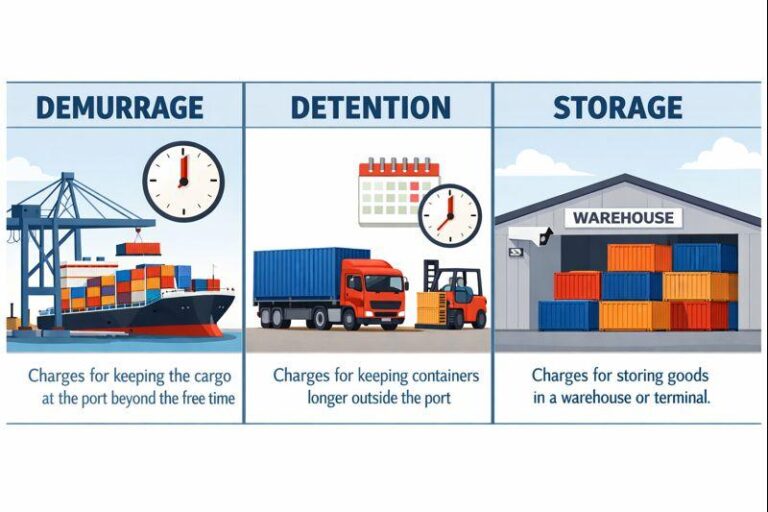
Demurrage vs Detention vs Storage Verified & Reviewed · Last updated January 2026 Demurrage vs detention vs storage is one of the most expensive...
Read guide →When dealing with international shipping, one of the common costs importers and exporters encounter is Terminal Handling Charges (THC). These cha...
Learn more → Useful Resource Customs Bond for USA ImportsCustoms Bond for USA Imports: The Complete Guide Verified & Reviewed · Last updated March 2026 If you import into the United States, a customs bo...
Learn more →WhatsApp us