
Related Guide
Sea Freight Shipping from China
Sea freight is the most cost effective shipping method for large volumes and container load cargo. It is ideal for businesses looking to reduce s...
Read guide →

Shipping air conditioners and HVAC equipment from China requires careful planning because many units are bulky and may contain refrigerants, compressors, and sensitive internal components.
Learn about refrigerant requirements, FCL and LCL sea freight, air freight, export packaging, container loading, customs documents, and import compliance for HVAC shipments from China.
Refrigerant & DG
FCL & LCL Shipping
HVAC Import Compliance
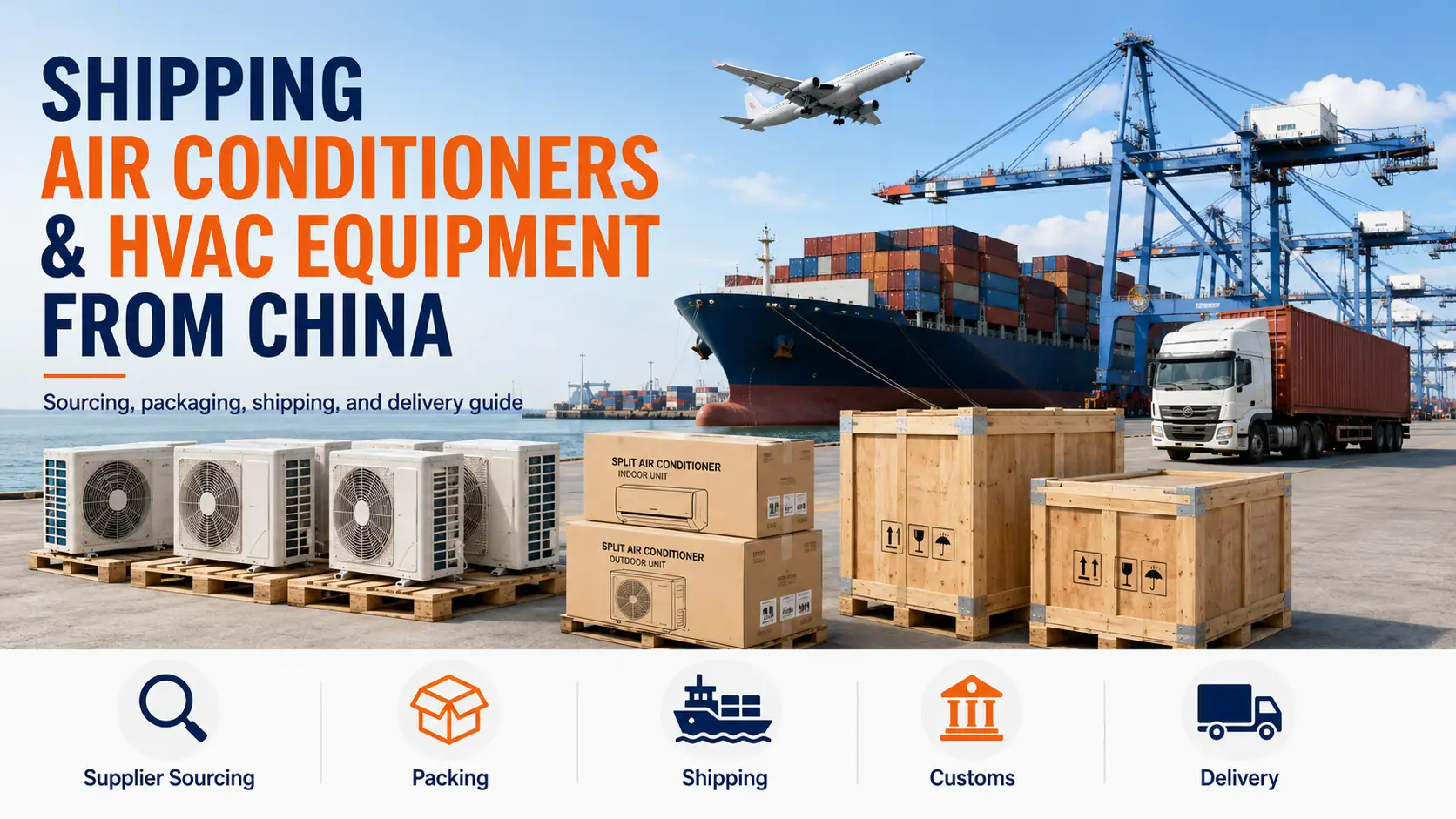
China is one of the world’s major production bases for air conditioners and HVAC systems. Chinese manufacturers operate within established appliance and HVAC supply chains, particularly in manufacturing regions such as Guangdong and Zhejiang.
Importers can source products from large air conditioner brands as well as OEM factories producing private-label units for overseas markets. Major Chinese brands include Midea, Gree, Haier, Hisense, and TCL, while many other manufacturers specialize in OEM production for distributors, contractors, and international buyers.
Common products shipped from China include:
Split air conditioners: A typical split air conditioner consists of an indoor unit and an outdoor condensing unit. Many modern systems use inverter technology to adjust compressor output according to cooling demand.
Multi-split systems: One outdoor unit can support multiple indoor units, depending on the system design.
Portable air conditioners: Self-contained units commonly used in residential, retail, and e-commerce markets.
Window air conditioners: Compact systems with the main components installed within one housing.
Floor-standing air conditioners: Often used in offices, restaurants, showrooms, and larger rooms.
Heat pumps: Used for heating and cooling in residential and commercial applications.
Commercial HVAC systems: Larger cooling, heating, and ventilation equipment for hotels, factories, offices, warehouses, and other facilities.
HVAC components: Compressors, control boards, fan motors, heat exchangers, copper components, and replacement parts.
The exact product type matters because an indoor unit without refrigerant may have very different shipping requirements from a pre-charged outdoor unit.
Before booking air conditioners or HVAC equipment from China, importers should confirm the cargo details with the supplier first. This helps avoid incorrect freight quotes, carrier rejection, customs issues, or extra charges after the goods are ready.
Key points to check include:
Product Type and Model: Confirm whether the shipment contains split air conditioners, outdoor units, heat pumps, commercial HVAC systems, or spare parts.
Refrigerant Type: Check whether the equipment is pre-charged and confirm the refrigerant used, such as R32 or R410A.
SDS/MSDS: Ask the supplier for supporting safety documentation when refrigerant or other regulated substances are involved.
HS Code: Confirm the correct customs classification for the complete unit, compressor, spare part, or other HVAC product.
Packing Details: Collect the number of cartons or pallets, carton dimensions, gross weight, and total volume.
Voltage and Frequency: Make sure the equipment matches the electrical standard of the destination market.
Product Compliance: Verify applicable energy-efficiency, labeling, electrical safety, and certification requirements before production.
Pickup and Destination Details: Provide the China pickup location, destination country, port or delivery address, and cargo-ready date.
For larger orders, it is also useful to confirm how indoor and outdoor units are matched and labeled before export packing. Accurate information at this stage makes it easier to choose the right shipping method and reduce problems later in the shipment.
Refrigerant is one of the most important factors to confirm when arranging international shipping for air conditioners.
It is not enough to describe the cargo simply as an “air conditioner.” The freight forwarder may need to review the equipment configuration, refrigerant type, gas quantity, packaging, transport mode, and carrier requirements before confirming the booking.
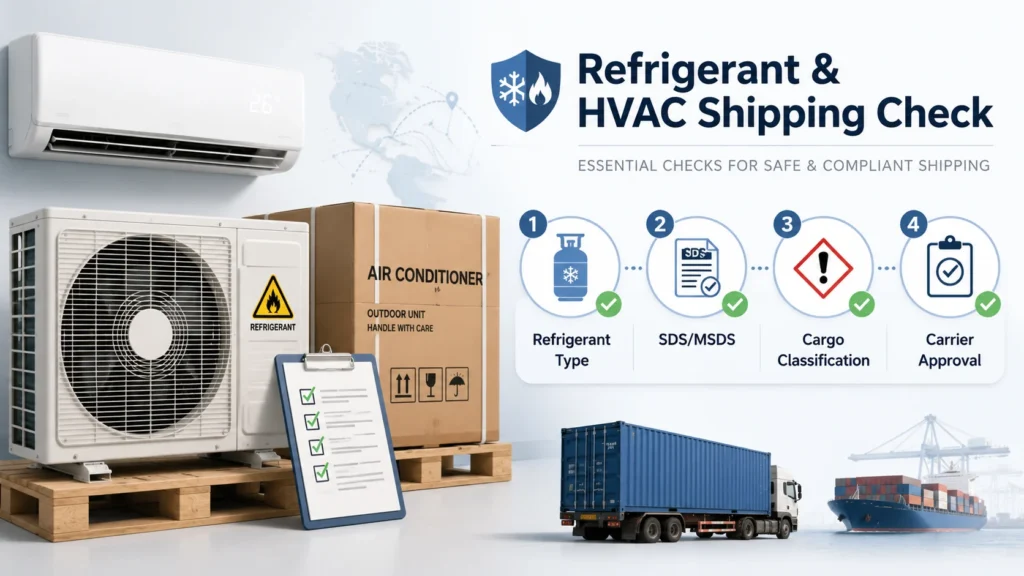
Modern air-conditioning equipment may use refrigerants such as R32 or R410A, while older systems may contain other refrigerants.
Environmental regulations and refrigerant policies continue to change across different markets. Importers should therefore confirm both transportation requirements and destination-market rules before purchasing or shipping the equipment.
The supplier should be able to provide refrigerant specifications and supporting technical documentation when required.
Depending on the refrigerant, quantity, equipment configuration, and shipping method, the forwarder or carrier may request:
SDS/MSDS
Refrigerant specifications
Applicable UN classification information
Dangerous-goods declarations
Special packaging or labels
Manufacturer declarations
Carrier pre-approval
These checks should be completed before the cargo reaches the freight warehouse.
A common shipping problem occurs when a supplier initially provides only the product name, cartons, and weight. The shipment is quoted as general cargo, but the refrigerant information is provided only after booking.
The shipment may then require a different carrier, additional documentation, or a revised booking, increasing the risk of extra charges and delayed departure.
Some factories can supply certain air-conditioning systems without pre-charged refrigerant so that the units can be filled locally after arrival.
This may simplify transportation in some cases, but it is not automatically the best option.
The importer still needs to confirm whether local filling is technically suitable, whether it affects the manufacturer’s warranty, and whether the intended refrigerant complies with the regulations of the destination market.
For this reason, refrigerant information should be checked before choosing the shipping method rather than after production is complete.
The best shipping method depends on the shipment volume, urgency, product value, refrigerant status, packaging, and destination.
For complete air-conditioning systems, sea freight is generally the most cost-efficient option because the units occupy substantial cargo space.
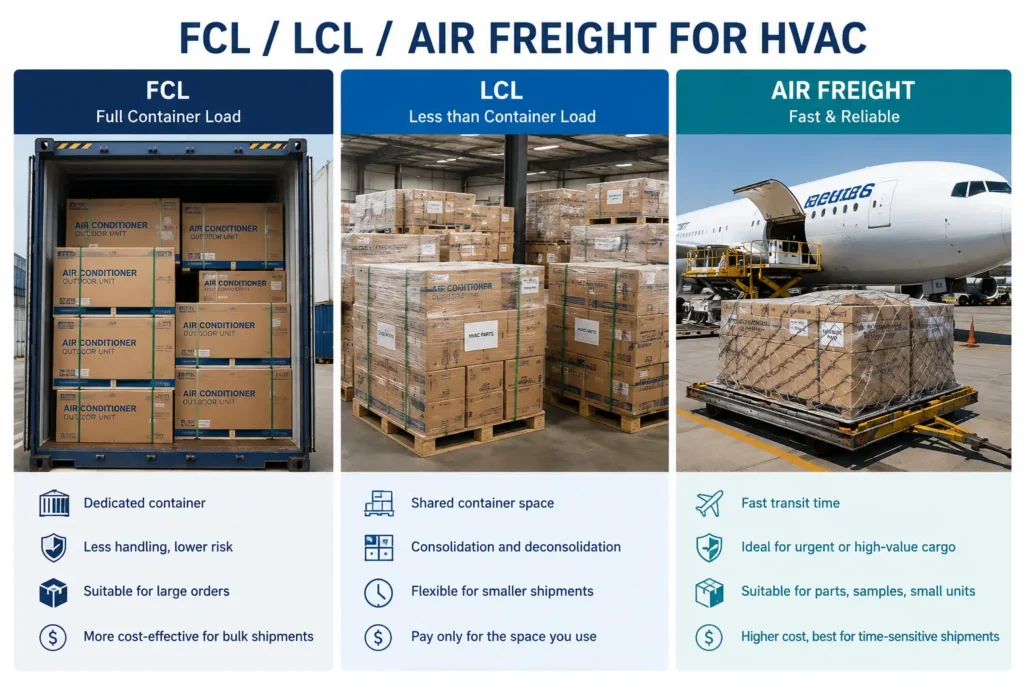
FCL, or Full Container Load, is usually the best option for wholesalers, distributors, construction projects, and larger commercial orders.
Using a dedicated container provides several advantages:
Fewer handling points
Lower risk of carton damage
Better control over stacking
Easier loading planning
More predictable cargo handling
Lower shipping cost per unit at sufficient volume
FCL is particularly useful for split air conditioner shipments because indoor and outdoor units often have different carton dimensions and weights.
Depending on the order volume, a 20GP, 40GP, or 40HC container can be selected to improve space utilization and cost efficiency.
LCL, or Less than Container Load, is suitable when the shipment does not fill an entire container.
It can be practical for:
Trial orders
Replacement units
Small commercial shipments
Mixed HVAC products
Buyers testing a new supplier
However, LCL cargo passes through consolidation and deconsolidation warehouses, which means cartons may be handled several times before final delivery.
Heavy outdoor units are particularly vulnerable to damaged corners, crushed cartons, and unstable stacking. Palletizing or additional reinforcement may therefore be advisable when the original factory packaging is not designed for repeated international handling.
Air freight offers much faster transportation but is generally less economical for complete air conditioners.
It is more commonly used for:
Compressors
Control boards
Fan motors
Replacement components
Samples
Urgent air conditioner units
Project-critical spare parts
Air freight charges are based on chargeable weight, which considers both actual weight and cargo volume. Large air conditioner cartons can therefore generate relatively high freight costs even when their actual weight is moderate.
If the equipment contains refrigerant, airline acceptance and any additional handling requirements should be confirmed before booking.
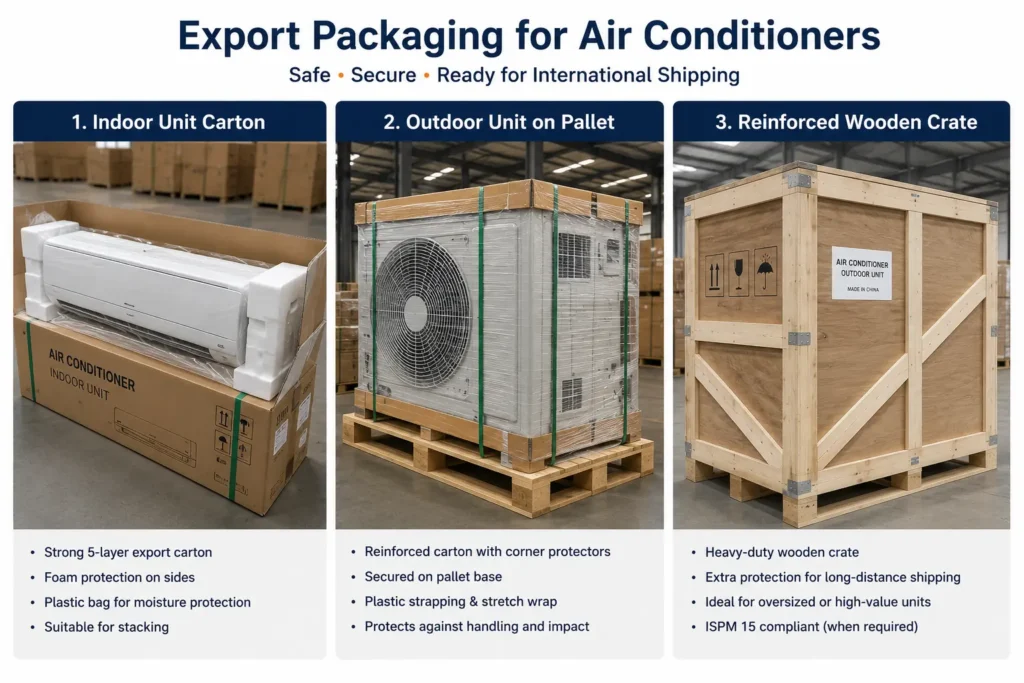
Air conditioners and HVAC equipment require suitable export packaging because many units combine heavy components with vulnerable panels, fins, piping, and electrical parts.
Packaging should be selected according to the unit type, cargo weight, shipping method, and number of handling stages.
Indoor units are generally lighter and are often packed in factory cartons with molded foam or protective inserts.
For export shipments, packaging should provide:
Strong outer cartons
Foam protection around the unit
Reinforced corners and edges
Protection for panels and air outlets
Secure positioning inside the carton
For LCL shipments or long-distance delivery, palletizing may provide additional protection when cartons will pass through several warehouses.
Outdoor units are normally heavier because they contain components such as the compressor, condenser, fan, copper piping, and refrigerant circuit.
Recommended protection may include:
Reinforced export cartons
Strong bottom support
Corner boards
Pallets
Strapping
Stretch wrapping
Wooden crates for heavier or more vulnerable units
The equipment should be secured firmly so that it cannot move freely inside the carton or across the pallet during transportation.
Palletizing is especially useful for LCL sea freight, where cargo passes through consolidation, container loading, unloading, and deconsolidation.
Wooden crates may be considered for expensive, oversized, or fragile HVAC equipment requiring additional protection from impact or stacking pressure.
When wooden packaging is used for international shipping, it should meet applicable destination requirements such as ISPM 15 where required.
Some air conditioners, compressors, and HVAC components should remain upright during storage and transportation.
Where required by the manufacturer, cartons should include clear handling marks such as:
This Side Up
Keep Upright
Fragile
Do Not Stack
Correct orientation helps protect compressors, piping, refrigerant circuits, and other sensitive internal components.
LCL cargo normally experiences more handling than FCL cargo because it shares container space with other shipments.
Ordinary retail cartons may therefore be insufficient for heavy outdoor units. Reinforcement or palletizing can help reduce damage caused by repeated warehouse handling and stacking.
For larger orders, FCL usually offers better cargo protection because the shipment remains inside a dedicated container between origin loading and destination unloading.
Air conditioners and HVAC equipment often combine large carton volume with uneven unit weights, so container planning should be completed before loading.
The supplier or freight forwarder should first confirm:
Carton quantity
Carton dimensions
Gross weight
Stackability
Indoor and outdoor unit combinations
Pallet dimensions
Available container space
For larger shipments, a loading plan can help determine whether a 20GP, 40GP, or 40HC container provides the best combination of space utilization and shipping cost.
Heavy outdoor units should be placed in stable positions, while lighter indoor-unit cartons should not carry excessive stacking pressure. Cargo should also be secured to reduce movement during ocean transportation.
For shipments containing several models, the packing list should clearly identify matching indoor and outdoor units. This helps reduce errors during loading, customs inspection, unloading, and warehouse distribution.
Good container planning is not simply about fitting more cartons into the container. It also helps reduce cargo damage and makes destination handling more efficient.
Customs requirements for air conditioners and HVAC equipment depend on the destination country, product type, HS code, refrigerant, and importer requirements.
In addition to standard shipping documents, some shipments may require refrigerant declarations or product compliance records.
Commercial Invoice: Lists the seller, buyer, product description, quantity, transaction value, Incoterms, and customs information.
Packing List: Shows the number of cartons or pallets, dimensions, net and gross weight, and packaging details.
Bill of Lading or Air Waybill: Issued by the carrier as the main transport document for sea or air freight.
Certificate of Origin: Confirms where the goods were manufactured and may be required for customs clearance, preferential tariffs, or trade-related requirements.
For equipment containing refrigerant, additional documents may be required depending on the cargo and route.
These may include:
SDS/MSDS: Provides safety and chemical information for the refrigerant.
Refrigerant Declaration: May state the type and quantity of refrigerant charged into the equipment.
DG Documentation: Required when the shipment falls under applicable dangerous-goods transport rules.
Non-Gas Declaration: May be requested when units are shipped without regulated refrigerant.
Product compliance documents depend on the destination and HVAC product involved.
They may include:
Energy-efficiency documentation
Electrical safety records
Technical declarations
Product labels
Refrigerant-related compliance records
Test reports or certificates
These documents relate to product market access rather than the transportation document set itself.
The HS code should be confirmed with the customs broker or agent responsible for the import.
Complete air conditioners, compressors, heat pumps, spare parts, and other HVAC products may fall under different tariff classifications.
Incorrect classification can result in customs delays, additional duty assessments, or requests for corrected documents.
Shipping compliance and product compliance are related but should be treated separately.
A carrier may accept the cargo for transportation while customs or another regulatory authority still requires additional product documentation before the equipment can legally enter, be sold, or be installed.
The USA is an important market for Chinese air conditioners and HVAC equipment, but importers should review the applicable product requirements before production begins.
Depending on the equipment, relevant requirements may involve:
Refrigerants
Energy efficiency standards
Product labeling
Electrical safety
State-specific regulations
UL or other recognized electrical safety standards may be relevant depending on the product, buyer, installation, or distribution channel, but they should not be treated as a single universal import requirement.
Air conditioners sold in California may also be subject to additional state-specific energy-efficiency, registration, or labeling requirements depending on the equipment category.
The exact model and intended use should therefore be checked before mass production.
Europe is another major market for air conditioners from China, particularly split air conditioners, heat pumps, and energy-efficient residential systems.
Importers should review applicable requirements relating to:
CE conformity
Ecodesign
Energy labeling
RoHS where applicable
Electrical safety
Technical documentation
The requirements can vary depending on whether the product is a household air conditioner, heat pump, commercial HVAC system, or individual electrical component.
A CE mark by itself should not be treated as proof that every requirement has been satisfied. The supporting technical documentation and conformity procedures also need to correspond to the actual product.
Other countries may apply their own rules relating to:
Refrigerants
Energy efficiency
Voltage and frequency
Electrical safety
Product certification
Labeling
Importer registration
These requirements should be checked before production whenever possible.
Discovering a compliance problem after the air conditioners have already been manufactured can result in relabeling, storage costs, delays, or difficulty completing customs clearance.
A practical shipping process usually follows these steps:
Confirm the product model and technical specifications.
Check the refrigerant type and obtain the SDS/MSDS where applicable.
Verify destination-market compliance requirements.
Confirm the HS code with the appropriate customs party.
Collect the final packing list, dimensions, weight, and cargo-ready date.
Choose FCL, LCL, or air freight according to shipment size and urgency.
Confirm export packaging, carrier acceptance, and required transport documents.
Arrange China pickup, export handling, international transportation, customs clearance, and final delivery.
Confirming refrigerant and carrier requirements early helps avoid unnecessary rebooking or delays after the cargo reaches the warehouse.
Air conditioners and HVAC equipment can face delays or extra charges when important cargo details are not confirmed before booking. Most problems come from refrigerant information, incorrect documentation, weak packaging, or destination compliance issues.
Refrigerant details are confirmed too late: The supplier may initially provide only the product name, weight, and dimensions. If refrigerant information is submitted after booking, the carrier may require additional documents, a different service, or new approval.
The cargo is booked under the wrong classification: Air conditioners with different refrigerants or configurations may not follow the same transport requirements. The SDS/MSDS and product specifications should be checked before confirming the shipment.
The HS code is incorrect: Complete air conditioners, compressors, parts, and other HVAC equipment may use different HS classifications. An incorrect code can lead to customs delays, additional duty, or document requests.
Export packaging is not strong enough: Heavy outdoor units are more vulnerable to carton damage, especially during LCL handling. Pallets, reinforced cartons, corner protection, or wooden crates may be needed depending on the shipment.
Product compliance is checked after production: Voltage, energy efficiency, labeling, refrigerant rules, and certification requirements vary by market. These should be confirmed before the factory completes the order.
Indoor and outdoor units are mismatched: Large shipments may contain several models. A clear packing list and proper carton identification help prevent mistakes during loading, customs inspection, and destination distribution.
Checking these points before the cargo leaves the factory can reduce shipping risk and avoid unnecessary storage charges, rebooking, or customs delays.
Shipping HVAC equipment efficiently starts with checking the cargo details before booking. Refrigerant type, product configuration, packaging, and destination requirements can all affect the available shipping options.
Tonlexing can coordinate shipments from manufacturers and suppliers across China by FCL, LCL, or air freight, depending on the size, urgency, and characteristics of the cargo.
Our services can include:
Factory pickup in China
FCL and LCL sea freight
Air freight
Export handling
Container loading coordination
Shipping documentation
Customs support
Final delivery arrangements
For air conditioners containing refrigerant, providing the product details and SDS/MSDS early allows the shipment requirements to be reviewed before booking.
For a tailored freight quote, send us the product details, refrigerant information, packing data, pickup location, destination, and cargo-ready date.
Yes. Air conditioners are regularly exported from China by sea freight and air freight. The forwarder should confirm whether the unit contains refrigerant because this may affect the transport arrangement and carrier acceptance.
Not every air conditioner should automatically be treated the same way. The applicable transport classification depends on the equipment, refrigerant, quantity, packaging, and transport regulations.
R32 air conditioners can be transported on suitable routes when the applicable requirements are met. The documentation, packaging, and carrier acceptance should be checked before booking.
For most commercial orders, sea freight is more cost-effective because air conditioners are bulky. FCL is suitable for larger shipments, while air freight is generally used for urgent units, samples, or replacement parts.
Typical documents include a commercial invoice, packing list, bill of lading or air waybill, HS classification information, and applicable product compliance documents. Refrigerant-containing equipment may also require an SDS/MSDS and additional transport documentation.
Useful freight, customs and importing resources related to this shipping guide.
Sea freight is the most cost effective shipping method for large volumes and container load cargo. It is ideal for businesses looking to reduce s...
Read guide →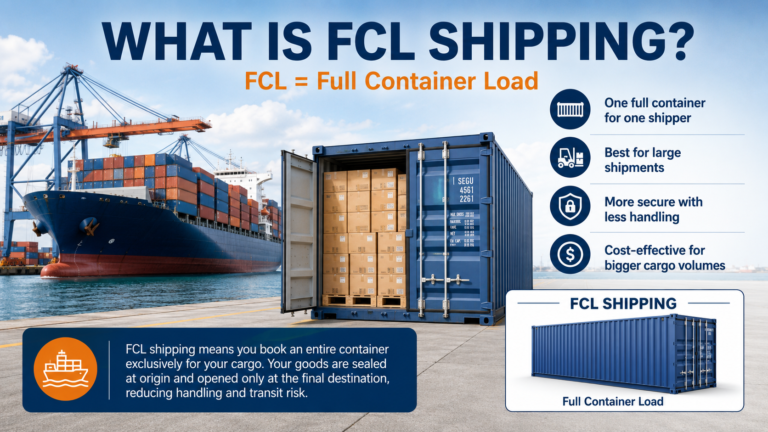
What is FCL Shipping? Verified & Reviewed · Last updated June 2026 FCL shipping, short for Full Container Load shipping, is an international frei...
Read guide →
Learn how LCL shipping and consolidated shipments help reduce shipping costs for smaller cargo from China.
Read guide →
Shipping Dangerous Goods From China Verified & Reviewed · Last updated February 2026 Shipping dangerous goods from China requires strict complian...
Read guide →What is the MSDS? The MSDS, or Material Safety Data Sheet, is a vital document used in chemical manufacturing, logistics, and workplace safety. I...
Learn more → Useful Resource Documents Required to Import from China (2025 Guide)Importing goods from China can be highly profitable—but only when you understand the necessary documents and import requirements. Whether you’re...
Learn more →WhatsApp us