
Related Guide
Sea Freight Shipping from China
Sea freight is the most cost effective shipping method for large volumes and container load cargo. It is ideal for businesses looking to reduce s...
Read guide →

Shipping glass from China takes more care than ordinary cargo. Strong packing and the right shipping method can help reduce breakage during handling and transit.
This guide explains how to pack fragile glass, choose between air, LCL, and FCL shipping, and prepare for customs clearance and insurance.
Glass Packaging
Shipping Methods
Cargo Insurance
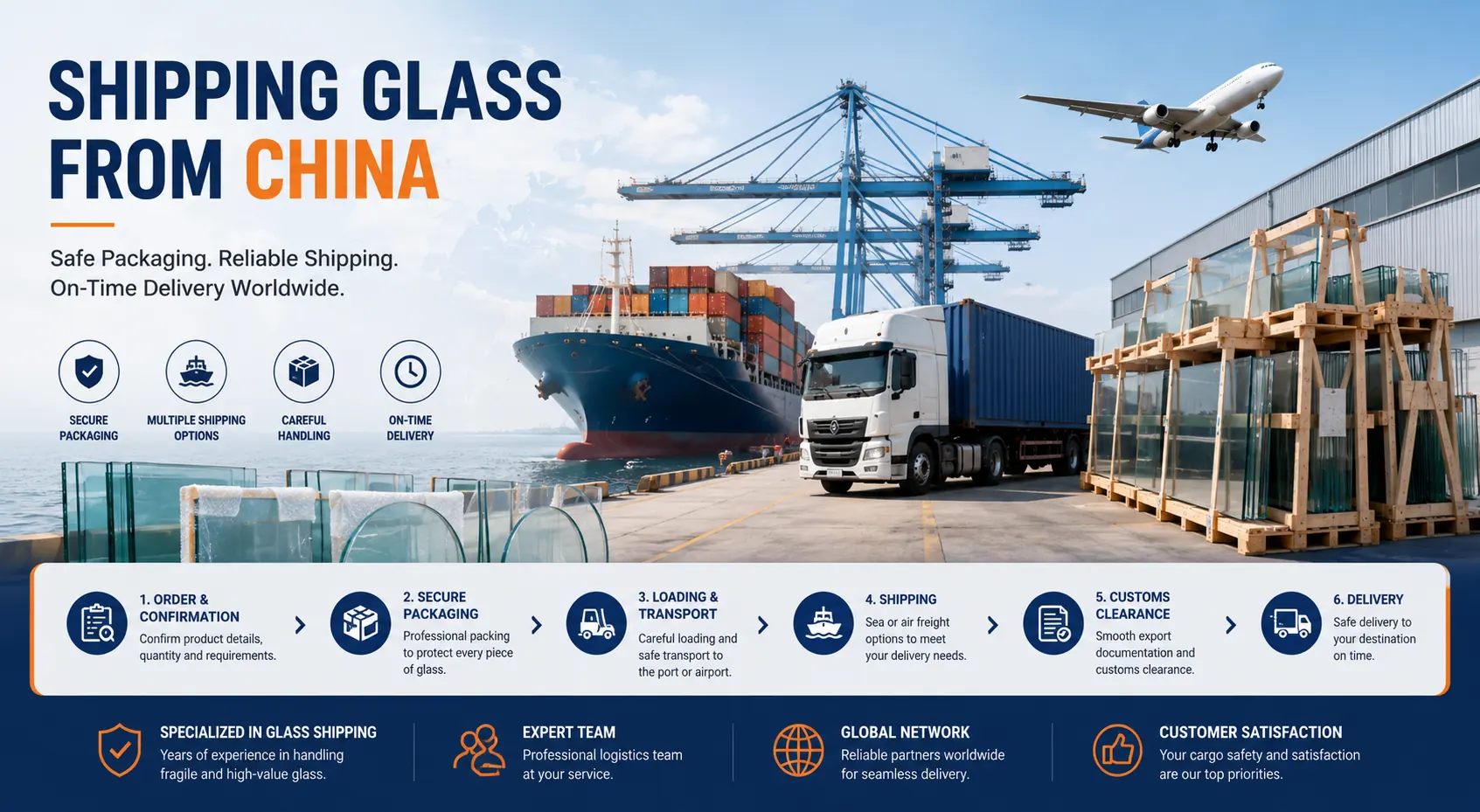
The best shipping option depends on product size, weight, value, urgency, and the amount of handling the cargo can tolerate.
| Cargo Type | Recommended Shipping | Key Packing |
|---|---|---|
| Samples and small items | Express or air freight | Individual cushioning and strong boxes |
| Glass bottles and glassware | LCL or FCL | Dividers, reinforced cartons, pallets |
| Large commercial orders | FCL sea freight | Pallets or wooden crates |
| Mirrors and large panels | FCL preferred | Custom crates and edge protection |
Final packing should be confirmed before choosing between the available shipping options. Reinforced boxes, pallets, foam, and wooden crates can significantly increase the final dimensions and gross weight.
Fragility is only part of the challenge. Many products are also relatively heavy, which increases the pressure placed on cartons, pallets, and internal cushioning during transportation.
Common risks include:
Impact during loading and unloading
Vibration during road and ocean transport
Pressure from stacked cargo
Movement inside the box
Contact between individual pieces
Pallets or crates shifting in transit
Moisture weakening cardboard packing materials
Labels such as Fragile, Handle with Care, and This Side Up are useful, but they should not be treated as a substitute for proper packing. The package still needs to withstand normal international freight handling.
Proper packing is the first line of protection. Standard factory cartons may be suitable for storage or local delivery but may not withstand repeated warehouse handling, stacking pressure, vibration, and long-distance transportation.
Packing requirements should ideally be agreed with the supplier before production is completed.
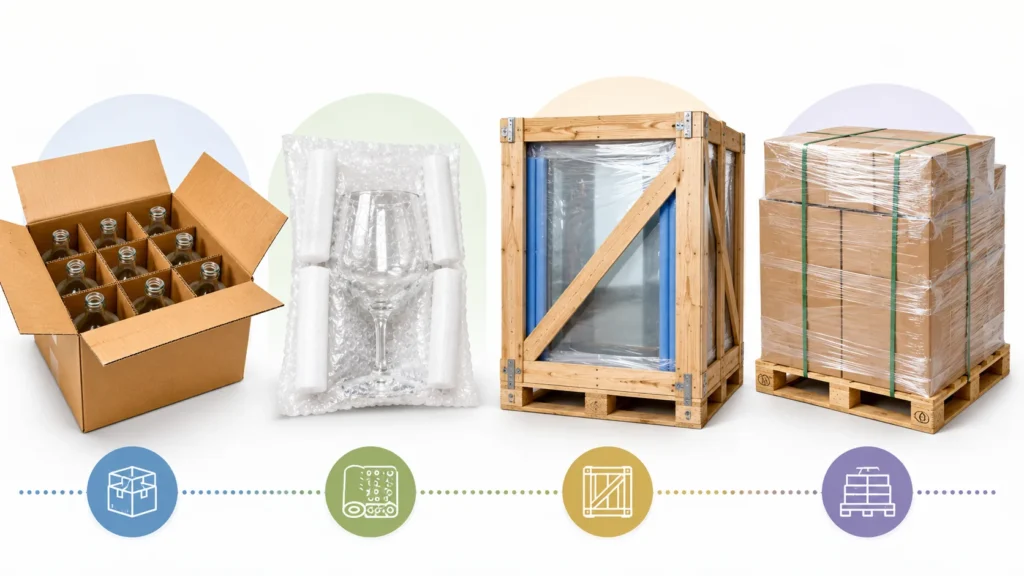
Smaller glass items should normally be protected individually. Wrap each item with several layers of bubble wrap, polyethylene foam, or another suitable cushioning material.
When preparing the box:
Wrap individual pieces separately
Protect rims, corners, and exposed edges
Avoid direct contact between the items
Leave cushioning between the item and each side of the box
Fill empty space so the contents cannot shift
Around two inches of cushioning may be appropriate for delicate pieces where practical, although the actual amount should depend on product weight, shape, and fragility.
Packing peanuts can be used as secondary void fill for some lightweight products, but loose fill should not be relied on as the main protection for heavy cargo.
Glass bottles, jars, cups, and similar items are commonly packed in strong corrugated boxes. Cardboard dividers or individual cells keep the contents separated and reduce bottle-to-bottle contact.
For heavier or more delicate products, additional protection may include:
Double-wall corrugated cartons
Inner and outer boxes
Foam inserts
Reinforced corners
Additional internal cushioning
When double boxing is used, the inner box should also be cushioned so it cannot move inside the outer box.
High-quality packing tape should be used to seal the top and bottom securely, especially when the contents are heavy.
Ordinary cartons may not provide enough structural support for mirrors, windows, large panels, or unusually shaped pieces.
These items may require:
Custom wooden crates
Foam protection
Corner guards
Edge protectors
Internal blocking
Reinforced frames
If solid wood is used for crates or pallets, check whether ISPM 15 requirements apply in the importing country.
For larger orders, cartons should normally be secured on suitable pallets where practical. Boxes should remain within the pallet footprint, with heavier cartons below lighter ones.
Strapping and stretch wrap can help keep the load stable during forklift handling. Before pickup, check that no box or crate can move freely.
It is much easier to correct weak cartons or missing dividers at the factory than after the goods are already ready for export.
Different products face different risks, so the same packing design should not be used for every item.
Glass bottles should be kept apart using individual cells or cardboard dividers. Strong outer cartons help protect the contents from compression, while palletization improves stability for larger orders.
Cups, dishes, tableware, ornaments, and decorative pieces should usually be wrapped individually. Particularly delicate items may need an inner box, stronger outer box, or custom foam insert.
Large flat products require more rigid protection. Mirrors and panels may need wooden crates, edge protection, internal supports, and blocking to control movement.
The crate design should match the actual dimensions, weight, orientation, and structural characteristics of the product.
The main shipping options are express courier, air freight, LCL sea freight, and FCL sea freight. The right choice depends on cargo volume, gross weight, delivery time, value, and handling risk.
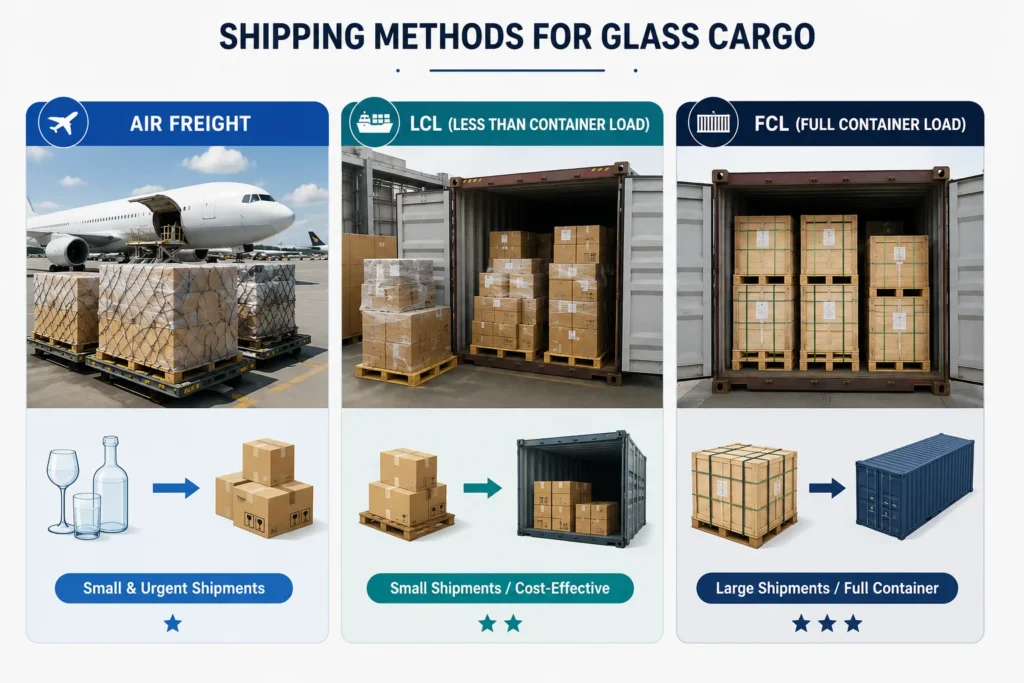
Sea freight is commonly used for larger commercial orders because these products are often heavy and can become expensive to move by air.
Bottles, tableware, windows, construction products, and large panels can be transported as LCL or FCL depending on total volume.
LCL allows smaller orders to share cargo space with other shippers. It is useful when the volume does not justify booking a full unit.
However, LCL cargo normally passes through consolidation and deconsolidation warehouses. These additional handling stages make strong cartons, pallets, crates, and internal protection especially important.
FCL is generally more suitable for larger quantities, heavy pallets, wooden crates, or oversized fragile cargo.
Its main advantages include:
Fewer intermediate handling stages
Better control over loading
More flexibility for cargo securing
Less contact with other shippers’ goods
FCL does not eliminate the possibility of breakage, but it can reduce handling exposure when the cargo is packed and secured correctly.
Air freight is useful for urgent orders, samples, replacement pieces, and smaller quantities of high-value items.
Express courier can also work for small packages. However, because many fragile products are relatively heavy, air and courier charges can rise quickly as the order becomes larger.
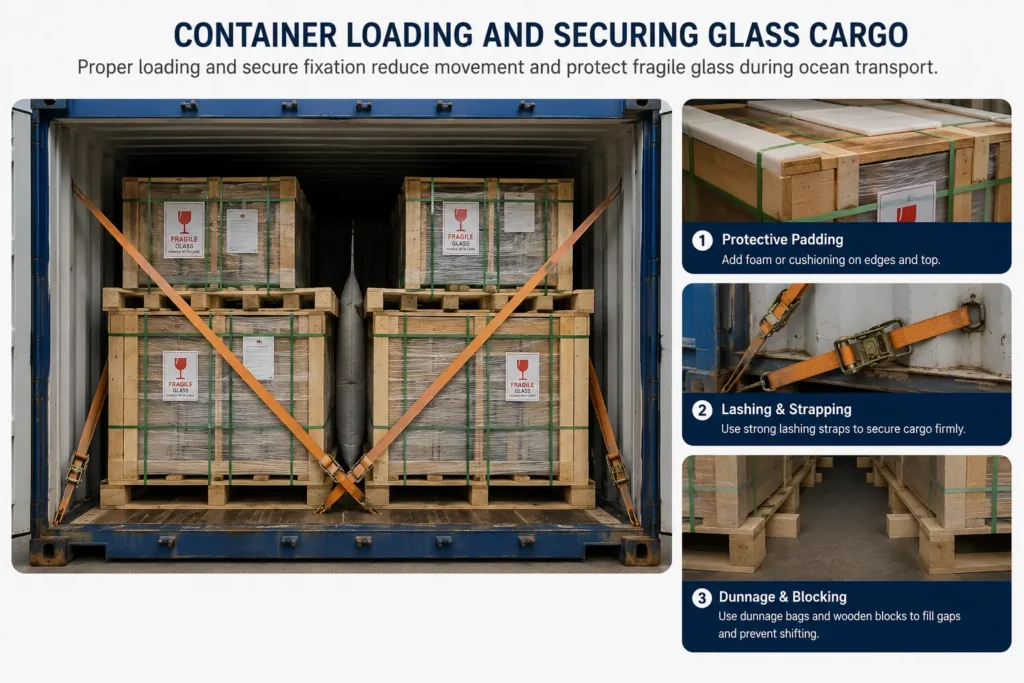
Good packing protects individual items, while proper loading prevents entire cartons, pallets, or crates from moving during transportation.
Before loading, check that the equipment is clean, dry, and free from obvious damage or water leakage. Moisture can weaken cardboard and reduce the strength of the outer box.
During loading:
Maintain reasonable weight distribution
Prevent pallets and crates from sliding
Use blocking or bracing where necessary
Avoid unstable stacking
Follow marked stack limits
Keep heavy cargo away from weak cartons
Maintain the correct orientation for mirrors and panels
Packing and loading photos should also be kept. They provide a useful record of cargo condition before departure.
There is no fixed shipping cost because the final price depends on the delivery country, packed dimensions, gross weight, transport method, and service scope.
Fragile cargo is difficult to price accurately before the final packing is confirmed. Wooden crates, reinforced cartons, pallets, edge protection, and cushioning can all increase the final CBM or chargeable weight.
Different transport methods use different pricing methods:
LCL Sea Freight: Usually calculated by shipment volume in CBM
FCL Sea Freight: Quoted by equipment type, such as 20GP, 40GP, or 40HQ
Air Freight: Calculated by chargeable weight, using the higher of actual and volumetric weight
Express Courier: Usually charged by billable weight, with package dimensions and delivery location also affecting the rate
For an accurate quotation, the freight forwarder should use the final packed dimensions and gross weight, rather than only the original product size or net weight.
Fragile cargo may also require additional protection and handling beyond the main freight charge. Depending on the product, route, and service scope, extra costs may include:
Wooden crating: Around $50–$150 per crate as a general reference, depending on size, material, and construction
Cargo insurance: Often around 0.3%–0.5% of the commercial invoice value, subject to insurer terms, cargo type, and minimum premiums
Destination port charges: May be around $300–$800 per shipment on some routes, depending on the port and included services
Special handling: Additional charges may apply for fragile, oversized, non-stackable, or unusually shaped cargo
Import duties and taxes: Depend on the HS code, customs value, product type, and importing country
Wooden crates and reinforced pallets can also increase total CBM. For air freight, additional protective materials may increase the chargeable weight.
Customs clearance requirements depend on the product type, HS code, customs value, and importing country. Glass bottles, mirrors, tableware, windows, and construction products may fall under different tariff classifications.
For most international orders, the basic customs documents include:
Commercial Invoice: Shows the buyer, seller, product description, quantity, declared value, and trade terms
Packing List: Provides package quantity, dimensions, gross weight, and packing details
Bill of Lading or Air Waybill: Confirms the transportation details
HS Code: Used to determine applicable customs duties and import requirements
Additional Certificates or Permits: Required where local regulations apply
Some products may also face additional controls. Food and beverage containers can be subject to food-contact requirements, while certain mirrors, architectural products, or other items may be affected by safety standards, anti-dumping duties, or other trade measures.
Before departure, confirm the correct HS classification, expected duties and taxes, and any product-specific requirements with the local customs authority or customs broker.
For fragile cargo, pre-shipment inspection helps prevent damage, while cargo insurance helps reduce financial loss if covered damage occurs during transit.
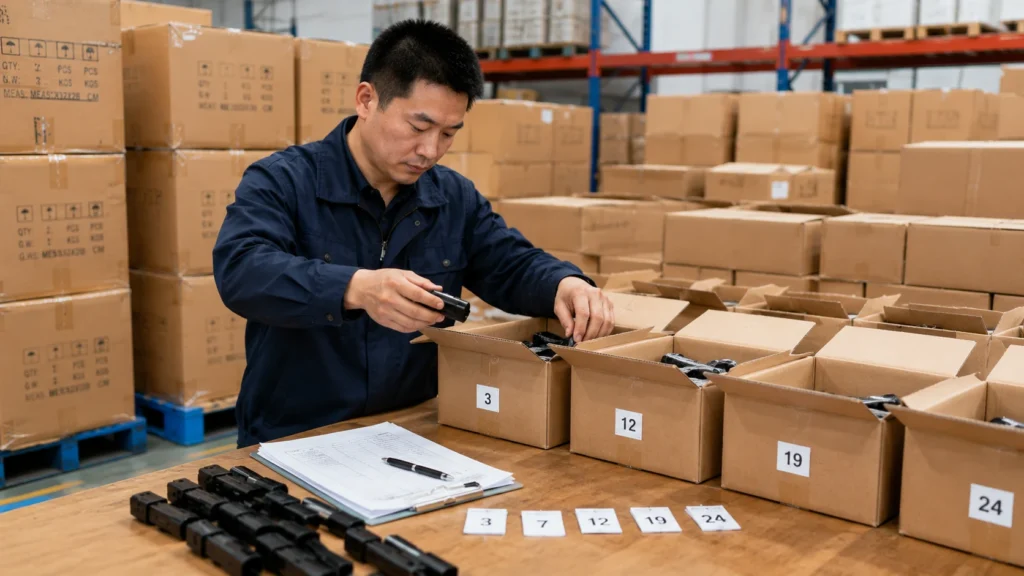
Before the goods leave China, check:
Product quantity and visible defects
Individual wrapping and cushioning
Carton or wooden crate strength
Pallet stability and strapping
Shipping marks and labels
Final packed dimensions and gross weight
For larger orders, loading supervision or additional packing checks may also help identify problems before departure.
Cargo insurance is strongly recommended for fragile or high-value items. Premiums are often around 0.3%–0.5% of the insured value as a general reference, although actual rates depend on the route, packing, cargo type, and coverage.
Before purchasing insurance, confirm:
Whether breakage is covered
Deductible or excess
Packing-related exclusions
Required claim documents
If damage is found after delivery, photograph both the goods and the original package and keep the invoice, packing list, inspection records, and transport documents for any claim.
A practical shipping process can be organized into eight steps:
Confirm the product type, dimensions, weight, quantity, and value.
Agree on suitable export packing with the supplier.
Inspect the goods and cartons before pickup.
Confirm the final packed dimensions, gross weight, and CBM.
Compare the available shipping options and choose express, air freight, LCL, or FCL.
Arrange pickup, export handling, loading, and international freight.
Complete customs clearance in the importing country.
Inspect the cargo after delivery and record any damage immediately.
Following this order helps avoid changing the freight plan after the boxes or crates have already been completed.
Shipping fragile products involves more than booking space with a carrier. The freight plan should match the cargo size, packing method, handling risk, delivery time, and import requirements.
A freight forwarder can coordinate:
Factory pickup in China
Air freight, LCL, or FCL booking
Export handling and documentation
Loading and cargo securing
Cargo insurance
Customs clearance support
Final delivery
Before booking, confirm the final packed dimensions, gross weight, packing type, and cargo photos. These details help determine which transport method is suitable and whether additional protection is needed.
If you are preparing a fragile cargo order in China, send Tonlexing your pickup address, delivery location, number of packages, packed dimensions, gross weight, cargo value, packing details, and photos. We can review the cargo and recommend a suitable freight solution.
The cost depends on delivery location, gross weight, CBM, final packed dimensions, and transport method. Sea freight is generally more economical for larger or heavier commercial orders, while air freight and express are more suitable for smaller or urgent cargo.
The safest approach combines individual cushioning, strong boxes or crates, secure pallets, and proper loading. For larger orders, FCL can reduce intermediate handling compared with LCL, but strong packing remains essential.
Yes. LCL can be used for properly protected items. However, consolidation and deconsolidation create additional handling, so reinforced cartons, pallets, or wooden crates are particularly important.
Glass bottles should be separated using individual cells or cardboard dividers. Strong corrugated boxes, suitable cushioning, and secure palletization are recommended for commercial orders. The contents should not move freely inside the box.
Cargo insurance is recommended for fragile or high-value goods. Review the coverage and exclusions before departure and keep packing, inspection, loading, and delivery records in case a claim is required.
Useful freight, customs and importing resources related to this shipping guide.
Sea freight is the most cost effective shipping method for large volumes and container load cargo. It is ideal for businesses looking to reduce s...
Read guide →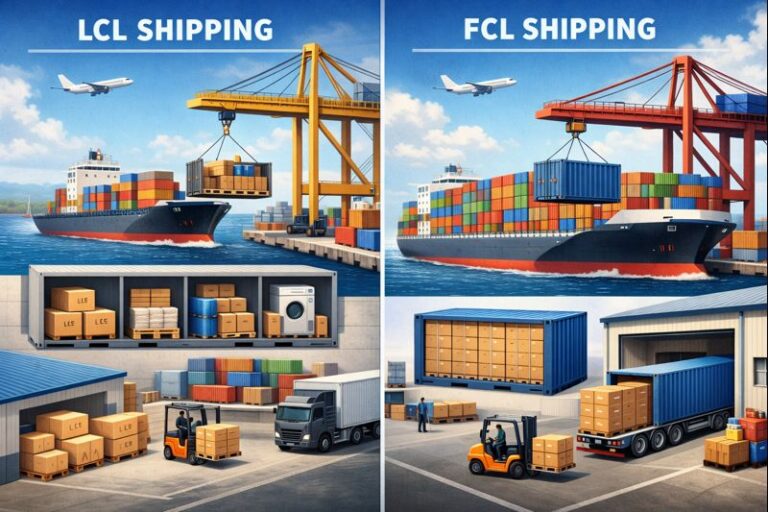
LCL vs FCL Shipping: What They Mean, Key Differences, and Which One to Choose Verified & Reviewed · Last updated January 2026 FCL vs LCL shipping...
Read guide →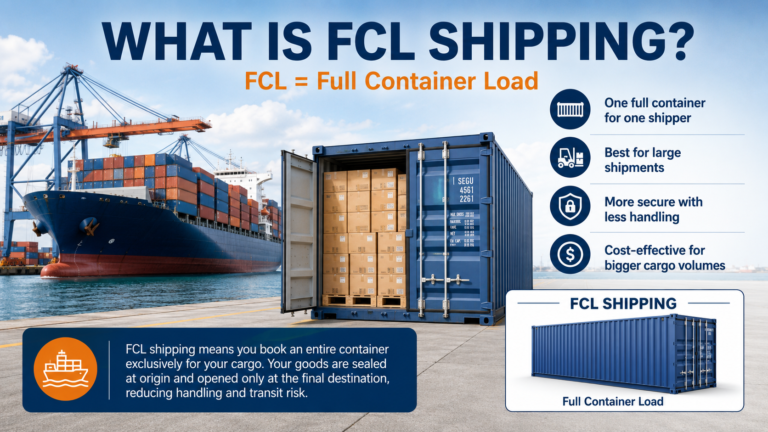
What is FCL Shipping? Verified & Reviewed · Last updated June 2026 FCL shipping, short for Full Container Load shipping, is an international frei...
Read guide →
Learn how LCL shipping and consolidated shipments help reduce shipping costs for smaller cargo from China.
Read guide →Air freight from China is the best option for time sensitive and high value shipments. It offers fast delivery, reliable transit times, and effic...
Learn more → Useful Resource What Is Cargo Insurance and How Does It Work?What Is Cargo Insurance and How Does It Work? Verified & Reviewed · Last updated April 2026 Cargo insurance protects goods against physical loss...
Learn more →WhatsApp us