

Shipping Oversized Cargo to USA
- Verified & Reviewed · Last updated March 2026
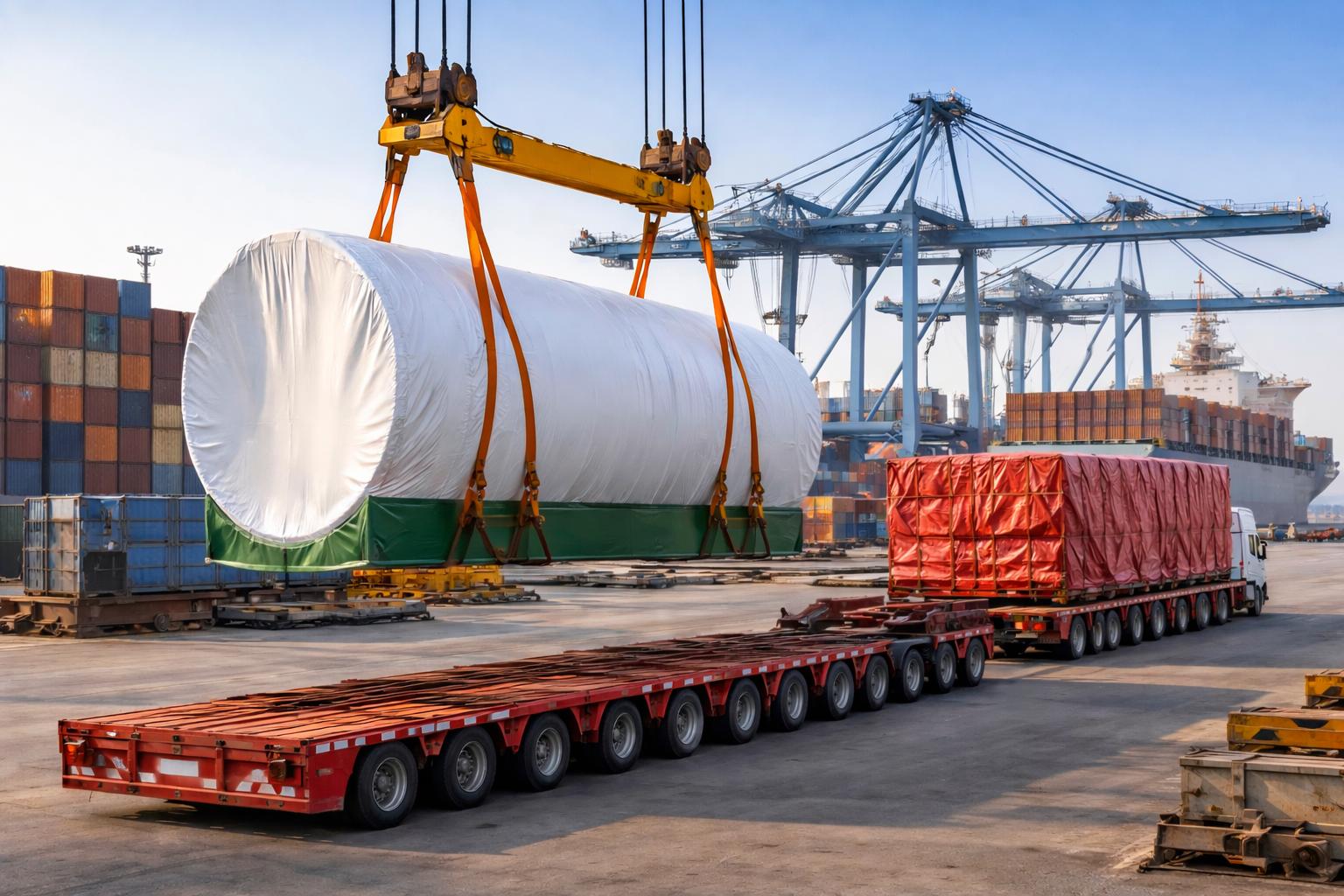
Shipping oversized cargo to USA depends on cargo dimensions, weight, shipping method, and final delivery requirements. Compared with standard freight, oversized shipments often require specialized equipment, extra planning, and more complex inland transport arrangements.
This guide explains shipping oversized cargo to USA, including what is considered oversized cargo, the best shipping methods, estimated transit time, reference rates, customs clearance, and the key factors that affect final delivery and total logistics cost.
Oversized cargo definition
Transit time & costs
Customs & final delivery
- Experienced China-based logistics specialists
Table of Contents
What Is Considered Oversized Cargo in International Shipping
Oversized cargo refers to freight that exceeds the internal limits of a standard container and cannot be handled as regular container cargo. In most cases, cargo is considered oversized if it exceeds any of the following standard container dimensions:
Length over 12.05 m
Width over 2.33 m
Height over 2.59 m
Single-piece weight over 28,000 kg
Common examples include heavy machinery, oversized vehicles, industrial equipment, steel structures, tanks, and long construction materials.
Once cargo falls into this category, it usually requires a different shipping method, such as flat rack, open top, RoRo, or breakbulk cargo service.
Why Shipping Oversized Cargo to USA Requires Special Planning
Shipping oversized cargo to USA involves much more than booking ocean freight. A successful shipment depends on how well each stage is planned before the cargo even leaves the factory or warehouse.
Compared with standard cargo shipping, oversized freight usually requires:
specialized equipment for loading and transport
detailed route planning
permit checks for inland delivery
stronger packing and cargo protection
closer coordination with the carrier
more attention to customs clearance
more precise unloading arrangements at destination
This is why oversized shipments should be managed as a logistics project rather than a routine booking. A small mistake at the beginning can create major costs later. Incorrect dimensions may lead to the wrong container load choice. Weak packing may result in cargo damage. Poor inland delivery planning may cause the shipment to sit at port even after customs clearance is completed.
Best Shipping Methods for Oversized Cargo to USA
There is no single shipping method that works for every oversized shipment. The right option depends on dimensions, weight, cargo type, destination requirements, and how the cargo can be loaded safely.
Flat Rack Shipping
Flat rack shipping is one of the most common solutions for oversized freight. It is suitable for cargo that cannot fit inside a standard container but can still be secured on a container platform.
This method is often used for:
heavy machinery
industrial equipment
cargo with irregular shapes
oversized loads that require side or top loading
Flat rack shipping is often a practical balance between stability, cargo security, and ocean freight efficiency.
Open Top Container Shipping
Open top shipping is used when cargo cannot be loaded through a standard container door because of height restrictions. Instead, the cargo is loaded from above, usually by crane.
It is often suitable for:
tall machinery
industrial tanks
equipment frames
cargo that needs vertical loading
For some shipments, open top service is more efficient than forcing the cargo into a standard container load arrangement.
Breakbulk Cargo Shipping
Breakbulk cargo shipping is used when the cargo is too large or too heavy for flat rack or open top equipment. In this case, the shipment is handled as an individual cargo unit and loaded directly onto vessels.
Breakbulk cargo is often the best option for:
large industrial modules
extra-long steel structures
very heavy equipment
major project cargo
oversized shipment units with extreme dimensions
This method usually requires more planning, closer loading supervision, and stronger coordination at both origin and destination.
RoRo for Oversized Vehicles
RoRo is often a good choice for oversized vehicles and wheeled machinery. If the unit can roll, drive, or be towed safely, this method can simplify the shipping process and reduce handling risk.
It is commonly used for:
trucks
buses
trailers
wheeled heavy equipment
special project vehicles
For oversized vehicles, RoRo can sometimes be one of the more cost effective options.
Shipping Time and Rates for Oversized Cargo to USA
The shipping time and cost of oversized cargo to USA are usually less predictable than standard freight. In most cases, both depend on cargo dimensions, loading complexity, and final delivery requirements.
Ocean transit is only part of the timeline. Oversized shipments often need extra time for lashing, permit approval, and inland delivery planning, which is why they should be managed as a full logistics project.
Estimated Transit Time
Typical lead times may include:
China to U.S. West Coast: 15 to 25 days
China to U.S. East Coast: 30 to 40 days
Lashing and loading preparation: 1 to 2 extra weeks
Permit approval: 5 to 10 working days
Route survey for super loads: about 1 extra week
Actual transit time can be longer if the cargo needs crane loading, direct discharge, or special inland routing after arrival.
Reference Rates for Oversized Cargo Shipping to USA
| Cost Item | Reference Range |
|---|---|
| Ocean freight premium | 200%–500% above standard freight |
| Lost slot charges | Quote-based |
| THC and terminal handling | USD 500–2,000 |
| Lashing and securing | USD 300–1,500 |
| Inland trucking | USD 5–10 per mile |
| Super load trucking | USD 15–30 per mile |
| State permits | USD 50–500 per state |
What Usually Increases the Final Cost
The final price is usually affected by:
cargo dimensions and weight
lost slots on the vessel
crane handling or direct discharge
lashing and packing requirements
inland trucking distance
permit and escort requirements
weather, congestion, and equipment availability
For many oversized shipments, inland delivery becomes the most expensive part of the move.
How the Shipping Process Works
Oversized cargo shipping works best when the process is viewed as three connected stages: planning before booking, handling during shipment, and control after arrival. This keeps the article readable and also reflects how real project cargo moves in practice.
Before Booking: Cargo Review and Planning
Every shipment should start with accurate cargo information. Before any freight shipping decision is made, the logistics team needs to review:
exact dimensions
actual weight
cargo photos
lifting points
packing condition
loading requirements
final destination details
This stage is where the shipping method is selected. It is also where the team decides whether the cargo should move by flat rack, open top, breakbulk cargo, or another service. If inland delivery in the USA may require permits, route checks, or special trucks, those issues should be reviewed early.
Good planning at this stage helps create the optimal route and reduces the risk of expensive changes later.
During Shipment: Pick Up, Loading, and Ocean Freight
Once the shipping plan is confirmed, the cargo is picked up from the factory, yard, or warehouse. For oversized freight, pick up is not always simple. Some shipments need special trucks just to reach the port, and some origin locations require crane support before loading can even begin.
Packing and cargo protection matter greatly during this stage. Oversized cargo often needs more than basic wrapping. It may require:
steel supports
timber bases
waterproof covering
anti-rust protection
secure lashing points
reinforced packing
At the port, the cargo is prepared for loading according to the selected shipping method. This may involve cranes, specialized operators, loading supervision, and close coordination with the carrier. Once the cargo is on board, ocean freight becomes only one part of the broader transportation process. Transit time matters, but so does schedule reliability and handling quality.
After Arrival: Customs Clearance and Final Delivery
After arrival in the United States, customs clearance becomes the next major step. Even a well-managed shipment can face delays if documents are inaccurate or incomplete.
Most oversized cargo imports require clear documentation such as:
bill of lading
importer details
product descriptions
supporting compliance documents where needed
After customs clearance, the shipment moves to final delivery. This is often where oversized cargo becomes most complicated. Depending on the cargo and destination, final transport may involve:
heavy haul trucks
special delivery permits
route restrictions
crane unloading
scheduled site access
door delivery coordination
For many businesses, final delivery is the stage that determines whether the overall shipment is truly successful.

What Affects the Cost of Shipping Oversized Cargo to USA
The cost of shipping oversized cargo to USA is calculated based on the full transport chain, not just the ocean freight rate. Two shipments that look similar can have very different costs because their handling requirements are different.
The main cost factors usually include:
cargo dimensions
cargo weight
shipping method
carrier and vessel availability
loading and unloading requirements
port pair selection
inland transportation distance
permit requirements
destination access conditions
For example, a lower freight rate to one port may not be the most cost effective option if inland transport from that port is more difficult. In the same way, a cheaper shipping method may create more handling risk or higher delivery costs later.
Businesses should therefore focus on total logistics cost rather than only the first quote.
Common Challenges in Oversized Cargo Shipping
Oversized cargo shipping is more difficult than standard freight because delays can happen at several stages, not just during ocean transport.
Customs and Regulatory Compliance
Large machinery and used equipment may face stricter review after arrival in the United States. If documents are incomplete or the cargo does not meet EPA or DOT requirements, customs clearance can be delayed.
Port Congestion and Handling Delays
Oversized cargo often needs crane appointments and special terminal handling. If the vessel arrives late or the handling window is missed, storage charges and demurrage can increase quickly.
Inland Route Restrictions
Final delivery is often more difficult than ocean freight. Low bridges, narrow roads, overhead wires, and temporary road closures can all affect the planned route.
Weather Exposure
Cargo shipped on flat rack, open top, or other exposed equipment is more sensitive to wind and rain. Bad weather can affect both ocean transport and final delivery.
Because of these challenges, oversized shipments need early planning, accurate documents, and closer coordination from origin to destination.
Why Choose Tonlexing for Oversized Cargo Shipping to USA
Oversized cargo shipping requires more than basic freight booking. It needs accurate planning, the right shipping method, and close coordination from origin to final delivery. That is why choosing an experienced logistics partner matters.
Tonlexing supports oversized cargo projects with a practical and detail-focused approach. From cargo review and method selection to port handling, customs coordination, and inland delivery planning, the goal is to keep the shipment moving safely and efficiently.
Tonlexing can support key parts of the process, including:
cargo review before booking
flat rack, open top, breakbulk, and RoRo solution planning
origin pick-up and loading coordination
ocean freight booking and schedule follow-up
customs clearance support
warehouse handling when needed
inland transportation and permit planning
final delivery scheduling
For customers shipping heavy machinery, industrial equipment, or oversized vehicles, Tonlexing focuses on clear communication, realistic planning, and full-process coordination. Instead of treating oversized freight like a routine shipment, Tonlexing handles it as a project that requires closer control at every stage.
Frequently Asked Questions
Oversized cargo is freight that exceeds standard shipping dimensions, normal weight limits, or regular container capacity and therefore requires special handling or transport arrangements.
The best shipping method depends on the cargo’s dimensions, weight, and loading conditions. Common methods include flat rack, open top, breakbulk cargo, and RoRo for oversized vehicles.
The cost is calculated based on dimensions, weight, shipping method, carrier availability, loading needs, permits, inland transportation, and destination delivery conditions.
Yes, many oversized shipments can be arranged on a door-to-door basis, but this usually requires route planning, permits, customs clearance, and unloading coordination.
Insurance is strongly recommended, especially for high-value machinery, heavy equipment, and oversized freight with higher handling risk.
Related Oversized Cargo & USA Shipping Guides
Get an Oversized Cargo Shipping Quote to USA
Tailored solutions for oversized and heavy cargo
Flat rack, breakbulk, RoRo, and open top options
Planning support for permits, delivery, and final routing
Get tailored shipping solutions, practical routing support, and clear pricing for oversized cargo moving to the United States.