

The Characteristics of Logistics Management
- Verified & Reviewed · Last updated June 2026
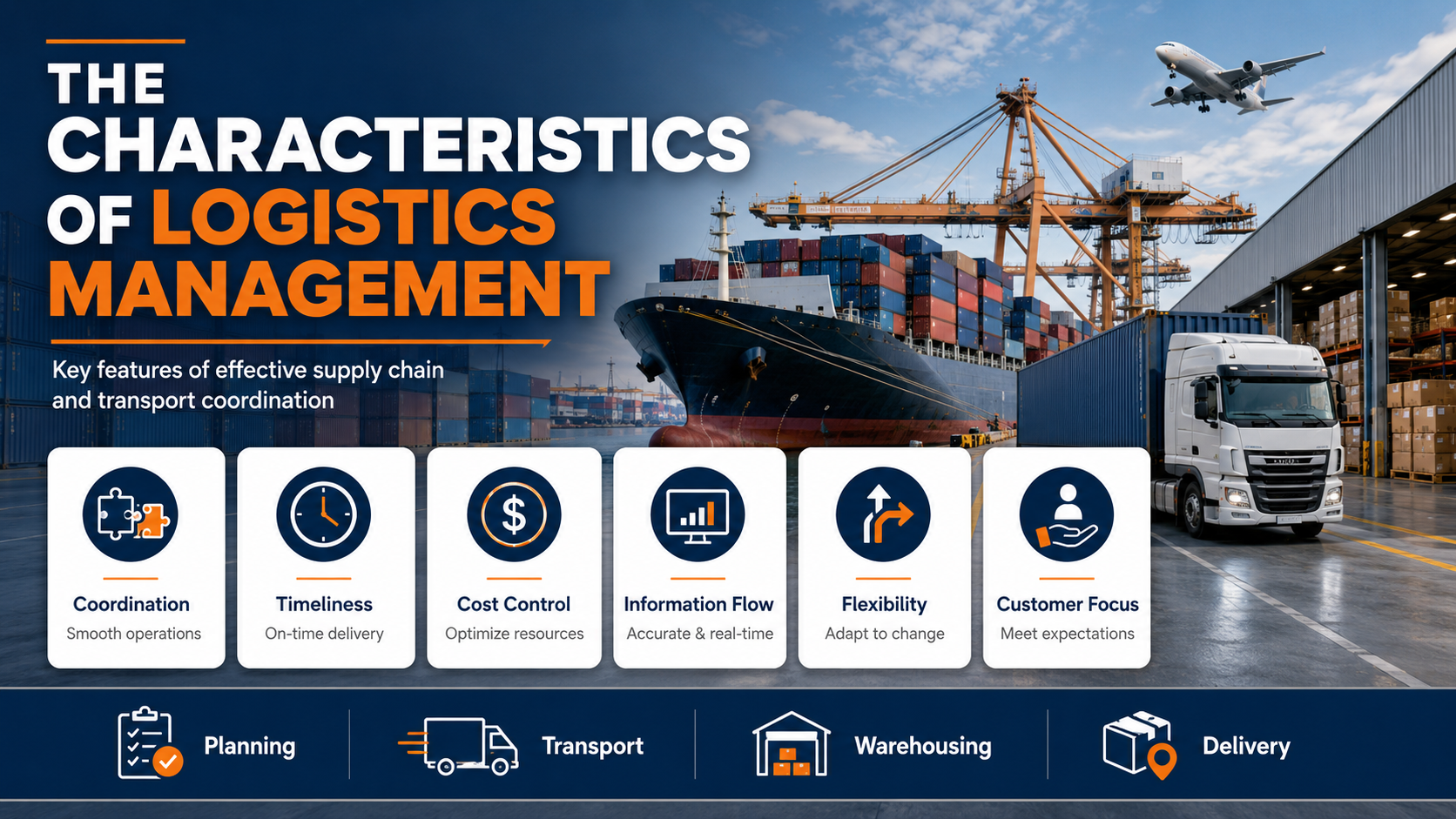
Logistics management plays a key role in how goods, information, transportation resources, warehouses, and delivery activities move across the supply chain.
This guide explains the main characteristics of logistics management, including speed, visibility, coordination, flexibility, cost efficiency, risk control, technology support, and customer-focused service.
Shipping method / Mode
Transit time range
DDP / Door to Door
- Experienced China-based logistics specialists
Table of Contents
What Is Logistics Management?
At its core, logistics management is the strategic process of planning, implementing, and controlling the efficient, forward-and-reverse flow and storage of goods, services, and related information from the point of origin to the point of consumption.
As a vital sub-discipline of supply chain management, its primary objective is to execute the famous “7 Rights” of Logistics: delivering the right product, in the right quantity, in the right condition, to the right place, at the right time, to the right customer, and at the right cost.
While many people confuse logistics with the broader concept of supply chain management, they are distinct. Supply chain management is the overarching umbrella covering everything from raw material sourcing and manufacturing to product marketing. Logistics, on the other hand, is the highly focused, hands-on piece of that puzzle—the physical muscle that actually moves the inventory.
The ultimate goal of this discipline is simple: to establish a stable, predictable, and cost-effective pipeline that satisfies customer demands while maximizing a business’s operational margins.
Key Characteristics of Modern Logistics Management
Modern logistics management has evolved from simple cargo transportation into a highly sophisticated, strategic business driver. To build a resilient and predictable supply chain, an effective logistics framework must exhibit several distinctive characteristics.
Here is a detailed breakdown of the nine defining characteristics of successful logistics management:
Speed and Agility
In a competitive marketplace, speed is non-negotiable. Logistics management focuses on accelerating cargo velocity—minimizing transit times, eliminating cross-docking delays, and implementing Just-in-Time (JIT) delivery. This agility ensures that companies can respond to volatile market shifts and sudden spikes in consumer demand without bottlenecking.
End-to-End Visibility (Transparency)
Modern logistics replaces traditional, fragmented tracking with complete data visibility. By leveraging cloud platforms, electronic data interchange (EDI), and IoT sensors, all stakeholders—from manufacturers to final importers—have a single source of truth regarding shipment locations, customs clearance milestones, and inventory counts, while information sharing enhances visibility across the supply chain.
Structural Flexibility and Adaptability
Global trade is highly dynamic, often disrupted by port congestion, geopolitical shifts, or changing customs regulations. A key characteristic of robust logistics management is flexibility—specifically, the capacity to rapidly pivot across multiple transportation modes (e.g., shifting from ocean freight to rail freight) and switch transportation methods when conditions change, or alter routing without halting the supply chain.
Cost Optimization and Efficiency
A successful logistics operation operates like clockwork. Reliability means delivering goods intact, undamaged, and precisely within the agreed-upon delivery window, with consistent delivery times and reliable services that help ensure customer satisfaction. This predictability allows wholesalers and manufacturers to maintain lower safety stocks, directly freeing up working capital.
High Reliability and Predictability
Logistics management is dedicated to reducing the Total Cost to Serve. This is achieved not by cutting corners, but through intelligent optimization, including inventory management as a cost-control lever: maximizing container load factors, optimizing warehouse layouts to decrease labor touchpoints, and negotiating strategic freight rates across multimodal networks. Teams also adjust inventory levels to avoid stockouts and overstocking, and use economic order quantity to minimize total inventory costs.
Seamless Network Coordination
Logistics does not happen in a vacuum. It requires tight integration across logistics networks that connect customs brokers, ocean carriers, truck fleets, and warehouse operators. Superior logistics management acts as the orchestrator, harmonizing these moving parts into a singular, frictionless workflow that supports efficient logistics and smoother supply chain operations.
Human-Centered & Customer Orientation
Ultimately, logistics is designed to serve people. Modern logistics management prioritizes the end-user experience by providing clear communication, offering tailored cargo solutions (such as temperature-controlled cold chains), and incorporating sustainable practices (like eco-friendly packaging) to align with global green initiatives.
Proactive Risk Mitigation
Rather than reacting to supply chain disruptions after they occur, advanced logistics management embeds risk control into its daily architecture. This involves executing rigorous carrier vetting, securing comprehensive cargo insurance, and maintaining diversified sourcing and transport pathways, including sourcing raw materials through alternative suppliers to reduce disruption risk.
Technology-Driven Infrastructure
At its core, modern logistics is powered by digital infrastructure. From Warehouse Management Systems (WMS) and AI-driven route planners to automated customs filing software, technology is the engine that converts chaotic physical cargo movement into organized, predictable data streams.
At a Glance: The Logistics Matrix
| Logistics Function | Main Role | Business Impact |
|---|---|---|
| Transportation Management | Selects routes, carriers, and shipping methods | Improves delivery time and controls freight cost |
| Warehouse Management | Stores, organizes, and prepares goods for shipment | Improves order accuracy and warehouse space usage |
| Inventory Management | Tracks stock levels and product availability | Reduces stockouts and excess inventory |
| Order Fulfillment | Picks, packs, and ships customer orders | Improves delivery efficiency and customer experience |
| Fleet Management | Manages trucks, vans, and transport assets | Supports stable pickup and delivery performance |
| Reverse Logistics | Handles returns, repairs, recalls, and replacements | Reduces losses and improves after-sales service |
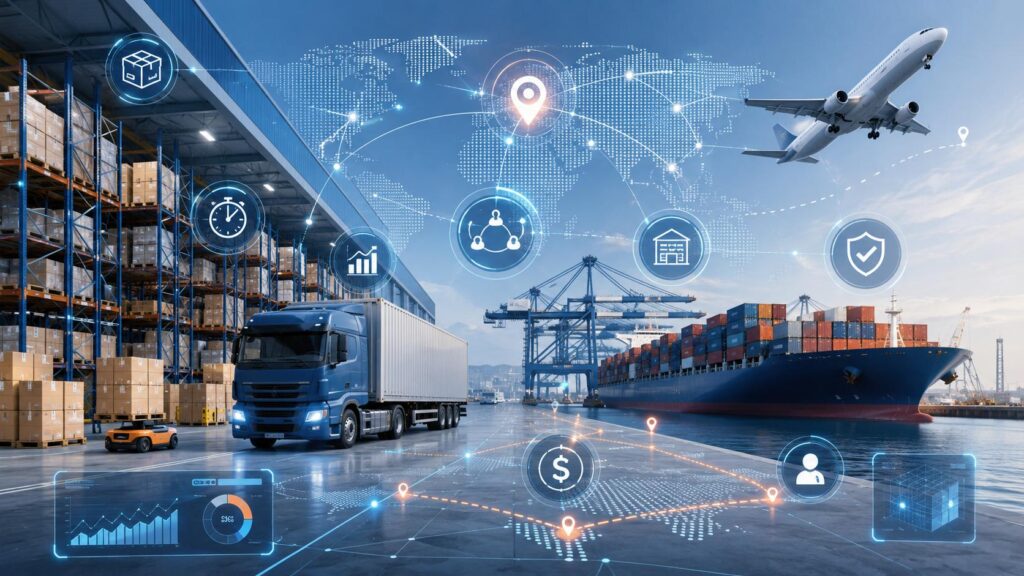
Logistics Management in International Shipping
When logistics management crosses international borders, it becomes significantly more complex than domestic shipping. International logistics involves different regulations, customs systems, transport networks, currencies, and compliance requirements. Instead of simply moving goods from point A to point B, it is a coordinated process involving documentation, transportation planning, and risk control.
To manage this complexity effectively, international logistics management is usually built around three core pillars:
Global Trade Compliance and Documentation
Documentation is one of the most critical parts of international logistics. Even small errors can lead to customs delays, fines, or cargo inspections. For this reason, logistics management must ensure all trade documents are accurate and consistent.
Key documents include:
Commercial Invoice: Defines product value, buyer/seller details, and customs valuation basis
Bill of Lading / Air Waybill: Serves as transport contract and cargo receipt
HS Code Classification: Determines duty rates and import regulations
Incoterms (FOB, CIF, DDP, etc.): Defines cost and responsibility between buyer and seller
Accurate documentation ensures smooth customs clearance and reduces the risk of shipment delays.
Multimodal Transport Coordination
International logistics rarely relies on a single transport method. Effective transportation management usually means coordinating multiple stages and transport modes working together.
A typical supply chain may include:
First mile: Pickup from factory to port or airport by truck
Main transport: Ocean freight, air freight, or rail freight
Hub handling: Port, airport, or bonded warehouse transfer
Last mile: Final delivery to warehouse or customer address
This multimodal structure requires strong coordination between carriers, freight forwarders, and local agents to ensure smooth cargo movement across borders, with route optimization and efficient transportation routes helping keep multimodal moves timely and cost-effective, while fleet management supports vehicle oversight on first-mile and last-mile legs.
Specialized handling techniques protect delicate or hazardous materials during international moves.
Risk Management and Supply Chain Resilience
International shipping is exposed to many uncertainties as part of complex supply chains, including port congestion, customs inspections, weather disruptions, and geopolitical risks. Effective logistics management must include strong risk control strategies.
Common risk management practices include:
Backup shipping routes and alternative carriers, including optimizing transportation routes to reduce disruption and operational costs
Cargo insurance for financial protection
Real-time shipment tracking systems
Diversified freight forwarder and carrier networks
These measures help improve supply chain resilience and ensure more stable delivery performance even under disruption.
Digital Shift in International Logistics
Modern international logistics increasingly relies on digital systems, with freight forwarders and logistics providers using a logistics management system for real-time control of the entire logistics process. Tracking platforms and management software, often integrated with enterprise resource planning tools, provide real-time visibility of shipments.
These systems enable:
Real-time container and cargo tracking
Automated customs status updates
Temperature and condition monitoring for sensitive goods
Better coordination between all logistics stakeholders
These tools improve operational efficiency and business efficiency across the supply chain. Digitalization improves transparency, reduces manual errors, and enhances overall logistics efficiency.
How TONLEXING Supports Effective Logistics Management
At TONLEXING, we understand that cutting-edge logistics management is the backbone of successful international business. Our comprehensive suite of logistics services is custom-tailored to optimize your supply chain, offering quick, reliable, and highly cost-effective transportation solutions.
Why Choose TONLEXING?
Advanced Visibility: Real-time cargo tracking and seamless digital information sharing.
Global Multimodal Network: Diverse air, sea, and land freight options adapted to your budget and timeline.
Eco-Friendly & Customer-Centric: A dedicated team committed to sustainable operations and peerless service quality.
Contact TONLEXING today to get a tailored freight quote and experience seamless global shipping.
Frequently Asked Questions
The main characteristics of logistics include speed, reliability, information visibility, flexibility, cost efficiency, coordination, customer service, risk control, and accurate delivery. These features help goods move smoothly from suppliers to the final customer, helping companies meet customer expectations and support the overall customer experience.
The characteristics of logistics management include supply chain coordination, transportation planning, information sharing, cost optimization, customer orientation, technology support, accuracy, reliability, and risk management. Together, they help businesses manage the flow of goods efficiently, with demand forecasting and inventory control also supporting planning as companies use historical data to predict future demand and avoid stockouts or excess inventory.
The 7 principles of logistics management are the right product, right quantity, right condition, right place, right time, right customer, and right cost. These principles are also known as the 7 Rights of logistics.
The 4 common types of logistics management are inbound logistics, outbound logistics, reverse logistics, and third-party logistics coordination. They cover the movement of goods from suppliers to customers and back when returns, repairs, or replacements are needed.
The 5 Ps of logistics are product, place, price, promotion, and people. These elements help companies design logistics services that match cargo requirements, customer expectations, and business goals.
Related Logistics Management Guides
Build a Smarter Logistics Management Process
Improve shipment visibility and coordination
Reduce logistics costs and delivery risks
Get reliable China-based freight support
TONLEXING helps businesses manage sea freight, air freight, customs clearance, warehousing, and door-to-door delivery from China with efficient logistics solutions.