Related Guide
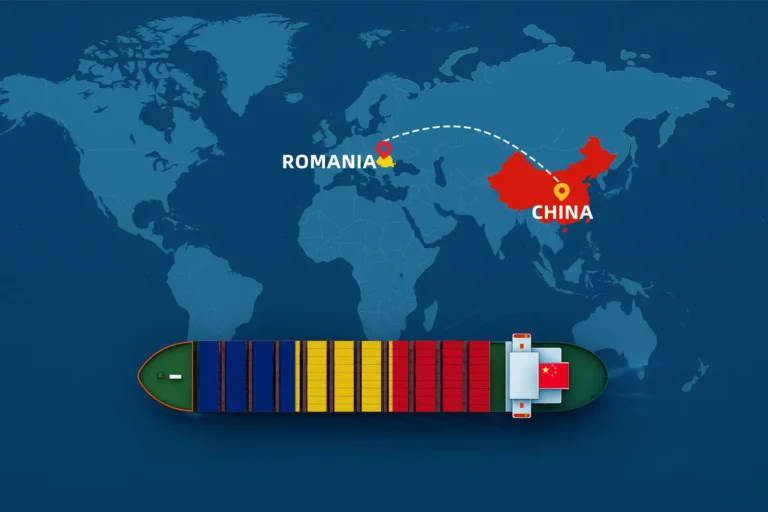
Shipping from China to Romania
Shipping from China to Romania – Sea, Air & DDP in 2026 Fast, reliable shipping from China to Romania for B2B importers, eCommerce sellers, and p...
Read guide →

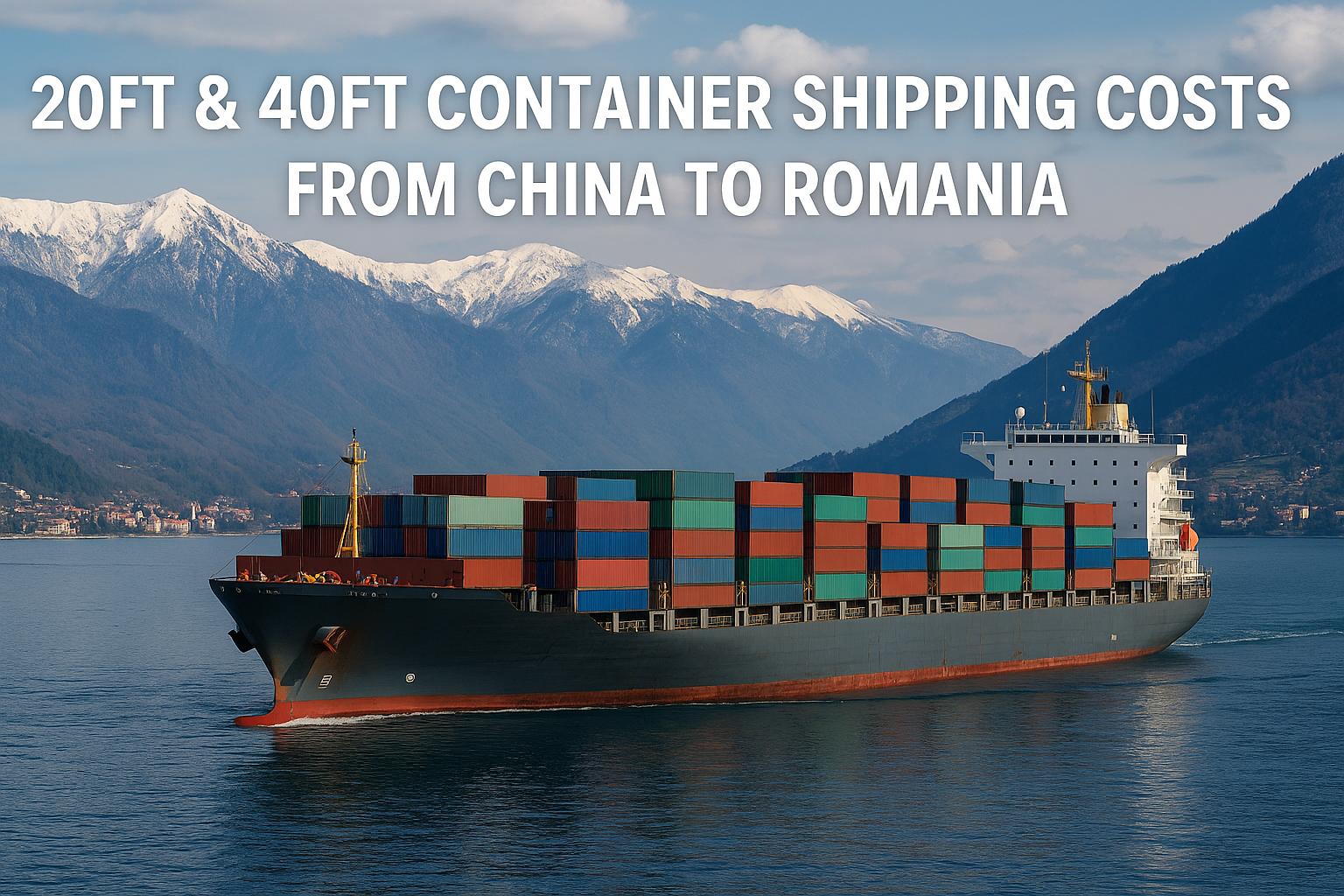
20ft 40ft Container Shipping Costs from China to Romania vary depending on container size, ocean freight rates, shipping routes, customs clearance, and final delivery requirements.
This guide explains container shipping costs from China to Romania, covering 20ft and 40ft container rates, Constanța Port routes, FCL and LCL shipping, transit times, port charges, customs duties, and door-to-door delivery options.
Shipping method / Mode
Transit time range
DDP / Door to Door
These prices are general port-to-port freight rates. The final price may be higher if your shipment includes supplier pickup in China, export customs declaration, terminal handling charges, Romania customs clearance, customs duties, VAT, port charges, container transport, cargo insurance, or final delivery.
| Shipping Option | Estimated Cost Range | Best For | Estimated Transit Time |
|---|---|---|---|
| 20ft Container FCL | USD 1,300–3,200 | Heavy cargo, machinery, dense goods | 30–45 days |
| 40ft Container FCL | USD 2,000–5,500 | Large commercial shipments | 32–50 days |
| 40HQ Container FCL | USD 2,200–5,800 | Bulky but lightweight cargo | 32–50 days |
| LCL Shipping | USD 50–140 per CBM | Smaller shipments | 35–55 days |
| Rail Freight | USD 150–300 per CBM | USD 150–300 per CBM | 20–30 working days |
For most importers, sea freight is the most cost-effective option for medium and large shipments. Air freight is faster but much more expensive, while rail freight can be considered when the shipment needs faster delivery than ocean freight but does not justify air freight costs.
The right container size depends on cargo volume, cargo weight, packaging method, and how efficiently the shipment can be loaded. In China to Romania container shipping, choosing correctly is important because it directly affects overall shipping costs, space utilization, and transport efficiency.
A 20ft container is often used for dense and heavy cargo, while 40ft and 40HQ containers are better suited for larger-volume shipments. The key is not only the price of the container, but how well your cargo fits into it.
A 20ft container is best suited for heavy or compact cargo that does not require much space but has a high weight. It is commonly used in industrial shipments where weight limits are reached before volume limits.
Typical cargo includes machinery, metal products, tools, stone, tiles, construction materials, chemicals, and spare parts. Because of its structure, it is often chosen when cargo is dense and needs stable handling during ocean freight from China to Romania.
A 20ft container can usually hold around 9–10 standard pallets, depending on pallet size and loading method.
Key advantages:
Better for heavy and dense cargo
More stable cost control for low-volume heavy shipments
Suitable when weight limit is reached early
Key limitations:
Limited space compared with 40ft containers
Not ideal for bulky or high-volume cargo
A 40ft container is widely used for general commercial cargo and medium-to-large shipments. It offers significantly more space than a 20ft container, making it suitable for shipments that require higher volume capacity.
It is commonly used for furniture, electronics, home goods, textiles, packaging materials, retail products, and mixed cargo from multiple suppliers. For many importers, this is the most balanced option in container shipping from China to Romania.
A 40ft container can usually load around 20–21 standard pallets, depending on cargo arrangement and packaging.
Key advantages:
More loading space for larger shipments
Lower cost per cubic meter when fully utilized
Suitable for mixed cargo and commercial goods
Key considerations:
Higher total shipping cost than 20ft container
Needs efficient loading to maximize value
A 40HQ (High Cube) container has the same length as a standard 40ft container but provides additional height. This makes it especially suitable for bulky but lightweight cargo that requires more vertical space.
It is often used for furniture, household goods, plastic products, display items, packaging materials, and e-commerce shipments. When cargo volume is high but weight is not a limiting factor, 40HQ containers are often the most efficient choice.
Key advantages:
Extra height for bulky cargo
Better space utilization for lightweight goods
Ideal for high-volume shipments
Key considerations:
Slightly higher cost than standard 40ft container
Not necessary for heavy cargo with low volume
In addition to standard dry containers, some shipments require special container types depending on cargo characteristics. These options are less common but essential for certain goods in international shipping.
Unlike standard containers, special equipment usually increases overall shipping costs due to limited availability, handling requirements, and additional operational complexity.
Common special container types include:
Reefer container – for temperature-controlled goods such as food, pharmaceuticals, or chemicals
Open top container – for tall cargo that cannot be loaded through standard doors
Flat rack container – for oversized machinery or heavy equipment
Tank container – for liquid or chemical products
In most cases, specialized containers can cost 50%–100% more than standard containers, depending on route, season, and carrier availability.
Most China to Romania container shipments are routed to Constanța Port. The final container rates depend on departure port, carrier schedule, vessel space, fuel surcharge, market demand, and shipping season.
Origin Port in China | Destination Port | 20ft Container | 40ft / 40HQ Container |
|---|---|---|---|
Shanghai | Constanța | USD 1,300–3,100 | USD 2,000–5,300 |
Ningbo | Constanța | USD 1,400–3,200 | USD 2,100–5,400 |
Shenzhen / Yantian | Constanța | USD 1,500–3,200 | USD 2,200–5,500 |
Guangzhou / Nansha | Constanța | USD 1,500–3,200 | USD 2,200–5,500 |
Qingdao | Constanța | USD 1,600–3,300 | USD 2,300–5,600 |
Tianjin / Xingang | Constanța | USD 1,700–3,400 | USD 2,400–5,700 |
Xiamen | Constanța | USD 1,500–3,200 | USD 2,200–5,500 |
These rates are for general planning only. They usually do not include trucking from factory to port, export customs clearance, origin port fees, destination port charges, Romania customs, import duties, VAT, demurrage, detention, or inland delivery.
A container shipping cost calculator can help estimate the logistics budget before booking, but it should only be used as a reference. The final price still depends on the container type, port pair, fuel surcharge, seasonal demand, customs requirements, and delivery distance.
To calculate the total landed cost, prepare these details in advance:
Product name and HS code
Total weight and cubic meter volume
Number of cartons, pallets, or crates
Supplier address in China
Destination city or ZIP code in Romania
Required service: port-to-port or door-to-door
A simple formula is:
Total Landed Cost = Origin Charges + Ocean Freight + Destination Charges + Duties & VAT + Inland Delivery
This structure helps importers compare different shipping quotes more clearly and avoid hidden charges after arrival.
The main shipping routes from China to Romania are designed around major Chinese export ports and the Port of Constanța, Romania’s key gateway on the Black Sea. These routes are typically operated by global shipping lines and may include direct sailings or transshipment via major international hubs.
Route selection plays an important role in transit time, freight rates, and overall shipping efficiency.
The most widely used route for container shipping from China to Romania is by ocean freight to Constanța Port. Cargo is usually shipped from major Chinese ports and transported through key international waterways before entering the Black Sea.
Typical route path:
China Ports → South China Sea → Indian Ocean → Suez Canal → Mediterranean Sea → Black Sea → Constanța Port
This route is commonly used for full container load (FCL) shipments and offers stable schedules for long-distance trade between Asia and Eastern Europe.
Most shipments to Romania originate from China’s leading container hubs, depending on supplier location and cargo type.
Common departure ports:
Qingdao Port
Tianjin Port
Xiamen Port
Each port offers different sailing schedules and carrier options, which can influence both container shipping rates and transit time.
Some shipments do not sail directly to the Black Sea. Instead, they are transshipped at major global hubs before continuing to Constanța.
Common transshipment hubs:
Singapore
Port Klang (Malaysia)
Colombo (Sri Lanka)
Piraeus (Greece)
Istanbul / Mediterranean hubs (depending on carrier)
Transshipment routes are often used when:
Direct sailings are not available
Freight rates are lower via hub routing
Carrier schedules are more flexible
However, transshipment may increase total transit time slightly compared to direct services.
After passing through the Mediterranean Sea, vessels enter the Black Sea through the Turkish Straits before reaching Romania.
The final destination is: Port of Constanța (Romania)
From Constanța, containers are usually delivered by truck or rail to inland cities such as Bucharest, Cluj-Napoca, Timișoara, Brașov, and Iași.
In some cases, importers may also use a combination of sea freight and rail transport for faster inland delivery or optimized logistics planning.
Example structure:
China → European rail hub → Romania inland delivery (via Constanța or direct rail connection)
This option is less common for full containers but can be used for time-sensitive shipments where ocean freight alone is not ideal.

Customs clearance in Romania must comply with European Union (EU) import regulations. All goods imported from non-EU countries such as China must be cleared at the first point of entry, which is usually the Port of Constanța for sea freight or Bucharest Henri Coandă International Airport for air shipments.
The clearance process is based on document verification, product classification, and tax assessment. Any inconsistency in documents or declared values may lead to delays, inspections, or additional charges.
To ensure smooth customs clearance, importers must provide a complete and accurate set of shipping documents. These documents are used by Romanian customs to verify cargo details and determine import eligibility.
The most commonly required documents include:
Commercial Invoice – showing buyer, seller, product details, value, currency, and Incoterms
Packing List – detailing cargo quantity, weight, dimensions, and packaging method
Bill of Lading / Air Waybill – official transport document issued by the carrier
EORI Number – required for all EU importers for customs identification
Customs Import Declaration (SAD) – single administrative declaration submitted to Romanian Customs
For regulated goods such as electronics, chemicals, or batteries, additional documents like MSDS, certificates, or import permits may also be required.
Import taxes in Romania are calculated based on the CIF value, which includes product cost, insurance, and freight charges. Once the cargo arrives, customs will assess duties and VAT according to product classification.
The main tax components include:
Customs Duties – usually ranging from 0% to 12% depending on HS code and product category
VAT (Value Added Tax) – standard rate is 19%, applied to CIF value plus import duties
Additional Charges – may apply for inspections or special product categories
Some products may also be subject to anti-dumping duties, especially certain goods originating from China such as steel products, solar panels, or electric equipment. These additional tariffs depend on EU trade policy and product classification.
Although many shipments are cleared without issues, Romanian customs may randomly inspect containers or request additional verification. This is especially common for shipments with unclear product descriptions, inconsistent values, or missing documents.
Delays usually happen due to:
Incorrect HS code classification
Inconsistent invoice and packing list data
Undervalued or unclear cargo declarations
Missing import documents or certificates
If cargo is held for inspection or clarification, storage charges at the port may apply, increasing overall shipping costs.
Door-to-door container shipping from China to Romania is a complete logistics solution that covers the entire shipping process from the supplier’s location in China to the final delivery address in Romania. It is widely used by importers who want a simpler and more controlled way to manage international shipping without handling multiple service providers.
This service is especially popular in global trade because it reduces coordination work, improves efficiency, and provides a clearer view of overall shipping costs from the beginning.
Door-to-door shipping combines several stages of the shipping process into one integrated service. Instead of arranging each step separately, a freight forwarder manages the entire flow from pickup to final delivery.
Typical services include:
Supplier pickup and inland transport in China
Export customs clearance and documentation
Ocean freight for FCL or LCL shipments
Destination port handling at Constanța
Romania customs clearance and import procedures
Inland transport to final delivery location
This makes it a complete end-to-end shipping solution for container shipments from China to Romania.
Door-to-door service is commonly used when importers want to avoid dealing with port operations, customs procedures, and multiple transport providers. It is especially useful for businesses without local logistics teams in China or Romania.
It is often chosen for:
First-time importers
E-commerce and small-to-medium businesses
Shipments from multiple suppliers
Cargo requiring full customs support and coordination
It is also suitable when importers need predictable overall shipping costs rather than separate quotations for each stage.
Reducing shipping costs from China to Romania is not only about finding the lowest ocean freight rate. The real savings come from optimizing the entire logistics process, including container selection, shipping routes, customs clearance, and inland transport. Importers who focus on total shipping costs instead of single price components usually achieve better long-term cost control.
One of the most effective ways to reduce shipping costs is selecting the correct container size. A 20ft container is often more suitable for heavy or dense cargo, while a 40ft or 40HQ container is more cost-efficient for large-volume shipments.
If cargo volume is close to a full container load, using FCL shipping instead of multiple LCL shipments can significantly reduce cost per cubic meter and improve loading efficiency.
Choosing between FCL and LCL has a direct impact on overall shipping costs. FCL shipping is usually more economical when cargo volume is high enough to fill most of the container, while LCL is better for smaller shipments.
To reduce costs:
Use FCL when cargo exceeds medium volume levels
Avoid splitting shipments unnecessarily
Consolidate small shipments before booking LCL
Proper planning helps avoid paying higher per-unit costs for fragmented shipments.
Shipping routes from China to Romania vary in cost depending on carrier schedules, transshipment points, and port pairs. Choosing the right departure port in China can help reduce both ocean freight rates and inland transport costs.
Importers should compare different routing options from major Chinese ports such as Shanghai, Ningbo, Shenzhen, and Qingdao to the Port of Constanța. In many cases, a slightly longer route may offer better pricing depending on carrier availability and seasonal demand.
Seasonal demand has a strong impact on container shipping rates. During peak season, freight rates increase due to limited container space and higher global demand.
To reduce costs, importers should:
Book shipments earlier before peak periods
Avoid urgent bookings during high-demand seasons
Plan shipments around stable market periods
Peak season surcharges can significantly increase total shipping costs if not planned in advance.
Customs clearance in Romania is another important cost factor. Delays or documentation issues can lead to additional storage fees, inspection charges, and unexpected expenses.
To ensure smooth clearance:
Use correct HS codes
Prepare accurate commercial invoices and packing lists
Declare cargo value properly
Ensure EORI number and import documents are complete
Smooth customs clearance helps avoid unnecessary delays and extra port costs.
Inland transport from Port of Constanța to final destinations such as Bucharest or other Romanian cities can significantly affect total shipping costs. Optimizing delivery routes and planning consolidated deliveries can help reduce transport expenses.
Using full container load deliveries instead of multiple partial shipments can also improve cost efficiency.
An experienced freight forwarder can help optimize shipping routes, compare carrier rates, and structure the most cost-effective logistics plan. They can also help avoid hidden charges such as demurrage, detention, or unnecessary port storage fees.
Good coordination across pickup, shipping, and customs clearance often results in lower overall shipping costs and more stable delivery performance.
The cost to ship a container from China to Romania is usually USD 1,300–3,200 for a 20ft container and USD 2,000–5,500 for a 40ft container by ocean freight. A 40HQ container may cost up to USD 2,200–5,800, depending on shipping routes, carrier availability, fuel surcharge, customs clearance, and seasonal demand.
For most importers, sea freight (FCL shipping) is the most cost-effective option when shipping medium or large volumes. If the cargo volume is small, LCL shipping is more economical because you only pay for the space used. Air freight is the fastest option but significantly more expensive and is mainly used for urgent or high-value goods.
Shipping time depends on the transport method. Sea freight (FCL) usually takes 30–45 days, while LCL shipping may take 35–55 days due to consolidation. Rail freight takes around 20–30 working days, and air freight typically takes 5–7 working days depending on routing and customs clearance.
Most container shipments from China arrive at the Port of Constanța, Romania’s main Black Sea gateway. From there, goods are transported by truck or rail to inland cities such as Bucharest and other major destinations across Romania.
Yes. Smaller shipments can be shipped using LCL, air freight, or rail freight, depending on cargo size, urgency, and budget. LCL is the most common option for small or partial shipments because it allows importers to share container space and reduce overall shipping costs.
Useful freight, customs and importing resources related to this shipping guide.
Shipping from China to Romania – Sea, Air & DDP in 2026 Fast, reliable shipping from China to Romania for B2B importers, eCommerce sellers, and p...
Read guide →
Shipping Cost from China to Romania (2026 Guide) Verified & Reviewed · Last updated May 2026 Shipping cost from China to Romania in 2026 typicall...
Read guide →
Shipping from China to Romania has become increasingly important for importers sourcing consumer goods, electronics, industrial equipment, textil...
Read guide →
Sea freight is the most cost effective shipping method for large volumes and container load cargo. It is ideal for businesses looking to reduce s...
Read guide →Air freight from China to Romania has become one of the most reliable and fast-growing logistics channels for businesses importing electronics, t...
Learn more → Useful Resource DDP Shipping from China to RomaniaIn recent years, trade between China and Romania has grown rapidly, with an increasing number of Romanian importers relying on Chinese suppliers...
Learn more →WhatsApp us