Related Guide
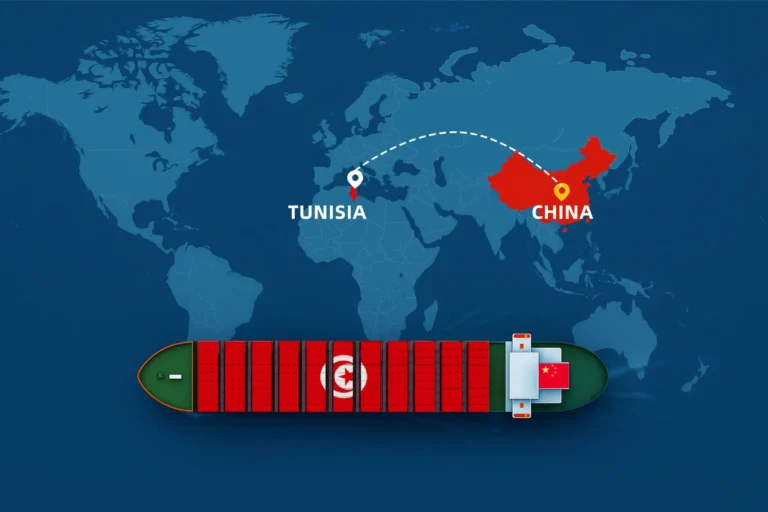
Shipping from China to Tunisia
Shipping from China to Tunisia – Sea, Air & Door-to-Door in 2026 Fast, reliable shipping from China to Tunisia for B2B importers, distributors,an...
Read guide →

Shipping goods from China to Tunisia is an important part of international shipping for importers, wholesalers, manufacturers, construction companies, and trading businesses. Whether importing machinery, furniture, electronics, textiles, building materials, auto parts, household products, or bulk cargo, understanding container shipping costs helps importers plan their budget more accurately.
This guide explains the cost of shipping a 20ft or 40ft container from China to Tunisia, covering major ports such as Rades, Tunis, Sousse, and Sfax, with details on FCL shipping, LCL shipping, transit time, port charges, and door-to-door delivery.
Container size
Sea freight rates
Total shipping cost
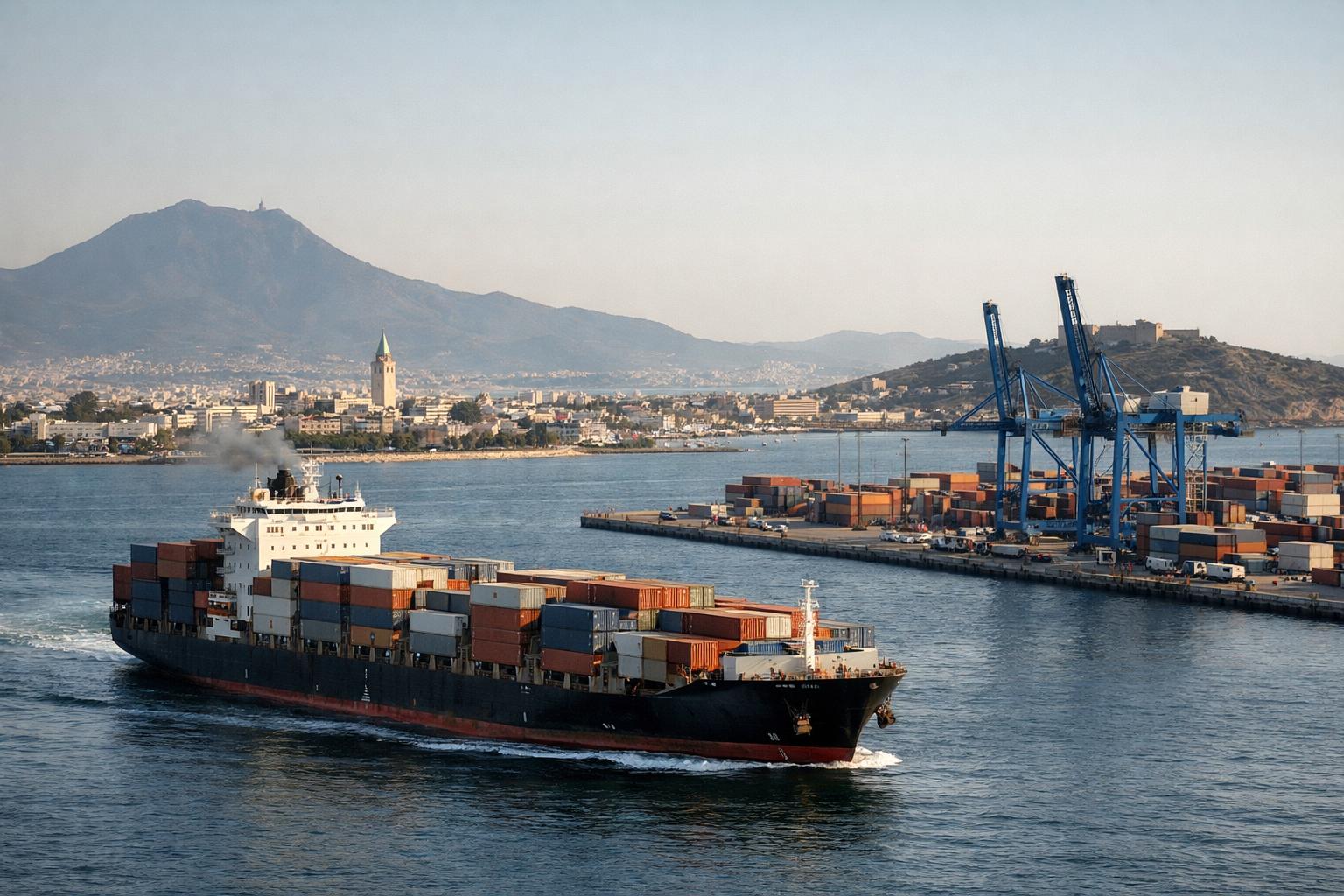
The average container shipping costs from China to Tunisia vary by port, container type, shipping method, and market conditions. As a general planning reference, shipping costs for 20ft containers typically range from USD 3,500 to USD 5,000, while shipping costs for 40ft containers typically range from USD 4,200 to USD 6,500.
| Shipping Method | Estimated Cost | Best For | Estimated Transit Time |
|---|---|---|---|
| 20ft Container FCL | USD 3,500–5,000 | Heavy cargo, machinery, dense goods | 25–35 days port to port |
| 40ft Container FCL | USD 4,200–6,500 | Larger commercial shipments | 25–35 days port to port |
| 40GP Container FCL | USD 6,994–8,493 | High-volume container load | 25–35 days port to port |
| LCL Shipping | About USD 142 per CBM | Smaller shipments below full container load | 35–50 days |
These average price ranges are for planning only. Final shipping rates should be confirmed with a freight forwarder before booking because sea freight rates and air freight costs change frequently.
Choosing between a 20ft, 40ft, or 40HQ container depends on how your cargo uses space and weight. A 20ft container is usually better for heavy goods, while a 40ft or 40HQ container is more cost effective for larger-volume shipments.
A 20ft container is commonly used for heavy and compact cargo such as machinery, steel products, tiles, hardware, construction materials, and raw materials.
The shipping cost for a 20ft container from China to Tunisia usually ranges from USD 3,500 to USD 5,000. In June 2026, 20GP container rates were around USD 4,539–5,620, depending on the port, carrier space, and sailing date.
It is usually suitable when:
Cargo is heavy but not bulky
Weight is the main loading limit
The importer needs full container load control
For very heavy cargo, the freight forwarder should check container payload and road weight limits before booking.
A 40ft or 40HQ container is better for cargo that takes up more space but is not extremely heavy. It is often used for furniture, home appliances, textiles, electronics, plastic products, packaging materials, and e-commerce goods.
The shipping cost for a 40ft container from China to Tunisia usually ranges from USD 4,200 to USD 6,500. In June 2026, 40GP rates reached about USD 6,994–8,493, showing how quickly container rates can change during tight market periods.
This option is usually better when:
Cargo volume is large
Goods are light but bulky
You want a lower cost per CBM
A 40HQ container gives extra height, so it is often preferred for cartons, furniture, and other bulky goods.
In most cases, the answer depends on whether your cargo reaches the weight limit first or fills the container space first. Heavy goods usually fit better in a 20ft container, while light and bulky goods usually benefit from a 40ft or 40HQ container.
Container Type | Approx. Loading Volume | Best For |
|---|---|---|
20ft Container | 25–28 CBM | Heavy and dense cargo |
40ft Container | 55–60 CBM | Large commercial shipments |
40HQ Container | 60–68 CBM | Bulky and light cargo |
If your shipment is over 15 CBM, FCL shipping may be more efficient than LCL shipping. For smaller shipments, LCL can still be useful because costs are calculated by CBM. For Tunisia, LCL shipping rates may be around USD 142 per CBM, depending on route and destination charges.
Sea freight from China to Tunisia is the main shipping method for commercial cargo, especially when importers need to move large quantities at a lower cost.
For sea shipping, importers usually choose between FCL shipping and LCL shipping. The better option depends on cargo volume, shipment size, budget, and how much control you need during the shipping process.
FCL shipping, or full container load, means your cargo occupies an entire shipping container. This option is usually recommended when the shipment volume is large enough to fill most of a 20ft, 40ft, or 40HQ container.
Compared with LCL shipping, FCL provides better cargo protection and a more efficient shipping process because the container is loaded for a single consignee and remains sealed throughout most of the journey. It also reduces cargo handling and helps minimize the risk of damage or delays.
FCL shipping is commonly used for:
Machinery and industrial equipment
Furniture and home goods
Building materials
Electronics and appliances
Commercial inventory
Large-volume cargo and bulk cargo
For importers shipping more than 15 CBM, FCL shipping is often the more economical option because it offers lower shipping costs per unit and more predictable transit times.
LCL shipping, or less than container load, allows multiple importers to share space inside the same container. It is a practical option for smaller shipments that do not require a full container.
Because cargo from different shippers is consolidated and separated during the shipping process, LCL usually involves more handling than FCL. While it can reduce upfront transport costs, transit times are often slightly longer due to consolidation and deconsolidation operations.
LCL shipping is commonly chosen for:
Sample orders
Trial shipments
Spare parts
Small commercial orders
Cargo below 15 CBM
For shipments with limited cargo volume, LCL shipping can be a cost effective solution. However, for fragile goods, high-value products, or urgent shipments, FCL shipping, air freight, or express shipping may provide better security and delivery reliability.
Shipping routes play an important role in both shipping costs and transit times. The route selected by the carrier can affect ocean freight rates, vessel schedules, transshipment requirements, and final delivery efficiency.
China exports to Tunisia primarily through several major Chinese ports, each serving different manufacturing regions and industrial clusters.
Common origin ports include:
Shanghai and Ningbo handle a large share of container shipping from East China, while Shenzhen and Guangzhou are preferred for cargo from South China. Qingdao and Tianjin are important gateways for exporters in North China.
The main destination ports for sea freight from China to Tunisia include:
Rades Port
Tunis Port
Sousse Port
Sfax Port
Rades is the busiest container port in Tunisia and handles a significant portion of the country’s imports. It is often the preferred destination for cargo destined for Tunis and surrounding regions. Sousse and Sfax may offer advantages depending on the final delivery location and inland transport requirements.
When comparing shipping options, importers should consider not only ocean freight but also local transport costs after arrival. In some cases, a slightly higher sea freight rate can reduce overall shipping costs by shortening inland delivery distances.
Most shipping routes from China to Tunisia pass through the Mediterranean shipping network. Depending on the carrier and sailing schedule, containers may be transshipped through major hubs before reaching Tunisia.
Common transshipment hubs include:
Algeciras
Valencia
Malta
Gioia Tauro
Tangier Med
Direct services are limited on this trade lane, so many shipments move through one of these hubs before connecting to Tunisia. While transshipment can slightly increase transit time, it often provides more sailing options and competitive container rates.
For importers seeking stable schedules and reliable transit times, working with an experienced freight forwarder can help identify the most suitable shipping routes based on cargo type, destination, and delivery requirements.

Customs clearance is an important step when shipping from China to Tunisia. Proper documentation and accurate cargo information can help avoid delays, inspections, and unexpected customs charges after the shipment arrives.
Importers should ensure that all shipping documents are prepared correctly before the cargo reaches Tunisia. Inconsistent product descriptions, incorrect HS codes, or missing documents may result in customs holds and additional costs.
Most shipments to Tunisia require the following documents:
Commercial Invoice
Packing List
Bill of Lading or Air Waybill
HS Code information
Certificate of Origin, if required
Product certificates or import permits, if applicable
The commercial invoice and packing list should clearly show product descriptions, quantities, cargo value, gross weight, and packaging details. Accurate documentation helps customs authorities verify the shipment more efficiently.
Customs Duties: Calculated based on the product’s HS code and its CIF (Cost, Insurance, and Freight) value. Tunisian buyers heavily prefer CIF terms because it simplifies the calculation of local customs value and secures local banking approvals more easily.
Value Added Tax (VAT): The standard VAT rate is 19%, though reduced tiers of 13% and 7% exist for specific types of cargo.
Foreign Currency Restrictions: Tunisian law dictates that commercial banks cannot release foreign currency to pay international suppliers until the importer presents verified customs or shipping documents proving the goods have arrived.
Tunisian customs inspectors frequently scrutinize or require additional government agency approvals for the following goods:
Electronics & Telecom Equipment: Requires a “Non-Objection” letter or type approval from the telecommunications authority; networking gear or encrypted software faces rigorous security checks.
Industrial Machinery & Auto Parts: Highly scrutinized for value declarations; if the declared invoice price looks unrealistically low, customs will re-value the freight to reference market prices and levy heavy back-taxes.
Prohibited Items: Absolute bans apply to drones (without rare, advanced defense authorization), counterfeit goods, and uncertified plant derivatives.
Door-to-door shipping from China to Tunisia is suitable for importers who want a simpler way to manage the shipment. Instead of arranging pickup, freight, customs support, and delivery separately, one freight forwarder coordinates the process from the supplier in China to the final address in Tunisia.
This option is especially useful for importers who do not want to handle multiple logistics providers or follow each shipping stage by themselves.
A door-to-door service can be arranged by sea freight or air freight, depending on the cargo size, budget, and delivery timeline. The exact scope should always be confirmed before booking, because different quotes may include different services.
A typical service may cover:
Pickup from the supplier in China
Export handling and customs clearance
International freight to Tunisia
Destination handling and clearance support
Inland delivery to the final address
Before confirming the shipment, ask whether duties, VAT, storage, inspection fees, cargo insurance, and remote delivery charges are included or excluded. This helps avoid unexpected costs after arrival.
DDP shipping is a more complete door-to-door option. It is often chosen by buyers who want the logistics provider to handle most import-related steps and provide a clearer landed cost before shipment.
Under a DDP arrangement, the provider usually manages transportation, customs clearance, tax handling according to the agreed scope, and final delivery. However, the quote must be checked carefully, because not every DDP offer includes the same items.
Importers should confirm whether the price includes customs duties, VAT, clearance fees, final delivery, and any possible inspection or storage charges. A reliable freight forwarder should explain these details clearly before booking, so the importer knows what is covered and what may be billed separately.
Reducing shipping costs is not only about finding the lowest ocean freight rate. The real goal is to lower the total shipping cost while avoiding delays, storage fees, and customs problems.
Use these practical methods:
Choose FCL when cargo volume is large enough
Use LCL only for smaller shipments
Book early before peak season or Chinese holidays
Prepare accurate shipping documents before departure
Choose the nearest suitable China port
Compare both Rades and Sousse if final delivery is needed
Avoid oversized, overweight, or poorly packed cargo
Confirm destination charges before booking
For most importers, the biggest savings come from better planning. A reliable freight forwarder can compare container rates, shipping routes, customs requirements, and final delivery options before shipment, helping you avoid hidden costs and choose the most cost effective shipping plan.
A clear shipping process helps importers avoid delays and additional costs. Whether you choose sea freight, air freight, express shipping, or door-to-door shipping, the basic workflow should be planned before cargo pickup.
The shipping process usually includes:
Confirm cargo details
The importer provides product name, HS code, cargo volume, cargo weight, carton quantity, packing list, and cargo value.
Choose shipping method
The freight forwarder compares sea freight, air freight, express delivery, FCL shipping, LCL shipping, and door shipping options.
Confirm quote and schedule
The importer confirms container shipping costs, shipping routes, transit time, and service scope.
Arrange pickup in China
Cargo is picked up from the supplier or delivered to the forwarder’s warehouse.
Prepare shipping documents
Commercial invoice, packing list, bill of lading, HS code, and certificates are checked before export.
Export customs clearance
The cargo is cleared for export from China.
International shipping
The cargo moves by sea freight, air freight, or express courier services.
Arrival and customs clearance in Tunisia
The consignee or customs broker handles customs procedures, customs duties, import duties, and release.
Final delivery
After release, the cargo is delivered to the consignee’s address or picked up from the port.
A smooth shipping process depends on accurate documentation, timely communication, reliable shipping providers, and proper customs preparation.
Choosing the right freight forwarder can make a significant difference in shipping costs, transit times, and customs efficiency. An experienced freight forwarder not only arranges transportation but also helps importers avoid common logistics problems that can lead to delays and unexpected expenses.
With professional support, importers can compare shipping options, select the most suitable route, and ensure that shipping documents are prepared correctly before cargo departure.
A reliable freight forwarder can assist with:
FCL and LCL shipping arrangements
Sea freight and air freight solutions
Customs clearance coordination
Door-to-door shipping services
Shipping document preparation
Cargo tracking and shipment updates
Final delivery planning
For businesses importing regularly from China to Tunisia, working with an experienced freight forwarder can simplify the shipping process, improve delivery reliability, and help control overall shipping costs.
Shipping costs for a 20ft container from China to Tunisia usually range from USD 3,500 to USD 5,000 under normal market conditions. In June 2026, 20GP container rates were around USD 4,539 to USD 5,620. The final cost depends on origin port, destination port, cargo weight, shipping routes, sea freight rates, and customs clearance.
Shipping costs for a 40ft container from China to Tunisia usually range from USD 4,200 to USD 6,500. During June 2026, 40GP container rates reached around USD 6,994 to USD 8,493. Rates can increase during peak season, container shortages, or periods of high demand.
LCL shipping costs from China to Tunisia may be around USD 142 per cubic meter. LCL shipping rates depend on cargo volume, warehouse handling, shipping routes, destination charges, and customs clearance fees.
Sea freight from China to Tunisia may take 25–35 days port to port on some services. For full planning, including transshipment, customs procedures, port handling, and final delivery, importers should allow 45–60 days.
Rades is one of the major ports for container shipping to Tunisia, especially for cargo moving to Tunis and surrounding areas. Sousse, Tunis, and Sfax may also be suitable depending on shipping routes and final delivery location.
Useful freight, customs and importing resources related to this shipping guide.
Shipping from China to Tunisia – Sea, Air & Door-to-Door in 2026 Fast, reliable shipping from China to Tunisia for B2B importers, distributors,an...
Read guide →
This article will detail the different shipping options available for transporting goods from China to Tunisia, such as sea freight, air freight...
Read guide →
How long does it take to ship from China to Tunisia? This is a common question for importers, e-commerce sellers, and freight forwarders operatin...
Read guide →
Sea freight is the most cost effective shipping method for large volumes and container load cargo. It is ideal for businesses looking to reduce s...
Read guide →Air freight from China is the best option for time sensitive and high value shipments. It offers fast delivery, reliable transit times, and effic...
Learn more → Useful Resource DDP Shipping from ChinaDDP shipping from China includes customs clearance, import duties, and final delivery. It is a convenient door to door service with clear and pre...
Learn more →WhatsApp us