

Air freight from China to Egypt is the fastest way to move commercial cargo between the two countries. When you cannot wait for long sea freight transit time, air freight gives you predictable delivery, flexible routing, and more control over your supply chain.
This guide explains everything you need to know before shipping goods from China to Egypt:
- How transit time and shipping costs are calculated
- Which international airports and routes work best
- What the shipping process and international shipping process look like step by step
- How Egyptian customs and the customs clearance process work
- When to use sea freight, air freight, or a sea and air freight combination
- How to choose a freight forwarder and build a reliable shipping solution
Use it as a checklist whenever you plan air freight from China to Egypt.
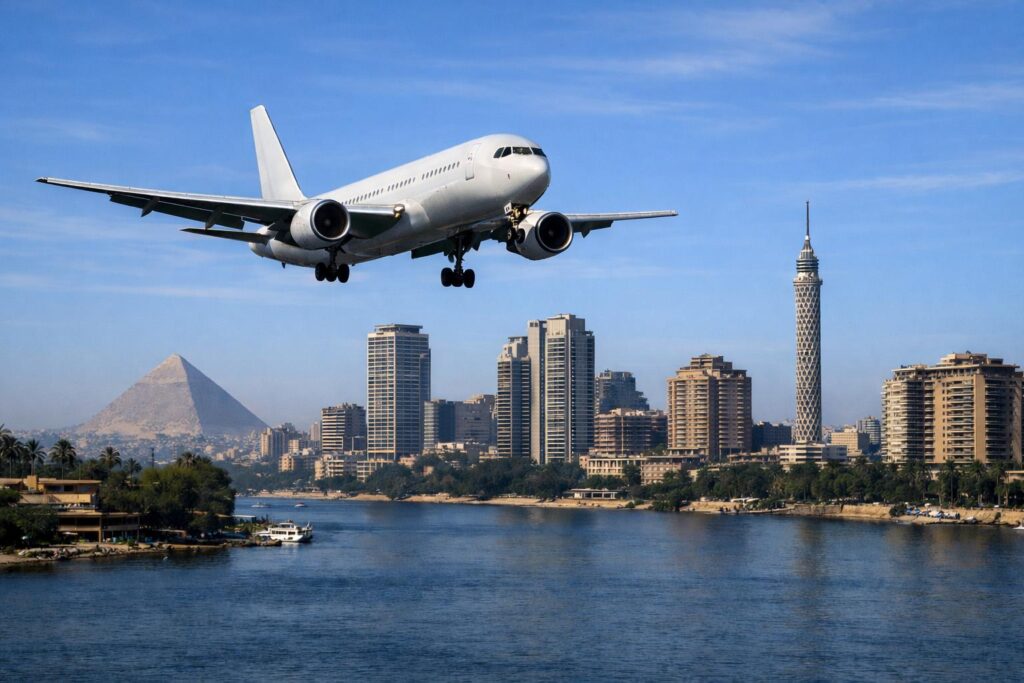
When Is Air Freight from China to Egypt the Right Choice?
Not every shipment needs air freight. The key is to match the shipping method with the value and urgency of your cargo.
Air freight is ideal when
Air freight from China to Egypt works best in situations where time and reliability matter more than the lowest possible freight rate:
- You have time sensitive shipments such as fashion collections, new electronics launches, or seasonal promotions that must arrive before a specific date.
- Factories in Egypt rely on critical spare parts or components and a delay would stop production or cause contract penalties.
- Your shipping goods are high value or high margin, so the additional air shipping cost is still acceptable compared with the profit they generate.
- You need stable transit time and want to reduce exposure to port congestion, strikes, or schedule changes that can affect slower modes.
In these scenarios, a planned air freight solution protects revenue, brand reputation and customer satisfaction much better than slower transport.
When sea freight is a better fit
Sea freight remains the best shipping method when:
- You move a full shipping container or large container load of heavy, low-margin products.
- Delivery deadlines are flexible and can absorb longer sea freight transit time.
- You run FCL shipping or LCL shipping from major Chinese ports and have space to hold buffer stock.
- Transportation costs per unit are more important than speed.
In reality, many companies use sea and air freight together: base inventory ships by sea shipping, while urgent top-ups or unexpected orders move by air freight.
Transit Time: How Long Does It Take from China to Egypt?
Transit time is a key factor for every buyer. It is more than just the flight; it includes handling at both ends and customs procedures.
Transit time for air freight
- Express shipping with couriers: often 1–3 business days door to door, depending on route and customs.
- Standard air freight: typically 2–8 business days airport to airport.
- Economy or deferred air shipping: about 5–12 business days, with lower freight charges but slower delivery.
These figures describe normal conditions. In peak seasons, limited capacity or extra customs procedures can extend shipping time slightly.
Sea freight transit time for comparison
Sea freight transit time from China to Egypt varies by shipping port and carrier schedule, but it is usually measured in weeks, not days. When you plan ocean freight, you must build inventory buffers and accept less flexibility.
What can slow down transit time
- Limited space during high season and public holidays.
- Indirect routing instead of direct flights.
- Incomplete paperwork delaying customs clearance.
- Random checks by Egyptian customs, especially for sensitive categories.
If you need predictable transit time, book early, prepare documents carefully, and work with an experienced freight forwarder and customs broker.
How to design realistic lead time
Instead of quoting only flight time to your customers, build a door-to-door lead time model:
- Add one or two days for pickup and export handling in China.
- Add two to four days for customs clearance and local delivery in Egypt.
- Keep a small buffer for unexpected customs procedures.
This approach keeps your promises realistic and builds trust with your buyers.
Air Freight Cost from China to Egypt: Rates and Cost Structure
To control your Egypt cost, you need to understand exactly how air freight and related charges are calculated.
Chargeable weight and volumetric weight
Air freight is billed on chargeable weight, which is the higher of:
- Gross weight – the actual weight of the shipment.
- Volumetric weight – calculated from carton dimensions.
Bulky packages with a lot of air inside can create high volumetric weight. In those cases, redesigning packaging is one of the fastest ways of reducing shipping costs.
Practical example
Suppose you ship 10 cartons of clothing, each weighing 8 kg.
- Gross weight = 80 kg.
- If carton dimensions give a volumetric weight of 12 kg per carton, volumetric weight = 120 kg.
The airline charges you based on 120 kg, not 80 kg. Improving packing to reduce carton size can instantly lower your shipping rate.
Other elements that affect shipping costs
Shipping costs vary based:
- Origin city and which airport you use in China.
- Destination airport and required inland trucking in Egypt.
- Chosen shipping mode: express shipping, standard air freight, or deferred.
- Commodity type and whether it is considered dangerous, high-value, or restricted.
- Seasonality and demand on China to Egypt lanes.
- Handling, documentation, and storage charges at both ends.
- Optional cargo insurance to protect against loss or damage.
A realistic quote always includes more than just the airline freight rate. Ask your freight forwarder to break down the full shipping rate including transportation costs and local fees.
Incoterms and who pays what
Incoterms decide how shipping costs are divided between buyer and seller:
- EXW – the buyer pays most of the international logistics from the factory door onwards.
- FOB – the seller delivers goods to the export airport; the buyer pays from departure to final delivery.
- CIP or CPT – the seller pays the main air freight and sometimes insurance up to an agreed point.
- DAP or DDP – the seller may cover almost everything to the consignee’s door; under DDP, this includes customs duties and import tax.
Clarify these terms in your contract to avoid disputes about who should pay each part of the international shipping bill.
Sample air freight rate table from China to Egypt
Real air freight from China to Egypt rates change with season, fuel and market demand, so you always need a fresh quote. The table below is only a simple example to show how pricing can scale with chargeable weight.
| Chargeable weight | Example rate (USD/kg) | Estimated air freight cost (USD) | Typical scenario |
|---|---|---|---|
| 100 kg | 5.90 | 590 | Small urgent shipment, samples, spare parts |
| 300 kg | 4.60 | 1,380 | Medium shipment for a promotion or restock |
| 500 kg | 4.05 | 2,025 | Regular replenishment shipment |
| 1,000 kg | 3.75 | 3,750 | Large planned shipment with stable demand |
These figures are illustrative only, not a formal offer. They show how the rate per kilogram usually falls as chargeable weight increases, while the total air freight cost from China to Egypt still rises with volume.
Main Airports and Routes Between China and Egypt
Picking the right pair of international airports is key to stable transit time and efficient international logistics.
Origin gateways in China
Most shipments depart from one of these international airports:
- Shanghai Pudong International Airport (PVG) – large, frequent flights and strong capacity for all kinds of cargo.
- Guangzhou Baiyun International Airport (CAN) – serves South China’s manufacturing base and e-commerce exporters.
- Shenzhen Bao’an International Airport (SZX) – very popular for electronics and high-tech goods shipping from China.
- Beijing Capital International Airport (PEK) – useful for North China factories; some routes may involve Air China or partner airlines.
Your freight forwarder will choose the best origin based on factory location, flight options, and overall shipping costs.
Destination airports in Egypt
- Cairo International Airport (CAI) – primary hub for Egypt air freight, with the most options for connections, ground handling, and nationwide trucking.
- Regional airports near Alexandria – sometimes used when the consignee is close to the coast, though flight options can be more limited.
Most air freight from China to Egypt lands at Cairo International Airport first, then moves inland by truck.
How to choose the best route
When comparing routes, look beyond price:
- Check total transit time, including transfer stops.
- Ask how often the airline flies each week.
- Consider how strong the ground handling is at each airport.
- Make sure your customs broker is comfortable working with that terminal.
A slightly more expensive route with better reliability can be the best shipping solution overall.
Step-by-Step Shipping Process from China to Egypt
A clear shipping process reduces risk and avoids surprises.
Pre-booking: define requirements and shipping needs
Before contacting a freight forwarder, clarify:
- Pickup location and preferred origin airport.
- Nature of the cargo and any special handling.
- Desired service: airport-to-airport, door shipping, or full door to door service.
- Target transit time and delivery window.
- Whether you need cargo insurance or Delivered Duty Paid terms.
The more clearly you describe your shipping needs, the easier it is to receive accurate quotes.
Pickup and origin handling
- The freight forwarding company or shipping company arranges pickup from your factory.
- Cargo is delivered to a warehouse near Shanghai Pudong International Airport, Guangzhou Baiyun International Airport, Shenzhen Bao’an International Airport, Beijing Capital International Airport, or another origin airport.
- Staff check carton count, dimensions, and weight to confirm chargeable weight.
- Export customs procedures are completed, and the shipment is cleared for departure.
Flight and transit
- Cargo is loaded on board and moved to the next international airport on its route.
- The freight forwarder tracks movement and updates you if there are schedule changes.
- If a transit hub is used, the shipment is transferred onto the connecting flight to Cairo International Airport.
Arrival, customs clearance, and delivery
- At arrival, the cargo is moved into the import terminal.
- Your customs broker prepares file submissions using the commercial invoice, packing list, airway bill, and other documents.
- Egyptian customs review the file, may inspect the cargo, and calculate duties plus import tax.
- After payment, the shipment is released, and a local trucker handles door shipping service to your warehouse or distribution center.
- Once door to door delivery is complete, your team inspects the cargo and closes the shipment file.
When all parties follow this international shipping process, air freight from China to Egypt becomes a repeatable routine instead of a stressful one-off project.
Documentation: The Heart of Smooth Customs Clearance
Many delays in Egypt shipping are caused not by the flight but by missing or inconsistent documents.
Commercial invoice
A good commercial invoice should show:
- Seller and buyer details, including full company names and addresses.
- Clear product descriptions and HS codes where possible.
- Quantities, unit prices, and total value by currency.
- Terms of sale and payment terms.
Egyptian customs use this document to check value, classification, and compliance, so avoid vague wording or unrealistic prices.
Packing list
The packing list should precisely match the physical shipment:
- Total number of cartons or pallets.
- Gross weight per package type.
- Dimensions of each carton or pallet.
- Reference numbers linking the packages to the items on the commercial invoice.
Matching commercial invoice and packing list data makes customs clearance faster and reduces the chance of extra checks.
Additional documents
Depending on what you are shipping from China to Egypt, you may also need:
- Certificate of origin for duty or trade agreements.
- Test reports or conformity certificates for electronics, toys or regulated products.
- Dangerous goods declarations for batteries, chemicals or special cargo.
- Insurance certificate, if cargo insurance is purchased.
Your freight forwarder and customs broker should review the document set before departure.
Spending a little time on documentation before the flight leaves China can easily save days of delay during customs clearance in Egypt.
Explore more shipping guides:
- 20ft & 40ft Container Shipping Costs from China to Egypt (2025 Guide)
- Air Freight from China to Saudi Arabia
- Air Freight from China to Israel
- Air Freight from China to Jordan (2025 Guide)
- Air Freight from China to Italy

Customs Clearance Process with Egyptian Customs
Smooth customs clearance is critical for keeping your China–Egypt transit time under control. Understanding how Egyptian customs work helps you set a realistic schedule and budget.
What Egyptian Customs Look At
During the customs clearance process, Egyptian customs pay close attention to:
- Declared value and description – whether the prices and descriptions on the commercial invoice look reasonable for the product.
- HS codes and product category – whether classification is correct and matches the goods in the shipment.
- Compliance with Egyptian customs regulations – especially for restricted or controlled products.
- Document consistency – whether invoice, packing list and airway bill show the same buyer, seller, quantities and values.
If something is unclear or inconsistent, customs procedures may include extra questions, document requests or even a physical inspection, all of which can delay release.
Role of a customs broker
A reliable customs broker:
- Checks documents before the shipment departs from China to Egypt.
- Advises on HS codes and estimated customs duties.
- Handles communication with customs during the clearance stage.
- Helps you follow the correct customs procedures and avoid errors.
Working with the right customs broker is one of the easiest ways to protect transit time and keep your Egypt cost under control.
How to avoid common clearance problems
Most clearance issues can be avoided with a bit of preparation:
- Use clear product descriptions, not generic names like “parts” or “goods”.
- Make sure the values on your commercial invoice match your purchase contracts and payment records.
- Double-check consignee details, tax numbers and contact information.
- Prepare licenses, permits and certificates early for controlled or sensitive goods.
These small steps can easily save you several days of delay in the customs clearance process, and keep your air freight from China to Egypt running on schedule.
Service Models: Airport-to-Airport, Door Shipping and Door-to-Door
Different service models exist to match different levels of responsibility and convenience.
Airport-to-airport air freight
You or your customer handle:
- Pickup at origin and delivery to the airport.
- Customs clearance in Egypt.
- Local delivery from Cairo International Airport to the final address.
This model has the lowest service fee but requires more coordination.
Door shipping service
Door shipping service means the forwarder:
- Picks up the goods from your supplier in China.
- Moves them to the departure airport, arranges air freight, and passes them to your customs broker in Egypt.
- You then handle local clearance and delivery.
It reduces workload at origin while keeping some control at destination.
Full door to door service
Door to door service and door to door delivery cover:
- Factory pickup in China.
- Export and import customs clearance.
- Air freight and all local handling.
- Final delivery to your warehouse.
This is the most convenient option for small teams, new importers, and businesses that want hassle free shipping with a single point of contact.
How to Choose a Freight Forwarder for China–Egypt Air Freight
The choice of freight forwarder can make or break your shipping experience.
What a good freight forwarder should offer
- Clear explanation of different shipping methods and shipping modes.
- Transparent quotes that separate air freight, local charges, and optional services.
- Knowledge of international logistics and experience with Egypt air freight lanes.
- Support for customs clearance preparation and cooperation with your customs broker.
Signs of a reliable freight forwarder
A reliable freight forwarder:
- Responds quickly and in writing.
- Provides realistic delivery estimates based on data, not guesses.
- Shares routing options via Shanghai Pudong International Airport, Guangzhou Baiyun International Airport, Shenzhen Bao’an International Airport or Beijing Capital International Airport and explains why each one is chosen.
- Focuses on long-term customer satisfaction rather than just low initial prices.
When you find the best freight forwarder for your business, you gain a partner who understands the freight industry, your products, and your long-term growth plan.
Questions to ask before you decide
- How many China to Egypt shipments do you handle each month?
- What are your main carrier partners on this lane?
- How do you calculate chargeable weight and extra fees?
- Can you provide references from existing customers in my industry?
Their answers will tell you a lot about whether they can support your growth.
Cost Control and Risk Management
On the China–Egypt lane, the goal is to control shipping costs while keeping transit time and reliability stable. Good planning lets you lower your Egypt cost without adding risk.
Ways to Lower Your Egypt Cost
- Optimize packaging – design cartons for air freight to reduce volumetric weight and chargeable weight, so every kilo of air freight from China to Egypt is used efficiently.
- Ship smarter, not more often – where timing allows, consolidate several small orders into one shipment to reach better weight breaks and lower average shipping costs.
- Choose efficient routes – use nearby origin airports such as Shanghai Pudong or Guangzhou Baiyun to cut domestic trucking and handling fees and keep total Egypt cost under control.
Managing Risk
- Insure what matters – use cargo insurance for high-value or fragile shipments so one incident does not wipe out your margin.
- Monitor performance – record actual shipping time and clearance time for each partner, then keep the freight forwarder and customs broker who deliver the most reliable results.
- Communicate early – keep clear, written communication with your freight forwarder, shipping company and customs broker so any issue in the international shipping process is spotted and solved before it reaches your customer.
By combining cost control with basic risk management, you turn air freight from China to Egypt into a predictable, repeatable part of your supply chain instead of an expensive emergency tool.
Tonlexing Air Freight Case Study: Unlocking Speed on the China–Egypt Lane
Client challenge
One of Tonlexing’s Egyptian clients sources consumer goods from multiple factories across China. Before working with Tonlexing, they relied on slower modes and “spot” bookings. Shipments often arrived after key promotions, and the team had little visibility on total shipping costs or real transit time.
Retail buyers were frustrated by empty shelves, and the importer felt they were constantly firefighting: chasing space, chasing updates, and guessing when cargo would actually be in stock.
They approached Tonlexing looking for a structured air freight from China to Egypt solution that could deliver speed, reliability, and smoother customs clearance.
Tonlexing air freight solution and impact
Tonlexing rebuilt the client’s China–Egypt flow around planned air freight rather than last-minute shipments.
- Cargo from different suppliers was consolidated and routed through major airports such as Shanghai Pudong International Airport and Guangzhou Baiyun International Airport.
- Stable lanes into Cairo International Airport were secured, giving the client predictable air shipping schedules week after week.
- A transparent rate sheet linked to chargeable weight made total shipping costs easy to forecast and include in product pricing.
- Tonlexing’s team coordinated pickup in China, origin handling, air freight, support with customs clearance in Egypt, and final door to door delivery to the client’s main warehouse.
Within a few months, typical door-to-door transit time dropped to around 5–7 business days, and stock-outs during campaigns almost disappeared.
Retailers noticed that product availability improved, the client’s customer satisfaction rose, and air freight from China to Egypt changed from an emergency “last resort” into a reliable, planned part of their supply chain.
Summary: Building a Strong China–Egypt Shipping Strategy
To build a robust strategy for shipping from China to Egypt:
- Match mode to cargo – use air freight for urgent or high-value shipments, sea freight for large volumes, and sea and air freight combinations when needed.
- Optimize routes and airports – select suitable international airports in China and rely on Cairo International Airport for most arrivals.
- Prepare documents correctly – accurate commercial invoices and packing lists are the foundation of fast customs clearance.
- Partner with experts – a reliable freight forwarder, trustworthy customs broker and efficient shipping company turn complex international logistics into a predictable process.
Do these consistently and your air freight from China to Egypt will support growth instead of creating emergencies.
FAQ: Air Freight from China to Egypt
How much does air freight from China to Egypt cost per kilogram?
Shipping costs vary based chargeable weight, route, and service level. For a realistic air freight rate, your freight forwarder needs exact carton dimensions, total gross weight, pickup city, and whether you require airport-to-airport or door to door delivery. Without this information, any number is just a rough guess.
What is the best shipping method for my China to Egypt shipments?
If speed is critical, air freight is usually the best shipping method. If cost per unit is more important and cargo is heavy, sea freight or a sea and air freight mix may work better. Many importers ship base volume by ocean freight and keep a smaller stream of air freight from China to Egypt for urgent orders.
How long does shipping from China to Egypt take by air?
Typical transit time for standard air freight is about two to eight business days from airport to airport. Express shipping through courier services can be faster, while deferred services can be slower but cheaper. The exact shipping time depends on routing, capacity, and customs clearance speed in Egypt.
Which airports should I use in China?
Most exporters use Shanghai Pudong International Airport, Guangzhou Baiyun International Airport, Shenzhen Bao’an International Airport, or Beijing Capital International Airport. The best choice depends on where your suppliers are located and which airlines have reliable space to Cairo International Airport.
What documents are required for customs clearance in Egypt?
Normally you need a commercial invoice, packing list, airway bill, and any certificates that apply to your cargo. Egyptian customs may also ask for product test reports or licenses for regulated items. Your customs broker will guide you through local customs procedures and help you estimate customs duties and import tax.
How can I reduce my shipping costs without risking delays?
Focus on packaging and planning. Reduce volumetric weight by optimizing carton sizes, and consolidate shipments so you reach more favorable weight breaks. Share accurate data with your freight forwarder early, so they can propose the best shipping solution and avoid last-minute changes that push up costs.
What is the difference between a freight forwarder and a shipping company?
A shipping company usually operates aircraft or vessels, while a freight forwarding company coordinates the whole international shipping process. Your freight forwarder books space with airlines, arranges origin and destination handling, and works with customs brokers and truckers to provide a complete solution from factory to warehouse.
Do I really need a customs broker for air freight from China to Egypt?
You are not legally required to use a customs broker, but it is highly recommended. A good broker understands Egyptian customs regulations, prepares your file correctly, and answers questions from customs officers. This reduces delays, avoids mistakes, and helps you keep transit time under control.
When should I choose door shipping or full door to door service?
Door shipping service is useful if you want the forwarder to handle pickup in China and airport formalities while you manage clearance and delivery in Egypt. Full door to door service is better when your team is small, you are new to international logistics, or you simply want hassle free shipping with one partner responsible for the entire flow.
How do I find the best freight forwarder for China to Egypt?
Look for a forwarder with proven experience on China to Egypt routes, good references, and clear, written communication. Ask how they handle problems, what international airports they use, how they calculate shipping rate and transportation costs, and how they work with customs brokers. A reliable freight forwarder will focus on long-term cooperation rather than just undercutting prices.
Final Thoughts: Making Air Freight from China to Egypt Work for You
Air freight from China to Egypt is no longer just a last-minute rescue option. When you understand how transit time is built, how shipping costs are calculated, which airports and routes make sense, and what Egyptian customs expect in terms of documentation, it becomes a predictable tool you can plan around. Instead of worrying about delays and surprises, you can design clear lead times, protect your key sales periods and keep customers supplied.
The missing piece for many importers is a partner who connects all of this into one process. With the support of an experienced freight forwarder such as Tonlexing, you can turn the China–Egypt lane into a strength rather than a bottleneck: reliable air freight from China to Egypt, smoother customs clearance, transparent pricing and flexible options from airport-to-airport to full door-to-door delivery. Once these elements are in place, every new shipment feels less like a risk and more like a routine step in growing your business.