

Air freight from China to Pakistan is one of the most efficient shipping methods for transporting high-value, time-sensitive, and urgent cargo between the two countries. As China remains Pakistan’s largest trading partner and a key player in Pakistan’s international trade network, demand for fast and reliable air cargo services continues to grow.
Compared with sea freight, air freight offers significantly shorter transit time, stronger schedule reliability, and better cargo security. For importers shipping electronics, machinery parts, raw materials, medical supplies, or express shipments, air freight from China to Pakistan often delivers the best balance between speed and operational certainty.
This guide provides a comprehensive overview of air freight, covering air freight cost, transit time, major airports, shipping process, customs clearance, and how to choose the right shipping method for your final destination in Pakistan.
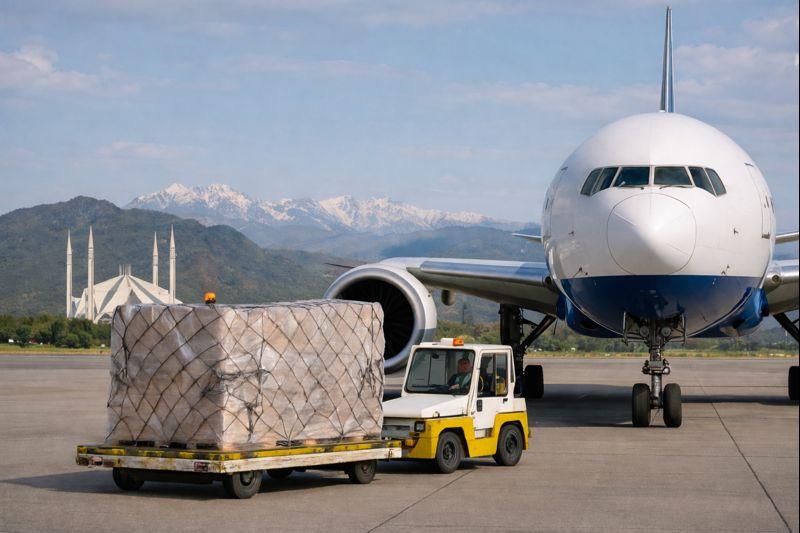
China–Pakistan Trade Relationship and Air Cargo Demand
The strong China–Pakistan trade relationship is supported by long-term cooperation, expanding economic infrastructure, and the China–Pakistan Economic Corridor (CPEC). These two countries maintain close commercial ties across manufacturing, energy, construction, agriculture, and technology sectors.
China exports a wide range of goods imported into Pakistan, including machinery, electronics, raw materials, industrial equipment, and consumer products. Many of these goods require fast delivery, making Pakistan air cargo services an essential component of bilateral trade.
With frequent flights, dedicated cargo services, and strong airline connectivity, air freight has become a critical logistics solution supporting the growth of international trade between China and Pakistan.
Shipping Methods from China to Pakistan: Air vs Sea Freight
When shipping goods from China, choosing the right shipping method depends on cargo weight, shipping costs, urgency, and cost considerations.
Air Freight
- Fast transit time (3–5 days airport to airport)
- Ideal for high value or urgent cargo
- Higher shipping costs and freight rates
- Suitable for express shipping and door to door delivery
Sea Freight
- Lower shipping rates
- Longer transit time (20–35 days)
- Best for full container or heavy cargo
- Includes routes via Karachi Port and Port Qasim
In practice, many shipping companies offer sea and air freight solutions together, allowing importers to balance speed and cost depending on shipment size and delivery deadlines.
Why Choose Air Freight from China to Pakistan?
Air freight is widely used when speed, reliability, and quality services are the top priority.
Key advantages include:
- Short and predictable transit time
- Lower risk of potential delays compared with sea freight
- Suitable for high value and sensitive cargo
- Frequent departures from major airports in China
- Efficient customs clearance process when documents are prepared correctly
Although air freight has a high cost compared with sea freight, it often reduces total supply-chain risk and inventory pressure for importers.
When Sea Freight Is the Right Shipping Method
Sea freight is usually the most cost-effective option when cargo volume is large, delivery time is flexible, and the shipment is heavy or container-based. While sea freight rates are significantly lower than air freight, the longer transit time and occasional port congestion may increase delivery uncertainty.
Major Airports for Air Freight from China to Pakistan
China has a highly developed air cargo network, and your origin airport can affect both pricing and flight availability. Common departure hubs include:
- Beijing Capital International Airport
- Shanghai Pudong International Airport
- Guangzhou Baiyun International Airport
- Shenzhen Bao’an International Airport
On the Pakistan side, air cargo is mainly handled through these gateways:
- Jinnah International Airport (Karachi) – the largest commercial hub with strong cargo handling capacity
- Allama Iqbal International Airport (Lahore) – widely used for industrial and manufacturing imports
- Islamabad International Airport – suitable for government, project cargo, and high-value shipments
In many cases, the “best” airport is simply the one that matches your consignee location and customs clearance plan. For example, shipments for Karachi/Sindh often clear faster through Karachi, while goods for Punjab may be more efficient via Lahore.
Typical Cargo Shipped by Air from China to Pakistan
Air freight is commonly used to transport:
- Electronics and high-value components
- Machinery parts and industrial equipment
- Medical devices and pharmaceuticals
- Time-sensitive commercial shipments
- Imported goods for manufacturing and resale
For such cargo, proper packaging, accurate cargo weight calculation, and compliance with customs documents are essential to ensure smooth customs clearance.
Air Freight Cost from China to Pakistan
Understanding air freight cost from China to Pakistan is critical when selecting the right shipping method. Compared with sea freight, air freight offers much faster transit time, but shipping costs are higher and are calculated based on multiple factors such as cargo weight, volume, airline capacity, fuel surcharges, and seasonal demand.
In practice, air freight rates may vary depending on the origin airport in China, the destination airport in Pakistan, and market conditions. Below is a reference price list widely used in the market for general cargo shipments.
Air Freight Rates from China to Pakistan (USD per kg)
| Origin Airport (China) | Destination Airport (Pakistan) | 45–100 kg | 100–300 kg | 300 kg+ | Transit Time |
|---|---|---|---|---|---|
| Beijing Capital International Airport | Jinnah International Airport (Karachi) | 4.0–6.0 | 2.5–4.0 | 1.2–2.5 | 3–5 days |
| Guangzhou Baiyun International Airport | Jinnah International Airport (Karachi) | 3.5–5.5 | 2.2–3.8 | 1.0–2.2 | 3–5 days |
| Shanghai Pudong International Airport | Allama Iqbal International Airport (Lahore) | 3.8–5.8 | 2.3–4.0 | 1.1–2.4 | 4–6 days |
| Shenzhen Bao’an International Airport | Islamabad International Airport | 4.2–6.2 | 2.8–4.5 | 1.4–2.8 | 4–6 days |
Note: The above air freight rates are indicative only. Actual freight rates may vary depending on cargo type, airline availability, and selected shipping services.
Air Freight Cost in Pakistani Rupees
When converted into Pakistani rupees, air freight costs usually range between PKR 1,000 and PKR 3,100 per kg, depending on the exchange rate, cargo weight, and negotiated freight rates. Smaller shipments generally face higher per-kg shipping costs, while larger cargo volumes benefit from more competitive pricing.
What Factors Affect Air Freight Costs?
Several cost considerations influence final shipping costs, including:
- Cargo weight and volume
- Chargeable weight (actual weight vs volumetric weight)
- Origin and destination airports
- Airline selection and cargo services
- Customs clearance and local handling charges
- Express shipping versus standard air cargo
Because air freight has a relatively high cost, careful planning is essential to avoid unnecessary charges.
How Air Freight Charges Are Calculated
Air freight pricing is calculated based on chargeable weight, which is the greater of actual cargo weight or volumetric weight.
Volumetric weight formula: Volumetric weight (kg) = cubic meter × 167
Example:
If cargo volume is 2 cubic meters, the volumetric weight is 334 kg. Even if the actual cargo weight is lower, airlines will charge based on the higher volumetric weight. Proper packaging and optimized carton sizes therefore play a major role in controlling air freight costs.
Typical Transit Time for Air Freight from China to Pakistan
Transit time is one of the biggest advantages of air freight.
- Export handling in China: around 1 day
- Flight time: 1–2 days
- Import customs clearance: 1–3 days
- Door to door delivery: usually 5–10 days in total
Although air freight offers fast delivery, potential delays may occur due to customs inspections, incomplete documentation, or airline capacity constraints.
Shipping Process: Air Freight from China to Pakistan
A standard air freight shipping process includes:
- Cargo pickup from supplier or warehouse
- Export customs clearance in China
- Airline booking and cargo acceptance
- Air transportation to Pakistan
- Import customs clearance
- Final delivery to the consignee
An experienced logistics team helps ensure the customs clearance process runs smoothly and avoids unnecessary delays.
Explore more shipping guides:
- Shipping Cost from China to Pakistan
- DDP Shipping from China to Pakistan (2025 Guide)
- 20ft & 40ft Container Shipping Costs from China to Pakistan
- Air Freight Shipping of Plastic Molds from Guangzhou, China to Pakistan
- Air Freight from China to Saudi Arabia
- Air Freight from China to India

Customs Clearance in Pakistan: Documents and Best Practices
Customs clearance is the stage where most delays happen—mainly because paperwork is incomplete or inconsistent.
Common required documents
For most commercial shipments, you should prepare:
- Commercial Invoice
- Packing List
- Air Waybill (AWB)
- HS Code (Harmonized System)
- Import permits/certificates (if the cargo category requires them)
Duties and import considerations
Pakistan import duties depend on the HS code classification, declared value, and product type. Incorrect HS coding or undervaluation can trigger inspection holds, penalties, or extended clearance time.
Typical Pakistan import taxes :
- Customs Duty (CD): 0–20% (HS-code based)
- Sales Tax (GST): ~18%
- Additional Customs Duty (ACD): 0–7% (if applicable)
- Regulatory Duty (RD): 0–90%+ (only for selected products)
- Withholding Income Tax (at import): ~3–6% (depends on importer status/category)
Note: Final duty/tax rates are determined by the HS code and customs assessment.
Best practices for smooth customs clearance
To reduce risk, ensure:
- invoice and packing list match exactly (product name, quantity, units, values)
- HS code is confirmed before shipping
- any permits for regulated goods are prepared in advance
- documentation is submitted early to avoid clearance delays
Working with a licensed customs broker or an experienced forwarder’s customs team is one of the most effective ways to keep clearance smooth and predictable.
Door-to-Door Delivery: Simplifying China–Pakistan Shipping
For many importers, door-to-door service is the most convenient choice because it integrates multiple steps under one coordinated plan. A door-to-door solution commonly includes pickup in China, export handling, air transportation, import clearance coordination, and local delivery within Pakistan.
Door-to-door arrangements can vary depending on who pays duties and taxes and who acts as importer of record. A professional forwarder should clearly confirm service scope, responsibilities, and whether duties/taxes are included or paid separately.
Express Shipping and Air Cargo Services
Express shipping is a premium option designed for urgent shipments with strict delivery schedules. It is commonly used for spare parts, emergency supplies, and time-critical commercial cargo. Express typically costs more than standard air freight, but it provides faster processing and prioritized handling—subject to availability and cargo compliance.
Real-Time Tracking and Cargo Visibility
Tracking improves shipment planning and helps importers respond quickly if issues occur during transit or clearance. Real-time visibility is especially valuable for air cargo because schedules are tight and the window for correction is smaller. A reliable partner should provide milestone updates and communicate proactively if exceptions happen.
Common Risks and Potential Delays in Air Freight
Even with air freight, delays can occur. The most common reasons include airline capacity shortages, customs inspections, incomplete documentation, and weather disruptions. Many risks can be reduced through early preparation—confirming cargo category, optimizing packaging, and ensuring documents are complete before the shipment is booked.
Choosing the Right Freight Forwarder / Shipping Company
A reliable freight forwarder should provide transparent pricing, stable airline resources, customs guidance, and end-to-end coordination. Beyond freight rates, communication quality matters: proactive updates, clear documentation instructions, and fast response times often decide whether a shipment stays on schedule.
To receive an accurate quote quickly, it helps to provide:
- cargo name and HS code (if available)
- total cartons + carton dimensions + total gross weight
- pickup city in China + destination city in Pakistan
- service type (airport-to-airport or door-to-door)
- whether cargo contains batteries/liquids/powders/magnets/branded items
The more accurate your shipment data is, the more stable your final cost and timeline will be.
Air Freight for High-Value and Sensitive Cargo
Air freight is particularly suitable for high-value or sensitive shipments that require careful handling and reduced transit time—such as electronics, medical devices, precision machinery, and time-sensitive commercial cargo. For these goods, air shipping typically offers better security and lower exposure to transit risks than long-haul ocean shipping, provided packaging and documentation meet airline and customs requirements.
Frequently Asked Questions About Air Freight from China to Pakistan
How long does air freight from China to Pakistan take?
Airport-to-airport shipments typically take 3–5 days. Door-to-door delivery usually takes 5–10 days, depending on customs clearance speed and the final destination city.
How much does air freight from China to Pakistan cost per kg?
The air freight cost usually ranges between USD 3–8 per kg, depending on cargo weight, airline, route, and service level. In Pakistani rupees, this generally equals PKR 1,300–3,600 per kg.
Smaller shipments often have higher per-kg freight rates, while larger cargo volumes benefit from lower average shipping costs.
Is air freight cheaper than sea freight?
No. Air freight has a high cost compared with sea freight. Sea freight is the cheapest shipping method for large volumes and full container loads. However, air freight is much faster and often reduces overall supply-chain risk for urgent or high-value shipments.
The right shipping method depends on urgency, budget, and cargo characteristics.
What documents are required for air cargo to Pakistan?
Typical customs documents include:
- Commercial invoice
- Packing list
- Air waybill
- HS code under the harmonized system
- Import permits (if required)
Accurate documentation is essential for smooth customs clearance and avoiding potential delays.
Which airport is best for air cargo in Pakistan?
Jinnah International Airport (Karachi) handles the highest volume of Pakistan air cargo and offers the widest range of cargo services. Allama Iqbal International Airport (Lahore) and Islamabad International Airport are also major gateways for air freight shipments.
Can I use door to door air freight from China to Pakistan?
Yes. Many freight forwarders and shipping companies offer door to door delivery, covering pickup, air freight, customs clearance, and final delivery. This option simplifies the shipping process and is ideal for businesses without local logistics teams.
Final Summary
Air freight from China to Pakistan is a critical logistics solution supporting international trade between the two countries. Although air freight has higher shipping costs than sea freight, it delivers unmatched speed, reliability, and security—especially for high-value and time-sensitive cargo.
By understanding air freight cost structures, transit time expectations, customs clearance requirements, and available shipping services, businesses can choose the most efficient and cost-effective shipping strategy for their needs.