

DAP Incoterms 2020: Delivered at Place Explained
- Verified & Reviewed · Last updated September 2026
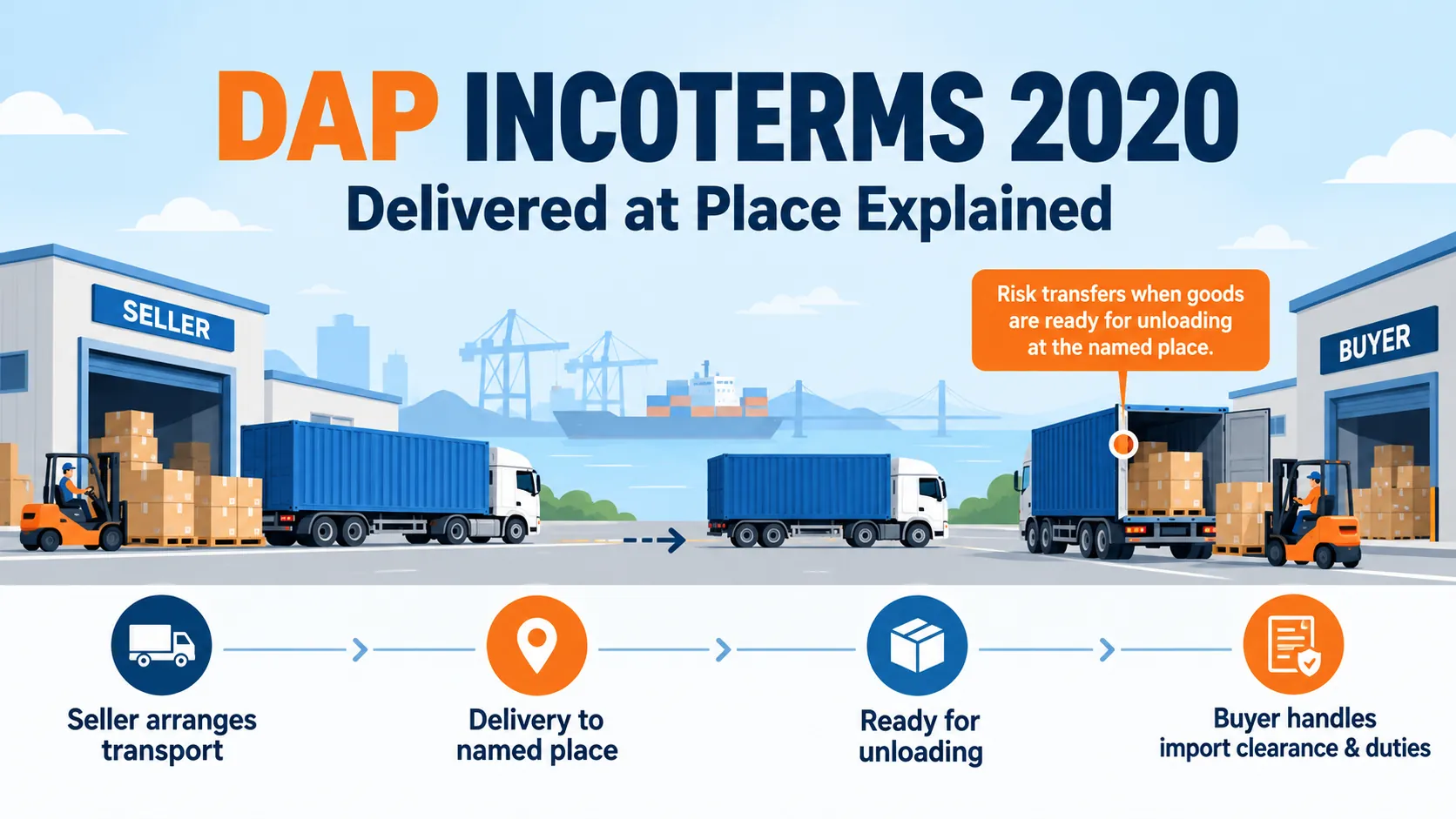
DAP Incoterms, or Delivered at Place, defines how shipping costs, risks, and responsibilities are divided between sellers and buyers under Incoterms® 2020.
Under DAP, the seller arranges delivery to the named destination, while the buyer handles import customs clearance, duties, taxes, and unloading.
DAP Responsibilities
Costs & Risk Transfer
DAP vs DDP
- Experienced China-based logistics specialists
10,000+ international shipments handled Global sea, air & DDP shipping solutions 24/7 shipment tracking & customer support
Table of Contents
What Does DAP Mean in Incoterms?
DAP means Delivered at Place. Under DAP Incoterms 2020, the seller must arrange transportation to the destination specified in the sales contract. The delivery location should be clearly defined, such as a warehouse address, airport, terminal, or another agreed place.
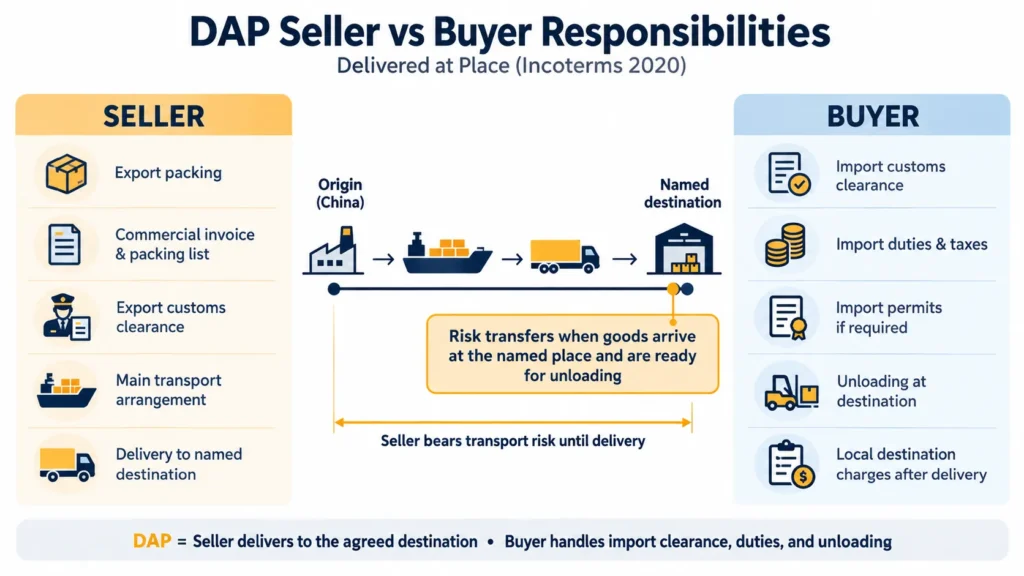
The seller is responsible for:
Export packaging
Transportation arrangements
Delivery to the agreed destination
The buyer is responsible for:
Import customs clearance
Import duties and taxes
Unloading the goods after arrival
The key point of DAP is that the seller delivers the goods to the agreed location, but the seller is not responsible for unloading or import clearance.
The goods are considered delivered when they arrive at the named destination and are placed at the buyer’s disposal, ready for unloading.
DAP Incoterms 2020 Responsibilities at a Glance
The following table shows the main responsibility split under DAP.
| Responsibility | Seller | Buyer |
|---|---|---|
| Export packaging | ✓ | |
| Export documentation | ✓ | |
| Export customs clearance | ✓ | |
| Pickup from supplier | ✓ | |
| International transportation | ✓ | |
| Delivery to named destination | ✓ | |
| Import customs clearance | ✓ | |
| Import duties and taxes | ✓ | |
| Unloading at destination | ✓ |
DAP creates a clear division between international transportation and destination import procedures.
The seller manages the shipment until delivery, while the buyer takes responsibility for local import requirements.
Seller Responsibilities Under DAP
Under DAP, the seller handles most transportation-related responsibilities before the goods reach the destination.
Export Clearance and Shipping Documents
The seller normally prepares export-related documents and completes export customs procedures.
Common documents include:
Export declaration
Other export documents required by regulations
The seller must ensure the goods are properly prepared for international transportation.
Transportation to the Named Destination
The seller arranges transportation from the origin location to the agreed destination.
This may include:
Factory pickup
Freight booking
International transportation
Transit arrangements
Delivery coordination
For example, if the contract states: DAP Buyer’s Warehouse, Germany, Incoterms® 2020
the seller is responsible for arranging transportation until the goods reach that warehouse.
Risk Before Delivery
Under DAP, the seller bears the transportation risk until the goods arrive at the agreed destination and are ready for unloading.
The seller is not normally responsible for unloading after arrival.
Buyer Responsibilities Under DAP
The buyer’s responsibilities begin when the goods arrive at the named destination.
Import Customs Clearance
The buyer handles import customs procedures in the destination country.
This includes:
Import declaration
Customs documentation
Import permits when required
Communication with local customs authorities
The buyer should ensure they have the ability to legally import the goods before selecting DAP.
Import Duties and Taxes
Under DAP, the buyer normally pays:
Import duties
VAT or GST
Customs-related taxes
Destination import charges
This is one of the biggest differences between DAP and DDP.
Under DDP, the seller normally takes responsibility for import clearance and duties. Under DAP, these responsibilities remain with the buyer.
Unloading at Destination
DAP means the goods are delivered ready for unloading. It does not mean the seller unloads the cargo.
The buyer normally arranges:
Labor
Equipment
Local unloading costs
For heavy cargo or special equipment, unloading arrangements should be confirmed before shipment.
DAP Costs: Who Pays What?
One common question about DAP Incoterms is which party pays each shipping cost.
| Cost | Seller | Buyer |
|---|---|---|
| Export packaging | ✓ | |
| Pickup from supplier | ✓ | |
| Export customs clearance | ✓ | |
| International freight | ✓ | |
| Delivery to named destination | ✓ | |
| Cargo insurance | Optional | Optional |
| Import customs clearance | ✓ | |
| Import duty | ✓ | |
| VAT / import tax | ✓ | |
| Unloading | ✓ |
DAP does not require either party to purchase cargo insurance.
For valuable shipments, buyers and sellers may separately arrange cargo insurance to protect against possible loss or damage during transportation.
When Does Risk Transfer Under DAP?
Risk transfer is an important part of understanding DAP.
Under DAP, the seller carries the transportation risk until the goods reach the agreed destination.
The risk transfers to the buyer when:
The goods arrive at the named place
The goods are available to the buyer
The goods are ready for unloading
For example, if cargo is shipped under:
DAP Customer Warehouse, Germany, Incoterms® 2020
the seller manages transportation until the shipment reaches the warehouse.
Once the cargo arrives and is ready for unloading, the buyer becomes responsible for the goods and unloading process.
This is why the delivery location should always be clearly written in the sales contract.
DAP Customs Clearance and Import Requirements
DAP separates export and import responsibilities.
The seller normally handles export customs clearance in the origin country. The buyer normally handles import customs clearance in the destination country.
DAP may work well for buyers who:
Already have a customs broker
Understand local import requirements
Prefer to control duty payments
Have experience importing goods
However, DAP may not be suitable if the buyer cannot complete import procedures or does not have the required import qualifications.
For buyers who want the seller to manage customs clearance and import taxes, DDP shipping may be a better option.
Real DAP Shipping Case: Wooden Baby Milestone Cards to Germany
The following quotation is from a real customer shipment of wooden baby milestone cards shipped from Shenzhen, China to 71063 Sindelfingen, Germany.
This shipment was handled under DAP Incoterms 2020.
The seller arranged transportation to the named destination, while the consignee remained responsible for import customs clearance, duties, and taxes after arrival.
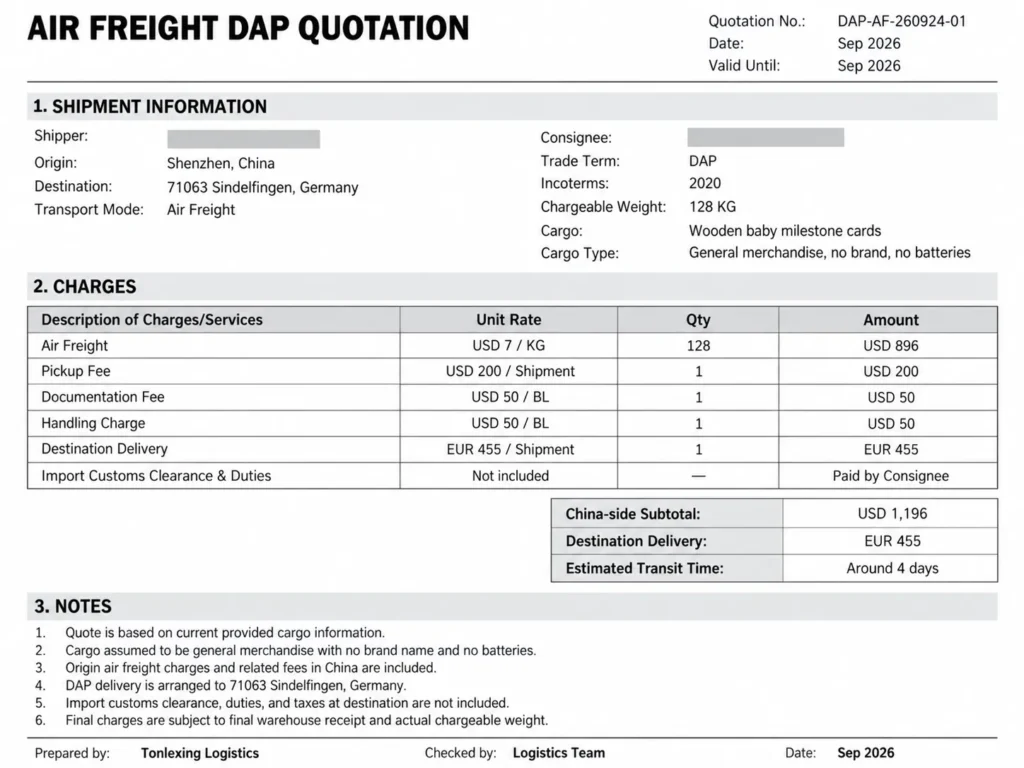
The China-side subtotal was USD 1,196, with an additional EUR 455 destination delivery fee. The estimated transit time was around 4 days, subject to final warehouse receipt and actual chargeable weight.
This real shipment shows how DAP works in practice. The transportation was arranged to the buyer’s destination, while import clearance and destination taxes remained the buyer’s responsibility.
DAP vs DDP vs DPU
DAP, DDP, and DPU all involve delivery to a destination, but their responsibilities are different.
| Incoterm | Import Clearance | Import Duties | Unloading |
|---|---|---|---|
| DAP | Buyer | Buyer | Buyer |
| DDP | Seller | Seller | Buyer |
| DPU | Buyer | Buyer | Seller |
DAP vs DDP
The main difference between DAP and DDP is import responsibility.
Under DAP:
Buyer handles import clearance
Buyer pays import duties and taxes
Under DDP:
Seller handles import clearance
Seller pays import duties and taxes
Read our detailed guide on DAP vs DDP Incoterms for a full comparison.
DAP vs DPU
The main difference is unloading responsibility.
Under DAP, the seller delivers the goods ready for unloading.
Under DPU, the seller is responsible for unloading the goods at the destination.
How to Write DAP in a Sales Contract
DAP should always include a specific named destination.
The recommended format is: DAP [Named Place of Destination], Incoterms® 2020
Example: DAP Customer Warehouse, Berlin, Germany, Incoterms® 2020
Avoid unclear terms such as:
DAP Germany
DAP Europe
DAP Berlin
A precise delivery point helps both parties understand where the seller’s transportation responsibility ends.
Frequently Asked Questions
What does DAP mean in Incoterms?
DAP means Delivered at Place. The seller arranges transportation to the agreed destination, while the buyer handles import clearance and duties.
Who pays import duty under DAP?
The buyer normally pays import duties, VAT, and other destination taxes under DAP.
Who handles customs clearance under DAP?
The seller handles export customs clearance, while the buyer handles import customs clearance.
Does DAP include unloading?
No. Under DAP, the goods are delivered ready for unloading. The buyer normally handles unloading.
What is the difference between DAP and DDP?
DAP requires the buyer to handle import clearance and duties. DDP requires the seller to handle these responsibilities.
Related Logistics Guides
Useful freight, customs and importing resources related to this shipping guide.
Related Guide
DDP Shipping from China
DDP shipping from China includes customs clearance, import duties, and final delivery. It is a convenient door to door service with clear and pre...
Read guide →
Related Guide
DDP vs DDU vs DAP: Key Differences Explained (2025 Guide)
International shipping can be confusing, especially when it comes to trade terms like DDP, DDU, and DAP. These Incoterms define who is responsibl...
Read guide →
Related Guide
What Is FOB? Importing from China: A Comprehensive Guide
When importing goods from China, understanding trade terms is essential to managing logistics, costs, and responsibilities effectively. One of th...
Read guide →
Useful Resource
Exw Ex Works Incoterms
Explore this related Tonlexing logistics guide for freight, customs and importing support.
Learn more → Useful Resource Customs Clearance Step by StepCustoms Clearance Step by Step: The Complete Process Verified & Reviewed · Last updated February 2026 Customs clearance step by step helps intern...
Learn more →