

DDP vs FOB Shipping China to USA
- Verified & Reviewed · Last updated March 2026
DDP vs FOB Shipping China to USA affects shipping costs, customs clearance, final delivery, and overall supply chain control for importers.
This guide explains the difference between DDP and FOB shipping from China to the USA, including import duties, risk transfer, freight responsibility, and which option works better for different shipment types.
Shipping method / Mode
Transit time range
DDP / Door to Door
- Experienced China-based logistics specialists
Table of Contents
What Is DDP in Shipping?
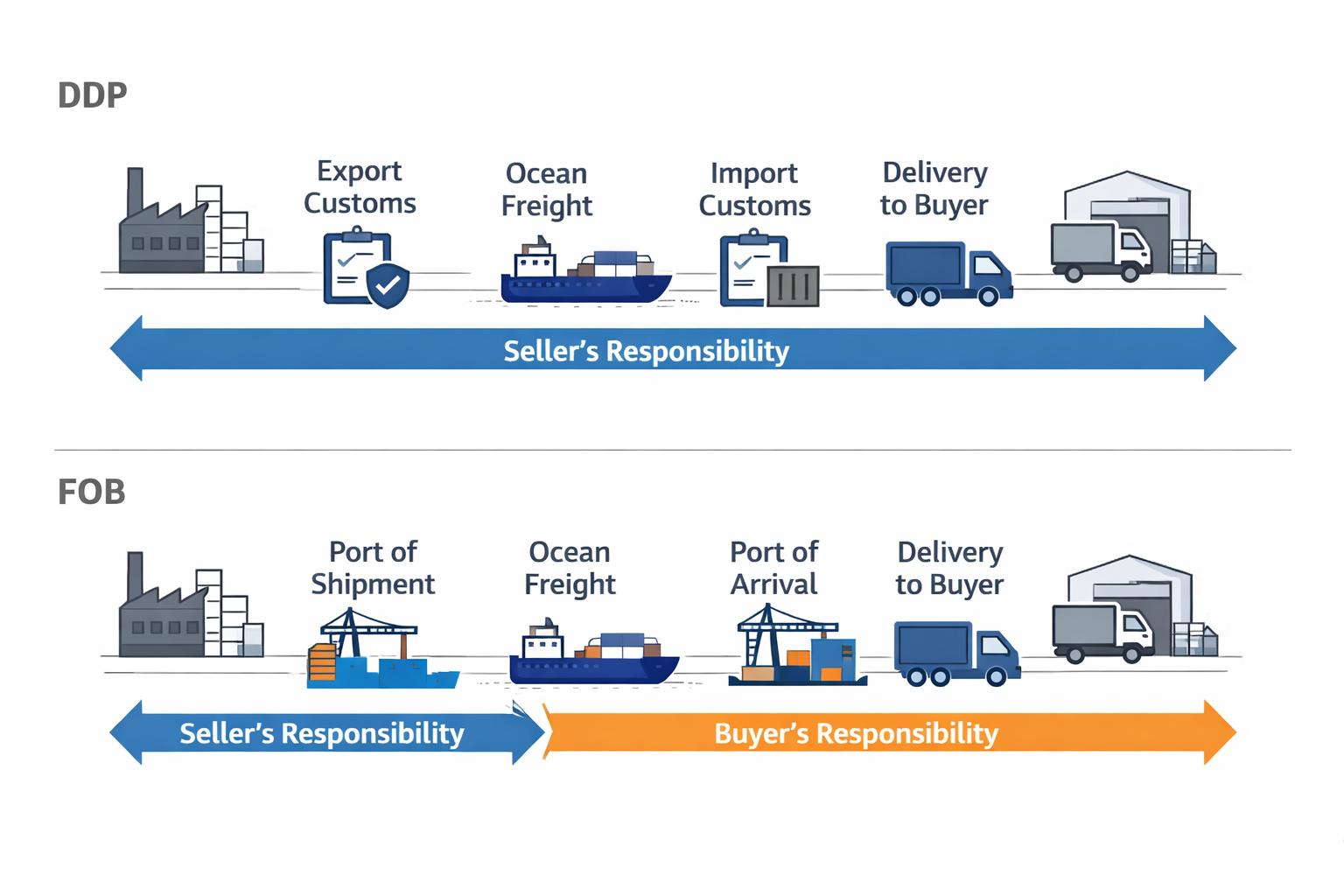
Delivered Duty Paid is one of the seller-heavy terms in international shipping. Under ddp delivered duty paid, the seller is responsible for arranging most of the transportation process and delivering the goods to the named place in the United States.
In a standard ddp shipping arrangement, the seller pays for or arranges most of the following:
export handling
export clearance
export declaration
international freight
import customs clearance
us customs clearance procedures through the arranged service
import duties and other agreed duties and taxes
final delivery or last mile delivery to the agreed address
That is why ddp shipping is often attractive to first time buyers, small importers, ecommerce sellers, and dtc brands that want a simpler import process.
Instead of coordinating multiple service providers, the buyer can often work through one freight forwarder and get a clearer view of landed costs, shipping costs, and total delivery planning before the goods leave China.
What Is FOB in Shipping?
FOB Free on Board means the seller delivers the goods to the agreed port in China and completes the export-side formalities there. After loading, the buyer assumes responsibility for the next stage of transport.
Under fob terms, the seller usually handles origin work in China, including delivery to port, export procedures, and loading. Once the goods are on board, the buyer arranges the main transport, import handling, and inland delivery in the United States.
Under fob free on board, the buyer usually takes responsibility for:
international freight or ocean freight
air freight or sea transport booking if applicable
import customs
import clearance
import duties
destination charges
final delivery to the final destination
This is why FOB is often preferred by experienced importers that already have a customs broker, a reputable freight forwarder, or a structured import workflow in place.
In simple terms, DDP is built around convenience, while free on board is built around control.
The Core Difference Between DDP and FOB
The real difference between DDP and FOB is responsibility.
With DDP, the seller responsible side is much broader. With FOB, the buyer takes over earlier in the process. That changes who books transport, who handles import formalities, who pays destination charges, and when risk transfer occurs.
Here is a practical comparison:
| Item | DDP Shipping China to USA | FOB Shipping China to USA |
|---|---|---|
| Export handling | Seller manages it | Seller manages it |
| Export clearance | Seller manages it | Seller manages it |
| Main transport | Seller books it | Buyer books it |
| Import customs clearance | Usually included | Buyer handles it |
| Import duties and taxes | Usually included | Buyer pays separately |
| Final delivery | Usually included | Buyer arranges it |
| Cost transparency | Better for all-in pricing | Better for line-by-line control |
| Best for | Small teams, first-time importers | Larger or repeat importers |
For the same shipment, the better option is not always the same. It depends on whether you want simplified execution or stronger control over freight planning and destination operations.
How DDP Shipping Works from China to USA
DDP shipping from China to USA is often used as a door-to-door solution. The seller or appointed freight forwarder manages most of the transport chain, from pickup in China to the named delivery point in the United States.
1. Cargo Pickup in China
Once the goods are ready, the shipment is collected from the supplier or factory. This first step may include local transport and inland transportation to the airport or seaport.
2. Export Procedures
The seller prepares the required paperwork, completes export clearance, and submits the necessary export declaration before the goods depart China.
3. International Transport
The cargo then moves from China to the USA by one of several shipping methods.
Air Freight DDP
Air freight is often used for urgent, time-sensitive, or smaller shipments. It is a common choice when faster transit matters more than the lowest rate.
Sea Freight DDP
Sea freight is more suitable for larger cargo or goods that are less urgent. For containerized goods, ocean freight is often the more economical method.
4. U.S. Import Handling
When the cargo arrives, the arranged service handles US customs clearance, import customs clearance, duty processing, and related import formalities in the destination country.
5. Final Delivery
After customs release, the cargo is delivered to the agreed address. Depending on the service scope, that may be a warehouse, office, retail site, fulfillment center, or the buyer’s door.
This is one reason DDP is popular with importers that want to reduce internal workload and simplify the overall shipping process.
How FOB Shipping Works from China to USA
FOB shipping from China to USA is commonly used by importers who want more visibility and control over the logistics chain.
1. Delivery to the Port in China
The supplier prepares the goods and the seller delivers them to the agreed port of loading in China.
2. Export-Side Formalities
The seller completes export clearance and related documentation before departure.
3. Loading and Risk Transfer
Once the goods are loaded, risk transfer takes place under FOB terms, and the buyer takes over the main transport responsibility.
4. Main Transport
The buyer or their freight forwarder books the main transport. This may be ocean freight for larger cargo or air freight for urgent goods. This gives the buyer more control over freight costs, route choice, timing, and carrier selection.
5. U.S. Import Process
When the goods arrive, the buyer handles import customs, import clearance, customs broker coordination, and payment of import duties and related charges.
6. Inland Delivery
After customs release, the buyer arranges inland delivery to the warehouse, business address, or other final destination.
Because the buyer controls more stages under FOB, this option often works better for repeat importers with established import systems.
DDP vs FOB Cost: Which One Is Cheaper?
At first glance, FOB often looks cheaper. But the real comparison is not just the quoted price from the supplier. It is the full landed cost after freight, customs, duties, and destination delivery are included.
Why FOB Often Looks Cheaper
FOB often appears cheaper because the seller only includes the goods and origin-side work in China. The buyer then pays the rest separately after the cargo moves.
This structure can work well for buyers that already have a customs broker, a reliable freight forwarder, and access to competitive freight rates.
Why DDP Can Be Better for Smaller Imports
For smaller shipments, DDP can be more efficient because the ddp price often bundles freight, customs, duties, and delivery into one service. That can improve budgeting and reduce the chance of surprise local fees.
For many small importers, FOB may look cheaper at the start, but once destination charges, customs fees, and local delivery are added, the total can be higher than expected. This is where hidden costs matter.
Cost Comparison in Real Business Use
When comparing ddp vs fob shipping china to usa, think about:
total shipping costs
customs-related charges
destination handling
possible hidden costs
your internal labor and coordination time
whether cargo insurance is included
whether any insurance paid amount is built into the service
If you want an all-in landed quote, DDP is often easier to evaluate. If you want a more detailed breakdown, FOB often gives better visibility.

Customs Clearance and Import Responsibility
One of the biggest differences between DDP and FOB is who handles the U.S. import side.
With DDP, the arranged party usually handles customs, including import customs clearance, duty processing, and delivery coordination. This makes DDP attractive for buyers who want less operational pressure.
With FOB, the buyer usually appoints a customs broker, manages us customs clearance, pays import duties, and organizes inland transport after arrival.
In simple terms:
DDP reduces the amount of work needed after the cargo arrives
FOB gives the buyer more control, but also more responsibility
If your team is new to importing, DDP may be safer. If you already have an established logistics setup, FOB may deliver better control.
Risk Transfer: Who Carries the Risk?
Risk transfer determines when transport risk moves from seller to buyer.
With DDP, the seller usually carries the risk for most of the journey until the goods reach the agreed destination in the USA.
With FOB, the transfer happens earlier. Once the goods are loaded in China, the buyer takes on the main transport risk.
That means:
DDP gives the buyer less exposure during transit
FOB gives the buyer more control, but also more risk
For some importers, this is also the point where cargo insurance becomes especially important.
DDP vs FOB for Sea Freight and Air Freight
The better option also depends on the transport mode.
Sea Freight
For sea freight, FOB is often the better choice for larger shipments, especially container cargo, because the buyer can control ocean freight, destination handling, and delivery arrangements more directly.
For smaller shipments, especially LCL cargo, DDP can be more practical because it combines freight, customs work, and final delivery into one service.
Air Freight
For air freight, DDP is often easier for smaller and urgent cargo because the shipping chain is more standardized and faster. FOB air shipments are more common when the buyer wants direct control over airline booking or customs arrangements.
General Practical Rule
Sea freight: FOB often works better for larger cargo
Air freight: DDP often works better for smaller urgent cargo
The right choice depends on shipment size, urgency, and how much of the process your team wants to manage.
Common Mistakes to Avoid
When comparing DDP and FOB, buyers should look beyond the headline quote and avoid costly mistakes that can increase cost, delay clearance, or disrupt delivery planning.
Ignoring hidden costs
A low quote does not always mean a low total cost. Extra charges at destination can increase the final amount.Assuming DDP covers everything
Some DDP services may not include full last mile delivery. Always check what is included.Not preparing customs setup under FOB
Without a customs broker, import bond, and delivery plan, FOB shipments may face delays.Underestimating delays
Port congestion, inspections, and document problems can slow down both DDP and FOB cargo.Choosing the wrong Incoterm
DDP and FOB are common, but not every shipment fits the same term. The wrong choice can increase cost and responsibility.
These are not minor details. They are the kinds of costly mistakes that can affect budget control, transit planning, and customer delivery expectations.
Final Verdict: DDP or FOB for Shipping from China to USA?
When comparing ddp vs fob shipping china to usa, DDP is usually the better option for importers that want convenience, fewer moving parts, and more predictable landed costs.
FOB is usually better for buyers that want more control over freight planning, destination handling, and customs coordination.
Choose DDP when:
you want a simpler process
you prefer one provider to manage more of the work
you want clearer all-in budgeting
you do not want to manage multiple parties
Choose FOB when:
you import regularly
you have a reputable freight forwarder or your own freight forwarder
you want tighter control over freight booking and customs
you prefer line-by-line visibility over charges
The best option depends on your cargo, your team, your budget, and how much control you want over the full supply chain.
Frequently Asked Questions
DDP is better for buyers that want convenience and fewer logistics steps. FOB is better for buyers that want control and already understand the U.S. import process.
In most cases, the arranged service handles customs, including import customs clearance and delivery coordination.
Under FOB, the buyer usually pays import duties, destination fees, and other local charges.
Sometimes. FOB can be cheaper for buyers with an established logistics setup. For smaller imports, DDP may offer better value once all destination charges are included.
Yes. For many small or new importers, delivered duty paid is the easier and lower-stress option.
Recommended Reading for China to USA Shipping
DDP or FOB Shipping from China to USA?
Compare landed cost and shipping responsibility
Choose the right option for your shipment size
Get expert support for customs and final delivery
Get tailored DDP and FOB shipping solutions from China to the USA with clear pricing and practical support.