Related Guide
Shipping from China to New Zealand
Shipping from China / Shipping from China to New Zealand China–New Zealand Shipping Guide · Updated August 2026 Shipping from China to New Zealan...
Read guide →

Choosing the right freight forwarder to New Zealand requires more than comparing freight rates. Importers must also consider supplier pickup, export documents, customs clearance, biosecurity checks and final delivery.
Tonlexing Logistics provides sea freight, air freight, express and door-to-door shipping from China to Auckland, Tauranga, Christchurch and other New Zealand destinations. The best option depends on cargo size, value, urgency and import requirements.
Shipping method
Costs & Transit Times
Customs Clearance
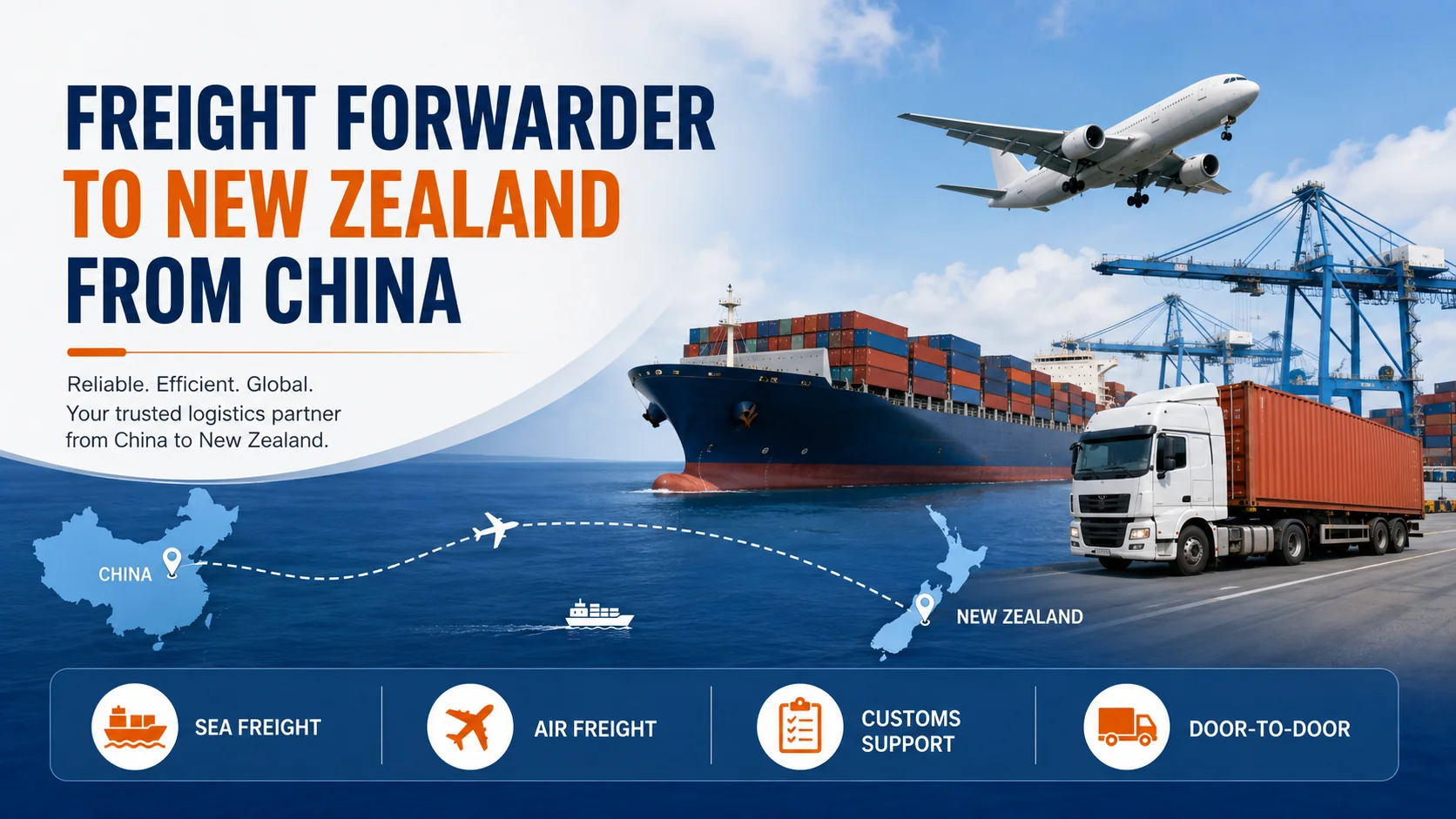
A freight forwarder connects the different companies involved in an international shipment. This may include Chinese suppliers, pickup drivers, warehouses, shipping lines, airlines, customs brokerage providers, inspection facilities and local delivery companies.
For China-to-New Zealand shipments, the freight forwarding scope may include:
Collecting goods from one or several suppliers
Receiving and measuring packages at a China warehouse
Consolidating orders into one shipment
Checking basic shipping documentation
Preparing the China export customs declaration
Booking sea freight or air freight
Issuing the bill of lading or air waybill
Coordinating customs clearance in New Zealand
Arranging MPI inspection or treatment when required
Delivering cargo to a warehouse, shop, business premises or home address
Providing shipment and document updates
The exact responsibility depends on the Incoterm and service level. An EXW shipment requires more origin handling than an FOB shipment, while a port-to-port quote covers less than a complete destination-delivery service.
Importers should therefore ask freight forwarders to define the pickup point, destination, customs responsibilities and excluded fees in writing.
Selecting the right shipping option for your New Zealand import depends on more than comparing freight prices. Importers need to consider cargo volume, product value, delivery urgency, customs requirements, handling risks and the total landed cost before choosing between sea freight, air freight or express services.
For most commercial shipments from China to New Zealand, sea freight is usually the most cost-effective solution for large and regular inventory, while air freight is better suited for urgent or high-value goods. Express shipping provides convenience for smaller parcels but is rarely economical for larger business shipments.
A reliable freight forwarder to New Zealand should evaluate the complete shipping process, including supplier pickup, export handling, international transport, customs clearance and final delivery, instead of recommending a method based only on the lowest freight rate.
Sea freight is usually the most cost-effective method for furniture, machinery, building materials, solar equipment, textiles, homeware and other heavy or bulky goods.
Importers can choose between:
LCL shipping: Cargo shares a container with other shipments.
FCL shipping: One customer uses a dedicated 20ft, 40ft or 40HQ container.
LCL works well for several cartons, pallets or crates that do not fill a container. It can also be used when goods from multiple factories are consolidated in China. However, the importer should compare warehouse handling, destination depot fees, customs brokerage and final delivery—not only the basic rate per CBM.
FCL involves fewer consolidation stages and gives the importer more control over loading. It may offer a better unit cost when the order is large enough, even if the goods do not use every available cubic metre.
For a detailed comparison, see Tonlexing’s guide to shipping from China to New Zealand.
Air freight is suitable for electronics, replacement parts, seasonal inventory, medical equipment, samples and other goods that need to arrive faster than ocean cargo.
The price is generally calculated using chargeable weight. The airline compares actual gross weight with volumetric weight and charges the higher result. Large but lightweight cartons can therefore cost more than expected.
Importers requesting an air freight quote should provide:
Number of cartons
Dimensions of each carton
Total gross weight
Product description
HS code, when available
Cargo-ready date
Final delivery postcode
More information is available in the air freight from China to New Zealand guide.
Express shipping is suitable for small shipments that require simple handling and fast delivery. Services from international courier networks are commonly used for documents, samples, spare parts and lightweight parcels.
Advantages include:
Simple booking process
Door-to-door delivery
Online tracking
Faster customs processing for eligible shipments
However, express shipping becomes less competitive as shipment weight increases. For commercial imports involving multiple cartons, pallets or regular inventory, air freight or sea freight usually provides better value.
Express shipping is generally suitable when:
The shipment is small
Delivery speed is more important than cost
The cargo does not require special handling
The importer needs immediate availability
For businesses that want fewer logistics tasks, door-to-door shipping provides a complete transport solution from the supplier’s location in China to the final delivery address in New Zealand.
Depending on the agreement, door-to-door freight may include:
Supplier pickup in China
Warehouse consolidation
Export customs declaration
Sea or air freight
New Zealand customs clearance coordination
Final delivery
However, importers should confirm exactly what the quotation includes. Terms such as “door delivery” or “all-inclusive shipping” can have different meanings between providers.
Before booking, check whether the quotation covers:
Customs brokerage
GST and import duty responsibilities
MPI inspection costs
Destination charges
Residential delivery fees
Storage or waiting charges
For more information about tax-paid shipping options, see Tonlexing’s DDP shipping from China to New Zealand.
Shipping costs change with carrier capacity, origin city, cargo type, fuel adjustments, season and destination. A freight forwarder cannot calculate a reliable price from the product name alone.
Tonlexing’s current New Zealand cost page, updated in May 2026, publishes the following planning figures. They must be reconfirmed before publication or used only as reference values because live August rates may have changed.
| Shipping method | Planning cost | Estimated transit time |
|---|---|---|
| Express shipping | USD 6–8 per kg | 1–3 days |
| Standard air freight | USD 3.50–5.30 per kg | 3–7 days |
| LCL sea freight | USD 40–150 per CBM | 25–40 days |
| 20ft FCL container | USD 1,900–2,500 | 20–35 days |
| 40HQ FCL container | USD 3,700–4,800 | 20–35 days |
| DAP or DDP delivery | Quoted per shipment | Based on selected service |
These figures should not be presented as an all-inclusive landed price unless the quotation specifically includes destination fees, customs brokerage, import duty, GST, MPI costs and final delivery.
Importers can review the separate shipping cost from China to New Zealand page for a more detailed cost overview.
Importers should also consider:
Cargo volume and weight: Larger shipments usually achieve better unit costs.
Origin location in China: Pickup distance from the supplier to the port affects the final price.
Destination address in New Zealand: Auckland, Tauranga, Christchurch and regional areas may have different delivery costs.
Cargo characteristics: Dangerous goods, batteries, oversized items or special packaging may require additional handling.
Shipping season: Peak periods can affect vessel space and freight rates.
To obtain a usable shipping-cost comparison, send the same cargo information to Tonlexing for every option and request an itemised quote showing both origin and destination fees.
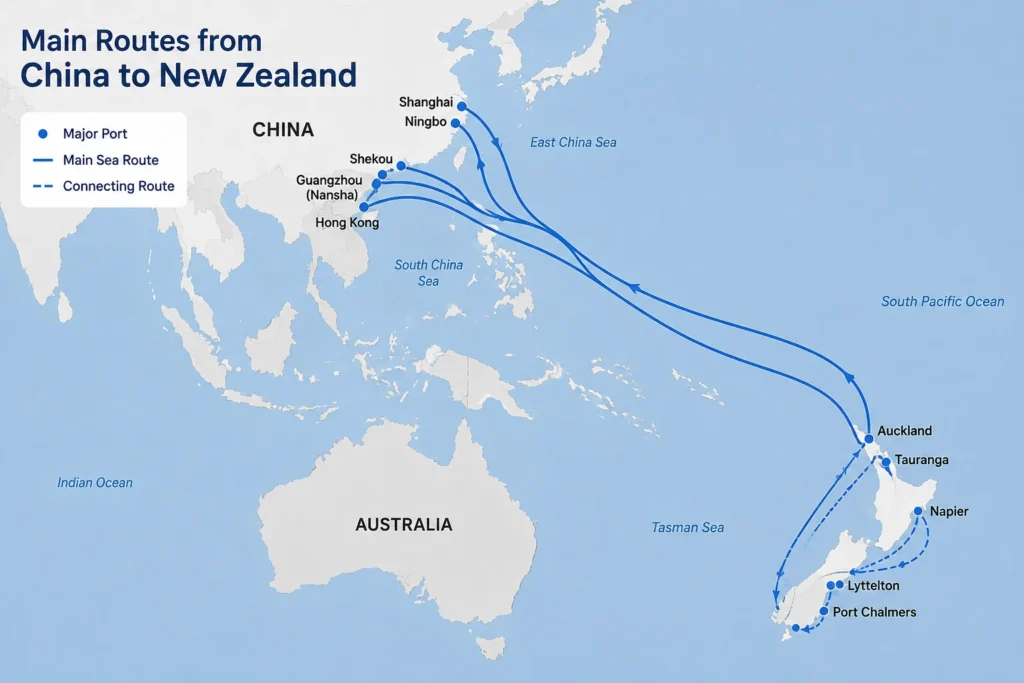
Cargo can depart from major Chinese logistics gateways such as Shenzhen, Guangzhou, Shanghai, Ningbo, Qingdao, Xiamen and Tianjin. The most suitable departure point usually depends on the supplier location and carrier schedule.
Moving cargo across China simply to use a slightly lower ocean rate may add domestic transport costs, handling and several days to the shipping process. The origin port should therefore be selected using the total route rather than the international freight price alone.
Important New Zealand gateways include:
Auckland: Suitable for many imports delivered within Auckland and the upper North Island. Port of Auckland describes itself as New Zealand’s largest import port.
Tauranga: An important international freight gateway with extensive road and rail connections to the upper North Island. Its container terminal is New Zealand’s largest and handles a significant share of the country’s container traffic.
Lyttelton: The main sea gateway serving Christchurch and many South Island shipments. Lyttelton operates the largest container-terminal operation in the South Island.
Auckland Airport: The principal routing point for much of the international air cargo entering New Zealand.
Other destinations: Wellington, Hamilton, Napier, Dunedin and regional addresses can be served through a combination of international freight and domestic transport.
The closest port is not always the least expensive destination. Carrier frequency, transshipment, terminal charges, delivery distance and available warehousing should also be considered.
Shipping goods to New Zealand requires more than arranging international freight. Importers must also comply with New Zealand Customs requirements, GST obligations and strict biosecurity controls managed by the Ministry for Primary Industries (MPI).
For businesses importing from China, a reliable freight forwarder to New Zealand should help review product information, prepare shipping documents and coordinate customs clearance before cargo arrives. Proper preparation can reduce the risk of border delays, inspection costs and unexpected storage charges.
All goods arriving in New Zealand must be cleared by the New Zealand Customs Service.
Low-Value Goods (Under $1,000 NZD): Do not require a formal Inward Cargo Report. However, an Import Entry Transaction Fee (IETF) of $2.21 NZD + GST applies.
High-Value Goods (Over $1,000 NZD): Require a Formal Import Entry. Commercial importers must register for a unique Customs Client Code before the cargo arrives.
New Zealand applies a 15% Goods and Services Tax (GST) on imported goods.
For commercial imports requiring border GST assessment, the taxable value is generally calculated based on:
GST calculation basis = Customs value of goods + international freight + insurance + applicable import duty
This means GST is not always calculated only on the product purchase price. Freight and insurance costs can also affect the final tax amount.
New Zealand has some of the strictest biosecurity regulations in the world. MPI controls potential risks from imported goods that may introduce pests, diseases or environmental threats.
Certain products require additional attention, including:
Wooden pallets and crates
Used machinery and equipment
Food products
Plant-based materials
Animal-related products
Agricultural goods
Outdoor equipment
Before shipment, importers should confirm that:
Wooden packaging complies with ISPM 15 requirements
Containers are clean and free from soil or contamination
Used equipment has been properly cleaned
Required permits or certificates are available
Product descriptions match the actual cargo
Non-compliant cargo may require cleaning, treatment, inspection or additional documentation before release.
Some imported goods, especially sea containers containing regulated products, may need to be handled through MPI-approved facilities before final delivery.
A transition facility allows cargo to be inspected, unpacked or processed under approved biosecurity conditions.
Importers should consider:
Whether the product requires MPI inspection
Whether the destination facility can handle the cargo type
Whether additional handling fees apply
Whether special unloading arrangements are required
Planning these requirements before shipment helps prevent cargo being held after arrival.
Some prohibited items cannot enter New Zealand, while restricted products require approvals, permits or additional documentation. Customs provides separate guidance for prohibited and restricted imports.
Importers should disclose cargo such as:
Food, seeds and plant products
Animal products
Medicines and controlled substances
Batteries and dangerous goods
Chemicals
Used machinery and outdoor equipment
Untreated timber
Alcohol and tobacco
Product restrictions should be reviewed before the goods leave China.
A clear shipping process helps the importer understand what must be completed before each stage begins.
The importer provides the product description, supplier address, number of packages, carton dimensions, gross weight, total CBM, declared value and delivery postcode.
Restricted, dangerous or biosecurity-sensitive cargo must be identified immediately.
The freight forwarder compares express, air freight, LCL and FCL options. The decision should reflect the complete cost, required arrival date and cargo-handling risk.
For broader planning, see the guide to shipping from China to New Zealand.
EXW, FOB, DAP and DDP allocate different costs and responsibilities to the supplier and buyer. The quotation should use the same Incoterm as the purchase agreement.
Goods are collected from the supplier or delivered to a Tonlexing warehouse. When several factories are involved, the orders can be consolidated before international freight is booked.
Available warehousing and additional services may include carton counting, measurement, palletising, repacking and shipping-label preparation.
The invoice, packing list, product description, HS code and consignee information are checked before the customs declaration is submitted.
The importer should also confirm whether a certificate of origin, permit, treatment document or dangerous-goods declaration is required.
Tonlexing arranges the selected sea freight, air freight or express service. The shipment receives a bill of lading, air waybill or tracking reference according to the method.
Transit-time planning should include pickup, warehouse handling, export clearance, the main transport leg, destination clearance and final delivery. Tonlexing’s China-to-New Zealand transit-time guide explains these separate stages.
The required information is submitted for New Zealand customs clearance. Customs or MPI may request additional documents, inspection, cleaning or treatment depending on the shipment.
After release, the cargo is collected from the airport, port, container depot or LCL warehouse and transported to the final destination.
For FCL shipments, the importer must also plan unloading and empty-container return within the permitted free time.
Before authorising the shipment, use this checklist to confirm that the quotation and cargo details are complete.
Product name and material are clearly stated
HS code has been checked
Carton quantities match the purchase order
Dimensions and weight are current
Batteries, liquids, magnets and chemicals are disclosed
Wood packaging has been identified
Cargo-ready date is confirmed
Commercial value is accurate
Supplier address is complete
New Zealand delivery postcode is confirmed
Incoterm is stated
Air, LCL and FCL options have been compared where relevant
Delivery equipment and unloading requirements are known
Rural or residential restrictions have been checked
Cargo insurance has been considered
Origin charges are included or listed
International freight is clearly shown
Destination fees are explained
Customs brokerage is included or excluded
GST and import duty responsibilities are stated
MPI inspection and treatment are identified as included or excluded
Storage, demurrage and detention terms are understood
Payment account details have been verified
The best shipping method should be selected by the total cost to the final destination, not by the lowest rate in the first line of a quotation.
Many shipping problems start with incomplete cargo information or unclear quotations. Importers can reduce delays and extra costs by checking the shipment before booking.
Common mistakes include:
Choosing only by price: Low rates may exclude destination charges, customs brokerage or delivery.
Providing inaccurate cargo details: Incorrect weight, dimensions, descriptions or HS codes can affect costs and clearance.
Ignoring import requirements: Wood packaging, used machinery and regulated goods may require MPI documents or inspection.
Confusing transit time with delivery time: Pickup, consolidation, customs clearance and inland transport must also be included.
Using unclear shipping terms: Confirm the responsibilities and charges under EXW, FOB, DAP or DDP.
A reliable freight forwarder should review the cargo, documents and service scope before departure.
Tonlexing Logistics coordinates freight forwarding from suppliers across China to destinations throughout New Zealand. Each shipment is reviewed according to the cargo details, supplier location, delivery deadline and final address rather than being assigned a standard shipping method.
Tonlexing can compare different transport methods based on shipment size, urgency and handling requirements. Available options may include:
LCL and FCL sea freight
Standard and urgent air freight
Express shipping for smaller cargo
DAP and eligible DDP delivery
The recommended option should balance transit time, handling risk and total landed cost.
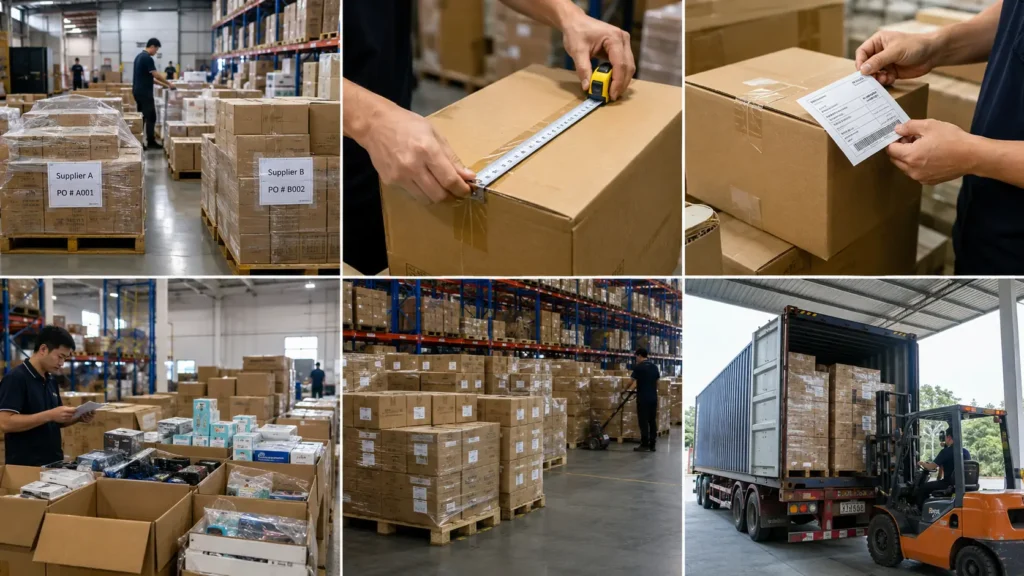
Goods can be collected from factories or delivered to a China warehouse before export. When an order involves several suppliers, cargo may be consolidated under one shipping plan.
Related services may include warehouse receiving, carton measurement, repacking, palletising and shipping-label preparation. The exact warehousing scope should be confirmed during quotation.
Tonlexing can coordinate China export declarations together with New Zealand customs brokerage and final delivery arrangements. Importers should provide accurate product descriptions, HS codes, declared values and packaging details before shipment.
For biosecurity-sensitive cargo, the transport plan should also consider MPI requirements, wood packaging, inspections and suitable delivery facilities.
A useful quotation should show more than the main international freight rate. Tonlexing can prepare an itemised offer covering the agreed origin, freight and destination services so importers can understand what is included and what remains payable after arrival.
The final scope may depend on:
Cargo type and volume
Supplier and delivery addresses
Incoterm
Customs and MPI requirements
Unloading and access conditions
Send Tonlexing your packing list, supplier address, cargo-ready date and New Zealand postcode to receive a shipment-specific quotation.
The cost depends on the origin, destination, cargo type, weight, volume, Incoterm and shipping method. Freight forwarders may charge for pickup, warehousing, export handling, international freight, customs brokerage and delivery.
A useful quote should separate the main charges and identify possible inspection, storage and additional fees.
Sea freight is normally more economical for large or heavy cargo. LCL is useful for smaller commercial shipments, while FCL may provide better value for higher volumes.
For small packages, express or economy parcel services may be more practical than paying the minimum charges associated with LCL.
Tonlexing’s current planning guide lists approximately 1–3 days for express shipping, 3–7 days for standard air freight, 20–35 days for FCL and 25–40 days for LCL. These figures are not guaranteed and require confirmation against the live schedule.
Pickup, consolidation, customs clearance, MPI processing and final delivery must be added when they are not included in the stated transit time.
Not necessarily. Goods above NZ$1,000 normally require a formal Import Entry and may be subject to GST, goods levies and import duty.
The duty rate depends on the HS code, product and origin. Some products have a zero duty rate, but GST and clearance charges may still apply.
They should not simply be described as GST-free. Customs usually does not collect GST at the border for ordinary goods at or below the threshold, but the overseas seller may have collected GST when the customer purchased the goods.
Low-value freight consignments may also attract Customs and MPI goods levies under the rules effective from 1 April 2026.
Useful freight, customs and importing resources related to this shipping guide.
Shipping from China / Shipping from China to New Zealand China–New Zealand Shipping Guide · Updated August 2026 Shipping from China to New Zealan...
Read guide →
Shipping Cost from China to New Zealand in 2026 Verified & Reviewed · Last updated May 2026 Shipping cost from China to New Zealand in 2026 typic...
Read guide →
Shipping goods between China and New Zealand has never been more accessible. With increasing trade volumes and growing demand for fast, reliable...
Read guide →
As trade between China and New Zealand continues to expand, more importers are choosing DDP shipping from China to New Zealand for its simplicity...
Read guide →If you’re asking how long does it take to ship from China to New Zealand, the short answer is that shipping time varies by mode and paperwork rea...
Learn more → Useful Resource Cost of Shipping 20ft and 40ft Containers from China to New ZealandIf you’re planning to ship goods from China to New Zealand, whether for business or personal use, understanding the costs, transit times, and log...
Learn more →WhatsApp us