

How to Import from China to the UK: Complete Business Guide
- Verified & Reviewed · Last updated June 2026
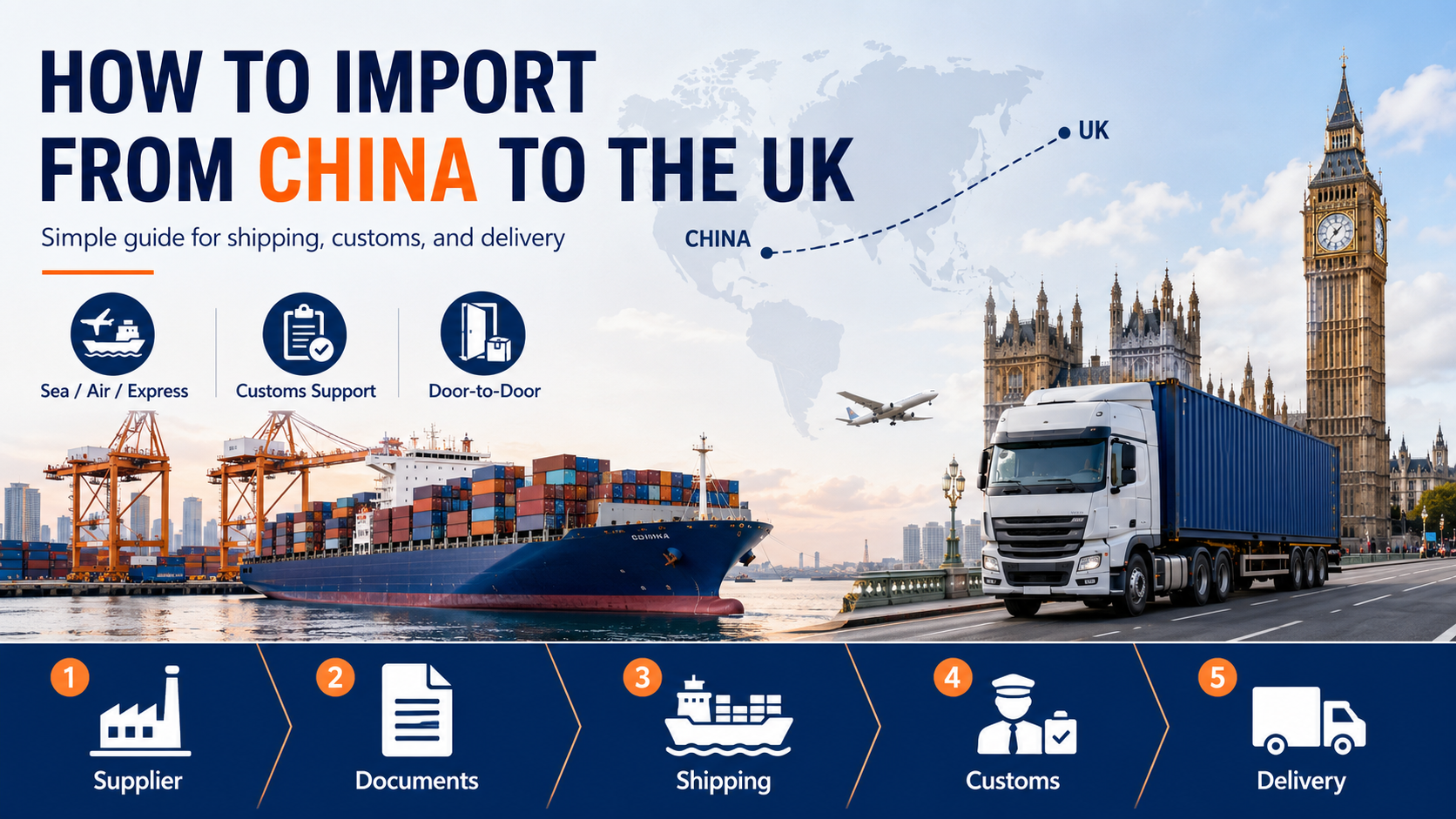
Importing from China to the UK involves more than finding a Chinese supplier and arranging shipping. UK businesses need to prepare an EORI number, check the correct commodity code, understand customs duty and import VAT, and choose the right shipping method before the goods arrive.
This guide explains how to import goods from China to the UK in a simple, practical way. It covers the key steps, from checking your product and getting an EORI number to choosing sea freight, air freight, or a freight forwarder for customs clearance.
EORI number
Import duty & VAT
China to UK shipping
- Experienced China-based logistics specialists
Table of Contents
Check If Your Goods Can Be Imported into the UK
To determine if your goods can legally enter the UK from China, you must check for total bans, strict import licensing restrictions, and mandatory product safety standards.
Here is the framework to verify if your specific goods are permitted.
Identify Banned Goods (Prohibited)
Certain items are completely banned from entering the UK to protect public health, safety, and the environment. You cannot import:
Illicit drugs and controlled substances.
Offensive weapons, including flick knives and certain self-defence sprays.
Endangered animal and plant species (unless protected by specific CITES permits).
Indecent or obscene materials featuring minors.
Identify Restricted Goods (Requires a Licence)
Many items are legal but require a specific import licence, certificate, or inspection before they can clear UK customs. Common restricted categories include:
Chemicals and Pesticides: Must comply with UK REACH regulations.
Plants, Seeds, and Food Products: Require a Phytosanitary Certificate from China and must be declared via the UK’s IPAFFS (Import of Products, Animals, Food and Feed System).
Textiles and Footwear: Certain items require monitoring surveillance licences depending on the specific materials used.
Electronics with Radio/Wireless Tech: Must comply with UK telecommunications and frequency standards.
Verify UK Product Safety Compliance
Even if a product is not banned or restricted, it cannot be legally sold in the UK unless it meets manufacturing safety laws.
Product Markings: Most manufactured goods require the UKCA (UK Conformity Assessed) mark or the CE mark to prove they meet UK safety, health, and environmental standards.
Enforcing Bodies: UK Trading Standards can seize and destroy goods at the port if the products lack proper compliance certificates (e.g., test reports for children’s toys, cosmetics, or electrical goods).
Intellectual Property: Customs will confiscate counterfeit goods, fake brands, or copyright-infringing items immediately.
Get an EORI Number
An EORI number is required for most businesses importing goods into the UK. EORI means Economic Operators Registration and Identification. It is used by UK customs to identify the importer during customs clearance.
If you import goods into England, Wales, or Scotland, your EORI number should start with GB. If your shipment involves Northern Ireland, different rules may apply, and you may need an XI EORI number depending on the movement of goods.
You may need an EORI number if you are:
A UK limited company importing stock
A sole trader importing products for resale
A VAT registered business
An overseas company acting as importer
A business using a freight forwarder or customs agent
Without the correct EORI number, your shipment may be delayed, and you may not be able to complete the customs declaration properly.
Find the Correct Commodity Code
A commodity code is a ten digit number used to classify your product for customs. It is one of the most important parts of importing from China to the UK.
The correct commodity code helps determine:
Customs duty rate
Import VAT treatment
Whether an import licence is required
Whether trade restrictions apply
What full details must be included in the customs declaration
GOV.UK explains that importers need to use commodity codes to pay the right amount of customs duty and import VAT. The UK Trade Tariff can be used to look up commodity codes, duty rates, VAT rates, and related trade measures.
To find the correct commodity code, you should prepare full product details, including material, use, function, size, technical specifications, country of origin, and the sender and receiver addresses, quantities, values, commodity codes, and descriptions needed for customs paperwork. Do not rely only on the code provided by your Chinese supplier, because a wrong code can lead to higher duties, customs delays, or future tax problems.
Confirm Supplier Details and Incoterms
After checking the product, you need to confirm all trading terms with your Chinese supplier. This includes product price, packaging, lead time, payment terms, carton details, and Incoterms.
Incoterms define who pays for shipping costs and who is responsible for each stage of the shipment.
| Incoterm | What It Means for the UK Buyer |
|---|---|
| EXW | Buyer handles pickup from the factory, export, shipping, UK customs, and final delivery. |
| FOB | Supplier delivers the goods to the Chinese port. Buyer handles main freight and UK import. |
| CIF | Supplier pays sea freight to the UK port. Buyer handles customs clearance, duty, VAT, and delivery. |
| DAP | Seller arranges delivery to the UK address. Buyer usually pays import duty and import VAT. |
| DDP | Seller or freight forwarder handles duty, VAT, customs clearance, and delivery. |
For many UK importers, FOB is a good option because the supplier handles China export, while the buyer controls the main shipping, customs clearance, and destination costs.
Choose the Best Shipping Method from China to the UK
Your shipping method depends on the size, weight, value, and urgency of your goods. Most goods from China to the UK are shipped by sea freight because it is more cost-effective for bulk cargo. Air freight is faster but more expensive.
| Shipping Method | Best For | Transit Time | Estimated Cost |
|---|---|---|---|
| Sea Freight LCL | Small commercial shipments | 40–60 days | USD 80–180 per CBM |
| Sea Freight FCL | Full container shipments | 35–55 days | 20ft: USD 1,800–3,500; 40ft: USD 2,500–5,000 |
| Air Freight | Urgent or high-value cargo | 6–16 days | USD 4.5–9.5 per kg |
| Express Courier | Samples and small parcels | 3–7 days | USD 6–12 per kg |
Sea Freight
Sea freight is the most economical shipping method for businesses importing large volumes of goods from China to the UK. It is widely used for furniture, machinery, building materials, textiles, and other commercial cargo where transportation cost is more important than delivery speed. Depending on your shipment size, you can choose either LCL or FCL services.
Sea freight is suitable for:
LCL shipments that do not fill a whole container
FCL shipments using a dedicated 20ft or 40ft container
Heavy, bulky, or high-volume cargo
Businesses looking for the lowest shipping cost
Typical door-to-door transit time is 40–60 days, depending on the departure port, destination, customs clearance, and inland delivery.
Air Freight
Air freight is the best option when goods need to arrive quickly or when shipping high-value products. Although the transportation cost is higher than sea freight, the shorter transit time helps businesses reduce inventory shortages and respond faster to customer demand.
Air freight is commonly used for:
Electronics and consumer products
Fashion and seasonal goods
Spare parts and urgent replenishment
Samples and time-sensitive shipments
Most air freight shipments from China to the UK take 6–16 days door to door, including customs clearance and final delivery.
Express Courier
Express courier services provide the fastest and simplest shipping solution for small commercial shipments, samples, and documents. Major carriers such as DHL, FedEx, UPS, and TNT manage the transportation, customs clearance, and final delivery through a single network.
Express shipping is ideal for:
Samples and prototypes
Small parcels
Business documents
Urgent replacement parts
Transit time is typically 3–7 business days, making it the fastest shipping option for smaller shipments from China to the UK.
UK Customs Clearance
To clear UK customs smoothly, you must submit a formal declaration, pay necessary import taxes, and verify that your goods meet all safety regulations.
Required Customs Documents
Before your shipment arrives in the UK, make sure you have all the necessary customs paperwork. The most commonly required documents include:
Commercial Invoice
Packing List
Bill of Lading or Air Waybill
EORI Number
Commodity Code
Customs Declaration
Import Licence (if required)
All documents should contain consistent information, including the product description, quantity, customs value, and country of origin.
Customs Duty and Import VAT
UK Customs (HMRC) will not release your goods until all financial obligations are secured.
Customs Duty: Charged on goods worth over £135. The percentage is calculated based on the product’s value plus shipping and insurance costs to the UK border.
Import VAT: Standardly charged at 20% on the total value of the goods, shipping, and duty combined.
Postponed VAT Accounting (PVA): If your business is UK VAT-registered, you can choose PVA. This allows you to account for and reclaim import VAT on your standard VAT return instead of paying cash upfront at the border.
Customs Inspection and Cargo Release
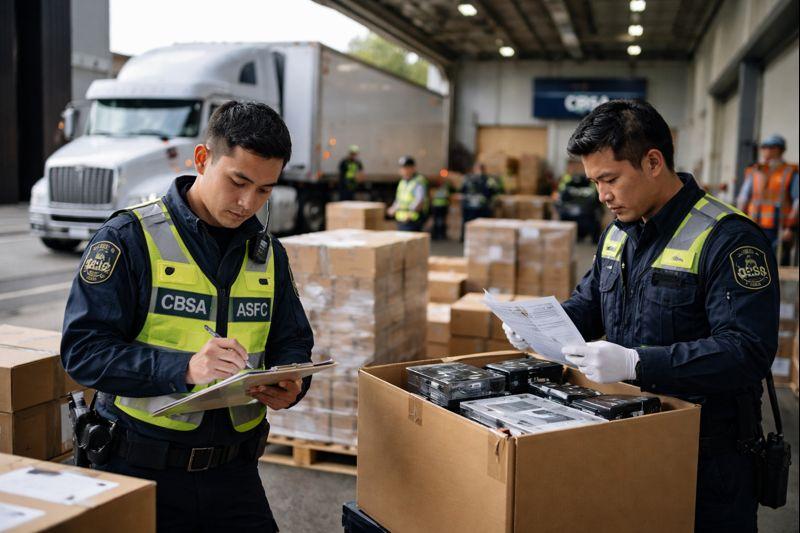
Most shipments are cleared electronically, but UK customs may select cargo for document verification or physical inspection. Customs officers may review the declared value, commodity code, country of origin, product compliance, or supporting documents before releasing the shipment.
If everything is accurate and all applicable duties and taxes have been paid, the goods can be released for final delivery to your warehouse or business address.
Work with a China to UK Freight Forwarder
Tonlexing provides China to UK freight forwarding services by sea freight, air freight, and door-to-door shipping. Our team helps UK businesses coordinate supplier pickup, export handling, customs paperwork, customs clearance, and final delivery.
Tonlexing can help with:
Comparing sea freight and air freight
Arranging pickup from your Chinese supplier
Booking LCL, FCL, or air cargo space
Preparing shipping documents
Coordinating China export procedures
Supporting UK customs clearance
Checking customs paperwork before shipment
Arranging final delivery in the UK
A good freight forwarder does more than book transport. It helps you understand shipping costs, delivery time, customs duty, import VAT, and possible risks before the shipment starts. This helps reduce customs delays, storage charges, and unexpected costs when your goods arrive in the UK.
Common Mistakes to Avoid
Many import problems happen because the shipment was not planned properly before leaving China.
Common mistakes include:
Using the wrong commodity code
Forgetting to apply for an EORI number
Not checking import licence requirements
Choosing the cheapest shipping quote without checking what is included
Using unclear commercial invoices
Ignoring import VAT when calculating profit
Not confirming product compliance before selling in the UK
Paying the supplier before checking packaging, carton size, and shipping details
To avoid nasty surprises, always calculate the full landed cost before placing an order.
Frequently Asked Questions
The cost depends on product value, shipment size, shipping method, commodity code, duty rate, import VAT, customs clearance fees, insurance, and final delivery. Sea freight is usually cheaper for large shipments, while air freight is better when goods need to arrive quickly.
Yes, most commercial importers need an EORI number. If you import into Great Britain, the EORI number must start with GB. If you import through Northern Ireland, you may also need an XI EORI depending on the movement.
In most cases, yes. Import VAT is normally charged at the same rate as if the goods were supplied in the UK. The standard UK VAT rate is 20%, although some goods may be reduced-rated or zero-rated.
The main documents are the commercial invoice, packing list, bill of lading or air waybill, EORI number, commodity code, import declaration, and any required licence or certificate.
Sea freight is best for large or heavy shipments. Air freight is best for urgent goods. Express shipping is best for samples and small parcels. For regular commercial imports, many businesses use a freight forwarder to compare the total cost and transit time.
Related China to UK Shipping Guides
Import from China to the UK with Tonlexing
Sea freight, air freight, and door-to-door shipping
Support with customs paperwork and UK customs clearance
Experienced China-based DDP team
Get reliable China to UK shipping support, transparent pricing, and expert freight forwarding for your next import.