Related Guide
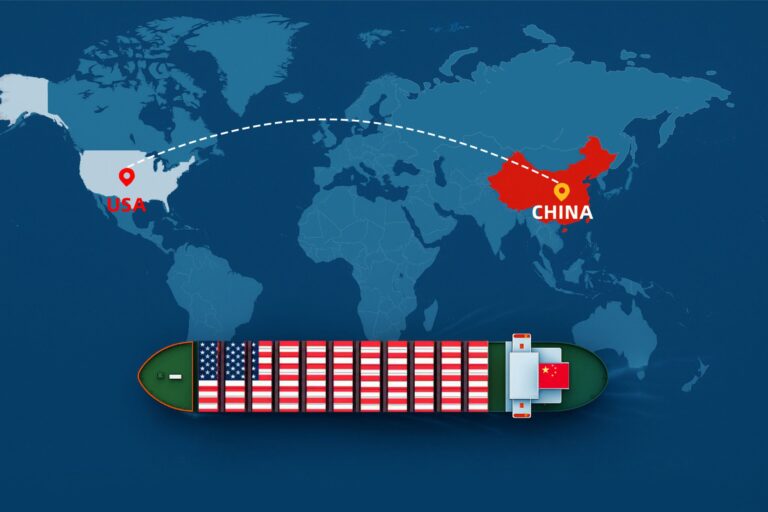
Shipping from China to the USA
Shipping from China to the USA includes air freight, sea freight, and DDP shipping options. Compare shipping costs, transit times, and US customs...
Read guide →

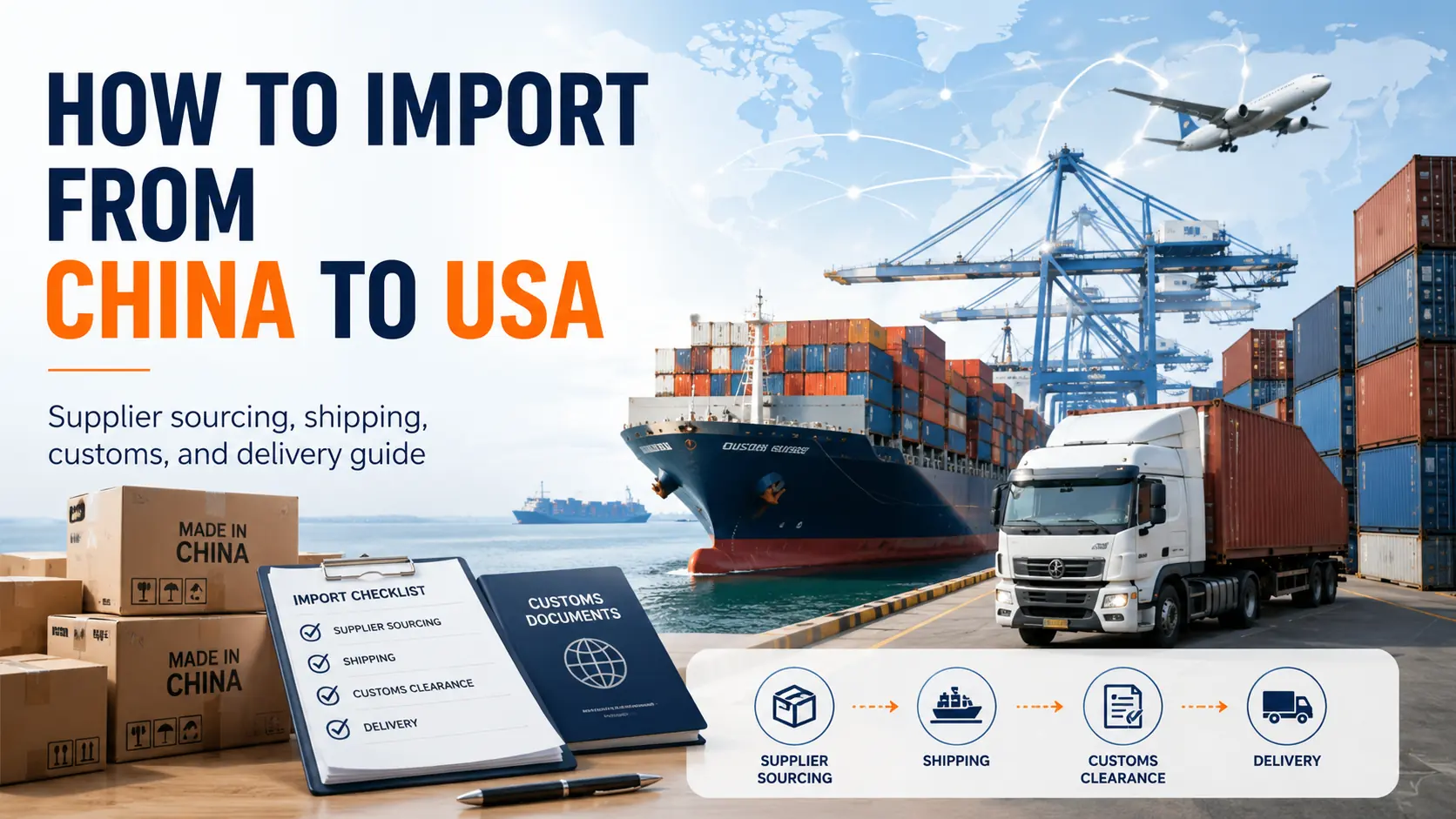
Importing from China to the USA requires supplier verification, product compliance checks, correct HTS classification, import duty calculation, and suitable shipping arrangements.
Learn how to import goods from China to USA, including supplier sourcing, tariffs, shipping costs, customs clearance, and final delivery.
Import Duties
Shipping Costs
Customs Clearance
The first step is to confirm whether the goods can legally enter and be sold in the United States.
There is no single federal import license that applies to every shipment. However, different categories may be regulated by different agencies, and some items require testing, registration, certification, labeling, permits, or supporting records.
Examples include:
FDA: food, dietary supplements, medical devices, and other regulated goods
CPSC: toys, children’s goods, and certain consumer items
FCC: certain electronics and radio-frequency devices
EPA: chemicals, pesticides, engines, and some environmentally regulated goods
DOT / NHTSA: vehicles and certain automotive items
Importers should also check whether the goods are restricted, prohibited, subject to intellectual-property controls, or affected by battery, dangerous-goods, wood-packaging, or other special requirements.
A supplier in China may be able to manufacture and export an item, but that does not automatically mean it satisfies U.S. import regulations.
Imported goods may need country-of-origin marking, warnings, instructions, or other information before entering the U.S. market.
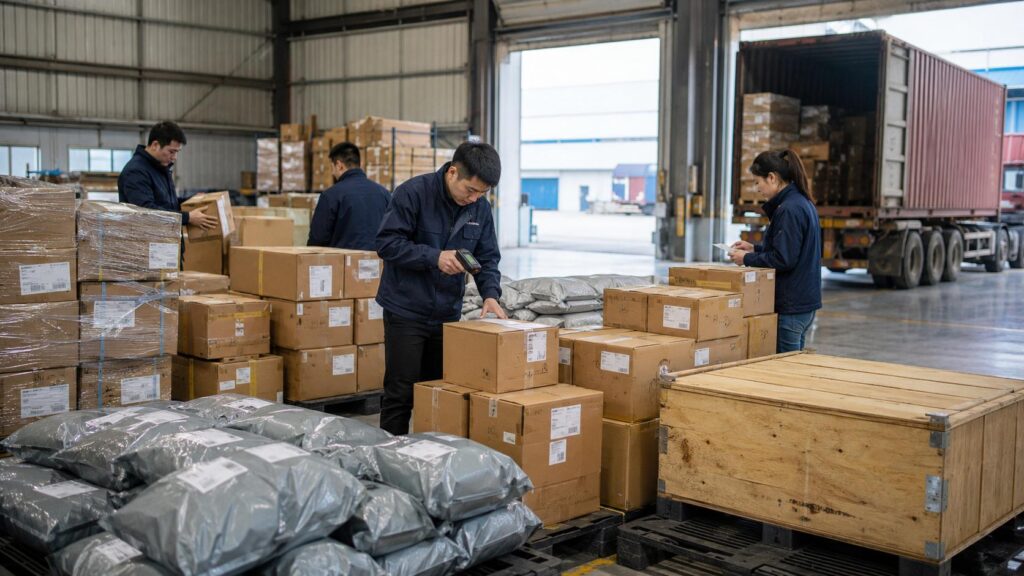
Goods manufactured in China generally need an appropriate “Made in China” marking where U.S. rules apply. Consumer electronics, toys, batteries, food, and medical equipment may need additional labels or certification information.
Confirm these details before mass production to avoid costly relabeling later.
Finding a supplier in China is relatively easy, but choosing one that can consistently meet your quality, compliance, and delivery requirements requires more careful verification. Importers can source suppliers through platforms such as Alibaba, Made-in-China, Global Sources, trade fairs, sourcing agents, or direct factory contacts.
Before placing a commercial order, check more than the quoted price. Important verification points include:
Chinese business license and registered company details
Whether the supplier is a manufacturer or trading company
Production capacity and lead time
Export experience, especially with the U.S. market
Product certifications and available test reports
Quality-control procedures
Packaging capability
For larger or customized orders, consider requesting product samples, arranging a factory audit, or using a third-party pre-shipment inspection.
Samples are especially important for checking materials, dimensions, workmanship, functions, labeling, and packaging before mass production. Once the sample is approved, confirm the final specifications, quantity, price, production time, packaging requirements, and payment terms in the purchase order or proforma invoice.
Do not choose a supplier based only on the lowest unit price. Poor quality, incorrect documentation, weak packaging, or production delays can create much higher costs later in the import process.
Correct classification is one of the most important parts of importing from China to the USA.
Goods entering the United States are classified under the Harmonized Tariff Schedule of the United States (HTSUS). The correct HTS code affects the tariff rate, reporting requirements, and whether additional trade measures apply.
A supplier may provide an HS code for export, but importers should not assume it is automatically the correct U.S. classification.
The final HTS classification can depend on:
Function
Material
Composition
Construction
Technical specifications
Intended use
Similar-looking goods can fall under different HS codes or U.S. tariff classifications. Detailed descriptions, photos, specifications, and material information are often needed.
For complex or high-value imports, a licensed broker or qualified classification specialist can help review the code before the shipment departs.
A simple calculation is:
Import Duty = Customs Value × Applicable Duty Rate
The actual amount payable may also include additional tariffs, processing charges, the Harbor Maintenance Fee for applicable ocean shipments, or antidumping and countervailing duties where relevant.
There is no single duty rate for all imports from China. The correct tariff rate depends on the exact HTS classification and the rules in effect for that item.
Certain goods from China may also face additional tariffs under U.S. trade measures. Before placing an order, confirm the HTS code, normal duty, and whether any additional tariffs apply.
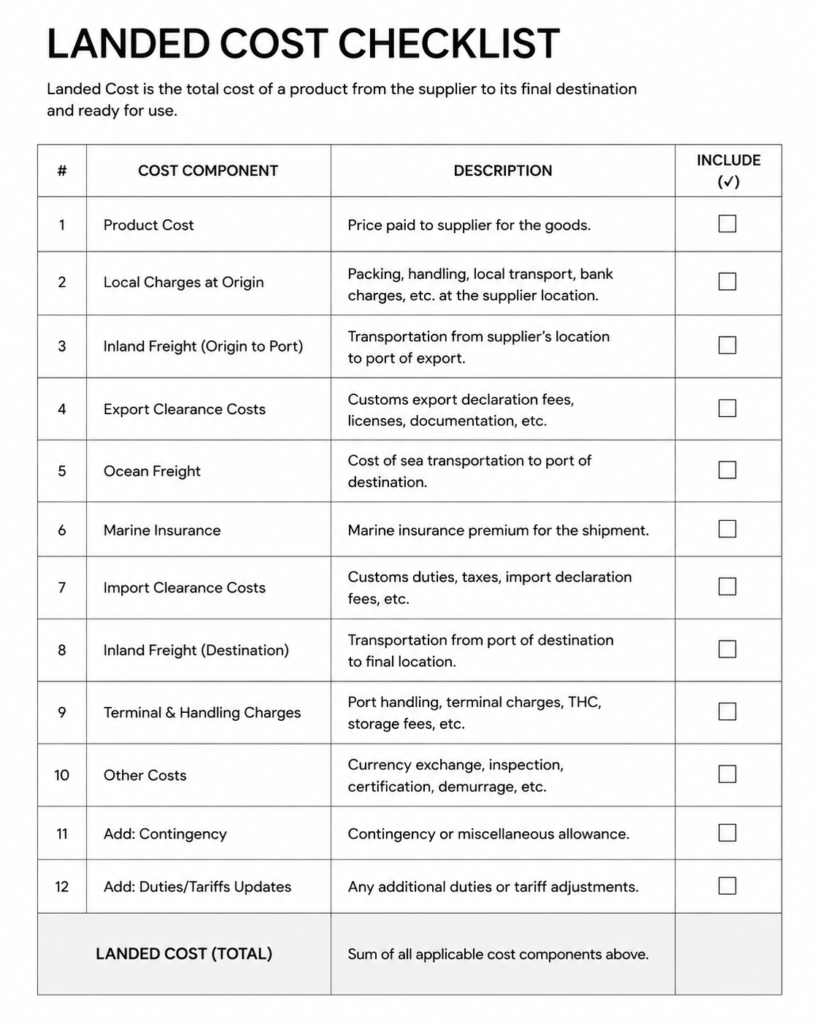
The supplier’s quoted price is only one part of the real cost of importing from China to the USA. Before placing an order, importers should estimate the total landed cost to understand how much the goods will actually cost after they arrive at the final destination.
A simple calculation is:
Total Landed Cost = Goods Cost + China Origin Costs + International Freight + Duties and Fees + Clearance + Final Delivery
The main cost components usually include:
Goods Cost: Unit price, customization, packaging, and tooling if required
China Origin Costs: Factory pickup, export handling, inspection, and local transportation
International Freight: Express, air freight, LCL, or FCL shipping
Import Costs: Duties, additional tariffs, and applicable government fees
Entry and Clearance: Broker, bond, and filing-related charges
Destination Costs: Terminal, warehouse, handling, or storage fees where applicable
Final Delivery: Trucking or courier delivery to the U.S. destination
For businesses comparing suppliers or shipping options, it is often more useful to calculate the cost per saleable unit:
Landed Cost per Unit = Total Landed Cost ÷ Number of Saleable Units
A supplier with a lower factory price does not always provide the lowest final cost. Higher freight, duties, destination charges, or poor packaging can quickly offset the initial savings.
For a more accurate estimate, calculate the landed cost using the actual HTS classification, cargo dimensions, weight, shipping method, and U.S. delivery ZIP code before confirming the order.
Importers have several shipping options from China to USA, including express courier, air freight, LCL sea freight, and FCL sea freight. The best method depends on shipment size, weight, urgency, cargo value, destination, and budget.
| Shipping Method | Best For | Relative Speed | Typical Cost |
|---|---|---|---|
| Express Courier | Samples and small parcels | Fastest | $8–$12/kg |
| Air Freight | Urgent commercial cargo | Fast | $5–$10/kg |
| LCL Sea Freight | Smaller ocean shipments | Slower | $110–$150/CBM |
| FCL Sea Freight | Larger commercial shipments | Slower | $1,200–$4,300/container |
These prices are general references only. Actual shipping costs depend on cargo details, route, season, carrier capacity, and final destination.
Express courier is convenient for samples, documents, spare parts, and small parcels. It is fast and simple, but costs rise quickly as package weight and volume increase. For larger shipments, standard air freight may be more economical.
Air freight from China to USA is commonly used for urgent, high-value, and time-sensitive shipments such as electronics, machinery parts, replacement components, and fashion goods. Pricing is usually based on chargeable weight, which considers both actual weight and cargo volume.
Sea freight is usually more economical for larger commercial shipments.
LCL shipping allows smaller shipments to share container space with other cargo and is suitable when the volume is not large enough for a full container load.
FCL shipping gives one shipper use of the container and is generally more efficient for larger volumes, with a lower shipping cost per unit at scale.
Ocean freight rates vary by container type, departure port, destination, season, and carrier capacity. Shipments may enter through major U.S. ports such as Los Angeles or New York/New Jersey, depending on the route and final destination.
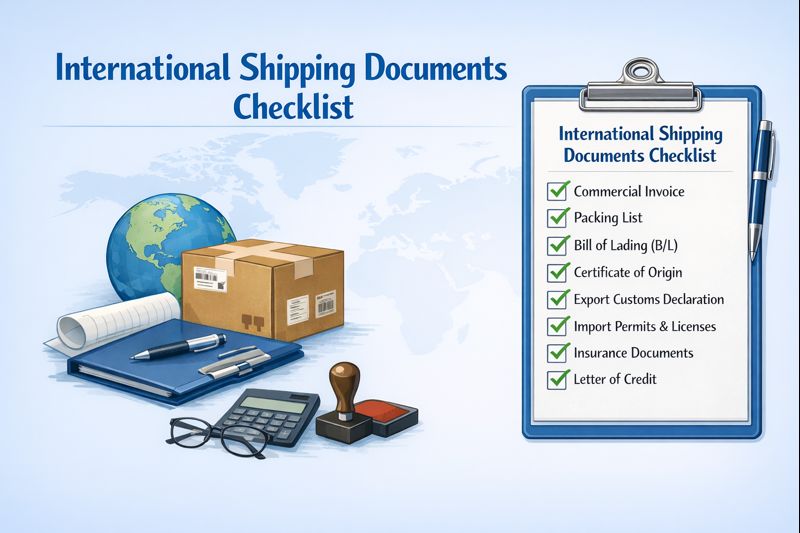
Accurate documents are essential for a smooth import process.
Common documents include:
Commercial Invoice: seller, buyer, item description, quantity, value, currency, and transaction details
Packing List: package count, dimensions, gross and net weight, and packing information
Bill of Lading: transport document for ocean freight
Air Waybill: transport document for air shipments
Certificates or Permits: required for some regulated goods
Entry Documents: prepared according to the type of U.S. import entry
The commercial invoice, packing list, transport document, and entry data should be consistent. Avoid vague descriptions such as “parts,” “accessories,” or “goods” when a specific commercial description can be provided.
Review the documents before departure whenever possible. Fixing inconsistencies after arrival can add time and costs.
When cargo reaches the United States, it must satisfy U.S. Customs and Border Protection requirements before release.
The Importer of Record is responsible for the accuracy of the import declaration, classification, value, duties, and applicable regulatory requirements.
A licensed customs broker can assist with entry preparation, HTS review, duty calculation, bond arrangements, and communication with US Customs. A broker is especially useful for first-time importers, regulated cargo, higher-value shipments, or difficult classifications.
Using a broker does not remove the importer’s responsibility for accurate information.
Many formal commercial imports require a bond.
Common options include:
Single Transaction Bond: generally used for one entry
Continuous Bond: commonly considered by businesses importing on a regular basis
The suitable option depends on shipment frequency, value, and the importer’s activity.
For applicable sea freight, Importer Security Filing (ISF) is an important pre-arrival requirement.
Information may include the buyer, seller, manufacturer, ship-to party, container stuffing location, consolidator, and classification details. Because information comes from several parties, the filing should be prepared before the vessel departs rather than at the last minute.
Not every shipment is physically inspected.
A shipment may receive normal release, require document review, be selected for examination, or need review by another government agency. Accurate documents and classification help reduce avoidable delays.
Many problems can be prevented before the cargo leaves China.
Ordering before checking compliance: confirm U.S. requirements before mass production.
Using the supplier’s HS code without verification: confirm the correct HTS classification when needed.
Ignoring additional tariffs: the normal duty may not be the only import charge.
Comparing only the main freight rate: destination, handling, entry, and delivery costs also matter.
Using weak export packaging: international shipping involves stacking, vibration, moisture, and repeated handling.
Preparing documents too late: review invoice, packing list, classification, and importer details before departure.
Planning these points early is usually cheaper than fixing them after arrival.
A freight forwarder can coordinate pickup in China, consolidation, export handling, air or ocean freight, shipping documents, cargo tracking, destination handling, broker coordination, and final delivery to the US.
Tonlexing provides freight solutions for businesses shipping goods from China to the USA, including air freight, sea freight, FCL, LCL, consolidation, and door-to-door delivery.
For an accurate quotation, provide:
Goods description and HS/HTS code if available
Number of cartons, pallets, or crates
Package dimensions and gross weight
Total CBM and cargo value
Pickup location in China
U.S. destination and ZIP code
Cargo-ready date
Battery, liquid, magnet, powder, or other sensitive-cargo information
Preferred shipping method
Complete shipment information makes it easier to compare suitable routes and identify special handling needs before booking.
There is no single federal import license for all goods. Certain categories may require permits, registrations, testing, certification, or approval from the relevant U.S. agency.
There is no universal rate. Import duty depends on the HTS classification, customs value, origin, and whether additional tariffs or trade measures apply.
Use detailed information about material, function, construction, specifications, and intended use to determine the applicable HTSUS classification. For difficult cases, consult a qualified broker or classification specialist.
Express and air are generally faster, while ocean freight is usually more economical for larger shipments. Total lead time also includes production, export handling, entry processing, and final delivery.
Alibaba is a sourcing marketplace. Individual suppliers may offer courier, air, sea, or door-to-door shipping, while others require the buyer to arrange transport separately. Confirm the Incoterm and included services before ordering.
Useful freight, customs and importing resources related to this shipping guide.
Shipping from China to the USA includes air freight, sea freight, and DDP shipping options. Compare shipping costs, transit times, and US customs...
Read guide →
Break down shipping costs from China to the USA, including air freight, sea freight, and delivery times for different shipment sizes.
Read guide →
Importing goods from China to the USA? Don’t let high import duties eat into your profits. Whether you’re a small business or an established impo...
Read guide →
Importer of Record IOR in the USA Verified & Reviewed · Last updated March 2026 Importer of Record (IOR) in the USA determines who is legally res...
Read guide →Sea Freight Shipping from China to the USA Verified & Reviewed · Last updated June 2026 Sea freight shipping from China to the USA is one of the...
Learn more → Useful Resource Air Freight from China to the USACompare air freight rates from China to the USA, including transit times, chargeable weight, and cost effective air shipping options.
Learn more →WhatsApp us