

How to Reduce Total Landed Cost to the USA
- Verified & Reviewed · Last updated March 2026
Reducing total landed cost is one of the fastest ways to protect profit margins and win with competitive pricing in the U.S. market. The challenge is that many teams only look at the freight quote and miss the full costs involved from supplier to final destination.
This guide explains how to reduce total landed cost to USA with a practical, repeatable approach—covering landed cost calculation, shipping costs, customs duties, port charges, and the indirect costs that quietly erode profit margins.
Landed cost calculation
Duties & Tariffs
Shipping costs / Port charges
- Experienced China-based logistics specialists
Table of Contents
What Total Landed Cost Means for USA Imports
Total Landed Cost (TLC) is the comprehensive total cost of purchasing and delivering a product to its final destination in the USA. It includes more than the unit price and the freight quote, because it captures the full chain of costs required to land goods, clear them, and move them inland.
TLC typically includes:
Purchase price and supplier charges
International freight and origin costs
U.S. transportation costs to your final delivery point
Customs fees, customs charges, and customs duties
Duty rates based on the harmonized tariff schedule
Port charges and destination handling
Warehousing, storage, and handling fees
Cargo insurance
Other costs such as compliance exceptions, delays, and damage
A clear TLC view helps you avoid underpricing, protect profit margins, and make smarter decisions in supply chain management—because you are optimizing the real cost, not just one line item.
Landed Cost Formula and the Right Way to Calculate It
A consistent landed cost calculation helps you compare routes, shipping methods, and suppliers using the true cost, not just the invoice price or a freight quote.
A practical cost formula
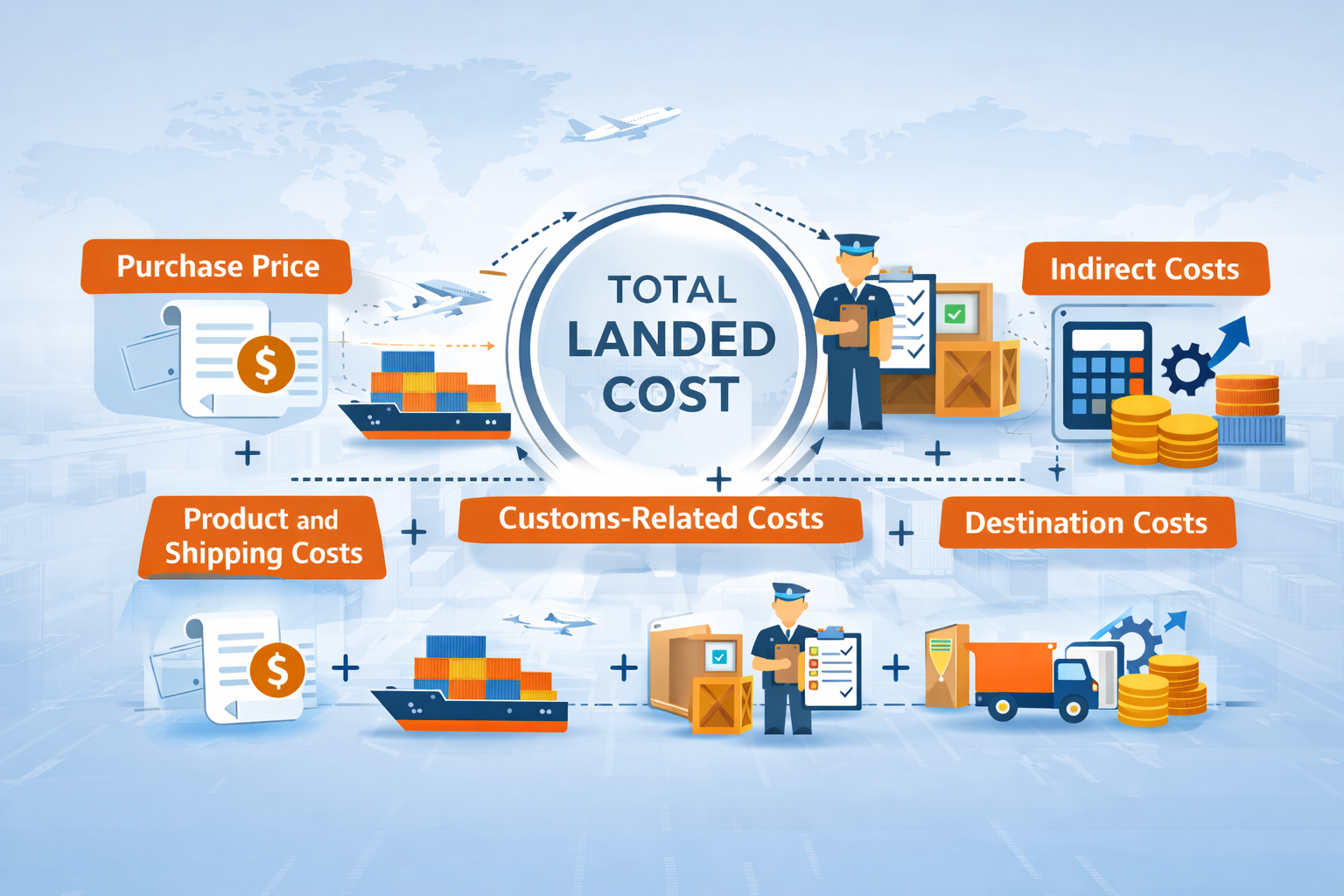
Total Landed Cost = Purchase Price + Product and Shipping Costs + Customs Related Costs + Destination Costs + Indirect Costs
Where each cost element typically includes
Purchase Price: product prices, supplier add-ons, export packing
Product and Shipping Costs: origin pickup, export handling, documentation, international freight, and carrier shipping fees
Customs Related Costs: customs duties, duty rates, customs fees, broker charges, required filings
Destination Costs: port charges, terminal handling, drayage, U.S. trucking to the final destination, warehousing and handling fees
Indirect Costs: delays, exams/holds, demurrage fees, damage, returns, cancellation costs, and manual rework
The right way to calculate it
Because the final invoice often arrives after shipment, calculate TLC in two passes:
Estimate before shipping
Use confirmed carton dimensions/weight, route, and HTS duty assumptions. This supports pricing and go/no-go decisions.Audit after delivery
Reconcile actual freight charges, port charges, customs charges, and accessorials to identify recurring leaks and real cost savings opportunities.
A qualified customs broker can help forecast duties and fees and reduce surprises.
Step 1: Reduce Shipping Costs and Shipping Expenses First
Freight is often the biggest visible line item. But the best TLC wins come from optimizing the shipment design, not just chasing lower rates.
Negotiate freight rates with structure
To reduce shipping costs without increasing risk:
Compare freight rates across multiple carriers and routes
Negotiate by lane and season, not one-off bookings
Ask for clear line items so hidden shipping fees do not appear later
Always request an all-in view of freight charges and destination charges, especially for LCL shipments.
Consolidate shipments to lower per-unit cost
Consolidation is one of the easiest ways to cut costs:
Combine small orders into larger shipments to gain volume discounts
Consolidate multiple suppliers into one container when possible
Reduce per-shipment document and handling fees
Optimizing shipping methods by consolidating smaller shipments into full containers can redauce per-unit freight costs and improve supply chain efficiency.
Optimize packaging to avoid DIM charges
Carriers bill the higher of actual weight or dimensional weight. To reduce surcharges:
Right-size cartons to eliminate excess space and avoid shipping air
Reduce shipment size by improving carton design
Improve palletization to reduce handling and damage
This directly lowers shipping expenses and can reduce returns.
Step 2: Control Port Charges, Free Time, and Demurrage Fees
In the USA, total landed cost often increases after the vessel arrives—not because of ocean freight, but because the container is not picked up fast enough. When pickup is delayed, you may start paying extra port charges, storage, and penalties. The key is to use the terminal’s free time window properly. If the container stays in the terminal after free time ends, demurrage fees and other charges can add up quickly.
Protect free time and prevent containers sitting
Terminals provide free time for pickup. Treat it like a deadline. Once free time ends, charges rise fast, and a customs hold is one of the most common reasons containers start sitting.
To avoid containers sitting:
Prepare clearance documents before arrival: commercial invoice, packing list, HS/HTS details, consignee/IOR info. Clean docs reduce holds under customs regulations.
Pre-book drayage and delivery appointments: reserve truck/chassis early and lock your warehouse appointment so you can move immediately after release.
Track release milestones daily using real time data: arrival, discharge, holds, exam status, customs release, terminal release, pickup appointment, out-gate, final delivery.
Ask your forwarder to confirm how much free time allotted inside the terminal you have, what counts as “day 1,” and what situations trigger extra charges or extensions.
Reduce demurrage costs and demurrage fees
Demurrage costs often come from:
Document errors and clearance delays
Missed appointments
Shortage of trucks or chassis
Lack of visibility into holds
Cut these costs by implementing a simple arrival checklist and escalation process.
Step 3: Reduce Customs Duties and Customs Fees Legally
For many importers, duties and tariffs are the biggest lever. Reducing duties requires compliance, not shortcuts.
Review Harmonized Tariff Schedule and HS classification
Regularly review product classification under the harmonized tariff schedule. Misclassification can lead to overpayment and penalties.
A reliable customs broker can help you:
Validate HS codes based on product materials and use
Align invoice descriptions with classification rules
Reduce risk under customs regulations
Correct classification improves determining landed cost accuracy and reduces surprises.
Use a free trade agreement when eligible
A free trade agreement can lower tariffs for qualifying goods. Trade agreements such as USMCA may reduce duties for certain goods from Mexico and Canada, depending on rules of origin.
Do not assume eligibility from a supplier statement alone. Confirm qualification with the required paperwork and your broker’s guidance before you price the product.
Use duty drawback and FTZ strategies
If you import goods and later export them, duty drawback can refund a large share of duties in many cases. Also, Foreign-Trade Zones can defer duty payments for goods not entering the U.S. market.
These strategies can create significant cost savings, but they require process discipline and clean documentation.
Step 4: Fix the Purchase Price Trap with TLC-Based Supplier Selection
Many companies pick suppliers based on unit price and later find the product is not profitable after shipping and duties.
Evaluate suppliers by total landed cost, not purchase price
A strong supplier selection process compares:
Purchase price and payment terms
Packaging efficiency and carton consistency
Document accuracy and compliance behavior
Lead time reliability and cancellation risk
Damage rate and claim history
If you evaluate suppliers based on TLC, you avoid surprises and protect profit margins.

Step 5: Manage Exchange Rates, Currency Conversion, and Payment Costs
TLC is affected by financial details that teams often forget.
Track currency exchange rates and exchange rates
Currency exchange rates impact your real spend between PO payment and customs entry. To reduce leakage:
Track exchange rates weekly for major settlement currencies
Record FX impact in your landed cost sheet
Use consistent pricing review cycles
Include currency conversion and processing fee items
Many importers forget:
currency conversion spreads
processing fee items charged by platforms
payment processing costs on certain payment methods
bank charges for international wires
These are not massive per shipment, but they matter at scale and should be in your TLC model.
Step 6: Cut Indirect Costs That Destroy the True Cost
The biggest landed cost problem is often not freight. It is the hidden indirect costs from operational mistakes.
Common indirect costs to track
Storage and rescheduling
Exams and holds
Redelivery and accessorial charges
Damages, returns, rework
Customer penalties and chargebacks
If you do not track these, your team will believe costs are stable while margins fall.
Prevent manual errors and cancellation costs
Manual errors in invoices, carton counts, and descriptions can trigger holds and extra charges. Use standardized templates and a pre-ship approval checklist.
Also track cancellation costs and even cancellation costs like rebooking, missed sailings, and rush replacements. These costs add up quickly and are preventable with better planning.
A Practical Checklist to Reduce Total Landed Cost
Use this checklist to reduce total landed cost to the USA without sacrificing reliability. It’s built for daily execution—so you can cut shipping costs, control port charges, and avoid extra fees that erode profit margins.
Before you book the shipment
Confirm the purchase price and any supplier add-ons that affect the total cost
Lock carton count, dimensions, and weight to avoid unexpected shipping fees and DIM changes
Choose the shipping method that fits lead time and overall cost, not just the lowest quote
Request a full cost breakdown: international freight, destination handling, and inland delivery to the final destination
During clearance & delivery
Verify HS/HTS and duty rates to prevent overpaying customs duties
Use a reliable customs broker to reduce customs fees, holds, and rework
Track free time and plan pickup early to avoid containers sitting and demurrage fees
After delivery
Audit the invoice to confirm the true cost and find repeatable cost savings
Record the top 3 extra fees involved, then fix them in your next shipment process
Frequently Asked Questions
Start by controlling destination leakage: port delays, demurrage, and document errors. Then consolidate shipments and optimize packaging to reduce shipping expenses.
Costs involved include purchase price, international freight, port charges, customs duties, customs fees, insurance, warehousing, handling fees, and indirect costs like delays and damage.
Yes. Tariffs and duty rates can significantly increase TLC. If you do not account for them, you will underprice products and erode profit margins.
A customs broker helps improve accuracy for duty estimates, classification, and compliance. Better accuracy reduces surprises and improves competitive pricing.
Yes. Currency conversion spreads and bank charges can change your landed cost, especially when exchange rates move between supplier payment and customs entry. Include them in your model and review them regularly so your pricing stays accurate.
Related Guides for Shipping to the USA
Get a Total Landed Cost Estimate for Your U.S. Import
Clear landed cost breakdown: freight, port charges, duties, and delivery
HTS & duty-rate check to avoid overpaying customs duties
Door-to-door options to your final destination with fewer surprise fees
Share your cargo details and destination ZIP to get an accurate TLC estimate and cost-saving options.