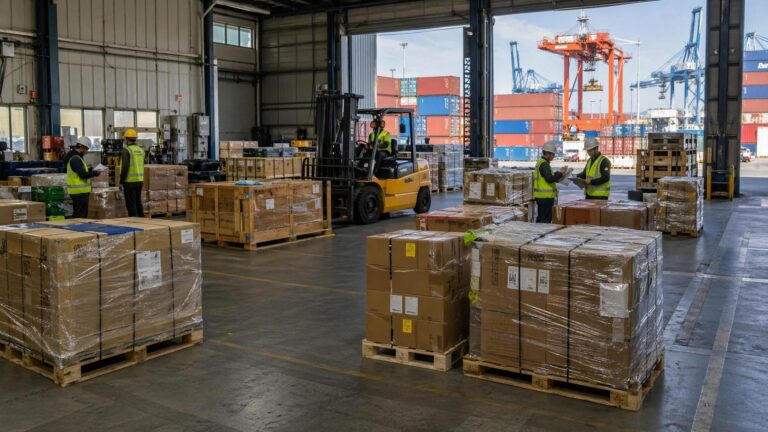
Related Guide
What Is Container Freight Station CFS in Shipping?
What Is Container Freight Station CFS in Shipping? Verified & Reviewed · Last updated April 2026 A Container Freight Station CFS is a logistics f...
Read guide →An added benefit for eligible new customers shipping with Tonlexing.
Check Eligibility & Get a Quote →Subject to cargo eligibility, insurer approval and policy terms.
Coverage and insured value depend on the cargo, route and written insurer confirmation before shipment. Policy exclusions, deductibles and claims terms apply. The US$500,000 figure is a maximum coverage limit, not a guaranteed claim payment. Insurance premiums are not represented as free unless expressly confirmed in your quote.


When shipping goods from China to the UK by LCL (Less than Container Load), ocean freight is only part of the total cost. Importers may also need to pay destination terminal handling, CFS fees, documentation, customs clearance, storage and final delivery charges.
These costs vary depending on the arrival port, shipment volume, gross weight and required services. Understanding the different fees helps importers compare LCL shipping quotes and calculate the actual cost before their goods arrive.
UK Destination Fees
W/M Calculation
Cost Control
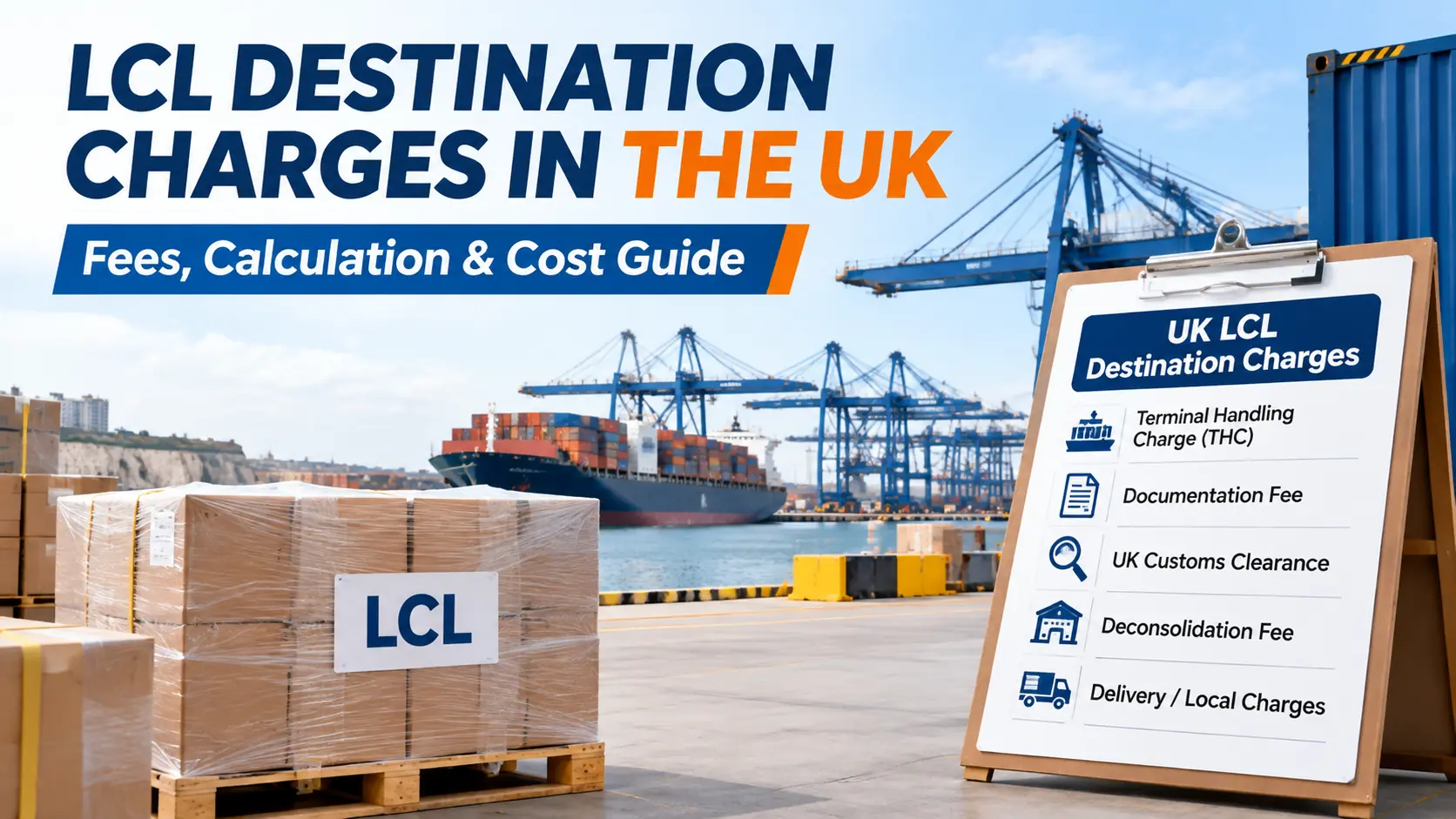
LCL destination charges are local fees incurred when a shared container arrives at a UK port. The container is transferred to a container freight station (CFS), where individual shipments are unloaded, separated and prepared for collection or delivery.
Unlike full container load (FCL) shipping, LCL involves additional consolidation and deconsolidation operations. Importers therefore need to check destination fees separately from origin charges and ocean freight.
These charges may include port handling, warehouse operations, documentation and onward transportation. Not every shipment incurs all these costs, as the final amount depends on the destination agent and agreed service scope.
The following table outlines the main fees importers may encounter when their goods arrive in the UK.
| Charge | What It Covers | Common Billing Basis |
|---|---|---|
| Destination Terminal Handling Charge (DTHC) | Handling the arriving container at the terminal | Per container or allocated shipment basis |
| CFS Handling Fee | Unloading, sorting and separating shared-container cargo | Per CBM or W/M |
| Documentation Fee | HBL processing and cargo release paperwork | Per shipment |
| Customs Clearance Fee | Preparing and submitting import declarations | Per declaration |
| Inspection Fee | Customs examinations and additional checks | Actual service cost |
| Storage Fee | Holding cargo beyond the free storage period | Per CBM, pallet or day |
| Delivery Charge | Transport from the CFS to the final address | Per shipment or vehicle |
| Special Handling Fee | Palletising, repacking or handling oversized goods | Based on requirements |
Destination Terminal Handling Charges cover terminal operations associated with the arriving container. CFS handling fees cover unloading, sorting and separating individual consignments.
These are different services, although some forwarders may combine them into one destination handling rate. Check the quotation to understand exactly what is included and avoid duplicate charges.
Documentation fees generally cover House Bill of Lading (HBL) processing, cargo release paperwork and administrative services. They are usually charged per shipment rather than by cubic metre.
A separate customs broker fee may apply for preparing and submitting the import declaration. Additional charges can arise if goods require scanning, physical examination or port health inspections.
UK destination warehouses usually provide a limited free storage period. Once this expires, storage fees may accrue daily until the goods are collected or released for delivery.
Final delivery charges depend on the UK postcode, distance, vehicle type and unloading requirements. Oversized, non-stackable or dangerous goods may also require additional handling.
For LCL cargo, CFS storage should be distinguished from container demurrage and detention, which relate to the shipping line’s container remaining beyond the permitted free time.
LCL destination charges are calculated according to the type of service, shipment volume and gross weight. Many CFS handling and LCL freight charges use weight or measurement (W/M), while documentation, customs clearance, storage and delivery may follow separate pricing rules.
For W/M-rated services, the chargeable quantity is based on whichever is greater between cargo volume and gross weight converted into metric tonnes.
The standard comparison is:
1 CBM = 1,000 kg = 1 W/M
Importers can use a CBM calculator to check cargo volume before requesting an LCL shipping quotation.
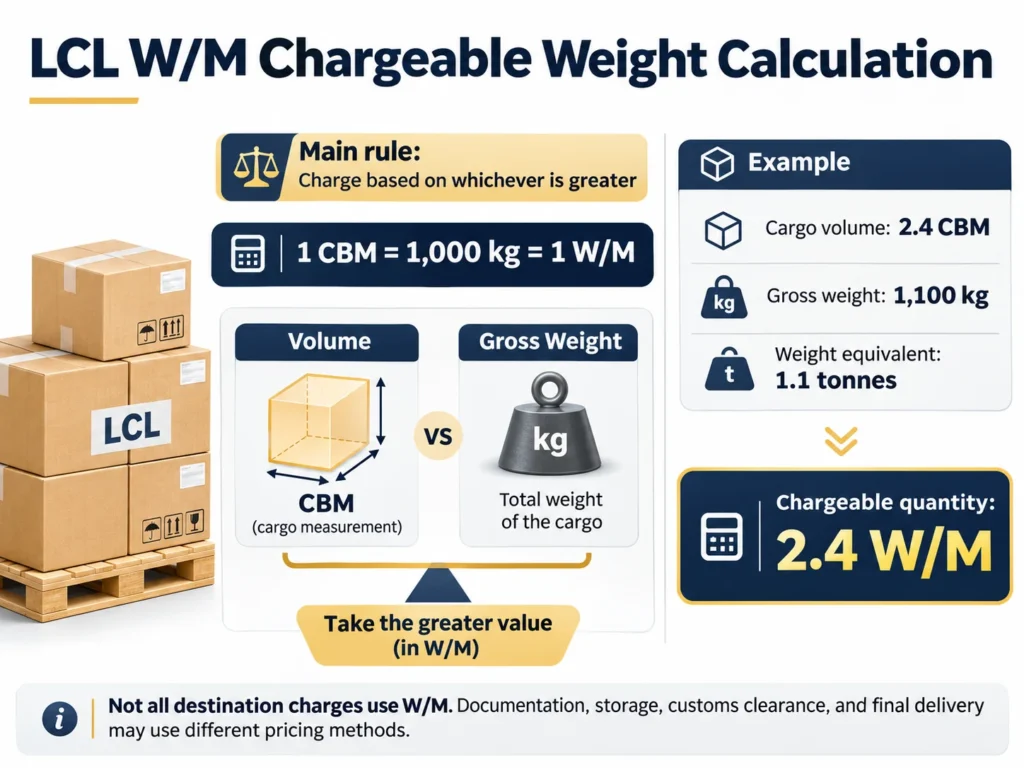
Not all UK destination charges are based on W/M. The billing method depends on the service provided.
| Charge | Calculation Method |
|---|---|
| CFS handling | Per CBM or W/M |
| Documentation and release | Per HBL or shipment |
| Customs clearance | Per declaration |
| Storage | Per CBM, pallet or day |
| Final delivery | Based on postcode, distance and vehicle |
| Special handling | According to actual service requirements |
Some destination agents also apply a minimum chargeable quantity, commonly 1 CBM or 1 W/M. This means even a smaller shipment may be billed at the minimum rate.
When comparing LCL shipping costs, ask the freight forwarder to confirm the chargeable volume, minimum fees, free storage period and applicable rates for each service. This helps establish the actual destination costs rather than relying on the ocean freight rate alone.
Destination charges are not the same across all UK ports and warehouses. Several factors influence the final amount:
Arrival port: London Gateway, Felixstowe, Southampton and Liverpool have different terminal and handling arrangements.
CFS location: Warehouse tariffs, minimum charges and free storage periods vary between facilities.
Cargo volume and weight: Larger consignments generally incur higher volume-based handling fees.
Cargo type: Oversized, fragile, non-stackable and dangerous goods may require additional services.
Storage time: Delayed document processing or late collection can result in extra warehouse fees.
Delivery location: Distance, postcode, vehicle access and unloading requirements affect local transport costs.
Seasonal demand can also influence warehouse capacity and handling arrangements. Importers should confirm the applicable rates and free time before the shipment leaves China.
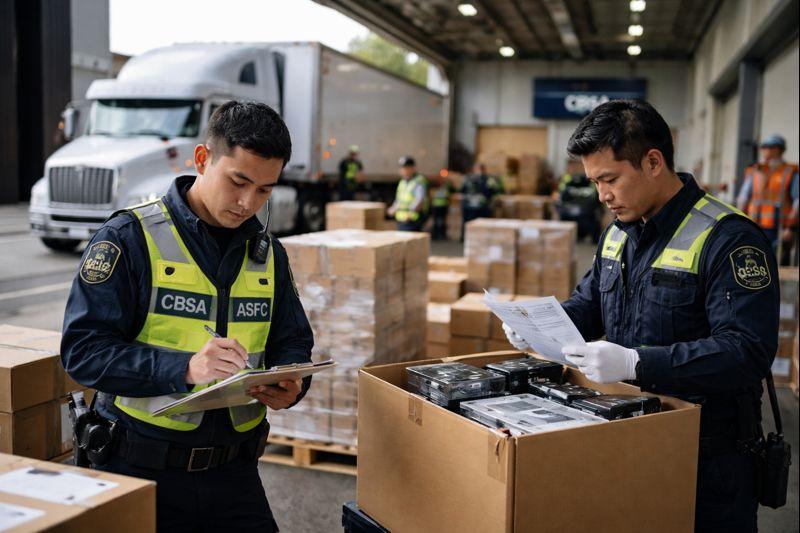
Destination handling fees and import taxes are separate costs. A freight forwarder’s service charge for arranging customs clearance does not automatically include government duties or VAT.
Businesses importing goods into Great Britain generally need a valid GB EORI number. Northern Ireland may involve different EORI requirements.
The customs broker normally requires the following documents and information:
Commercial invoice
Packing list
Bill of Lading
Commodity code (HS code)
Importer and exporter details
Accurate product descriptions and declared values help avoid document corrections and unnecessary delays.
Customs Duty depends on the commodity code, customs value, country of origin and applicable tariff measures.
The standard UK VAT rate is 20% for most goods, although reduced and zero rates apply to certain products. Import VAT is calculated according to HMRC valuation rules, which may include the customs value, applicable duty and relevant incidental expenses.
Importers should confirm the correct tax treatment with their customs broker before calculating the total landed cost.
The responsibility for destination fees depends on the agreed Incoterms and the actual freight contract.
| Incoterm | General Cost Responsibility |
|---|---|
| EXW | Buyer generally arranges and pays for transportation from the seller's premises |
| FOB | Buyer generally pays main ocean freight and import-side costs |
| CFR | Seller pays main freight; buyer generally handles import-side costs |
| CIF | Seller pays freight and insurance; buyer generally handles import clearance and taxes |
| DAP | Seller arranges delivery; buyer handles import clearance and taxes |
| DDP | Seller is responsible for agreed import costs, duties, taxes and delivery |
For CFR and CIF shipments, some destination handling fees may already be included in the seller’s freight contract. Buyers should check the quotation to avoid duplicate charges.
Under DAP and DDP, the named delivery location and the services included should be clearly stated.
Before booking LCL shipping, ask the freight forwarder for an itemised quotation. Pay particular attention to these points:
Check destination fees: Confirm whether DTHC, CFS handling, documentation and release fees are included.
Confirm calculation methods: Check W/M rates, minimum charges and fixed administrative fees.
Ask about free storage: Confirm the free period and daily rates after expiry.
Prepare import documents: Ensure the invoice, packing list, commodity code and EORI details are ready.
Confirm final delivery: Check whether local transport, unloading and special vehicle requirements are included.
Compare total costs: Evaluate origin charges, ocean freight, destination fees and final delivery together.
A low ocean freight rate does not always mean a lower overall shipping cost. Comparing the complete quotation helps importers identify additional fees and budget accurately.
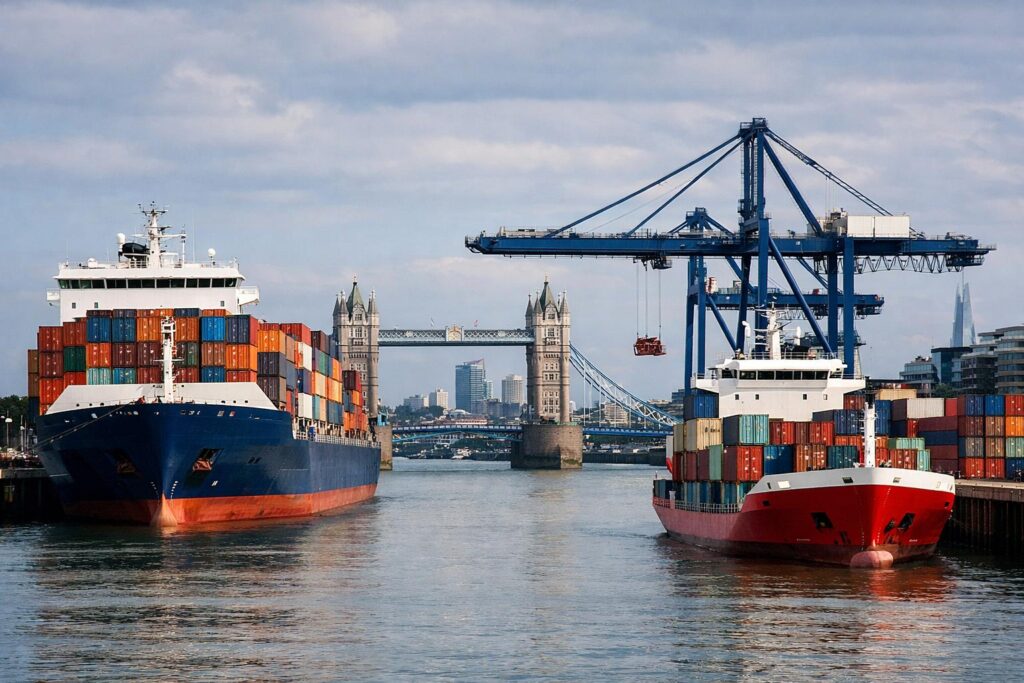
LCL and FCL have different pricing structures. LCL is generally charged by W/M, while FCL costs are usually quoted per container.
| Comparison | LCL Shipping | FCL Shipping |
|---|---|---|
| Container space | Shared with other importers | Dedicated container |
| Pricing | Based on W/M | Per 20ft or 40ft container |
| Handling | Consolidation and deconsolidation | Fewer shared-cargo handling stages |
| Suitable loads | Smaller shipments | Larger shipments |
| Main cost factors | Volume, weight and CFS fees | Container rate, port fees and haulage |
LCL is often an economical choice for smaller shipments that do not require a full container. However, additional handling and documentation fees can make it less competitive as cargo volume increases.
For some routes, comparing LCL and FCL costs around 10–15 CBM can be useful, although the actual break-even point depends on the route, container rates and local charges.
Air freight may be more suitable for urgent shipments, but usually involves higher transportation costs. The best shipping method depends on cargo volume, budget and required transit time.
Common charges include DTHC, CFS handling, documentation, customs clearance, storage and final delivery. Additional inspection or special handling fees may apply.
Not always. Some forwarders provide combined rates, while others quote ocean freight and destination fees separately. Always request an itemised breakdown.
Many LCL rates use W/M, based on whichever is greater between cargo volume and gross weight in metric tonnes. Other fees may use fixed or daily rates.
Free storage periods vary by destination CFS and service arrangement. Confirm the number of free days and additional storage rates before shipping.
DDP can cover agreed destination handling, import clearance, applicable duties, taxes and final delivery. Confirm the service scope with the seller or freight forwarder before booking.
Useful freight, customs and importing resources related to this shipping guide.
What Is Container Freight Station CFS in Shipping? Verified & Reviewed · Last updated April 2026 A Container Freight Station CFS is a logistics f...
Read guide →
Origin Charges vs Destination Charges in International Shipping Verified & Reviewed · Last updated July 2026 Origin charges and destination charg...
Read guide →
When dealing with international shipping, one of the common costs importers and exporters encounter is Terminal Handling Charges (THC). These cha...
Read guide →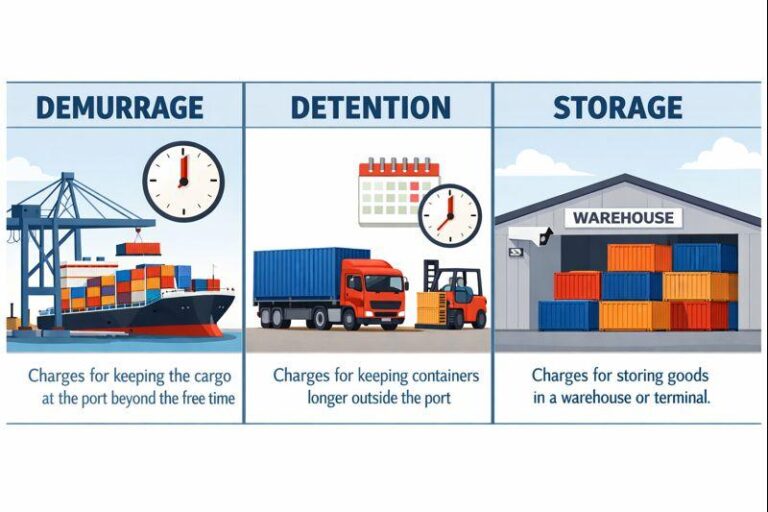
Demurrage vs Detention vs Storage Verified & Reviewed · Last updated January 2026 Demurrage vs detention vs storage is one of the most expensive...
Read guide →Customs Clearance in the UK Verified & Reviewed · Last updated February 2026 Customs clearance in the UK is the process of declaring goods to HMR...
Learn more → Useful Resource FCL vs LCL Shipping to the UKFCL vs LCL Shipping to the UK: Costs & Transit Times Verified & Reviewed · Last updated February 2026 FCL vs LCL shipping to the UK affects total...
Learn more →WhatsApp us