Related Guide
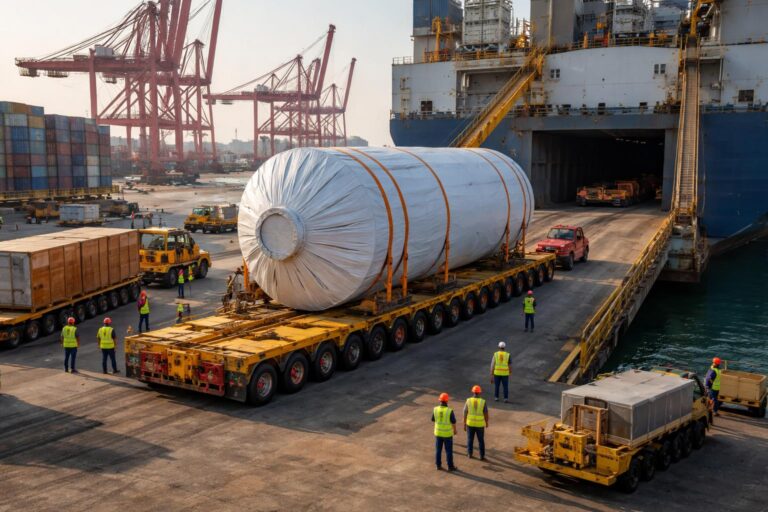
Shipping Oversized Cargo from China
Shipping Oversized Cargo from China Verified & Reviewed · Last updated February 2026 Shipping oversized cargo from China depends on cargo dimensi...
Read guide →

Open top container shipping from China is used for machinery, bulky equipment, and cargo that cannot be easily loaded through standard container doors. It allows top loading by crane and is suitable for goods that require extra height clearance or special handling.
This guide covers open top container sizes, freight costs, loading requirements, China ports, transit factors, customs clearance, and how to arrange safe delivery from China to your destination.
Open Top Container
OOG Cargo
Sea Freight
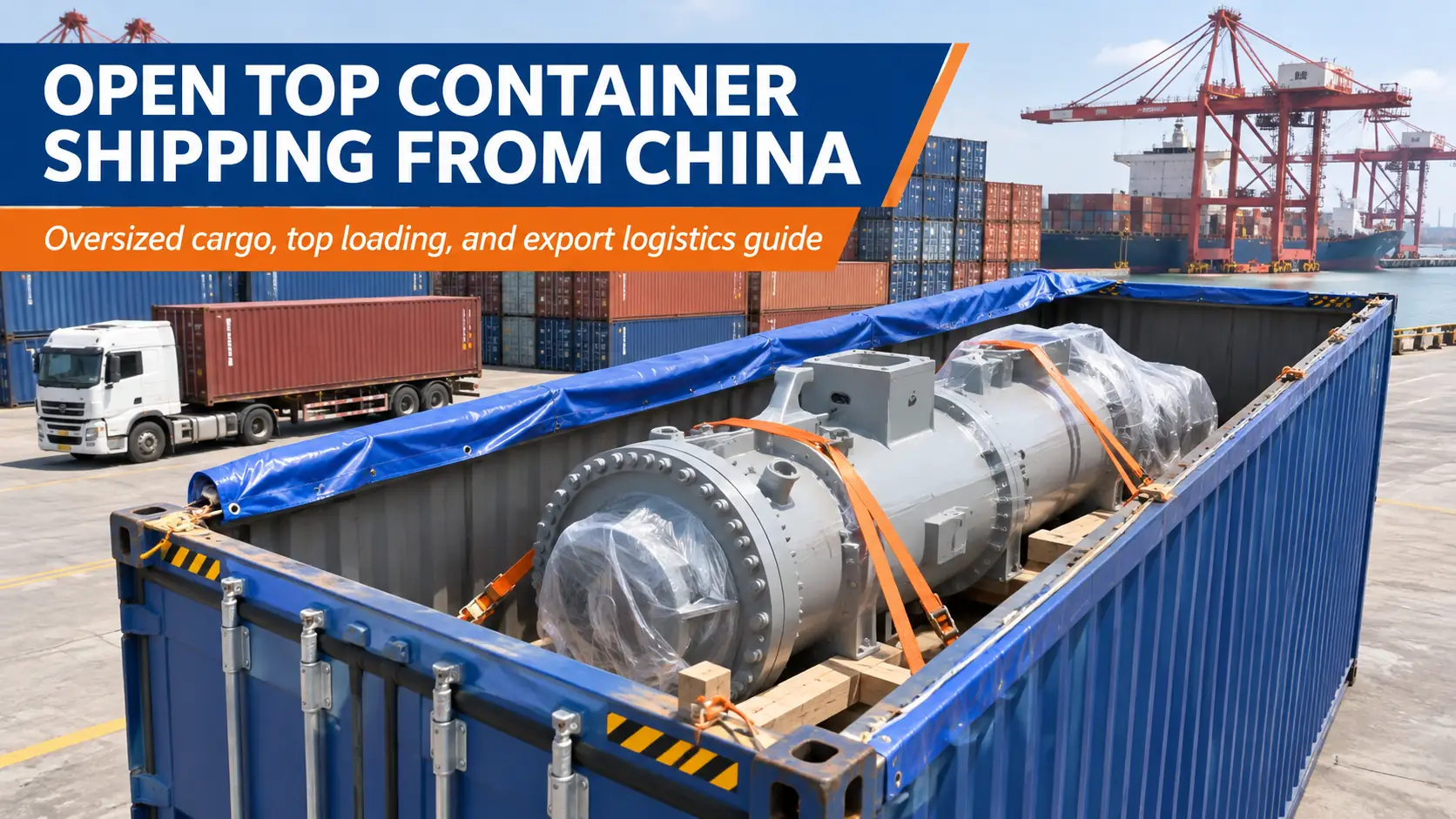
An open top container is a specialized shipping container designed for goods that require loading from above. Unlike a standard dry container, it has a removable roof structure covered by a waterproof tarpaulin, allowing machinery and bulky products to be lifted into the unit by crane.
It retains solid side walls, an end door and a reinforced floor, providing support and protection during ocean transportation. Depending on the equipment design, the roof bows and door header can be removed to create additional loading clearance.
The main design features include:
Removable roof: Provides overhead access for crane loading and unloading
Tarpaulin cover: Protects the contents against rain and external moisture
End doors: Allow access from the front when the dimensions permit
Steel construction: Provides structural support for suitable industrial and commercial goods
Flexible loading access: Makes handling tall or awkwardly shaped products easier
Open top containers are generally available in two roof configurations.
The choice depends on the dimensions, handling requirements and available equipment on the selected shipping route. Importers should confirm the exact container specifications and carrier availability before booking.
This equipment is suitable when the height, shape or handling requirements of a product make conventional door access difficult.
Large production machines, generators, industrial components and manufacturing equipment often require overhead lifting.
For example, a machine may fit within the internal dimensions of a standard container but still be difficult to position through its end doors. A removable-roof unit provides more flexible access for crane operations.
Steel pipes, metal structures, timber and certain construction materials may also be transported using this equipment.
However, length, weight distribution and securing requirements must be checked carefully. Products that exceed the permitted width or length may require flat rack equipment instead.
Some industrial products have unusual shapes or lifting requirements. Their packaging, centre of gravity and lifting points must be assessed before selecting a container type.
For international cargo transportation, the best solution depends on the physical characteristics of the goods rather than volume alone.
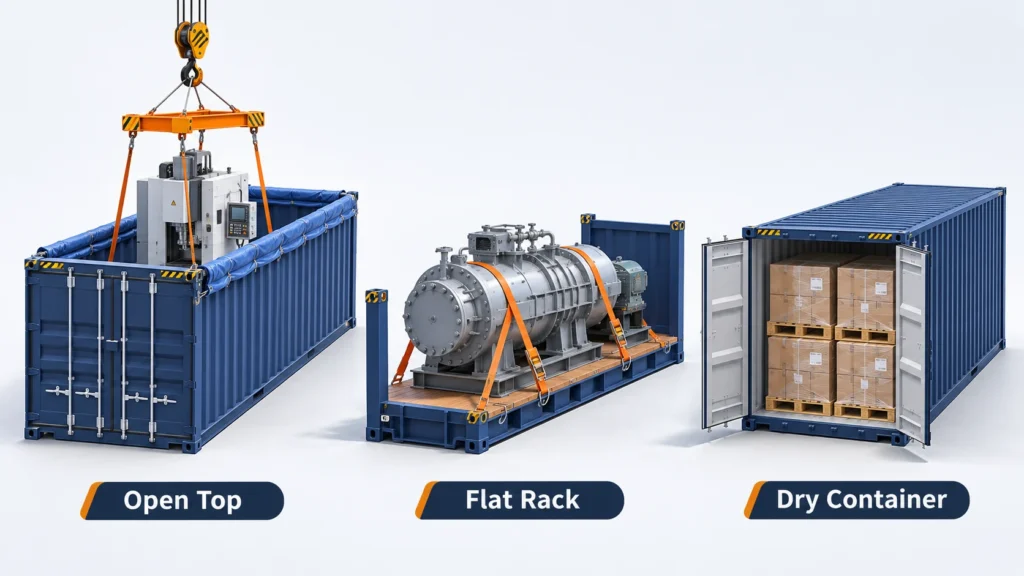
Choosing the right equipment depends on dimensions, accessibility and the method of handling.
| Container Type | Best For | Main Feature |
|---|---|---|
| Open Top | Tall or bulky products that need top access | Removable roof and side walls |
| Flat Rack | Wide, long or out-of-gauge goods | Open sides and top |
| Dry Container | Standard commercial products | Fully enclosed structure |
If the dimensions exceed standard equipment limits, review our guide to shipping oversized cargo from China. Very large machinery may also require breakbulk or Ro-Ro shipping.
Standard equipment is available in 20ft and 40ft configurations. The following reference specifications illustrate their typical dimensions and loading capacity.
| Specifications | 20ft Open Top | 40ft Open Top |
|---|---|---|
| Internal Length | 5.897 m | 12.032 m |
| Internal Width | 2.352 m | 2.352 m |
| Internal Height | 2.348 m | 2.348 m |
| Door Opening (W × H) | 2.340 × 2.280 m | 2.340 × 2.280 m |
| Roof Opening (L × W) | 5.674 × 2.232 m | 11.798 × 2.232 m |
| Maximum Payload | 28,220 kg | 26,500 kg |
| Internal Capacity | 32.7 CBM | 66.7 CBM |
Actual specifications vary by carrier and equipment manufacturer. Confirm the allocated unit’s dimensions, payload and roof clearance before booking.
For more information, see our guide to 20ft, 40ft and 40ft HC shipping container specifications.
The price of specialized container transportation varies according to the route, equipment availability, carrier, dimensions and handling requirements. Rates also change with seasonal demand, port congestion and vessel capacity.
The following table provides indicative ocean freight budget ranges from major Chinese export ports.
| Shipping Route | In-Gauge Open Top | OOG Open Top |
|---|---|---|
| China to US West Coast (LA, Long Beach) | $4,500–$6,500 | $7,500–$12,000+ |
| China to US East Coast (New York, Savannah) | $5,500–$8,000 | $9,000–$15,000+ |
| China to Europe (Rotterdam, Hamburg) | $4,000–$6,000 | $7,000–$11,000+ |
| China to Southeast Asia (Singapore, Laem Chabang) | $1,500–$2,500 | $3,000–$5,000+ |
Note: These are indicative 2026 ocean freight estimates, not fixed quotations. Actual rates vary with carrier, sailing schedule, equipment availability and cargo specifications. OOG rates depend on the approved dimensions and vessel stowage requirements.
Several factors determine the final freight price:
Container size: A 40ft open top container may cost approximately 30%–50% more than a 20ft unit, depending on the route and carrier.
Cargo dimensions: Goods extending beyond the standard container profile may require OOG approval and additional freight charges.
Loading and securing: Crane operations, lashing materials and specialized handling can increase origin costs.
Shipping route: Destination port, transshipment arrangements and seasonal demand affect ocean freight rates.
Local charges: Factory pickup, terminal handling, customs clearance and destination delivery are generally quoted separately.
The choice between FCL, LCL and other transportation methods depends on cargo volume, dimensions, weight and handling requirements. For most open top shipments, FCL is the preferred option because it provides dedicated equipment and greater control over loading arrangements.
FCL (Full Container Load) means booking an entire container for one shipment. It is suitable for heavy machinery, construction equipment and bulky goods that require dedicated loading, lifting and securing arrangements.
Importers can choose a 20ft or 40ft unit based on the package dimensions and payload requirements. FCL also avoids the additional consolidation and deconsolidation procedures involved in shared-container shipping.
LCL (Less than Container Load) allows multiple importers to share container space. It is generally suitable for smaller, standard packages that do not require specialized equipment or individual crane operations.
However, conventional LCL services rarely accommodate oversized or irregular goods requiring open top loading. For smaller shipments, standard LCL may be an alternative if the products can be safely handled and packed in conventional equipment.
For urgent, lightweight products, air freight may offer a faster alternative. For cargo exceeding standard container dimensions, flat rack or breakbulk shipping may be more appropriate.
A freight forwarder can compare the available shipping solutions according to cargo volume, dimensions, delivery schedule and destination requirements.
Shipping an open top container from China involves cargo assessment, equipment booking, factory loading, export customs clearance and final delivery.
Provide the product description, dimensions, gross weight, package quantity, factory location and destination port. Include photographs and lifting details for machinery.
Check the internal dimensions, roof opening, payload and loading requirements. Confirm whether a 20ft or 40ft unit is suitable and whether OOG approval is needed.
Confirm equipment availability, shipping rates, vessel schedules and carrier requirements before arranging pickup.
Coordinate factory pickup, crane operations and cargo securing. Ensure the goods are properly loaded and the container is ready for port delivery.
Prepare export documents, complete customs procedures and arrange ocean transportation. Coordinate destination customs clearance, unloading and final delivery.
For broader route planning, compare the available services in our sea freight shipping from China guide.
Proper handling and securing are essential when transporting heavy machinery and irregularly shaped products.
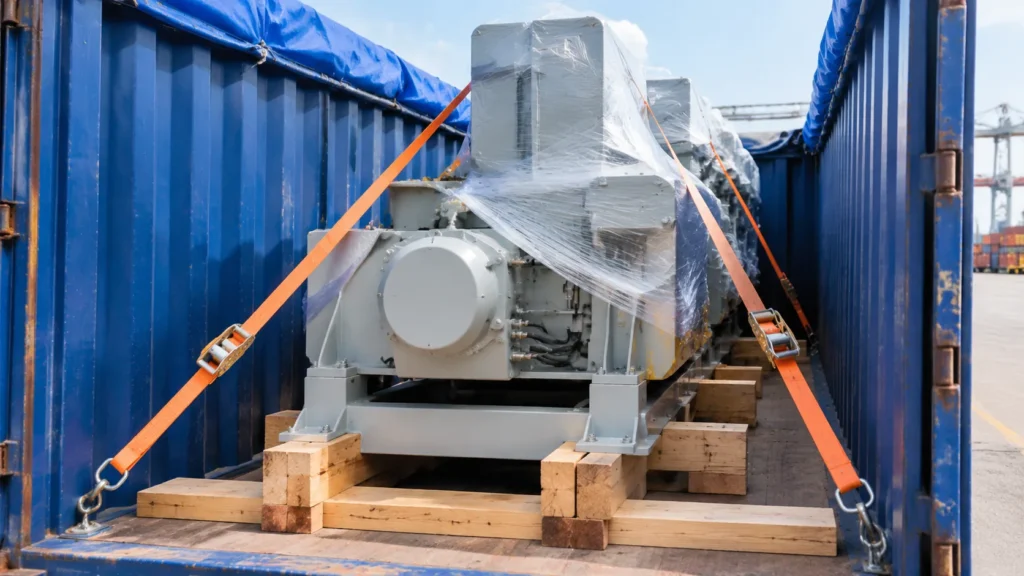
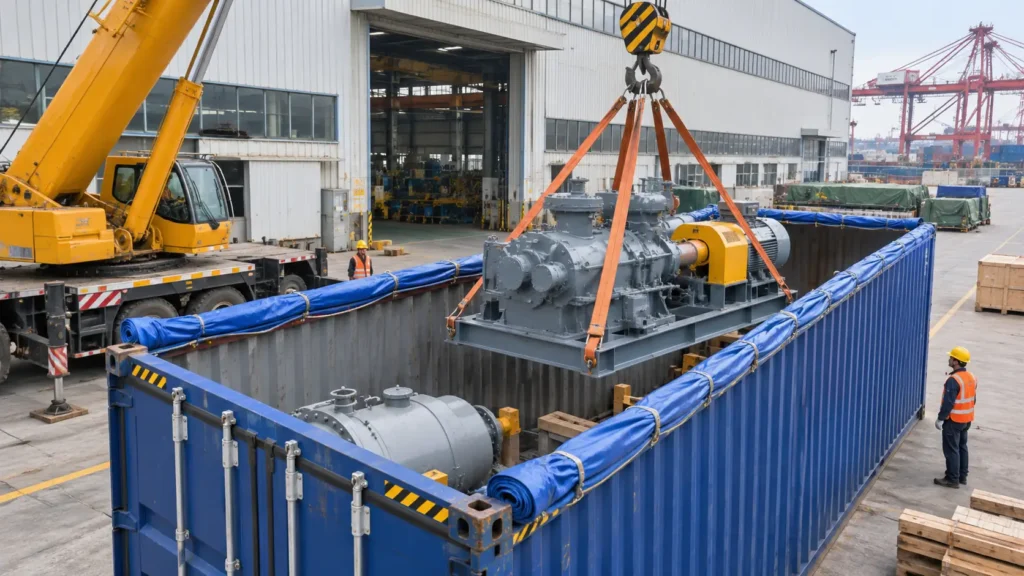
Before lifting, check the centre of gravity, lifting points, equipment capacity and clearance through the roof opening.
The crane operator and factory team should follow an agreed lifting plan. Keep the load stable during positioning and prevent uncontrolled contact with the container structure.
Products must be secured against movement during ocean transportation. Depending on their shape and weight, the securing plan may include:
Timber blocking and dunnage
Approved steel wire ropes or lashing straps
Bracing and chocking materials
Suitable attachment and securing points
Heavy items should be distributed according to the equipment’s floor-loading limits. Concentrated loads may require additional support or an engineered securing arrangement.
A tarpaulin provides protection against rain, but it does not replace export packaging.
Machinery and moisture-sensitive products may require protective wrapping, sealed packaging or desiccants. The marine environment can also cause corrosion, so exposed metal surfaces should receive suitable protection.
For high-value goods, consider appropriate cargo insurance for international shipments.
China has several major export ports handling container shipping and specialized equipment. The most suitable departure port depends on the supplier’s location, inland transportation costs, carrier services and the availability of open top containers.
The main export gateways include:
Shanghai Port: Serves manufacturers across Shanghai, Jiangsu and surrounding areas, with extensive international container shipping connections.
Ningbo-Zhoushan Port: An important gateway for Zhejiang and eastern China, serving a wide range of industrial exporters.
Shenzhen Port: Handles shipments from Guangdong and southern China. Its major container terminals include Yantian and Shekou.
Guangzhou Port: Serves manufacturers across the Pearl River Delta, including Foshan, Jiangmen and Zhongshan.
Xiamen Port: Provides export services for suppliers in Fujian and nearby manufacturing regions.
Qingdao Port: A major northern China gateway serving Shandong and surrounding industrial areas.
Tianjin Port: Supports international shipments from Tianjin, Beijing and other northern manufacturing regions.
The nearest port is not always the most economical option. For example, a supplier in Foshan may compare transportation through Guangzhou and Shenzhen, while a factory in Shandong may consider Qingdao or Tianjin. The final choice should account for factory pickup costs, equipment availability and vessel schedules.
Transit times vary according to the destination port, shipping route, vessel schedule and transshipment arrangements. Specialized equipment availability and additional handling requirements can also affect the departure schedule.
The main factors include:
Origin and destination ports: Different port pairs have different sailing frequencies and transit schedules.
Direct or transshipment services: Connecting services may increase overall transportation time.
Equipment availability: Open top containers may require advance arrangements before the cargo can be loaded.
Cargo handling requirements: Crane operations, OOG approval and additional inspections may affect the shipping schedule.
Port congestion and seasonal demand: Terminal conditions and vessel delays can influence departure and arrival dates.
When comparing shipping schedules, distinguish port-to-port transit time from the full door-to-door delivery period. Factory pickup, export customs clearance, destination handling and final transportation should be considered separately.
For an accurate schedule, provide the supplier’s location, destination port, cargo dimensions and expected ready date. A freight forwarder can then check suitable vessel services and confirm the available equipment before booking.
Customs clearance for open top container shipments from China involves accurate cargo declarations, shipping documentation and compliance with export and import regulations. Machinery, construction equipment and oversized products may require additional technical information depending on their classification, destination and applicable controls.
Importers should prepare the required documents before the shipment departs to reduce the risk of customs delays, inspections or additional charges.
The main documents for an open top container shipment generally include:
Commercial Invoice: States the product description, quantity, declared value, seller and buyer information.
Packing List: Provides package counts, dimensions, gross weight, net weight and packaging details.
Bill of Lading: Serves as the main ocean transport document and records the shipment details.
Export Customs Declaration: Contains the information required for China export customs clearance.
Shipping Instructions: Provide the consignee, notify party, cargo description and other details needed to prepare the bill of lading.
For machinery and oversized products, carriers or customs authorities may also request technical specifications, product photographs, dimension drawings, lifting details or applicable export permits and certifications.
Make sure the declared cargo information matches the actual goods and physical measurements. Inconsistent descriptions, quantities or weights may lead to additional checks.
After the shipment arrives, the importer or appointed customs broker must complete import customs clearance under the destination country’s regulations.
Key requirements may include:
Correct HS code classification and customs valuation
Commercial invoice and packing list
Bill of lading and import declaration
Applicable import duties, VAT or other taxes
Product-specific permits, certificates or compliance documents where required
Some machinery and construction products may be subject to additional safety, technical or import certification requirements. These depend on the product type and destination market rather than the container itself.
Before shipping, verify the HS code, product description, declared value and applicable certification requirements with the customs broker. For heavy or oversized goods, prepare accurate dimensions, packaging details and technical documents in advance.
The exporter, importer and freight forwarder should also ensure that the information provided to customs matches the booking and shipping documents.
For more guidance, see our commercial invoice, packing list and bill of lading guide and our step-by-step customs clearance guide.
Choosing an experienced freight forwarder helps coordinate equipment selection, factory operations and international transportation.
Tonlexing provides shipping support for importers who need to move machinery, industrial products and bulky goods from China. Services can include:
Cargo dimension assessment and equipment selection
Factory and supplier coordination
Warehouse pickup and suitable consolidation arrangements
Special equipment booking and vessel planning
Export customs clearance
International sea freight and destination delivery coordination
The transportation plan is based on the actual cargo design, packaging quality, weight, dimensions and destination requirements.
To request a quotation, provide your cargo details, package quantity, pickup city, destination port, expected shipping date and photographs. For heavy machinery, include technical drawings and lifting information so the handling requirements can be assessed before booking.
It is used for tall, bulky or heavy goods that are difficult to load through standard container doors. Typical examples include industrial machinery, generators and construction materials.
An open top unit has side walls and end doors with a removable roof. A flat rack has an open platform and is more suitable for goods that exceed standard container width or length limits.
A standard 20ft unit typically measures 5.897 × 2.352 × 2.348 m internally, while a standard 40ft unit measures approximately 12.032 × 2.352 × 2.348 m. Confirm the allocated equipment’s specifications before loading.
The rate depends on the route, equipment availability, dimensions, weight and destination charges. A reliable quotation requires complete shipment details.
They may, but goods extending above the roof line generally require OOG assessment and carrier approval. Additional charges, vessel stowage arrangements and destination handling requirements may apply.
Useful freight, customs and importing resources related to this shipping guide.
Shipping Oversized Cargo from China Verified & Reviewed · Last updated February 2026 Shipping oversized cargo from China depends on cargo dimensi...
Read guide →
Shipping Heavy Cargo from China to USA Verified & Reviewed · Last updated March 2026 Shipping heavy cargo from China to USA depends on the shippi...
Read guide →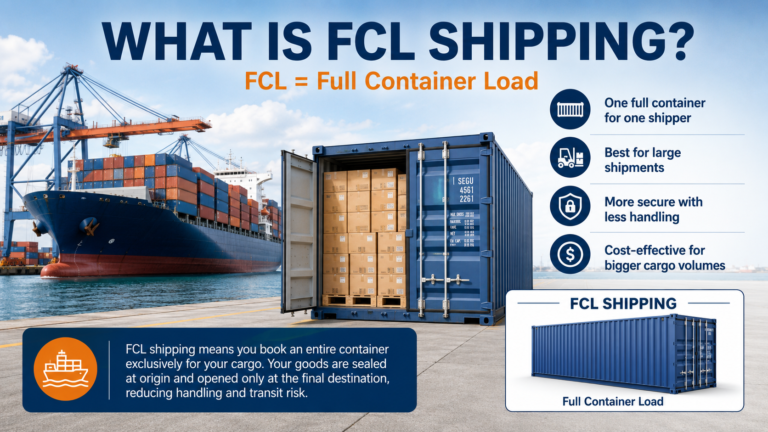
What is FCL Shipping? Verified & Reviewed · Last updated June 2026 FCL shipping, short for Full Container Load shipping, is an international frei...
Read guide →
Sea freight is the most cost effective shipping method for large volumes and container load cargo. It is ideal for businesses looking to reduce s...
Read guide →Shipping containers play a vital role in global trade, providing standardized, secure, and cost-effective transportation solutions. Among the mos...
Learn more → Useful Resource How to Ship Excavators and Bulldozers from China(ro-ro or break bulk?)Why Ship Excavators and Bulldozers from China? How to ship excavators and bulldozers from China has become a strategic decision for many global b...
Learn more →WhatsApp us