

Port of Shenzhen Guide: Port Areas, Freight Costs & Transit Times
- Verified & Reviewed · Last updated February 2026
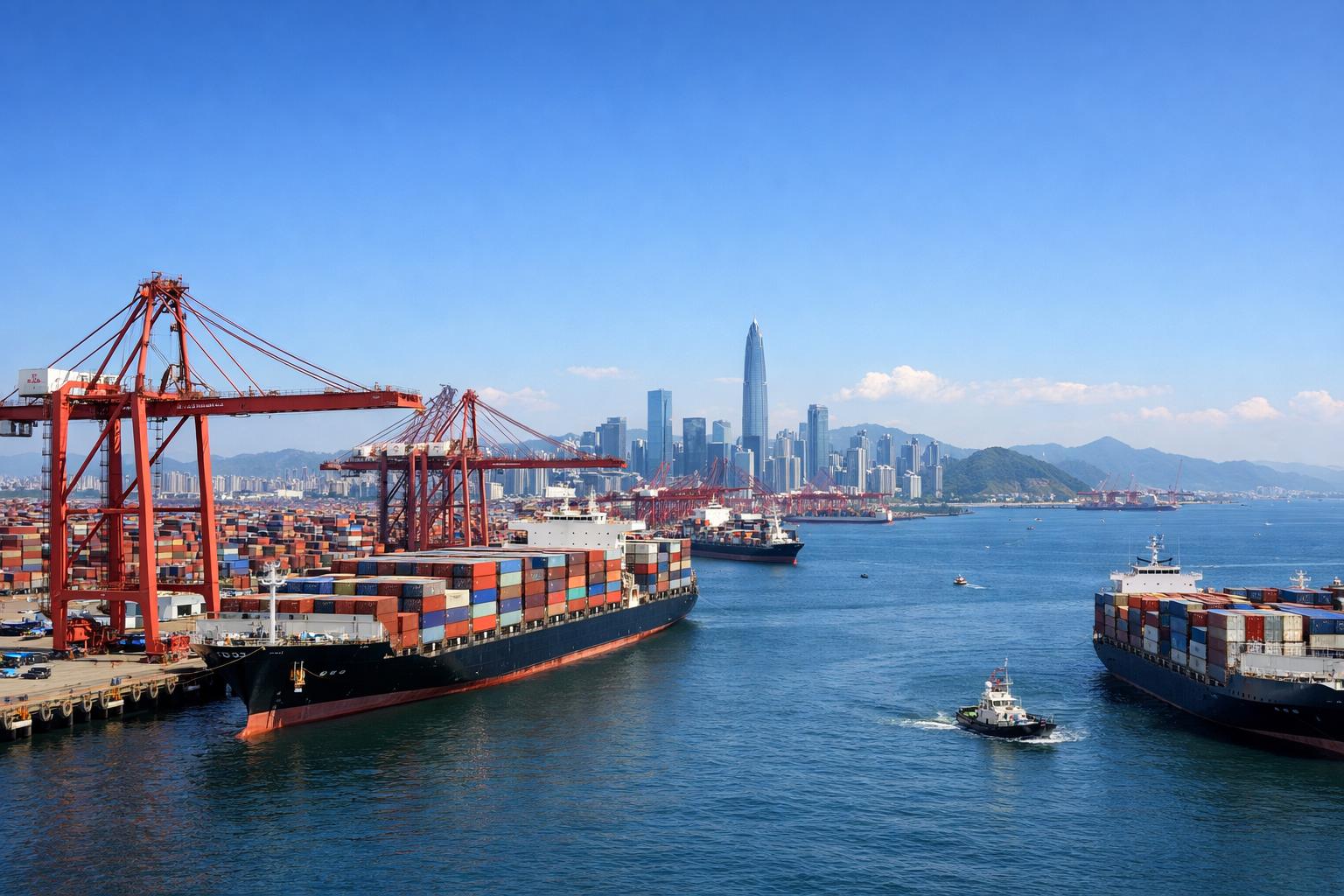
The Port of Shenzhen is a major gateway in South China, next to Hong Kong and the Pearl River Delta. It’s a port cluster made up of multiple port areas, and is widely regarded as one of the world’s busiest container port systems.
This guide breaks down the east vs west port zones, key terminals, and quick references for 20GP/40HQ & LCL freight costs and FCL vs LCL transit times.
Port areas / Terminals
Freight cost
Transit Time
- Experienced China-based logistics specialists
Table of Contents
Strategic Location and Regional Connectivity
Shenzhen’s strategic location makes it a preferred export origin for manufacturers in the Pearl River Delta:
Fast inland access for cargo from Shenzhen, Dongguan, Huizhou, and nearby cities
High sailing frequency and strong coverage of global destinations
Multi-modal transportation links, including feeder services and barge transportation
Efficient port-city integration that supports long-term development potential
In practical terms, Shenzhen connects shippers to major main container line ports through direct services and transshipment networks, giving exporters more options to balance cost, schedule, and reliability.
Shenzhen Port Structure: Six Areas, Two Wings
The Port of Shenzhen is a port cluster rather than a single terminal. It is commonly summarized as two wings—an eastern port zone and a western port zone—formed by different coastline layouts, deep-water conditions, and operational strengths.
Eastern port wing: Yantian Port and Dapeng Port
Western port wing: Nanshan Port, Bao’an Port, and the Dachan Bay cluster
In some references, you may also see island-based names such as Dachan Island and Xiaochan Island. These are geographic terms used around the Dachan Bay area, while Dachan Bay Port is the standard operational name used in shipping and documentation.
Main Ports and Key Port Areas in Shenzhen
Yantian Port (Eastern Base)
Yantian Port is widely recognized as the eastern base for deep water container operations in Shenzhen. It is often chosen for long-haul export containers due to its deep-water capability, stable operations, and strong carrier networks.
Key strengths:
Deep-water access supporting large vessel calls
Mature container yard and gate systems
Strong reach to global destinations through mainline services
Dapeng Port (Eastern Port Coverage)
Dapeng Port is part of the eastern wing and is commonly referenced in system-level descriptions of the Port of Shenzhen. It complements the broader east-side port capacity and coverage.
Nanshan Port (Western Wing)
Nanshan Port is a key part of the western wing. It is tied closely to Shenzhen’s urban economy and plays a role in integrated logistics development and port-city coordination.
Bao’an Port (Western Wing)
Bao’an Port supports western Shenzhen cargo flows and contributes to the west-side capacity distribution across port areas.
Dachan Bay Port, Dachan Bay, and Island References
Dachan Bay Port is a major west-wing port area. The broader Dachan Bay region is frequently referenced in online searches, including island-based terms such as Dachan Island and Xiaochan Island. These references help capture local long-tail demand while keeping the port terminology accurate.
Eastern Port vs Western Port: Resource Conditions and Practical Differences
Shenzhen’s two-wing structure reflects resource conditions across the coastline.
Eastern port
The eastern port side is commonly associated with deep-water container handling and long-haul mainline services. Many exporters prefer the eastern side when they want consistent schedules for international container shipping.
Western port
The western port side functions as a multifunctional port and is often described as a multifunctional port integrated with regional supply chains. It can offer:
Flexible carrier routings and terminal options
Strong regional connectivity and feeder access
Efficient integration with inland networks, including barge transportation
This “two wings” layout helps Shenzhen maintain strong core competitiveness across different shipping patterns.
Freight Costs From Shenzhen Port
FCL (Full Container Load) means you book a full container (usually 20GP or 40HQ) and pay per container. It’s typically better value for larger volumes, with simpler handling and more predictable timelines.
LCL (Less than Container Load) means your cargo shares a container with other shippers and you pay per CBM. It’s suitable for smaller shipments, but can take longer due to consolidation and deconsolidation.
The table below shows reference ranges for common lanes. Actual rates vary by season, carrier space, surcharges, cargo type, and destination-side charges.
Cost Reference by Lane
| From Shenzhen Port → | FCL 20GP (USD/Container) | FCL 40HQ (USD/Container) | LCL (USD/CBM) |
|---|---|---|---|
| USA West Coast | 1,000–2,200 | 2,200–4,300 | 45–90 |
| USA East Coast | 1,200–2,000 | 2,000–4,800 | 55–105 |
| Canada (Vancouver) | 1,200–1,500 | 1,500–3,800 | 45–90 |
| Canada (Toronto/Montreal) | 1,000–1,800 | 1,800–3,700 | 55–105 |
| UK / North Europe | 1,200–2,400 | 2,500–4,500 | 50–100 |
| Middle East (Jebel Ali) | 800–2,000 | 1,800–3,300 | 45–90 |
Transit Times From Shenzhen Port
Transit times below are port-to-port reference ranges for FCL and LCL shipments. FCL is usually faster because the container moves as one sealed unit, while LCL typically takes longer due to consolidation and deconsolidation. Real lead time can also be affected by route type, port congestion, customs processing, and local delivery arrangements.
Transit Time Reference
| From Shenzhen Port → | FCL Transit Time | LCL Transit Time |
|---|---|---|
| USA West Coast | 12–18 days | 15–25 days |
| USA East Coast | 22–35 days | 28–45 days |
| Canada (Vancouver) | 14–22 days | 18–30 days |
| Canada (Toronto/Montreal) | 18–28 days | 25–40 days |
| UK / North Europe | 28–40 days | 35–55 days |
| Middle East (Jebel Ali) | 18–28 days | 25–40 days |

Cargo Scope: Containers, Bulk, and Specialized Shipments
Shenzhen is best known for container throughput, but its port system supports broader cargo categories through specialized facilities:
Container shipping is the core driver of Shenzhen’s global ranking
bulk and cargo shipment options exist in specialized areas depending on terminal capability
For shipping bulk, confirm terminal acceptance rules, packaging, and documentation early
Some specialized terminals handle regulated categories, including petroleum products, liquid chemicals, and liquefied gas
Compliance reminder: Regulated cargo often requires extra paperwork and labeling rules. Confirm requirements before cargo arrives at the terminal to avoid rollovers.
Modern Logistics, Sustainability, and Planning
Shenzhen continues investing in modern logistics upgrades to improve throughput, visibility, and efficiency:
Process optimization that reduces dwell time and improves yard flow
Sustainability initiatives to reduce environmental impact, including shore power at suitable berths
Development strategies aligned with urban planning and city-port integration
In broader policy discussions, the Shenzhen municipality updated port development priorities over time as part of ongoing infrastructure and planning initiatives. For shippers, the practical value is improved operational capability and long-term system resilience.
Passenger Transportation, Cruise, and Tourism Functions
Beyond cargo, Shenzhen’s coastal system is sometimes linked to passenger transportation and travel-related port functions. In wider port-city narratives, cruise operations, aquatic tourism, and port areas handling tourists may be mentioned as part of waterfront development and service diversification.
For freight shippers, the key takeaway is that Shenzhen is a multi-function coastal system. While export logistics remains the main focus, the broader ecosystem reflects Shenzhen’s port-city integration goals.
Frequently Asked Questions
The Port of Shenzhen is an integrated port cluster and a collective name for several ports and multiple port areas along Shenzhen’s coastline, serving container trade and diversified cargo operations.
A more accurate term is six areas or six port areas within one integrated system. They are commonly grouped into an eastern port wing and a western port wing.
For deep-water export containers, Yantian Port is widely recognized as a leading gateway and a key eastern base supporting mainline services.
Dachan Bay Port is a major west-wing port area. Dachan Island, Dachan Island port, Xiaochan Island, and Xiaochan Island port often appear as geographic or search references around the Dachan Bay region. For operational accuracy, keep Dachan Bay Port as the primary term.
Yes. Shenzhen is frequently cited as one of the busiest container port systems and is often discussed among the world’s busiest ports due to its role in the Pearl River Delta export economy and dense global carrier networks.
More Shenzhen Shipping & Transit Time Guides
Get a Shenzhen Port Shipping Quote
Best terminal match: Yantian vs West Port (Dachan Bay / Nanshan)
FCL 20GP/40HQ & LCL options with clear cost breakdown
Latest transit time guidance based on your destination lane
Share your cargo details and destination—we’ll recommend the right port area and a reliable schedule.