Related Guide
Shipping from China to Romania
Shipping from China to Romania – Sea, Air & DDP in 2026 Fast, reliable shipping from China to Romania for B2B importers, eCommerce sellers, and p...
Read guide →

Rail freight from China to Romania is a reliable shipping option that balances cost efficiency, stable transit times, and flexible delivery solutions.
This guide covers rail freight shipping from China to Romania, including rail transit time, shipping costs, railway routes, customs clearance, and door-to-door DDP solutions for international cargo.
Shipping method / Mode
Transit time range
DDP / Door to Door
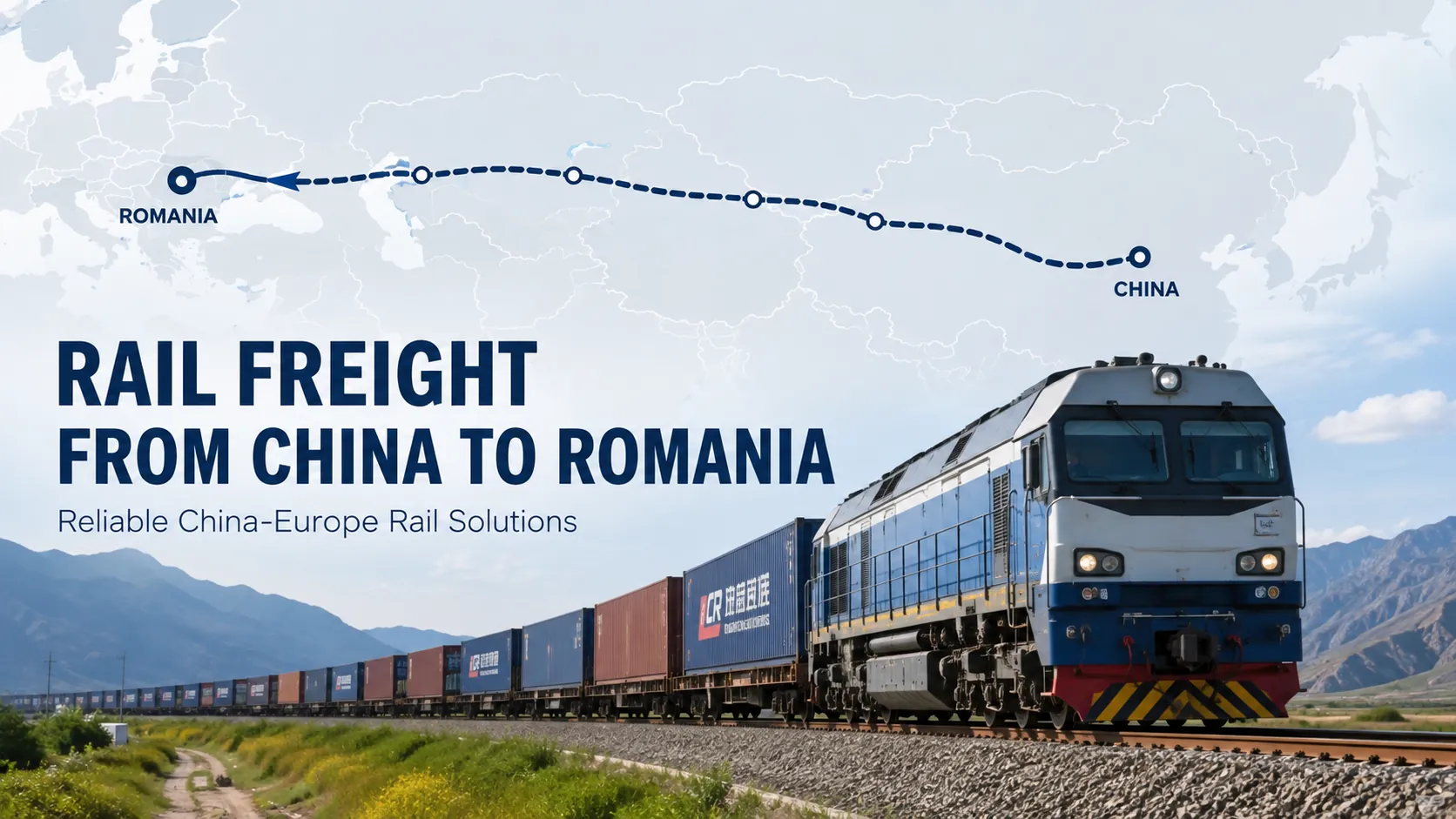
Rail freight from China to Romania refers to the transportation of goods from Chinese suppliers to Romanian destinations through international railway networks. It is an important part of China-Europe logistics and provides a reliable alternative to sea shipping and air transportation.
Unlike ocean freight, which may require several weeks for transportation, railway freight can significantly shorten delivery times. At the same time, compared with air cargo, rail shipping provides a more affordable option for larger shipments.
Rail freight services usually involve multiple stages:
Supplier warehouse in China → Export customs clearance → Railway transportation → European railway terminal → Romania customs clearance → Final destination delivery
Professional freight forwarders manage the entire shipping process, including transportation arrangements, customs documentation, import procedures, and local delivery.
Rail transport is especially suitable for companies importing:
Electronics
Machinery
Automotive parts
Industrial equipment
Consumer products
General commercial goods
For businesses looking for efficient international shipping between China and Romania, rail freight offers a practical combination of speed, capacity, and cost effectiveness.
The transit time of rail freight from China to Romania generally ranges from 12 to 30 days.
However, the actual transit time depends on several factors, including:
Departure city in China
Railway transportation route
Border crossing procedures
Customs clearance efficiency
Railway schedule availability
Cargo type
Final delivery location in Romania
| Shipping Method | Average Transit Time |
|---|---|
| Rail Freight From China to Romania | 12–30 days |
| Air Freight From China to Romania | 3–10 days |
| Sea Freight From China to Romania | 25–40 days |
| Express Shipping | 3–7 days |
Rail freight offers a middle-ground solution between air and sea transportation.
For example:
Air freight is the fastest option but usually comes with much higher costs.
Sea freight is cheaper for large-volume cargo but requires longer shipping times.
Rail freight provides faster delivery than ocean shipping while maintaining reasonable transportation costs.
For many European importers, rail freight from China to Romania can save approximately 10–15 days compared with sea transportation.
Although railway transportation provides relatively stable delivery schedules, several factors may influence shipping time.
The shipping time depends heavily on where the cargo starts.
Major railway departure cities include:
Shanghai
Shenzhen
Guangzhou
Yiwu
Chengdu
Chongqing
Xi’an
Western China railway hubs may provide different transportation options compared with coastal cities.
Different China-Europe railway routes have different transit times.
Factors include:
Railway capacity
Border processing time
Infrastructure conditions
Seasonal transportation demand
Customs procedures can affect the overall delivery schedule. Accurate documentation helps avoid unnecessary delays during:
Export customs clearance in China
Border inspections
Import customs clearance in Romania
Terminal-to-terminal transportation is usually faster than door-to-door shipping because door delivery requires additional local trucking and handling.
Rail freight costs from China to Romania vary depending on shipment volume, cargo type, departure city, railway route, and delivery requirements. The most common pricing methods include LCL (Less than Container Load), FCL (Full Container Load), and DDP (Delivered Duty Paid) solutions.
LCL rail freight is suitable for smaller commercial shipments that do not require a full container. The shipping cost is usually calculated based on cargo weight, volume, or the minimum chargeable quantity.
Typical LCL rail freight rates:
| Shipment Weight | Estimated Cost |
|---|---|
| 21–50 kg | Around $2.00/kg |
| 51–99 kg | Around $1.80/kg |
| 100+ kg | Around $1.50/kg |
For larger LCL shipments, pricing may also be calculated based on cargo volume. The average cost is approximately $150–$300 per CBM, depending on the departure location, railway terminal, and service requirements.
FCL rail shipping is suitable for businesses transporting large quantities of goods using an entire container.
Typical FCL rail freight costs:
| Container Type | Estimated Cost |
|---|---|
| 40ft High Cube Container | Approximately $3,500–$5,500 |
FCL pricing is usually calculated per container rather than per kilogram. Therefore, variations in cargo weight within the container normally have less impact on the basic railway freight charge.
FCL rail shipping is commonly used for:
Machinery
Industrial products
Automotive parts
Large-volume commercial goods
For businesses that prefer a simplified shipping solution, DDP (Delivered Duty Paid) service provides a complete door-to-door logistics option.
A DDP rail freight solution may include:
Export customs clearance in China
International railway transportation
Romania import customs clearance
Customs duties and taxes
Final truck delivery
Because the freight forwarder manages the entire shipping process, DDP shipping costs are usually higher than standard terminal-to-terminal rail freight.
Typical DDP rail freight costs may range around:$3.50–$4.50/kg, depending on cargo type, shipment volume, customs requirements, and final delivery location.
The final rail freight cost from China to Romania depends on several factors:
Cargo weight and volume: Larger shipments usually achieve better unit costs.
FCL or LCL shipping: Full container load and shared container shipping use different pricing methods.
Departure city: Shipping from coastal hubs or western China railway terminals may affect transportation costs.
Railway route: Different routes influence transit time and freight rates.
Customs requirements: Duties, taxes, and customs clearance services can affect the total cost.
Delivery method: Terminal delivery and door-to-door services have different charges.
Choosing the right shipping method and logistics solution can help businesses better control rail shipping costs while maintaining reliable delivery schedules.
Rail freight from China to Romania operates through the China-Europe railway network, connecting major manufacturing areas in China with European logistics hubs. The selected railway route can influence transit time, shipping costs, and transportation reliability.
Because China and Europe have different railway systems, some shipments may require container transloading at border junctions. This is a normal part of international railway transportation and helps cargo continue through different railway networks.
The most commonly used route for railway freight from China to Romania is the China-Europe Railway route through Central Asia.
The typical transportation route is:
China → Kazakhstan → Central Asia → European Railway Network → Romania
Goods usually depart from major Chinese railway hubs, such as:
Xi’an
Chengdu
Chongqing
Yiwu
Shanghai
After crossing Central Asia and entering Europe, shipments are transported through European railway terminals before being delivered to Romania.
This route is widely used because of:
Stable railway connections
Established logistics infrastructure
Competitive transit times
Suitability for FCL and LCL shipments
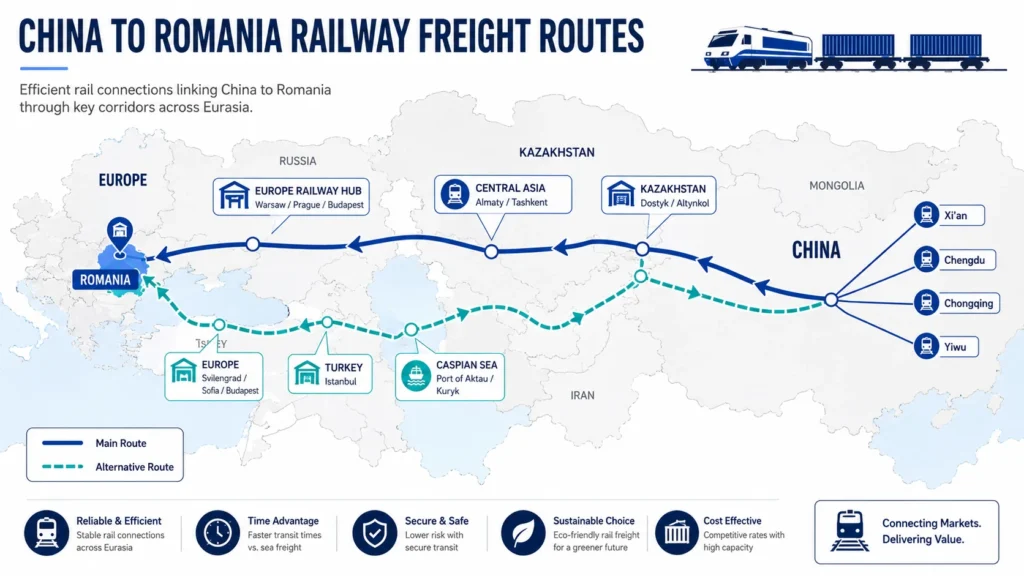
Another option for China-Europe rail transportation is the Middle Corridor, which provides an alternative connection between Asia and Europe.
The general route includes:
China → Central Asia → Caspian Sea → Turkey → Europe → Romania
This route can provide additional flexibility for international supply chains and may be considered depending on:
Railway capacity
Seasonal conditions
Transportation requirements
Overall shipping costs
China to Romania rail freight involves multiple countries, railway systems, and border procedures.
Because China, Central Asia, and Europe use different railway gauge standards, containers may need to be transferred at certain border junctions. This process is known as railway transloading.
The main factors affecting route efficiency include:
Border processing time
Railway terminal operations
Customs clearance procedures
Transportation schedules
Working with an experienced freight forwarder helps manage these procedures and ensures smoother international railway transportation.
The best China to Romania railway route depends on:
Cargo type
Shipment volume
Required delivery time
Budget requirements
Final destination in Romania
For businesses shipping regular commercial goods, railway freight provides a reliable middle-ground option between sea freight and air freight, offering better delivery speed than ocean shipping while maintaining lower costs than air transportation.
A successful shipment from China to Romania requires coordination between suppliers, railway operators, customs authorities, and freight forwarders.
The entire shipping process usually includes the following steps.
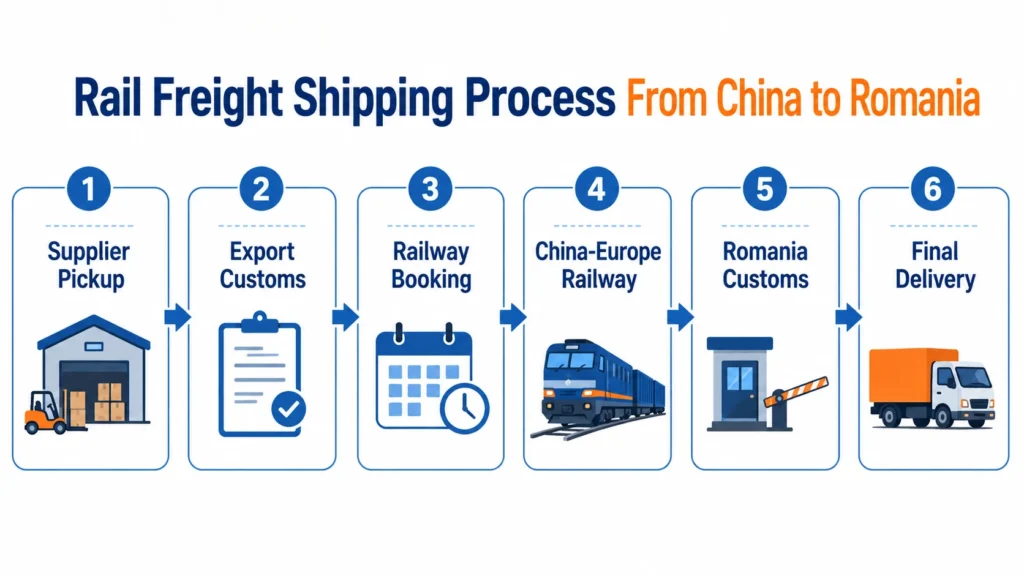
Before transportation begins, the freight forwarder evaluates the shipment details, including:
Product category
Cargo weight
Cargo volume
Packaging requirements
Delivery destination
Required delivery time
Based on this information, the logistics provider recommends the most suitable shipping method:
FCL rail freight
LCL rail freight
Door-to-door shipping
DDP shipping
A proper shipping strategy helps businesses control costs and avoid unexpected expenses.
After confirming the shipment plan, the cargo is collected from the supplier.
The preparation process includes:
Cargo inspection
Packaging confirmation
Container loading
Export documentation preparation
For container shipments, proper loading is important to ensure cargo safety during international transportation.
Before leaving China, shipments must complete export customs procedures.
Common documents include:
Commercial invoice
Packing list
Export declaration
Railway transport documents
Accurate documentation helps prevent delays during customs inspection.
After customs clearance, containers are transported through the selected railway route.
During transportation, cargo may pass through:
Railway terminals
International borders
European logistics hubs
The railway carrier provides transportation documents confirming the acceptance and movement of goods.
A railway receipt or railway bill is an important document used to identify and claim cargo at the destination terminal.
When the shipment arrives in Romania, import customs clearance must be completed.
The process involves Romanian customs authorities reviewing:
Product information
Commercial invoice
Import documents
Customs value
Applicable duties and taxes
Proper customs preparation helps avoid:
Clearance delays
Storage fees
Additional customs costs
After customs clearance, goods can be delivered to the final destination.
Delivery options include:
Railway terminal pickup
Local trucking
Warehouse delivery
Door-to-door service
For companies requiring simplified logistics management, door shipping solutions provide a complete transportation process from China supplier to Romanian destination.
Customs clearance is an essential part of rail freight from China to Romania. Since Romania is a member of the European Union, imported goods must comply with EU customs regulations before they can be delivered to the final destination.
A professional freight forwarder can assist with the entire customs clearance process, including document preparation, import procedures, customs duties, and tax requirements.
Common documents for rail freight shipments include:
Commercial invoice – provides product details, shipment value, and transaction information.
Packing list – includes cargo quantity, weight, and packaging details.
Railway receipt and consignment note – confirm transportation arrangements and carrier acceptance.
EU EORI number and import declaration – required for customs procedures in Romania.
Imports from China to Romania are subject to European Union customs regulations. The final import cost depends on the product category, HS code classification, declared value, and applicable tax requirements.
The main charges for rail freight shipments entering Romania may include:
Import VAT (TVA): Romania applies a standard VAT rate of 21% on most commercial imports.
Customs Duties: Import duties generally range from 0% to 15%, depending on the product type and TARIC HS code.
Customs Clearance Fees: Additional handling or documentation fees may apply during the import clearance process.
Accurate product classification and complete shipping documents, including the commercial invoice and packing list, help avoid customs delays and unexpected costs.
For businesses that prefer a simplified solution, DDP shipping from China to Romania can include customs clearance, import duties, taxes, and final delivery as part of a complete door-to-door service.
To ensure efficient customs clearance, businesses should:
Prepare complete shipping documents in advance
Provide accurate product descriptions
Confirm HS code classification
Work with experienced customs brokers or freight forwarders
Understand Romanian customs requirements before shipment
Incorrect documentation or missing information may result in:
Clearance delays
Additional storage costs
Unexpected customs fees
When shipping goods from China to Romania by rail, businesses can choose between Full Container Load (FCL) and Less Container Load (LCL) services based on cargo volume, budget, and delivery requirements.
FCL and LCL rail freight provide flexible solutions for different shipment sizes, allowing companies to select the most cost-effective transportation method for their supply chain needs.
Full Container Load (FCL) means that one shipment occupies an entire container during railway transportation.
FCL rail freight is suitable for businesses shipping large volumes of cargo, including:
Machinery and industrial equipment
Automotive parts
Bulk commercial goods
Regular supplier shipments
Less Container Load (LCL) allows multiple shipments from different companies to share container space.
LCL rail freight is suitable for:
Small and medium-sized shipments
Trial orders
Businesses that do not have enough cargo for a full container
Many importers prefer door-to-door service because it reduces the complexity of international logistics.
Instead of managing multiple transportation stages separately, businesses can rely on one logistics provider to handle the entire shipping process.
Door-to-door rail freight usually includes:
Supplier pickup in China → Export customs clearance → Railway transportation → Romania customs clearance → Final delivery
This service helps companies save time by combining multiple logistics operations into one solution.
Delivered Duty Paid (DDP) shipping is a popular option for businesses that want a simplified import process.
Under DDP shipping, the logistics provider may manage:
Transportation costs
Export procedures
Customs clearance
Import duties
Taxes
Final delivery
DDP service is especially useful for companies that are unfamiliar with Romanian customs procedures or European import requirements.
When choosing a shipping method from China to Romania, businesses need to consider delivery time, transportation costs, cargo volume, and supply chain requirements.
The three main international shipping options are:
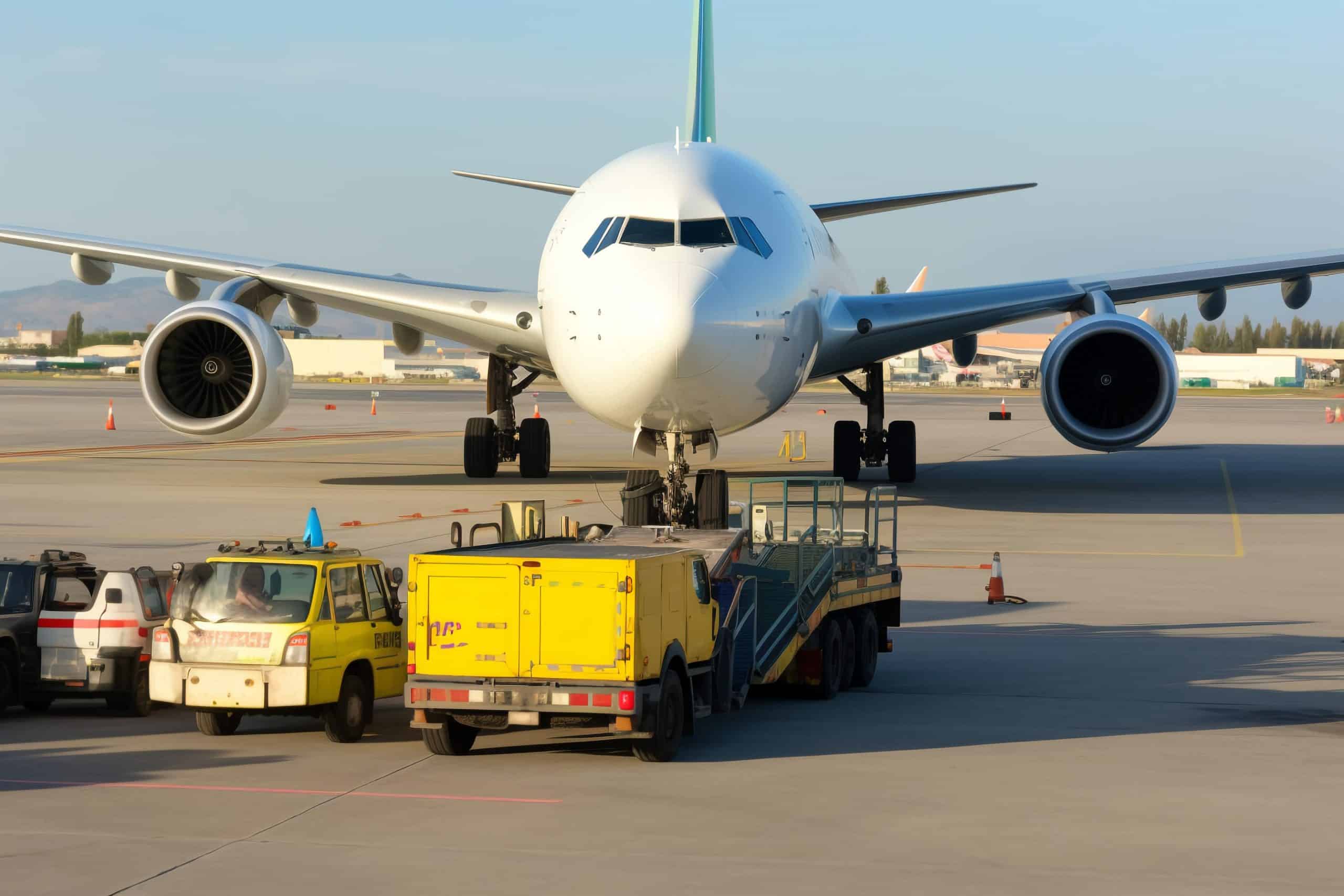
Transit Time: 3–10 days
Cost Level: High
Best For: Urgent and high-value shipments.
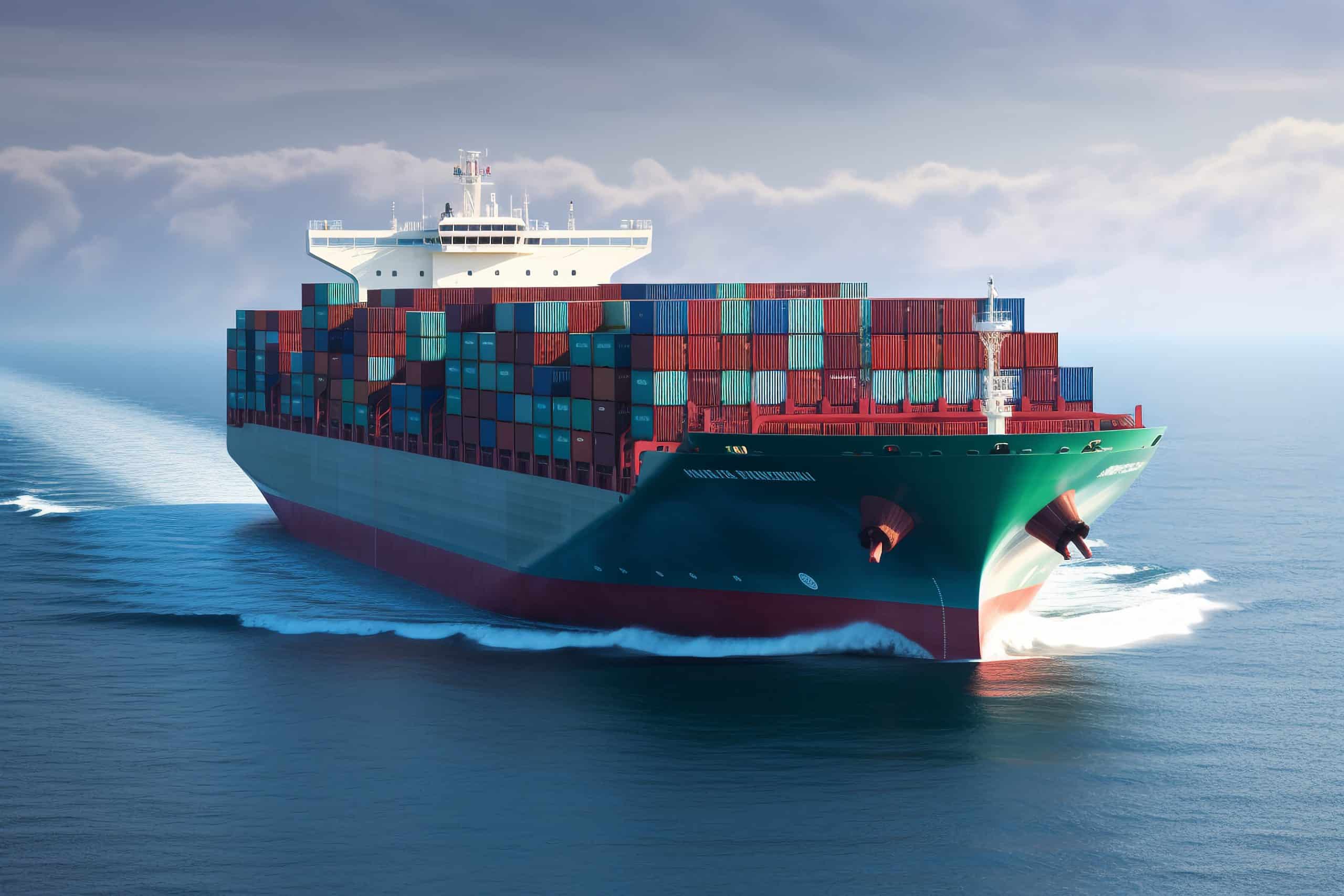
Transit Time: 25–40 days
Cost Level: Low
Best For: Large-volume and non-urgent cargo
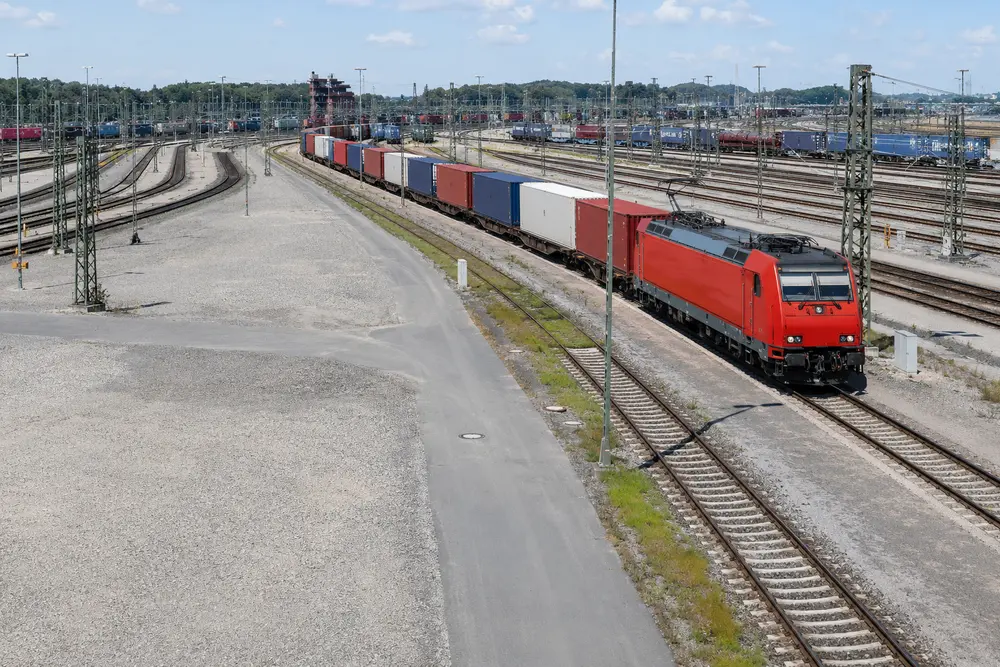
Transit Time: 12–30 days
Cost Level: Medium
Best For: Commercial shipments requiring a balance between speed and cost.
Rail freight from China to Romania provides a balanced solution between air and sea transportation, offering competitive costs, reliable transit times, and efficient supply chain management.
Rail shipping costs are generally lower than air freight while providing faster delivery than ocean shipping. This makes rail transportation a cost-effective option for businesses looking to optimize transportation expenses.
Compared with sea freight, rail freight provides more stable transit times, helping businesses:
Improve inventory planning
Reduce storage costs
Maintain supply chain efficiency
Rail transport has a lower carbon footprint compared with air transportation, making it a more environmentally friendly option for companies focusing on sustainable logistics.
Through the China-Europe Railway network, rail freight connects Chinese suppliers with major European logistics hubs and provides efficient access to Romania and surrounding markets.
Tip: Rail freight provides a middle-ground solution between sea and air transportation, offering faster delivery than ocean freight while maintaining lower costs than air freight.
Choosing the right logistics partner is essential for reliable international transportation. Tonlexing provides professional China-Romania rail freight solutions, helping businesses simplify cross-border shipping and improve supply chain efficiency.
Our services are designed to support companies with:
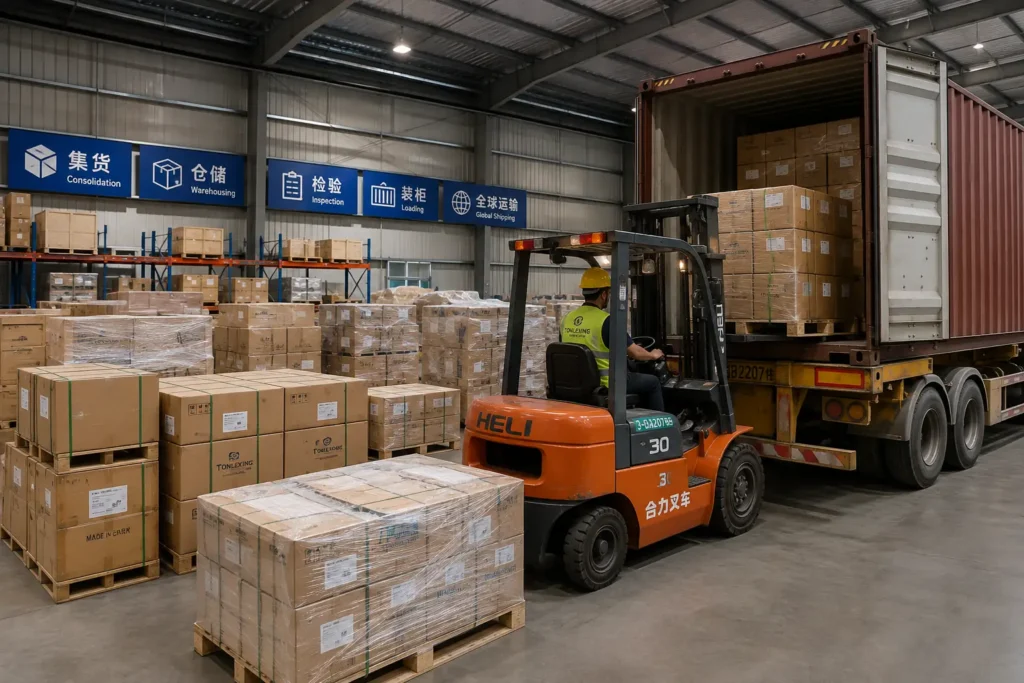
We provide transportation solutions connecting China with Romania through efficient railway networks.
From supplier pickup to final destination delivery, we manage the entire shipping process.
Services include:
Rail freight shipping
Customs clearance
FCL and LCL transportation
Door-to-door service
DDP shipping solutions
Different businesses have different shipping requirements.
We provide customized solutions based on:
Cargo volume
Delivery schedule
Budget
Destination requirements
With experience in China-Europe logistics, we help businesses build stable and efficient supply chains.
Rail freight from China to Romania usually takes around 12–30 days. The exact transit time depends on the departure city, railway route, customs clearance, and final delivery location.
Rail freight costs depend on cargo type, weight, volume, container size, route, and service requirements.
Typical costs may range from approximately $4,356 to $7,744, but the final quotation depends on shipment details.
Yes. Rail freight is generally much cheaper than air freight, especially for medium and large commercial shipments.
Air freight provides faster delivery but usually has significantly higher transportation costs.
Yes. Rail freight usually takes 12–30 days, while sea freight often requires 25–40 days.
Rail transportation can reduce delivery time while maintaining reasonable costs.
Yes. All shipments entering Romania require customs clearance according to EU customs regulations.
A professional freight forwarder can help manage customs procedures and documentation.
Useful freight, customs and importing resources related to this shipping guide.
Shipping from China to Romania – Sea, Air & DDP in 2026 Fast, reliable shipping from China to Romania for B2B importers, eCommerce sellers, and p...
Read guide →
Shipping Cost from China to Romania (2026 Guide) Verified & Reviewed · Last updated May 2026 Shipping cost from China to Romania in 2026 typicall...
Read guide →
Shipping from China to Romania has become increasingly important for importers sourcing consumer goods, electronics, industrial equipment, textil...
Read guide →
In recent years, trade between China and Romania has grown rapidly, with an increasing number of Romanian importers relying on Chinese suppliers...
Read guide →Rail Freight from China — Fast, Cost-Effective Shipping Rail freight from China is a balanced option between ocean and air—faster than sea and mo...
Learn more → Useful Resource Railway Freight from China to Europe: A Comprehensive GuideRailway freight has become an increasingly popular shipping solution for businesses looking to transport goods from China to Europe. The rise of...
Learn more →WhatsApp us