Related Guide
Shipping from China to Nigeria
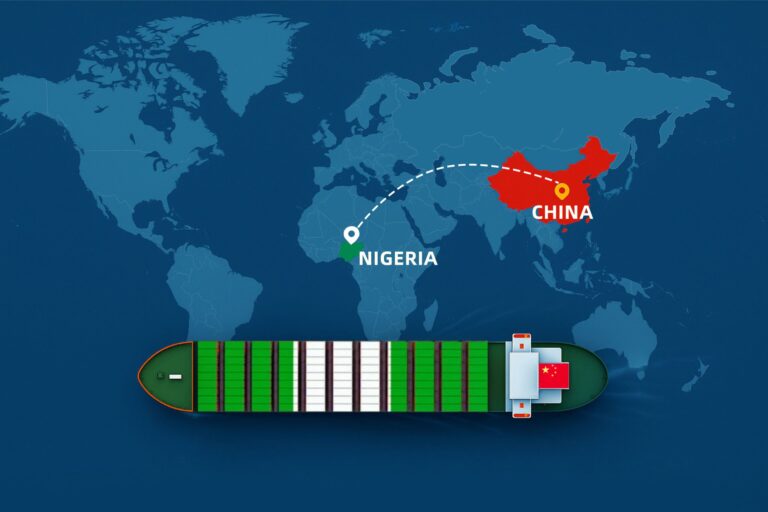
Illustration of shipping from China to Nigeria featuring a cargo ship with China and Nigeria flags, symbolizing international freight routes.
Read guide →

Businesses shipping larger or heavier cargo to Nigeria can use sea freight for stable capacity, flexible container options, and more manageable transport costs.
This guide covers the key decisions before booking, including FCL and LCL selection, current rates to Lagos, port-to-port transit times, Nigerian customs requirements, required documents, and final delivery planning.
FCL & LCL Options
Rates & Transit Times
Nigeria Customs Guide
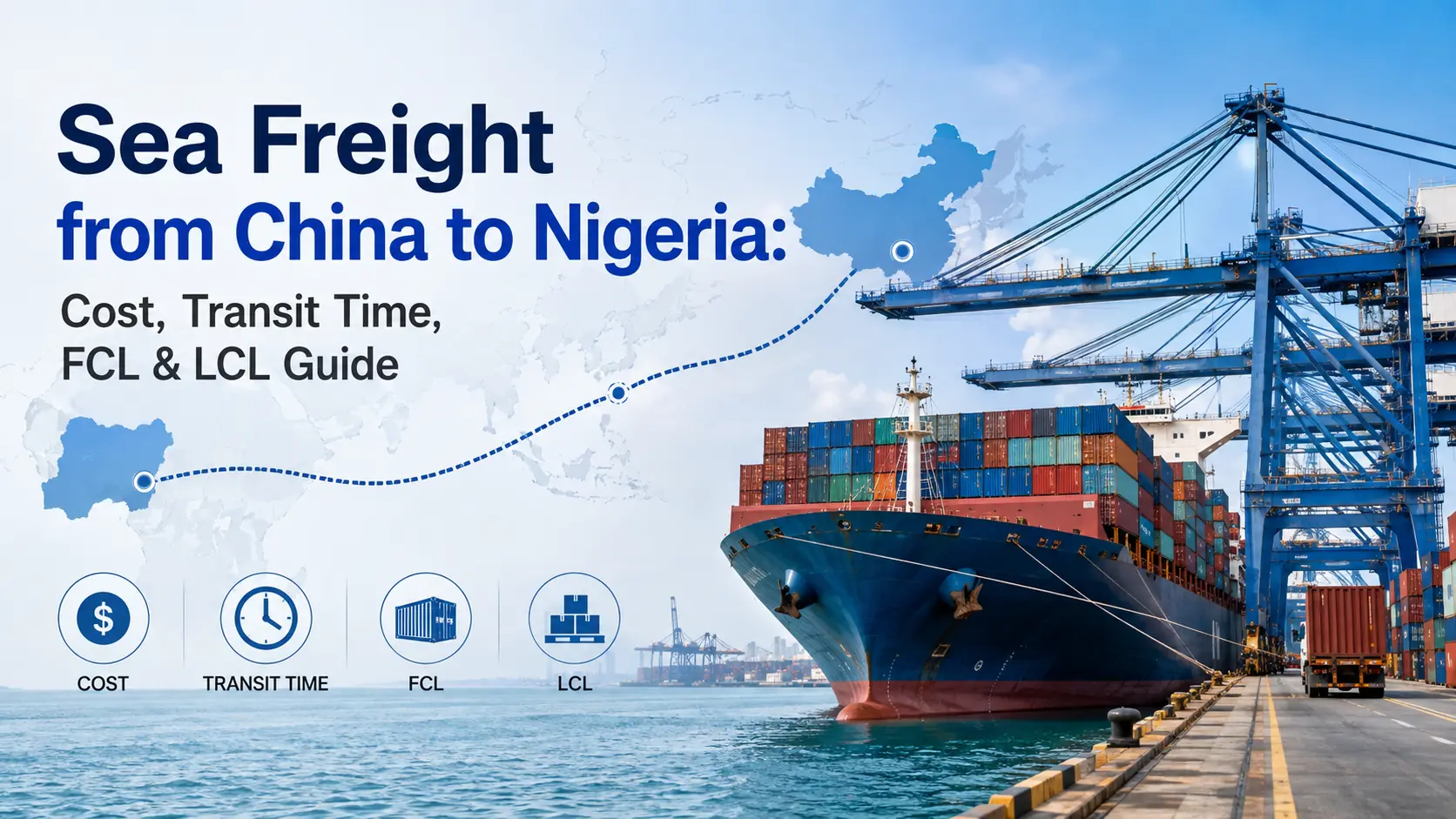
Compare the main sea freight options from China to Nigeria before choosing a container size or booking method.
$2,970–$3,630
FCL to Lagos
Suitable for dense or medium-volume commercial cargo.
$3,150–$3,850
FCL to Lagos
Better capacity for larger or bulkier commercial shipments.
$100–$180
Per CBM to Lagos
A practical option when your cargo does not fill a complete container.
35–50 Days
Port-to-Port
Timing varies by container type, origin port and carrier routing.
* Rates are August 2026 market planning references and may change with carrier capacity, equipment availability and destination charges.
For businesses shipping goods from China to Nigeria, the first decision is usually whether to book a complete container or use shared container space. The best choice depends on cargo volume, weight, packaging, value, supplier locations and the delivery deadline.
The table below provides a practical starting point for comparing the main sea shipping options to Lagos.
| Shipping Option | Estimated Cost | Typical Port-to-Port Time | Best For |
|---|---|---|---|
| LCL to Lagos | USD 100–180/CBM | 45–50 days | Smaller commercial shipments |
| 20GP container | USD 2,970–3,630 | 35–40 days | Dense or medium-volume cargo |
| 40GP container | USD 3,150–3,850 | 35–40 days | Larger commercial shipments |
| 40HQ container | Current quote required | 35–45 days | High-volume or bulky goods |
These August 2026 figures should be treated as market planning references rather than fixed quotations. Freight rates can change with shipping line capacity, equipment supply and peak-season demand, while total delivery time also needs to include China pickup, export handling, customs clearance in Nigeria and inland transportation.
For urgent or lightweight cargo, air freight can still be considered. However, importers moving larger commercial orders normally use sea shipping because the cost per unit becomes considerably more economical as shipment volume increases.
Container shipping from China to Nigeria is mainly divided into FCL (Full Container Load) and LCL (Less than Container Load). The definitions are simple, but the actual decision should consider more than cargo volume. Handling risk, destination charges, supplier consolidation and total landed cost can all change which shipping method provides better value.
FCL means that one importer books the entire container. Common equipment includes 20GP, 40GP and 40HQ containers. A 20ft container is often suitable for relatively dense goods, while 40GP and 40HQ equipment provides substantially more loading space for furniture, machinery, equipment and other bulky products.
A full container also reduces the number of times cargo needs to be handled between the factory and destination. This can be useful for fragile or higher-value goods and for importers purchasing from several suppliers. Products can be collected into one China warehouse, checked and loaded together rather than being shipped internationally as several separate orders.
Importers should not assume that a 20GP will always be the cheapest option simply because it is smaller. Depending on carrier pricing and equipment availability, the difference between 20GP and 40GP rates can sometimes be relatively limited. Larger shipments should therefore compare both container sizes.
LCL allows cargo from several importers to share one container. It is useful for trial orders, several pallets, smaller wholesale shipments or regular stock replenishment when the volume does not justify paying for an entire container.
The rate is normally calculated according to cubic meters, although dense cargo may also be affected by weight-related charging rules. More importantly, the quoted ocean rate per CBM may represent only one part of the final cost. Consolidation, CFS handling, documentation, deconsolidation and destination warehouse charges can all affect the amount ultimately paid by the importer.
For this reason, businesses should compare the complete LCL shipping cost, not only the advertised USD-per-CBM figure. When shipment volume begins to increase, ask the freight forwarder to calculate both shared-container and full-container options. At a certain point, moving to a complete container can reduce handling and provide a lower overall cost per unit.
China to Nigeria shipping costs change regularly because ocean freight is affected by carrier capacity, vessel schedules, container availability and seasonal demand. The departure port also matters because a supplier in Guangdong, Zhejiang or northern China will have different domestic trucking and port options.
For August 2026, the following rates can be used as planning references for cargo moving to Lagos:
| Shipping Method | Estimated Cost | Typical Transit Time |
|---|---|---|
| 20GP from China to Lagos | USD 2,970–3,630 | 35–40 days |
| 40GP from China to Lagos | USD 3,150–3,850 | 35–40 days |
| LCL from China to Lagos | USD 100–180/CBM | 45–50 days |
| 40HQ from China to Lagos | Contact for current rate | 35–45 days |
The final freight cost depends on the origin city, cargo-ready date, shipping line, available vessel space, container equipment, routing and cargo characteristics. A quotation should therefore include a clear validity period, especially when the shipment will not be ready immediately.
One of the most common mistakes made by importers is comparing quotations only by the ocean freight line. A lower container rate does not necessarily produce lower total shipping costs if important origin or destination charges are excluded.
Depending on the Incoterm and service scope, the complete logistics cost may include factory pickup in China, warehouse handling, export customs declaration, container trucking, terminal handling, ocean freight, shipping documentation, Nigerian destination handling, customs brokerage and inland delivery. Import duties and taxes are normally treated separately unless the quotation specifically states otherwise.
LCL shipments deserve particular attention because CFS and deconsolidation charges can significantly affect the final amount. For full containers, importers should check free time and understand when port storage, demurrage or detention could begin.
Instead of asking only “What is the freight rate?”, a better question is:
“What is included in this shipping cost, what is excluded, and where does the service end?”
That makes quotations easier to compare and reduces the risk of unexpected charges after the shipment reaches Nigeria.
Sea freight transit times vary according to the Chinese departure port, carrier routing and whether the service involves transshipment. For common China to Lagos routes, approximately 35–45 days port to port is a reasonable planning range for container cargo.
Typical route estimates are shown below.
| Origin Port | Destination | Estimated Port-to-Port Time |
|---|---|---|
| Shenzhen / Yantian | Lagos | 35–40 days |
| Guangzhou / Nansha | Lagos | 35–45 days |
| Shanghai | Lagos | 35–45 days |
| Ningbo-Zhoushan | Lagos | 38–45 days |
| Qingdao | Lagos | 40–50 days |
These transit times are estimates rather than guaranteed schedules. Vessel changes, transshipment, weather, carrier adjustments and congestion at Nigerian ports can extend the journey.
Shared-container cargo usually requires additional time because goods first move through a consolidation warehouse in China and are later separated at the destination. Importers with fixed retail, construction or production deadlines should therefore build some buffer into their supply chain instead of planning around the earliest possible arrival date.
A carrier schedule showing 38 days describes the ocean journey, not necessarily the complete time from factory to consignee. Before sailing, the shipment may need supplier pickup, warehouse receiving, consolidation, export documentation and customs processing. After arrival, the cargo still requires terminal handling, Nigeria customs clearance and delivery to the final destination.
For example, goods may arrive at Lagos on schedule but still experience clearance delays if Form M, PAAR, product certificates or other customs documents are incomplete. Businesses should therefore plan around the full logistics cycle from cargo-ready date in China to final delivery in Nigeria.
The best port for shipping from China to Nigeria depends mainly on the supplier location, cargo volume, available sailing schedules and the final delivery point in Nigeria. In most cases, using a departure port close to the factory helps reduce domestic trucking costs and avoids unnecessary handling before the goods enter the international shipping process.
China has several major container gateways commonly used for cargo moving to Nigeria. South China ports are particularly convenient for goods manufactured in Guangdong, while Shanghai and Ningbo-Zhoushan serve large supplier clusters in eastern China. Qingdao can be a practical option for shipments originating in Shandong and other parts of northern China.
| China Port | Common Supplier Areas | Typical Destination |
|---|---|---|
| Shenzhen / Yantian | Shenzhen, Dongguan, Huizhou | Lagos |
| Guangzhou / Nansha | Guangzhou, Foshan, Guangdong | Lagos |
| Ningbo-Zhoushan | Zhejiang and nearby manufacturing areas | Lagos |
| Shanghai | Shanghai, Jiangsu, eastern China | Lagos |
| Qingdao | Shandong and northern China | Lagos / available Nigeria services |
The lowest ocean freight rate should not be the only reason to choose a departure port. For example, moving cargo from Guangdong to Shanghai simply to obtain a slightly lower container rate may add domestic trucking, warehouse handling and extra transit time. When goods are purchased from several suppliers, it is often more efficient to consolidate them near the main supplier cluster and then select the most practical export port.
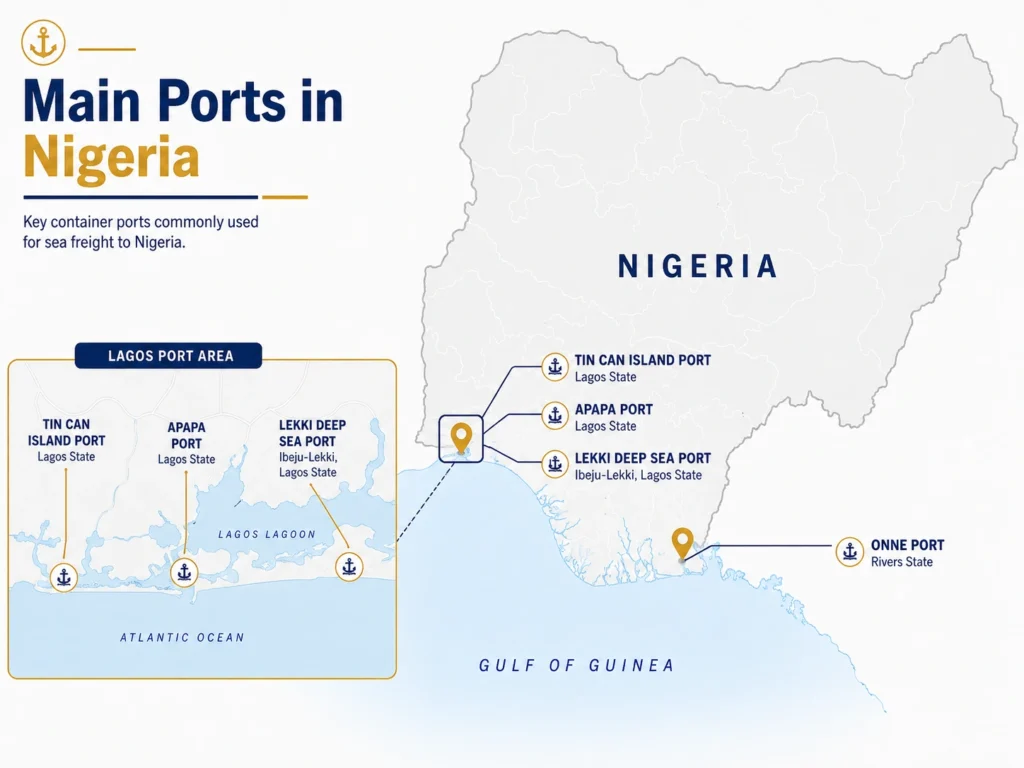
For most container shipping from China to Nigeria, Lagos is the main destination area. Port selection on the Nigerian side should consider carrier service, customs arrangements, inland delivery distance and the consignee’s final location rather than simply choosing the most familiar port.
The main options include:
Apapa Port – One of the principal gateways for containerized imports into Lagos and commonly used for general commercial cargo.
Tin Can Island Port – Another major Lagos container terminal serving a wide range of imported goods.
Lekki Deep Sea Port – A newer container gateway in the Lagos region that may be available depending on the shipping line and sailing schedule.
Onne Port – A useful option for some cargo serving southeastern Nigeria, particularly when the final destination is around Port Harcourt or other parts of Rivers State.
Cargo discharged in Lagos can continue by road to inland destinations such as Abuja, Ibadan and Kano. For shipments serving Port Harcourt or southeastern Nigeria, businesses should compare the total cost and transit time of routing through Lagos against using Onne where suitable carrier services are available.
The most efficient China-to-Nigeria port combination is therefore the one that minimizes the total logistics cost, not simply the ocean freight charge. Supplier location in China, vessel availability, Nigerian customs clearance and final inland delivery should all be considered before the shipment is booked.
Nigeria customs clearance should be planned before goods leave China. The import process includes pre-shipment preparation, customs documentation, pre-arrival assessment, declaration, assessment and cargo release, so unresolved issues at origin can create delays after the vessel reaches port.
IMPORT REGISTRATION
What must be prepared before shipment?
PRE-ARRIVAL ASSESSMENT
What is required before cargo arrival?
PRODUCT COMPLIANCE
Does your product require conformity approval?
CLASSIFICATION & TAXES
How are duties and restrictions determined?
Form M is an important part of Nigeria’s commercial import procedure. The importer generally completes Form M through an Authorized Dealer Bank, with supporting documents depending on the product and transaction.
The information should accurately identify the goods and should remain consistent with later customs documentation. Product name, quantity, value, country of origin, HS classification, model or brand where applicable, and supplier information should therefore be checked before submission.
For an importer, the practical lesson is simple: do not wait until the container is already sailing to identify discrepancies between the supplier’s invoice and the Nigerian import documents. Correcting information early is usually easier than resolving it during customs clearance.
PAAR means Pre-Arrival Assessment Report and forms part of the Nigerian import process before cargo release. Supporting information can include the registered Form M, regulatory certificates where applicable, Bill of Lading, commercial invoice, packing list and certificate of origin.
Because PAAR is a pre-arrival procedure, the importer and clearing agent should prepare the required documentation before the shipment reaches Nigeria. This helps customs assessment begin with consistent shipment information and reduces the risk that basic document issues delay the container after arrival.
Certain regulated product categories require compliance under the Standards Organisation of Nigeria Conformity Assessment Programme (SONCAP). The programme verifies that regulated products meet applicable Nigerian standards or approved equivalents before shipment.
This can be particularly relevant when importing electrical products, machinery and other regulated manufactured goods from China. Importers should determine whether the product is subject to SONCAP before cargo is loaded, because conformity requirements are much easier to handle before departure than after the shipment reaches Lagos.
Nigeria also introduced an important digital processing change in 2026. From March 27, 2026, specified SONCAP and Import Permit procedures moved to the National Single Window platform. Importers of regulated goods should therefore confirm the current application and certificate activation process before shipping.
Nigeria uses the ECOWAS Common External Tariff, and the applicable customs duty depends on the product’s HS classification. The Nigeria Customs Service provides tariff information that can be used to review HS codes, duty rates, Import Adjustment Tax information and applicable restrictions.
Importers should check the exact product classification rather than relying on a general “average Nigerian duty rate.” Machinery, textiles, electrical products, vehicle parts and other product categories can receive very different tariff treatment.
Before shipment, confirm the product description, HS code, applicable customs duty, additional taxes, import restrictions and any product-specific approvals. Nigeria also maintains prohibited and restricted import categories, so market access should be checked before the supplier dispatches the goods.
Shipping goods from China to Nigeria requires both standard transport documents and, depending on the product, additional Nigerian import documents. The exact requirements vary by cargo type, but the key information should be prepared before departure so that the supplier, freight forwarder, importer and clearing agent are working with the same shipment details.
For most commercial sea freight shipments, the main documents include:
Commercial Invoice – Shows the seller, buyer, product description, quantity, unit value and total transaction value.
Packing List – Details the number of cartons, pallets or packages together with gross weight, dimensions and packing information.
Bill of Lading – Issued for the ocean shipment and records the shipper, consignee, cargo description and transport details.
HS Code Information – Used to classify the goods for customs duty, taxes and import controls.
Form M and PAAR – Required as part of the Nigerian import and pre-arrival customs process where applicable.
SONCAP Documents – Required for product categories subject to Nigeria’s conformity assessment requirements.
Certificate of Origin, Insurance or Special Permits – May be required depending on the product, transaction or regulatory authority involved.
The main risk is not simply a missing document, but inconsistent information between documents. Product descriptions, quantities, values, HS codes, consignee details and country of origin should match across the commercial invoice, packing list, Bill of Lading and Nigerian import records.
Before the goods leave China, businesses should also confirm whether the product is regulated, restricted or requires additional certification. Machinery, electrical products, chemicals, food-related goods and other controlled product categories may need extra approvals beyond the standard shipping documents.
Preparing these requirements before vessel departure can reduce customs questions, document corrections and avoidable clearance delays after the cargo reaches Nigeria.
A clear shipping process helps importers know when decisions, documents and cargo information are required. Although every shipment is different, most sea freight bookings follow the same general sequence.
Provide the product description, number of packages, gross weight, dimensions, supplier address and final destination in Nigeria. If several suppliers are involved, include each pickup location and cargo-ready date. Special or regulated goods should also be identified before booking.

The freight forwarder reviews the shipment size, weight and handling requirements and compares the available options. Smaller cargo may move by LCL, while larger shipments can use 20GP, 40GP or 40HQ containers.
The quotation should clearly show the freight rate, service scope, major charges and exclusions.

Goods can be collected from the factory or delivered to a warehouse in China. When products come from several suppliers, they can be consolidated before export to reduce separate international shipments.
This is especially useful for businesses sourcing goods from different manufacturing areas in China.

Before departure, the commercial invoice, packing list and Bill of Lading information should be checked carefully. The Nigerian importer should also prepare Form M, SONCAP or other required import documents where applicable.
Any major discrepancies should be corrected before the shipment leaves China.

Once the cargo and documents are ready, vessel space is booked. Full-container shipments are loaded and sealed, while LCL cargo moves through a consolidation warehouse before departure.
The shipment then moves to Nigeria according to the confirmed sailing schedule.

Before arrival, the Nigerian clearing agent prepares the customs declaration and supporting documents. After duties, taxes, customs release and terminal procedures are completed, the goods can leave the port.
Cargo can then be delivered within Lagos or moved inland to destinations such as Abuja or Port Harcourt. For container shipments, free time and empty-container return should also be monitored to avoid unnecessary charges.

The lowest ocean freight rate does not always produce the lowest landed cost. Importers often save more by improving supplier coordination, container utilization, documentation and destination planning than by choosing a quotation that is only slightly cheaper.
For example, products purchased from several factories in Guangdong can often be collected into one warehouse and shipped together. This can reduce fragmented pickup and international shipping arrangements. Packing dimensions should also be reviewed because inefficient cartons can increase CBM and cause an importer to pay for unnecessary container space.
Several practical actions can help control the overall cost:
Consolidate goods from multiple suppliers where practical
Compare different container sizes before booking
Choose a departure port close to the supplier cluster
Improve carton dimensions and container utilization
Confirm HS codes and import requirements early
Request an itemized freight quotation
Check Nigerian destination and terminal charges
Monitor container free time after arrival
Customs preparation is equally important. Incorrect product descriptions, missing certificates or inconsistent documentation can result in storage, demurrage and clearance delays after arrival in Lagos. Businesses should therefore evaluate the total cost of shipping from China to Nigeria, not only the ocean freight component.
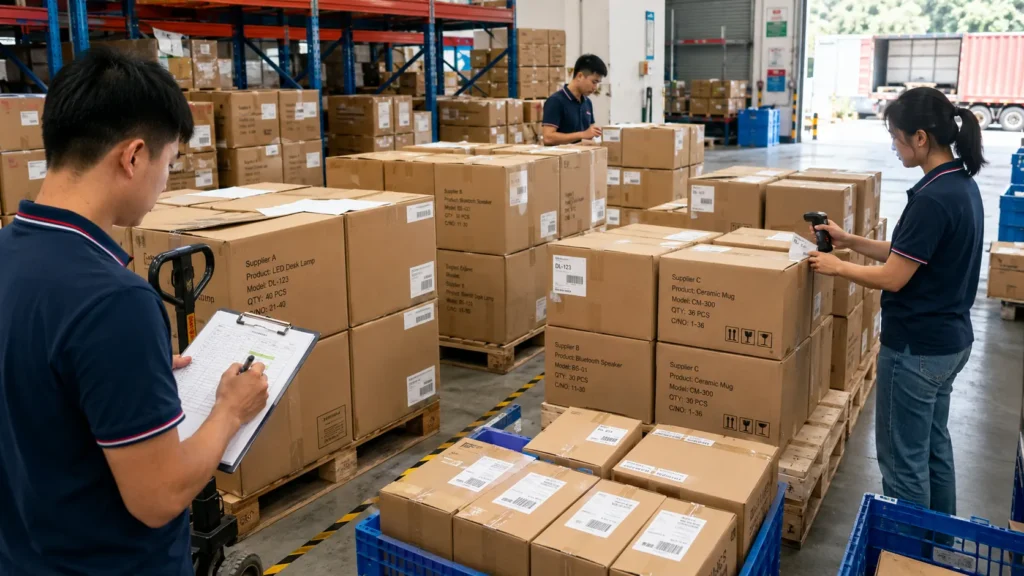
Shipping from China to Nigeria requires coordination across several stages, from supplier pickup and cargo consolidation in China to ocean booking, documentation and destination delivery. Tonlexing Logistics helps businesses manage these steps through a single freight plan based on the cargo volume, supplier locations and final destination.
For importers working with several Chinese suppliers, we can consolidate eligible cargo before export and compare FCL or LCL options according to the actual shipment. Our support can include:
FCL and LCL sea freight from major ports in China
Factory pickup and supplier consolidation for multi-supplier orders
Export handling and shipping documentation before departure
Nigeria customs coordination and door-to-door delivery where required
Rather than choosing a route only by the lowest ocean rate, Tonlexing can help compare the complete shipping plan, including container size, origin handling, transit time and destination requirements.
For an accurate quotation, send the product name, package quantity, gross weight, dimensions, supplier location, cargo-ready date and final destination in Nigeria.
Sea freight from major Chinese ports to Lagos generally takes around 35–45 days port to port for full-container shipments. LCL cargo normally requires approximately 45–50 days because consolidation and deconsolidation add additional handling time. Factory pickup, customs clearance and inland delivery should be added when estimating the complete shipping time.
As of August 2026, a 20GP container from China to Lagos is approximately USD 2,970–3,630 as a market planning reference. Actual shipping costs depend on the departure port, carrier capacity, container availability, cargo-ready date and charges included in the quotation.
A 40GP container from China to Lagos is currently approximately USD 3,150–3,850 based on August 2026 market references. Rates can change according to shipping line capacity, available equipment, sailing schedules and seasonal demand, so the final rate should be confirmed before booking.
LCL shipping from China to Lagos is approximately USD 100–180 per CBM as an August 2026 market reference. The final cost depends on cargo volume, Chinese origin, consolidation charges, destination handling and the services included in the freight quotation.
Regular commercial shipments commonly require a commercial invoice, packing list and Bill of Lading, together with Nigerian import documentation such as Form M and PAAR. Regulated goods may also require SONCAP certification or other product-specific approvals. Importers should confirm the applicable requirements before the cargo leaves China.
Useful freight, customs and importing resources related to this shipping guide.
Illustration of shipping from China to Nigeria featuring a cargo ship with China and Nigeria flags, symbolizing international freight routes.
Read guide →
Shipping from China to Nigeria: Why It Matters in 2025 Shipping from China to Nigeria plays a critical role in Africa’s international trade lands...
Read guide →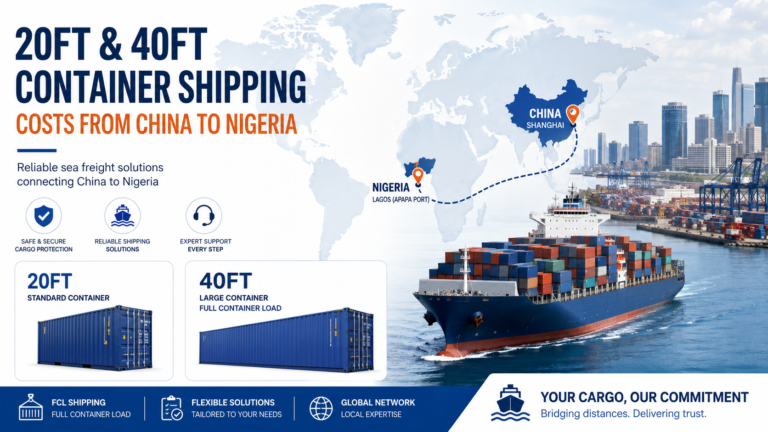
20FT & 40FT Container Shipping Costs from China to Nigeria Verified & Reviewed · Last updated June 2026 20ft 40ft Container Shipping Costs from C...
Read guide →
Shipping from China to Nigeria has become one of the most important pillars of international trade in West Africa. Nigeria’s expanding consumer m...
Read guide →The trade relationship between China and Nigeria has grown significantly in recent years, making Nigeria one of the most important destinations f...
Learn more → Useful Resource LCL Shipping from ChinaLearn how LCL shipping and consolidated shipments help reduce shipping costs for smaller cargo from China.
Learn more →WhatsApp us