
Related Guide
Shipping cost from China to Sri Lanka
Sri Lanka is a growing trade partner with China, importing machinery, textiles, electronics, construction materials, and consumer goods. As the l...
Read guide →

Sea freight from China to Sri Lanka provides a reliable shipping solution for commercial cargo, with FCL and LCL options available for different shipment volumes and delivery requirements.
This guide covers sea shipping routes from China to Sri Lanka, including freight costs, transit times, major ports, customs clearance requirements, and door-to-door shipping options.
FCL / LCL Shipping
Transit Time & Cost
Colombo Port & Customs
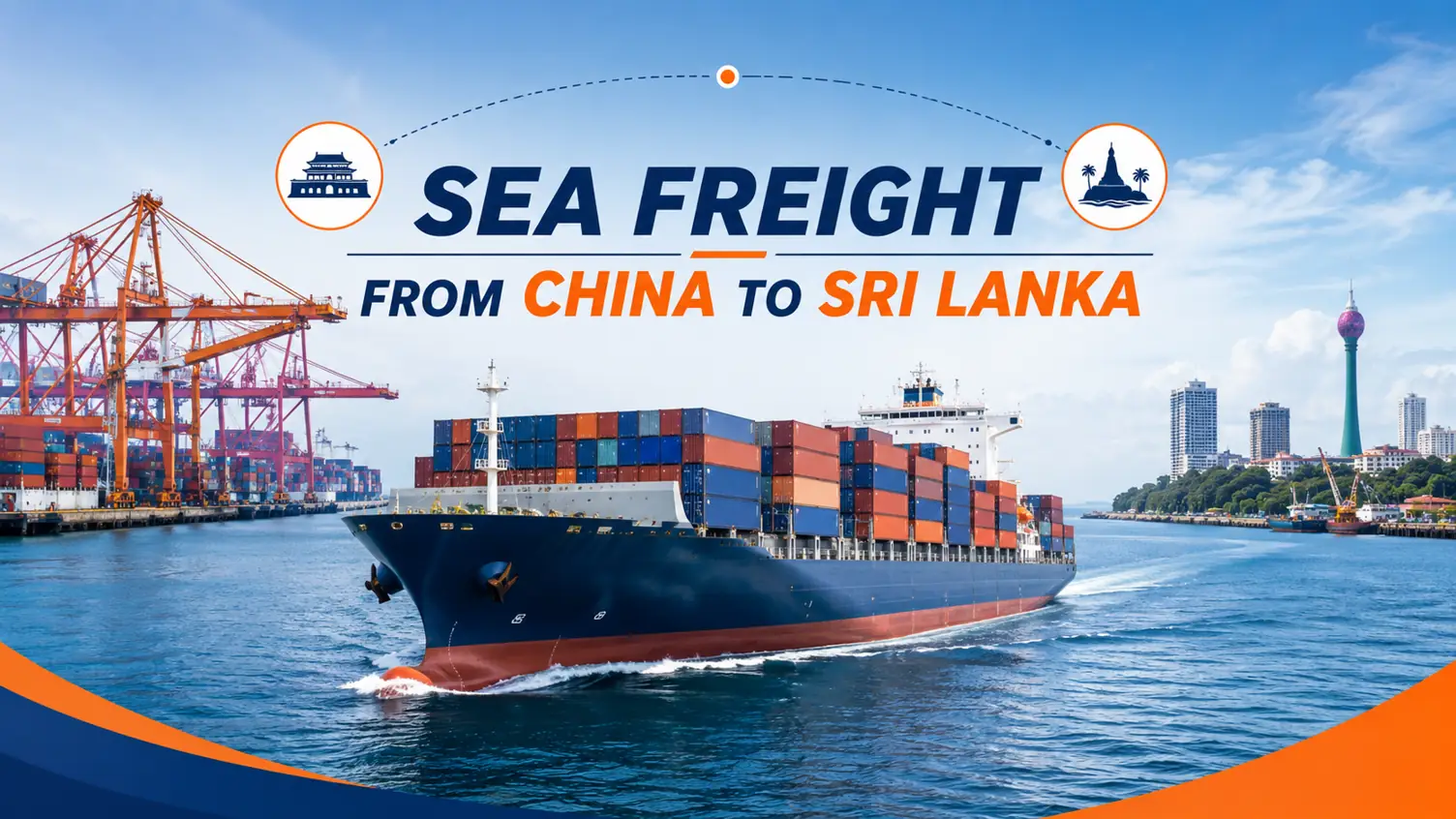
China and Sri Lanka maintain strong trade connections, with a wide range of products imported from China every year. Sea freight is the preferred choice for most commercial shipments because container transportation can handle large cargo volumes while maintaining better cost effectiveness compared with air transportation.
For businesses importing from China, choosing the right shipping solution requires considering cargo volume, delivery requirements, customs procedures, and the total landed cost.
Common cargo types shipped from China to Sri Lanka include:
Consumer goods and retail products
Electronics and electrical equipment
Machinery and spare parts
Furniture and home products
Construction materials
Industrial equipment
The suitable shipping method depends mainly on shipment size and delivery requirements:
FCL shipping is usually suitable for large shipments that require an entire container.
LCL shipping is suitable for smaller volumes that do not fill a complete container.
Door-to-door shipping is suitable for importers who prefer a freight forwarder to manage transportation and delivery arrangements.
When planning sea freight from China to Sri Lanka, importers should consider more than just the ocean freight rate. Export procedures, documentation, customs clearance, import duties, and final delivery costs can all affect the final shipping cost.
The cost of shipping from China to Sri Lanka depends on multiple factors, including container size, cargo volume, departure port, shipping season, and additional services required during transportation.
The total shipping cost is not limited to ocean freight. Importers should also consider export handling, documentation, customs clearance, port charges, import duties, and final delivery fees when calculating the actual landed cost.
| Shipping Method | Estimated Cost | Transit Time | Suitable For |
|---|---|---|---|
| 20GP Container | USD 1,710–2,090 | 10–15 days | Medium-volume cargo |
| 40GP Container | USD 1,755–2,145 | 10–15 days | Large shipments |
| LCL Shipping | USD 45/CBM+ | 11–19 days | Small and shared cargo |
Actual rates may change depending on vessel schedules, market conditions, cargo details, and destination requirements.
Several key variables influence the final cost of sea freight:
Container selection has a major impact on transportation costs. For larger shipments, using a full container can provide better cost efficiency because fixed transportation costs are distributed across more cargo.
Common container options include:
For shipments that cannot fill a complete container, LCL shipping allows importers to share container space and reduce upfront transportation expenses.
The selected departure port affects both shipping rates and transit time. China has several major export ports connected with Sri Lanka shipping routes.
Common departure ports include:
Shenzhen Port
Guangzhou Port
Shanghai Port
Ningbo Port
Xiamen Port
The closest port to the supplier is not always the most economical choice. A freight forwarder can compare available shipping options based on cargo location, vessel schedule, and budget.
Different goods may require different transportation arrangements. Cargo weight, dimensions, product characteristics, and special handling requirements can affect the final quotation.
Factors that may influence pricing include:
Cargo weight and volume
Packing requirements
Fragile or high-value goods
Special handling needs
Required certificates or inspections
Providing accurate shipment details helps avoid unexpected costs during shipping operations.
The selected Incoterms also influence the overall shipping cost.
For example:
FOB terms allow buyers to arrange international transportation after the supplier completes export procedures.
Door-to-door service allows the freight forwarder to coordinate pickup, shipping, customs support, and final delivery.
Additional charges may include:
Export documentation fees
Port handling charges
Customs clearance fees
Import duties and taxes
Local transportation costs
Understanding these costs before shipment helps importers calculate the real cost of importing goods from China to Sri Lanka.
The transit time from China to Sri Lanka mainly depends on the departure port, shipping route, vessel schedule, and customs clearance efficiency. In general, sea freight from China to Sri Lanka takes around 10–25 days, with most commercial shipments arriving at Colombo Port.
Shipments from southern China ports usually have shorter transit times because of their proximity to major international shipping routes. Cargo from eastern or northern China may require additional inland transportation and longer ocean schedules.
For most commercial shipments, the estimated ocean transit time is:
| Departure Port in China | Destination Port | Estimated Transit Time |
|---|---|---|
| Shenzhen Port | Colombo Port | 10–15 days |
| Guangzhou Port | Colombo Port | 12–18 days |
| Xiamen Port | Colombo Port | 12–20 days |
| Shanghai Port | Colombo Port | 15–22 days |
| Ningbo Port | Colombo Port | 15–22 days |
The actual delivery time from China to Sri Lanka may vary depending on the shipping method, cargo handling process, and customs procedures. Besides the sailing distance, factors such as vessel schedules, port operations, and import clearance can all affect the final arrival time.
For FCL shipping, transit times are usually more predictable because the container is dedicated to one shipment and requires fewer handling steps. In comparison, LCL shipping may take slightly longer because cargo needs to be consolidated before departure and separated after arrival.
Other factors that may influence delivery times include:
Vessel availability and sailing frequency
Port congestion at origin or destination
Customs clearance procedures
Cargo inspection requirements
Seasonal shipping demand
Final delivery arrangements
For urgent shipments, air freight from China to Sri Lanka usually takes around 3–7 days, making it suitable for time-sensitive or high-value cargo. However, for larger commercial shipments, sea freight remains the preferred shipping method because it provides greater capacity and better cost efficiency.
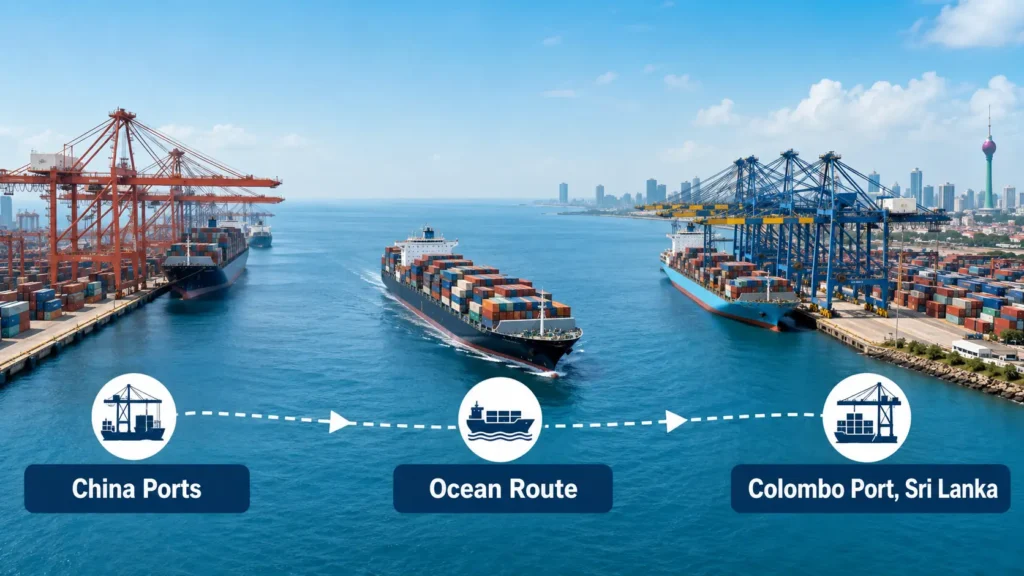
The main shipping routes from China to Sri Lanka connect major Chinese export ports with Colombo Port, which is the primary container handling hub in Sri Lanka.
China has several major ports that support international trade with Sri Lanka. The best departure port depends on the supplier location, cargo type, shipping schedule, and transportation cost.
SOUTH CHINA
A common departure point for Guangdong suppliers, especially for electronics, consumer goods, and general commercial cargo.
PEARL RIVER DELTA
Convenient for machinery, furniture, industrial products, and consumer goods produced across the Pearl River Delta.
EAST CHINA
One of the world’s largest container ports, with extensive international connections for cargo originating in eastern China.
ZHEJIANG
An important export hub for industrial goods, machinery, and commercial shipments from Zhejiang manufacturing areas.
Colombo Port handles most of Sri Lanka’s international container traffic. For regular imports from China, it offers the widest range of shipping services and inland transport options.
Hambantota is a deep-water, multi-purpose port located near major international shipping lanes. It supports Ro-Ro, container, breakbulk, bulk, and project cargo operations.
Compare origin trucking, sailing frequency, cargo requirements, and destination handling—not ocean freight alone.
When arranging China to Sri Lanka shipping, importers usually choose between Full Container Load (FCL) and Less than Container Load (LCL) based on cargo volume, budget, and delivery requirements.
The correct shipping mode can significantly affect transportation costs and cargo handling efficiency.
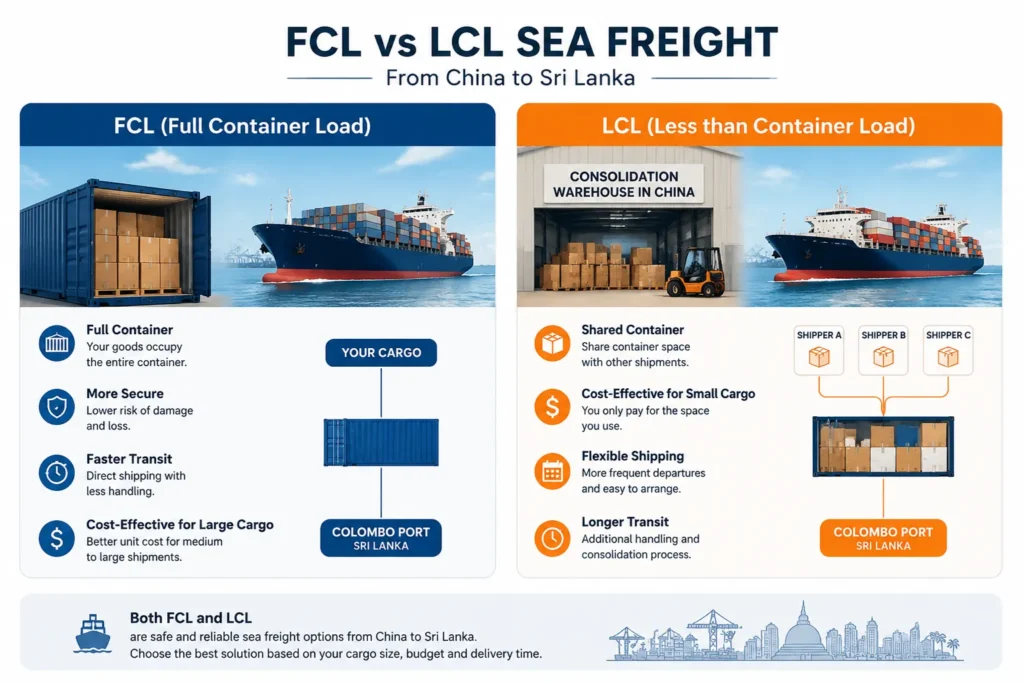
Full Container Load (FCL) means that one shipment occupies an entire container. The cargo is loaded into the container and transported directly through the shipping process.
FCL shipping is suitable for:
Large factory orders
Machinery and industrial equipment
Furniture shipments
Bulk consumer goods
Regular commercial imports
Advantages of FCL include:
Better cost efficiency for large shipments
Fewer cargo handling points
Lower risk of damage from consolidation
More predictable transportation arrangements
Common container types include:
20ft container
40ft container
40ft high cube container
For businesses importing larger volumes from China, FCL shipping is usually the preferred choice.
Less than Container Load (LCL) allows multiple shipments from different importers to share container space. Cargo is collected, consolidated, and shipped together before being separated at destination.
LCL shipping is suitable for:
Small and medium-sized shipments
Trial orders
Products from multiple suppliers
Importers who do not need a full container
Benefits of LCL include:
Lower initial transportation costs
Flexible option for smaller volumes
No need to wait until cargo fills a complete container
However, LCL shipments may require additional handling during consolidation and deconsolidation, which can result in slightly longer delivery times.
| Feature | FCL Shipping | LCL Shipping |
|---|---|---|
| Cargo volume | Large shipments | Smaller volumes |
| Container usage | Dedicated container | Shared container space |
| Cost advantage | Better for high-volume cargo | Better for small shipments |
| Cargo handling | Less handling | More handling |
| Transit time | Usually faster | May take longer |
| Best for | Factory orders and bulk goods | Trial orders and mixed cargo |
Choosing between FCL and LCL depends on shipment size, delivery requirements, and cost expectations. A freight forwarder can compare different shipping options and recommend the most suitable solution based on cargo details.
The shipping process from China to Sri Lanka involves several stages, including supplier coordination, export preparation, ocean transportation, customs clearance, and final delivery.
Proper preparation before shipment helps reduce delivery delays, avoid unexpected costs, and ensure smooth cargo movement.
Before booking sea freight, importers should provide complete shipment information:
Product name and cargo type
HS code
Cargo weight and volume
Number of cartons, pallets, or containers
Supplier location in China
Delivery location in Sri Lanka
Preferred shipping method
Accurate shipment details allow the freight forwarder to select suitable shipping routes and calculate the final cost more accurately.
After confirming the shipping plan, cargo is collected from the supplier or delivered to the warehouse.
The preparation process may include:
Cargo receiving
Packing confirmation
Export documentation preparation
Container loading for FCL shipments
Cargo consolidation for LCL shipments
For buyers purchasing from multiple Chinese suppliers, warehouse consolidation can simplify logistics operations before export.
Before departure, shipments must complete export customs procedures in China.
Common documents include:
Commercial invoice
Packing list
Export declaration information
Bill of Lading details
Accurate documentation helps avoid export delays and ensures the shipment can move smoothly to the port.
After export clearance, cargo is loaded onto the vessel and transported to Sri Lanka.
During ocean transportation, the shipment follows the selected shipping route from Chinese ports to Colombo Port.
The transit time depends on:
Departure port
Vessel schedule
Shipping route
Seasonal conditions
Port operations
After arrival at Colombo Port, the shipment must complete import procedures before release.
The process includes:
Import declaration submission
Customs assessment
Payment of duties and taxes
Cargo release
Local transportation arrangement
For door-to-door shipping, the freight forwarder can arrange final delivery from Colombo Port to the importer’s warehouse, factory, or business location.
Customs clearance is a critical stage when importing goods from China to Sri Lanka. After the vessel arrives at Colombo Port, imported cargo must complete customs procedures before it can be released for final delivery.
Sri Lanka Customs reviews imported goods based on product classification, declared value, origin, and applicable regulations. Accurate documentation and correct HS code classification are essential to avoid delays, additional inspections, or unexpected charges.
For businesses importing goods regularly, understanding Sri Lanka’s customs requirements before shipment can make the entire China to Sri Lanka shipping process more efficient.
Commercial shipments from China usually require several documents for import declaration and cargo release.
Common required documents include:
Commercial Invoice: Provides details of the seller, buyer, product description, quantity, declared value, and trade terms.
Packing List: Shows package details, dimensions, gross weight, net weight, and packing information for customs verification.
Bill of Lading: Issued by the shipping carrier as proof of transportation and contains shipment and vessel information.
Certificate of Origin: May be required for certain products to verify the origin of goods and support import procedures.
Import Licenses or Certificates: Certain regulated products may require additional approvals, permits, or certificates before entering Sri Lanka.
The HS code plays an important role in Sri Lanka customs clearance because it determines the applicable duty rates, import requirements, and restrictions for different products.
Before shipping from China to Sri Lanka, importers should confirm:
Correct HS code classification
Accurate product description
Applicable customs duties
Required permits or approvals
Incorrect HS code declarations may result in:
Customs reassessment
Additional inspections
Clearance delays
Incorrect duty calculation
Import duties and taxes in Sri Lanka are generally calculated based on factors such as product category, CIF value, and customs regulations.
Common charges may include:
Customs Duty: Applied according to the product HS code and applicable tariff category.
Value Added Tax (VAT): Generally 18% for applicable imports.
Other Import Taxes: Additional taxes or levies may apply depending on the product type.
Customs duty rates vary by product category, with common rates including 10% or 15%. Importers should confirm the latest requirements based on their specific goods before shipment.
Sri Lanka Customs requires commercial importers to submit import declarations electronically.
The general customs clearance process includes:
Submission of import declaration
Review of shipment information
Customs assessment
Duty and tax calculation
Inspection if required
Payment completion
Cargo release
Commercial import declarations are processed through the ASYCUDA system, which supports electronic customs procedures.
According to updated customs requirements, Paperless Customs Declaration procedures in Sri Lanka will become mandatory from October 1, 2026. Importers should ensure shipment information and supporting documents are prepared correctly before submission.
Even when sea freight arrives according to schedule, customs issues may delay cargo release and increase additional costs.
Common problems include:
Incorrect HS Code: Wrong product classification may lead to duty reassessment, additional inspections, or delayed clearance.
Incomplete Documentation: Missing commercial invoices, packing lists, certificates, or permits may prevent customs approval.
Incorrect Product Description: The declared information should match the actual goods to avoid questions during customs review.
Missing Import Requirements: Some products may require additional approvals, including food products, medical equipment, chemicals, and certain electronic products.
A professional freight forwarder can help identify potential issues related to classification, valuation, permits, and documentation before shipment, making the customs clearance process smoother and reducing the risk of delays after arrival.
For importers who prefer a simpler shipping experience, door-to-door sea freight from China to Sri Lanka provides a complete logistics solution from the supplier’s location in China to the final destination in Sri Lanka.
Instead of coordinating multiple service providers, businesses can work with one freight forwarder to manage transportation, customs support, and delivery arrangements.
Door-to-door shipping is especially useful for companies that are unfamiliar with Sri Lanka import procedures or need support managing shipments from multiple suppliers.
A complete door-to-door service may include:
The freight forwarder arranges cargo collection from:
Supplier factory
Warehouse
Manufacturing location
Services may include local transportation, warehouse receiving, and cargo consolidation.
The shipment is prepared for international transportation through major Chinese ports.
Services may include:
Export documentation support
Container loading
LCL consolidation
Ocean freight booking
After arrival at Colombo Port, support may include:
Document review
Customs clearance coordination
Communication with local partners
Cargo release assistance
After customs clearance, cargo can be delivered to:
Warehouse
Factory
Retail location
Business address
Door-to-door shipping provides better control over the entire logistics process and reduces the need for importers to coordinate separate transportation providers.
Selecting the right freight forwarder can directly affect shipping reliability, customs efficiency, and overall transportation costs.
Tonlexing provides sea freight from China to Sri Lanka solutions for businesses requiring flexible transportation options, including FCL shipping, LCL consolidation, customs support, and door-to-door delivery.
Our services include:
Cargo pickup from suppliers in China
Export preparation support
FCL and LCL sea freight
Cargo consolidation
Shipping schedule coordination
Customs clearance support
Final delivery arrangements
For different cargo requirements, Tonlexing can help customers compare shipping options and select a suitable solution based on:
Cargo volume
Cargo type
Budget
Delivery requirements
Sea freight from China to Sri Lanka usually takes around 10–25 days, depending on the departure port, vessel schedule, shipping route, and customs clearance process.
Shipments from Shenzhen and Guangzhou are usually faster, while shipments from Shanghai or Ningbo may require longer transit times.
The cost depends on container size, cargo volume, departure port, shipping season, and required services.
Typical options include:
20GP container shipping
40GP container shipping
LCL shipping charged by CBM
Additional services such as customs clearance and final delivery may affect the total shipping cost.
Most shipments arrive at Colombo Port, Sri Lanka’s main container port.
Colombo Port provides international shipping connections, customs facilities, and access to local transportation networks.
FCL is usually better for large shipments because it provides better cost efficiency and fewer handling points. LCL is suitable for smaller shipments that do not require a full container.
Yes. Door-to-door sea freight can include supplier pickup, export handling, ocean transportation, customs support, and final delivery in Sri Lanka.
The exact service depends on cargo type, destination, and import requirements.
Useful freight, customs and importing resources related to this shipping guide.
Sri Lanka is a growing trade partner with China, importing machinery, textiles, electronics, construction materials, and consumer goods. As the l...
Read guide →
Sea freight is the most cost effective shipping method for large volumes and container load cargo. It is ideal for businesses looking to reduce s...
Read guide →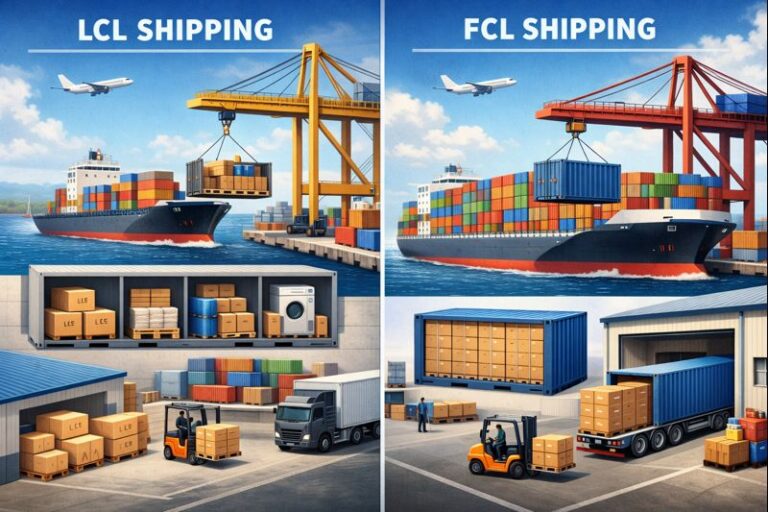
LCL vs FCL Shipping: What They Mean, Key Differences, and Which One to Choose Verified & Reviewed · Last updated January 2026 FCL vs LCL shipping...
Read guide →
Compare shipping cost from China by country, shipping method, and cargo size. Learn air freight rates, sea freight pricing, and the cheapest ship...
Read guide →DDP shipping from China includes customs clearance, import duties, and final delivery. It is a convenient door to door service with clear and pre...
Learn more → Useful Resource Air Freight from ChinaAir freight from China is the best option for time sensitive and high value shipments. It offers fast delivery, reliable transit times, and effic...
Learn more →WhatsApp us