Related Guide
How to Import Machinery from China
How to Import Machinery from China Verified & Reviewed · Last updated August 2026 Importing machinery from China requires careful supplier verifi...
Read guide →

China supplies a wide range of crushing and screening equipment for mining, quarrying, and construction projects, including jaw crushers, cone crushers, mobile crushing plants, and vibrating screens.
Learn about shipping methods, freight costs, export packaging, heavy machinery handling, and customs clearance when shipping crushing and screening equipment from China.
Freight Options
Heavy Machinery Shipping
Customs Clearance
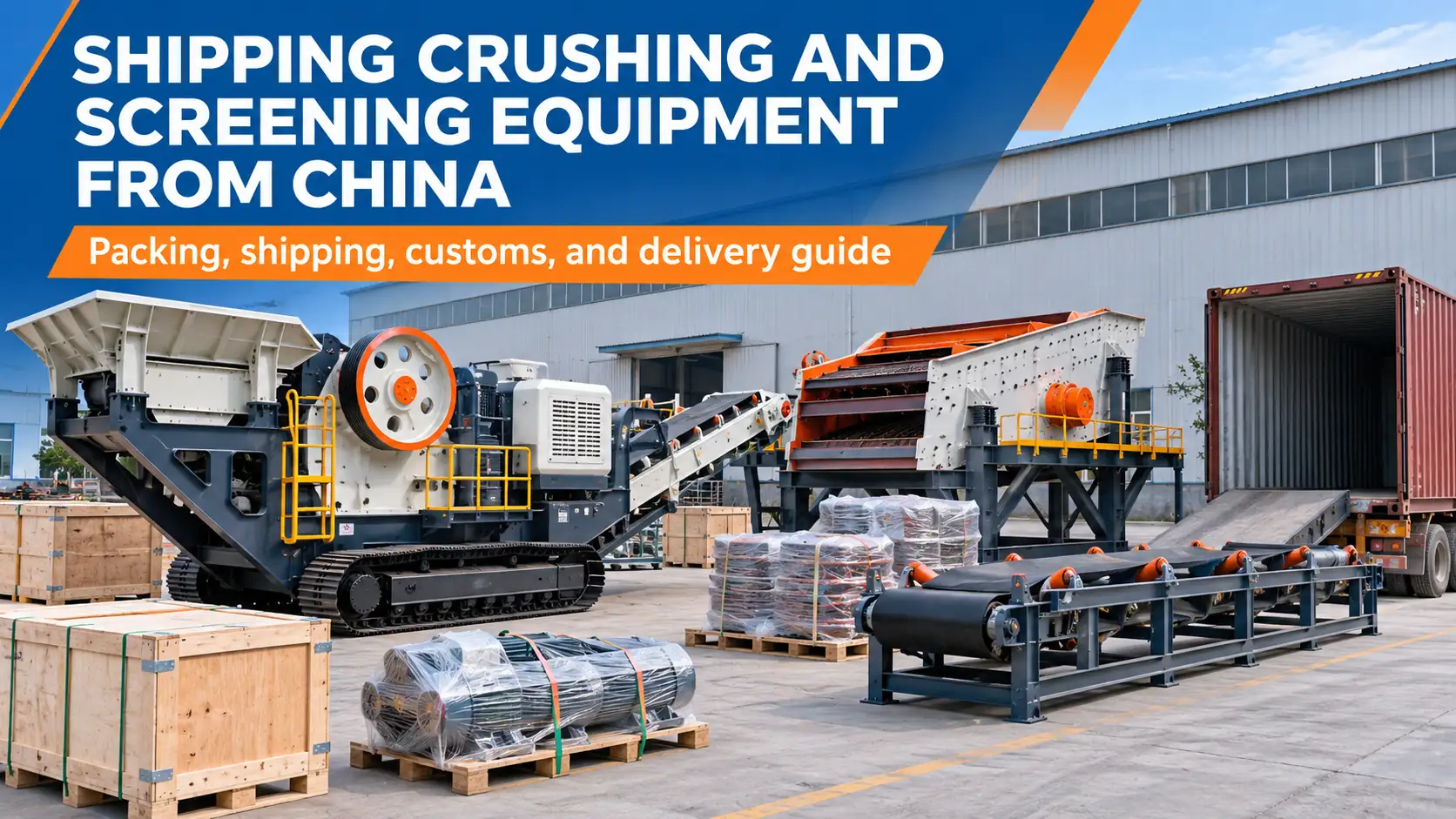
Chinese manufacturers produce different types of crushing and screening machinery for processing rocks, ores, aggregates, and construction materials. Understanding the equipment configuration is important because different machines have different transportation and loading requirements.
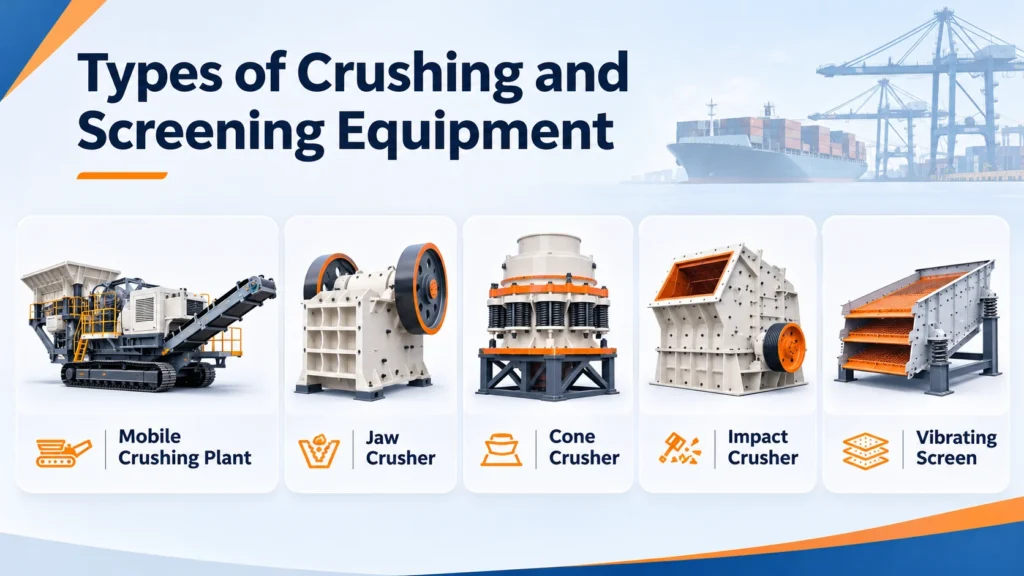
Mobile crushing plants combine several processing machines into a movable system. They are widely used in mining, quarrying, road construction, and construction waste recycling.
A typical mobile crushing plant may include a feeder, crusher, vibrating screen, and belt conveyor. Depending on the production requirements, the configuration may include a jaw crusher for primary crushing, an impact crusher or cone crusher for further processing, and screening equipment for separating materials by size.
Mobile crushers are generally available in two configurations:
Tire-type mobile crushers: Suitable for projects that require relocation between prepared working areas.
Crawler-type mobile crushers: Designed to move across different site conditions and operate closer to the material processing area.
Mobile crushing equipment can reduce the need to transport raw materials to a fixed processing facility. However, its overall dimensions and weight must be carefully checked before international shipment. Some units can be transported as complete machines, while larger plants may need to be separated into several sections.
Stationary crushing equipment is commonly installed in fixed mining operations, stone quarries, and aggregate production facilities.
The main types include:
Jaw crushers: Used for primary crushing of large rocks and ores.
Cone crushers: Commonly used for secondary and tertiary crushing.
Impact crushers: Suitable for processing materials such as limestone and construction waste.
These machines may be shipped individually or as part of a complete crushing plant. Large frames, motors, and supporting structures may require separate packing and specialized loading arrangements.
A complete production line may also include vibrating screens, screening plants, feeders, conveyors, sand-making machines, and grinding mills.
These machines support different stages of mineral processing, from material feeding and crushing to screening and size separation. When several machines are purchased together, each unit should be listed separately in the packing list to simplify transportation planning and customs documentation.
Before arranging shipment, confirm the actual cargo details with the manufacturer. The machine’s dimensions, weight, packing method, and loading conditions will determine the most suitable transportation arrangement.
Pay particular attention to the following information:
Equipment specifications: Confirm the machine model, quantity, and main components.
Dimensions and weight: Obtain the packed length, width, height, and gross weight of each package.
Assembly condition: Check whether the equipment will be shipped as a complete unit or separated into several components.
Loading requirements: Confirm the lifting points, center of gravity, and availability of cranes or forklifts at the factory.
Accessories: Check whether motors, conveyors, control panels, and spare parts are included.
Special handling requirements: Declare batteries, diesel engines, hydraulic fluids, or other materials that may affect transportation.
Pickup and delivery details: Provide the factory address, destination port or delivery address, and expected cargo-ready date.
For large machinery, ask the supplier to provide packing photographs and technical drawings. This information allows the freight forwarder to evaluate container suitability, loading arrangements, and potential additional handling requirements before booking.
Sea freight is generally the preferred option for transporting heavy industrial machinery. However, different equipment configurations may require different container types or specialized vessel arrangements.
| Shipping Method | Typical Cargo | Main Point to Check |
|---|---|---|
| Standard FCL | Smaller crushers and dismantled machinery | Container dimensions, payload, and floor loading |
| Open Top | Tall machinery requiring top loading | Height limits and lifting arrangements |
| Flat Rack | Oversized machinery | OOG dimensions, lashing, and route restrictions |
| Breakbulk | Large non-containerized equipment | Heavy-lift capacity and port facilities |
| Ro-Ro | Accepted wheeled or tracked machinery | Operating condition and carrier approval |
| Air Freight | Urgent spare parts | Chargeable weight and cargo restrictions |
Full Container Load (FCL) shipping is suitable for machinery that fits safely inside standard containers. Depending on the cargo dimensions and weight, a 20ft or 40ft container may be selected.
Smaller jaw crushers, motors, vibrating screens, and dismantled equipment can often be transported in standard containers. Before booking, check the container’s internal dimensions, door opening, payload, and floor loading limitations.
Heavy machinery must be positioned and secured properly to prevent movement during transportation.
For more information, see our guide to sea freight shipping from China.
Open-top containers allow machinery to be loaded from above and are useful for cargo that is too tall for standard door loading.
Flat-rack containers are suitable for equipment that exceeds normal container width or height. They may be used for large crusher frames, feeder hoppers, and oversized mobile machinery components.
Both options require accurate cargo measurements, suitable lifting arrangements, and proper securing. Additional charges may apply for out-of-gauge handling and specialized inland transportation.
For very large machinery that cannot be transported in containers, breakbulk shipping may be a suitable option. Equipment is handled as individual cargo units rather than being loaded inside standard containers.
Ro-Ro shipping may be considered for certain mobile machines that can be driven or moved onto a vessel using ramps or suitable loading equipment. However, acceptance depends on the equipment’s condition, dimensions, weight, and vessel requirements.
For more details, see our guide to breakbulk and Ro-Ro shipping.
Air freight is generally not economical for complete crushing plants because of their size and weight. However, it can be useful for urgent replacement parts, electrical components, sensors, and smaller accessories needed to reduce equipment downtime.
For smaller and time-sensitive shipments, see our air freight services from China.
The cost of shipping crushing and screening equipment from China depends on the cargo size, gross weight, shipping method, and destination. Standard containers are generally suitable for dismantled machinery, while oversized equipment may require flat racks, Ro-Ro, or breakbulk transportation.
The following figures are indicative estimates for budgeting purposes. Actual rates vary depending on the route, shipping season, cargo dimensions, and carrier availability.
| Shipping Method | Indicative Cost | Typical Cargo |
|---|---|---|
| 40ft High Cube Container | $3,000–$5,500 per container | Dismantled machinery and smaller components |
| Flat Rack / OOG | $6,000–$11,000+ per unit | Oversized crusher frames and equipment |
| Ro-Ro Shipping | $110–$180 per CBM | Accepted wheeled or tracked mobile machinery |
| Breakbulk Shipping | $90–$160 per freight ton | Large machinery that cannot be containerized |
For a mobile crushing plant measuring around 60 CBM, Ro-Ro ocean freight may range from approximately $7,000 to $12,000, depending on the shipping arrangement.
Ocean freight is only part of the total transportation budget. Other expenses may include:
Inland transportation in China: Approximately $1,500–$3,000 for heavy-duty trucking, flatbed trailers, and cargo securing.
Destination port charges: Approximately $1,500–$3,500 for terminal handling, port operations, and related charges.
Customs clearance and import duties: The HS heading 8474 is commonly associated with machinery for crushing, grinding, and screening. Import duty rates may be around 0%–5% in some markets, but additional duties and customs service fees may apply depending on the destination.
For an accurate quotation, provide the equipment dimensions, gross weight, packing details, factory location, and destination port. These details help determine the appropriate shipping method and estimate the total logistics cost rather than ocean freight alone.
Proper export preparation is important for protecting heavy machinery during factory handling, inland transportation, and the sea voyage. Crushing equipment contains heavy metal structures as well as electrical and mechanical components that may be affected by impact, vibration, and moisture.
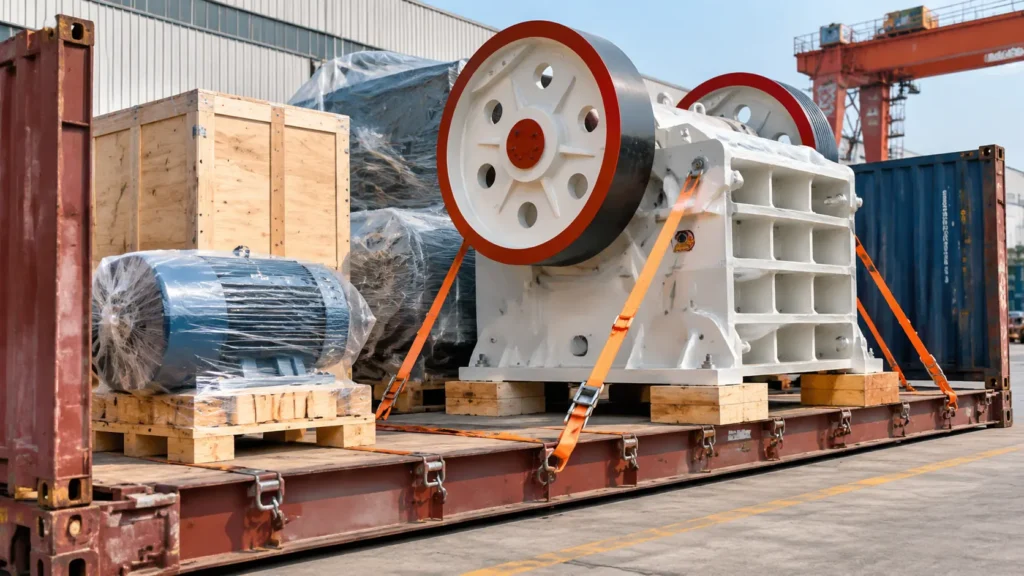
Large machines may be secured to reinforced steel frames or heavy-duty skids, while smaller components can be packed in suitable wooden crates.
Special attention should be given to:
Motors and electrical components: Use suitable moisture and impact protection.
Bearings and exposed metal surfaces: Apply appropriate anti-rust treatment.
Hydraulic connections and pipes: Protect exposed openings against dust and moisture.
Control panels: Use secure, moisture-resistant packaging.
Detachable accessories: Pack and label spare parts separately.
If solid wood packaging is used, confirm the applicable ISPM 15 treatment and marking requirements for the destination country.
Photographs of the equipment before and after packing are useful for checking cargo condition and supporting any potential damage claim.
Heavy machinery must be loaded and secured correctly to prevent movement during road and ocean transportation.
Before loading, confirm the equipment’s gross weight, center of gravity, and approved lifting points. The factory should provide loading instructions and confirm whether cranes or heavy-duty forklifts are available.
For containerized shipments, the loading team must distribute the weight properly and avoid excessive concentrated loads on the container floor.
For flat-rack and breakbulk cargo, suitable blocking, bracing, and heavy-duty lashing are essential. The securing arrangement should match the machinery’s structure and account for movement during transportation.
Mobile crushing plants may contain detachable conveyors, tracks, screens, and other components. These should be secured or dismantled according to the manufacturer’s instructions.
For related heavy equipment transportation information, see our guide to shipping excavators and bulldozers from China.
Accurate shipping documents and advance preparation are essential for completing export procedures in China and customs clearance at the destination.
The common documents for machinery shipments include:
Commercial Invoice: Shows the seller, buyer, equipment description, quantity, and declared value.
Packing List: Provides package numbers, dimensions, contents, and gross weights.
Sales Contract: Supports the commercial transaction when required.
Bill of Lading: Records the international sea transportation details.
Export Customs Declaration: Supports export clearance in China.
Certificate of Origin: Required when requested by the destination country or for applicable tariff preferences.
Technical Specifications: May include machine models, functions, power, and serial numbers.
The equipment descriptions, quantities, and package details should be consistent across the invoice, packing list, and shipping documents. For complete production lines, list each crusher, screen, conveyor, and accessory clearly rather than describing the entire shipment as general machinery.
You can also review our international shipping documents checklist before arranging shipment.
Import requirements depend on the destination country and the type of machinery being shipped. Before departure, buyers should confirm the applicable HS code, import duties, taxes, and any required product certifications.
The HS classification should be based on the equipment’s actual function, structure, and configuration. Individual crushers, screening machines, complete processing systems, and spare parts may fall under different tariff classifications.
Some markets also have additional requirements for imported industrial machinery, including:
Machinery safety and technical compliance standards.
Diesel engine emission requirements for applicable equipment.
Electrical safety requirements for motors and control systems.
Import permits or inspection documents where required.
Importers should check these requirements with their customs broker or relevant local authorities before shipment. Incorrect tariff classification or missing compliance documents may result in additional duties, inspections, storage charges, or customs delays.
For further information, read our guides to HS Code classification and the customs clearance process and its costs.
Shipping heavy machinery involves coordination between the manufacturer, freight forwarder, carrier, customs broker, and importer. Confirming the cargo details before booking helps avoid changes to the transport plan after the equipment reaches the port.
The typical transportation process includes:
Cargo Information: Collect the equipment specifications, packing list, dimensions, gross weight, and factory location.
Shipping Assessment: Review the cargo details and determine the suitable container type or transportation method.
Freight Quotation: Confirm the shipping cost, origin charges, destination expenses, and estimated transit time.
Factory Pickup and Loading: Arrange transportation from the factory to the port and coordinate loading when required.
Export Customs Clearance: Prepare the shipping documents and complete export declaration procedures in China.
International Transportation: Arrange vessel departure and monitor the shipment during transit.
Destination Clearance and Delivery: Complete import customs procedures and arrange transportation to the final destination.
For oversized machinery, allow additional time for carrier approval, special trucking, and port handling arrangements.
To obtain an accurate quotation, provide the freight forwarder with:
Equipment name, model, and quantity.
Packed dimensions and gross weight of each package.
Total cargo volume and packing list.
Factory pickup address in China.
Destination port or final delivery address.
Expected cargo-ready date.
Whether the machinery is assembled or dismantled.
Loading photographs or technical drawings for oversized units.
For complete crushing plants, a detailed packing list showing each machine and component is particularly useful.
Tonlexing provides international freight forwarding services for industrial machinery and oversized cargo. Based on the actual shipment details, our team can help assess suitable transportation methods and coordinate factory pickup, export handling, sea freight, and destination delivery.
Contact Tonlexing for a freight quotation with your cargo specifications and destination details.
Sea freight is generally the most practical option for complete machinery. Standard containers are suitable for equipment within container limits, while oversized units may require flat racks, open-top containers, or breakbulk shipping.
Some mobile crushers can be shipped in standard containers after dismantling. Larger units may exceed container dimensions or weight limits and require specialized transportation. The final decision depends on the packed dimensions and loading conditions.
Open-top containers are useful for tall machinery or cargo requiring top loading. Flat racks are more suitable for equipment that exceeds standard container width or height. Both require confirmation of cargo dimensions, lifting arrangements, and securing requirements.
Common documents include a commercial invoice, packing list, bill of lading, and customs declaration information. Depending on the destination, buyers may also need a certificate of origin, technical specifications, and relevant safety or environmental certificates.
The cost depends on cargo dimensions, gross weight, shipping method, factory location, destination, and handling requirements. Standard container shipping, flat-rack transportation, and breakbulk shipping have different cost structures. An accurate quotation requires the actual cargo details and destination information.
Useful freight, customs and importing resources related to this shipping guide.
How to Import Machinery from China Verified & Reviewed · Last updated August 2026 Importing machinery from China requires careful supplier verifi...
Read guide →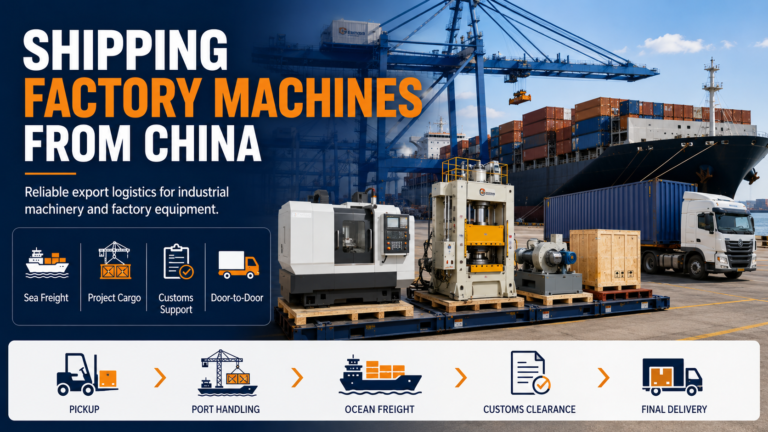
Shipping Factory Machines from China Verified & Reviewed · Last updated July 2026 Shipping factory machines from China requires careful planning...
Read guide →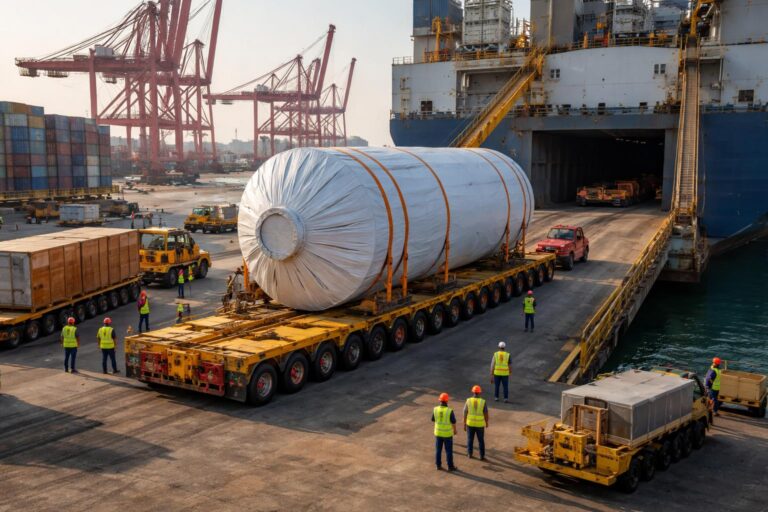
Shipping Oversized Cargo from China Verified & Reviewed · Last updated February 2026 Shipping oversized cargo from China depends on cargo dimensi...
Read guide →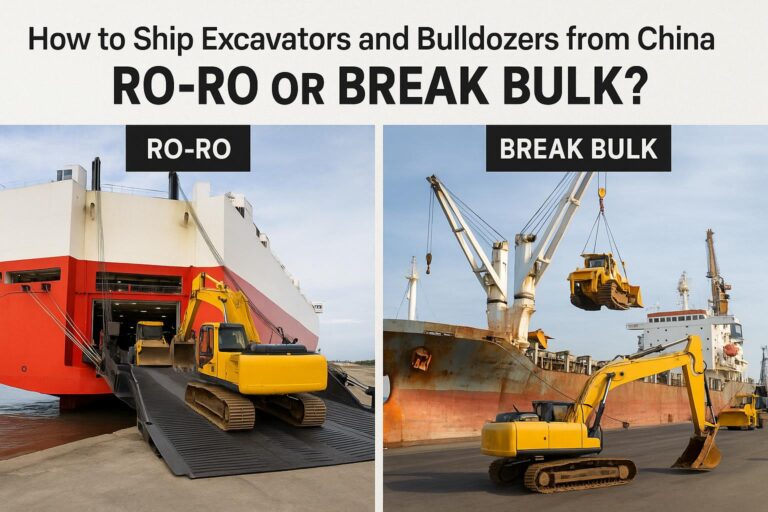
Why Ship Excavators and Bulldozers from China? How to ship excavators and bulldozers from China has become a strategic decision for many global b...
Read guide →Sea freight is the most cost effective shipping method for large volumes and container load cargo. It is ideal for businesses looking to reduce s...
Learn more → Useful Resource Project LogisticsProject Logistics — Heavy Lift & Oversized Cargo Shipping from China Project logistics is built for complex, high-value shipments—oversized, heav...
Learn more →WhatsApp us