Related Guide
Shipping Injection Molding Machines from China
Shipping Injection Molding Machines from China Verified & Reviewed · Last updated July 2026 Shipping injection molding machines from China requir...
Read guide →

Shipping factory machines from China requires careful planning because industrial machinery is often heavy, high-value, oversized, and sensitive to moisture, vibration, improper lifting, and customs delays.
This guide explains how to ship factory machines from China, covering shipping methods, machinery shipping costs, transit time, customs clearance, export documents, packaging requirements, cargo insurance, and door-to-door delivery solutions for industrial buyers.
Shipping Methods
Machinery Shipping Costs
Customs Clearance
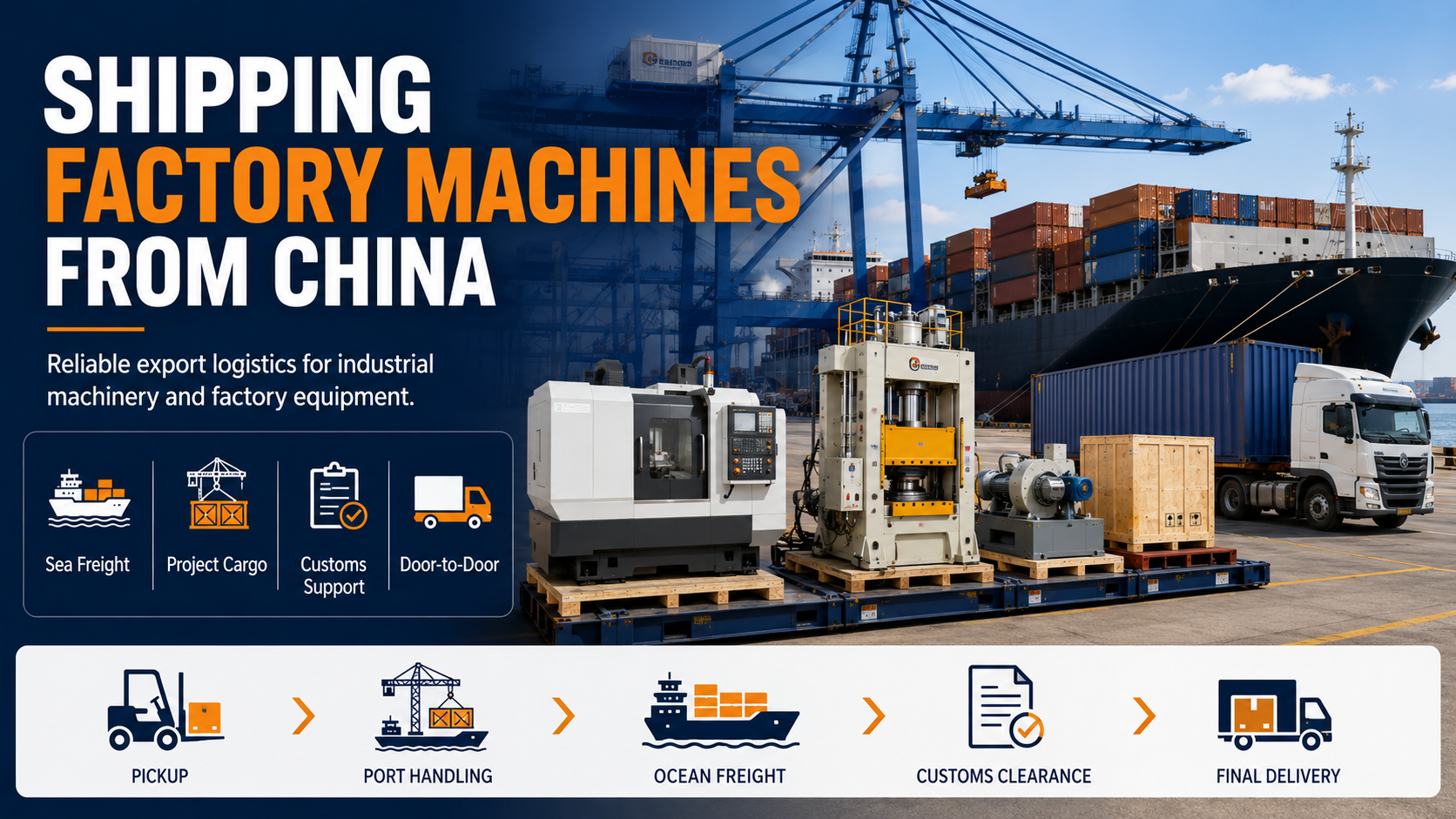
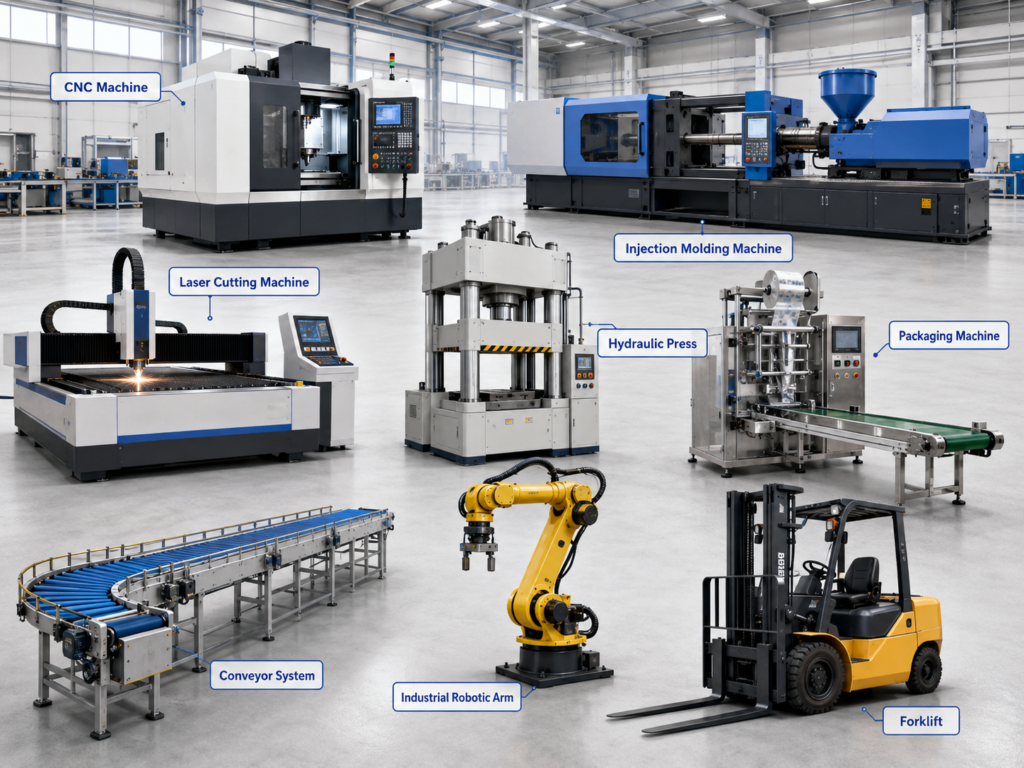
China ships many types of factory machines and industrial equipment to global markets. These machines are used in manufacturing, processing, packaging, construction, and production line operations. As long as the equipment is properly packed, documented, and classified under the correct HS code, most machinery can be shipped internationally.
Common factory machines shipped from China include:
CNC machines, laser cutting machines, and machine tools
Packaging machines, filling machines, and sealing machines
Food processing equipment and textile machinery
Printing machines, woodworking machines, and metal processing equipment
Construction machinery, spare parts, and complete production lines
The shipping method depends on the machine’s size, gross weight, packing dimensions, and loading requirements. Standard industrial machines are usually shipped by FCL sea freight, while oversized or heavy equipment may need flat rack containers, open top containers, RoRo shipping, or breakbulk shipping.
Factory machines are complex cargo. They are often expensive, heavy, and difficult to handle. Unlike general goods, machinery shipments may require special loading equipment, reinforced packing, flat rack containers, open top containers, or professional route planning.
If the logistics plan is not prepared correctly, the buyer may face customs delays, port storage fees, extra terminal handling charges, failed delivery, or cargo damage.
Many industrial machines are compact but extremely heavy. For example, a CNC machine may fit inside a 20ft container, but its weight must be distributed correctly to avoid floor damage or unsafe loading.
Some machines exceed standard container dimensional limits. If the machine is too tall, too wide, or too heavy, it may need a flat rack container, open top container, RoRo shipping, or breakbulk shipping.
For oversized machinery, the freight forwarder must check:
Machine’s size and gross weight
Container type
Lifting points
Center of gravity
Loading method
Port operation requirements
Route planning
Destination unloading conditions
Accurate cargo information is essential. Even a small mistake in dimensions can cause booking failure, port rejection, or additional handling costs.
Factory machines often contain motors, control panels, bearings, sensors, hydraulic systems, electrical cabinets, and precision parts. These components may be damaged by moisture, salt air, vibration, impact, or improper lifting.
Seaworthy packing is essential for machinery shipped by ocean freight. Good packing helps reduce rust, movement, shock, and water exposure during long-distance transport.
For valuable machinery, the supplier should take photos and videos before and after packing. These records help confirm cargo condition and support insurance claims if damage occurs during transport.
Machinery imports may involve HS code classification, customs inspections, import duties, safety standards, and destination market regulations. Different machinery types may require different documents or certificates.
For example, electrical machinery, used machinery, pressure equipment, engines, or equipment with safety functions may require additional compliance documents. Missing documentation can delay customs clearance significantly and increase port storage costs.
A clear process helps importers control cost, reduce risk, and avoid last-minute problems. The best time to plan shipping is before the machine is packed, not after the supplier says the goods are ready.
Never let a machine leave the factory floor until it has been inspected. Hire an independent testing and certification agency to conduct a factory acceptance test. Once the machine is crated and shipped, returning it for modifications is financially impossible.
Ensure your supplier provides highly detailed paperwork. For industrial assets, the minimum required documentation includes:
Commercial Invoice: Detailing the exact value, currency, and payment terms.
Detailed Packing List: Specifying weights, dimensions, serial numbers, and net/gross weights of each crate.
Bill of Lading (B/L): The contract between the cargo owner and the ocean carrier.
Certificate of Origin: Required for legal import and potential preferential tariff treatments.
Technical Drawings and Manuals: Often requested by customs officials to verify the declared HS code function.
Before the ship docks, your customs broker must file an entry manifest to secure pre-clearance. Once unloaded, heavy machinery cannot sit on standard chassis.
Specialized Equipment Dispatch: Coordinate with heavy-haul trucking companies capable of providing flatbeds, step-decks, or multi-axle lowboy trailers.
Rigging Services: Arrange for industrial riggers and heavy cranes to be present at your factory floor on the exact day of delivery to safely unload, position, and level the equipment.
Choosing the right shipping method is one of the most important decisions when shipping factory machines from China. The best option depends on the machinery’s size, gross weight, value, destination country, delivery schedule, and budget. While most industrial machinery is transported by sea freight, oversized equipment and urgent shipments may require specialized transportation.
FCL (Full Container Load) is the most common shipping method for factory machines that fit inside a standard shipping container. Because the container is used exclusively for one shipment, the machinery remains sealed from loading in China until arrival at the destination, reducing unnecessary handling throughout the journey.
FCL is suitable for CNC machines, packaging machines, food processing equipment, textile machinery, woodworking machines, and most standard industrial machinery.
Advantages
Better protection for valuable machinery
Lower handling risk than shared containers
More predictable shipping schedules
Cost-effective for medium and large shipments
The most commonly used containers are 20ft and 40ft containers. Heavy machinery is often loaded into 20ft containers because of their higher payload capacity, while larger but lighter equipment is commonly shipped in 40ft or 40HQ containers.
LCL (Less than Container Load) is suitable for smaller machinery, accessories, spare parts, or replacement parts that do not occupy an entire container. Multiple shipments from different importers share the same container, making LCL a practical option for lower cargo volumes, while FCL avoids sharing container space with other shippers and reduces handling exposure.
Although LCL reduces transportation costs for smaller shipments, it involves additional loading and unloading during consolidation and deconsolidation. This can extend shipping time and increase the number of touchpoints along the route. As a result, fragile or high-value machinery may face a higher damage risk than with FCL shipping, and the extra handling can also lengthen transit time.
LCL is generally recommended only when the cargo volume is too small to justify a full container.
Flat rack containers are designed for oversized machinery that cannot fit inside a standard container because of excessive width, height, or weight. Unlike enclosed containers, flat racks have open sides and no roof, allowing heavy equipment to be loaded by crane.
Typical cargo includes:
Large CNC machining centers
Industrial presses
Boilers
Heavy manufacturing equipment
Steel fabrication machinery
Because the cargo remains partially exposed during transport, additional weather protection and professional securing methods are essential.
Open top containers are another solution for machinery that exceeds the height limitations of a standard container but still fits within normal width restrictions. The removable roof allows cranes to lower equipment directly into the container before it is covered with a heavy-duty tarpaulin.
This shipping method is often chosen for tall industrial machines that cannot be loaded through conventional container doors but still benefit from the protection of container transport.
Some factory machines are simply too large or too heavy for any container, including flat racks. In these cases, breakbulk shipping becomes the preferred solution.
The machinery is lifted directly onto the vessel using heavy-duty cranes and secured individually instead of being placed inside a container.
Breakbulk shipping is commonly used for:
Complete production lines
Heavy presses
Mining equipment
Large storage tanks
Industrial reactors
Oversized manufacturing systems
Although breakbulk shipping is more expensive than container shipping, it is often the only practical solution for project cargo and indivisible heavy machinery.
RoRo (Roll-on/Roll-off) shipping is designed for self-propelled machinery or equipment mounted on wheels or tracks. Instead of being lifted by cranes, the machinery is driven or towed directly onto the vessel using built-in ramps.
RoRo is widely used for:
Forklifts
Excavators
Loaders
Mobile cranes
Agricultural machinery
Wheeled construction equipment
Because lifting operations are minimized, RoRo can reduce handling risks and speed up loading at suitable ports.
Air freight is generally reserved for urgent shipments rather than complete factory machines. The high transportation cost makes it unsuitable for most heavy industrial equipment, but it is an excellent solution when production downtime is more expensive than freight costs.
Air freight is commonly used for:
High-value industrial equipment
Precision instruments
Electronic control systems
Critical spare parts
Emergency replacement components
For manufacturers facing unexpected equipment failures, shipping replacement parts by air can significantly reduce production interruptions.
The cost of shipping factory machines from China varies widely because no two machinery shipments are exactly the same. Factors such as the machine’s dimensions, gross weight, shipping method, destination country, and delivery requirements all influence the final price.
For standard industrial machinery that fits inside a shipping container, sea freight is usually the most economical option. Larger or oversized machinery may require flat rack containers, breakbulk shipping, or RoRo services, which generally involve higher transportation and handling costs.
The table below provides general shipping cost estimates for common transportation methods.
| Shipping Method | Typical Cost | Suitable For |
|---|---|---|
| FCL Sea Freight (20ft) | USD 1,500–4,000 per container | Standard industrial machinery |
| FCL Sea Freight (40ft) | USD 2,500–6,000 per container | Larger machines or multiple units |
| LCL Sea Freight | Charged by CBM | Small machines and spare parts |
| Flat Rack Container | 50–100% higher than standard containers | Oversized machinery |
| Breakbulk Shipping | Quoted case by case | Project cargo and heavy machinery |
| RoRo Shipping | Based on vehicle size and weight | Wheeled construction equipment |
| Air Freight | USD 4–8/kg | Urgent machinery and spare parts |
These figures are for reference only. Ocean freight rates change throughout the year due to vessel capacity, fuel costs, and market demand. During peak shipping seasons, freight rates may increase significantly, and port congestion can also affect overall logistics costs.
The customs clearance process usually includes document review, HS code classification, duty calculation, tax payment, and possible customs inspections. A customs broker can help importers submit declarations, check duty rates, and handle questions from customs authorities.
HS codes classify machinery products for customs duties and taxes, and importing machinery requires document review, HS code classification, duty calculation, tax payment, and possible customs inspections. Different machinery types may have different duty rates and import requirements.
A CNC machine, food processing machine, packaging machine, and construction machine may all fall under different classifications. Importers should not rely only on a simple product name. The machine’s function, technical specifications, power system, and application may affect the HS code.
Import duties, VAT, tariffs, and trade measures can significantly affect total landed costs. The final cost is not only the machine price plus sea freight. It may also include destination port charges, customs broker fees, inspection charges, inland delivery, unloading costs, and local taxes.
Before placing the order, industrial buyers should estimate the total landed cost instead of only comparing supplier prices.
Your machinery will not clear customs if it fails to meet the domestic safety, environmental, and engineering standards of the importing country.
United States: Equipment containing electrical systems must ideally carry Nationally Recognized Testing Laboratory (NRTL) listings, such as UL or Intertek certifications. Additionally, if the machine uses specific refrigerants, lasers, or radio frequencies, it must pass EPA, FDA, or FCC cross-agency clearances.
European Union: Every industrial machine entering the EU must strictly adhere to the Machinery Directive (2006/42/EC) and bear a valid CE Mark alongside a signed Declaration of Conformity.
Wood Packaging Regulations: Any solid timber crates, pallets, or structural bracing blocks used to hold your machine must be treated and stamped with the ISPM 15 mark. Untreated wood is rejected at the border due to agricultural pest risks.
Packaging is one of the most important parts of machinery shipping. Poor packing can cause rust, impact damage, broken components, water exposure, and customs rejection.
Seaworthy packing protects machinery during factory pickup, container loading, ocean freight, unloading, customs inspections, and inland delivery. Heavy machinery should be packed with strong wooden crates, reinforced bases, internal bracing, and secure lashing.
Wooden crates should be strong enough to support the equipment’s weight. For heavy cargo, steel frames or steel-reinforced bases may be required.
Salt air and humidity can damage metal surfaces, electrical parts, and sensitive machinery components. Anti-rust oil, VCI film, vacuum packaging, desiccants, and waterproof covers can help protect machinery during long-distance shipping.
Shock-proof bases are also important for machines with precision parts, control systems, sensors, and electrical cabinets.
Clear lifting points must be marked on oversized machinery and heavy equipment. The center of gravity should also be marked to prevent incorrect lifting.
Proper weight distribution is essential inside containers and on flat rack containers. If the machine is not balanced or fixed correctly, it may move during transport and create serious damage risk.
Important packing details include:
Wooden crates with internal bracing
Steel straps and reinforced lashing
Vacuum packaging for corrosion protection
Shock-proof bases
Waterproof outer covering
Anti-rust treatment
Clear lifting points
Center of gravity marks
Nameplate protection
Photos before and after packing
Freight forwarders manage the logistics process for machinery shipping from China. For industrial equipment and heavy machinery, an experienced freight forwarder is especially important because the shipment may involve factory pickup, export paperwork, special containers, cargo insurance, customs declarations, and destination delivery.
Experienced freight forwarders can help with:
Checking machinery size and gross weight
Choosing the right shipping method
Comparing FCL, LCL, flat rack, open top, RoRo, breakbulk, and air freight
Coordinating factory pickup from Chinese factories
Arranging loading supervision
Preparing export customs documents
Handling customs declarations in China
Working with the destination customs broker
Providing cargo insurance for valuable machinery shipments
Managing terminal handling and port operations
Reducing customs clearance delays
Planning final delivery to the buyer’s factory
For machinery shipments, a freight forwarder should understand oversized cargo, heavy equipment, customs clearance, container loading, and destination market regulations.
Industrial buyers often manage complex supply chains. A delay in machinery delivery may affect production schedules, installation plans, and customer orders. Working with a professional logistics partner helps reduce uncertainty.
A good freight forwarder can identify potential problems before shipment, such as weak packing, incorrect dimensions, missing documents, route restrictions, import compliance issues, or unloading difficulties at the destination site.
Sea freight is usually the best option for most machinery because it is cost-effective for heavy and bulky cargo. If the machine fits into a container, FCL shipping is usually safer. If the equipment is oversized, flat rack, open top, RoRo, or breakbulk shipping may be required.
Sea freight usually takes several weeks depending on the route, vessel schedule, port congestion, customs clearance, and final delivery location. Air freight can deliver urgent parts in a few days, but it is expensive for heavy machinery.
Yes, used machinery can be shipped from China, but some destination countries may require extra documents. Customs may ask for machine age, serial number, photos, condition details, valuation records, or inspection reports.
Yes. Cargo insurance is strongly recommended because factory machines are valuable machinery shipments. Insurance helps protect against loss or damage during loading, ocean freight, customs inspection, port handling, and inland delivery.
Customs delays often happen because of wrong HS codes, missing documents, unclear product descriptions, inconsistent values, customs inspections, or missing certificates. A customs broker can help review documents and reduce clearance problems.
Useful freight, customs and importing resources related to this shipping guide.
Shipping Injection Molding Machines from China Verified & Reviewed · Last updated July 2026 Shipping injection molding machines from China requir...
Read guide →
Shipping Electric Forklifts from China Verified & Reviewed · Last updated July 2026 Shipping electric forklifts from China requires careful plann...
Read guide →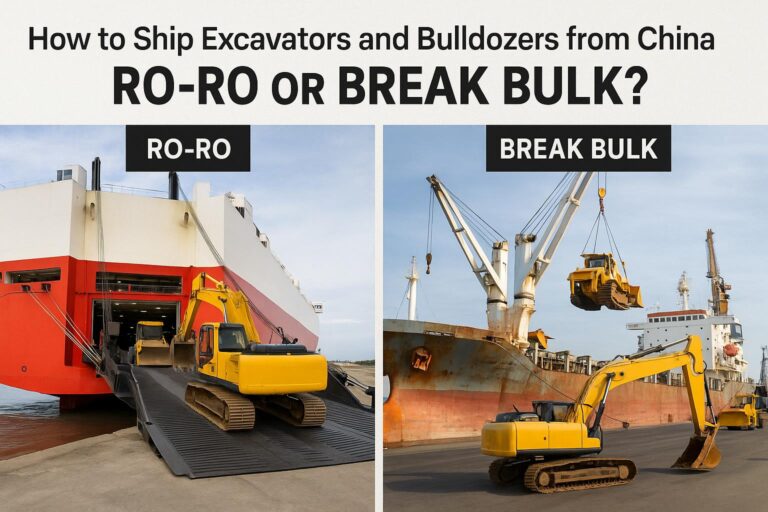
Why Ship Excavators and Bulldozers from China? How to ship excavators and bulldozers from China has become a strategic decision for many global b...
Read guide →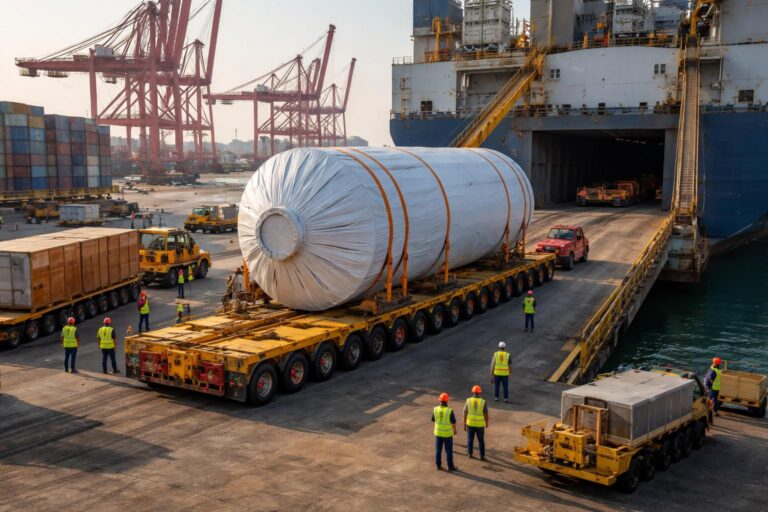
Shipping Oversized Cargo from China Verified & Reviewed · Last updated February 2026 Shipping oversized cargo from China depends on cargo dimensi...
Read guide →The United States is one of the largest importers of heavy machinery, sourcing equipment from China’s leading manufacturers to meet demands in in...
Learn more → Useful Resource Shipping Machinery from China to the UKShipping Machinery from China to the UK (2026) Verified & Reviewed · Last updated March 2026 Shipping machinery from China to the UK depends on y...
Learn more →WhatsApp us