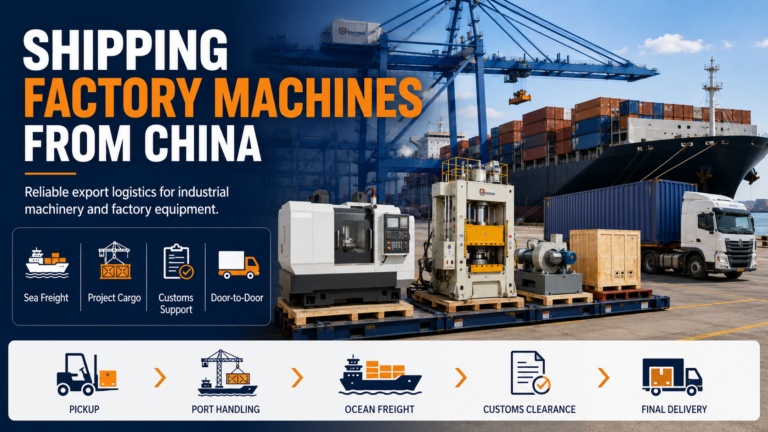
What Agricultural Machinery Can You Ship from China?
Agricultural machinery covers a wide range of equipment used for farming, planting, harvesting, irrigation, soil preparation, livestock work, and agricultural processing. Most importers source machinery from China because Chinese factories can supply both complete machines and spare parts at competitive prices.
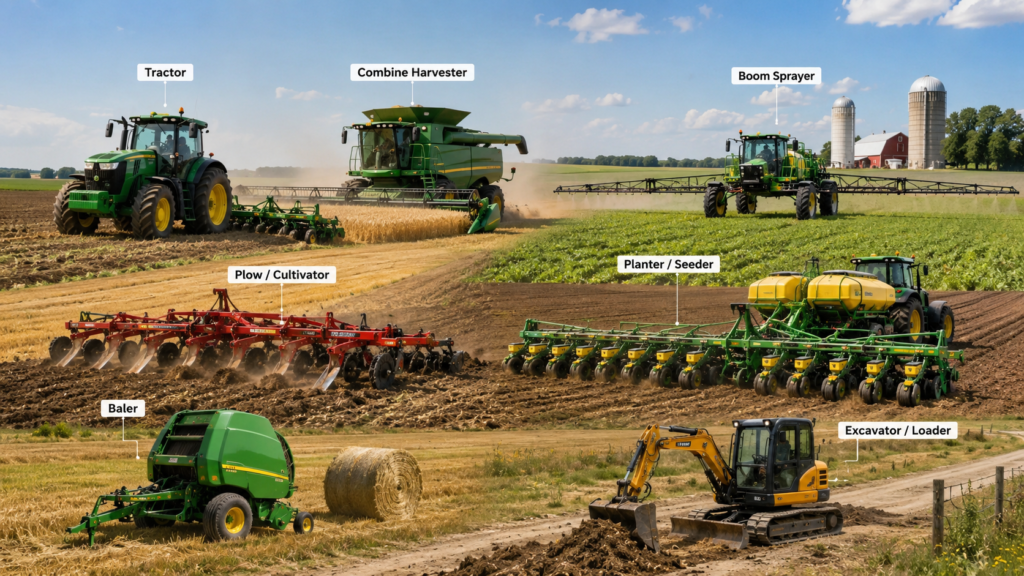
Common agricultural equipment shipped from China includes:
Tractors
Combine harvesters
Rice transplanters
Seeders and planters
Rotary tillers and cultivators
Sprayers and fertilizer spreaders
Irrigation pumps and systems
Balers and hay equipment
Farm trailers and loaders
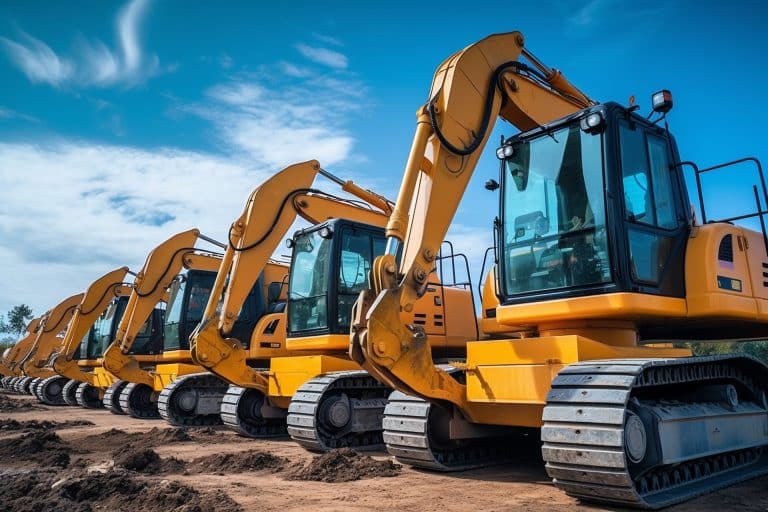
Mini excavators for farm use
Attachments and spare parts
For tractors, China produces models across several power categories. Compact tractors usually range from 15 to 50 HP and are suitable for small farms, orchards, gardens, and light field work. Mid-range utility tractors between 50 and 100 HP are widely used for general agricultural operations. Heavy-duty tractors above 100 HP are designed for large-scale farms, commercial planting, and demanding working conditions.
Why Import Agricultural Machinery from China?
Importing agricultural machinery from China can help farms and distributors reduce sourcing costs while gaining access to a wide range of product types. Compared with some foreign markets, Chinese agricultural machinery prices are often 30–50% lower, depending on equipment type, specifications, brand, order quantity, and customization level.
China’s agricultural machinery industry has developed rapidly because of strong domestic market demand, agricultural mechanization, and growing international trade. Many factories now produce equipment not only for China’s local market, but also for foreign markets in North America, Europe, Southeast Asia, Africa, the Middle East, Australia, and Latin America.
Main reasons importers choose machinery from China include:
Lower production cost
Wide selection of equipment and spare parts
Flexible OEM and customization options
Growing export experience among Chinese manufacturers
Competitive pricing for dealers and distributors
Availability of compact and mid-range farm machinery
Improved product quality from established suppliers
How to Find Reliable Chinese Manufacturers
Finding the right supplier is as important as choosing the right shipping method. A low price from an unknown factory may create bigger problems later if product quality, export documentation, or after sales support is weak.
You can source suppliers through B2B platforms, agricultural machinery exhibitions, industry referrals, factory visits, and export trade shows. Events such as the Canton Fair and specialized agricultural machinery exhibitions are useful for meeting manufacturers directly and checking equipment quality.
Before confirming an order, always:
Verify the supplier’s business license
Confirm export experience for your market
Request product certificates
Check warranty terms clearly
Ask for spare parts availability
Confirm specs, dimensions, and engine details
Request loading photos before shipment
Ask whether they can support export documentation
A reliable supplier should understand your specific agricultural needs, not just quote a machine price. For example, tractors used in dry farmland, wet paddy fields, orchards, livestock farms, and mountainous areas may require different tires, attachments, power ratings, and safety features.
Main Shipping Methods for Agricultural Machinery from China
The appropriate shipping method depends on the machinery size, weight, shape, mobility, destination port, urgency, and budget. Some equipment can fit into a standard container, while oversized machines may need flat rack containers, open top containers, RoRo shipping, or breakbulk transport.
A professional freight forwarder should check the machinery dimensions before quoting. The most important information includes total length, width, height, gross weight, packing method, lifting points, whether the machine can move by itself, and whether any spare parts are shipped together.
Container Shipping for Standard Agricultural Equipment
Container shipping is the most common method for agricultural machinery that can fit inside a standard container. It is suitable for compact tractors, small tillers, seeders, irrigation equipment, farm attachments, spare parts, and disassembled machinery.
A standard 20ft container has internal dimensions of approximately 5.9 m long, 2.35 m wide, and 2.39 m high. A 40ft container provides more length and volume, making it suitable for larger equipment or multiple units.
Container shipping is usually suitable for:
The main advantage is better weather protection. The machinery is enclosed inside the container, reducing exposure to rain, seawater, dust, and handling risks. It is also easier to manage customs clearance and inland delivery when the cargo can remain inside the container until final unloading.
Flat Rack Shipping for Oversized Machinery
Flat rack shipping is used when agricultural machinery exceeds standard container dimensions. Flat rack containers have no side walls and no roof, which allows wide, tall, or heavy equipment to be loaded by crane or forklift.
Flat rack containers are suitable for:
Flat rack shipping is more expensive than standard container shipping because it uses special equipment, requires professional lashing, and may occupy additional space on the vessel. Flat rack surcharges can add 50–150% to standard container rates, depending on machine size, shipping route, and carrier space.
Weather protection is also important. Since the cargo is exposed, waterproof covers, rust protection, shrink wrapping, and proper lashing are often required.
Open Top Containers for Tall Machinery
Open top containers are suitable for tall machinery that cannot fit through normal container doors or exceeds standard container height. The cargo is loaded from the top by crane and protected with a tarpaulin after loading.
Open top containers are often used for:
Tall agricultural equipment
Machinery with fixed vertical structures
Farm equipment loaded by crane
Machines that are difficult to push through container doors
Compared with flat rack containers, open top containers provide better side protection. However, they still require careful loading, securing, and weather protection.
RoRo Shipping for Self-Propelled Agricultural Machinery
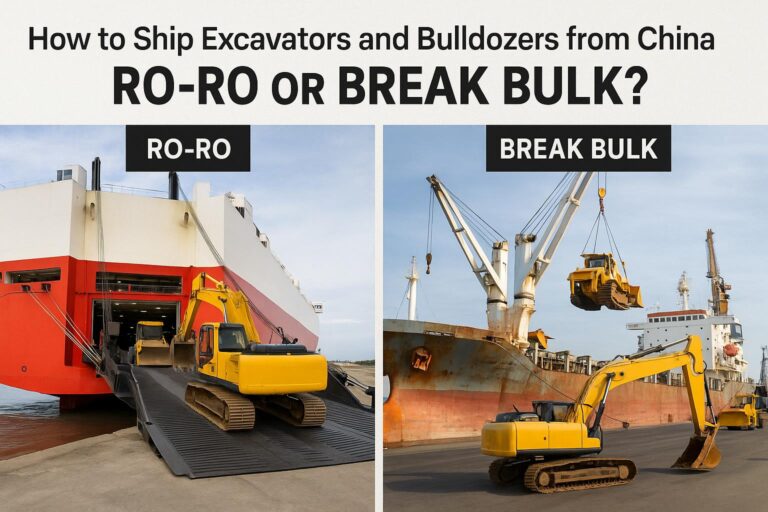
RoRo shipping is suitable for self-propelled agricultural machinery that can be driven onto the vessel. RoRo stands for roll-on roll-off. The equipment is driven directly into the ship and parked in a dedicated deck area.
RoRo shipping is efficient for:
RoRo shipping can be faster and easier than container shipping for large drivable machines. It avoids container unloading and reduces the need for heavy lifting at the origin port. However, RoRo schedules and destination coverage are not available for every route, so the freight forwarder must check service availability in advance.
Breakbulk Shipping for Very Large Equipment
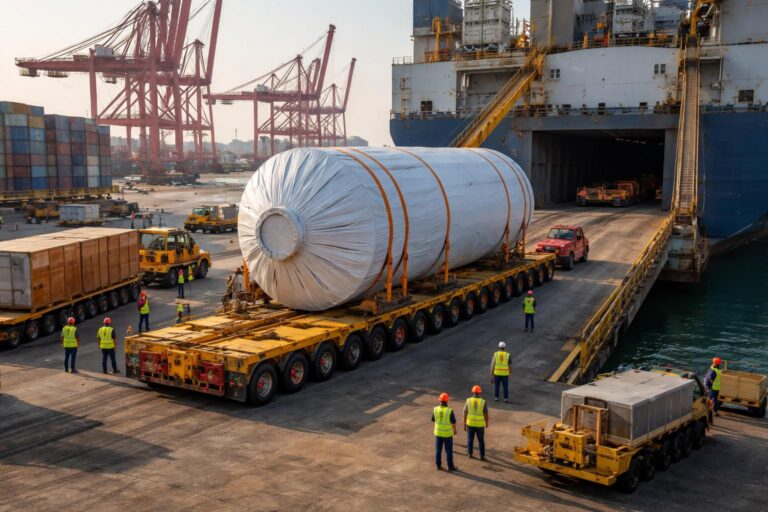
Breakbulk shipping is used for very large, heavy, or irregular agricultural machinery that cannot fit into containers or RoRo vessels. The cargo is loaded directly onto the vessel by crane and secured as individual pieces.
This method is suitable for:
Extremely oversized machines
Large agricultural processing lines
Heavy equipment with unusual dimensions
Non-drivable machinery
Large project shipments
Breakbulk shipping requires detailed planning, lifting drawings, cargo photos, lashing design, and port handling coordination. It is usually used for large projects rather than small individual shipments.
Air Freight for Spare Parts and Urgent Components
Air freight is not usually used for complete agricultural machinery because machines are large and heavy. However, it is useful for urgent spare parts, electronic components, hydraulic parts, sensors, control panels, and replacement accessories.
Air freight is suitable when:
A farm machine is stopped and parts are needed urgently
The shipment is small but time-sensitive
Warranty replacement parts must arrive quickly
High-value components need fast delivery
For complete machinery, sea freight is usually the most cost-effective choice. For urgent spare parts, air freight can reduce downtime and protect farming schedules.
How Much Does It Cost to Ship Agricultural Machinery from China?
Shipping costs depend on the shipping method, cargo size, weight, route, port charges, season, fuel cost, equipment availability, and destination delivery distance. Agricultural machinery often requires more accurate cost planning than general cargo because oversized cargo, special containers, cleaning, insurance, and customs inspections may add hidden costs.
Estimated Freight Cost by Shipping Method
These are general market references. Final shipping costs must be calculated according to the machine dimensions, weight, origin city, destination port, service route, loading method, and customs requirements.
Hidden Costs Importers Often Miss
Many first time importers focus only on the supplier’s machine price or ocean freight. In reality, the total cost can increase if destination fees, storage, customs delay, cleaning, or local delivery are not planned.
Common hidden costs include:
Port storage fees
Demurrage and detention
Crane or forklift charges
Customs inspection fees
Cleaning or quarantine fees
Flat rack handling surcharge
Import license application cost
Inland heavy truck delivery
Extra packaging or weather protection
Documentation correction fees
Storage fees can accumulate quickly, sometimes around USD 50–150 per day depending on the port, country, and cargo type. This is why import documents and customs clearance preparation should be completed before the cargo arrives.
Shipping Time from China to Major Destinations
Shipping time depends on origin port, destination port, vessel schedule, transshipment route, customs inspection, and inland delivery. Agricultural machinery may also need extra time for loading, lashing, cleaning, and destination unloading.
Sea freight from China to the USA usually takes about 25–40 days for transpacific routes. Shipments to Europe often take around 30–45 days. Southeast Asia is faster, commonly around 7–15 days by sea depending on the route. Middle East destinations usually require around 15–30 days.
Estimated Transit Time by Region
Door-to-door delivery takes longer than port-to-port shipping. You should add time for factory pickup, export customs, port handling, vessel loading, destination customs clearance, and local trucking.
Customs Clearance for Agricultural Machinery
Customs clearance is one of the most important steps when importing agricultural machinery from China. A freight forwarder and customs broker can help manage the process, but the importer should still understand the basic requirements.
Agricultural machinery imported into different countries may need to comply with customs, tax, safety, environmental, and biosecurity rules. Requirements vary by importing country, machine type, engine type, age, HS code, and intended use.
HS Code and Import Duties
The HS code determines how customs authorities classify the machinery. It affects import duties, sales tax, import restrictions, and product compliance requirements. Using the wrong HS code can cause customs delays, duty adjustments, penalties, or document corrections.
Typical import duties for agricultural machinery may range from 2.5% to 6% in some markets, but the exact rate depends on the importing country and product classification. Some agricultural machinery may enjoy lower duty rates, while certain parts, engines, or processing equipment may be taxed differently.
Before shipping, confirm:
Correct HS code
Import duty rate
Sales tax or VAT
Any anti-dumping or special tariff rules
Import license requirements
Product certificate requirements
Required Documents for Import Clearance
A complete document set helps reduce customs delays and extra charges. Incorrect or incomplete documentation is one of the most common reasons agricultural machinery gets delayed at the destination port.
Essential import documents usually include:
Commercial invoice
Packing list
Bill of Lading
Sales contract
HS code confirmation
Certificate of origin
Product certificates if required
Import license if required
Insurance certificate
Customs declaration forms
Cleaning certificate for used equipment if required
The commercial invoice and packing list must match the actual cargo. Machine model, quantity, value, weight, dimensions, serial number, and country of origin should be consistent across all documents.
Customs Broker Support
A customs broker helps prepare import declarations, communicate with customs authorities, calculate import duties, and handle inspections. For agricultural machinery, using an experienced customs broker is strongly recommended because regulations can be different from ordinary consumer goods.
A customs broker can help with:
Using a freight forwarder can also help manage the complexities of customs clearance, especially when your shipment includes oversized cargo, used equipment, engines, or multiple spare parts.
Biosecurity, Cleaning and Inspection Requirements
Agricultural machinery must often meet strict international biosecurity rules. This is especially important for used equipment, machinery with tires or tracks, and machines that may have operated in soil, farms, forests, or fields.
Many countries have strict rules against soil, seeds, insects, organic debris, and plant material entering through imported machinery. If customs or quarantine officers find contamination, the cargo may be held, cleaned, inspected again, or rejected.
Why Cleaning Before Shipping Matters
Machinery must be thoroughly cleaned before shipping to remove soil, mud, straw, seeds, plant residue, insects, grease buildup, and organic debris. Even small amounts of soil inside tires, undercarriages, wheel arches, chains, and hydraulic areas can cause inspection problems.
Cleaning should focus on:
For used equipment, detailed loading photos and cleaning photos are useful. They can help prove the machine condition before shipment and support customs inspection if questions arise.
Engine and Environmental Compliance
Agricultural machinery with diesel or gasoline engines may need to meet environmental standards in the importing country. For example, imported engines may require emissions compliance documents in some markets. EPA-related requirements may apply for machinery imported into the USA.
Compliance may involve:
Engine model verification
Emissions certificate
Manufacturer declaration
Safety standards documentation
Product certificates
Local registration documents if required
Do not assume that every machine sold in China can be imported freely into your country. Confirm compliance before production and before shipping.
Packaging, Loading and Cargo Protection
Agricultural machinery is valuable and often exposed to vibration, lifting, port handling, sea movement, humidity, and weather. Proper packaging and loading reduce the risk of damage during international transport.
For container shipping, machines should be blocked, braced, and lashed inside the container. Spare parts should be packed in wooden cases, cartons, or pallets. If wooden packaging is used, it should comply with international fumigation requirements when applicable.
For flat rack shipping, cargo protection is even more important because the machinery is exposed during transport. Waterproof covering, rust prevention, edge protection, and strong lashing are necessary.
Loading Photos and Inspection
Loading photos are important for both cargo safety and insurance claims. They help prove how the machinery was loaded, secured, and protected before departure.
Useful loading photos include:
If damage occurs, these photos can support communication with the supplier, freight forwarder, insurance company, and customs authorities.
Best Incoterms for Shipping Agricultural Machinery from China
Incoterms decide which party controls shipping, pays each cost, and takes responsibility at different points of the journey. For agricultural machinery, choosing the right Incoterm affects cost control, customs clearance, delivery schedule, and risk management.
FOB for Better Freight Control
FOB is a practical choice for many importers because the Chinese supplier handles export clearance and delivery to the origin port, while the buyer chooses the freight forwarder and controls international shipping.
FOB is suitable when:
You want control over sea freight
You have your own freight forwarder
You want clearer destination cost management
You want to avoid supplier markup on freight
EXW for Factory Pickup
EXW gives the buyer maximum control, but also more responsibility. The freight forwarder must arrange factory pickup, export customs, port delivery, and international freight.
EXW is suitable when:
You need pickup directly from the factory
The supplier has limited export experience
You want one logistics provider to control the full process
You are working with multiple suppliers in China
DDP for Door-to-Door Delivery
DDP can be useful for first time importers who want a simpler solution. Under DDP, the logistics provider arranges pickup, export, freight, customs clearance, taxes, and final delivery.
DDP is suitable when:
You want one total cost
You are not familiar with customs clearance
You need delivery to farm, warehouse, or dealer location
You want to reduce communication with multiple parties
For high-value machinery, DDP terms should be checked carefully. Make sure import duties, sales tax, unloading, insurance, and local delivery are clearly included.
Step-by-Step Process for Shipping Agricultural Machinery from China
A clear shipping process helps avoid delays, wrong container selection, documentation problems, and unexpected costs. Agricultural machinery should be planned before production is completed, not after the supplier says the machine is ready.
Step 1: Confirm Machine Specifications
Before quoting, confirm the equipment size, gross weight, model, engine type, packaging method, and whether it can be disassembled. Proper dimensional measurements are necessary for selecting the appropriate shipping method and container type.
You should confirm:
Length, width, and height
Gross weight
Wheelbase or track width
Engine power and fuel type
Whether attachments are included
Whether spare parts are packed separately
Whether the machine can be driven
Loading and lifting points
Step 2: Choose the Appropriate Shipping Method
After confirming dimensions, the freight forwarder can decide whether the machinery fits a standard container, open top container, flat rack, RoRo vessel, or breakbulk service.
The wrong shipping method can cause major problems. A machine that slightly exceeds standard container dimensions may require flat rack shipping. A drivable tractor may be cheaper by RoRo on some routes, but not all destination ports support RoRo service.
Step 3: Prepare Export Documentation
The supplier and freight forwarder should prepare export documentation before the cargo leaves the factory. Export documentation must match the product details and shipping information.
Important export documents include:
Commercial invoice
Packing list
Export customs declaration
Bill of Lading instructions
Product certificates if required
Certificate of origin if needed
Loading photos
Insurance documents if arranged
Step 4: Arrange Pickup and Loading
Agricultural machinery may require low-bed trucks, forklifts, cranes, ramps, or special loading equipment. For oversized cargo, loading should be planned carefully to avoid damage and port handling issues.
Before pickup, confirm:
Step 5: Complete Customs Clearance
Once the cargo reaches the destination, the importer or customs broker must submit import documents, pay duties and taxes, and handle customs inspection if required. Machinery with engines, used equipment, or oversized cargo may need additional checks.
To avoid delays, prepare customs clearance before vessel arrival. Waiting until the cargo arrives can lead to storage fees and demurrage.
Step 6: Arrange Final Delivery and Unloading
Final delivery must be planned according to machine weight, road limits, site access, and unloading equipment. Some farms, warehouses, or rural delivery points may not have cranes or forklifts available.
For heavy equipment, confirm:
Common Mistakes When Importing Agricultural Machinery from China
Many import problems happen because importers focus on the purchase price and ignore logistics details. Agricultural machinery is not the same as small general cargo. It requires more accurate planning from supplier selection to final delivery.
Choosing a Supplier Without Export Experience
Some factories understand domestic sales but do not have enough export experience. They may not prepare documents correctly, pack equipment properly, or understand destination country compliance. This can cause delays during customs clearance.
Before payment, check whether the supplier has exported to your country before and whether they can provide correct product certificates.
Ignoring Dimensions and Weight
Small differences in height, width, or weight can change the entire shipping method. A machine that does not fit a standard container may need a flat rack, open top container, or RoRo service. This can significantly increase shipping costs.
Always confirm actual machine dimensions after production, not only catalog dimensions.
Forgetting Cleaning Requirements
Used agricultural equipment must be cleaned carefully before shipping. Soil, seeds, plant residue, or organic material can trigger quarantine problems in many countries. Cleaning after arrival is usually more expensive than cleaning before export.
Not Buying Marine Cargo Insurance
Agricultural machinery is high-value cargo. Damage can occur during loading, sea transport, unloading, or inland delivery. Without insurance, the importer may have limited recovery options.
Relying Only on the Supplier’s Shipping Quote
Some suppliers quote only basic sea freight to the destination port. This may not include destination port charges, customs clearance, import duties, sales tax, local delivery, insurance, or unloading.
Always compare the full total cost, not only the ocean freight.
Why Choose Tonlexing for Agricultural Machinery Shipping from China?
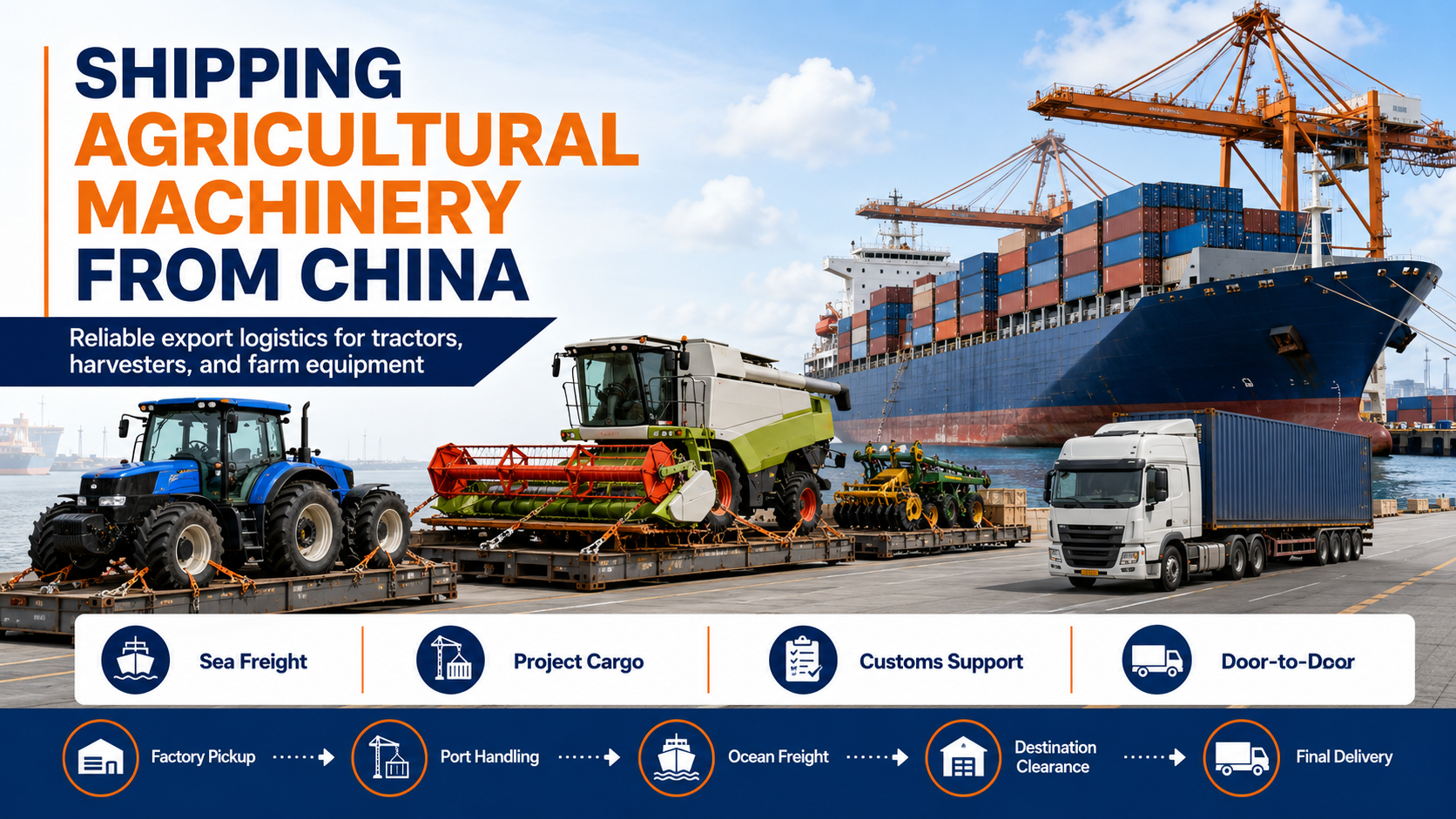
Tonlexing helps importers ship agricultural machinery from China by sea freight, container shipping, flat rack, RoRo shipping, air freight for spare parts, and door-to-door delivery. We work with farms, machinery dealers, distributors, project buyers, and first time importers who need clear costs and reliable logistics support.
Our team can help you choose the appropriate shipping method based on equipment size, weight, destination, customs requirements, and delivery address.
Tonlexing can support:
Factory pickup in China
Supplier coordination
Container shipping
Flat rack and open top solutions
RoRo shipping for drivable machinery
Export documentation
Customs clearance support
Marine cargo insurance
Loading photos and shipping updates
Door-to-door delivery
Spare parts shipping
Cost comparison before booking
Whether you are importing compact tractors, harvesters, seeders, sprayers, attachments, or spare parts, Tonlexing can provide a practical logistics plan with transparent shipping costs and destination support.