Related Guide
Shipping from China to Iraq
Shipping from China to Iraq – Sea, Air & DDP in 2026 Fast, reliable shipping from China to Iraq for B2B importers,industrial cargo, and general g...
Read guide →

Shipping a 20ft or 40ft container from China to Iraq is a common solution for importers moving machinery, building materials, furniture, electronics, textiles, auto parts, and general commercial goods. Most shipments move by sea freight to Umm Qasr Port, Iraq’s main gateway for containerized cargo.
This guide explains updated container shipping costs from China to Iraq, including 20ft and 40ft container rates, FCL and LCL options, transit time, customs clearance, and key factors that affect the final shipping cost.
Shipping method / Mode
Transit time range
FCL / LCL Options
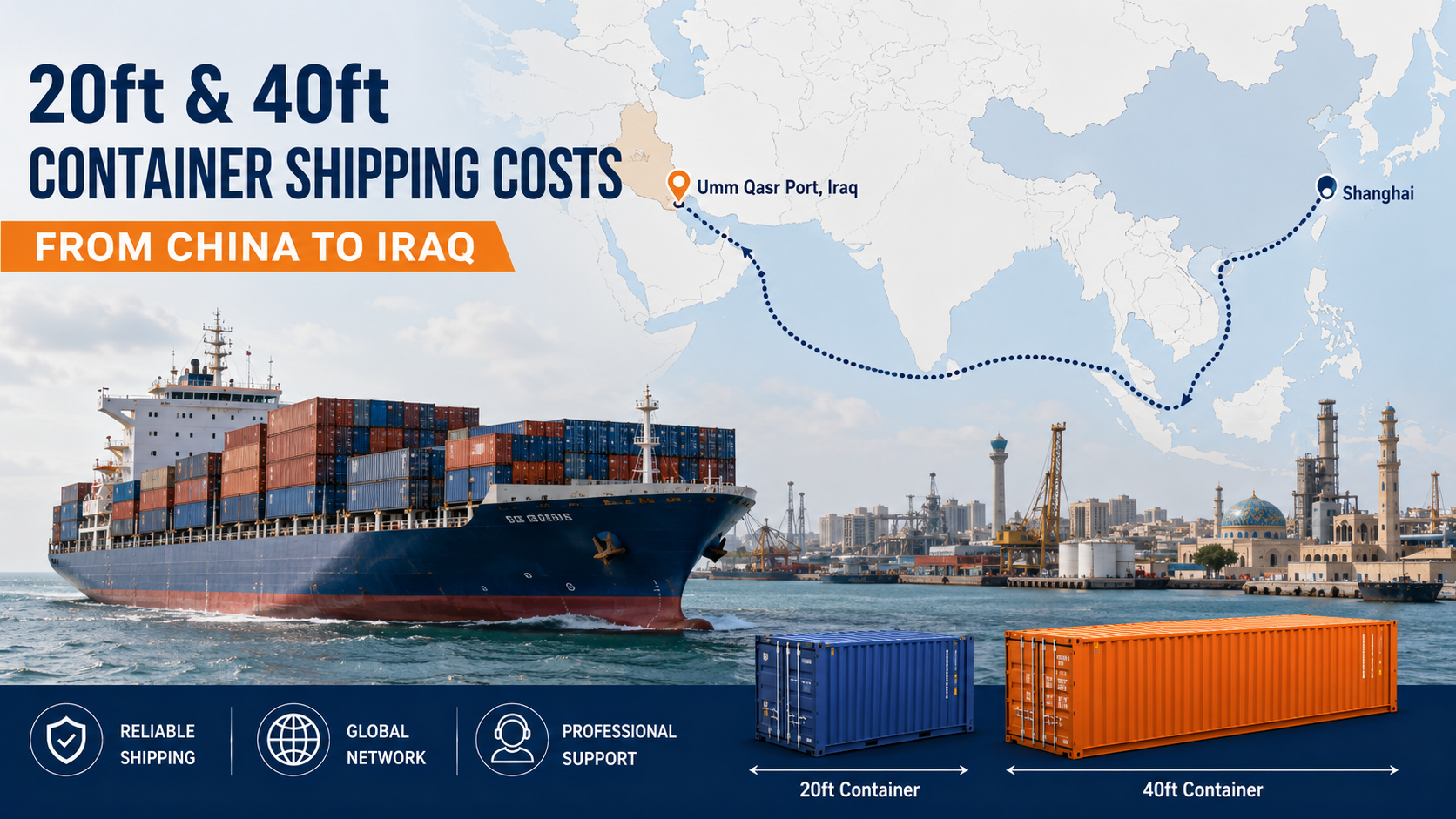
These prices mainly refer to sea freight from major Chinese ports to Umm Qasr. They may not include customs fees, import duty, customs broker service, inland trucking, security surcharges, storage fees, or final delivery to Baghdad, Erbil, Basra, Najaf, Mosul, or other inland cities.
| Shipping Method | Estimated Cost | Best For | Average Transit Time |
|---|---|---|---|
| 20ft Container FCL | USD 1,800–3,500 | Heavy cargo, machinery, building materials | 25–40 days |
| 40ft Container FCL | USD 3,200–6,000 | Large-volume commercial cargo | 25–40 days |
| 40HQ Container FCL | USD 3,400–6,200 | Bulky cargo, furniture, light goods | 25–40 days |
| LCL Shipping | USD 85–180 per CBM | Small shipments below container load | 30–45 days |
Container shipping rates are volatile and subject to market fluctuations. To get up-to-date rates, importers should provide detailed shipment details, including cargo name, cargo volume, gross weight, packing list, pickup address in China, destination city in Iraq, and preferred shipping method.
Container size and loading capacity are key factors when calculating container shipping costs from China to Iraq. Choosing the right container type directly affects freight cost, cargo safety, and overall shipping efficiency.
In international shipping, the most commonly used containers are 20ft, 40ft, and 40HQ containers, each with different volume capacity and loading limits. Importers should select the container based on cargo volume (CBM), gross weight, and packaging method.
A 20ft container is mainly used for heavy and dense cargo shipments from China to Iraq. It offers around 28–33 CBM of usable space, which is equivalent to about 9–10 standard pallets depending on loading method.
This type of container is commonly chosen when cargo weight is high but volume is limited. Typical goods include machinery, steel products, tiles, hardware tools, and construction materials. In many cases, the container reaches its weight limit before it is fully filled in volume, making it suitable for dense shipments.
The 40ft container is the most commonly used option for commercial shipments from China to Iraq. It provides around 67 CBM of space — about 2,389 cu ft — and can usually load about 20–21 pallets.
Compared with a 20ft container, it does not cost double, but it offers significantly more space. This improves cost-effectiveness and makes it more cost-efficient per cubic meter, especially for importers shipping furniture, textiles, electronics, household goods, or consolidated cargo from multiple suppliers.
Because of its balance between cost and capacity, the 40ft container is often the default choice for medium to large shipments.
The 40HQ (High Cube) container is designed for bulky but lightweight cargo. Specialized containers such as refrigerated units usually cost more than standard containers. It provides around 76 CBM of space, thanks to its extra height compared with a standard 40ft container.
It is commonly used for products that take up more space than weight, such as furniture, plastic goods, packaging materials, and e-commerce shipments. It is not intended for oversized cargo, which usually requires equipment like open-top or flat rack containers. For volume-heavy cargo, 40HQ usually provides better loading efficiency than a standard 40ft container.
| Container Type | Capacity (CBM) | Pallet Capacity |
|---|---|---|
| 20ft Container | 28–33 CBM | 9–10 pallets |
| 40ft Container | ~67 CBM | 20–21 pallets |
| 40HQ Container | ~76 CBM | 20–24 pallets |
Container shipping from China to Iraq can be arranged through several different transportation methods depending on cargo volume, urgency, budget, and delivery requirements.
For most importers, sea freight remains the most cost-effective solution, especially for 20ft and 40ft container shipping to Umm Qasr Port, followed by inland delivery to cities such as Baghdad, Basra, and Erbil.
Full Container Load (FCL) shipping means your cargo uses an entire container, such as a 20ft, 40ft, or 40HQ container.
This is the most common and reliable method for shipping large-volume cargo from China to Iraq.
Key features of FCL shipping:
Exclusive use of one container
Better cargo safety and reduced handling risk
More stable shipping schedules
Lower cost per cubic meter for large shipments
For shipments above medium volume, FCL is usually more cost-efficient than LCL shipping.
LCL shipping is used when cargo volume is not enough to fill a full container. In this case, goods are combined with other shipments in one container, and cost is calculated based on CBM (cubic meter).
Key features of LCL shipping:
Pay only for space used
Flexible for small shipments
Shared container with other importers
Higher handling and consolidation process
However, LCL usually takes longer than FCL due to consolidation in China and deconsolidation at Umm Qasr Port.
When planning container shipping from China to Iraq, choosing the right shipping route and major ports can have a big impact on freight cost, transit time, and overall shipping operations.
China has multiple major ports that handle international ocean freight. For cargo bound to Iraq, the most frequently used are:
Shanghai Port – China’s busiest container hub, ideal for bulk goods and full container load shipments.
Shenzhen Port – Popular for South China exports, offering competitive ocean freight rates.
Guangzhou Port – Convenient for exporters in Guangdong province, supporting both LCL shipping and FCL cargo.
Ningbo and Qingdao Ports – Additional gateways handling a large share of Middle East trade.
The choice of port often depends on supplier location, shipping schedules, and available container space.
Among the major Iraqi ports, the primary entry point for Iraq sea freight is:
Umm Qasr Port – Located near Basra, this is Iraq’s largest and most important seaport. Almost all containerized cargo, including 20ft and 40ft shipping containers, arrives here before distribution inland.
Smaller inland facilities and bonded warehouses in Baghdad and Erbil may also receive cargo through multimodal container transportation after arriving at Umm Qasr.
Given that Umm Qasr Port handles most imports, businesses should work with a reliable freight forwarder familiar with local customs clearance and customs duties in order to ensure smooth delivery.
Several international shipping lines operate between China and Iraq, usually via transshipment hubs in the Middle East (such as Jebel Ali, Dubai). Common shipping routes include:
Shanghai → Jebel Ali → Umm Qasr
Shenzhen → Jebel Ali → Umm Qasr
Guangzhou → Jebel Ali → Umm Qasr
The total transit time for these routes ranges from 20 to 30 days, depending on vessel schedules, weather, and port congestion. Choosing the right shipping company and booking space in advance helps to ensure timely delivery and avoid delays.
Shipping time from China to Iraq depends on the shipping method, shipping route, departure port, destination port, customs clearance speed, and inland delivery distance. For most importers, sea freight remains the most common and cost-effective option, especially for 20ft and 40ft container shipping to Umm Qasr Port.
Sea freight is the most widely used shipping method for container cargo from China to Iraq.
Port-to-port transit time: 25–40 days
Some routes (via transshipment): 30–45 days
Most shipments are routed through Middle East hubs such as Jebel Ali (UAE) before reaching Umm Qasr Port in Iraq.
FCL (Full Container Load) shipping is usually more stable and predictable compared to LCL shipping, because the container is not consolidated with other cargo.
LCL (Less than Container Load) shipments usually take longer than FCL because of additional handling processes.
Average transit time: 30–45 days
Extra time is required for:
Cargo consolidation in China
Container loading schedule coordination
Deconsolidation at destination port
LCL is more flexible but slightly slower compared to full container shipping.
Air freight is the fastest shipping method from China to Iraq, mainly used for urgent or high-value cargo.
Average transit time: 3–7 days
Express cases: 2–5 days (depending on flight availability)
Air freight is commonly shipped from major Chinese airports such as Shanghai, Guangzhou, and Shenzhen to Baghdad or Erbil.
While air freight is much faster, it is significantly more expensive than sea freight.
Door-to-door shipping includes pickup, export handling, international transport, customs clearance, and final delivery.
Sea freight door-to-door: 30–50 days
Air freight door-to-door: 7–12 days
Delivery time may vary depending on:
Customs clearance speed at Umm Qasr Port
Inland trucking distance to cities like Baghdad or Erbil
Documentation accuracy and inspection delays
Customs clearance in Iraq is one of the most important steps in the shipping process when importing goods from China. All cargo arriving at Umm Qasr Port or Iraqi airports must go through customs inspection, documentation review, and import duty assessment before it can be released for final delivery.
To complete customs clearance at Umm Qasr Port or Iraqi airports, you will need:
These documents are mandatory and missing paperwork may result in documentation fees or cargo being held at customs.
Import duty in Iraq is usually calculated based on HS code, declared value, and product category. In most cases, import duty ranges from:
5% – 20% depending on goods type
In addition to import duty, importers may also need to pay:
Customs clearance fees
Customs broker service charges
Inspection fees (if selected by customs)
Port handling and release charges
These costs are part of the total landed cost and should be considered before shipping.
Customs clearance in Iraq can be affected by several common issues, including:
Incorrect or inconsistent commercial invoice information
Missing or incomplete packing list details
Wrong HS code classification
Delay in import license approval
Random customs inspection at Umm Qasr Port
Storage charges due to delayed clearance
Because of these risks, working with an experienced freight forwarder or customs broker in Iraq can significantly reduce delays and unexpected costs.
To avoid delays and extra charges, importers should:
Prepare all documents before shipment arrival
Use correct HS codes and product descriptions
Ensure invoice value matches market logic
Confirm import requirements before shipping
Work with a reliable freight forwarder in Iraq
Proper preparation helps ensure faster clearance at Umm Qasr Port and smoother final delivery to cities like Baghdad, Basra, and Erbil.
Reducing shipping costs from China to Iraq is not only about finding the cheapest freight rate. In most cases, the total landed cost includes ocean freight, origin charges in China, destination charges at Umm Qasr Port, customs clearance, import duty, and inland trucking. Therefore, optimizing the entire shipping process is the key to saving money.
Importers who only focus on ocean freight often end up paying more in hidden charges such as port handling fees, storage fees, or inefficient container usage.
Selecting the correct container type is one of the most effective ways to reduce shipping costs.
Use 20ft container for heavy and dense cargo
Use 40ft or 40HQ container for large-volume shipments
Compare LCL vs FCL when cargo is between 10–15 CBM
A 40ft container often provides better cost per cubic meter, improving cost effectiveness and making it more cost-efficient for bulk shipments.
Many importers in China buy goods from multiple suppliers. Shipping each order separately increases cost significantly.
To reduce expenses:
Combine cargo into one shipment
Use a consolidation warehouse in China
Load everything into one 20ft or 40ft container
Cargo consolidation reduces:
Multiple origin charges
Repeated customs declarations
Extra handling fees
This is especially effective for e-commerce and wholesale importers.
Shipping rates from China to Iraq fluctuate due to market demand, fuel prices, and peak season congestion.
Freight costs often increase during:
Q3 peak season
Pre-holiday shipping rush
Container shortage periods
Booking early helps secure:
Lower ocean freight rates
Stable container availability
Fewer peak season surcharges
Shipping costs vary based on multiple factors tied to route and port choice, and choosing the right shipping route can significantly reduce cost and transit time.
Key optimization points:
Compare different China origin ports (Shanghai, Shenzhen, Ningbo, Guangzhou)
Avoid unnecessary inland trucking in China
Use efficient transshipment routes via Middle East hubs (e.g. Jebel Ali)
Ensure stable schedules to avoid delays and storage charges
A shorter inland trucking distance in China often reduces total shipping cost more than small ocean freight differences.
A professional freight forwarder can help reduce overall shipping costs by optimizing:
Ocean freight rates
Carrier selection
Container space booking
Customs clearance in Iraq
Inland trucking from Umm Qasr Port
They also help avoid hidden charges and other additional costs such as:
Documentation errors
Customs delays
Incorrect HS code classification
Security surcharges may apply on Iraq-bound shipments due to regional risks.
For shipping to Iraq, experienced handling at Umm Qasr Port is especially important due to customs procedures and inland delivery complexity.
Incorrect documentation is one of the most common causes of extra shipping costs.
Make sure to prepare:
Commercial invoice (accurate value & description)
Packing list (matching actual cargo)
Correct HS code
Certificate of origin
Accurate documents help avoid:
Customs inspection delays
Storage charges at port
Penalties or re-declaration fees
Many importers focus only on ocean freight but ignore destination costs in Iraq.
To reduce total cost:
Confirm if quote includes Umm Qasr destination charges
Check inland trucking fees separately
Avoid delayed customs clearance
Minimize port storage time
Destination costs can sometimes equal or exceed freight savings if not managed properly.
Choosing the right freight forwarder is critical when shipping from China to Iraq. The logistics process involves ocean freight booking, customs clearance, port handling, inland trucking, and final delivery—especially through Umm Qasr Port, where most container shipments enter Iraq.
Tonlexing provides end-to-end international logistics solutions designed to help importers reduce shipping costs, avoid customs delays, and ensure smooth cargo delivery from China to Iraq.
Tonlexing manages the full shipping process from China to Iraq, including:
Supplier pickup across major Chinese cities
Export customs declaration in China
Sea freight (FCL & LCL) and air freight services
Container loading and consolidation
Iraq customs clearance at Umm Qasr Port
Inland trucking to final destination cities
This integrated solution helps importers simplify supply chain management and reduce coordination between multiple service providers.
Tonlexing offers updated and competitive container shipping rates based on real-time market conditions.
We help clients compare:
20ft and 40ft container options
LCL vs FCL cost efficiency
Sea freight vs air freight solutions
Door-to-door shipping costs
Our goal is to help importers achieve lower total landed cost, not just cheaper ocean freight.
Shipping to Iraq requires experience with:
Umm Qasr Port operations
Iraq customs clearance procedures
Documentation compliance
Inland delivery challenges
With years of experience in Middle East logistics, Tonlexing ensures smoother handling of cargo from China to Iraq with fewer delays and reduced risk at customs.
Customs clearance in Iraq can be complex due to document requirements and inspection procedures. Tonlexing supports:
Commercial invoice and packing list review
HS code verification
Import documentation preparation
Coordination with local customs brokers
Cargo release at Umm Qasr Port
This helps reduce delays, storage fees, and unexpected customs issues.
For importers who prefer a hassle-free experience, Tonlexing provides door-to-door shipping services from China to Iraq.
This includes:
Factory pickup in China
Export handling
Ocean or air freight
Iraq customs clearance
Final delivery to Baghdad, Basra, Erbil, and other cities
Delivered Duty Paid can also be arranged so the quoted price includes freight, duties, customs clearance, and final delivery when suitable.
Whether you need port-to-port or full door-to-door service, we can tailor the solution based on your shipment details.
Tonlexing handles a wide range of cargo, including:
Machinery and industrial equipment
Furniture and household goods
Electronics and consumer products
Construction materials
E-commerce and consolidated shipments
We provide tailored logistics solutions based on cargo volume, weight, and delivery requirements.
In 2026, shipping costs for a 20ft container from China to Iraq are generally between USD 1,800 and USD 3,500, while shipping costs for a 40ft container are usually between USD 3,200 and USD 6,000. A standard 20ft container shipment may be quoted around USD 2,300 under normal market conditions, but actual container rates vary depending on the Chinese port, carrier space, peak season, fuel costs, and destination charges at Umm Qasr Port.
No. A 40ft container is usually only 20%–50% more expensive than a 20ft container, but it provides more than double the loading space. This is why it is often more cost-efficient for larger shipments or consolidated cargo.
Shipping from China to Iraq typically takes 25–40 days by sea freight. Transit time from major Chinese ports to Umm Qasr Port may take 25–45 days depending on carrier schedule, transshipment, weather, and port congestion. Air freight usually takes 3–7 days.
The main destination port for container shipping from China to Iraq is Umm Qasr Port. Almost all container traffic arrives at Umm Qasr before moving inland to Baghdad, Basra, Erbil, Najaf, Mosul, and other cities.
Direct sailings to Iraq are rare. Most container shipping routes from China to Iraq use transshipment hubs in the Middle East, often through Jebel Ali in the UAE, before reaching Umm Qasr Port.
Useful freight, customs and importing resources related to this shipping guide.
Shipping from China to Iraq – Sea, Air & DDP in 2026 Fast, reliable shipping from China to Iraq for B2B importers,industrial cargo, and general g...
Read guide →
In recent years, trade between China and Iraq has steadily increased, driven by demand for machinery, construction materials, consumer goods, and...
Read guide →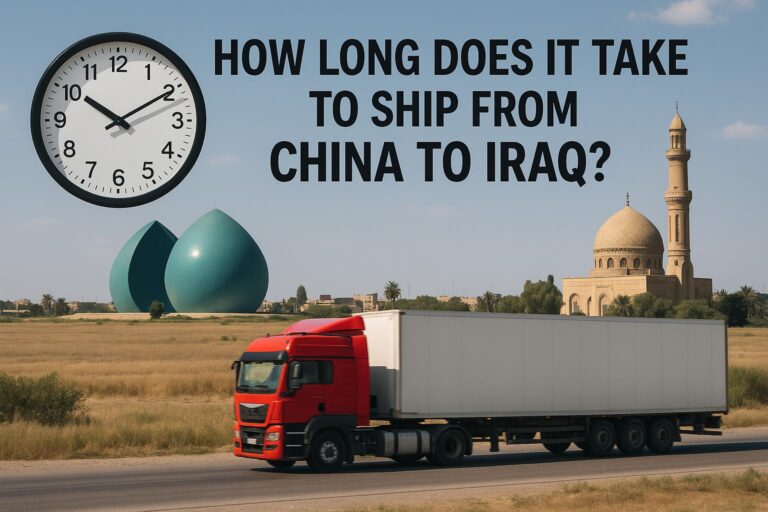
China and Iraq have maintained a strong trading relationship over the years, driven by the growing demand for Chinese machinery, electronics, con...
Read guide →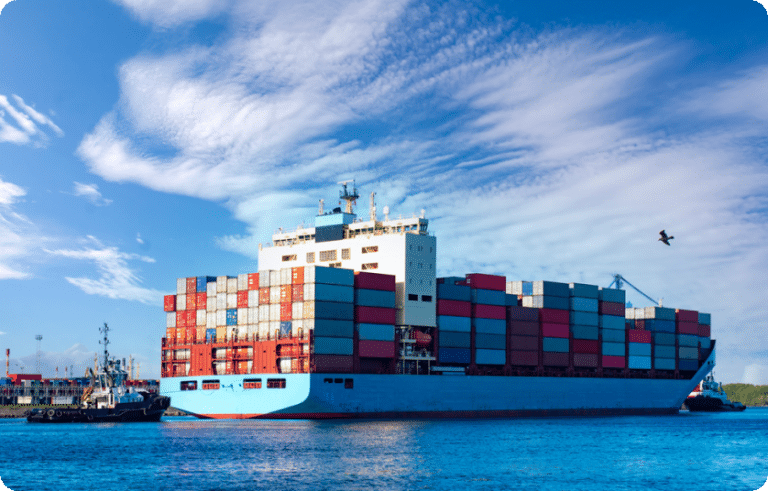
Sea freight is the most cost effective shipping method for large volumes and container load cargo. It is ideal for businesses looking to reduce s...
Read guide →Air freight from China is the best option for time sensitive and high value shipments. It offers fast delivery, reliable transit times, and effic...
Learn more → Useful Resource DDP Shipping from China to IraqLooking for a seamless way to ship goods from China to Iraq without worrying about customs clearance, taxes, or hidden fees?DDP shipping (Deliver...
Learn more →WhatsApp us