Related Guide
Guide to Importing and Shipping Freezers from China
As global trade continues to grow, China remains one of the leading suppliers of various appliances, including freezers. Freezers are in high dem...
Read guide →

Shipping home appliances from China requires choosing the right shipping method based on product size, weight, packaging, delivery time and destination requirements.
This guide explains how to ship refrigerators, washing machines, kitchen appliances, air conditioners and smart home devices from China, covering sea freight, air freight, express shipping, DDP door-to-door service, customs clearance, import documents and key cost factors.
Shipping method / Mode
Customs clearance
DDP / Door to Door
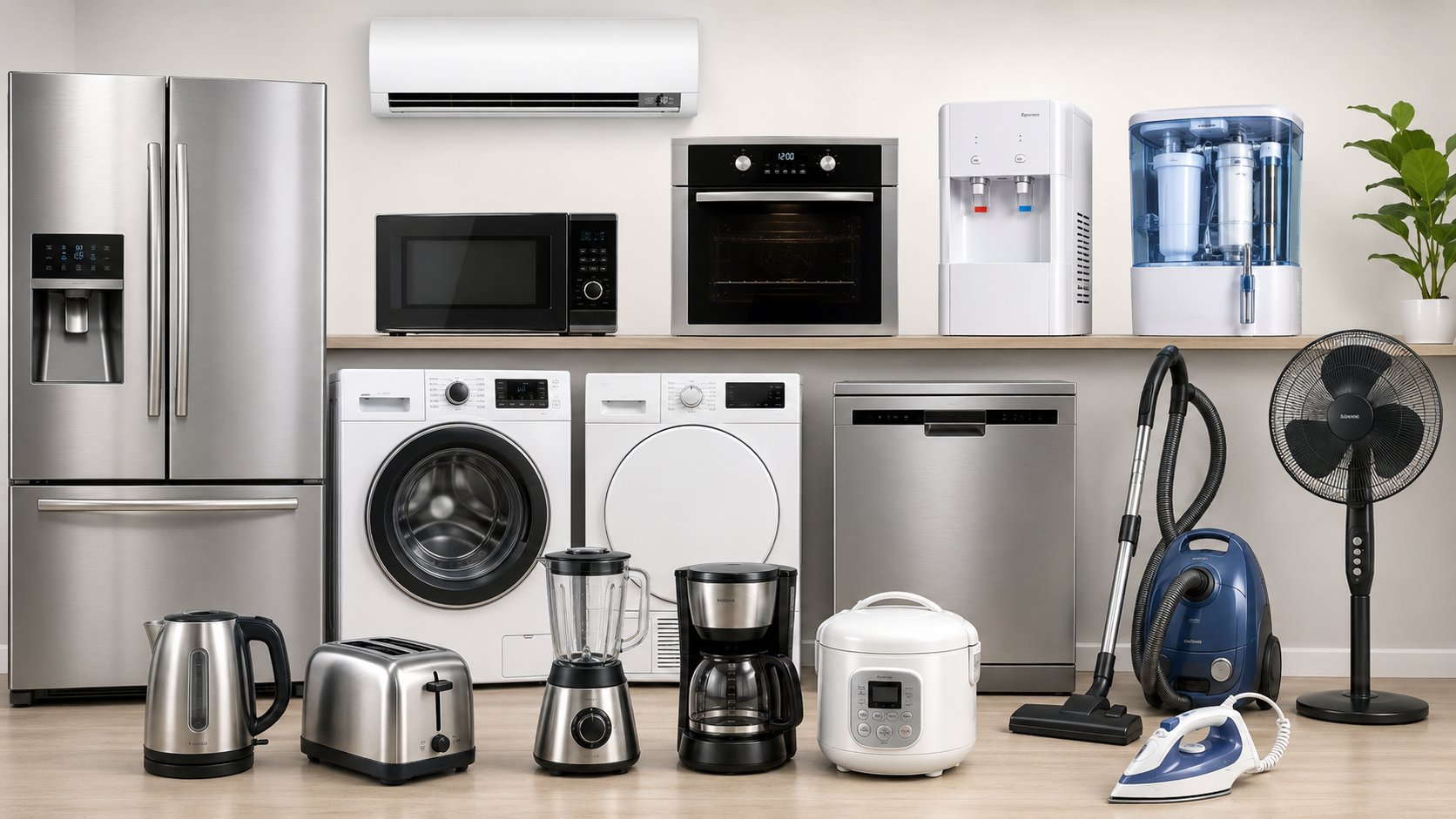
Most home appliances can be shipped internationally from China as long as they meet the import regulations of the destination country. The first step is to identify the appliance category clearly because customs, certification and shipping requirements may vary by product type.
Common home appliances shipped from China include:
Refrigerators and freezers
Washing machines and dryers
Air conditioners and dehumidifiers
Dishwashers
Ovens, microwaves and induction cookers
Range hoods and kitchen appliances
Coffee machines, blenders and food processors
Vacuum cleaners and floor cleaning devices
Water heaters and water dispensers
Fans, heaters and air purifiers
Smart home appliances and connected electronic devices
Large appliances such as refrigerators, washing machines and air conditioners are usually shipped by sea freight because of their size and weight. Small appliances such as coffee machines, air purifiers, vacuum cleaners and kitchen electronics can be shipped by LCL, air freight, express courier or DDP door-to-door service.
If the appliance contains built-in batteries, wireless functions or cooling systems, the shipment may require additional technical docum
There is no single best shipping method for every shipment. The right choice depends on cargo volume, actual weight, volumetric weight, product value, delivery time and whether the importer needs customs support.
Sea freight is the most cost-effective method for shipping heavy appliances and larger shipments from China. It is suitable for refrigerators, washing machines, air conditioners, ovens, dishwashers and bulk kitchen appliances.
For large orders, Full Container Load shipping is usually recommended. Your goods are loaded into a 20ft, 40ft or 40HQ container and shipped to the destination port. FCL reduces handling risk and gives better control over loading, packaging and delivery schedules.
For smaller shipments, LCL sea freight is more flexible. Your cargo shares container space with goods from other importers and is charged by CBM or weight ton. LCL is suitable when the shipment is not enough for a full container, but it involves more warehouse handling, so strong packaging is important.
Air freight is much faster than sea freight, but it has higher costs. It is suitable for urgent shipments, lightweight items, samples, replacement parts, smart appliances and high value items.
Before choosing air freight, importers should calculate chargeable weight. Many appliances are packed in large cartons, which means volumetric weight may be higher than actual weight. This can increase the final air freight cost even if the product itself is not very heavy.
Air freight is usually a better choice for:
Urgent retail stock
Product samples
Small smart home devices
High value electronics
Replacement components
Time-sensitive e-commerce shipments
Express services such as DHL, FedEx and UPS are suitable for small samples, spare parts and lightweight appliances. Express shipping offers fast delivery and simple tracking, but the price per kilogram is high.
For very small shipments, express can save time. For commercial shipments above 100 kg, standard air freight or DDP air shipping may be more affordable.
For Europe and some regions connected by rail, the China-Europe Railway Express can be a middle option between sea freight and air freight. It is usually faster than sea freight and cheaper than air freight, making it useful for selected appliance shipments moving to Europe.
Air-sea shipping may also be used when importers need a balance between cost and speed. This is not suitable for every destination, but it can help when full air freight is too expensive and sea freight is too slow.
The cost of shipping home appliances from China depends on the shipping method, cargo volume, actual weight, volumetric weight, origin city, destination country, customs requirements and final delivery address.
Large appliances are often expensive to ship because they take up a lot of container or warehouse space. Even when the actual weight is not extremely high, the bulky size can increase the final cost.
| Shipping Method | Estimated Cost | Typical Transit Time | Best For |
|---|---|---|---|
| Sea Freight 20ft FCL | USD 3,000–6,000/container | 25–40 days | 15–20 major appliances such as refrigerators and washing machines |
| Sea Freight 40ft FCL | USD 4,500–8,500/container | 25–40 days | 30–40+ large appliances or mixed bulk shipments |
| Sea Freight LCL | USD 100–250/CBM | 30–45 days | Small commercial shipments and mixed appliance orders |
| Air Freight | USD 4.50–9.00/kg | 3–8 days | Urgent orders, high-value items and lightweight appliances |
| Express Courier | USD 7.00–14.00/kg | 3–5 days | Samples, spare parts and small kitchen appliances |
| DDP Door-to-Door | Quote by kg, CBM or shipment | Depends on destination | Importers who want customs clearance and delivery included |
These ranges are for reference only. Final prices should be calculated based on product dimensions, gross weight, pickup location, destination address, customs clearance, taxes and delivery terms.
The freight rate is only part of the total cost. For home appliances, the final price is mainly affected by size, weight, packaging, shipping terms and destination charges.
Key factors include:
Actual weight and volumetric weight: Air and express shipments are charged by whichever is higher.
Incoterms: EXW, FOB and DDP include different cost responsibilities.
Destination charges: Customs clearance, brokerage fees, import duties, taxes and inland delivery may apply.
Packaging: Large appliances may need pallets, reinforced cartons or wooden crates.
Shipment size: FCL is better for bulk orders, while LCL suits smaller shipments.
Seasonal demand: Prices may rise during peak shipping periods.
Consolidation shipping can also reduce costs when buying from multiple suppliers in China.
Every commercial shipment of home appliances from China must complete customs clearance before it can be released for delivery. Customs authorities review the shipment value, HS code, product description, country of origin and supporting documents to determine whether the goods comply with local import regulations.
Preparing accurate documents before the shipment leaves China can help avoid delays, customs holds and unexpected charges at the destination.
Most home appliance shipments require the following documents:
Bill of Lading or Air Waybill
Certificate of Origin (if required)
Import License (if applicable)
Product compliance certificates or test reports (when required)
The commercial invoice should include the correct product description, quantity, declared value, Incoterms and supplier information. Using the correct HS code is equally important because it determines import duties, taxes and customs classification.

Home appliances are electrical products, so import regulations can be stricter than for ordinary household goods. Importers should confirm local safety standards before placing a large order.
Many markets require electrical safety certification before appliances can be sold or imported. The required certification depends on the destination country and product type.
Common examples include:
UL or ETL requirements for many products in the USA
CE compliance for the European market
UKCA marking for the United Kingdom
Energy efficiency labeling in certain markets
Local plug and voltage requirements
Wireless certification for smart home devices
Not every shipment will require the same documents, but importers should not assume that a product accepted in one market will automatically be accepted in another. For American consumers, European buyers or Canadian distributors, compliance expectations can be very different.
China commonly uses 220V and 50Hz. Some destination markets use different voltage, frequency and plug standards. If the appliance is built for the wrong market, it may not work safely after delivery.
Before shipping, confirm:
Destination country voltage
Frequency requirement
Plug type
Power rating
Product label language
User manual language
Certification mark
Model number and barcode
Warranty and after-sales requirements
This step is especially important when shipping to the USA, Canada and other 110V markets. Wrong voltage can lead to product returns, safety risks, customer complaints and customs issues.
Some small home appliances contain lithium batteries, such as cordless vacuum cleaners, smart cleaning devices, rechargeable kitchen tools and portable electronic devices.
Factory-sealed appliances with built-in batteries are often easier to ship than standalone lithium batteries, and they are legally shippable when properly declared and supported by the required test and safety documents. Many shipments must comply with UN38.3 lithium battery testing standards and airline or carrier rules.
For lithium battery appliances, importers should confirm:
Battery type and capacity
Whether the battery is built in or packed separately
UN38.3 test summary
MSDS if required
Complete power shutdown before shipping
Correct battery marks or labels
Accurate declaration on shipping documents
Damaged battery appliances or non-compliant units may be treated as prohibited items by carriers.
Improper battery declaration can cause customs holds, airline rejection, warehouse detention or shipment delays. Standardized safety processing is required before lithium battery goods are accepted for transport.
Secure packaging is crucial when shipping home appliances from China. Appliances can be damaged by vibration, compression, moisture, forklift handling or container movement during international shipping.
Small appliances usually need strong export cartons, internal foam protection and clear carton labels. Major appliances may require reinforced cartons, wooden crates, pallets, corner guards or waterproof wrapping.
A good appliance packaging plan should include:
Strong outer cartons or wooden crates
Foam protection inside the package
Corner and edge protection
Moisture protection for sea freight
Palletizing for easier warehouse handling
Upright labels for appliances that must not be tilted
Battery labels when required
Clear shipping marks and carton numbers
Inspections are recommended before shipment, especially for bulk orders. A pre-shipping inspection can check product quantity, carton condition, labels, plug type, voltage version and packaging strength.
Cargo insurance is also recommended for high value items, fragile appliances and larger shipments. Insurance cannot prevent damage, but it can help reduce financial loss if goods are damaged or lost during transit. To support insurance claims, keep product photos, packing photos, inspection reports and shipping documents.
A successful appliance shipment starts before the cargo leaves the supplier’s warehouse. Importers should organize product details, documents and shipping requirements early.
Ask your supplier for the product name, model number, HS code, carton size, gross weight, net weight, quantity and packing method. If the appliance contains lithium batteries, refrigerant, compressors or wireless modules, this must be declared before booking.
Choose sea freight for bulk or heavy appliances, air freight for urgent shipments, express for samples, and DDP shipping when you need door delivery with customs support. For Europe, rail freight may also be considered for selected routes.
Confirm whether the destination country requires safety certification, energy labels, plug standards, import permits, technical documents or special customs declarations. This step helps avoid delays and customs holds after arrival.
Ask the supplier to use export-standard packaging. For large appliances, confirm whether pallets, wooden crates or reinforced cartons are needed. A pre-shipping inspection can help detect problems before international logistics begins.
Your freight forwarder can collect goods from the supplier, consolidate cargo from multiple manufacturers to save money compared with arranging separate freight movements, check documents and complete export customs declaration in China, with Shanghai as one of the major export hubs that can affect routing and schedules.
The cargo is shipped by sea, air, rail, express or combined service, and smooth global shipping also depends on following carrier rules for batteries, packaging, and dangerous-goods documentation where applicable. During transit, the forwarder should provide tracking updates, arrival notices and shipping documents.
After arrival, the shipment must complete customs clearance. Duties, taxes, brokerage fees and destination charges may apply. Once released, the cargo can be delivered to your warehouse, store, Amazon FBA center or customer address.
Many importers focus only on the unit price and ignore logistics details. This can create higher costs, customs delays and damaged cargo.
Common pitfalls include:
Using weak domestic packaging instead of export packaging
Ignoring voltage and plug differences
Not checking safety certificates before shipment
Using unclear product descriptions on the commercial invoice
Declaring the wrong HS code
Forgetting lithium battery or refrigerant documents
Choosing LCL for fragile goods without strong protection
Comparing only cheap freight rates without destination fees
Not buying insurance for high value items
Booking too late during peak season
Not checking import duties and taxes before purchase
To avoid delays, importers should prepare documents early, confirm compliance with local rules, and work with a freight forwarder that understands appliance shipping.
Tonlexing provides international logistics services for importers shipping home appliances from China to the USA, Canada, Europe and other global markets. We help customers compare shipping methods, calculate costs, manage customs documents and arrange delivery from Chinese suppliers to the final destination.
Our appliance shipping services include:
Sea freight FCL and LCL
Air freight from major China airports
Express shipping for samples and spare parts
DDP door-to-door shipping
Rail freight for selected Europe routes
Factory pickup in China
Consolidation shipping from multiple suppliers
Export customs declaration
Import customs clearance support
Delivery to warehouses, stores or Amazon FBA centers
Whether you are shipping refrigerators, washing machines, kitchen appliances, smart home devices or mixed appliance orders, Tonlexing can provide a clear shipping plan based on your cargo size, budget and delivery deadline.
Sea freight is usually the best option for large appliances, heavy appliances and bulk orders because it offers lower unit shipping costs. Air freight is better for urgent, lightweight or high value items, while express shipping is mainly used for samples and small parcels.
The cost depends on cargo size, actual weight, volumetric weight, shipping method, destination country and final delivery address. Large appliances are usually charged by container or CBM, while air freight and express shipments are charged by kilogram.
FCL is better for major appliances such as refrigerators, washing machines and air conditioners because it reduces handling risk. LCL is suitable for smaller shipments, but the cargo needs stronger packaging because it will be handled more often during consolidation.
Yes, appliances with built-in lithium batteries can usually be shipped if they are declared correctly. The supplier may need to provide battery specifications, UN38.3 documents, MSDS or other safety documents depending on the shipping method and destination.
In many countries, yes. Home appliances are electrical products, so they may need to meet local safety, voltage, plug, labeling and energy efficiency standards before import or sale. Importers should confirm these requirements before placing a large order.
Useful freight, customs and importing resources related to this shipping guide.
As global trade continues to grow, China remains one of the leading suppliers of various appliances, including freezers. Freezers are in high dem...
Read guide →
Introduction: Why Import Restaurant Equipment from China How to ship restaurant equipment from China is a crucial topic for restaurant owners and...
Read guide →
Importing electronics from China has become a lucrative business opportunity for companies and individuals worldwide. China is the global leader...
Read guide →
China is the world’s leading manufacturer and exporter of LED lights, offering a wide variety of high-quality and cost-effective options. Whether...
Read guide →Importing and shipping lithium batteries from China requires more preparation than moving ordinary cargo. Lithium batteries are regulated as dang...
Learn more → Useful Resource Comprehensive Guide to Importing and Shipping Solar Panels from ChinaChina is one of the world’s major manufacturing bases for solar panels and solar modules, offering a wide range of products for distributors, ins...
Learn more →WhatsApp us