
Related Guide
Electronics Import and Shipping Guide from China
Importing electronics from China has become a lucrative business opportunity for companies and individuals worldwide. China is the global leader...
Read guide →

Reliable & Cost-Effective Shipping from China
Tailored Logistics Solutions for Your Business
China is one of the world’s major manufacturing bases for solar panels and solar modules, offering a wide range of products for distributors, installers, project contractors, and other commercial buyers. Importing solar panels from China can provide access to competitive sourcing options, but a successful order depends on more than product price. Supplier verification, product specifications, export packing, shipping arrangements, import requirements, and customs clearance all need to be confirmed before the goods leave China.
This guide explains the practical process of importing and shipping solar panels from China, from selecting a reliable supplier and checking product documentation to choosing between sea freight and air freight, estimating shipping costs, preparing customs documents, and arranging final delivery. Tonlexing can also coordinate pickup in China, international freight, customs support, and destination delivery according to the selected service terms.

China has a large and mature solar manufacturing supply chain, giving international buyers access to a broad range of solar panels and solar modules for residential, commercial, and utility-scale projects. The main advantages are product selection, manufacturing capacity, and the ability to source at competitive prices when specifications and suppliers are properly compared.
1. Competitive Pricing
Large-scale manufacturing and an established component supply chain allow Chinese manufacturers to offer competitive pricing across many solar panel specifications. Actual purchase prices depend on the module type, power output, order quantity, certification requirements, and commercial terms, so buyers should compare quotations based on the same specifications rather than price alone.
2. Wide Range of Products
Chinese suppliers offer solar panels in different technologies, wattages, dimensions, efficiencies, and configurations. This gives importers more flexibility when sourcing products for different installation requirements and target markets.
3. Manufacturing and Technology
Many Chinese solar manufacturers operate large-scale production lines and continue to develop higher-efficiency module designs and manufacturing processes. Buyers should still verify the actual product specifications, test reports, certifications, and warranty terms before placing an order.
4. Scalable Production
China’s manufacturing capacity also supports both regular commercial orders and large-volume solar projects. For larger purchases, buyers should confirm production lead time, batch consistency, packing arrangements, and delivery schedules with the supplier before arranging international shipping.
Finding a reliable supplier is an important step when importing solar panels from China. Besides price, buyers should check the supplier’s credentials, manufacturing capability, product documentation, and experience with export orders.
1. Online Platforms
Platforms such as Alibaba, Made-in-China, and Global Sources can help buyers compare solar panel suppliers. Before payment, confirm the company name, business license, factory address, product specifications, and export capability.
2. Trade Shows
Events such as the Canton Fair and SNEC PV Power Expo allow buyers to meet manufacturers, compare products, and discuss technical requirements directly.
3. Factory Visits and Supplier Verification
For larger orders, a factory visit or independent audit can help verify production capacity, quality control, and packing capability. It is also important to confirm whether the supplier is the actual manufacturer or a trading company.
4. Check Product Documents and Certifications
Request relevant test reports and certifications for the solar module and destination market. Make sure the documents match the actual model being purchased rather than relying only on supplier claims.
Before placing an order, confirm the product, import, compliance, and shipping requirements. These details affect not only whether the solar panels can be imported successfully, but also packing, freight planning, customs clearance, and total landed cost.
1. Product Specifications
Confirm the solar panel model, power output, panel dimensions, quantity, and any technical requirements before ordering. Clear specifications help avoid differences between the quotation, production, and final shipment.
2. Import Regulations and Duties
Import regulations, customs duties, and taxes vary by destination. The correct HS or HTS classification should be confirmed according to the solar module specifications and local customs requirements before shipment.
3. Compliance and Certifications
Check which product standards, test reports, and certifications are required in the destination market. Documents should match the actual solar panel model being imported, as requirements vary by country and application.
4. Shipping and Packing Details
Before arranging freight, confirm the packed quantity, pallet count, pallet dimensions, gross weight, total CBM, pickup location in China, and destination. These details are necessary for selecting the appropriate shipping method and preparing an accurate freight quote.
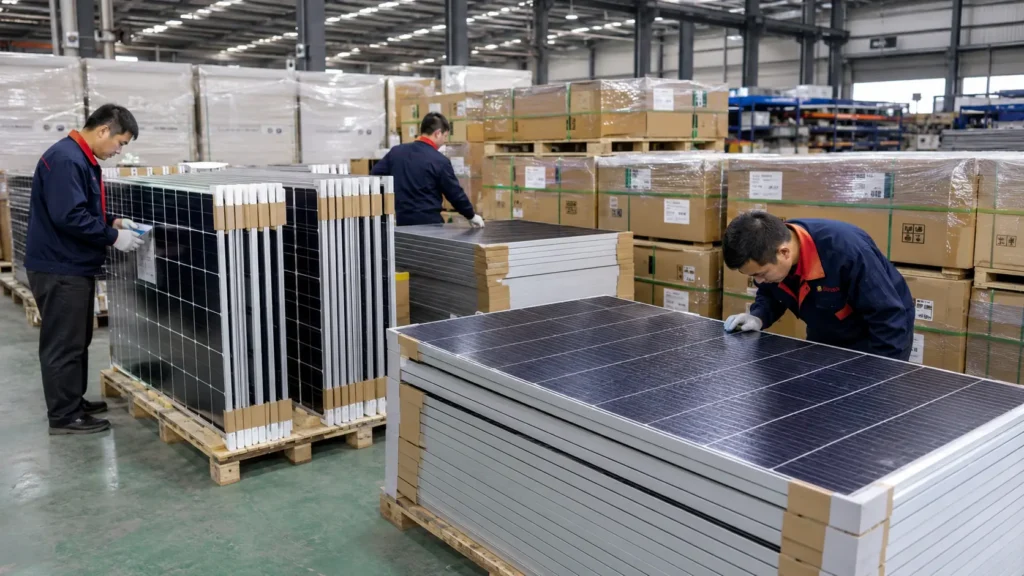
Solar panels are fragile and relatively bulky, so the shipping method should be selected according to the shipment volume, packed dimensions, destination, and delivery requirements.
1. Shipping Methods
The main options for shipping solar panels from China are sea freight and air freight.
Sea Freight: Usually the preferred option for commercial and large-volume shipments because of its lower freight cost per unit.
Air Freight: Better suited to urgent shipments, samples, or smaller quantities where delivery speed is more important than freight cost.
2. FCL vs LCL Container Shipping
For sea freight, solar panels can be shipped by FCL (Full Container Load) or LCL (Less than Container Load).
FCL: Suitable for larger shipments and reduces the amount of handling compared with shared-container transport.
LCL: Suitable for smaller shipments that do not require a full container, although additional consolidation and handling make protective packing especially important.
3. Packing and Container Loading
Solar panels should be packed on suitable export pallets or in protective crates according to the manufacturer’s packing design. Corner and edge protection, stable palletizing, and proper securing help reduce movement and damage during international transport. Before loading, the container condition and actual packed dimensions should also be checked.
Container capacity should be calculated from the actual panel dimensions, units per pallet, pallet size, and loading arrangement rather than from a fixed number of solar panels.
Shipping costs for solar panels from China depend on the departure port, destination, container size, shipment volume, carrier capacity, and current market conditions. The following 2026 reference rates provide a general baseline for port-to-port ocean freight from major Chinese ports such as Shanghai, Shenzhen, and Ningbo.
Destination Region | 20GP | 40HQ | Estimated LCL Rate | Average Ocean Transit Time |
|---|---|---|---|---|
US West Coast (LA, Long Beach) | $2,000–$3,800 | $3,200–$5,800 | $40–$75/CBM | 15–25 days |
US East Coast (NY, Savannah) | $2,800–$4,800 | $4,500–$7,500 | $55–$90/CBM | 30–40 days |
Northern Europe (Rotterdam, Hamburg) | $1,500–$3,000 | $2,400–$4,800 | $45–$80/CBM | 25–35 days |
Mediterranean (Genoa, Valencia) | $1,800–$3,200 | $3,000–$5,500 | $50–$85/CBM | 20–30 days |
Australia (Sydney, Melbourne) | $1,100–$1,900 | $1,800–$3,200 | $30–$60/CBM | 12–18 days |
Southeast Asia (Singapore, Bangkok) | $800–$1,800 | $1,400–$3,000 | $25–$50/CBM | 5–10 days |
These figures are reference port-to-port freight ranges rather than fixed quotations. Actual solar panel shipping costs may change with the shipment date, origin and destination ports, container availability, packed dimensions, and carrier selection. Inland pickup, customs clearance, duties and taxes, destination handling, insurance, and final delivery are normally calculated separately unless included in the quoted service.
For shipments to Africa, the Middle East, South America, or other destinations, rates can vary significantly by port and routing, so a shipment-specific quotation is recommended.
Customs requirements for solar panels vary by destination, so the importer should confirm the required documents, product classification, and applicable duties before shipment.
1. Key Documents
Common documents for customs clearance include:
Commercial Invoice: Shows the product description, quantity, value, and transaction details.
Packing List: Includes the number of packages, dimensions, gross weight, and packing details.
Bill of Lading (B/L): Issued by the carrier for sea freight shipments.
Certificate of Origin: May be required depending on the destination and customs requirements.
2. HS Classification and Customs Clearance
The correct HS or HTS classification should be confirmed according to the solar module specifications and destination-country customs rules. The importer or customs broker should also check whether any additional product documents or import requirements apply before the shipment arrives.
3. Duties and Taxes
Import duties, taxes, and other customs charges vary by destination and product classification. Some markets may also apply additional trade measures to certain solar products, so the applicable requirements should be checked before shipping rather than relying on a general duty rate.
After customs clearance, solar panels may be delivered to the importer’s warehouse, distribution center, or project site. Final delivery should be planned according to the pallet size, shipment weight, receiving address, and unloading conditions.
1. Inland Transportation and Final Delivery
For container shipments, delivery may be arranged by container truck or other suitable inland trucking after the cargo is released from the port. Before delivery, confirm the final address or postcode, site access, unloading method, and whether a delivery appointment is required.
For palletized solar panels, the consignee should also confirm that suitable unloading equipment is available at the destination. If the container will be unloaded directly at the site, the free unloading time and container return requirements should be checked in advance.
2. Warehousing and Storage
If the solar panels are not delivered directly to the installation site, temporary warehousing may be required. The cargo should be stored in a dry, protected area and handled according to the manufacturer’s packing and stacking requirements to reduce the risk of damage.
Tonlexing can coordinate inland transportation, warehousing, consolidation, and final delivery according to the selected shipping service and destination requirements.
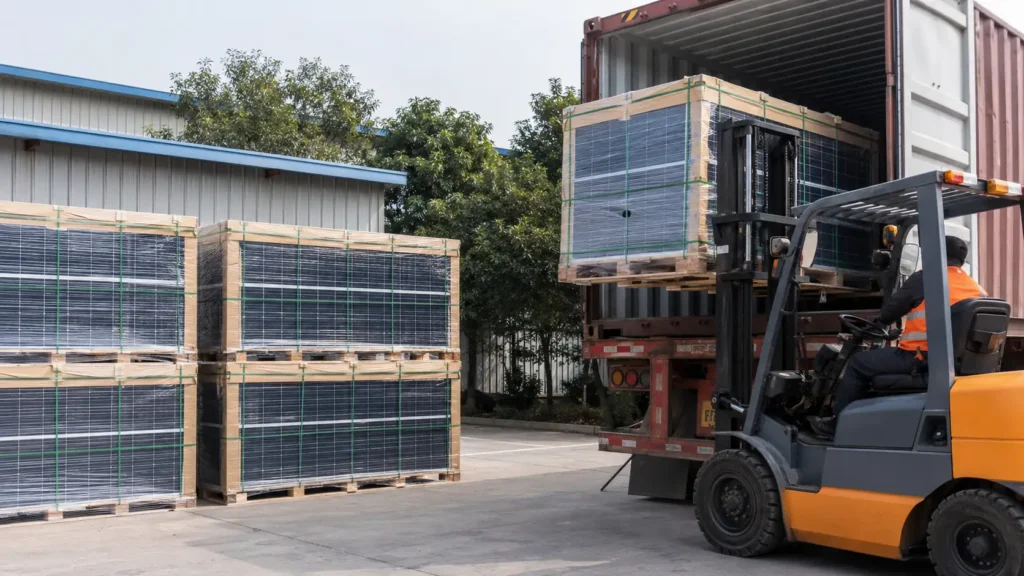
A successful solar panel import depends on confirming the commercial, product, and shipping details before the cargo leaves China. The following checks can help reduce avoidable delays and additional costs.
1. Verify the Supplier Before Payment
Confirm the supplier’s company information, product specifications, and agreed order terms before making payment, especially for a first order.
2. Agree on Payment Terms Clearly
Payment terms should be confirmed in the purchase contract and understood by both parties. Avoid using a fixed payment structure simply because it is common in another transaction.
3. Consider Cargo Insurance
Solar panels are fragile and can represent a high cargo value. Cargo insurance can be considered based on the shipment value, transport route, service terms, and level of risk.
4. Plan Production and Shipping Lead Times
Do not wait until production is completed to begin planning the shipment. Confirm the expected production date, cargo-ready date, booking schedule, and estimated transit time in advance, especially for sea freight.
5. Complete a Final Pre-Shipment Check
Before pickup or container loading, reconfirm the quantity, packing condition, pallet dimensions, gross weight, shipping documents, destination details, and any inspection requirements. Any mismatch is easier to correct before the cargo leaves China.
Q: How can I ensure the quality of solar panels before shipping?
A: Verify the supplier and product documents, confirm the exact model and specifications, and arrange a pre-shipment inspection when necessary. The packing condition should also be checked before pickup or container loading.
Q: What is the best way to ship solar panels from China?
A: Sea freight is generally more suitable for commercial and large-volume shipments. FCL is often preferred for larger orders, while LCL can be used for smaller shipments. The best option depends on the packed volume, weight, destination, and required transit time.
Q: Can solar panels be shipped by air?
A: Yes. Air freight can be used for samples, smaller quantities, or urgent shipments, but it is usually more expensive than sea freight.
Q: What documents are normally needed to import solar panels?
A: Common documents include a commercial invoice, packing list, bill of lading, and any certificates or product documents required by the destination country. The HS or HTS classification should also be confirmed before shipment.
Q: How should solar panels be packed for international shipping?
A: Solar panels should be securely palletized or packed in suitable export crates, with adequate edge and corner protection. The pallets should be properly secured to reduce movement during handling and international transport.
Tonlexing can coordinate the logistics process for solar panel shipments from China, from cargo pickup and freight booking to customs support and final delivery. The shipping plan is arranged according to the cargo volume, packing details, destination, required transit time, and selected service terms.
Our services can include:
Supplier coordination and cargo pickup in China
FCL, LCL, and air freight arrangements
Packing details and container loading confirmation
Export shipping documentation support
Customs clearance coordination
Warehousing and consolidation when required
Inland transportation and final delivery
Cargo insurance upon request
For a solar panel shipping quote, provide the cargo quantity, pallet count, packed dimensions, gross weight, total CBM, pickup location in China, destination port or postcode, and preferred shipping method. If the cargo is already packed, photos of the pallets or packaging can also help us confirm the most suitable shipping arrangement.
Contact Tonlexing for a solar panel shipping quote from China.
Useful freight, customs and importing resources related to this shipping guide.
Importing electronics from China has become a lucrative business opportunity for companies and individuals worldwide. China is the global leader...
Read guide →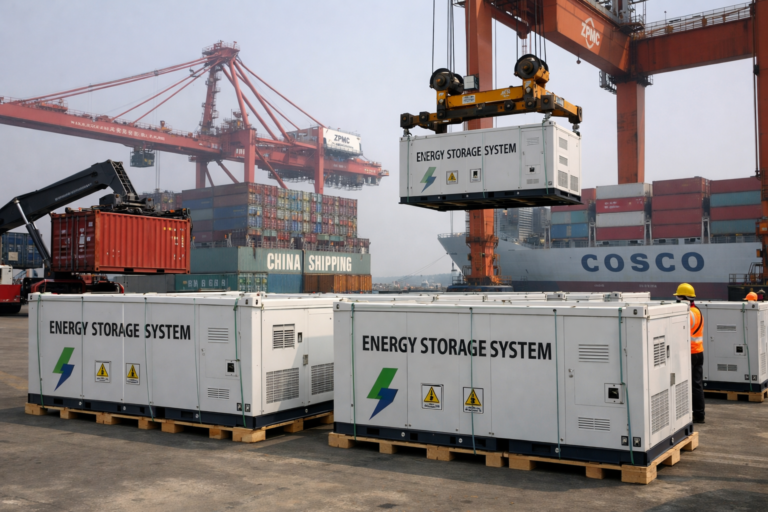
Shipping Energy Storage Systems from China Verified & Reviewed · Last updated March 2026 Shipping energy storage systems from China requires care...
Read guide →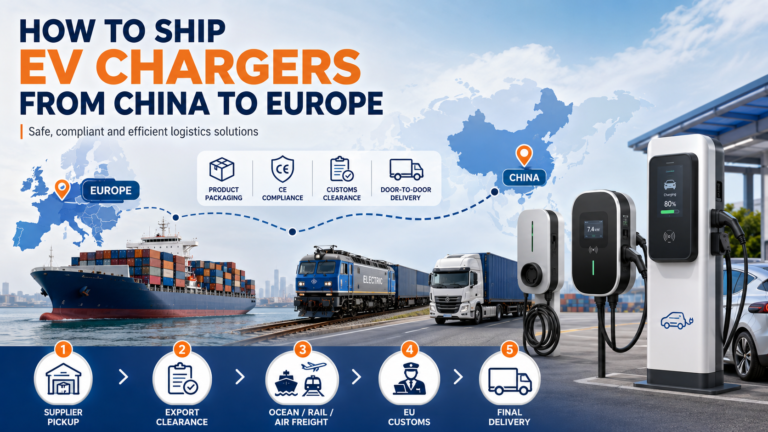
How to Ship EV Chargers from China to Europe: 2026 Guide Verified & Reviewed · Last updated June 2026 Shipping EV chargers from China to Europe r...
Read guide →
CE certification is a critical requirement for any electronic product sold within the European Union (EU). This certification signifies that the...
Read guide →Importing and shipping lithium batteries from China requires more preparation than moving ordinary cargo. Lithium batteries are regulated as dang...
Learn more → Useful Resource How to Ship LED Lights from China to USAHow to Ship LED Lights from China to USA Verified & Reviewed · Last updated March 2026 Shipping LED lights from China to the USA can be straightf...
Learn more →WhatsApp us