
Related Guide
Electronics Import and Shipping Guide from China
Importing electronics from China has become a lucrative business opportunity for companies and individuals worldwide. China is the global leader...
Read guide →

Shipping EV chargers from China to Europe requires more than booking international freight. Importers need to check product compliance, Type 2 or CCS2 compatibility, customs clearance, packaging, and the most suitable shipping method.
This guide explains how to ship EV chargers from China to Europe by sea freight, rail freight, air freight, express courier, or DDP door-to-door service, covering shipping costs, transit times, CE and RoHS documents, HS code checks, and final delivery.
EV Charger Shipping
Transit Time & Cost
DDP / Door to Door
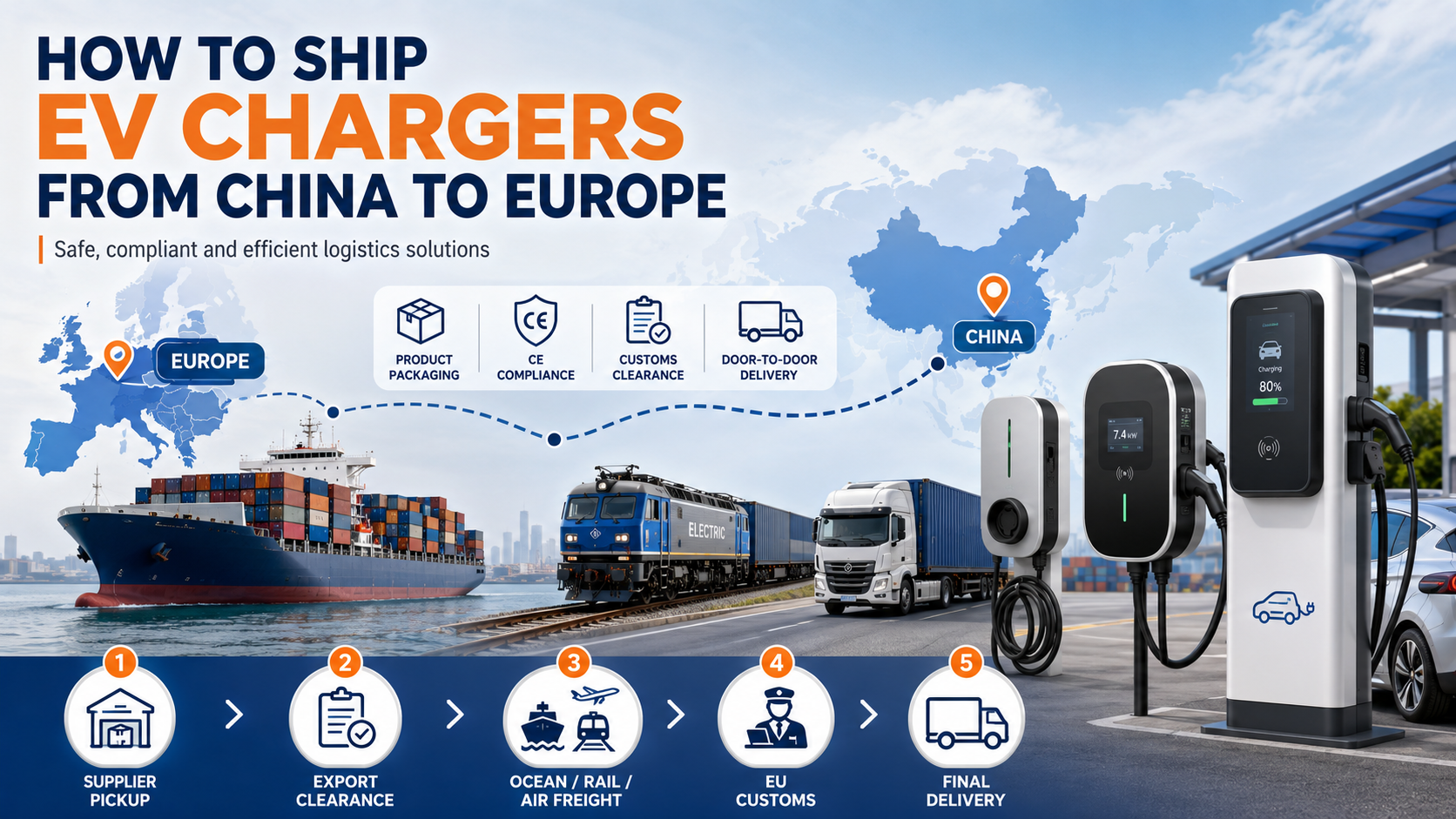
Before booking sea freight, rail freight, air freight, or DDP shipping, confirm the exact charger type and technical specifications with your supplier. This helps avoid customs delays, wrong product classification, and compatibility problems after the goods arrive in Europe.
Common EV charging products shipped from China include:
Portable EV chargers
AC wallbox chargers
Smart home chargers
Commercial charging stations
DC fast chargers
Charging cables and adapters
Power modules and spare parts
For Europe, compatibility is essential. Type 2 is commonly used for AC charging, while CCS2 is widely used for direct current fast charging. If the charger or adapter is designed for a Chinese electric vehicle or GB/T systems, you need to confirm the right specifications to ensure compatibility and enable safe charging in Europe.
Importers should check:
AC or DC charging type
Rated power and current
Connector type
Plug type
Voltage and frequency
Single-phase or three-phase input
Communication protocols
Smart charging functions
Product label and manual
Grid compatibility
A trusted EV charger supplier should provide a full technical datasheet before shipment. Do not rely only on catalog images or online descriptions.
EV chargers are connected to electric cars, power systems, users, and sometimes public charging infrastructure. Because of this, compliance is a crucial part of importing EV chargers from China to Europe.
For most EV charging products, buyers should check:
CE Declaration of Conformity
RoHS report
EMC test report
Low Voltage Directive test report
RED report for wireless or smart chargers
Product datasheet
Installation manual
Warning labels
Local language requirements
Smart chargers may need extra attention because they often include Wi-Fi, Bluetooth, 4G, RFID, OCPP, app control, remote monitoring, and energy management functions. These features affect both user experience and local market access.
For commercial charging stations and fast chargers, European electrical grid compatibility is also important. The charger should match local voltage, frequency, earthing system, protection requirements, and installation conditions.
China’s EV charging industry has grown quickly with the expansion of Chinese EV makers, electric cars, and charging infrastructure. When comparing suppliers, brand reputation matters as much as product specs. Companies such as BYD Auto, which manufactures a wide range of EV chargers, NIO, which offers a network of charging stations across China, Joint Tech, which has exported over 200,000 charging units worldwide, and Star Charge are active in EV charging systems, fast charging technology, and charging station solutions.
For European buyers, the goal is not only to find a low price. A good supplier should offer stable quality, safe product design, clear documents, and long-term technical support. Chinese EV chargers are often 30–50% cheaper than Western manufacturers, but the product must still be compatible with European standards and local installation requirements.
When choosing EV charger manufacturers, check whether they can provide:
Stable production capacity
Product testing documents
CE and RoHS files
European connector options
Smart charging technology
Warranty and after-sales support
Export packaging photos
Experience with international markets
Reliable suppliers help customers save time, reduce customs risk, and avoid costly after-sales problems.
The best way to ship EV chargers from China to Europe depends on cargo size, delivery time, budget, and destination country. A sample order and a full commercial shipment should use different logistics plans.
| Shipping Method | Best For | Estimated Transit Time | Cost Level |
|---|---|---|---|
| Sea Freight LCL | Small commercial shipments | 30–45 days | Low |
| Sea Freight FCL | Bulk EV charger orders | 28–45 days | Lowest per unit |
| Rail Freight | Inland Europe delivery | 15–25 days | Medium |
| Air Freight | Samples and urgent cargo | 3–7 days | High |
| Express Courier | Small parcels and adapters | 3–6 days | Highest |
| DDP Shipping | Door-to-door delivery | Depends on route | All-inclusive |
For most importers, the practical solution is to ship samples by air or express first. After testing quality, compatibility, and charging performance, larger orders can move by sea freight or rail freight.
Sea freight is usually the most cost-effective option for large EV charger shipments. It is suitable for cartons, pallets, heavy DC fast chargers, charging station projects, and warehouse replenishment.
LCL shipping works well when the cargo does not fill a full container. FCL shipping is better for larger orders because it gives more control, lowers unit cost, and reduces handling during transit.
Rail freight is faster than sea freight and usually much cheaper than air freight. It is suitable for shipments going to Germany, Poland, Hungary, Czech Republic, Austria, and other inland European markets.
For high-value charging equipment or urgent restocking, rail freight can provide a better balance between cost and speed.
Air freight is suitable for samples, testing units, urgent replacement parts, and small batches. Express courier is useful for small chargers, charging adapters, cables, and accessories.
These options are fast, but the cost per kilogram is high. They are not recommended for large commercial shipments unless the delivery deadline is very urgent.
Shipping cost depends on cargo volume, gross weight, pickup city, destination country, shipping method, customs service, and final delivery address. A port-to-port shipment to Rotterdam or Hamburg will cost less than door delivery to an inland warehouse.
| Shipping Method | Estimated Cost Range |
|---|---|
| Sea Freight LCL | USD 60–180 per CBM |
| 20ft Container | USD 1,800–3,500+ |
| 40ft Container | USD 2,500–5,500+ |
| Air Freight | USD 3.5–8.5 per kg |
| Express Courier | Higher per kg |
| DDP Shipping | Quoted by kg, CBM, or shipment |
These prices are only for reference. Final rates may change based on season, fuel surcharge, shipping space, port congestion, customs requirements, and the final delivery address in Europe.
Lower sourcing prices from Chinese EV charger manufacturers can improve overall value for money, but buyers should still compare the full landed cost, not only the product price or base freight rate.
Customs clearance is a key step when importing EV chargers from China to Europe. Clear documents help customs confirm the product type, value, HS code, and compliance status.
Prepare the main documents before the goods leave China:
Bill of lading or air waybill
CE Declaration of Conformity
RoHS report
Product datasheet
Importer EORI number
Certificate of origin if required
For smart chargers or DC fast chargers, customs may also request test reports, labels, manuals, or technical files.
The HS code affects customs duty and import requirements. Many EV chargers may fall under charger-related or static converter categories, but the final code should be confirmed by your customs broker.
Avoid vague descriptions such as “charger.” Use a clear description, for example:
AC EV Wallbox Charger, 22kW, Type 2 Connector, CE Certified
If the shipment includes adapters, cables, or spare parts, list them separately on the invoice.
For EU imports, the buyer usually needs an EORI number. Import VAT depends on the destination country, while duty depends on HS code, declared value, product origin, and tariff rules.
Before shipment, confirm who will be responsible for import clearance, VAT, duty, and final delivery under the chosen Incoterm.
EV chargers and electric car charging hardware contain electronic boards, cables, screens, casings, power modules, and communication components. Strong packaging is essential, especially for LCL shipping and long-distance transport, because packaging quality directly affects transport reliability.
Recommended packaging includes:
Export-grade cartons
Inner foam protection
Palletized cargo
Waterproof wrapping
Corner protection
Wooden crates for heavy charging stations
Clear shipping marks
Labels matching the packing list
Most standard EV chargers can be shipped as normal electrical equipment. However, if the charger includes lithium batteries, backup battery modules, energy storage components, or battery-powered accessories, dangerous goods rules may apply.
For European distribution, some importers also use bonded warehouses to manage inventory more efficiently. This can help brands supply customers in different countries, support charging station projects, and improve delivery speed across the European market.

DDP shipping is one of the simplest ways to import EV chargers from China to Europe. Under Delivered Duty Paid (DDP) terms, the freight forwarder manages most of the logistics process, including export customs clearance in China, international transportation, import customs procedures, and final delivery to the destination address.
For buyers who are new to importing EV charging products, DDP can reduce the complexity of dealing with customs brokers, VAT payments, and local delivery arrangements.
DDP shipping is commonly used for:
First-time importers
E-commerce sellers
Small and medium-sized distributors
Sample shipments
Buyers without an EU customs broker
Door-to-door deliveries
It is especially useful when importing EV chargers, charging cables, adapters, or small charging station orders that need a predictable landed cost.
Although services vary by provider, a typical DDP shipment may include:
Cargo pickup in China
Export customs clearance
International freight
Import customs clearance
Duty and VAT handling
Final delivery to the destination
Before confirming a quote, always check exactly what services are included and whether any additional charges may apply.
EV chargers are regulated electrical products, so compliance remains important even under DDP terms. Importers should ensure the shipment has the correct product description, HS code, and supporting documents.
Before shipping, confirm:
CE and RoHS documentation
Product specifications
HS code classification
Import country requirements
Whether batteries are included
Duty and VAT responsibility
A reliable DDP service should provide transparent pricing and clear customs procedures, helping buyers avoid unexpected costs or clearance issues after the cargo arrives in Europe.
Many import problems happen because buyers focus only on product price and ignore compliance, customs, packaging, and delivery details, which can hurt shipping efficiency as well as cost and compliance.
Common mistakes include:
Buying from suppliers without valid CE documents
Ignoring RoHS requirements
Using the wrong HS code
Declaring only “charger” on the invoice
Forgetting Type 2 or CCS2 compatibility
Not checking European grid compatibility
Shipping smart chargers without confirming protocols
Using weak packaging for heavy charging stations
Choosing CIF without understanding destination charges
Using cheap DDP without clear tax handling
Not checking battery or dangerous goods requirements
Not buying insurance for high-value cargo
The best way to reduce risk is to confirm documents, product specifications, packaging, customs requirements, and delivery terms before the goods leave China to support reliable and efficient delivery.
Tonlexing helps importers ship EV chargers from China to Europe by sea freight, rail freight, air freight, express courier, and DDP door-to-door service. Whether you are importing AC chargers, DC fast chargers, smart wallboxes, charging stations, cables, or adapter products, including products shaped by innovation and innovative charging solutions, our team can help you choose the right route with support for cutting edge technology products based on cost, speed, safety, and customs requirements.
Our services include:
Factory pickup in China
Supplier coordination
LCL and FCL sea freight
Rail freight to Europe
Air freight and express shipping
DDP door-to-door delivery
Export customs declaration
European customs clearance support
HS code checking
Document review
Cargo insurance
Final delivery to warehouse or project site
Send us your charger type, quantity, carton size, gross weight, CBM, pickup address, and destination address. Our logistics team will provide a practical shipping solution for your EV charger shipment from China to Europe, including products serving EV owners and EV drivers across European markets.
Sea freight is usually the cheapest option for bulk EV charger shipments. LCL is suitable for smaller orders, while FCL is better for larger commercial shipments.
Sea freight usually takes around 28 to 45 days. Rail freight takes around 15 to 25 days. Air freight takes about 3 to 7 days, and express courier usually takes about 3 to 6 days for small samples.
Yes. EV chargers sold or installed in Europe usually need CE-related compliance and RoHS documents. Depending on the product design, EMC, LVD, RED, labeling, and local language requirements may also apply.
Most standard EV chargers are not dangerous goods. If the product includes lithium batteries, backup battery modules, or battery-powered accessories, dangerous goods rules may apply.
Some Chinese EVs and other electric vehicle models can charge in Europe if the vehicle, charging system, and adapter are compatible. Europe mainly uses Type 2 for AC charging and CCS2 for DC fast charging, while many Chinese cars use GB/T standards. The right charging adapter must be checked to ensure compatibility in Europe.
Useful freight, customs and importing resources related to this shipping guide.
Importing electronics from China has become a lucrative business opportunity for companies and individuals worldwide. China is the global leader...
Read guide →
CE certification is a critical requirement for any electronic product sold within the European Union (EU). This certification signifies that the...
Read guide →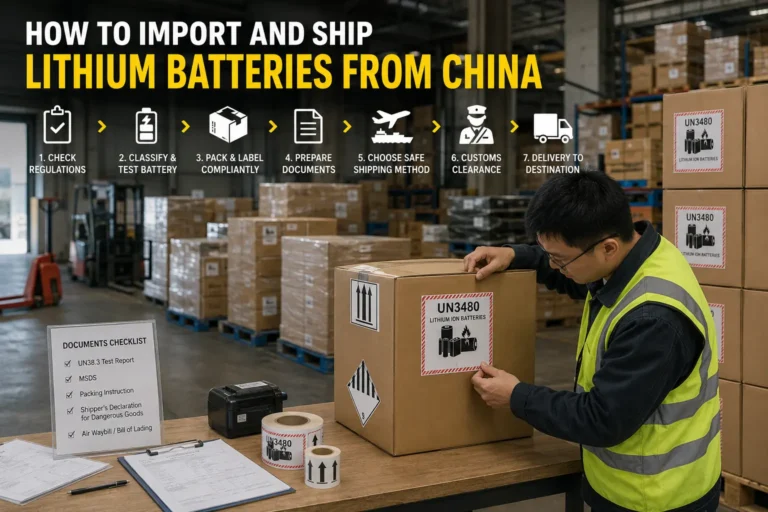
Importing and shipping lithium batteries from China requires more preparation than moving ordinary cargo. Lithium batteries are regulated as dang...
Read guide →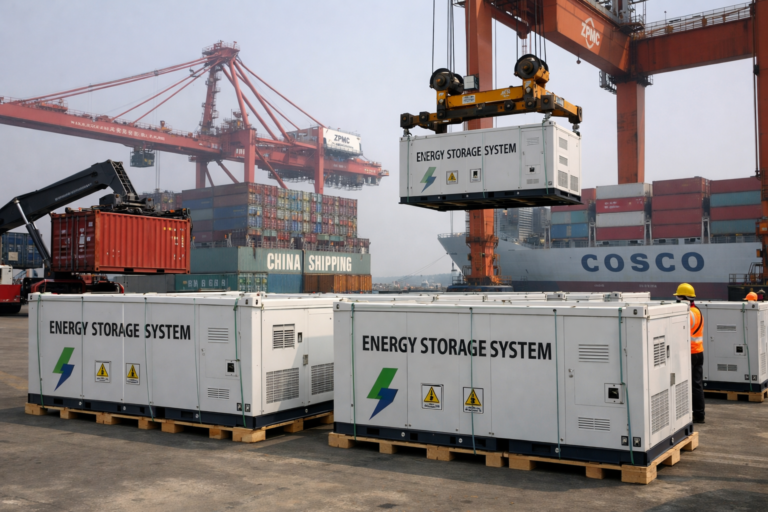
Shipping Energy Storage Systems from China Verified & Reviewed · Last updated March 2026 Shipping energy storage systems from China requires care...
Read guide →China is one of the world’s major manufacturing bases for solar panels and solar modules, offering a wide range of products for distributors, ins...
Learn more → Useful Resource Electric Motorcycle Shipping from ChinaElectric Motorcycle Shipping from China Verified & Reviewed · Last updated May 2026 Electric motorcycle shipping from China requires the right fr...
Learn more →WhatsApp us