Related Guide
Amazon FBA Shipping from China to USA
Why FBA Shipping from China Is Crucial for Amazon Sellers Shipping products from China to Amazon FBA in the USA has become a core strategy for ma...
Read guide →

Shipping from China to Amazon AWD allows sellers to send bulk inventory directly from Chinese suppliers to Amazon Warehousing and Distribution facilities in the USA. Instead of shipping all products directly to Amazon FBA fulfillment centers, businesses can store inventory in AWD and replenish FBA stock based on demand.
This 2026 guide compares Amazon AGL, SEND, and independent freight forwarders, covering shipping costs, transit times, US customs clearance, and AWD inbound requirements.
Shipping Methods
Shipping Costs
Transit Times
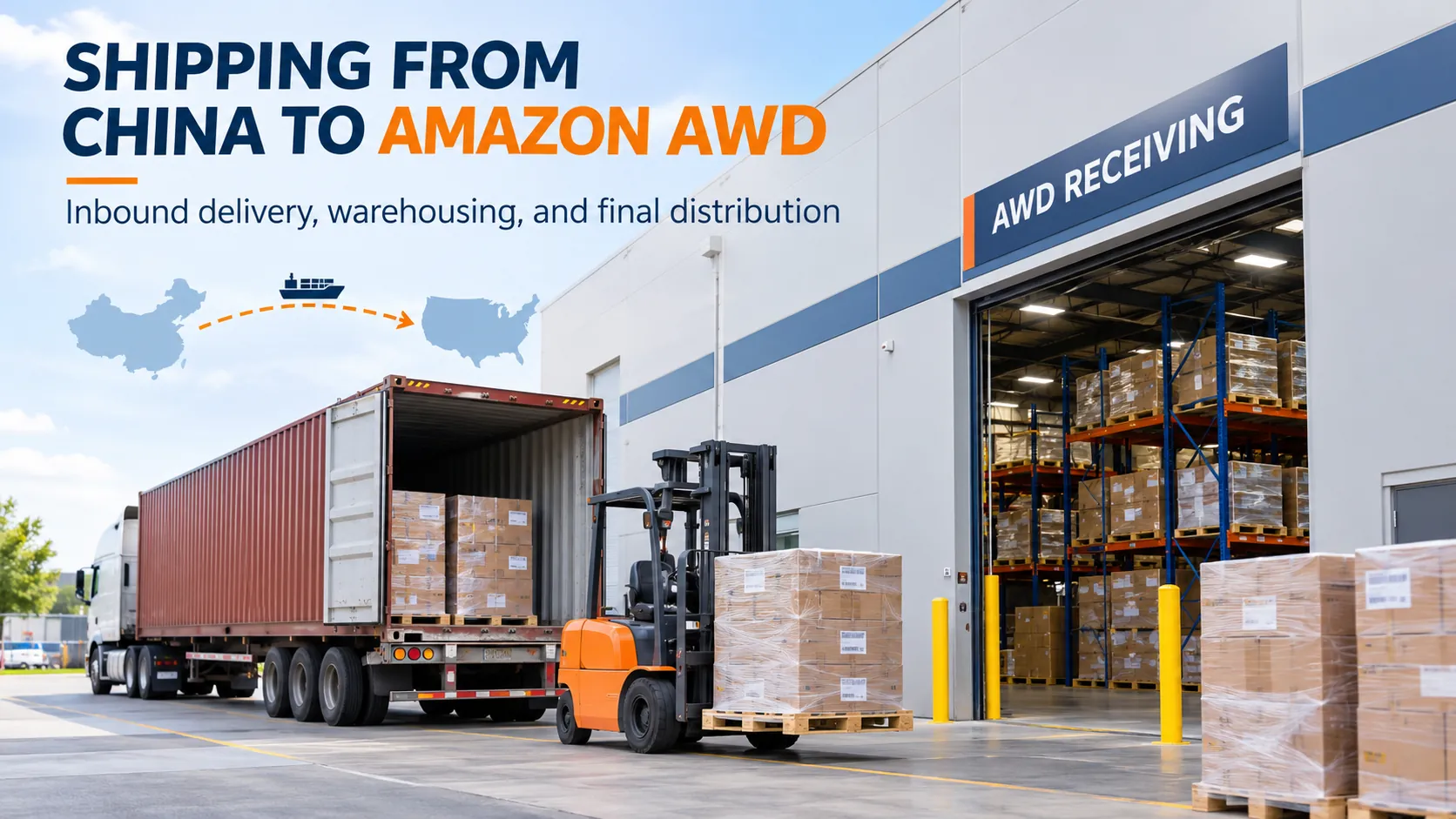
Amazon Warehousing and Distribution (AWD) is a bulk storage and distribution service that helps sellers manage inventory before it reaches Amazon FBA fulfillment centers.
Unlike Amazon FBA, which stores sellable products and fulfills customer orders, AWD focuses on upstream inventory storage. Amazon can automatically replenish eligible FBA inventory from AWD based on stock levels and replenishment settings.
For businesses importing products from China, this creates a more flexible supply chain. Large quantities of goods can be shipped to AWD without immediately occupying FBA storage space.
The main advantages include:
Lower-cost bulk storage compared with standard FBA storage in many situations
Automatic inventory replenishment to Amazon FBA fulfillment centers
No separate FBA inbound placement fee for eligible AWD replenishment
More flexible inventory planning for seasonal demand and product launches
However, AWD does not replace FBA. Products must still move into the appropriate fulfillment centers before they become available for FBA order fulfillment.
For businesses that need products delivered directly to fulfillment centers, see our shipping from China to Amazon FBA guide.
There are three main options for shipping products from China to Amazon AWD: Amazon Global Logistics (AGL), Amazon SEND, and independent freight forwarders. The right choice depends on shipment volume, delivery urgency, and logistics requirements.
Amazon Global Logistics provides ocean freight services for eligible shipments from China to AWD. Sellers can choose Full Container Load (FCL) or Less than Container Load (LCL), depending on cargo volume. AGL is suitable for bulk inventory shipments that require integrated transportation and delivery arrangements.
Amazon SEND connects sellers with participating international carriers and offers eligible air freight and sea freight services. Bookings can be managed through Amazon Seller Central, making it a convenient option for sellers who prefer Amazon-integrated shipping and tracking.
An independent freight forwarder can arrange factory pickup, supplier consolidation, cargo inspection, export customs clearance, international transportation, and final delivery to the assigned AWD warehouse.
This option offers more flexibility for sellers purchasing from multiple Chinese suppliers or requiring customized shipping arrangements.
Which option should you choose?
AGL: Suitable for bulk ocean freight shipments.
SEND: Suitable for eligible shipments using Amazon’s partnered carriers.
Freight Forwarder: Suitable for consolidated cargo and flexible logistics arrangements.
For large inventory shipments, sea freight is generally more economical, while air freight is better suited to urgent replenishment.
The cost of shipping from China to Amazon AWD includes international transportation, origin and destination handling, import duties, final delivery, and Amazon warehouse fees.
Actual shipping rates depend on the cargo volume, gross weight, origin, assigned destination, and transportation method.
For sea freight, the shipment is normally charged according to container size or cargo volume. Air freight is usually calculated using chargeable weight, which considers both actual and dimensional weight.
A complete freight quotation should account for the following expenses:
Origin Charges: Factory pickup, export handling, and documentation
International Freight: Ocean or air transportation from China to the United States
Import Charges: Customs brokerage, duties, taxes, and applicable inspections
Final Delivery: Port drayage, domestic trucking, and delivery to the assigned facility
For smaller shipments, LCL may offer a lower initial transportation cost. However, destination handling and inland delivery can increase the final landed cost.
Larger shipments may benefit from FCL, particularly when container utilization is high.
Before confirming a shipping quotation, check whether customs-related fees, import duties, delivery appointments, and destination handling are included.
Amazon charges separate fees for inventory storage, inbound processing, and transportation within its distribution network.
| AWD Fee | 2026 Base Rate |
|---|---|
| West Coast Storage | $0.57/cu ft/month |
| East, Southeast & South Central Storage | $0.48/cu ft/month |
| Standard Inbound Processing | $1.40/box |
| Eligible West Coast Palletizable Inbound | $1.05/box |
| Outbound Processing | $1.40/box |
| AWD Transportation | $1.40/cu ft |
Note: Amazon AWD fees are separate from international shipping costs. Compare the total freight, customs, delivery, and warehouse expenses when choosing a shipping method.
Shipping time from China to Amazon AWD depends on the transportation method, destination region, customs processing, and final warehouse delivery arrangements.
For Amazon Global Logistics (AGL) Ship to AWD ocean freight services, the published reference transit times are:
China to US West Coast: Approximately 45–55 days
China to US East Coast: Approximately 57–67 days
These estimates cover transportation from cargo drop-off at the origin to delivery at the first inbound receiving location. They are not limited to port-to-port sea freight transit times.
Several factors can extend the overall shipping schedule:
Origin Handling: Supplier preparation, cargo consolidation, and export procedures
International Transportation: Vessel schedules, flight availability, and port congestion
US Customs: Import documentation, inspections, and cargo release
Final Delivery: Domestic trucking, warehouse appointments, and receiving schedules
Allow additional time for AWD receiving and inventory processing after delivery. Cargo arriving at the warehouse is not necessarily available for immediate replenishment to Amazon FBA fulfillment centers.
For accurate inventory planning, confirm the latest carrier schedule before booking and calculate the delivery timeline based on when the products need to become available for sale.
Shipping from China to Amazon AWD involves coordinating suppliers, preparing inventory, creating a shipping plan, and arranging international transportation. Following the correct process helps avoid customs delays, labeling errors, and warehouse receiving problems.
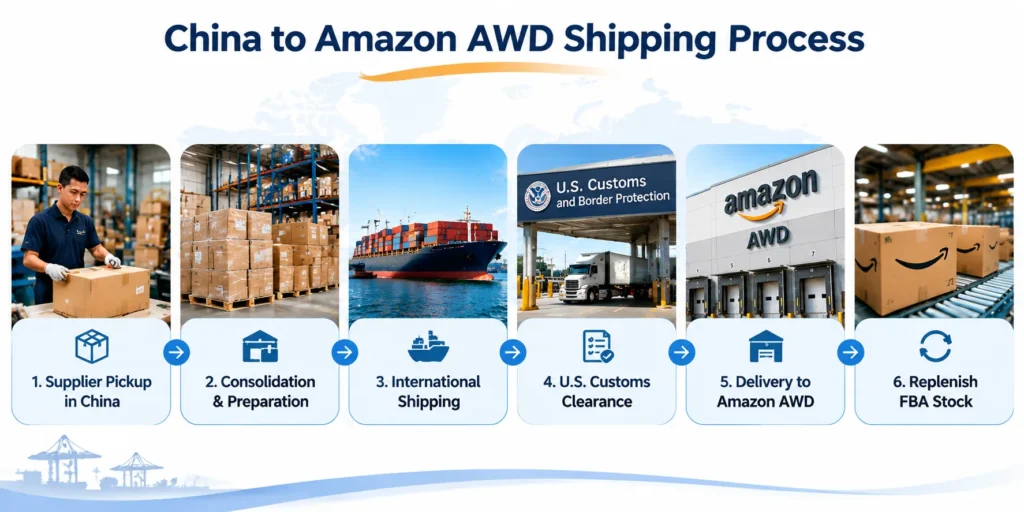
Before shipping, check that your products are eligible for Amazon AWD and meet the applicable size, weight, and packaging requirements.
Ask your Chinese supplier to confirm product quantities, carton dimensions, gross weight, and cargo-ready dates. For multiple suppliers, consider consolidating goods at a warehouse in China before export.
Log in to Amazon Seller Central, navigate to Inventory → Warehousing and Distribution (AWD), and select Send to AWD.
Choose the eligible SKUs, enter carton quantities and packing details, and confirm the shipping method. Amazon will provide the assigned receiving destination and shipment information.
Ensure products are properly packed, inspected, and labeled before leaving China.
Each carton requires a unique SSCC shipping label generated through the AWD workflow. Individual products must also meet applicable barcode requirements. For palletized cargo, prepare the necessary pallet labels and secure the cartons for transportation.
Choose sea freight or air freight based on shipment volume, delivery urgency, and transportation costs.
Amazon AGL, SEND, or an independent freight forwarder can coordinate pickup, export procedures, and international shipping. For larger shipments, FCL or LCL sea freight is commonly used to transport bulk inventory.
Before the goods arrive, confirm the Importer of Record and provide the required customs documents, including the commercial invoice, packing list, and transportation documents.
The importer or authorized customs broker completes the import entry and arranges payment of applicable duties and taxes. Cargo can proceed to final delivery after customs release.
Once the shipment clears customs, arrange transportation to the assigned AWD warehouse.
For seller-managed truckload shipments, the carrier must book a delivery appointment when required and provide the correct shipment references.
After warehouse receiving and processing, sellers can monitor inventory through Seller Central and manage automatic replenishment to Amazon FBA fulfillment centers.
Before shipping from China to Amazon AWD, sellers must ensure their products, cartons, and delivery arrangements meet Amazon’s inbound requirements. Incorrect packaging, missing labels, or ineligible products can result in receiving delays or rejected shipments.
Starting July 31, 2026, Amazon AWD accepts sortable products measuring less than 18 × 14 × 8 inches and weighing under 20 lb per unit. These limits apply to individual products, not shipping cartons.
Standard carton requirements include:
Maximum carton size of 25 × 25 × 25 inches
Maximum gross weight of 50 lb per carton
One unique SKU per carton, with no mixed-SKU packing
Up to 150 units of the same SKU per carton
Each shipment can contain up to 150 unique SKUs. Expiration-dated products and other restricted categories must meet additional eligibility requirements.
Always confirm product eligibility in Amazon Seller Central before arranging international shipping.
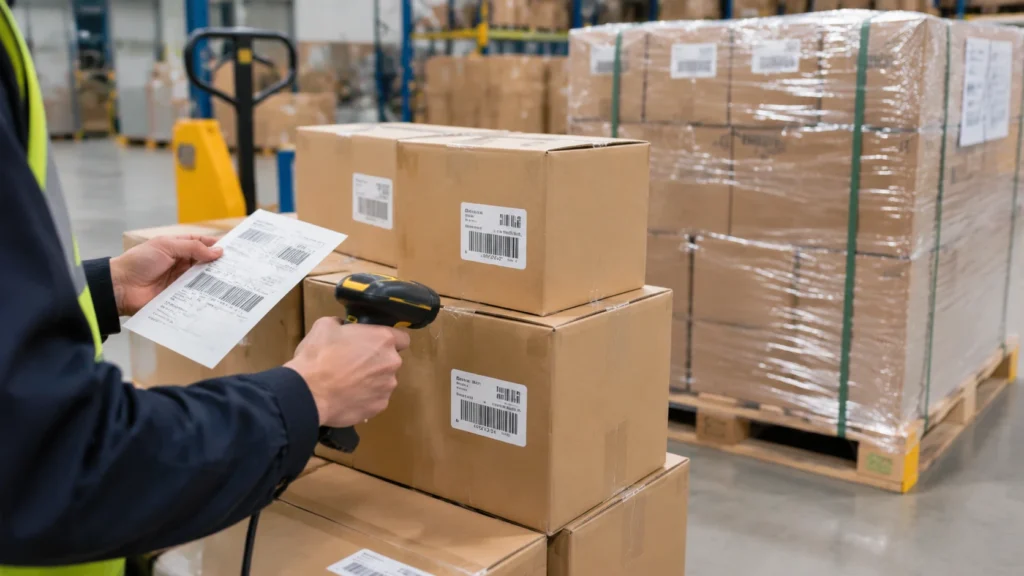
Every shipping carton requires a unique Serialized Shipping Container Code (SSCC) label generated through the AWD shipment workflow.
The SSCC identifies the carton during warehouse receiving, while individual products require an eligible manufacturer barcode or Amazon barcode, such as an FNSKU, when applicable.
For palletized shipments, cartons must be securely stacked and protected. Each pallet requires the appropriate AWD Pallet ID labels, and individual carton labels must remain scannable.
See our FNSKU labels for Amazon FBA guide for additional product labeling requirements.
For seller-managed LTL, FTL, or container deliveries, the carrier must arrange a delivery appointment through Amazon Carrier Central.
Amazon-managed carriers coordinate their own appointments, while eligible small parcel deliveries follow different requirements.
Before dispatch, confirm the assigned AWD warehouse, shipment reference numbers, bill of lading, and receiving appointment where required.
Shipping from China to Amazon AWD requires proper US customs clearance before inventory can be delivered to the assigned warehouse. Importers must ensure that their products comply with US import regulations, including tariff classification, import duties, and applicable product requirements.
Amazon does not act as the Importer of Record (IOR) for imported inventory. The seller or another eligible entity must assume this responsibility, while an authorized customs broker can handle customs declarations and coordinate cargo release.
The main documents for importing goods from China include:
Commercial Invoice: Product descriptions, declared values, quantities, and seller information
Packing List: Carton count, dimensions, gross weight, and packing details
Bill of Lading or Air Waybill: International transportation information
HTS Code and Customs Bond: Product classification and applicable import security requirements
For sea freight shipments, an Importer Security Filing (ISF) is generally required before cargo is loaded onto the vessel bound for the United States.
Under Delivered Duty Paid (DDP) arrangements, the seller is generally responsible for applicable import clearance, duties, and delivery costs. However, DDP does not automatically make Amazon the importer or remove the need for a legally designated IOR.
Before shipping, confirm who will handle customs entry, duty payments, and final delivery to the AWD warehouse.
For more information, see our US customs clearance guide and Importer of Record requirements.
Shipping from China to Amazon AWD can encounter delays when product preparation, shipping documents, or delivery arrangements are incorrect. The following problems are worth checking before dispatch.
Supplier Delays: Late production or incomplete cargo preparation can affect the shipping schedule. Confirm product quantities and cargo-ready dates with suppliers in advance.
Incorrect Carton Information: Mismatched SKU quantities, carton dimensions, or weights can cause receiving issues. Verify packing details before creating the shipping plan.
Missing or Incorrect Labels: Unreadable SSCC labels or incorrect product barcodes may delay warehouse processing. Check all labels before shipment.
Customs Clearance Delays: Incorrect invoices, HS codes, or importer information can hold up cargo release. Prepare accurate import documents before the goods arrive in the US.
Missed Delivery Appointments: Incorrect shipment references or late carrier arrivals can result in rejected or rescheduled deliveries. Confirm warehouse requirements and appointments before dispatch.
Proper supplier coordination and pre-shipment checks can help reduce delays, unexpected costs, and inventory receiving problems.
Shipping from China to Amazon AWD requires reliable coordination between suppliers, freight providers, and US delivery partners. Tonlexing helps simplify this process with:
Supplier Pickup: Collect goods from factories across China.
Cargo Consolidation: Combine products from multiple suppliers.
Pre-Shipment Inspection: Check product quality, quantities, and packaging.
International Freight: Arrange FCL, LCL, and air freight services.
Customs and Delivery: Coordinate export procedures, US import clearance, and final delivery to the assigned AWD warehouse.
Whether you are shipping a small consolidated order or a full container, Tonlexing helps coordinate the logistics process from China to the United States.
Contact Tonlexing with your cargo details and AWD destination to request a shipping quotation.
Yes. Eligible sellers can ship products directly from Chinese suppliers to Amazon AWD facilities in the United States using AGL, SEND, or an independent freight forwarder. The inventory must meet the applicable product eligibility, packaging, labeling, customs, and delivery requirements.
AWD is often suitable for bulk storage and automatic FBA inventory replenishment. Direct Amazon FBA shipping may be preferable when products need to become available for customer orders quickly. The better option depends on inventory volume, storage costs, delivery schedules, and replenishment needs.
Amazon Global Logistics lists approximately 45–55 days for eligible sea freight shipments to the US West Coast and 57–67 days to the East Coast. Actual delivery times depend on the carrier, customs processing, destination, and receiving schedule. Warehouse processing and FBA replenishment may require additional time.
Yes. International commercial imports must have an appropriate Importer of Record responsible for US customs compliance. Amazon does not automatically act as the importer for a seller’s inventory. An authorized customs broker can assist with entry documentation, duties, taxes, and applicable customs procedures.
Each shipping carton needs a unique AWD SSCC label, and individual products must have the appropriate barcode identification. Palletized shipments require additional pallet labels. Seller-managed truckload deliveries generally require an appointment through Carrier Central, while eligible small parcel shipments may follow different procedures.
Useful freight, customs and importing resources related to this shipping guide.
Why FBA Shipping from China Is Crucial for Amazon Sellers Shipping products from China to Amazon FBA in the USA has become a core strategy for ma...
Read guide →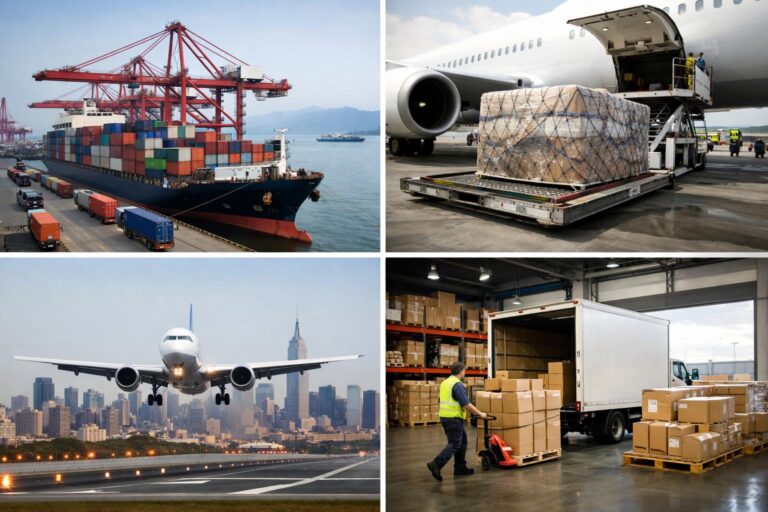
A guide to FBA freight forwarder China to USA, covering shipping methods, costs, transit times, and FBA delivery requirements.
Read guide →
China Warehouse Consolidation for USA Verified & Reviewed · Last updated January 2026 China warehouse consolidation for USA helps importers combi...
Read guide →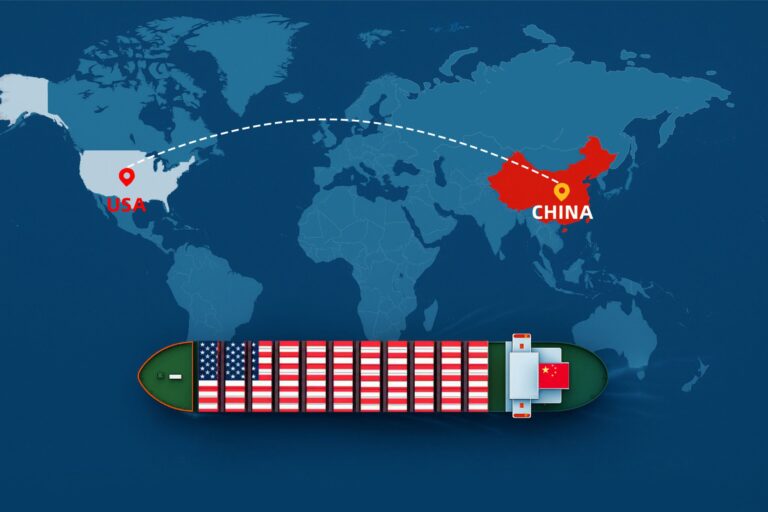
Shipping from China to the USA includes air freight, sea freight, and DDP shipping options. Compare shipping costs, transit times, and US customs...
Read guide →DDP Shipping from China to USA Verified & Reviewed · Last updated June 2026 DDP Shipping from China to USA is a duty-paid door-to-door shipping s...
Learn more → Useful Resource Importer of Record IOR in the USAImporter of Record IOR in the USA Verified & Reviewed · Last updated March 2026 Importer of Record (IOR) in the USA determines who is legally res...
Learn more →WhatsApp us