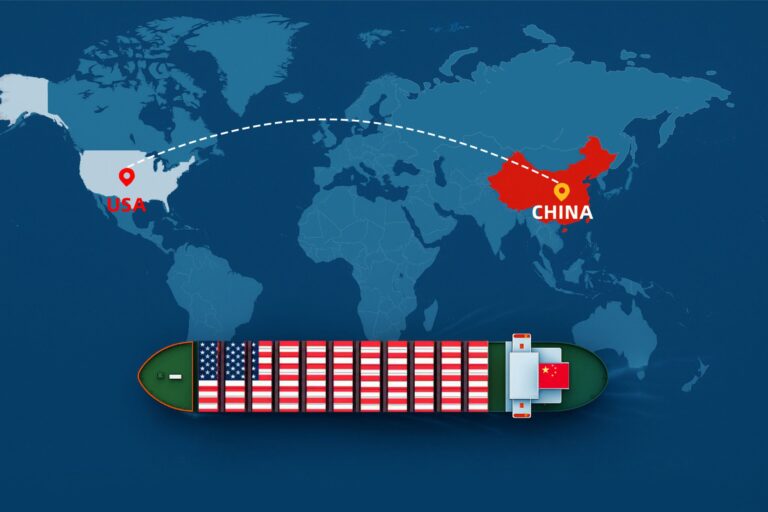
Related Guide
Shipping from China to the USA
Shipping from China to the USA includes air freight, sea freight, and DDP shipping options. Compare shipping costs, transit times, and US customs...
Read guide →

Shipping from Shanghai to the USA varies based on shipping method, freight rates, transit times, and total landed cost, including customs clearance and final delivery.
This updated 2026 guide explains shipping from Shanghai to the USA, comparing air freight, air cargo, and ocean freight services. It covers typical transit times, shipping cost ranges, and what impacts your final delivery timeline, including import customs clearance and documentation.
Shipping method / Mode
Transit time range
Customs clearance / Duties
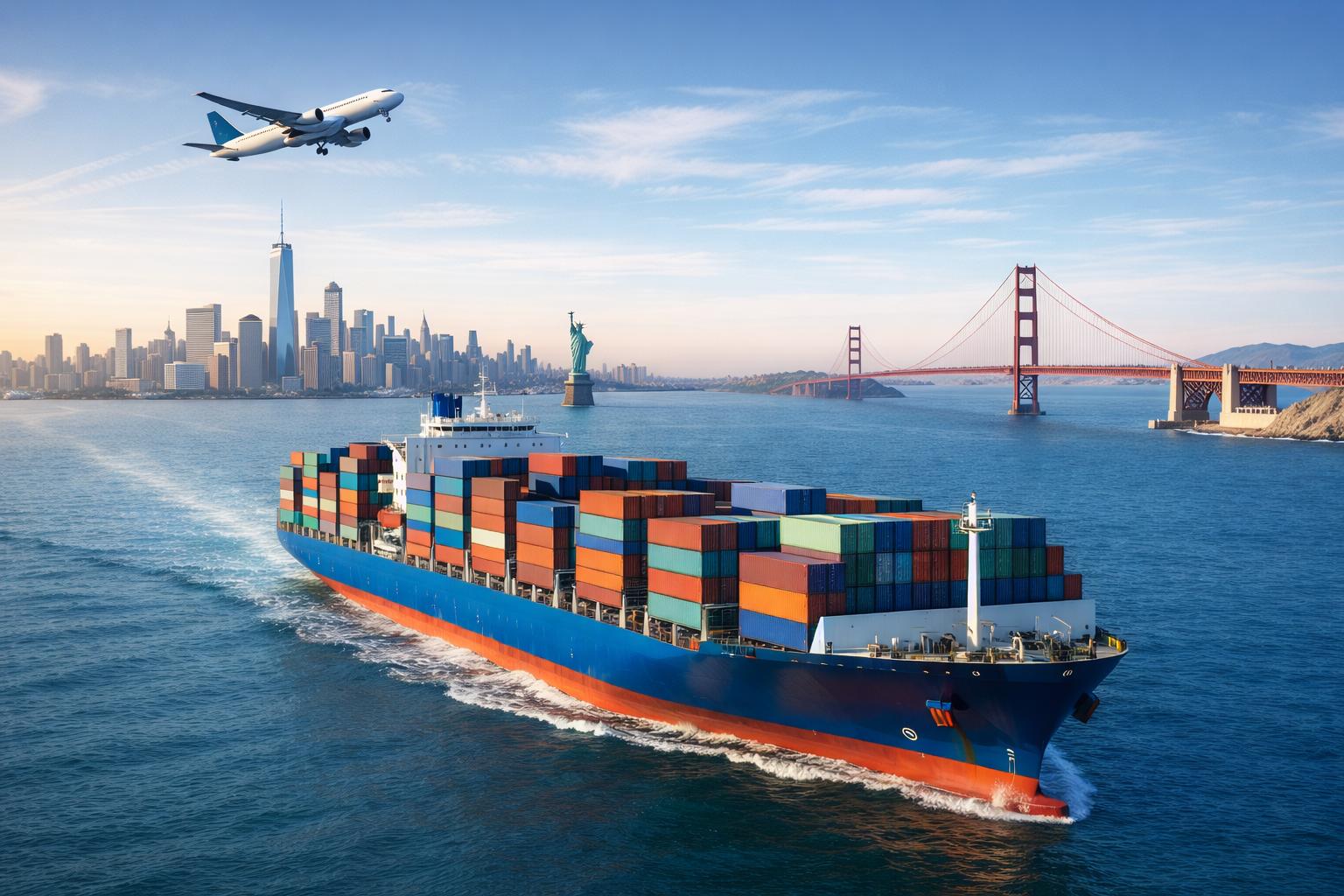
Fastest: Choose express shipment for small parcels, or expedited air freight for commercial cargo.
Lowest cost for bulk cargo: Choose sea freight, especially full container load when volume is steady.
Simplest door delivery: Use a freight forwarder to manage pickup, customs clearance, and final delivery.
Use express shipment when you are shipping small parcels, samples, or urgent replacement items. Pricing is typically based on chargeable weight, and delivery is usually door-to-door with end-to-end tracking.
Air freight is best when you need a reliable balance of speed and control for commercial shipments. It is commonly used for time sensitive orders and high value goods.
Watch for: dimensional weight, fuel surcharges, and airport handling fees that can change the total shipping cost. Plan time for pickup, export handling, and clearance steps that sit outside the flight time.
Sea freight is the standard option for large volumes and the most cost effective choice for bulky cargo and inventory replenishment. You can choose LCL for smaller shipments or FCL when you can justify a full container.
Total shipping time is not only the main transit. It usually includes pickup, export handling at Shanghai port, the main transit, import customs clearance when goods arrive, and final delivery to your warehouse or customer.
| Shipping Mode | Typical Transit Times | Best For |
|---|---|---|
| Express shipment | 1–7 days | small parcels, urgent documents |
| Air freight | 3–10 days | time sensitive cargo, high value goods |
| Sea freight FCL | 15–40 days | large shipments, full container load |
| Sea freight LCL | 20–45 days | smaller shipments, less than container load |
West Coast (for example Los Angeles / Long Beach) is generally faster on the ocean leg because the route is shorter.
East Coast can take longer due to distance and routing, and it may involve Panama Canal transit depending on the service.
If your final destination is inland, port choice should balance ocean time with inland delivery time.
Use this table to estimate shipping cost and compare freight rates. Actual prices vary by season, capacity, fuel surcharges, cargo weight, dimensions, and route.
| Shipping Mode | Lane / Scope | Typical Price Range | Unit |
|---|---|---|---|
| Express shipment | Door-to-door | $5–$10 | per kg |
| Air freight / air cargo | Port-to-port / Door-to-door | $3.0–$5.0 | per kg |
| Sea freight (LCL) | Port-to-port / Door-to-door | $50–$100 | per CBM |
| Ocean freight (FCL 20ft) | West Coast / East Coast | $1,500–$3,200 | per container |
| Ocean freight (FCL 40ft) | West Coast / East Coast | $1,800–$5,200 | per container |
cargo weight and dimensions
dimensional weight for air cargo
route selection, destination port charges, and inland transportation
fuel surcharges and peak season surcharges
customs clearance, duties, taxes, and broker handling fees
delivery requirements for final delivery, including appointments and special access
If you want to save money, consolidate other shipments, reduce dimensional weight, and choose a destination port that reduces inland transport to the final destination.
Full container load is ideal when you can fill most of a container or you want control of an entire container. It typically reduces handling and lowers damage risk for cargo that must stay together.
Choose full container load when:
your volume is high
you want fewer touchpoints
you want more predictable port operations
Less than container load is designed for smaller shipments that do not fill a full container. It can be cost effective at low volumes, but it adds consolidation and deconsolidation steps that may extend transit.
Choose less than container load when:
your volume is small
you want to pay by cubic meter
you can accept longer transit times
A practical rule: once your LCL volume grows, compare the total LCL cost with a full container quote. Many importers find a full container becomes more cost effective sooner than expected.
Import customs clearance is a critical part of the shipping process when goods arrive in the US. Mistakes in the customs clearance process can lead to significant delays and penalties.
The Harmonized Tariff Schedule is used to determine tariff rates for merchandise imported into the United States, and identifying the correct HTS code is a key step in determining duties.
The US has taken actions to suspend duty-free de minimis treatment. An Executive Order eliminated duty-free de minimis treatment for low-value imports from China, and CBP later issued guidance that de minimis treatment for low-value shipments valued at or under $800 would no longer apply more broadly.
Practical takeaway: even for smaller shipments via express shipment or air freight, plan for duties, taxes, and clearance steps rather than relying on an automatic duty-free exemption.
USTR extended a set of Section 301 exclusions until November 10, 2026. If your product is covered by an active exclusion, it can reduce duty impact, but only if the HTS classification and paperwork are accurate.
Most shipments need:
Commercial Invoice with clear product descriptions and declared value
Packing List with carton count, weights, and dimensions
Bill of Lading for ocean freight or air waybill for air cargo
These documents should match each other. Inconsistent quantities, vague descriptions, or incorrect classification are common reasons for holds and exams.

DDP stands for Delivered Duty Paid, meaning the seller is responsible for costs and risks until the goods are delivered to the buyer’s door.
Choosing DDP shipping means the seller arranges the end-to-end process, including:
transportation
customs clearance
duties and taxes
final delivery
DDP can simplify budgeting and operations, but it does not remove compliance risk. Incorrect HTS codes or inaccurate invoices can still create delays and additional charges.
Freight forwarders act as intermediaries between shippers and carriers. A freight forwarder simplifies freight shipping by managing end-to-end coordination, documentation, and communication, including:
booking air freight or ocean freight services
handling cargo insurance
coordinating customs clearance with brokers
arranging inland transportation for final delivery
helping you compare freight rates and service levels
If your supply chain is tight, an experienced freight forwarder helps reduce operational mistakes that cause delays and preventable fees.
consolidate smaller shipments to reduce repeated handling
optimize packaging to cut dimensional weight for air cargo
compare LCL totals vs full container load when volume grows
choose the destination port that reduces inland delivery cost to the final destination
book earlier during peak season to stabilize freight rates
prepare commercial invoice and packing list early to avoid storage and rework
It depends on shipping options and destination port. Express shipment is typically fastest, air freight is often within days, and sea freight commonly takes several weeks. Total transit includes customs clearance and final delivery.
For small parcels, express courier can be faster. For commercial cargo, expedited air freight can be very fast, but total speed depends on handling and customs steps.
For large shipments, sea freight is usually the most cost effective method. For smaller shipments, less than container load can work until volume makes full container load cheaper.
Do not assume small shipments are automatically duty-free. US rules on de minimis treatment have changed, and duties and taxes may apply even at low values depending on current policy and entry type.
An HTS code classifies your goods and helps determine tariff rates. Incorrect HTS classification can cause delays, exams, and penalties during customs clearance.
Useful freight, customs and importing resources related to this shipping guide.
Shipping from China to the USA includes air freight, sea freight, and DDP shipping options. Compare shipping costs, transit times, and US customs...
Read guide →
Break down shipping costs from China to the USA, including air freight, sea freight, and delivery times for different shipment sizes.
Read guide →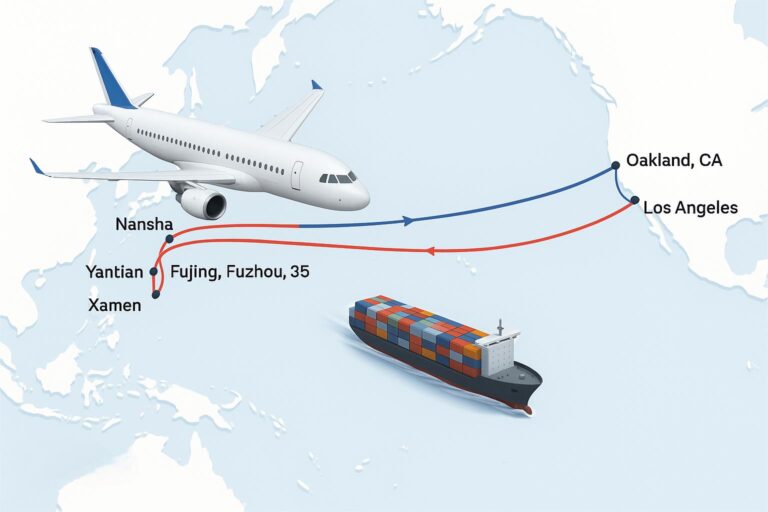
Explore the main shipping routes from China to the USA by sea and air. Compare West Coast, East Coast and Gulf Coast routes, major ports, distanc...
Read guide →
Sea Freight Transit Time from China to USA Verified & Reviewed · Last updated March 2026 Sea freight transit time from China to USA depends on th...
Read guide →Shanghai Pudong International Airport (PVG) Verified & Reviewed · Last updated July 2026 Shanghai Pudong International Airport (PVG) is one of Ch...
Learn more → Useful Resource DDP Shipping from China to USADDP Shipping from China to USA Verified & Reviewed · Last updated June 2026 DDP Shipping from China to USA is a duty-paid door-to-door shipping s...
Learn more →WhatsApp us