

Shipping Heavy Cargo from China to USA
- Verified & Reviewed · Last updated March 2026
Shipping heavy cargo from China to USA depends on the shipping method, cargo size, transit time, customs clearance, and total landed cost.
This guide explains how to ship heavy cargo from China to USA, covering sea freight, air freight, full container load, less than container load, customs clearance, cargo insurance, and door-to-door delivery for machinery, industrial equipment, and other large shipments.
Sea freight / Air freight
Transit time range
Door to door / Customs
- Experienced China-based logistics specialists
Table of Contents
Why Shipping Heavy Cargo from China to the USA Requires a Different Strategy
Heavy cargo is not handled the same way as smaller shipments or express shipments. The heavier or larger the shipment becomes, the more important freight planning becomes. A shipment may fit inside an entire shipping container, require an entire container by itself, or need special handling outside standard container space.
In international shipping, heavy cargo often includes:
industrial machines
manufacturing lines
oversized equipment
construction materials
large shipments of metal products
project cargo
palletized dense goods
bulk cargo for commercial import
When shipping from China, businesses must evaluate not only freight rates, but also origin port conditions, customs clearance process, inland trucking, cargo insurance, and final delivery arrangements in the United States.
That is why many importers work with experienced freight forwarders or a freight forwarding company instead of trying to manage the entire shipping process alone.
What Counts as Heavy Cargo in China to USA Shipments
There is no single universal rule for defining heavy cargo. In practice, cargo is usually treated as heavy when its weight, size, or handling requirements make shipping more difficult or more expensive than standard freight.
A shipment is often considered heavy cargo when:
the cargo weight is high relative to its volume
the shipment size makes loading more difficult
reinforced packing or lifting equipment is required
the goods cannot move efficiently under standard LCL shipping
the shipment needs an entire container or special equipment
the cargo exceeds normal container load limits
Some China to USA shipments are heavy but still fit within a standard full container load. Others are oversized and may require flat rack service, open top equipment, or another ocean transport arrangement.
For that reason, freight forwarders usually review the cargo type, dimensions, package count, cubic meter volume, and destination before recommending the most suitable shipping method.
Best Shipping Methods for Heavy Cargo from China to USA
The best shipping method depends on the cargo itself, the route, and the importer’s priorities. For some businesses, lower sea freight costs are the main concern. For others, shorter transit times are worth a higher freight cost.
Sea Freight for Heavy Cargo from China to USA
Sea freight is usually the most cost-effective solution for heavy cargo. It is widely used for:
large shipments
dense cargo
machinery
raw materials
bulk commercial goods
Compared with air shipping, sea freight is slower, but it usually offers better value for heavier cargo and larger volumes. For most importers moving heavy cargo from China to the USA, sea freight is the first option to consider.
Full Container Load for Heavy Cargo
Full container load is one of the most common solutions for heavy cargo. It is often the better choice when the shipment is heavy, needs safer loading, or requires more control over container space.
FCL is especially suitable when:
the cargo is heavy and dense
the goods need more secure loading
the shipment can justify an entire container
the cargo is easier to handle without mixing with other LCL shipments
For industrial equipment, metal products, and other dense cargo, using an entire shipping container can reduce handling risk and simplify the shipping process.
Less Than Container Load for Heavy Cargo
Less than container load can still work for certain heavy cargo shipments, especially when the goods are too small for an entire container but too large for express freight.
LCL is usually considered when:
cargo volume is limited
the shipment does not justify a full container load
the delivery schedule is flexible
the goods are suitable for shared cargo handling
However, importers should compare carefully. Dense cargo shipped under LCL may appear cheaper at first, but total shipping cost can rise after consolidation, deconsolidation, terminal handling, and destination charges are added. In some cases, full container load may offer better overall value.
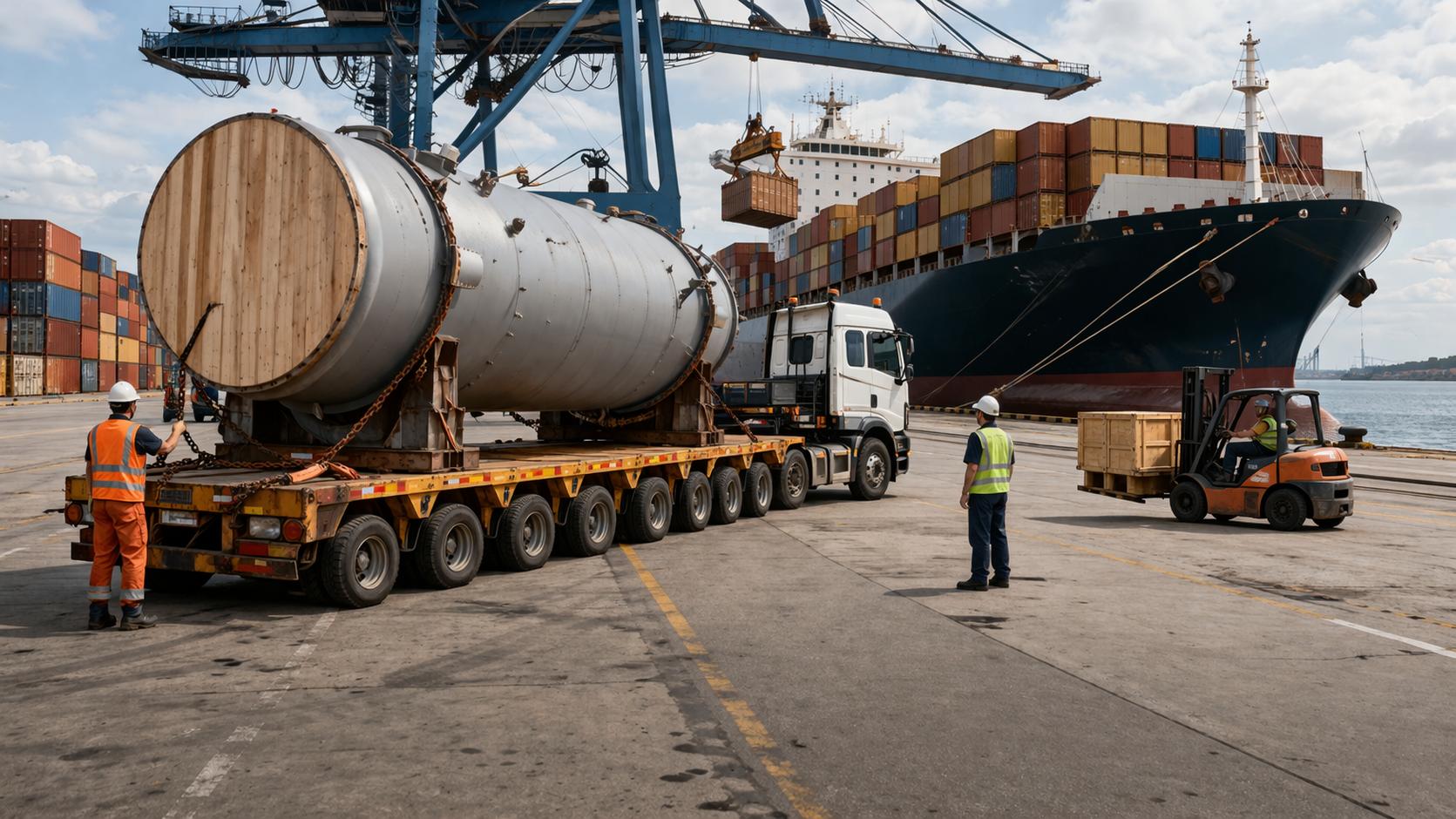
Ocean Freight for Oversized or Project Cargo
Some heavy cargo is too large for a standard container and must move through a different ocean freight arrangement.
This often applies to:
oversized machinery
industrial tanks
generators
long steel structures
plant equipment
project cargo
In these cases, shipping may require flat rack containers, open top equipment, or breakbulk service. Because oversized freight involves more planning, freight forwarders usually review the origin port, destination port, road access, lifting requirements, and final delivery conditions before booking.
Air Freight for Heavy Cargo from China to USA
Air freight is much faster than sea freight, but it is also much more expensive. It is generally used only when delivery speed is more important than shipping cost.
Air freight may be suitable when:
the goods are urgent
production downtime would be costly
the shipment is high value
the cargo weight is still manageable for air shipping
the goods are critical spare parts or urgent equipment
Air freight cost can rise quickly because of chargeable weight, fuel surcharges, airport handling, and limited cargo capacity.
When Air Shipping Makes Sense
In practice, air shipping is most suitable for:
urgent industrial parts
emergency replacement equipment
high-value goods
smaller heavy shipments
cargo with tight delivery deadlines
If the cargo is too large or too heavy, aircraft capacity and cargo acceptance rules may limit the available options. In that case, ocean freight is usually the more practical solution.
Express Shipping and Air Express for Heavy Cargo
Express shipping is mainly designed for documents, samples, and smaller commercial packages. It is not usually the right choice for true heavy cargo, although it may still work for smaller urgent shipments.
Air express is sometimes considered when:
the shipment is not large enough for normal air cargo handling
the delivery window is extremely tight
the goods are urgent samples or spare parts
Once cargo becomes large, dense, or palletized, regular air freight or sea freight is usually the more suitable shipping method.
How to compare container shipping rates without overpaying
For most importers, the main comparison is sea freight versus air freight.
| Shipping Method | Best For | Cost Level | Transit Times | Main Advantage |
|---|---|---|---|---|
| Sea Freight | Large shipments, bulk cargo, machinery | Lower | Longer | Most cost effective for heavy cargo |
| Ocean Freight FCL | Dense cargo and dedicated loads | Lower to medium | Moderate | Better use of container space |
| LCL Shipping | Smaller shipments that do not fill a container | Medium | Longer | Useful for limited cargo volume |
| Air Freight | Urgent commercial cargo | High | Fast | Best for speed |
| Express Shipping | Small urgent cargo | Very high | Very fast | Best for very small urgent goods |
For shipping heavy cargo from China to the USA, sea freight usually wins on cost, while air freight wins on speed.
Shipping Costs for Heavy Cargo from China to USA
For most businesses, sea freight is the main option for shipping heavy cargo from China to USA. It is usually the most cost effective choice for large shipments, dense cargo, and bulky commercial goods.
By comparison, air freight is much faster, but the air freight cost is much higher. It is normally used only for urgent, high-value, or time-sensitive cargo.
Typical Cost Reference
As a general market reference, the most common shipping methods are:
| Shipping Method | Best For | Transit Times | Cost Reference |
|---|---|---|---|
| Sea Freight FCL | Large shipments that can use most of a container | 15–35 days | About USD 1,944–2,695 per container |
| Sea Freight LCL | Heavy cargo that does not fill a full container load | 22–45 days | About USD 110 per cubic meter |
| Air Freight | Urgent heavy cargo and smaller time-sensitive shipments | 3–10 days | About USD 4.85 per kg |
What Affects Shipping Costs
The base freight rate is only one part of the total shipping cost.
Importers should also consider:
import duties and tariffs
destination charges
customs clearance
final delivery
fuel surcharges
special handling for oversized or heavy cargo
For example, a shipment with a low ocean freight quote may still end up costing more after customs clearance, port fees, and inland trucking are added.
How to Estimate Sea Freight Costs and Air Freight Cost
Sea freight costs are typically more attractive for heavy cargo, especially when shipping large volumes. For dense commercial freight, ocean transport usually provides the best value over long distances.
Air freight cost is higher because airlines have limited cargo capacity, higher operating costs, and stricter handling rules. Air freight rates often rise sharply during peak periods, especially when demand is strong.
When importers compare sea freight offers and air freight rates, they should ask for:
origin charges
main freight
customs clearance fees
customs broker fees
final delivery cost
cargo insurance options
destination handling charges
This gives a better view of the real freight cost and reduces the risk of hidden fees.
Transit Times for Heavy Cargo from China to USA
Transit times for heavy cargo from China to USA depend largely on the destination, the shipping arrangement, and the final delivery requirements.
West Coast ports
Shipments to Los Angeles, Long Beach, and Seattle are usually the fastest, with port-to-port transit times typically ranging from 12 to 22 days.East Coast ports
Shipments to New York, Savannah, and other East Coast gateways generally take longer, with transit times often ranging from 24 to 35 days.Inland and Gulf destinations
For cargo moving beyond the main coastal ports, additional rail or truck transfer is usually required. In these cases, total transit time is often around 30 to 45 days, and may be longer depending on the final destination.Door-to-door delivery
The full shipping schedule is normally longer than the ocean transit itself. Supplier pickup, export handling, customs clearance, terminal processing, and final delivery in the United States can all add extra time.Factors that may cause delays
LCL shipments often take longer than full container load shipments because they require consolidation before departure and deconsolidation after arrival. Customs inspections, port congestion, holiday periods, and special unloading arrangements for heavy cargo may also extend the overall timeline.
Door to Door Shipping Heavy Cargo from China to the US
Door to door service can simplify the shipping process, especially for importers who want one provider to manage the shipment from supplier pickup to destination delivery.
Door to door can include:
factory pickup in China
export formalities
sea freight or air freight
customs clearance
customs broker coordination
local trucking
final delivery to warehouse or job site
For heavy cargo, door to door service is useful because the shipment often requires more coordination than standard freight. A single shipping solution can reduce communication issues and improve control over the shipment.
However, importers should always confirm what door to door actually includes. Some quotes include only basic transport, while others include a more complete service scope.
Customs Clearance for Shipping Heavy Cargo from China to USA
For heavy cargo shipped from China to USA, customs clearance is one of the most important parts of the shipping process. It affects not only transit time, but also final delivery and total shipping cost. If product details are inaccurate or required documents are missing, the shipment may face delays, inspections, storage charges, or additional import costs.
Why Customs Clearance Matters
For ocean freight shipments to the United States, ISF filing is a key requirement. It must be submitted before the cargo arrives, and late or missing filing may lead to customs delays or penalties.
This is especially important for heavy cargo because any delay at the port can quickly increase total cost.
Heavy cargo usually involves higher shipment value, more detailed product classification, and stricter document review than standard freight. For that reason, customs clearance problems can create larger delays and higher costs.
The main risks often include:
delayed customs release
customs inspection
storage or port charges
incorrect duty calculation
final delivery delays
Customs Broker Support
Many importers use a licensed customs broker to handle the entry process. This is often the safest approach for heavy cargo, machinery, and industrial goods.
A customs broker can usually help with:
customs entry filing
duty and tax processing
document review
communication with US Customs
reducing clearance errors
Duties, Tariffs, and HS Code Accuracy
Import duties and tariffs should always be checked before shipment. The final amount depends on the product type, customs classification, and current tariff policy.
For heavy cargo, HS code accuracy is especially important because a classification mistake can lead to:
higher duties
customs disputes
shipment delays
additional review or correction costs
Required Shipping Documents
To complete customs clearance smoothly, the main shipping documents should be prepared accurately and in advance.
In most cases, importers will need:
commercial invoice
packing list
bill of lading or air waybill
product description
importer details
Depending on the cargo, additional certificates or compliance documents may also be required.
Practical Advice for Importers
For heavy cargo from China to USA, customs clearance should be planned early rather than treated as a final step. Importers should confirm the product description, HS code, document set, and broker arrangement before the shipment departs.
A clear customs plan can help reduce delays, avoid unnecessary charges, and make final delivery much easier to manage.

Why Freight Forwarders Matter for Heavy Cargo Shipping
Freight forwarders are especially important for heavy cargo because the shipping process is more complex than ordinary parcel shipping.
Experienced freight forwarders can help with:
choosing the right shipping method
comparing sea freight and air freight
planning full container load or less than container load
checking container space and weight limits
booking reliable shipping lines
arranging cargo insurance
supporting customs clearance
coordinating door to door final delivery
reducing shipment delays
A professional freight forwarding company also understands shipping routes, port requirements, inland delivery limitations, and how to secure competitive rates based on the actual cargo profile.
Cargo Insurance for Heavy Cargo from China to USA
Cargo insurance is often overlooked, but it is very important for heavy cargo and large shipments. Heavy machinery, industrial cargo, and oversized equipment represent higher shipment value and higher handling risk.
Cargo insurance may help protect against:
physical damage
loss during transport
handling accidents
selected transit risks depending on policy terms
For importers shipping valuable or difficult cargo, cargo insurance should be discussed early in the shipping process rather than added at the last minute.
Common Problems in China to USA Shipments
Shipping heavy cargo from China to USA often involves more than just booking freight. In many cases, delays and extra costs are caused by planning mistakes, document issues, or delivery problems that could have been avoided earlier.
Incorrect Cargo Information
One of the most common problems is inaccurate cargo details. If the cargo weight, dimensions, package count, or product description is wrong, the shipment may face quoting errors, booking changes, or additional freight charges.
Choosing the Wrong Shipping Method
One of the most common problems is inaccurate cargo details. If the cargo weight, dimensions, package count, or product description is wrong, the shipment may face quoting errors, booking changes, or additional freight charges.
Incomplete Customs Documents
Customs issues are another common problem in china to usa shipments. Missing or inaccurate documents can delay customs clearance, increase the risk of inspection, and create extra storage or penalty charges.
Final Delivery Problems
Heavy cargo often requires special delivery arrangements. If truck access, unloading equipment, appointment scheduling, or site conditions are not confirmed in advance, final delivery can be delayed even after the cargo has already arrived.
Inadequate Packing
Heavy cargo needs strong and suitable export packing. Poor packaging can increase the risk of damage during loading, ocean transport, and inland trucking, especially for machinery and other industrial goods.
Peak Season and Port Congestion
Shipping during busy periods can also create problems. Peak season demand, limited container space, and port congestion may extend transit times and raise freight rates, especially on major china to usa shipping lanes.
Frequently Asked Questions
For most heavy cargo, sea freight is the cheapest shipping option. It is usually more cost effective than air freight, especially for large shipments and bulk cargo.
Air freight can work for heavy cargo, but mostly for urgent or high-value goods. Air freight cost is much higher than sea freight, so it is usually used only when fast transit times are necessary.
Full container load is often better for dense or large shipments because it offers better control and may reduce handling risk. Less than container load can work for smaller shipments, but total cost should be checked carefully.
Many importers use a customs broker to support customs clearance, document review, and classification. This is especially useful for machinery, equipment, and commercial freight.
Yes, cargo insurance is worth considering for valuable heavy cargo, industrial equipment, and large shipments because damage or loss can be costly.
Related Shipping Guides
Get a Quote for Heavy Cargo Shipping from China to USA
- Sea freight and air freight options
- FCL, LCL, and oversized cargo support
- Customs clearance and final delivery planning
Get tailored shipping solutions, transparent pricing, and expert support for heavy cargo shipments.